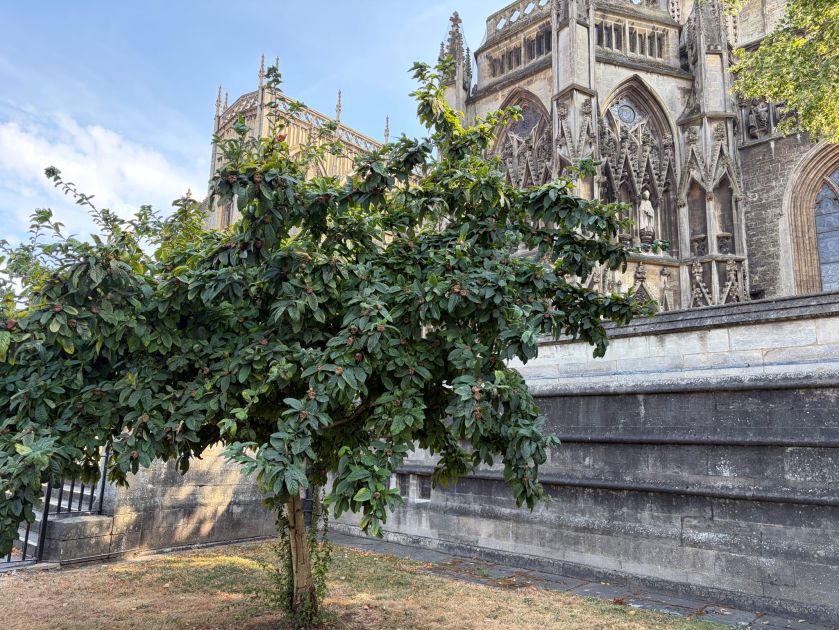
After a sweaty train ride up from Cornwall, we dropped our things at the AirBnb and made a beeline for the cool of nearby St Mary Redcliffe. The Gothic vaults and traceries were as stunning as ever, but this time I was entranced by the heavy-laden medlar tree right outside the front. A good pomme omen for the weekend!
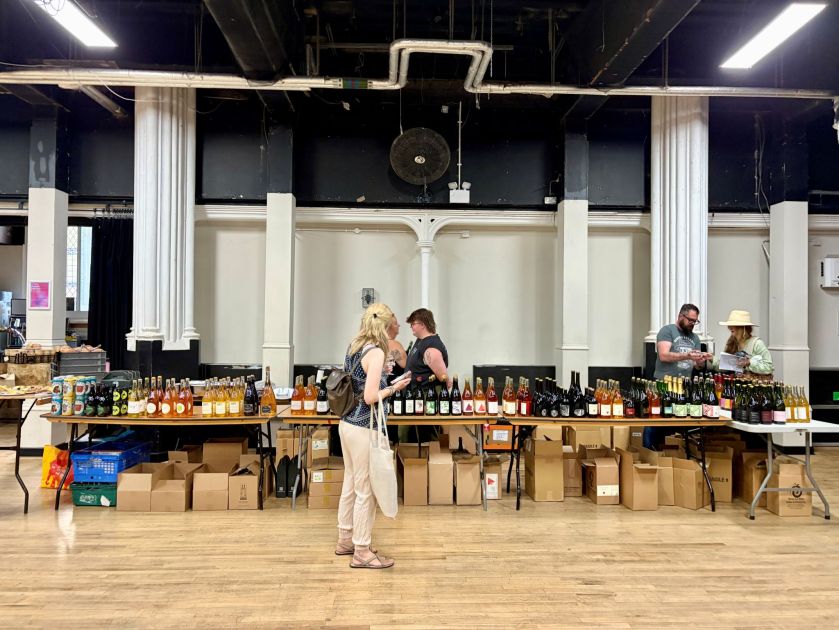
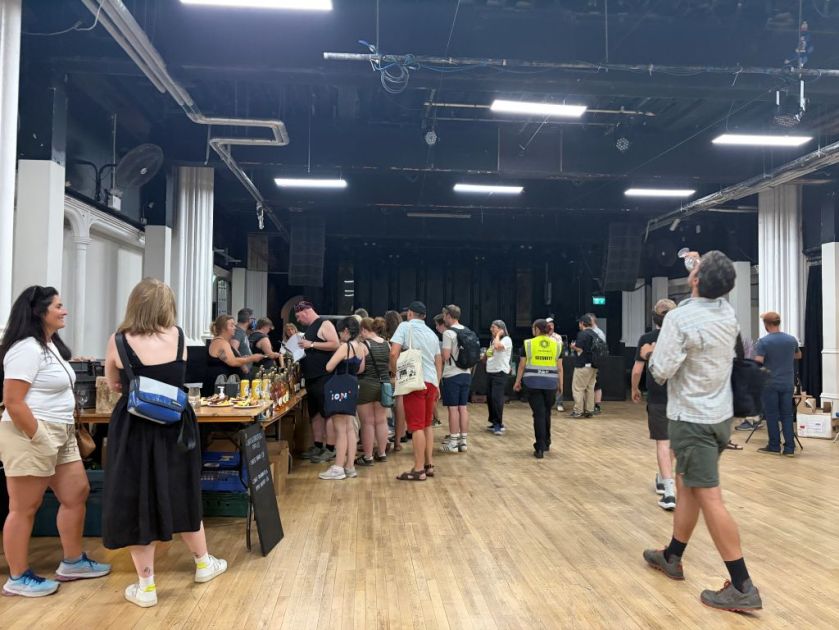
Our next spot of shade was provided by Left Handed Giant. I associate this Bristol brewery with the Cider Salon: the afterparty for the first Salon I attended—in 2022! how the time has flown—was held at one of its taprooms. With a tulip glass of crisp, citrussy Mills Brewing saison in hand, I set to perusing the line-up of this year’s Cider Salon: as usual, a great mix of new makers to get to know and old favourites to catch up on.
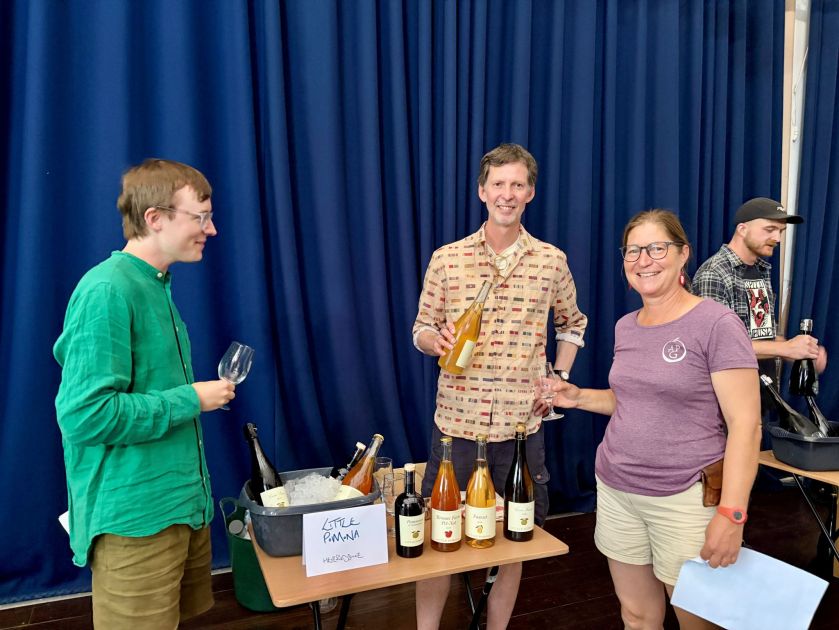
Given Adam has previously captured the format and buzz that makes the Cider Salon so special, I will fast-forward to the reviewing part (with the usual caveat about these kinds of events being more suited to the highlights reel than in-depth reviews). It was a good year for perries this Salon: some of my favourite drinks included the Moorcroft 2022 from Wilding, a luscious number that smelled of Turkish delight and tasted of freeze-dried strawberries (yes, specifically freeze-dried), and the dizzyingly aromatic 2023 Fausset from Little Pomona, a pet nat with oodles of candied lychee.
In terms of producers, there’s usually at least one revelation at the Cider Salon: the one maker you’re left thinking about and that others are almost guaranteed to mention at the afterparty. This time, that was Cidrerie de Reillon. Based in Lorraine—not France’s traditional cider country—Grég makes about 10-15 thousand litres per year of natural-ferment, nothing-added cider a year from old orchards around his hamlet of Reillon. I was particularly intrigued by his use of mirabelle: it seems that about half the global crop of this small yellow plum (which I associate with Germany) is grown in Lorraine. Grég’s proximity to Germany also came through in the apple varieties he uses; I felt like I detected the bitter-tart character and subtle tannins of typical German cider apples in his drinks.
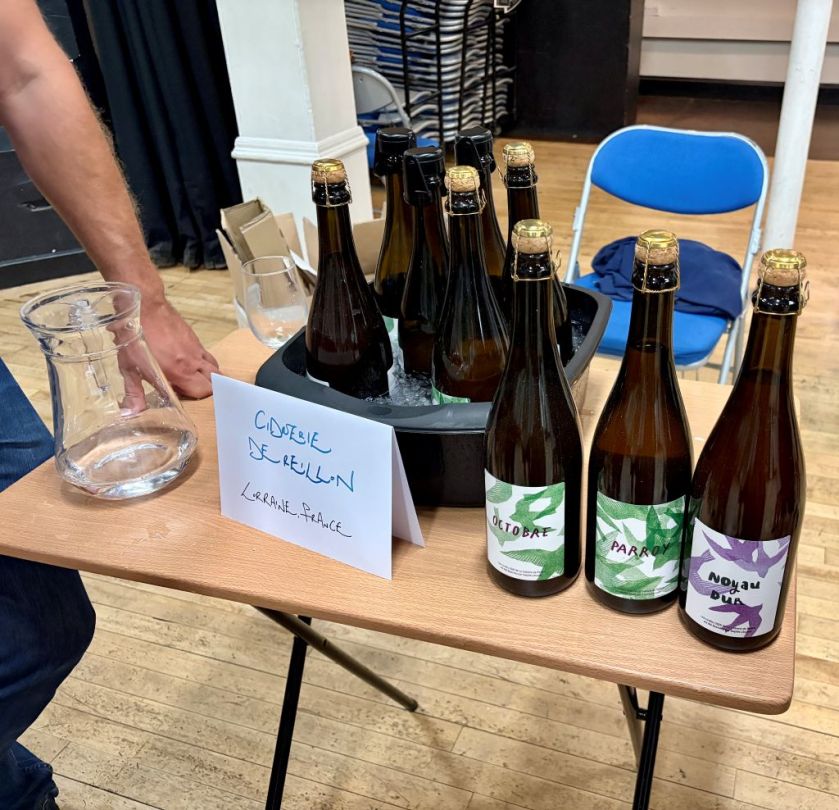
The three bottlings Grég had brought along were exceptional. Octobre, the only pure apple cider in the mix, had a beautiful bouquet of cinnamon and citrus; it instantly took me back to a time when I was a fan of a Penhaligon’s perfume called ‘St Clements’ (i.e., oranges and lemons say the bells of). It’s made with the earlier crop of apples; Grég also makes a Novembre. Next came Parroy, a cidromel bottle-fermented with about 40L of Grég’s own linden honey per 1,000L of cider. This blew me away with its highly unusual nose and palate of herbs and spices—za’atar and cumin? (Grég cited the linden honey’s vegetal influence.) Then, there was the delightful Noyau Dur, which starts with mirabelles (10%) that are carbonically macerated until the pears (20%) and apples (70%) are ready to join. All three were fresh, acid-driven, and complex.
Cidrerie de Reillon has a UK importer in Glasgow’s Sevslo Wines (and its shop, Made from Grapes), while another fresh face of French cider who is still in talks with importers to the UK was at the table right next door. Tanguy of Julo Cidrerie is a Breton from a farming family, so it’s not surprising he ended up going into cider. However, he said he wants to take that tradition and do something new with it, to express himself. One way he’s doing that is with acid: his Le Clos de Mily 2025 was a single-variety Avrolles, one of the most acidic French apples, repeatedly racked rather than keeved to retain natural sweetness. Still, the incredibly high acid kept it so refreshing it was almost minty—a delightfully different French cider.
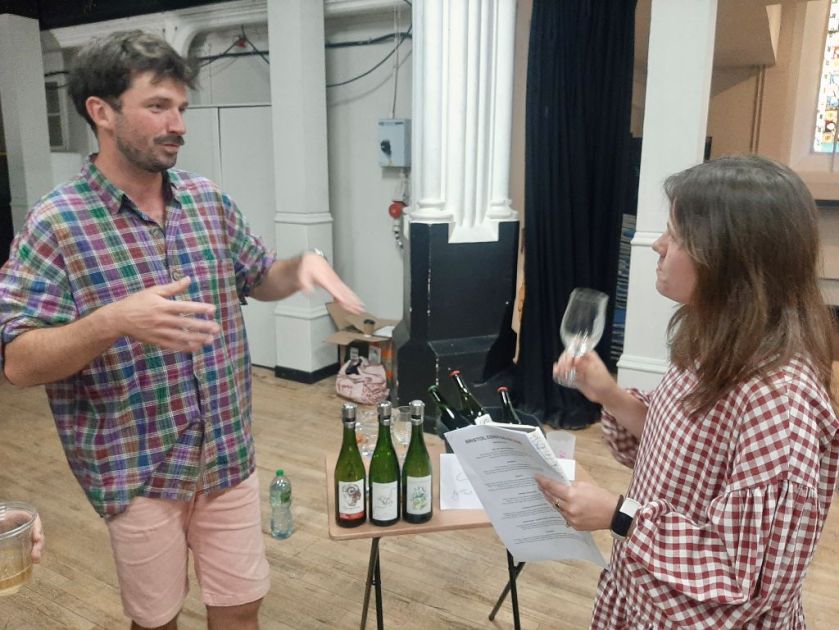
A third young French producer (this time from Normandy), Cyprien Lireux, was being poured at the Salon—this time not by the producer, but by its Huddersfield-based importer, Cider Mugs. Jack Laycock was travelling around Singapore and eating in a bistro there when he first tasted French cider. Instantly hooked, he needed to know how he could get this drink back home. When he found out this wasn’t that easy to do, he started an importing business himself. I love to hear about the myriad strange ways people find their way to fine cider, and we talked about everything from how, in many of the places Cider Mugs stock, the co-ferments sell well to both natural wine drinkers who know the nomenclature and those who think they don’t like cider, to the difficulties of pricing of pricing an often unfamiliar product.
Speaking of nomenclature: one thing that struck me at this Salon was how many technically driven and specialist conversations I overheard between cider makers (or those pouring the cider) and tasters: what cider can learn from wine making in terms of technique, whether traditional method cider is “worth it”, how to detect mouse… Even the makers I didn’t know jumped right into details about variety and method when they started pouring. Everyone was still perfectly approachable, but it’s exciting to see that the level of assumed knowledge has risen in comparison to previous years.
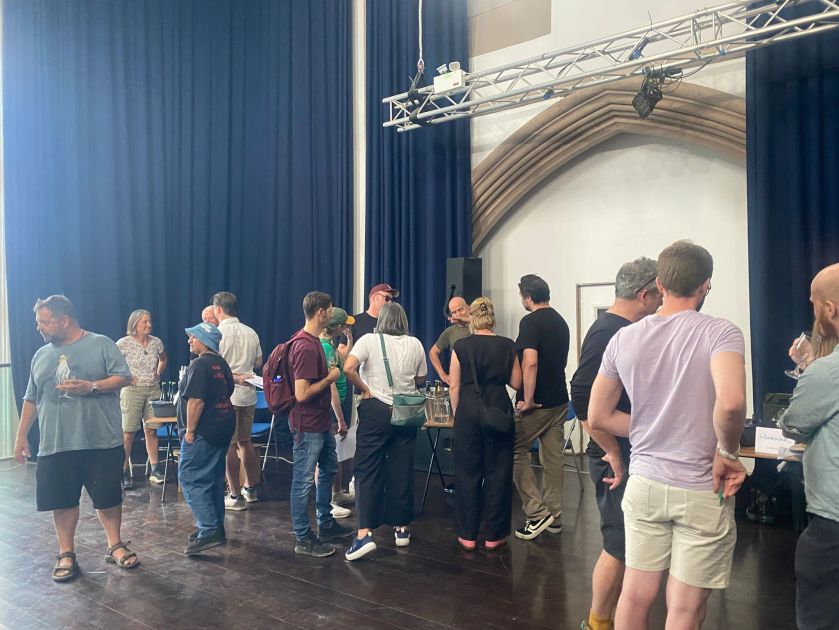
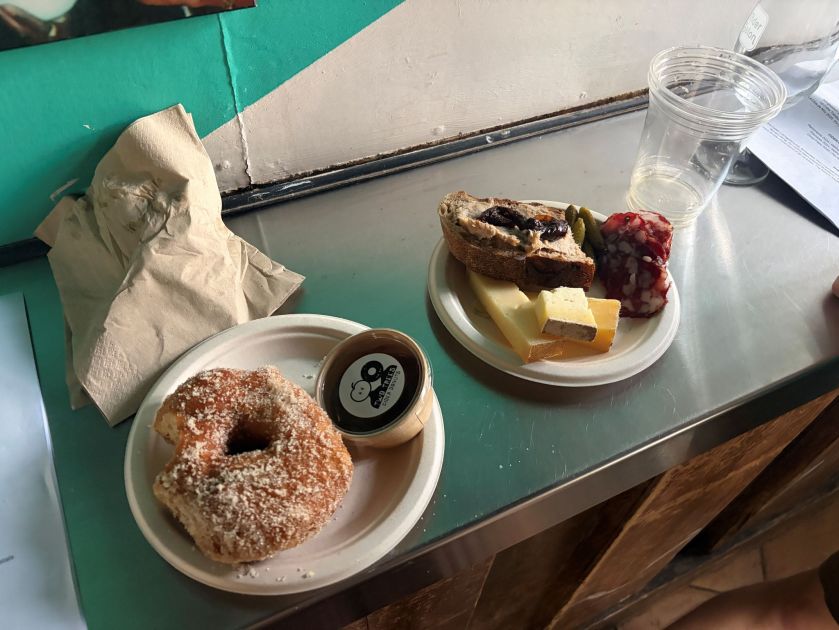
It may just have been my giddiness at being back at a big cider tasting after a while, but I felt the atmosphere was generally quite jubilant: while stories of dying trees circulated and the drought and climate change were clearly on people’s minds, everyone wanted to make hay while the sun shines. This mood carried over to the afterparty, which was a great success, held this year at the Steam Crane (what a bottle list—Pilton, Eden, Berryland!). Ciders were shared, the entire outside area seemed to have been taken over by cider makers, and at one point, glorious leftover cider donuts were handed around.
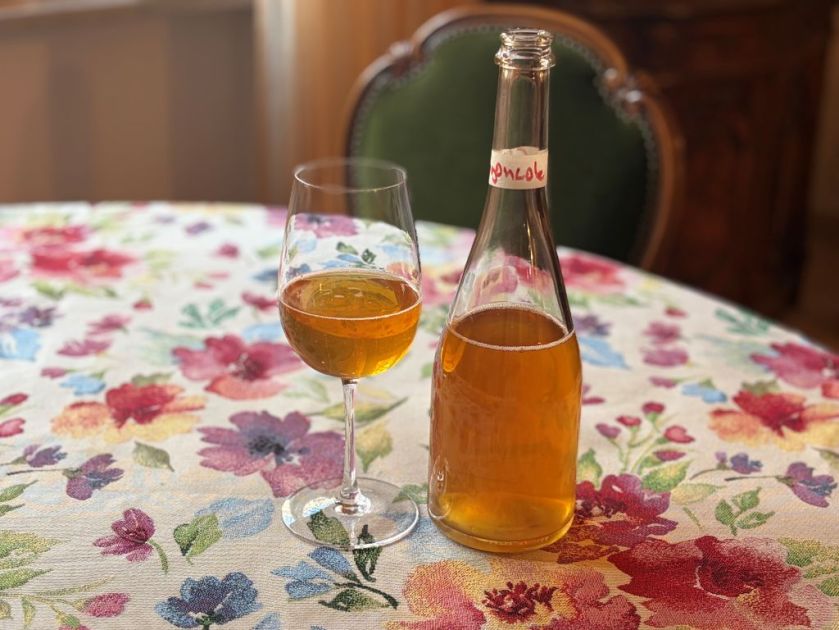
I’d like to wrap up this piece with reviews of the two ciders I came away with despite my best efforts not to add anything to a heavy suitcase. Thank you very much to Dylan from Ross on Wye and Ancha from Abaliget Garden Projects for sharing these.
Ross on Wye, Tanner’s Red 2025 – review
How I served: Lightly chilled.
Appearance: Hazy peach.
On the nose: Somehow just classic Ross. Assertive and inviting notes of cheese rind, red fruit, and slightly medicinal.
In the mouth: Higher in acid than expected. A decent amount of carbonation provides good lift. Lots of fruit (mostly peach/apricot), but also good stemmy bitterness.
In a nutshell: Surprisingly gushy and summery for a tannic Ross—yum!
Abaliget Garden Projects, Magoncok 2025 – review
How I served: Lightly chilled.
Appearance: Warm gold, with a delicate haze.
On the nose: Warm, yeasty, salty—I am reminded of a juicy olive-studded focaccia. Or perhaps it’s buttery sablée pastry? Either way, it’s quite savoury, and very interesting. There isn’t much fruit here. Some warming spices that are turning more spicy over time.
In the mouth: There are lovely light bubbles from the bottle conditioning. In addition to the notes from the nose, there’s a nutty bitterness and decent fruitiness—mango, dried apricots. The aftertaste is of brown sugar.
In a nutshell: Made from two seedling apple trees (magoncok means “seedlings”) behind a fallen-down church near where Ancha lives in southwest Hungary, this intriguing and perfectly autumnal cider keeps changing in the glass.
All photos by Bea Swanon, unless otherwise stated
Discover more from Cider Review
Subscribe to get the latest posts sent to your email.

