Agriculture, like life, is a less permanent state of affairs than it pretends to be. Years ago, a briefly held job saw me pack up and drive from Indiana to Oregon (2300 miles, or 3700 km) and then back again a few months later. Somewhere along that route—Nebraska or Kansas or Missouri; I’m not sure—I passed a sunflower plantation. The cultivated rows of brown and gold lasted for a mile or two, and then a string of feral sunflowers ran along the roadside ditch for the next 300 miles.
New York is like that, with apples.
The story of how it got that way involves trade between early European settlers and Native Americans like the Six Nations of the Haudenosaunee Confederation, a horrific genocide before, during, and after the U.S. War of Independence, the clear-cutting of virtually all old-growth forest for agriculture, and the steady abandonment of farm land to succession and reforestation during waves of urbanization and industrialization in the 19th and 20th centuries. (For reflections on this journey for the Finger Lakes National Forest in particular, see Melissa Madden’s 2020 essay “An Apple Commons” in Issue 9 of Malus.)
The relentless march of history has left us now with a patchwork of over 18 million acres of new-growth forest, covering over 60 percent of the state, where resurgent native trees are mixed with Old World arrivals. Lining the edges of this new wilderness is the jewel of the understory, the feral apple (and her cousin, the pear). And just like that, ten thousand years of cultivation are as nothing.
New York is home to a booming, modern industry in the production of cider and cider-like beverages. It is endowed with endless acres of conventionally-managed dwarf orchards lining Lake Ontario, the Hudson Valley, and other regions. In this form of apple agriculture, it is second only to the irrigated deserts of Eastern Washington. Yet some cidermakers look, instead, to the escaped giants lurking in the woods beyond.
The intentional marketing of “foraged cider” is, to my knowledge, a 21st century invention, but the practice itself is ancient. Here in the Finger Lakes, there is a living tradition that goes back decades. In “Fruit in the Forest: Foraging Apples and Pressing Cider in the Finger Lakes” (VOICES: The Journal of New York Folklore, Fall–Winter 2017), Maria Kennedy speaks to apple foragers who trace their communal cider-making tradition back to the Great Depression of the 1930s and before.
“To forage” is a verb; it describes the method, not the material. While it may evoke cutting your way into a thicket with nothing more than a shoulder bag and a machete in search of wild seedlings, it can just as accurately refer to shaking down apples from an exhaust-soaked roadside tree, or the rediscovery of grafted, named-variety trees in an abandoned orchard.
If foraging has an ecological value, then, it is not in what it puts into your body, which is variable, but in what it does not put into the land, in a time when we are increasingly reckoning with the unintended consequences of the industrial agriculture that keeps our society fed. And if foraged cider has an inherent value when it comes to the flavor and structure of cider, it derives from the scope of possibility it opens up.
There’s a certain long-standing overemphasis on named varieties in wine, or in American wine at least. It leads to the flattening of place and technique, as a handful of grapes become brand-name commodities. Cider has been in a very different place (can you imagine Paul Giamatti in Sideways ranting that “I am not drinking any fucking Dabinett”?), though the varietal-mania has been creeping in at the edges.
In my most radical moments, I imagine it as a kind of dialectic: at first, you’re drinking bad cider because you don’t know the variety (surplus concentrate); then, you’re drinking good cider because you do know the variety (named cider apples); finally, you’re drinking great cider because you don’t know the variety (foraged fruit).
I don’t actually believe that. Single varieties have been among my favorite ciders to date, and, in a country where the best-selling named variety in cider is most likely Honeycrisp, education about good cider apples has not gone nearly far enough. Plus, just as in natural wine, it is important to resist the temptation to let good philosophical practices cover for bad cidermaking practices.
But, when selected and processed with skill, foraged fruit can bring a lot to the table. It’s not just that blends sourced from wild seedlings can contain dozens or hundreds of unique varieties, but even grafted trees gone feral may see their fruit character shift with the age of the tree and the lack of fertilization or pest management. Freed from the need to justify their continued existence on the balance sheet via consistent production, such trees might well bring new flavors to the table when they do produce.
Beyond that, foraging serves an essential role in the ecosystem of a healthy cider culture. Named varieties have to come from somewhere, after all. While planning this article, I reached out to a couple local makers that I knew had produced foraged ciders in the past but who didn’t have any for sale at the time.
“We have moved away from foraging on any scale due to the labor it requires,” responded Shannon O’Connor of Blackduck Cidery in Ovid, NY, who noted that their one blend including foraged fruit from the prior year (Yellow Rose Sap) had sold out. “Over the past 15 years we have been focused on grafting our favorite foraged apples and pears into our own orchard.” Indeed, go to Blackduck’s website and you’ll find listings for scionwood from trees they’ve discovered, with names like Mad Cow (apple), Lemon (pear), and Cheese (pear).
I received a similar response from Deva Maas and Eric Shatt of Redbyrd Orchard Cider in Trumansburg, NY, whose own foraged scionwood offerings include Redbyrd Bitter and Gnarled Chapman (both apples). Happily, they did quite generously pass me an undisgorged, unlabeled bottle of a foraged cider from 2015, which is included in the reviews below (even if the reader will find it completely impossible to acquire).
Far be it from me to pretend to any kind of business knowledge, but such paths make a certain kind of sense. A new, small cidery might draw a good portion of fruit from untended trees while waiting for their own orchard to come in. Meanwhile, they can graft their best finds back into their budding orchard, making it all the richer when it comes into full bloom. Even growers who never forage themselves benefit, as anyone who has planted the Franklin apple in the past several years can attest.
Given the time and labor involved, foraged cider can only ever make up a fraction of a percentage point of commercial cider. However, in so doing it may serve as a source of revitalization for the industry, keeping our cider culture from ossifying into an unchanging set of known quantities.
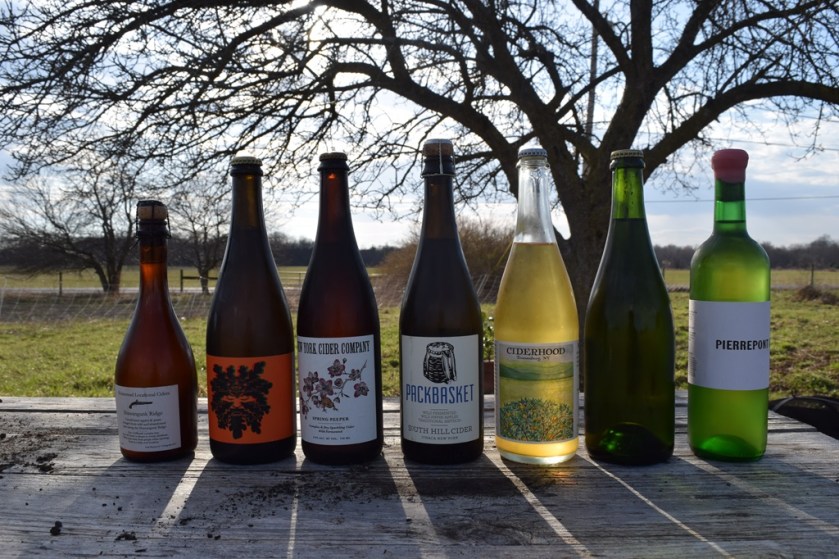
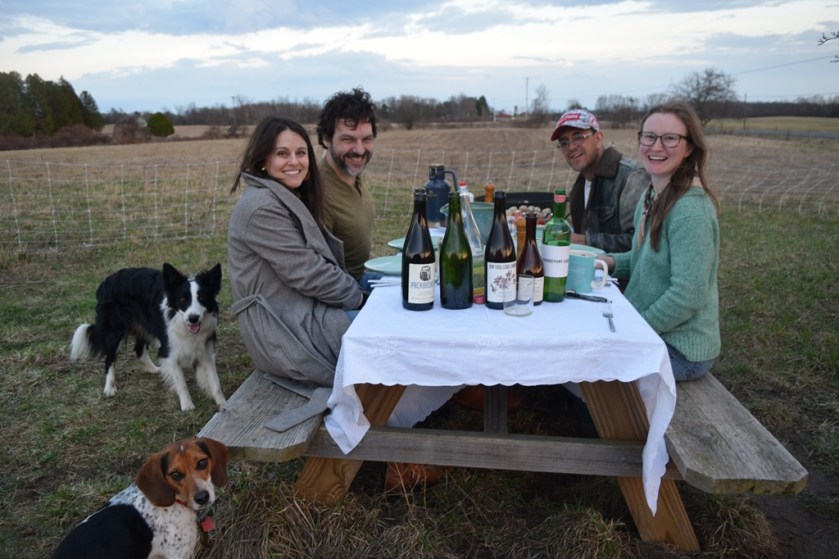
So, with such matters weighing upon us, my wife, three of our friends, and I cracked open seven bottles of New York foraged ciders this Spring and decided to give them a try.
Sylvan, Harvest Hymn 2024 – review
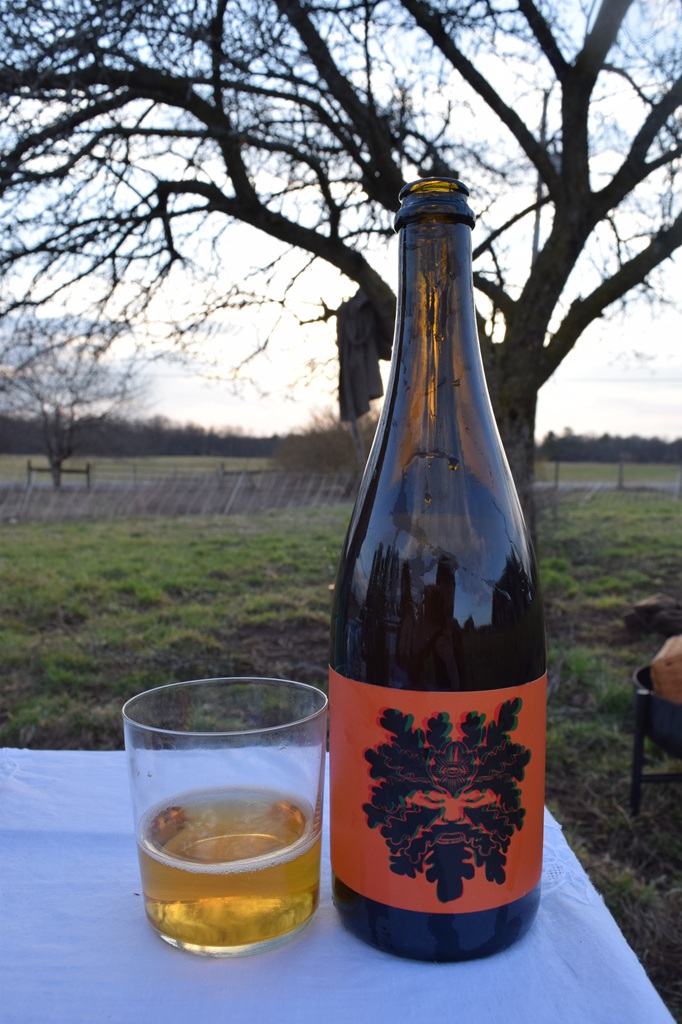
Based in Hammondsport, NY, not far from Keuka Lake, Sylvan Farm & Cidery is a “a queer-owned ecological cidery,” where cidermakers Josh and Charlie forage apples and pears on and around family land. Their 2024 Harvest Hymn is “Made with 100% foraged apples from three different sites located within a mile of our hilltop cidery.”
How I served: Taken from the wine fridge out into a mild Spring day.
Appearance: A clear, amber color with light bubbles.
On the nose: Malty sugars. Apple flesh. A touch of vanilla.
In the mouth: Strong malic acid up front. Mild tannins on the tail end. Throughout, the dominant note is green, tart apple.
In a nutshell: Great for fans of the region’s high-acid ciders, this one will appeal to drinkers looking for a dry cider still reminiscent of the original fruit.
Aaron Burr, Shawangunk Ridge 2024 – review
Andy Brennan of Aaron Burr Cidery in the Catskill Mountains’ Wurstboro, NY, is likely the most famous proprietor of foraged cider in the United States. His book Uncultivated: Wild Apples, Real Cider, and the Complicated Art of Making a Living is a must-read for anyone interested in foraged cider and the underlying ecological and agricultural questions.
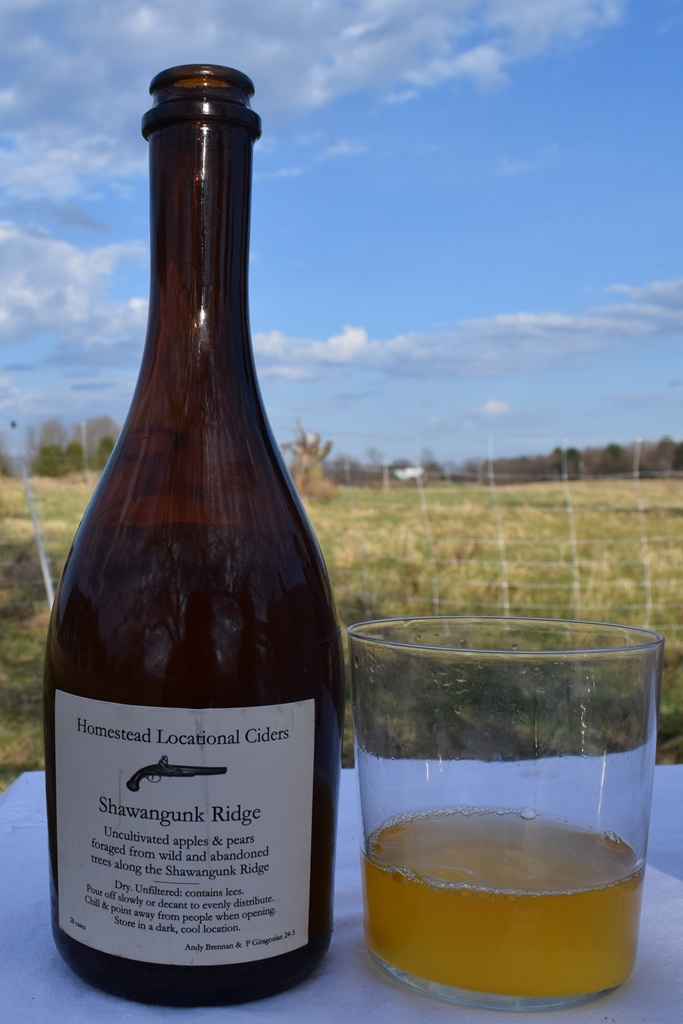
Part of Aaron Burr’s mainstay Homestead Locational Ciders line, this cider was made from “Uncultivated apples & pears foraged from wild and abandoned trees along the Shawangunk Ridge.”
How I served: As above.
Appearance: Opaque without much sediment; a golden fog.
On the nose: Dried hay. A light funk.
In the mouth: Full-bodied. Rounded tannins balanced by a touch of residual sugar that brings out warm fruit flavors. Notes of apricot and pumice. (“Bitter Mexican candy,” my friend Nate adds, though I cannot confirm the note.)
In a nutshell: Rich and funky. Rustic but complex. No one is doing it better.
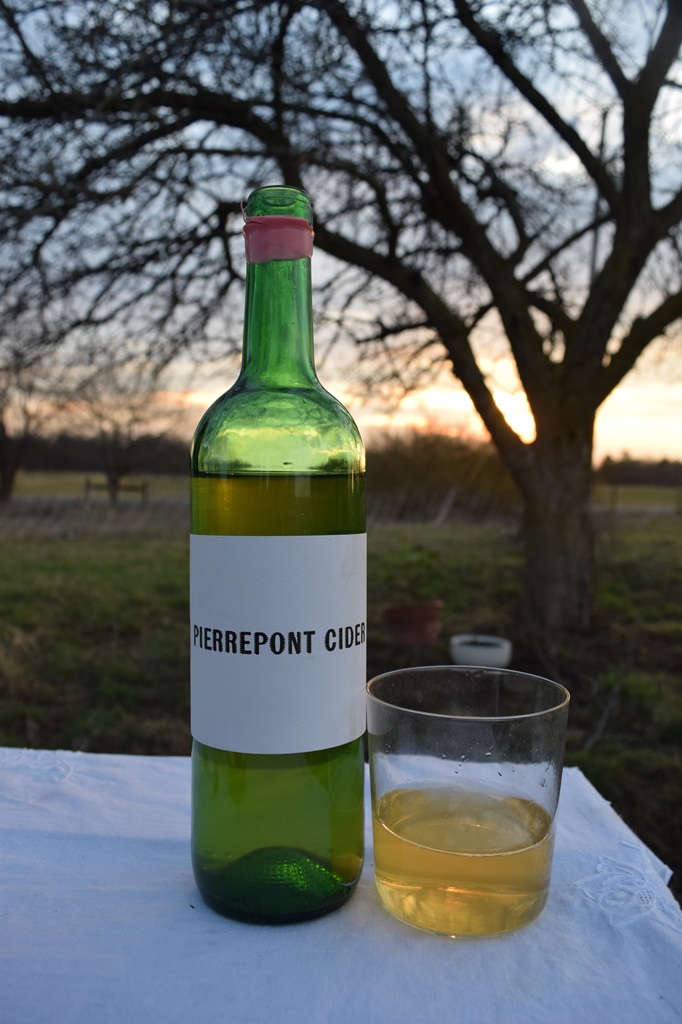
Pierrepont, White Label – review
Pierrepont Cider is based in Pierrepont, NY, where cidermaker Lee Van DeWater forages fruit in New York’s North Country, across the St. Lawrence River from Canada. The White Label (no production year clear on the label or online) was made from apples “foraged in the Little River watershed and aged in used oak wine barrels until bone dry.” The still bottling in green glass brought to mind Spanish cider, and so, right or wrong, I poured it from a height.
How I served: As above, but poured from a height.
Appearance: Clear, pale yellow. Still but for the effervescence of the pour.
On the nose: Clean nose, with just a mild pepper/spice note.
In the mouth: Medium acid. Vanilla. A delicate sweetness, as from a touch of sugar.
In a nutshell: Very approachable. Good natural flavor and a light oak character that doesn’t dominate.
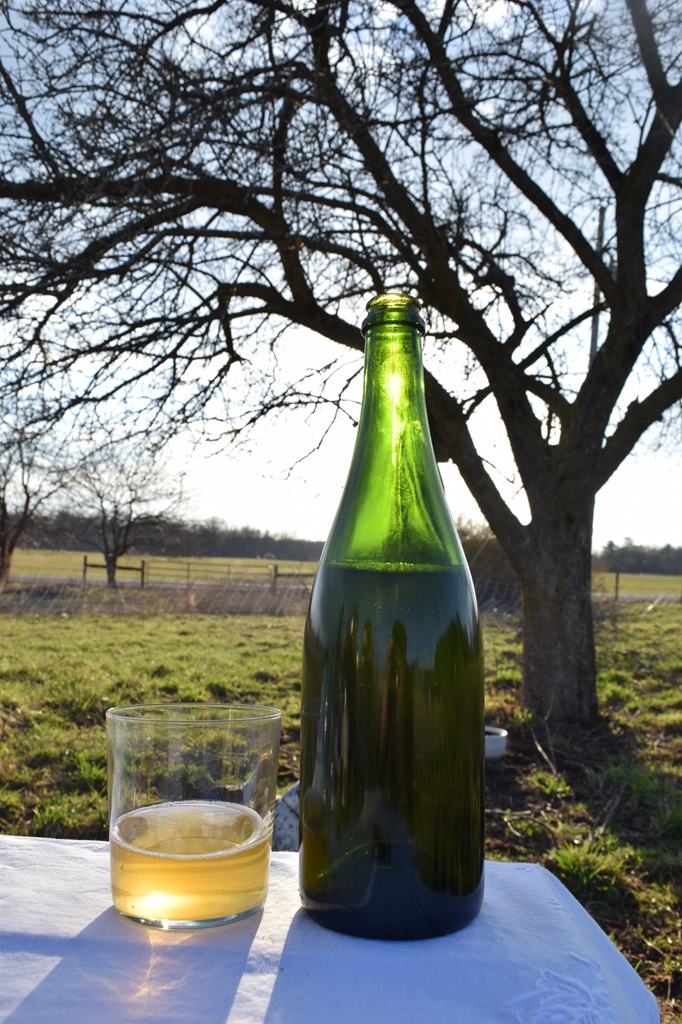
Redbyrd, Wild Pippin 2015 – review
Based in Trumansburg, NY, on the western shore of Cayuga Lake, Redbyrd Orchard Cider & Kombucha is a Biodynamic producer of alcoholic and non-alcoholic drinks. As previously noted, it’s been some time since they released a foraged cider, but Eric and Deva very kindly provided me with a cellared bottle of their 2015 Wild Pippin for this article. (Disclosure: this is the only bottle detailed in this article for which I did not pay market price, despite my best efforts.)
The bottle was unlabeled, undisgorged (arrested halfway through the traditional method), and had a lot more age on it than it would have when released. The bottle was passed to me upside down, but, rather than attempt a field disgorgement, I turned it right side up a week before the tasting so that the sediment would fall back into the bottle.
How I served: As above.
Appearance: Straw-colored with some sediment in suspension (which would have been absent in the disgorged version that was actually released).
On the nose: Dried fruit.
In the mouth: Nutty, with the rich flavors of the full apple—peel, flesh, and pip. Moderate-high acid and light-medium tannin.
In a nutshell: This cider takes you places. The delicate flavors survive the age and are even enhanced by it.
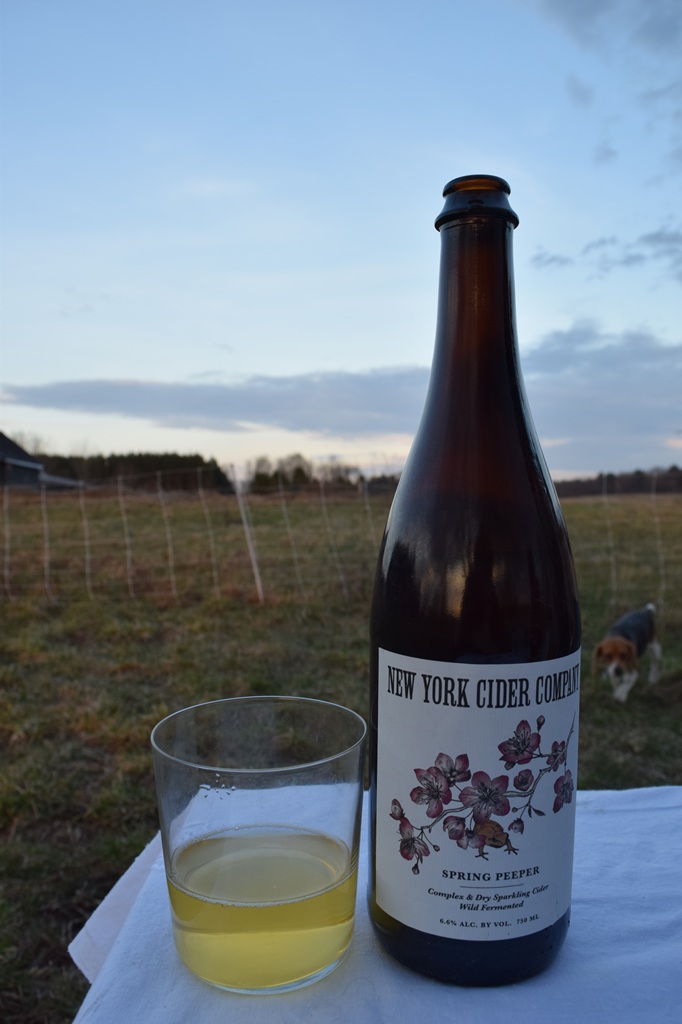
New York Cider Co., Spring Peeper 2023 – review
Based in Ithaca, NY, at the south end of Cayuga Lake, New York Cider Company puts out a colorful collection of ciders made from minimal intervention fruit, both foraged and cultivated. (My long-time favorite, The Naturist, is foraged at the nearby Empire Haven Nudist Park.) The cidery’s logo, emblazoned on their sign at the Ithaca Farmers Market and on a matching tote bag which I own, is the word “Sweet” crossed out.
Spring Peeper is named for a tiny, vocal frog endemic to the area, whose “orchestral mating calls” inspired the cider. Per cidermaker Steve Daughhetee, the blend is 80% foraged fruit and 20% Northern Spy.
How I served: As above.
Appearance: A crackling light haze.
On the nose: The overheard notes of funk drifting from the next house over.
In the mouth: A fresh, acidic opening with an undercurrent of mild tannin that slips away just as you’re thinking about it. A touch of VA that enhances, rather than detracts, from the fruity character.
In a nutshell: Light, bright, and subtly funky. It echoes on the palate like the far-off croak of the eponymous frog.
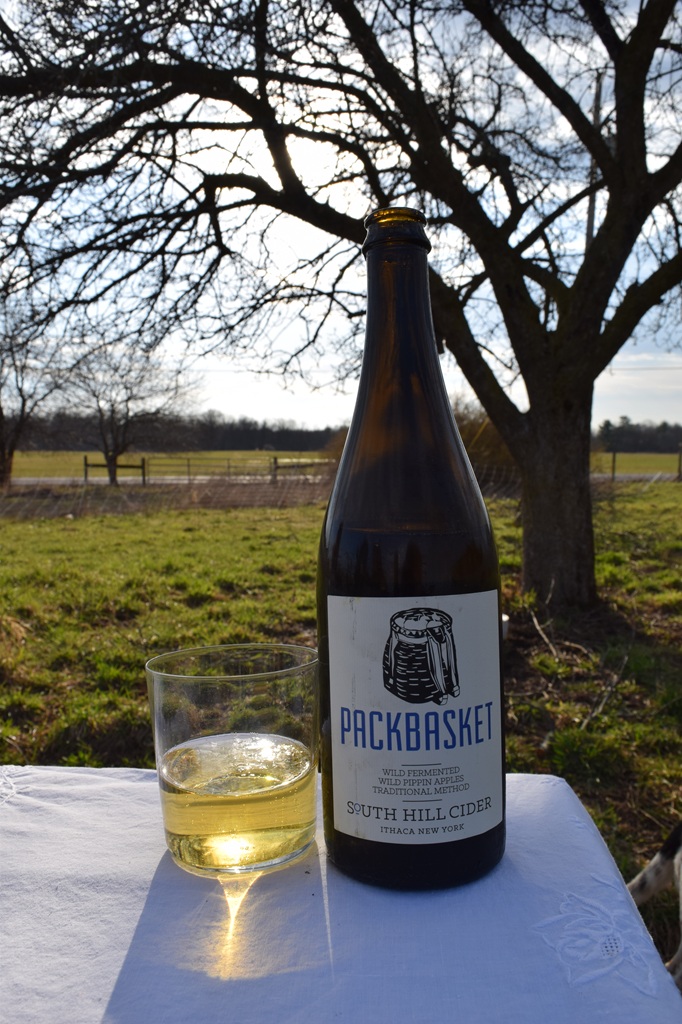
South Hill, Packbasket 2021 – review
Based in Ithaca, South Hill Cider is one of the area’s larger producers of real, full-juice cider. Consequently, their production is overwhelmingly orchard-based, but cidermaker Steve Selin has continued to release the Packbasket line of foraged over the years. Earlier this year, I attended a tasting of the 2014, 2019, 2021, and 2024 vintages, which displayed the variations in fruit character, age, and style possible in the category of “foraged cider” from even a single producer. For this tasting, we had a bottle of the 2021.
How I served: As above.
Appearance: A striking clarity. Classic tiny bubbles.
On the nose: Malo-lactic notes with an apple finish.
In the mouth: Apple peel. Good tannin, body. Bright acid tones, enhanced by a hearty carbonation.
In a nutshell: Bright and bubbly; break it out for celebrations.
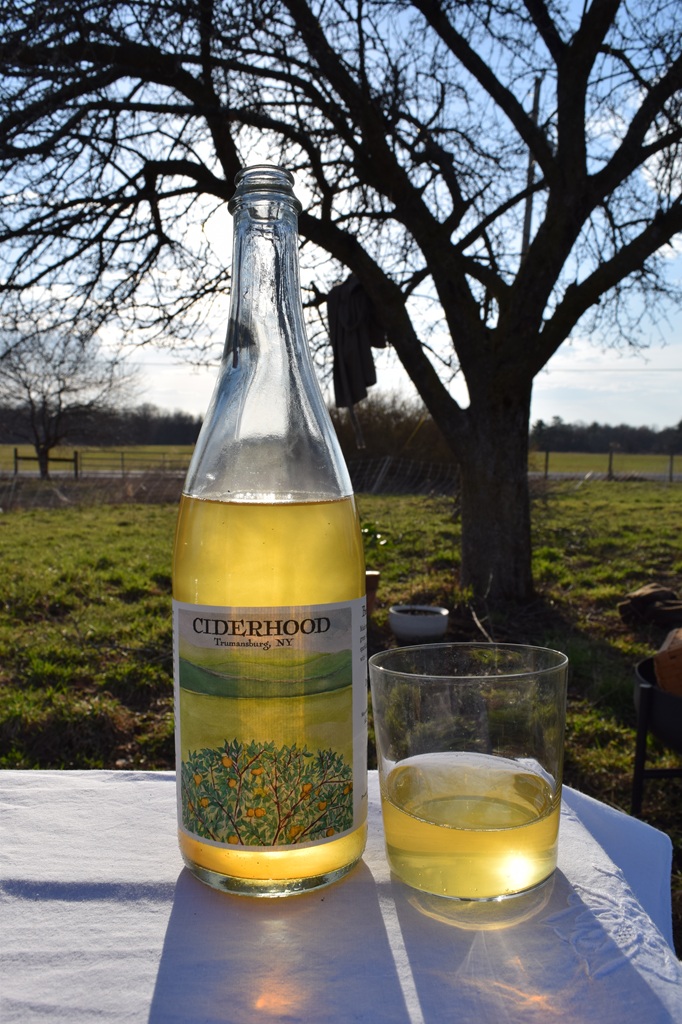
Ciderhood, Bright Green – review
Based in Trumansburg, Ciderhood was a new producer to me when I encountered a couple bottles in a local store. While my thoughts can be found below, I’ll say it’s heartening to see new producers popping up and reaching for foraged fruit in their early batches. Since this tasting, I have tried a cyser of theirs which I enjoyed.
The Bright Green is foraged from a single, large tree.
How I served: As above.
Appearance: Diaphanous, straw-colored, mostly still.
On the nose: Vanilla, oak, brine.
In the mouth: Low acid, heavy oak, slightly reductive. Moderately acetic. Almost soapy.
In a nutshell: A lot of barrel, to the point of losing balance, but with an interesting salinity. (My wife Cailyn, who liked it best, adds that it made her want oysters.)
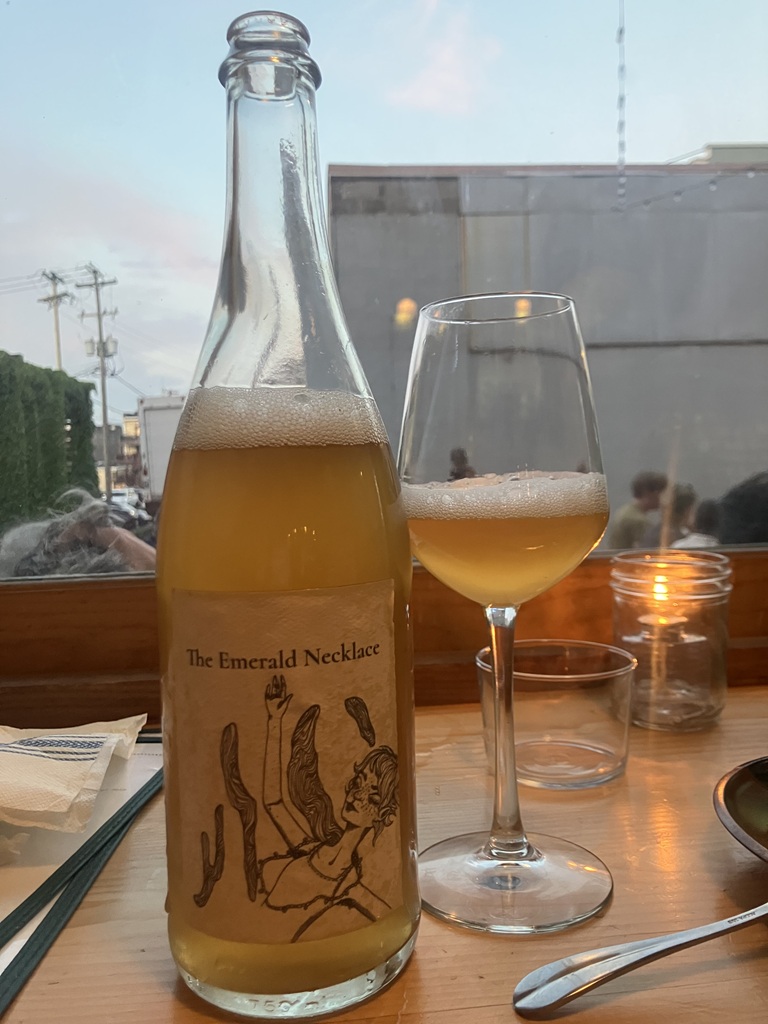
Bonus: Eve’s Cidery, Emerald Necklace 2023 – review
Located in Van Ettan, NY, south of the Finger Lakes and rising into the Southern Tier, Autumn Stoscheck of Eve’s Cidery is one of New York’s best regarded producers for a reason. I knew Eve’s produced foraged ciders and had recently laid hands on their foraged perry and foraged Pommeau, but, while preparing for this article, I could not find a suitable cider on the market. Yet, so far behind on my deadline for this piece did I fall that, months later, I found myself drinking the 2023 Emerald Necklace at Microclimate Wine Bar in Geneva, NY.
Per the label, “The Emerald Necklace is the name of the high elevation land encircling the southern ends of New York’s deep, glacially carved lakes with a network of conserved land where forest-edge succession dominates the landscape and wild apple seedlings thrive.”
Apples tend biennial, and, in the Finger Lakes, 2023 was supposed to be an “on year,” until a May frost wiped out the vast majority of blossoms. It’s not surprising to me then that a cidermaker might turn in such a year to foraging fruit at higher elevation, where delayed flowering would have protected trees from the full impact of the frost. The cider is bottled pet-nat style.
How I served: Falling from cellar temp to chilled in a bucket of ice over the course of an hour or so.
Appearance: Hazy citrine quartz
On the nose: Crushed lemongrass
In the mouth: Meyer lemon. Tart acid, mild tannin, a touch of residual sugar
In a nutshell: Bright and mouthwatering. A cider made for food.
I’ve written already about the variety inherent in foraged cider, where each place in each season will provide a different expression of the land. But the range on display in these ciders goes beyond the primary fruit character, demonstrating that the skill, taste, and vision of the maker can transform foraged fruit into any style. You could stock a bar with only these and other local foraged ciders and be happy with the selection, I think.
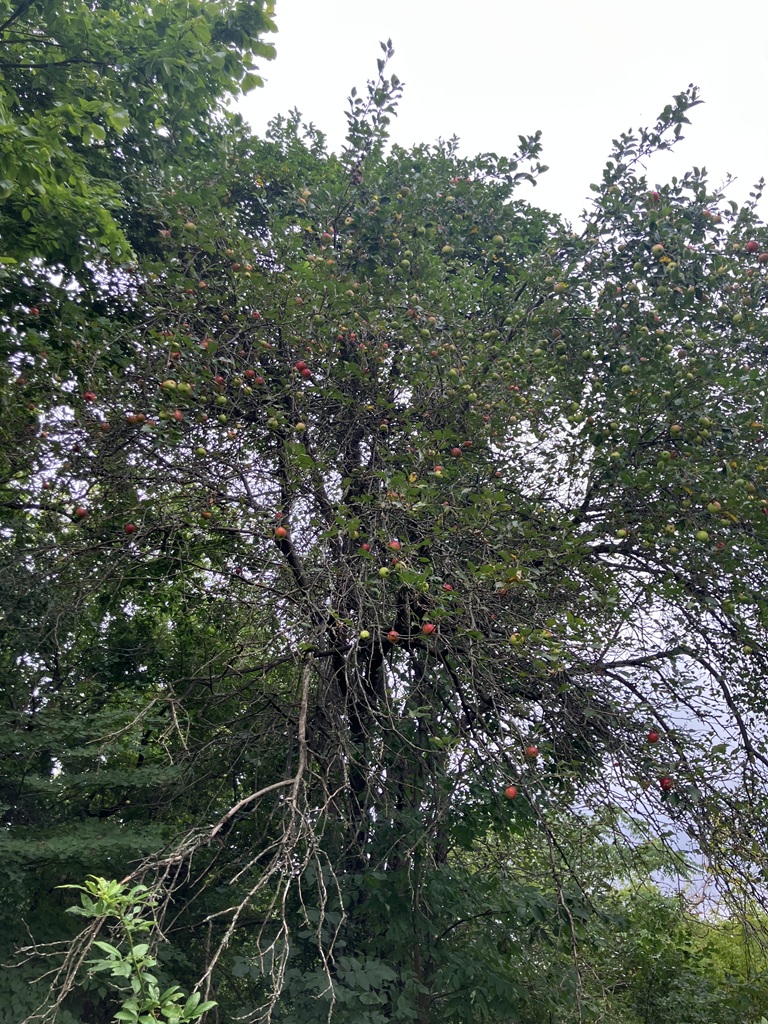
Towards a Conclusion of Some Sort
For thirteen thousand years or more, the consumption of alcohol has been tied up in our understanding of the spiritual, and so at times one must fall back upon religious metaphor. If walking a well-laid-out orchard is akin to meeting your god in a cathedral—an experience engendered by the melding of natural materials with human craftsmanship—then to walk the forest and spy above you a high branch glinting with wild apples is to meet your god upon a jagged mountaintop: here, Man cannot pretend at control.
I know that sounds like a little much, but last week I cut my way into a thicket to find the crumbled foundation of a 200-year-old settler’s house long gone, and next to it sprawled an ancient apple tree whose hollowed-out trunk had split into five gnarled arms, still bearing the half-formed green-and-red fruit of summer, and I don’t know how else to put it.
Still, that mountaintop is an incomplete metaphor, for this new wilderness is far from untouched. It is the product of the destruction of old growth forests, then the exhalation and inhalation of human agriculture. The trees are smaller now, the soil poorer, the animal and plant life thinner and less varied. That a landscape made barren can, in some part, be regenerated in the span of a human lifetime, but that it will not be able to match its prior ecological density for many hundreds or thousands of years is a fact that is, like some of the finest wild-foraged apples, bittersweet.
Many species in these woods are diseased or gone, and what remains is often still farmed or logged or otherwise developed. Even the practice of foraging for commercial ciders, which I am extoling, may contribute in some small way to the continued commodification of this “wilderness,” though, if so, it is far from a chief concern.
On the shores of Cayuga Lake, in the center of the Finger Lakes wine and cider region, a company is seeking to repurpose a decommissioned coal power plant into a data center for A.I. and cryptocurrency. Depending on the details, even a closed-loop cooling system at this site could lead to increased heating of the lake and a worsening of harmful algae blooms. Residents fear the construction at the old coal site could release pollution into the lifegiving waters. More carbon will be burned. Both feral and cultivated trees may suffer. And some in the cider community will still happily use A.I. for images, text, or neat little projects.
We saw another late frost in 2026, leading to a coordinated state and federal emergency declaration. It wasn’t as bad as 2023 here at least, but, with the breakdown of longstanding climate patterns, such events will become more frequent and more acute, while pest and disease pressures increase. Big growers and their suppliers will push for more chemical solutions, regardless of the impact on farmworkers or the wider biosphere, of which we are mere dependent parts. Most people will just be focused on trying to get enough to eat (and drink, if they can). It’s dark days ahead, but, despite it all, the apples are going to keep sprouting in abandoned fields at the edge of the woods, and, if I had to guess, I’d say they outlast us.
In the meantime, what’s for it but to drink what they offer us?
Discover more from Cider Review
Subscribe to get the latest posts sent to your email.

