The world of artisanal German cider sometimes feels quite small and lonely. But one thing Instagram has good for is revealing small makers that don’t get big headlines – ok, an exception is Böhm Ciderwerkstatt, who we have met on these pages before that got well deserved headlines after being crowned Supreme Champion at the International Cider Challenge this year, for no less than a perry! More on that in due course. I shall refrain from blowing my own trumpet for our Perry Championship win this year… well, maybe a piccolo trumpet! But a good year for German perry.
Anyway… for the most part, these small, usually part-time makers quietly do their thing, much as they do in the UK and elsewhere, often selling their wares very much locally. And it is in these kinds of makers that I have a deep interest – they’re closer to the ground, crafting small batch ciders (and increasingly perry, it would seem) in their own way, often highlighting regional varieties.
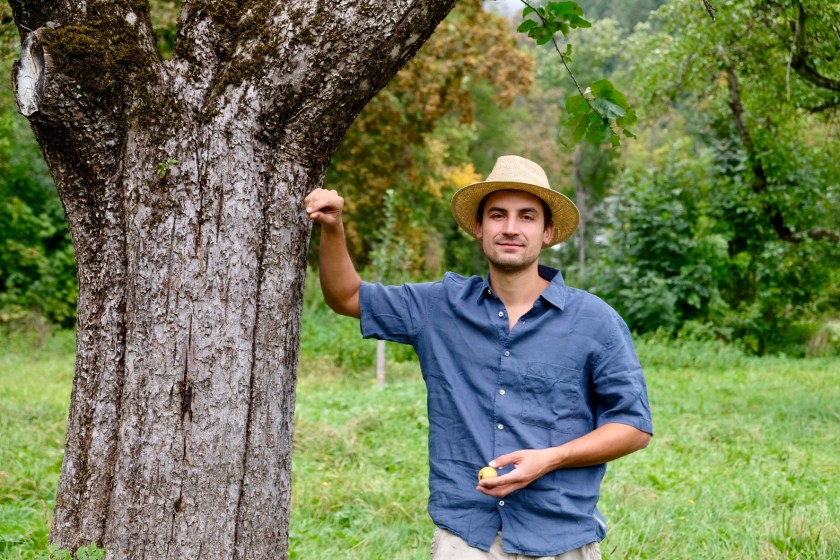
It was through Instagram that I first came across Paul Miedtke, making cider under the name Markehhof Cidre, down in the southern Black Forest, not too far from 1785 Cider, who we have also met on these pages before.
Paul’s story is almost a trope now. Boy travels. Boy meets cidre. Boy wonders why his local Most doesn’t taste like that. Boy returns to the farm and (after a wobbly start) makes cidre.
In a way, these voyages of discovery remind me of the German craft beer boom from around the time I moved over here, when traveling Germans discovered IPAs in the US and came back and started their own breweries. But the small cideries have far less glitz and publicity, and far more back ache and worry about selling the stuff you only get to make once a year.
But Paul had a big advantage in that his parents are fruit farmers. He grew up surrounded by apple and pear trees, his dad makes and sells Most, the local cider variant. For three years he was a fruit and horticultural advisor for the district government, so there’s quite a bit of fruit background there.
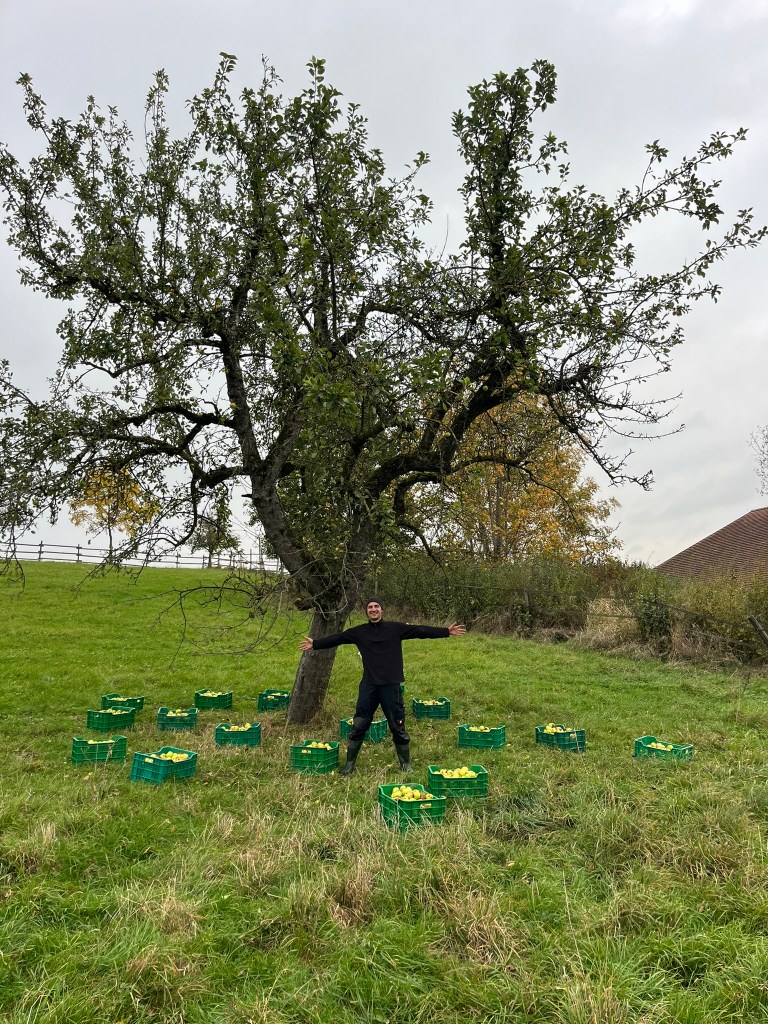
Paul’s delight in cidre was strong enough that in 2021 he set out to make something very much in a French style. Though not keeving, he uses multiple rackings to the same effect, slowing down the fermentation, reducing the nutrients available to the yeast so they eventually stop and leave residual sugar. He has also been seeking out bittersweet apple varieties, a rare thing in Germany. Like most of the Central Europe, the German cider tradition is built on apples what lean more towards acid, dual-purpose apples for the most part that are good for both eating and pressing. But you do find the odd specimen that in earlier times had been used as an interstem (Pomme D’Or or Généreuse de Vitry, for example), that bring a French flair, if you can find them. And Paul has found them.
Regular readers will know that southern Germany is also blessed with a wealth of perry pear trees, which Markenhof also uses to their advantage, as they should.
Earlier this year, Paul and I did a cider exchange, but it was some months later that I finally started opening bottles; the lack of reviews from me this year indicate a self-imposed reduction in alcohol consumption, so every bottle opened is relished. So now, finally, a tour through five Markenhof bottles, in the order tasted over the span of a few months.
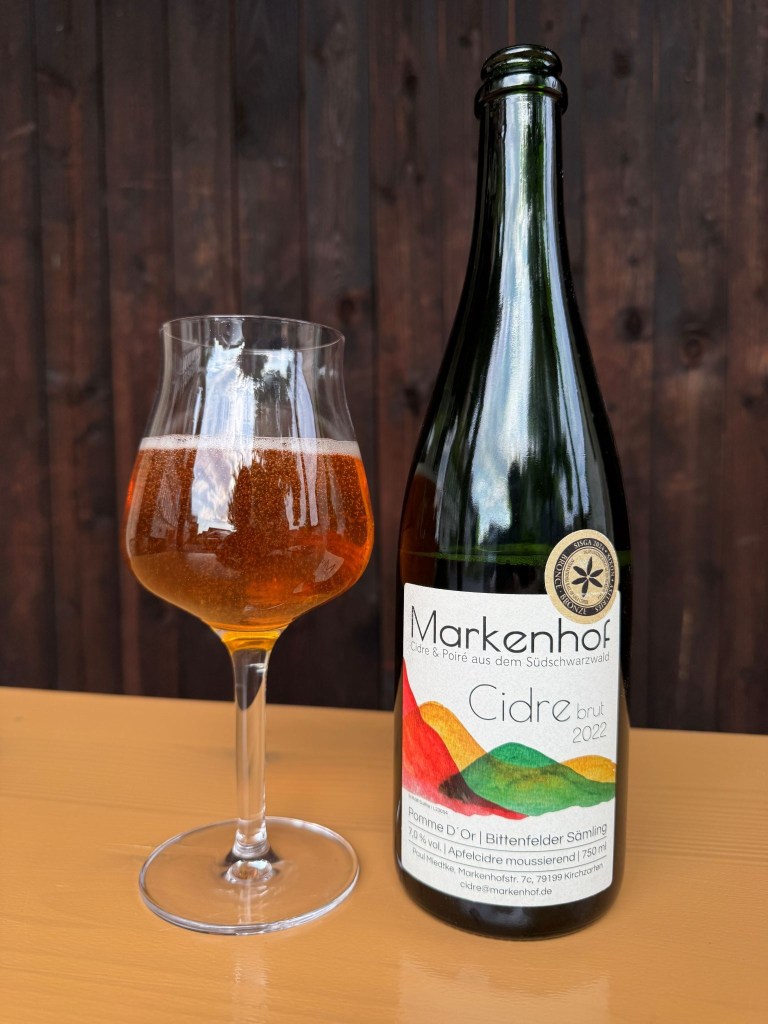
Markenhof, Cidre Brut 2022 – review
A blend of Pomme D’Or and Bittenfelder, the former a French bittersweet you sometimes find in southern Germany, the latter very much considered a classic “Mostapfel”, very much acid-forward. 7.0% alcohol.
How I served: A quick cool down in the fridge for a couple hours.
Appearance: Very sparkling. Almost amber, orange and clear.
On the nose: Highly aromatic! Laps out of the glass. Sweet, stewed apple, light mandarin peel, notes of cherry and vanilla pudding (custard to the English and Irish amongst us). A suggestion of leather, just a suggestion. It’s all wonderfully soft and pillowy; comforting.
In the mouth: Surprisingly bitter given all of the above, leaning into an apéritif, not that I’m complaining. Then all of the above, but bigger: stronger mandarin peel, or maybe more into bitter orange peel, way to the fore. Cherry, red apple skin, notes of burnt caramel. The fizz just keeps going too. There’s a lot going on, but it is dominated by that wonderful herbal and orange bitterness, which is so hard to find in German ciders, and wich I am all here for. As it warms, it drinks sweeter, more caramelly notes come out, dried apple, stewed too, but always with a bang after each swallow.
In a nutshell: Love it! It’s so refreshing to have a tannin-forward German cider. Some might find it a little unbalanced towards the bitter end of the spectrum, but I literally said “fuck me, that’s good” out loud while drinking it, and that’s a seal of approval.
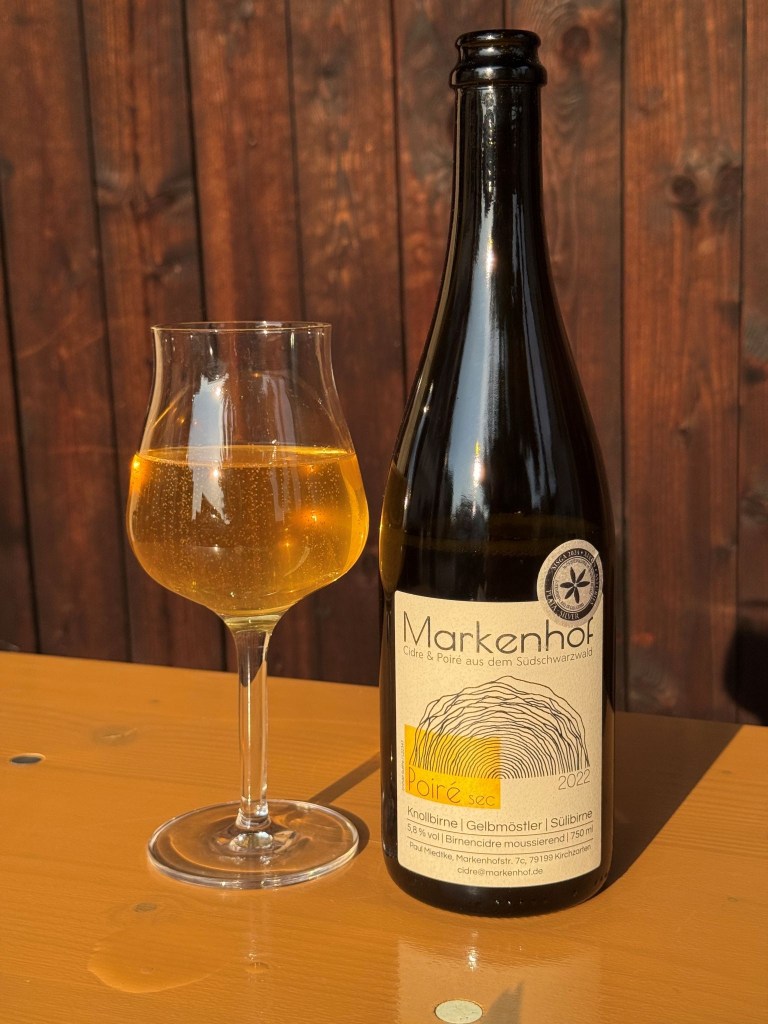
Markenhof, Poire Sec 2022 – review
A blend of Knollbirne, Gelbmöstler and Sülibirne, German, Swiss and Swiss varieties in that order. 5.8% alcohol.
How I served: As before. It was a hot day…
Appearance: A slight gush on opening. Gold, sparkling with a steady stream of bubbles in the glass, a slight haze.
On the nose: Leaning into the tropical territory. So juicy, almost tutti-frutti. Bold, ripe, poached pears in syrup, very ripe lychee, melon, honeycomb, a lick of crushed spruce tips and a light lemony undercurrent.
In the mouth: The label says Sec, and thankfully it tastes dry. A surprising acidity comes to the fore, presenting as zesty, tingling lime, but the flavours that follow are following the nose. Melon, poached pear, and an interesting herbal note, fresh thyme, a hint of bitters. The tannins present more as bitter than astringent, making it even more delicious and stupidly easy drinking. So soft in the mouth, with a fine fizz. Lasting finish suggesting herbs, lime starburst, and biscuity, yeasty undertones.
In a nutshell: A fabulously tasty perry, with lots of juicy notes, differentiated by that zesty lime and herbal bitterness.
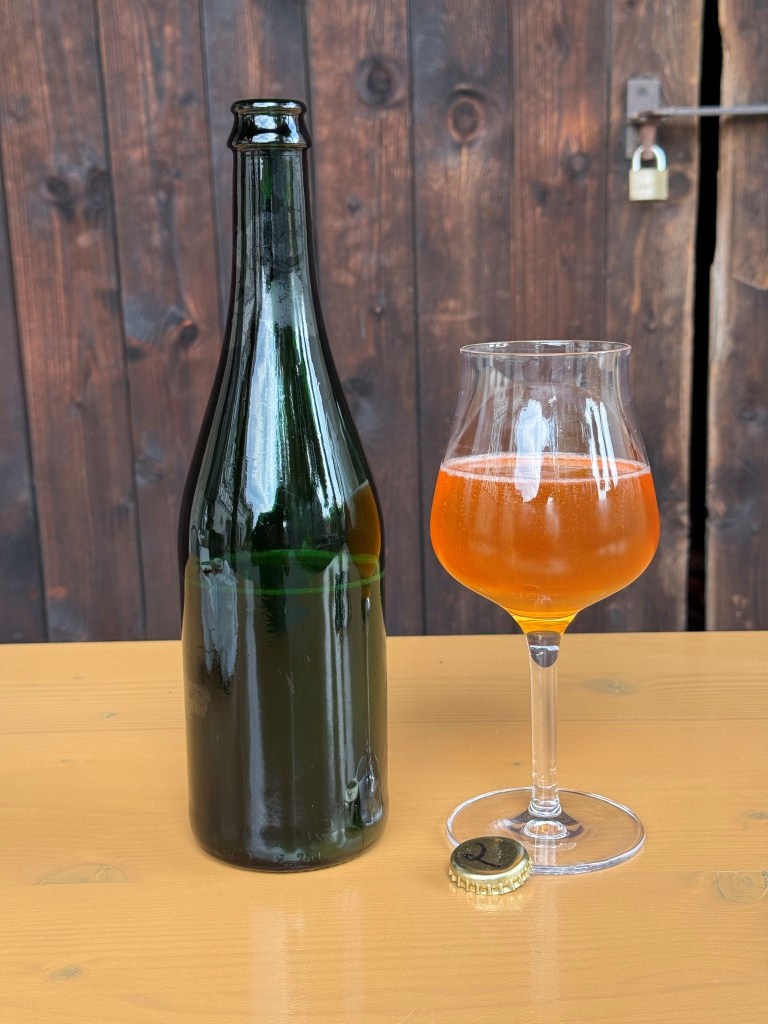
Markenhof, Cidre Brut 2024 – review
This had not been labelled yet when Paul sent his package, hence the rather anonymised photo.
How I served: Well chilled in the fridge, was a brutally hot day.
Appearance: A gusher out of the fridge. Orange-amber, a slight yeast haze from the gush. Highly sparkling.
On the nose: Good nose. Botter orange, mandarin peel, caramel/fudge, and a slight medicinal note that I would associate with tannic apple varieties. A very fleeting oxidative note, cardboard, but disappeared fast.
In the mouth: I suspect dryer than intended, given the possible additional fermentation in the bottle, but I will admit a personal preference for dryer drinks. But perhaps a stability issue if storing longer term. No complaints. Bitterness well to the fore, herbal in nature: thyme, chamomile. Light leather and tobacco notes, sweetened orange juice. The finishsuper long, a tick medicinal, with an extended bitter quality. There is some sweetness, presenting marshmallow-like in flavour. Shares definite DNA with its 2022 sister.
In a nutshell: Ticks all the right boxes for me, but perhaps a little more unbalanced on the bitter scale than the 2022. But I think that’s why I like it. Careful opening it though.
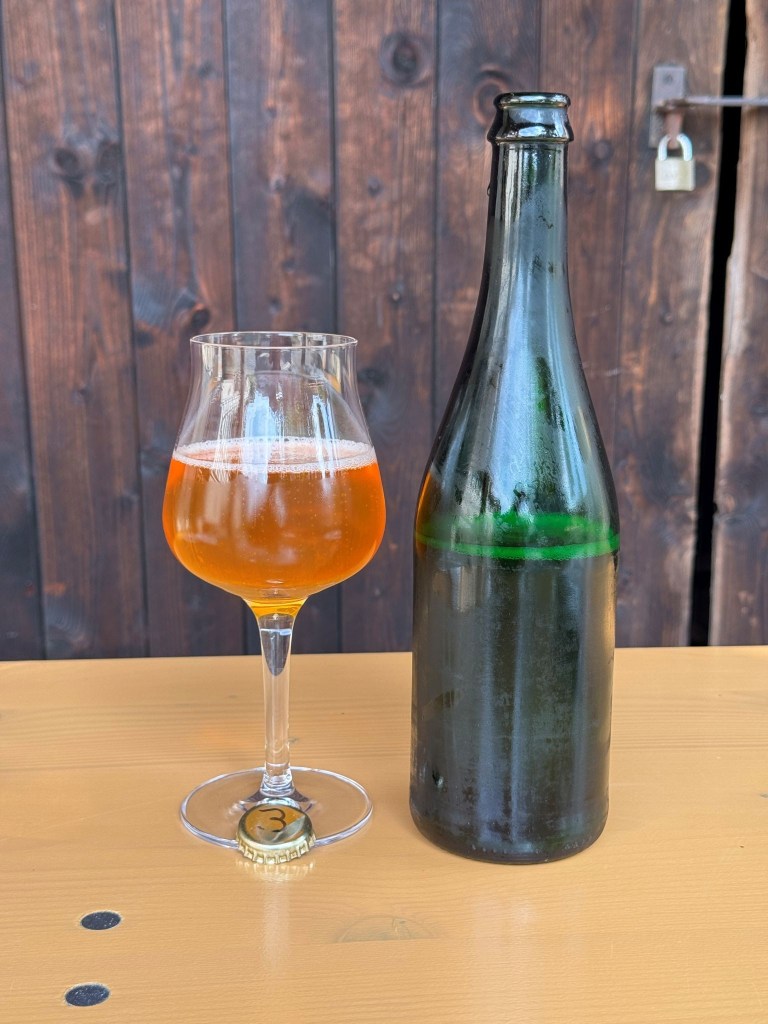
Markenhof, Cidre Brut Natur 2024 – review
How I served: As above.
Appearance: As above, but clear and no gush.
On the nose: Soft, vanilla fudge with orange water. Herbal notes that seem to be a trademark for the ciders so far are there, but not as in your face.
In the mouth: More fruit than the previous two ciders. Strawberry jam, gummibärs, orange marmalade – bitter orange of course. Again those herbal notes, but the bitter elements are less dominant, make it altogether rounder. A slight nuttiness, in a hazelnut pralines kind of way. Am I listing too many candies? Tough. It’s interesting. Soft, generous tannins again presenting more bitter than astringent, yet more honed than the others. Still aperitif material.
In a nutshell: A bitter-led, off-dry cider that is, on balance, more integrated than the previous examples. But again a winner if you lean towards bitter, herbal ciders. I do.
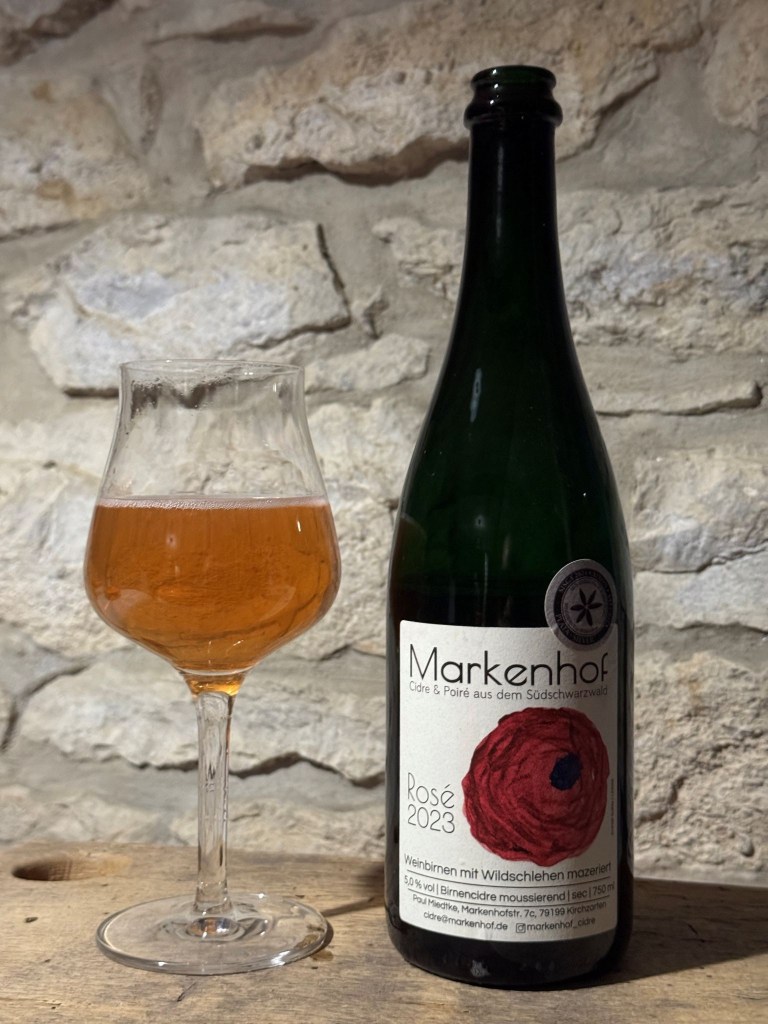
Markenhof, Rosé Sec 2023 – review
A coferment of perry pears and sloes. 5% alcohol.
How I served: Opened at ambient temperature on a cool Autumn day, 12°C.
Appearance: Red-gold, almost copper. A slight gush on opening. A steady stream of bubbles, some flakes of tannin, otherwise clear.
On the nose: Very perry, but dark. Petrichor, earthy, hints of dark charry and marzipan, further sniffing reveals cooked raspberry. Inviting.
In the mouth: Bitter almond, cherry cola, strawberry jam. It’s all round and jammy, a slight stickiness on the lips adding to the effect. Poached pear in red wine, raspberries again, It’s giving more with every sip. The sweetness becomes more apparent as one sips. The finish is jammy and lightly bitter, low astringency, but some grip.
In a nutshell: A warming, cosy, juicy perry with added depths and angles from the sloes. Just right on a cool Autumn evening.
A pretty strong showing for a cidery that only started 5 years ago. The choice of style is followed with certainty, and though my personal tastes lean very much to dry cider and perry, the depth and cleanliness of flavour in these Markenhof offerings gave me a lot to appreciate. I think you might too.
Discover more from Cider Review
Subscribe to get the latest posts sent to your email.

