
It was at this year’s top-grafting days in the orchards of Ross Cider & Perry Company, Broome Farm, that I came up against a familiar, if hackneyed, trope in the world of cider: “Oh Michelin, I’ve got some in my orchard, but it’s just used for bulking up an orchard blend. Nothing special.” I mentioned that Michelin is now known as Bisquet, due to the scientific wizardry of DNA-testing, my fellow top-grafter had not heard of this before, despite Ross Cider renaming their Michelin single variety ciders as Bisquet (along with Artistraw and Little Pomona). We were in the Gameeoolands Orchard at Broome Farm, processing material from the Dabinett and Bisquet trees that make up a large part of their delicious, barrel-aged, annual Raison D’Etre release. A biochar burner was turning the twiggy remnants from these trees into nutrient dense matter to re-apply to the soil and encourage even better growth and production from these trees in the future. Pretty special in its own right.
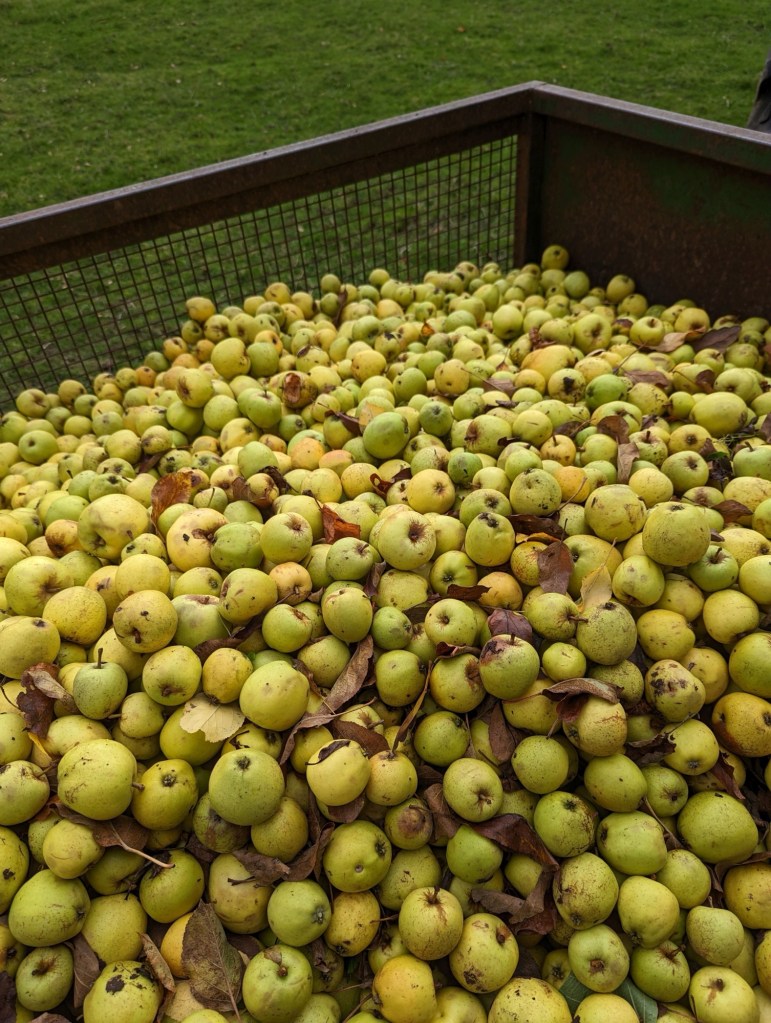
On this dismissive note towards Bisquet, well I’ve heard this said from a number of cidermakers over the past few years, and you can understand why: Bisquet is one of the most widely planted cider apples in the UK. As a variety, it was presumed to be Michelin back in the 1920s, and planted widely across the English county of Herefordshire, for its reliable cropping (less of a biennial tendency to fruit) and the inoffensive, middle-of-the-road flavour qualities of the resulting juice. The oft written adage is that Michelin is like Bulmers Norman, but with much softer tannins. You have to go back another 50 years from the 1920s to find the origin of, let’s call it French Michelin at this point to differentiate the varieties, in a village called Yvetot in Normandy: 220 miles away as the crow flies, and across the English Channel from the heartlands of Herefordshire. This tree was noted for all these positive qualities that orchardists and cidermakers at the time were looking for, indeed the Woolhope Naturalist Club (that would later count Herbert Edward Durham as one of its members) spotted this at a trip to the Grand Congress of Pomological Societies in Rouen in the 1880s, and thus, an order was placed to supply orchards in the UK with the variety. Fast forward 40 years, the mass planting in Herefordshire really takes off for Michelin, spurred by interest from cidermaking firms like Bulmers. Only, it wasn’t Michelin they were planting, it was predominantly Bisquet… but no-one would find out for at least another 100 years!
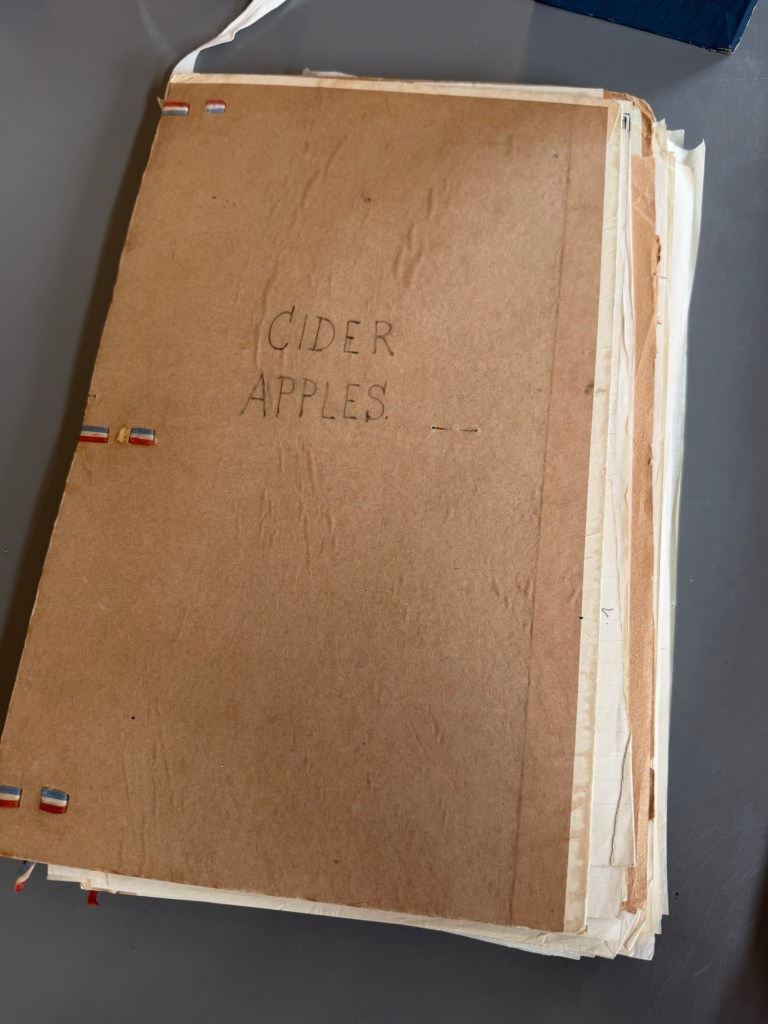
We’ve seen how this can happen time and time again in the world of cider and perry-making. My Hagloe Crab article on Cider Review shows how easy it is to have a case of mistaken identify when you have two highly respected, pomologically astute, behemoths of the industry state that both samples A and B are variety C. It was Charles Martell, John Tieser, and Ray Williams for Hagloe Crab, and back in the 1920s, it seems like it was members of the Bulmers family and Herbert Edward Durham, amongst others. Durham’s notes on Michelin from October 1926, in his Cider Apples handwritten Pomona, now in safekeeping at HARC, the Hereford Archive and Records Centre, reveal a brilliant snapshot of this variety from a century ago, you’ll note bottom right he compares two seasons’ vintages in SG, acidity, and tannin level.

You can understand how the confusion can happen in an era before DNA testing. When you have two varieties that crop at a similar time, display soft bittersweet juice qualities, look a similar way, starting off green, then turning yellow with a soft red blush in the October sunshine, it’s an easy mistake to make. Particularly when the nurseries you’re purchasing your trees from are telling you it’s Michelin you’ve just put an order in for hundreds, if not thousands, of trees. How the accident happened is unknown, a nursey in France perhaps selected the wrong mother trees to retrieve graftwood from, or perhaps the orchards in Hereford did receive a mixture of Michelin and Bisquet back in the 1920s, but started to subsequently graft from their own Bisquet trees again and again, mistakenly calling them Michelin. That we may never know, but what we do know is that at the online CraftCon of 2021, in a conversation around the art of keeving in cider between Templars Cider and Bartestree, at about 22 minutes in, Adam Bland of Templars Cider mentions in his orchard he has Bisquet, to which Dave Matthews replies that that’s the variety widely known in the UK as Michelin. This may be how some of you came to know that Michelin was in fact, Bisquet – one of the great reasons for attending CraftCon either in digital or physical form, you never quite know what you’ll discover!
John Teiser, the Museum of Cider’s volunteer Conservator of Fruit, manages the 100+ acres of library orchards left in trust to the Museum by the late Gillian Bulmer and her relatives. In these orchards you will find standard and half standard examples of rare cider apple and perry pear trees from across the Three Counties. Alongside the rarer examples of cider apples like Black Norman, Tanners Red, Upright Styre, and White Norman (varieties that have subsequently been making their way into Ross Cider’s top-grafting project in Oak Meadow Orchard, Broome Farm), you’ll also find the ubiquitous Bisquet. Through his work with FruitID, John has been diligently DNA-testing the trees from these orchards. It makes sense as Bulmers will have been one of the first cidermakers in the country to bring forth and develop a lot of these varieties for the wider orcharding and cidermaking community. Their Michelin initially DNA-matched that of the National Fruit Collection in Brogdale. But it was only when the FruitID database was shared in the early 2020s with INRAE, France’s National Research Institute for Agriculture, Food and Environment, looking at the MUNQ, Malus UNiQue genotype code, that it was found to match that of Bisquet. According to John, Long Ashton Research Station had noticed this error as far back as the 1960s, but the name Michelin had stuck, until now. You can’t argue with DNA results!
Armed with conclusive DNA proof that most of the examples we had previously known to be Michelin were in fact Bisquet, a handful of producers in the UK seized the opportunity to use this is as a differentiating point on their labels. One season either at the tailend of covid lockdowns, or shortly after, single variety Bisquet ciders started to appear on the shelves of discerning bottle shops and forward-looking bars. Leading the charge were Artistraw, Little Pomona, and the Ross-On-Wye Cider & Perry Company. Nomenclature in cider and perry is a curious, heartwarmingly idiosyncratic thing, and to get people to change the name of a variety they have worked with for years is understandably tricky. If you were a farmer in Herefordshire that took pride in your Startlecock harvest every year, and someone came along and said: “Listen here good chap, you simply must call this perry Holmer from now on…” well, umbridge and reticence to change are likely outcomes. Synonyms of cider and perry varieties are part of what makes this industry so endearing and personal. This however, is a case of mistaken identity, much the same as with Hagloe Crab, and when presented with the evidence, one would hope in time that orchardists and cidermakers alike will start to use the Bisquet name in a wider manner. That is if in fact it is all Bisquet in their orchards, and not a little bit of the true Michelin left over from some correct grafts that slipped through the net…I never said this would be straightforward!
Speaking to Tom Oliver, who has a bottle included in my review selection below, his thoughts on the matter are as follows:
“Bisquet is not known as a variety to a whole generation of growers around here that I buy my fruit from. Michelin, however, is known to everyone, as much as Dabinett is. I do not dispute that they are one and the same thing, DNA proves that. That being said, with a resurgence of interest in identification of varieties, it’s good to correct past mistakes, even if they weren’t known as mistakes at the time. I find it fascinating that if you speak to anyone new to the world of cidermaking, and by that I mean they started producing in the last 10 years or so, they’ll refer to the fruit as Bisquet. If you speak to any of the old farmers around me, it’s all known as Michelin.”
There’s a part of me that is quietly relieved we have a variety of cider apple that is as happy to grow in Northern France as it is across the UK in 2026 – one that fits the blending requirements of large swathes of the micro and macro cidermaking community, and one that tastes, really rather pleasant. It could so easily be a tale of decline and disease, but something about Bisquet works so well in orchards that it is up there with its Dabinett brethren as both a powerhouse of the UK cider scene, and one that is so easily dismissed as just a blender. I bought a selection of bottles that I could find for sale on The Cat In The Glass, to dig a bit deeper into the unique flavour profile of Bisquet, and dispel a few of these reductive assertions of the variety.
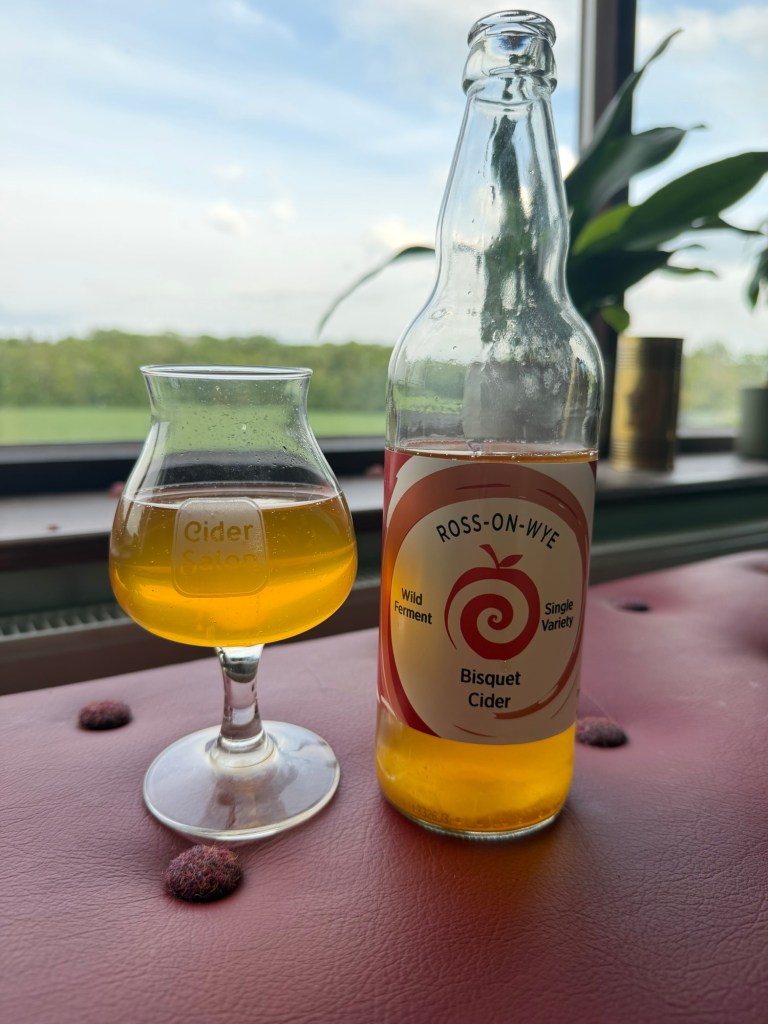
Ross Cider, Bisquet 2002 + 2023 – review
How I served: An hour or two in the fridge and then 20 minutes out at room temperature.
Appearance: Bright, satsuma orange hue, really good level of effervescence for a Ross bottling, small prickly bubbles rising out of the glass but not particular mousse. Great clarity.
On the nose: Hay and straw in the barn, candied orange, a little loose leaf rooibos tea. Freshly split apple logs (from responsibly top-working trees in Broome Farm). Great aroma to be starting this tasting with!
In the mouth: A big, soft bittersweet arrival, supper pillowy tannins brushing against your teeth like the most delicate toothbrush head possible. Intensely appley, alongside quite an apricot estery delivery, there’s almost something approaching paprika powder here on the tongue at the end of each sip. This would go so well with a lightly spiced Indian or Thai curry! The most surprising thing here is the 7.2% abv – if I was tasting this blind I would never have guessed that punchy volume. Wonder if the trees were from their Gammeoolands orchard like the Raison d’Etre fruit is? 2022 was a record breaking hot year, but 2023 just average, so the blended of the two vintages here has worked a treat.
In a nutshell: Prove the naysayers wrong and take a punt on a single variety Bisquet! A fruit forward, soft bittersweet beauty.

Artistraw, Bisquet 2022 – review
How I served: A couple of hours in the fridge and then 20 minutes at room temperature.
Appearance: A rich tungsten glow bordering on tawny marmalade hue. Moderate effervescence and a thin mousse. Brilliant clarity.
On the nose: Different producer, different house style wild yeasts at play, looking for those familiar notes here for Bisquet and by jove it’s coming through. Straw bales, paprika powder, and cooked apple slices.
In the mouth: There’s that really super soft bittersweet arrival that Bisquet brings to the table again. A little bit more vanilla pod background to this purely 2022 offering from Artistraw. The tasting notes on the label mention pineapple, I’d say it’s the BBQ/grilled pineapple note coming though here, with only a slight acidic twang right at the front of each sip. There’s something very friendly and approachable about this Bisquet from the heatwave 2022 season that was, almost surprised to see it coming in at a “mere” 6.6% abv considering. As the cider sits at room temperature for longer there’s a slight green nettle note on the aftertaste. The label is beautiful too and does a lot of leg work in terms of getting new drinkers at ease with trying a single variety cider too.
In a nutshell: A friendly, fruity Bisquet to introduce your friends to the concept of single variety ciders – even ones traditionally considered as just part of a blend.
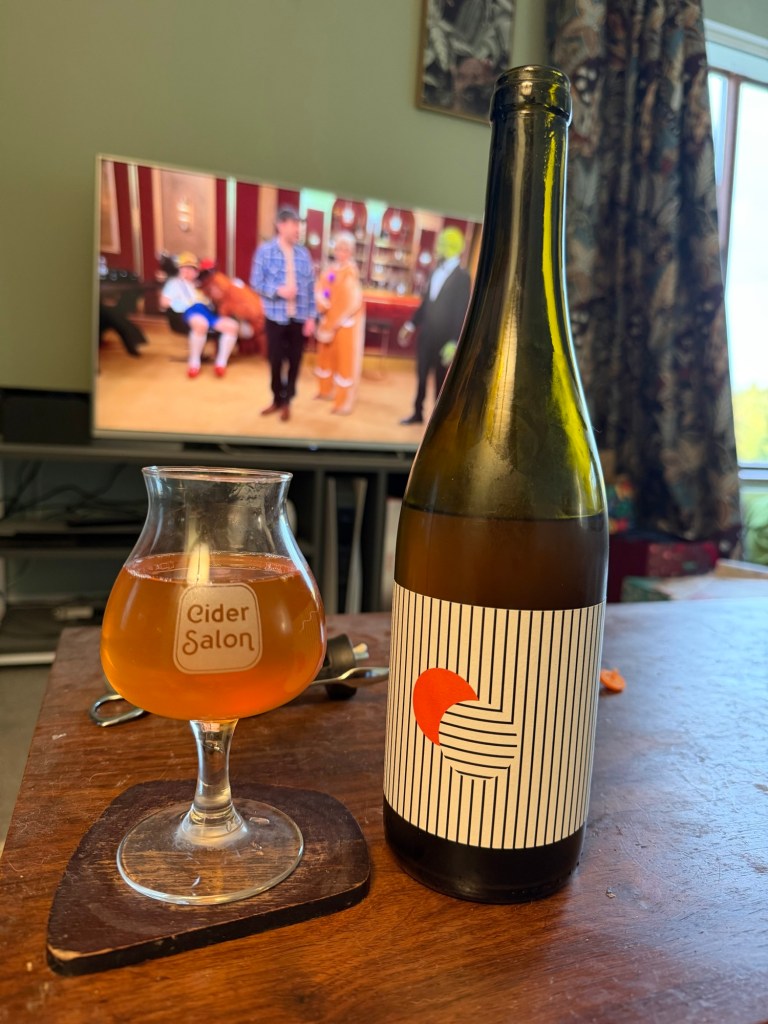
Little Pomona, Orange Cider 2022 – review
How I served: Three hours in the fridge and then 20 minutes in the sitting room.
Appearance: Still by design, and still by orange cider nature. No effervescence, slight haze, no mousse.
On the nose: Jumping ship once more on the producer, Little Pomona’s wild ferment house style is very evocative and familiar to me, the Bisquet here is apricot dialled up to the max, the fresh straw note still present , and no real sense of spice on the aroma. There’s a buttery note coming through on the aroma too. Grilled peach alongside the apricot.
In the mouth: I love this adjective on the tasting notes – “plush”, this Bisquet is well and truly plush, with a rich, oily texture not seen thus far in the slightly effervescent versions from Ross and Artistraw. The same hot season as the Artistraw 2022, but time in neutral French oak has added a textural quality to the juice. There are those familiar, soft, pillowy tannins at play, increasingly making me think this is a great variety to introduce newbies to the concept of bittersweet cider apple varieties to. A creamy, white pepper finish to this Bisquet, that wasn’t there in the other two single varieties. 7.5% abv, and it feels like it would very very at home with the white wine/ orange wine/ natural wine crowd, but at half the abv.
In a nutshell: Your friends will think it’s liquid apricot juice, fermented for their pleasure, but you must let them know: this is Bisquet!

Artistraw, Bisquet 2023 – review
How I served: A day in the fridge and then 5 mins out in the sitting room. The label on the cork cage recommends to chill before opening and serve < 12•c. Interesting this vintage is served cork and cage rather than crown cap, hinting at the level of fizz perhaps?
Appearance: Tangerine orange hue, generous effervescence level, great clarity and a noticeable mousse on the top of the liquid.
On the nose: An austere, taut aroma with hints of star anise, clove, pine needles, green olive and apple leaf
In the mouth: A totally different delivery to any of the other Bisquets I’ve tried so far, with the malic acid dialled up a little more and the soft tannins dialled down a little more. This is a Method Ancestral cider, which I understand to be Pet Nat, with the juice bottled before fermentation has completed, around the 1.004 – 1.008 SG level. Perhaps that’s why there cork and cage is there to add extra protection from this higher natural carbonation presentation of Bisquet. 2023 was a wet, lower sunshine season, and this is coming through for me with a lower 5.8% abv and a more restrained flavour profile. Very clean, quick delivery, short and snappy finish.
In a nutshell: Elegantly presented, mellow Bisquet SVC, with fruit grown under one heck of a cloud of a wet season.
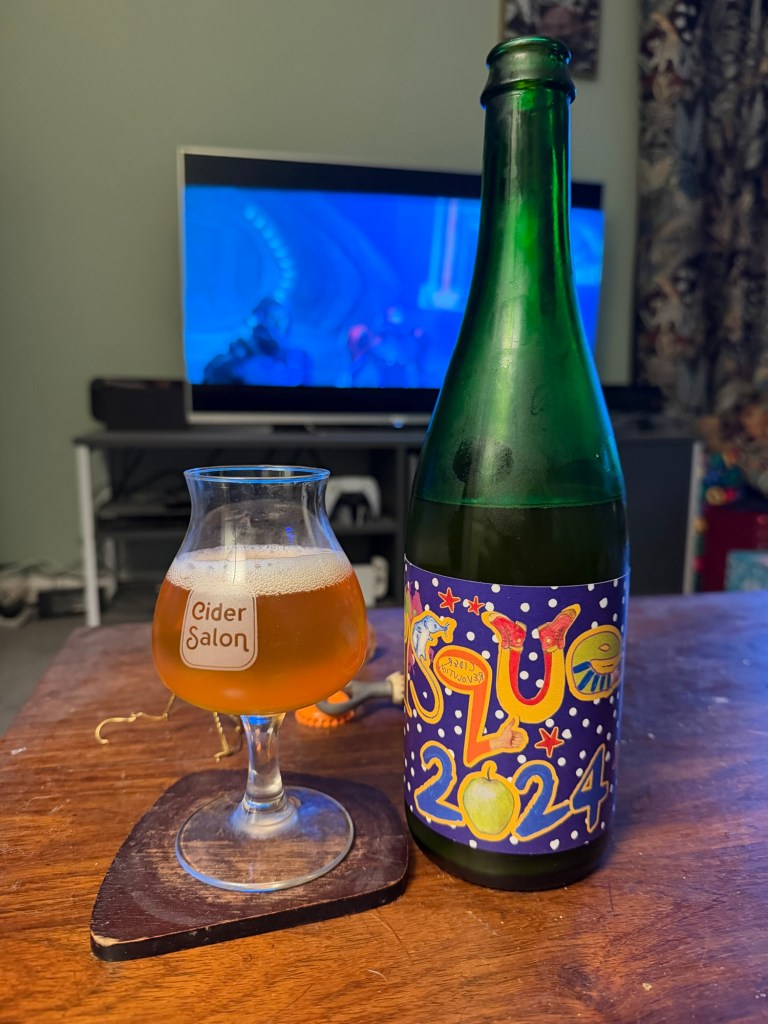
Atristraw, Bisquet 2024 – review
How I served: A day in the fridge then 15 minutes in the sitting room.
Appearance: Old gold, very mild effervescence, slight haze, thin mousse around the rim of the glass.
On the nose: Apple Tarte Tartin, a little bit fermenty and reductive, definite yeasty aroma compared to the previous vintage Bisquets from Artistraw.
In the mouth: There’s that fruity, apricot and cooked apple note that was present in the 2022 vintage. This bottle is presenting the slightest bit reductive on the palate as well, but I imagine that will dissipate with time. 2024 was the coolest summer since 2015, the sugars again were relatively low, bringing this in at a sessionable 4.7% abv. The soft tannins I’m looking for in a Bisquet are present here, but it’s not quite as fruity a number as the 2022. Fascinating to see the different vintages from Artistraw at play here.
In a nutshell: A cool summer vintage Bisquet, keep a bottle or two back to age at home and this one will come alive I imagine.

Little Pomona, Peut-Être 2020 – review
A blend of Dabinett and Bisquet in ex-red wine barrels.
How I served: Day in the fridge then 15 minutes room temperature.
Appearance: Hazy marmalade hue, still as a bone (as it was intended to be), no mousse.
On the nose: Strawberry and blackcurrant jam, a really jammy nose all-around. Cherries and apricot. The Dabinett and red wine barrels are bringing a deeper, stone fruit note to this had it just been Bisquet.
In the mouth: There’s the delicious orange marmalade note that so often comes with Dabinett, but it’s cut with strawberry jam, and apricot conserve. The soft tannin level that Bisquet showcases is still the predominant factor at play in this blend, there’s none of the harder tannins you can occasionally get with Dabinett SVCs. 2020 was a heatwave of a lockdown year, the 6.9% abv reflecting higher sugar levels.
In a nutshell: Bisquet and Dabinett are natural bedfellows, showcased expertly here alongside the jammy goodness that the ex-red wine barrels impart on the liquid matured within their oak casks.
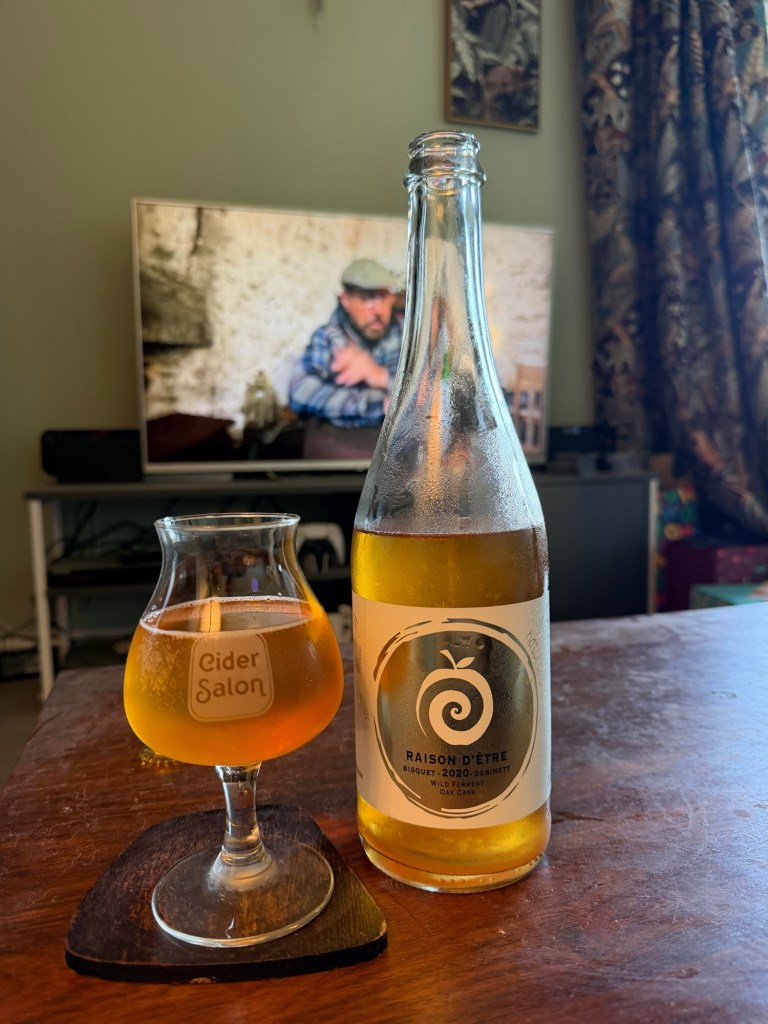
Ross Cider, Raison D’Être 2020 – review
Bisquet and Dabinett aged in oak casks.
How I served: A day in the fridge and then 20 minutes in a swelteringly hot sitting room.
Appearance: Tungsten orange hue, light effervescence, small mousse around the rim of the glass, great clarity.
On the nose: Apricot and tobacco, umami, smoky bacon frazzle crisps, bay leaf, apple strudel. Such an evocative set of aromas coming up from the glass.
In the mouth: The juiciest Raison out there in my humble opinion. Char-grilled apricot, a tangy, malic acid prickle alongside the soft tannins at play. The mouthfeel is just a joy, with vibrant fresh taste for a liquid that hails from the 2020 season. 7 abv% means business.
In a nutshell: Bisquet taking centre stage in this iconic annual release from Ross Cider. Juicer and softer than you may be expecting.
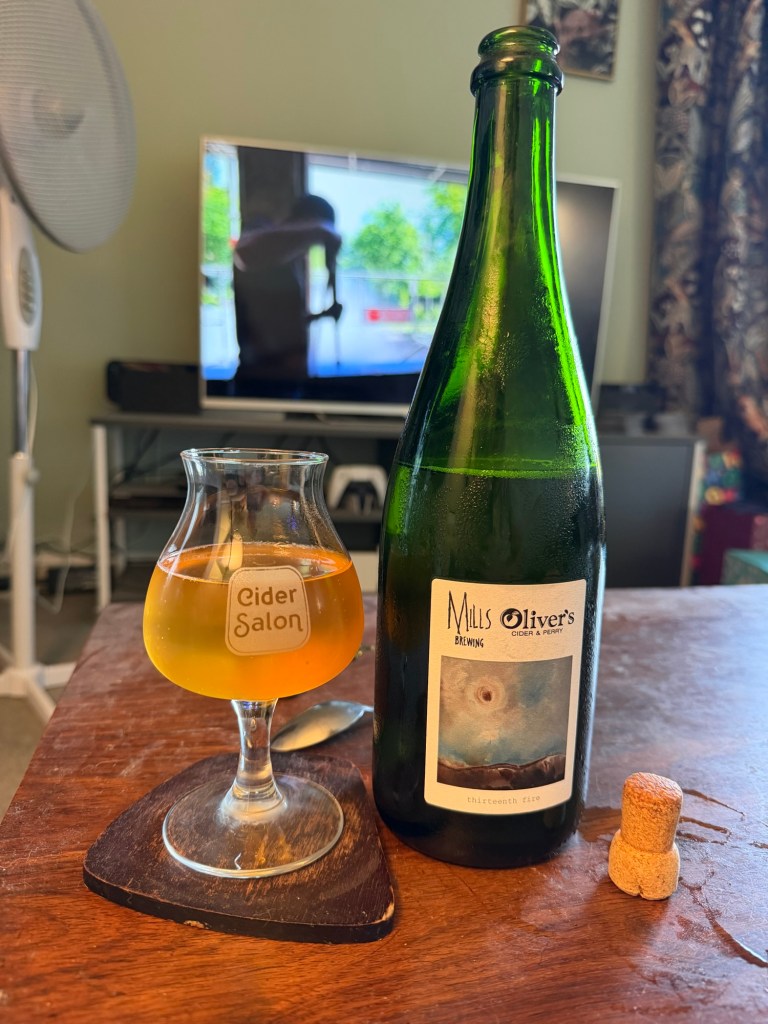
Mills Brewing & Oliver’s Cider, Perry’s Thirteenth Fire – review
A barrel-aged co-ferment of extra strong wort and juice from Michelin (Bisquet), Sheep’s Nose, and Foxwhelp
How I served: A day in the fridge, store upright as the bottle requests, and then served after 10 minutes at room temperature.
Appearance: Straw gold hue, light-to-mid effervescence but no mousse whatsoever. Great clarity.
On the nose: Fresh grain, straw and hay, there’s a bit of a radler meets sour beer nose going on here. Nosing this blind I’d have said beer over cider. Can’t wait to see what it tastes like!
In the mouth: By Jove! There’s that Bisquet-esque apricot note, it’s coming through alongside a pretty strong sour and saline note, which chilled down as the drink is at first, is incredibly refreshing on a hot day. There’s a tart raspberry note to the drink that expresses itself on the front corners of my tongue. Did I mention it’s got a 10% abv?! Those barley and wheat grains bringing a heck of a lot of sugar to the party pre-fermentation. Oh to have a made wine licence and to experiment with drinks like this, so much fun! There was a triple bottle range that Ross Cider collaborated with a few years back, All Amongst The Barley, that did something similar I’d memory serves me correctly.
In a nutshell: If you like beer and cider (with a particular penchant for Bisquet), seek this crazy, fun, co-ferment out from Mills and Tom Oliver – you won’t be disappointed.
Conclusion
It feels like I should have gotten around to this article a while ago, it is much overdue. We’ve focussed our attention here on Cider Review on many a variety of cider apple and perry pear over the years, but sometimes it’s the ones which are so often foregrounded by their widespread availability, that have a habit of slinking into the background. Bisquet has been one of the lucky ones in that sense. All the right qualities of its fruit, available to grow in all the best locations, just with one slight hiccup in its nomenclature along the way. Artistraw’s annual single variety release really highlights the effect of the seasons on a crop – nothing is 100% consistent in the natural world; nuance, subtleties, and differentiation are aspects to be cherished. I feel confident to use Soft Apricot as a descriptor of Bisquet now, but how soft, or how apricotty, well…that’s for the different seasons to determine. There’s also something rather relieving about covering a variety like this that is so very much not on the brink of anything, no collapse of its stocks in sight, no long hard road of recovery to make. I hazard that Bisquet is here to stay, and a large component of what you will be drinking for years to come in the orchard blend ciders from all across the UK. Does it need a reappraisal in terms of its flavours and what it brings to the table for new and established cider drinkers? It most certainly deserves it. Will it get one? That’s up to you all to determine. Seek out a bottle of Bisquet and let us know what you think of it. I’ll raise a glass this evening to all the happy accidents in cider and perry that have gone before us, and all those still to come. Wassail!
Discover more from Cider Review
Subscribe to get the latest posts sent to your email.

