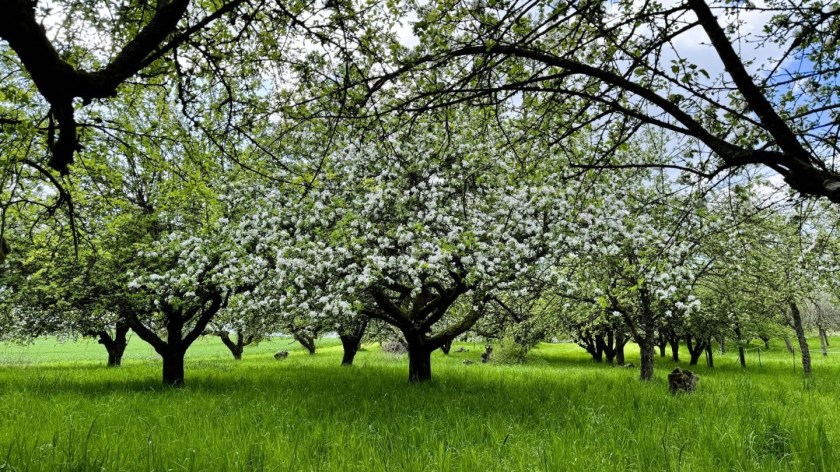
Sometimes I look up and wonder how on earth we got here. Ten years ago we had five fruit trees. Now we have over three hundred. We’re very lucky to have planted an orchard in a county where once there were thousands of registered cider makers. Serendipity overwhelming intention. A mild interest burgeoning into what some may describe as obsession. Tickling the surface has created an itch that must be scratched, a compulsion that must be sated. Many orchardists and makers have been caught up and swept along on similar currents. Fermenting orchard fruit was not always so.
We’re not from Devon and have no ancestral agricultural blood in our veins but cider has been the lifeblood flowing through the region. Devon has a cider heritage rich through centuries of orchard craft since the Romans marched forth. Delving into cider heritage around our tiny plot, where hillsides are coated in the legacy of centuries of orchard fruit, leads down an intricate rabbit warren of orchards, fruit, agriculture and fermentation.
Cider has been produced in the UK for centuries, since the Romans graced our green and pleasant land with efficient roads, sewerage systems and orchards. History books are brimming with tales of orchards and how they are interwoven through society, though, for cider, most focus on the few heartlands where orchards formed a deep part of agricultural life, typically the three counties (Gloucestershire, Herefordshire and Worcestershire) and the Southwest (largely Somerset and Devon). Proportionally, these regions held the lion’s share of bitter-sweet, bitter-sharp, tannic varieties resonant with British cider production.
If orchards and the fermentations of their fruit exist outside these traditional heartlands, what is the history of that and what has that evolved to in the present day? If the local archivists can find little of note for our tiny patch of Devon (our local newspaper archive contains few items relating to cider making and ‘sometimes the unfortunate results of drinking a little too much’), this led me to ponder on what cider heritage means in other regions of the UK. In counties where cider making and agriculture advanced hand in hand (until the government reforms cleaved their grip), varieties were propagated for their acidity, sweetness and tannin. How so for trees outside those regions where fruit fermentations were less favoured than those of grain or culinary purposes?
Considering what heritage means to us; Rull Orchard is planted on the fields of what was Rull Farm in the 1800s. An orchard once stood where our wetland area is now, with the last pear tree lost there in only 2019. A tree with which we were barely acquainted but the loss of which brought us a sorrow we couldn’t quite fathom. The day we found it fallen to the ground, we stood hand in hand over its prostrate form, bereft. I had once stood under that tree, gazing through fruit ladened branches to the wide, bright skies of summer beyond and marvelled at its stature. The picture I took became our Instagram profile photo. Business acumen would suggest flaunting our logo instead, but I haven’t the heart to change it; that tree represents what we love about what we’re doing; appreciating veteran trees, their orchards and the heritage craft that they’ve witnessed and supported for centuries. Ye Olde Pear. Beyond that lost specimen, what heritage do we have?
The history of orchards and cider production fascinates me as much as the narratives of makers today. I reached to makers beyond the cartographical lines that define regional styles to explore their experiences as cider makers and orchard custodians. For it is as much the people as it is the fruit that curates the cider.
Vagrant
Vagrant Cider represents an expression of apple fermentation that cheers for the underdogs, a howling invitation to explore the possibilities outside the traditional cider heartlands of the UK. A prescient calling to be the voice of trees whose songs had been unheard for so long and to play heartfelt renditions of those tunes each harvest. Elsewhere, mass planting of orchards with stalwart cider varieties steers fermentations down familiar roads. James seeks the road less travelled to celebrate the bounty of trees rooted (either by intention or design) without place or name.

I chatted with James early in January after a cold, rainy run and a walk with cider dog under bright, blue skies rarely seen last winter.
As a maker under the small producers’ exemption, James commands a growing respect for his ferments. One of few artisan makers in Cornwall, his ciders demonstrate a keen appreciation of and an intense understanding of the fruit he harvests. Largely a lone pursuit, though pressing has expanded to include some good companionship this year. Renowned for their crisp clarity and bright expression, his bottles are celebrated far and wide.
Raised surrounded by the Kentish orchards of England’s garden, James fondly remembers cider from Biddenden, served still and dry, from the keg in his local alehouse. A hearty fermentation of dizzying ABV that was well received by the pint and heard many a cry of ‘Another one!’. The similarities in cider styles from an upbringing in the garden of England to his own ferments may well be circumstantial, but there’s a certain poetry in the continued low tannin presence in his work.
His ethos is that of allowing the fruit he harvests to be the best expression it can possibly be each year. His years of experience, beginning when he relocated to Cornwall, have developed to a profound understanding of how fruit will ferment and ways to nurture his fermentations. Lessons learned have developed an intuition to spot fruit that will thrive under transformation once pressed.
On Cornish cider heritage
As with many counties, production started at a small agricultural scale (references cite Haye farm producing cider in 13th century) which has co-existed with the now industrial production of cider in Cornwall since the 1980s. Scale that requires the narrowing of creativity and loss of annual nuance. Craft cider production is a now rarity in a county in the top quartile by square mileage but lowest quartile in population.
A faithful following and deeper understanding of the ciders he creates is flowing into a growing and loyal customer base, but this is not consistently local. Wassails are not commonplace in the orchards of Kernow but have an aspirational appeal for James, countered by infrastructure and the Cornish mile.
Is Cornish Cider Heritage important to the future of Vagrant?
Vagrant will continue to source its fruit from derelict orchards and lone trees of highway, byway and scrubland. The nature of many Cornish varieties means that many of these trees will have a leaning towards a tannin free existence, though a good gribble can never be held down. Through Some Interesting Apples (SIA), James will be opening new paths for cider in Cornwall. Trees propagated after successful navigation of taste trials will bear fruit of complex and nuanced profiles, promising to begin a new era in climate resilient orchards.
Availability of fruit worthy of fermentation being one of the first challenges he faced, and a contributing factor to James’s ferments, meant that along with SIA, he is seeking the next generation of apple varieties; an organic and heartfelt project seeking trees that withstand the moods of climate; drought, flood, high winds and mild winters. Trees that demonstrate resilience to disease and fortitude in the face of unpopularity; of genetic depth that will help form the lexicon of the future of Cornish orchards. From these he hopes to forge a new Cornish Pomona, inspired by the work of James Evans and Mary Martin.
Promotion, though not the joy of many a cider maker, to raise the profile and ethos of sustainable cider. For James, his Vagrant’s Pomona alongside SIA form the cornerstone from which to form an evolved expression of Cornish cider heritage; one that appeals to many!
On favourite Cornish cider varieties
Much planting in Cornwall was small scale with little focus on growth for cider making. Many Cornish apple varieties are dual or triple purpose, developed to suit the need of harvest in an environment that can be inhospitable. A fine example being Storm Goretti, wreaking havoc in January, with winds registered above 120mph at its worst. Trees in Cornwall must be hardy to withstand mother nature’s nautical wrath.
With no home orchard, accessing fruit adds a complexity to the Vagrant harvest. There were few consistent varieties to choose from, many being unknown to owner and harvester alike, but a few worthy of fermenting stand out.
The Pear Apple: named with little thought for the confusion it would cause. A fruit so-called for its shape rather than its genealogy. Rarely found beyond the walls of Cotehele, James has fermented it as a single variety to 4.8%.
Colloggett Pippin: a variety that brings joy to the picker but ‘strikes fear into the heart of shaker and scratter alike’. A dual-purpose apple whose acids thrive in wetter vintages, tannins in warmer ones. This year the tannins push to the fore.
A single variety cider that delights in its low pectin and in its golden nectar. James’ biggest harvest yet in 2025, there will be plentiful pet nat bottles to come. Serve chilled.
Considered by James to be the best representation of what can be produced regionally and that proudly flies the flag for what Cornish cider can be, this was the obvious option for a tasting to represent the county.
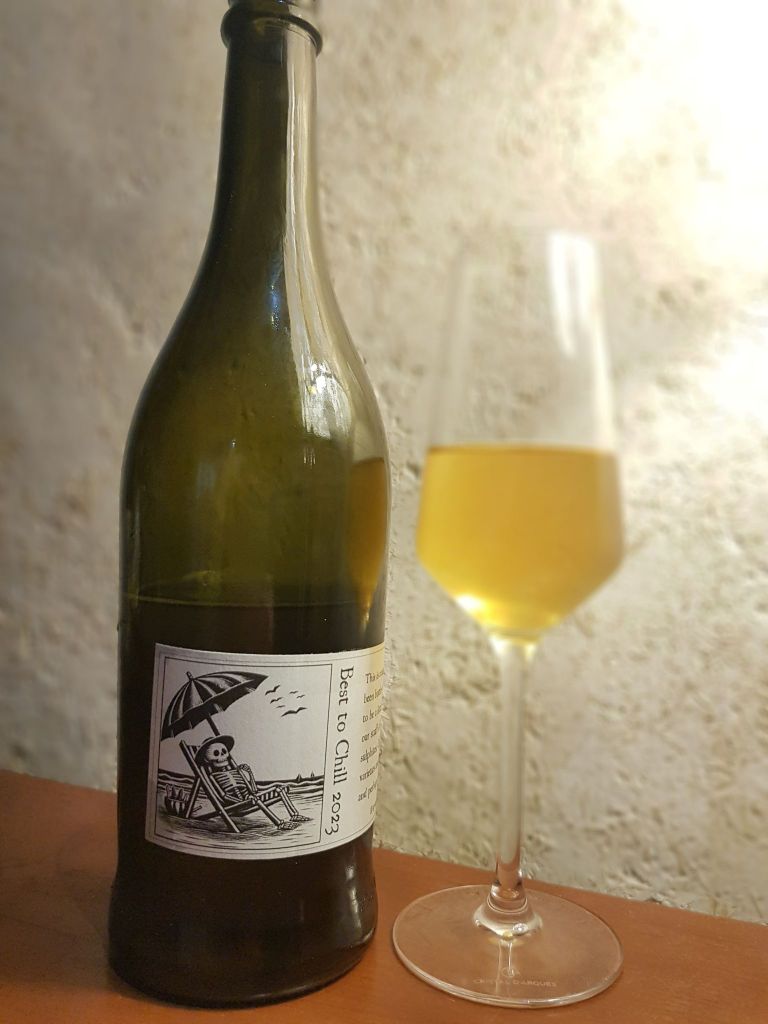
Collogett Pippin Single Variety Cider
5.4%, bottle conditioned
Appearance: Golden yellow with a light mousse and delicate fizz.
Nose: dark, thick green apple skins, dark, cool apple cellars.
Taste: insistently zingy, with notes of summer hay. A mouth-wateringly citrus-forward cider (think baked lemon and fresh grapefruit), layered with a chalky minerality and hearty astringency.
Sadly out of stock but will surely be seen again in future vintages.
Caledonian Cider
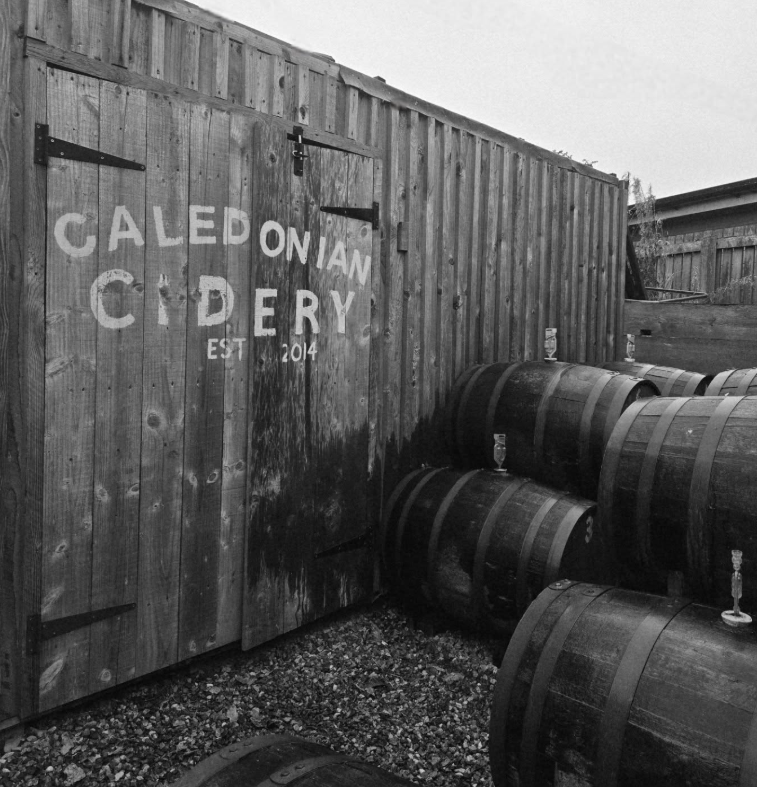
I chatted with Ryan midway through bottling one of our 2025 pet nat ciders in late January. We strained to hear our conversation under the barn roof as seven hells of rain poured from the skies, our voices battling the elements hundreds of miles apart.
Ryan joined me between shifts at the local distillery, painting his son’s bedroom and juggling workmen. A busy man with an open warmth and a wealth of cider knowledge, having worked in cider making for years, from France, through the Southwest and back to Scotland. From commercial, industrialised cider back to his love of small-scale artisanal; his beloved ‘creative side hustle’.
On discussing the meaning of heritage we spoke of the sanctity of Scotch whisky, protected by a legal definition since 1933 (minimum standards that are revered the world over) and how no such protection is afforded to cider or perry in the UK. Stunted by complexities of political-financial influence of parties indifferent to provenance and quality, and now too complex to view a clear path forward. Has the apple rolled too far from the tree to be labelled as counterfeit at any distance for minimal quality standards with orchard fruit fermentations? There could be a place for such a consensus, but too many cooks can over-beat an omelette. A key step forward for orchard fermentations could be in clarity of labelling of drink products, though appetite for this from industrialised producers dilutes the possibility. Though the will may be there for the creation of a DoP for cider regions, the logistics are beyond the grasp of the unscaled, but passionate, producer.
Ryan’s passion for orchards and their fruit sees him leading the pursuit of craft cider alone, his shift work granting him the flexibility that life may not otherwise allow. His fermentations are a creative outlet harnessing the fruit he’s become so familiar with. That and the blog he writes to document the rhythms of the cidery. Bobbing around the 5000L mark, Ryan is producing a sporting quantity of cider for a one-manned cidery.
The Highland weather is such that he has been producing his cider in the open air since storm Andrew liberated him of the roof to his cider shed. A truly ambient environment that represents the changeable Scottish climate and celebrates the patience of a slow fermentation. Perhaps that contributes to his success in fermenting in barrel, sourced from a distillery nearby whose distillers have a taste for apples as well as malt.
On Scottish cider heritage
The tale is a short one. Apples used in Sottish cider making are rarely cider varieties. Scotland’s fruit was historically grown to follow the periods of fruiting in the warmer climes of customers in England. When a tree may yield its ripened fruit in England, its Scottish kin could hold another month before the fruit is ready, thus providing a longer harvest period for fruit desirable for eating and cooking.
Trees planted in Scotland by those with pomonal aspirations are guided by the horticultural literature available; largely from experience of growers and producers much further south. The influences of a colder climate rarely extrapolate smoothly or align with conditions of orchards from the green and rolling orchard heartlands of England.
Ryan has sight of a Dabinett on which the fruits never ripen. Destined to blossom and fruit though their growth never reaches the maturity for harvest. They remain on the tree, pale seeded, withering as the winter advances and passes over into spring. So unpredictable is the fortune of the fruit, the fear of a low yield year sees him accepting fruit for as long as possible, lest the harvest suffer from the harsh northern climes. ‘Ciderists will travel for fruit’; the Scots mile longer than the Devonian one. Temperamental at best, hostile at worst, he describes the weather ‘…becoming a little milder of late’, reaching -3oC on rising that morning. That influence on the trees undocumented in a Scottish Pomona to date.
Is Scottish Cider Heritage important to the future of Caledonian Cider?
Cider culture in Scotland remains relatively niche, with Scotch firmly grasping the torch for many drinkers. Though there is an orchard following, particularly where the ties between cider and whisky cross; where barrel influence calls to memories of peaty drams and smoky nips. As with James, a faithful following is growing around Caledonian cider and its devoted maker.
Cider heritage has been loose in form north of the border. Present, but rare and hard to grasp. A pomonal haar that’s crept westward and settled in towns and villages where those who care for it capture its essence and hold it dear. Over the last ten years that has held tighter and awareness is growing, a momentum that should be embraced by makers.
The local villagers join Ryan in celebrating his wassail each winter, a community gathering of support that can only represent a growing appreciation for his endeavours.
The Scottish Cider map has been redrawn over the last ten years, waxing with new producers and waning with the flow of closures, be they social or financially led. The 2026 edition has been released and now highlights twenty two producers in Scotland. The map has hotbeds of cider regions, with Fife representing strongly. Ryan hopes to one day see a cider corridor of sorts, his cider map extending from John O’Groats to Lands End in a patchwork of microproducers held proudly prominent in the minds of the region. A perfect representation of regionality as you journey throughout.
The Ubhal cider gathering, new to 2026, promises to raise the profile of Scotland’s cider scene and its producers, adding momentum to a regional cider movement. A call to experience and appreciate fermentations nurtured through the climate further north than cider has traditionally been. Where heritage has been deeply interwoven with malt and distillation for centuries, but where one could grow from the humble pip.
On favourite Scottish cider varieties
Wild fermented, his ciders rarely begin their journey above 1.060 specific gravity, due to the climate in the highlands, and ferment gently, if at all, over the winter.
For Ryan, Katy offers great qualities that lend themselves to his favoured Caledonian cider. Harvested late September and taking months to ferment, racked to steady the yeasts he will look to bottle in February and enjoy once bottle conditioned from April. Scottish cider demanding a greater patience to rewards than those in the south of the UK!
Major is particular favourite of Ryan’s, harvested in October in the Highlands to be graced with time in an Islay cask.
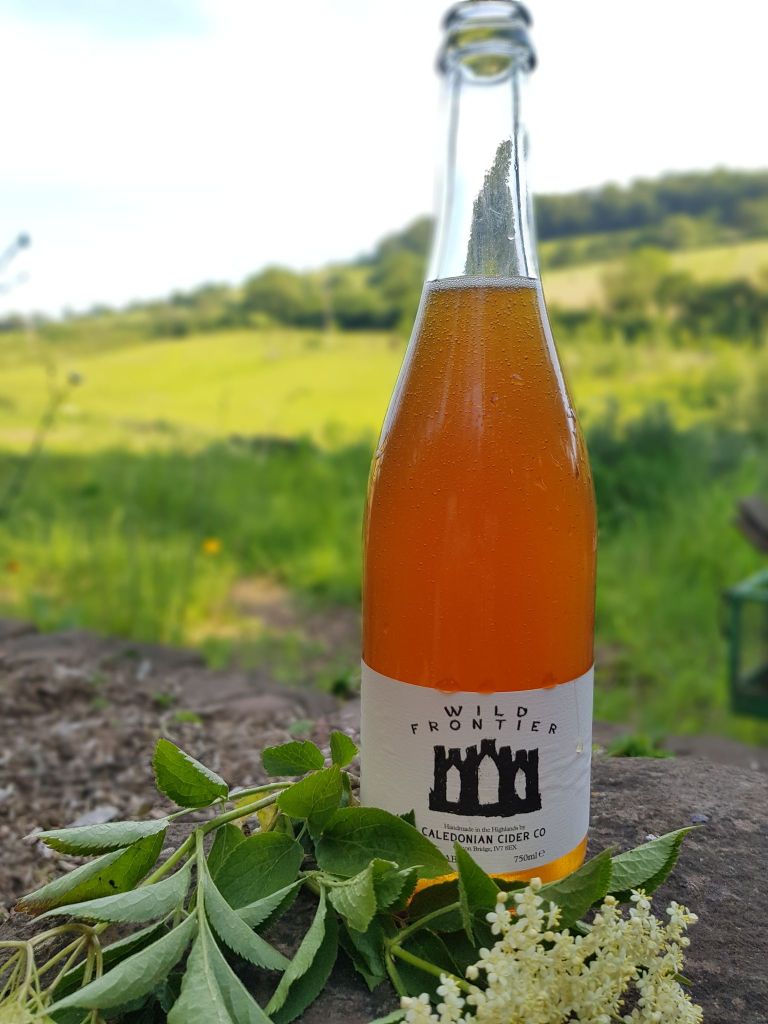
Wild Frontier
6.5%, bottle conditioned, barrel aged (possibly Islay), 80% Major, 20% orchard blend
Appearance: deep glowing amber, very find sediment and a lively fizz.
Nose: Fruit forward with ripe red apple and a light drift of barrel smoke.
Taste: bursting with all the fruit of summertime. Ripe apples and a brush of juicy strawberries. Soft, rounded tannins give a welcome length. Just enough residual sugar to offer a wonderful balance to acidity.
Blue Barrel Cider
We spoke on a mid-February morning, during a rare reprieve from the rain in Devon, an experience less raw in Cambridgeshire where Emma told of many dry spells across the winter that rendered their extensive pruning duties unhindered. Pruning envy aside, we dropped into chat of cider women, the Three Counties Cider and Perry Association, annual harvests, fermentation prospecting and building community. Leo joined as he returned from the orchard, temporarily thwarted by the weather, for his thoughts on apple varieties
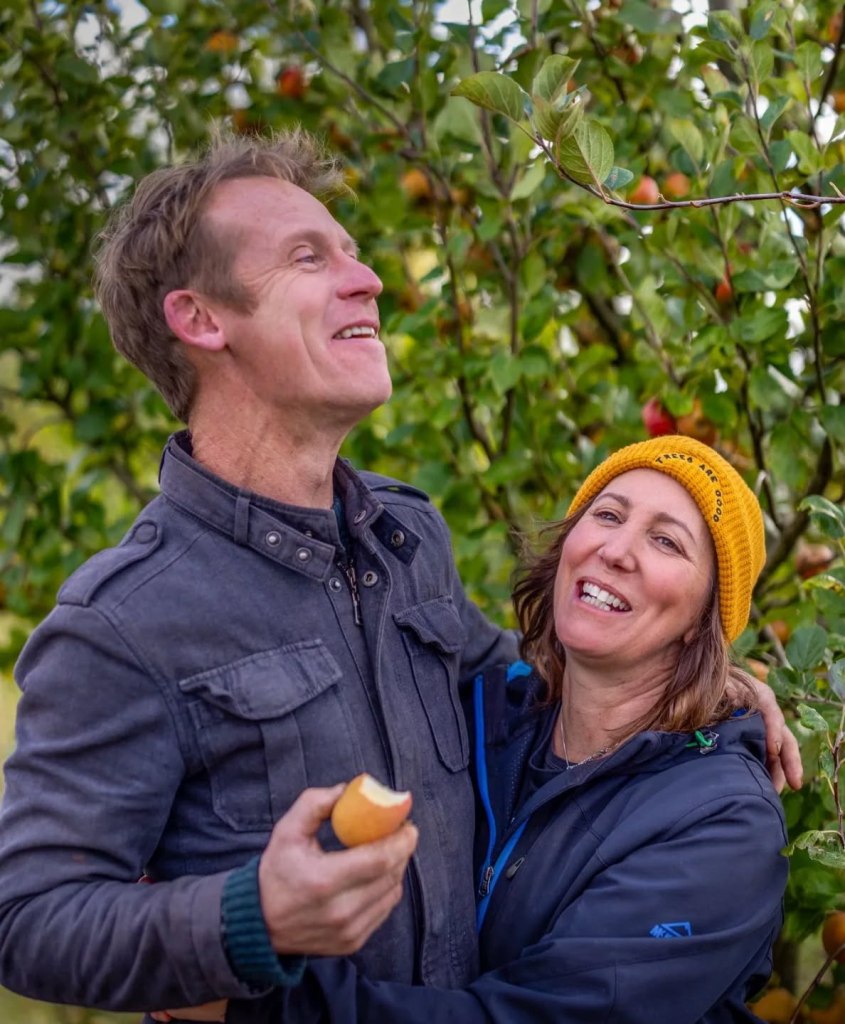
The spirit of Blue Barrel is deeply woven with an ecological fabric that swaddles their lives. Borne of a love of trees, community and the environment that has guided their path and leads their journey both through their fermentations and employment. Environment, habitat and ecology inherent to their craft; collaboration, education and enhancement opening hearts and minds to drive a thirst for craft ciders.
Emma and Leo have been working tirelessly to nurture the local cider scene and are building a future fuelled by their passion for planting trees (not only their own orchard but also with Trees are Good and the National Biodiversity Strategy Action plan) and their campaigning to retain and grow orchard habitats (Save Coton Orchard).
For many years Blue Barrel made ciders determined by scrumping just beyond the city walls of Nottingham, bolstered by harvests from forgotten orchards. They relocated to Cambridgeshire in 2021, an experience making them doubly aware of orchards and fermentation challenges where cider apples are rare. With their production volume growing each year, the 2025 harvest, perhaps predictably, was their biggest ever. Having newly discovered trees to harvest from, much of this growth was in their perry harvest which now includes fruit from several ancient wild pears they discovered on a local reserve. (Quivers of simmering envy run through the underbelly of makers far and wide at this prospect!)
On Cambridge cider heritage
Cambridgeshire is of Eastern counties history. Locally to Blue Barrel, the area was planted densely in the late 1800s with culinary fruit destined for Chiver’s jams. Fruit grown was never intended for fermentation. Local palates favour profiles that align with fellow Eastern County ciders. Emma’s work with Natural England has remapped the region’s historical orchards, revealing vast swathes of culinary orchards sadly now lost from the landscape. Where once you could walk miles across unbroken orchards, the common lament of trees lost is heard loudly here.
Though cider making is not the foundation of local orchards, the Cambridge Beer Festival is the longest running UK CAMRA festival, and this year will host over eighty ciders and perries. The force is strong in this county and offers great support for establishing a local presence.
Is Cambridgeshire Cider Heritage important to the future of Blue Barrel Cider?
Whilst there is a relatively young cider heritage in Cambridgeshire, outside of its beer festival, Blue Barrel is building a culture that embraces orchards at its heart, with some reliance on the trees historically planted in the area.
Support for their vision is gently building, emerging from shared passions for orchards and trees. Having the opportunity, they planted their own orchard, focussing on some of the more traditional cider varieties. The harvest from pre-existing local orchards had little to no cider fruit, influencing their unique style. A style that leans towards the Eastern palate but encourages bravery from the consumer to broaden their tannic experience or grasp a hint of barrel influence. They share the freedom of a relatively blank canvas on which to paint the vision of an emerging cider culture.
Establishing the Cambridge Cider and Perry Club has not only helped raise the profile locally, but bolstered their engagement with pubs to offer a wider range of orchard drinks for their customers. Working closely with the landlady of the The Devonshire Arms has seen the pub grow its cider and perry holding to levels that have seen it crowned Cambridge Cider pub of the year 2024 and 2025, with a faithful following and growing reputation as a destination drink hole for cider lovers.
Their community has gathered to them and their cause, with their Wassail growing in popularity year on year, now run with the help of volunteers and the local charitable organisation supporting local sustainability and targeting social isolation. To be amongst the trees bonds people to them and their harvests.
On favourite Cambridge cider varieties
Emma and Leo are instrumental in their input into the fruit available locally, and so the varieties they will have to work with in future vintages, by planting dual purpose trees. The Rosette, Blenheim Orange and russet apples being some varieties chosen that will satisfy the wider wishes of the future locale.
Working with favoured trees is an appeal all cider makers have. Those trees that we return to each year with eager anticipation to behold their yield. From the county’s arsenal the Discovery is a regional classic from which they produce a single variety. Their Cuckoo’s Return blends mixed dessert apples; mainly Worcester Pearmain, Spartan and Russets. Both are well received and delight drinkers new to full juice cider.
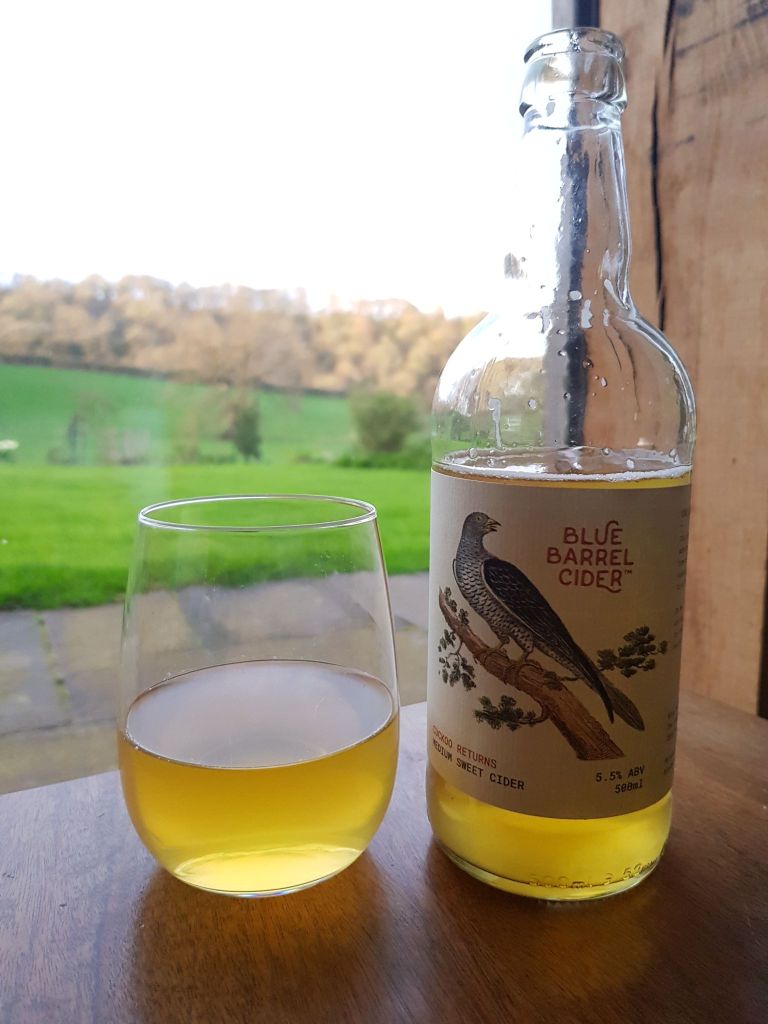
The Cuckoo Returns
An orchard blend of culinary apples, 6.5%.
Appearance: light straw with a gentle haze and light fizz
Nose: fresh, crisp green apple skins and grapefruit
Taste: thick, green russet skins with walnut salad and tart dressing. A slight vinous feel with well-balanced acidity. Super refreshing!
Nightingale Cider
We chatted deep into February as the gloom of another winter’s afternoon set in. We spoke of beloved pets and their propensity to cost the earth should they appear in any way enfeebled. Of faithful companionship and animal shadows. We spoke of the Garden of England, orchard loss and the influence that the creep oenological sway is having on shaping the landscape of the Southeast. We grumbled over tied pubs and celebrated freehouses, gave hurrahs to pockets of loyal support and boos to the ground that makers have to recapture from that lost to industrial cider.
With a 2025 harvest yielding well over 100,000 litres, Nightingale cider is keeping Sam busy, with the plans for 2026 ambitious with a high chance of busier. His sights set on a new press to the farm for 2026, the days will surely be long in Kent come September!
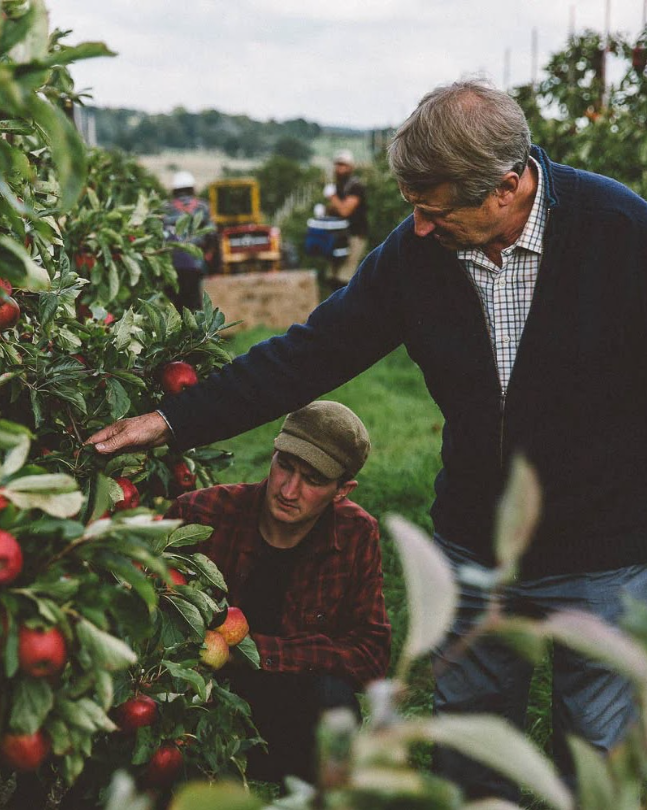
Sam remembers the fledgling days of Nightingale, when producing apple juice became producing cider. His initial fermentations from farm fruit, they all sat firmly outside the traditional cider category. With growing confidence, he considered exploring beyond the county’s arsenal of fruit and towards sourcing fruit with tannins to blend. On discussion he was dissuaded from this move and encouraged to focus on the fruit he had on the farm already; to representing the home fruit as truthfully as possible. Sixteen years on and Nightingale has done just that, leaning into the culinary varieties in abundance. Collaborations with makers in the cider heartlands, Ross Cider in particular, afford him the occasional opportunity to foray into the realms of tannin.
On Kentish cider heritage
Kent has several cider makers, some long established and of great size. With a county as large as Kent and such great volumes of fruit being grown, there exists a strong supporter base for the cider produced there. Many consumers are fiercely loyal to their local producers, with Nightingale occupying a hefty portion of the independent corner of the market.
Sam is keen to dig deeper into the Kentish cider tradition and has been gathering some local history himself. Tales emerging of a long history Kentish and Norwegian fermentation of strong apple wines, chapitalised and aged in spirit barrels. The value of connecting nature, produce, provenance and history spurring on his curiosity.
Is Kentish Cider Heritage important to the future of Nightingale Cider?
Sam chats of his relationship to Nightingale’s orchards and ferments with a refreshing enthusiasm and positivity ‘I’m still learning. Still loving being surprised by what I think I know…’
With the strong support that cider in Kent has, Sam is keen to continue Nightingale’s advocacy of Kentish apple varieties and the tannin-light fermentations that they create. This year he eagerly anticipates the return of significant orchard acreage from rental hands back under the wings of the family farm.
Such is the enthusiasm for cider in Kent, Nightingale’s wassail welcomes hundreds of revellers each year, escalating to levels where Nightingale now provide coach transport to stem the tide of eager participants.
Despite the strong cider community Sam enjoys, he echoes the need for continued and wider connection with both consumers, retailers and hospitality. Something he’s working hard to achieve!
On favourite Kent cider varieties;
The opportunity to name drop some local favourites brought forth some clear winners for Sam in Egremont, Cox’s Orange and Discovery. Quintessential and historical in their presence in Eastern counties and Kentish varieties, they’d clearly be in Sam’s starting eleven when it comes to team selection!
There’s potential for planting an orchard of traditional Kentish varieties ‘…for nostalgia… we still have so much to do with the fruit we have here’. No doubt the ciders that emerge from those trees over the years would offer drinks of equal finesse to those we’ve become acquainted to from Nightingale to date.
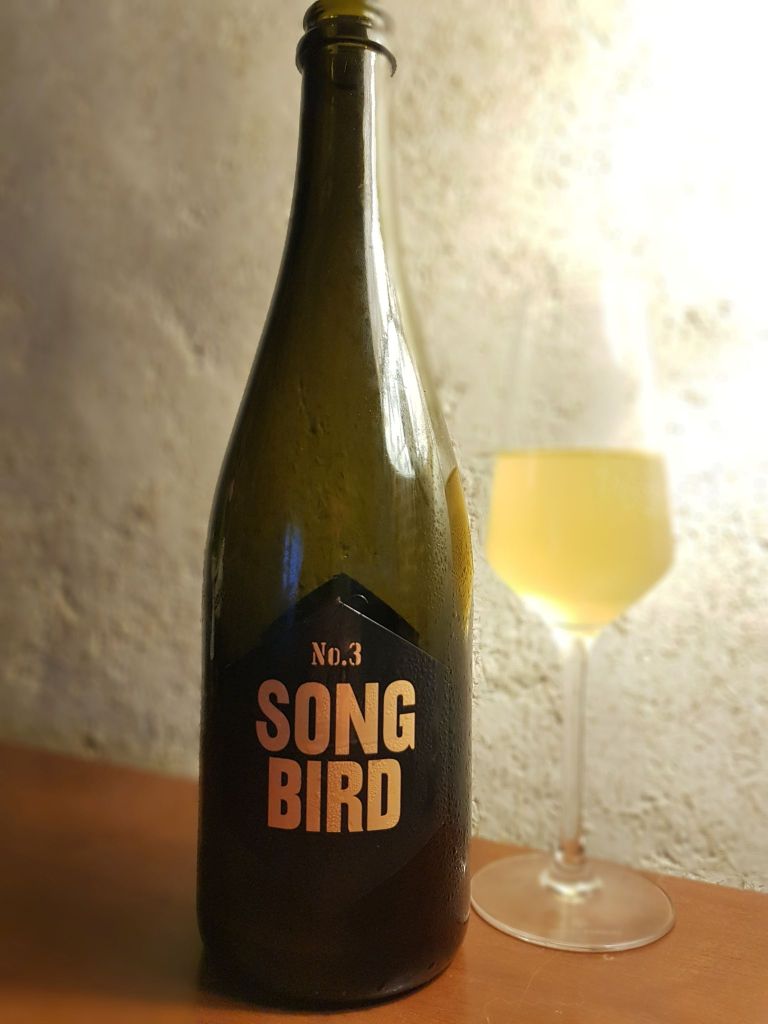
Songbird 3
Single Variety Egremont Russet, 8.5%, bottle conditioned, aged in Chardonnay & Priorat barrels.
Appearance: pale lemon yellow with the softest haze, delicate fizz
Nose: wildly complex and intriguing, this has an aroma to revisit time and again. Think deeply ripe tropical fruits; guava and pale green apple skins and hazelnuts, a squeeze of lime. All underpinned by a hint of summer hay, young leather and a gentle smoke.
Taste: all of the above with russet skins and added grapefruit. A vinous feel and a chalky bite. Well-rounded with good body.
Conclusion
The discussions we had as this article was shaped and grown were amongst cider folk flung across the UK. All enthusiasts of orchards, nature, fruit and their fermentations. All working with their harvests, fermenting wild and showcasing the characteristics of the fruit they work with. The common ideology is to protect, preserve and offer the finest representation of what orchards have to offer. A sound that will ring true to many.
Collaboration with other cider makers, hospitality and consumers is the sure way to educate on the differentiation between real cider and perry and the more widely available drinks available to commercial outlets.
What we all know, and what should form another string on our bow in our mission to raise the profile of orchard ferments, is that cider offers huge breadth. As agriculture and cider making have disentangled and diverged, we are seeing a revolution of from tradition and remoulding of regional heritage? Terroir forms part of the picture, varieties certainly do, as does the maker.
The resounding shared response when asked how important local heritage is to the future of their cider was that it is (of course) but that as cider makers we are in renaissance times for cider. Times when heritage is being smelted and remoulded as part of a conversation broader than variety alone. With varieties of fruit and styles of ferment no longer bound to an immoveable regionality, and Mother Nature’s growing influence on nature’s pantry, we live in a time in which we witness the emergence of blossoming heritage outside of the accepted heartlands. Heritage has gotten us to where we are, regardless of county, but for cider to thrive we must continue to develop that heritage by forming new rituals and communities which will, in time, build a stronger future. We live in an exciting season of new growth from which new regional heritage is blooming!
Discover more from Cider Review
Subscribe to get the latest posts sent to your email.


Such thoughtful and interesting article, all cider makers I am very fond of! I was just drinking blue barrel this afternoon at the excellent Black Horse in Rampton, which for anyone near Cambridge has a great range of real full juice ciders and perries, at least 10 on the list today.
LikeLike
Thank you hhmup. A great recommendation for a cider pub to visit too; we always need more of those!
LikeLike
Wonderful writing Claire!
LikeLike
Thank you so much!
LikeLike
Pingback: Feels Like Devon: Perries And A Cider From Rull Orchard | Cider Review