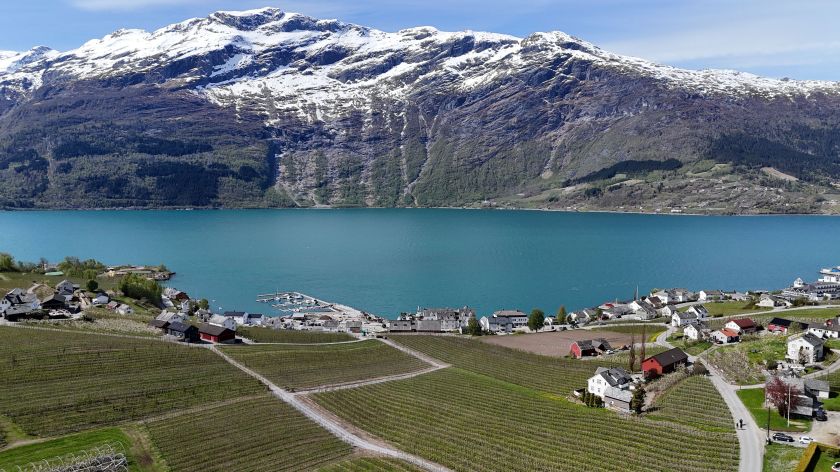
Over the past ten years, Norway has seen a huge transformation of how cider is both produced and perceived there. Having observed this from afar via occasional bottles, impromptu talks at events, and Adam’s evocative article last year, it was only when I got a chance to visit that country that I could truly understand the scope of those changes and the context in which they were affected. Changes that have created a vibrant, modern cider scene, a new cider culture even, that tightly integrates farming, gastronomy, tourism, and more, despite the incredibly tight controls surrounding the promotion of alcohol in Norway.
In early May this year, I was given the opportunity to visit the Hardangerfjord, probably the beating heart of Norwegian cider making, though by no means the only region that is part of that change, to visit the Hardanger International Cider Festival and satellite events around it.
But first, let’s put some things into context.
When cider was first made in Norway is slightly contested. There are some that say that the drink Bjórr, going back to Viking times, was apple-based, being a kind of proto-cider, though the consensus seems to be that this was a strong, sweet, malt-based drink, with honey, berries and herbs added, and probably the likes of crab apples in the mix. Though (golden) apples did of course have a special meaning in Norse mythology, I will stop there before I end up down another rabbit hole.
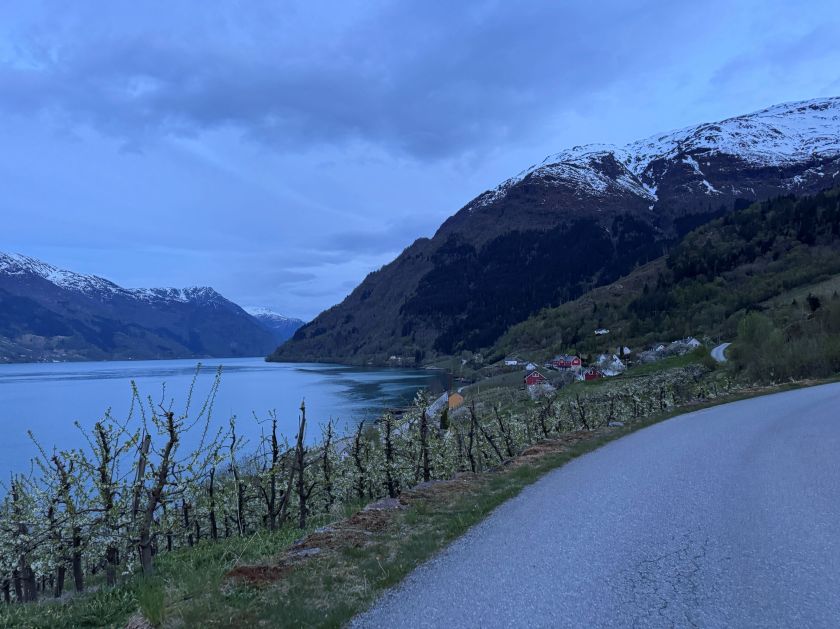
What we do know, though, is that apple cultivation was established along the Hardangerfjord in the 13th century. Cistercian monks had settled the area and realised that the relatively sheltered environment, combined with the temperature-buffering effect of the sea, meant that a narrow strip of arable land along the shores were well suited to fruit growing. While temperatures might not be as high as elsewhere, there was plenty of light and enough warmth in the growing season to help ripen fruit.
The first documented evidence of fruit being sold in Norway was in 1665, and it was cherries, not apples. It seems that the commercial trade in apples came much later, beginning in 1792 when a gentleman by the name of Johannes Pedersen Aga (Aga being a name still featuring prominently in the Norwegian cider landscape) imported a couple of Gravenstein apple trees from Hamburg to Aga in Sørfjorden, Hardanger – a variety that to this day makes up a significant portion of the apple trade in Norway.
The beginning of cider making in Hardanger is less certain; while some believe those monks were producing cider 800 years ago, there is no hard evidence, and the local culture, as recently as a generation ago, suggests that it was fruit wine from local berries was a standard drink for rural communities.
Carefully cultivated apples, valued for their storage potential during lean months, were maybe less likely to be fermented compared to more perishable berries which abound in that region. Never mind the energy and equipment needed to crush and press apples, a task that has left material evidence in other cider making cultures going back many centuries across Europe but appear to be absent in Norway.
But by the late 1800s cider was certainly being made, transforming from something made for private use to a more commercial form. From the late 19th to early 20th century, delegations were sent to Giesenheim, near Frankfurt, where there is still a school for wine and cider making. Here, Kristian Høye from Bergen and Sjur Aga (there’s that name again) learned about fruit wine and cider making, bringing these skills back to Hardanger. Over the following century, the fortunes of fruit wine and cider waxed and waned, till by the 1990s, cheap imports and a legal crackdown on the heavily chaptalised fruit wines meant that only about 100,000 litres of fruit wine and cider was being produced in Norway annually. By 2005 the last of the old producers had disappeared. But things were going to change.
It’s Thursday afternoon. I land in Bergen and am met by Matthijs Van Meurs from HANEN, a farm trade organisation that, along with Siderklynga Hardanger, has sponsored my trip. More about them later. We’re joined by Bernt Bucher Johannessen, also of HANEN and Greg of Campden BRI who will be giving a presentation at a seminar the next day.
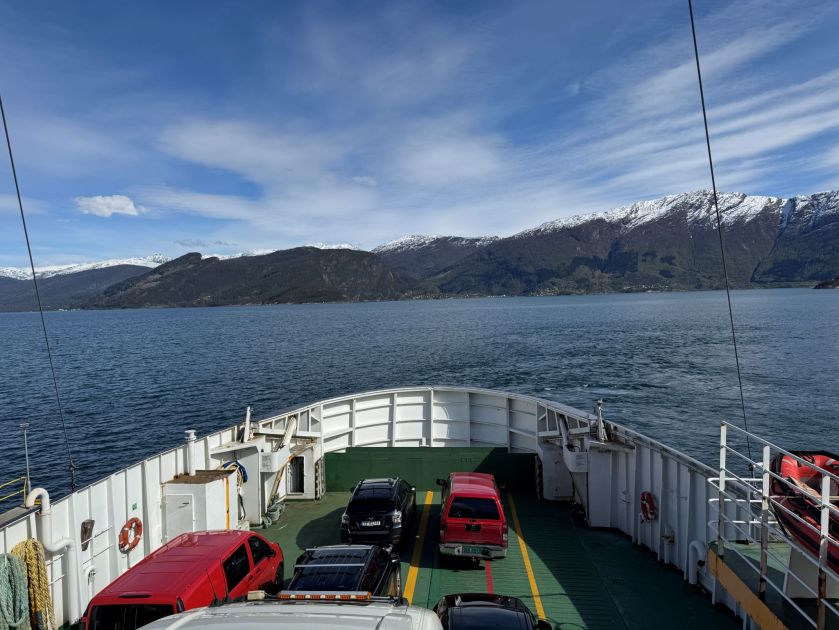
We have a two-and-a-half-hour drive to Utne, with a stop off at a cidery on the way. Winding roads through an impressive landscape that Spring is waking, a 10km tunnel under a glacier-topped mountain and a short ferry ride. The conversation is introductory in nature, but as we progress turns to what is happening in Norway’s cider scene, already a revelation.
After about two hours driving, we arrive at the Bleie farm, home of the Alde cidery, in Nå. Alde is one of Norway’s largest producer by volume, with an annual output of about 100,000 litres cider, plus 50,000 non-alcohol products. It’s almost hard to believe, as it is so compact, built into a converted barn and surrounded by houses where Olav and his extended family have lived for generations. The hillside sloping down to the waters of the fjord is steep, filled with tight, terraced rows of small apple trees, just about to blossom. Gravenstein, Discovery, Summerred, and Aroma. Those four names will feature often on our trip.
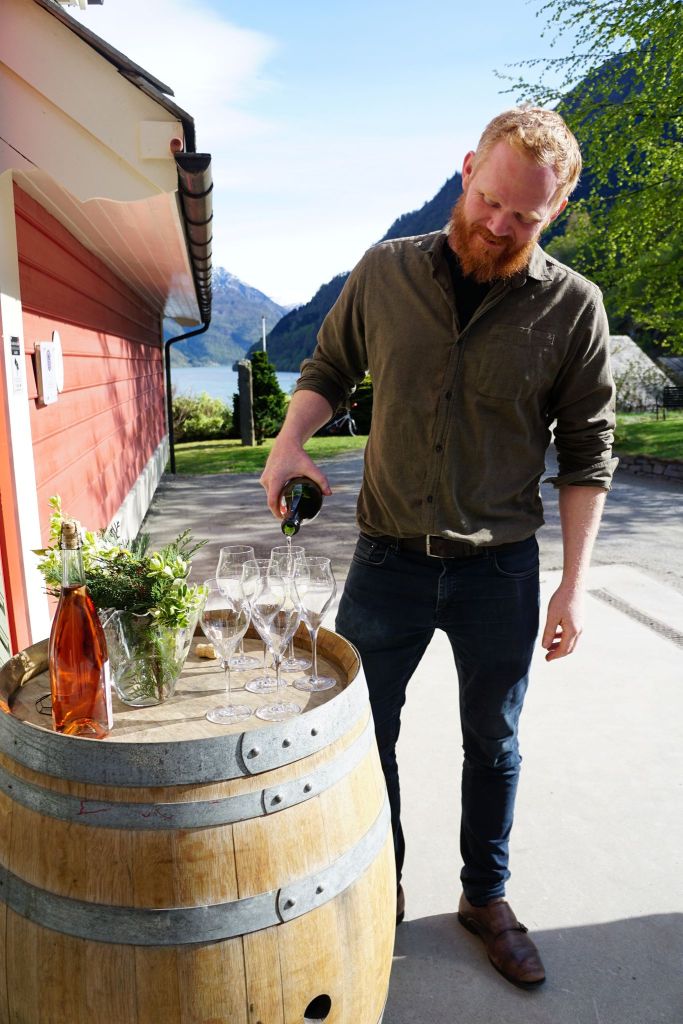
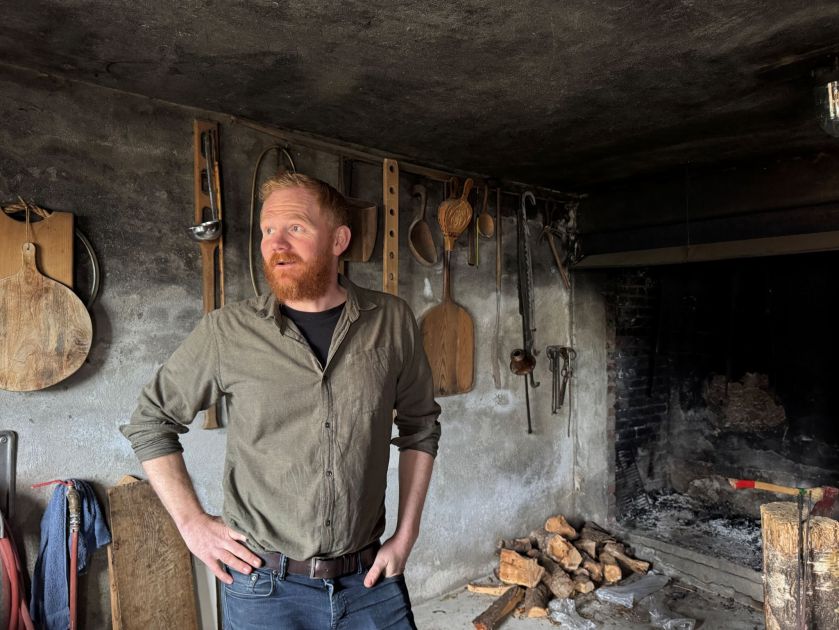
Olav’s father, Lars, was a fruit farmer, as was his father before him. I’m sure it goes back much further. But while Lars used to sell his fruit to the local co-op, the best quality, hand-picked fruit bound for supermarket shelves, now the entire crop is destined to become cider. These days they also need to buy in fruit from the co-op to cover their growing production volumes, the so-called second grade fruit that isn’t as pretty, or doesn’t have enough red blush for the shelves.
We sample a few of ciders. The bestseller made from all four apple varieties, the rosé with a blast of raspberry, a new cider matured in oak. They’re all super clean, acid-led, bright strawberry and light tropical tones, with a residual sweetness that the makers here feel their customers and the natural acidity of the apples demand. Chaptalisation is the norm, perhaps partially from the tradition of the disparaged fruit wines of yesteryear, but also because the growing season here doesn’t always give them the desired levels of natural sugar.
Olav had studied chemometrics, destined for big things in that field, till he decided to come back to the farm and turn to making cider, founding the Alde cidery in 2014. He’s a sociable talker, friendly and intelligent, clearly loving the technical aspects of making cider. You can take the cider maker out of the chemometrician, but not the chemometrician out of the cidermaker! It serves him well.
We were late arriving, and we’re all under time pressure as Olav should be moving on to where we will be staying overnight, for a cider pairing event. We move on but not before I get to see the family’s traditional farmhouse brewing kitchen, something very special to me.
As most of people know, alcohol sales and marketing in Norway is highly restrictive. Though alcohol had been previously banned during a period of prohibition, the state wine monopoly (Vinmonopolet) opened controlled sale of alcohol in 1922, using price and limited access as tools to curb consumption of alcohol. Many farmers were of course still making fruit wine and maybe cider for their own use, behind closed doors, but sales were simply not allowed. Though I’m sure if you knew a guy you might have been able to acquire some on the black market.
But in 2016 there was a fundamental shift that changed the future of cider in Norway. Despite the enormous restrictions on alcohol, Norwegian fruit farmers were given permission to sell their own produce directly from their farm. These farmers, like Olav’s family, pivoted towards making cider. In Alde’s case, they have moved entirely to cider production, 100% of the fruit they grow destined for the press, and they now need to buy in fruit to cover their growing production volume. Others, who we will meet later, still grow fruit primarily for consumption, selling the first-grade fruit to the local co-op, while second-grade fruit gets pressed for cider.
What is impressive is the sheer speed and scale of this transformation. Within that short time, the number of Norwegian cider producers grew from 11 in 2017 to just over 70 in 2025. The total annual production increased from just 15,770 litres in 2010 to 79,047 litres in 2017 – the year after farm sales were allowed – reaching 850,000 litres in 2025, a phenomenal growth in 8 years. By 2025, Norwegian cider accounted for almost 82% of all cider sales in Norway, taking over from Swedish industrial “cider” brands, you know the ones, which were reduced to an 11% market share.
On a global scale and compared to the traditional cider regions of Europe, these volumes might seem like a drop in the ocean, but the rate of growth and the targeted placement of cider in the local culture is quite staggering.
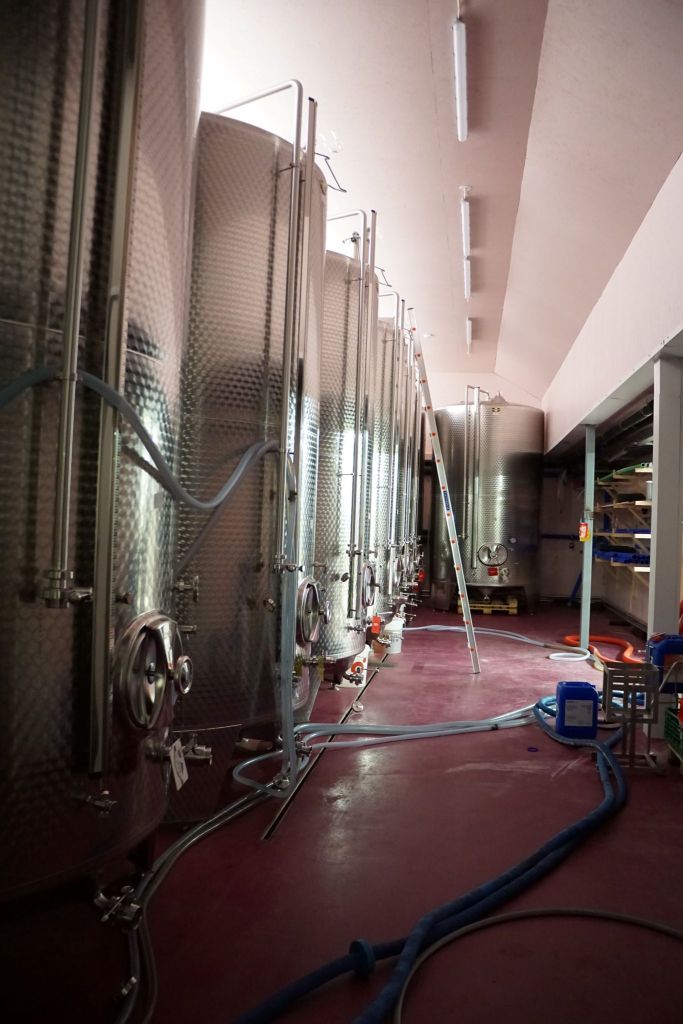
Without fail, all the cideries I visited were super modern, with new buildings or extensions to converted barns and chicken houses, and a lot of high-tech equipment. Large stainless-steel tanks with cooling, crossflow filters as standard, bottling lines with inline pasteurisation, robot arms to stack boxes on pallets. Very impressive and demonstrating considerable forethought, building capacity for future growth.
But how have they achieved so much in such a relatively short time? It must be said, a large part of this incredible investment has been a result of groundwork by pioneering makers across many regions. Names that pop up in conversation include Åge Eitungjerde from Balholm in Sogn, Marius Egge from Egge Gård in Lier, and Nils Lekve from Hardanger Saft og Siderfabrikk and Asbjørn Børsheim from Ulvik Frukt og Cideri, both in Ulvik. Add to that the new inter-maker cooperation within cider clusters, notably Siderklynga in Hardanger and Sogn frukt og siderlaget, and you have a very solid base to build on.
But Norwegian makers also benefit from an unprecedented support network from the State and other organisations. HANEN, NIBIO, Nofima and Innovation Norway all have played strong roles in the promotion of cider, both as a cultural and commercial enterprise.
I’ve already mentioned my hosts, HANEN, Norway’s trade body for farm food and rural tourism. HANEN represents more than 620 member businesses nationwide, covering everything from dairy to grain crops, and of course fruit growing and cider. An executive board sets the general direction, supported by a national secretariat that handles daily operations, while 12 regional teams are run by their own boards and managers. In cider, it’s probably fair to say that HANEN has been a strong catalyst in the changes Norway has seen. It helped secure the right to direct farm sales and works closely with regional maker networks so, today, the majority of Norwegian cider producers count themselves among its members.
HANEN really pushes the idea of adding value to produce. So not just selling apples but turning those apples into cider, increasing the value to the farmer while also integrating concepts for tourism and gastronomy that benefit consumers. They had already successfully developed this model with dairy farmers and cheese, creating a whole new concept of Norwegian farmhouse cheese, so applying the same logic to apple farmers and cider made sense. HANEN basically acts as an advocate, quality promoter, marketer, and tourism developer, launching Siderlandet to serve as a central online resource for information about Norwegian cider, its producers, and the surrounding cider culture in Norway, including developing Cider Routes for the west coast.
NIBIO, the Norwegian Institute of Bioeconomy Research, also plays a large support role for makers. I will come back to them later, though the name alone might be a spoiler.
Nofima is a food research institute that collaborates closely with NIBIO and cider producers, using its sensory expertise to map the flavour profiles of Norwegian ciders (I think they are developing a new flavour wheel for Norway). They were actively involved in European-wide projects like Uncorking Rural Heritage, aimed at enhancing the value and typicity of regional fermented drinks from regions with rich agricultural traditions but struggling local economies.
And then Innovation Norway enters the picture with advisory and financial support for Norwegian industry. In the case of cider, they have directly supported the growth of cideries by providing growth financing and funding for new production equipment. This answered one question I had on how some of those bottling lines and building expansion could have been funded. They will even cover salaries for short periods, on the understanding that there is a growth plan, and certain targets are achieved. An amazing boost and relief of financial pressure on fledgling cider businesses.
In short, Norwegian cider has an unparalleled support network. I have never seen anything like it, and it clearly works! Having professionals that know the legal and funding systems of your country, providing support mechanisms for accessing grant aid and centralised marketing must be such a relief for small makers, leaving them to focus on making great drinks and growing their customer base, ultimately making cider more sustainable as a long-term business proposition. How great would it be to see other parts of the world invest so much in cider culture?
We arrive just in time at the Utne Hotel, one of Norway’s oldest traditional hotels. Built in 1722, all wood, small staircases, quirky corners, and almost TARDIS-like in how many rooms they have fit into an apparently small building. Olav from Alde, and Endre from Ølmheim siderhage, arrive just after us and almost immediately our host, Bjørn Hettervik, begins the proceedings, a six-course meal, each paired with a cider from one of the two makers present.
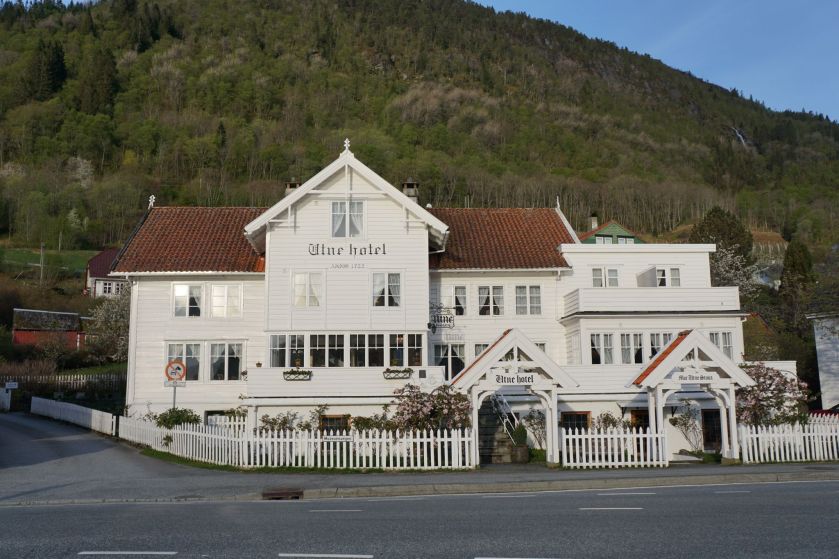
It’s an experience. Bjørn is very entertaining, with stories of the strong women who ran the hotel over the previous 300 years, always with a mischievous twinkle in his eye. The makers briefly introduce the cider before each course is brought out.
We start in a room adjoining the main dining room, a group of 15 people, I think. Endre introduces his Ølmheim traditional method cider, a single variety Gravenstein using ice cider as the dosage instead of sugar. Fresh hay and melony goodness, a good start with what I was told were excellent smoked raw prawns with soy vinaigrette and flowers (I can’t do prawns).
We move to the dining room where stories of the hotel continue and we’re served with the first sitting course. Ølmheim’s pet-nat was made “for fun” with high amounts of Discovery. You can tell, full on strawberry, fresh dough and a creaminess. It’s different to most Norwegian cider as it is unfiltered, slightly hazy. Served with warm, fermented Sirdal trout with a cider sauce and caviar.
Then a surprise, Ølmheim’s still cider made with Discovery. It’s a revelation, much more aromatic than the previous two bubbly ciders, assertive lime zest, fresh strawberries and crunchy green apple. Sterile filtered to stop fermentation and leave some residual sugar (my notes say 12g/L), as is the norm here. Absolute magic with the oily grilled turbot.
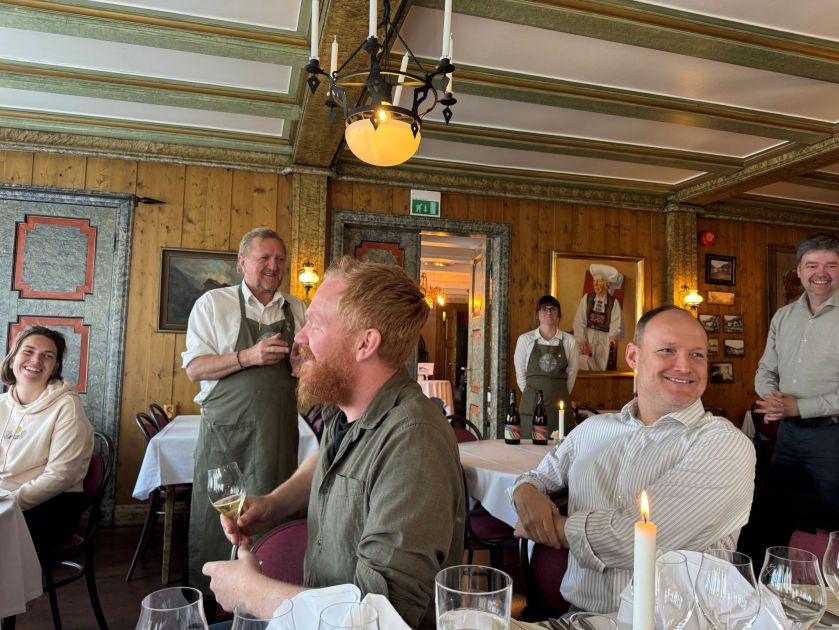
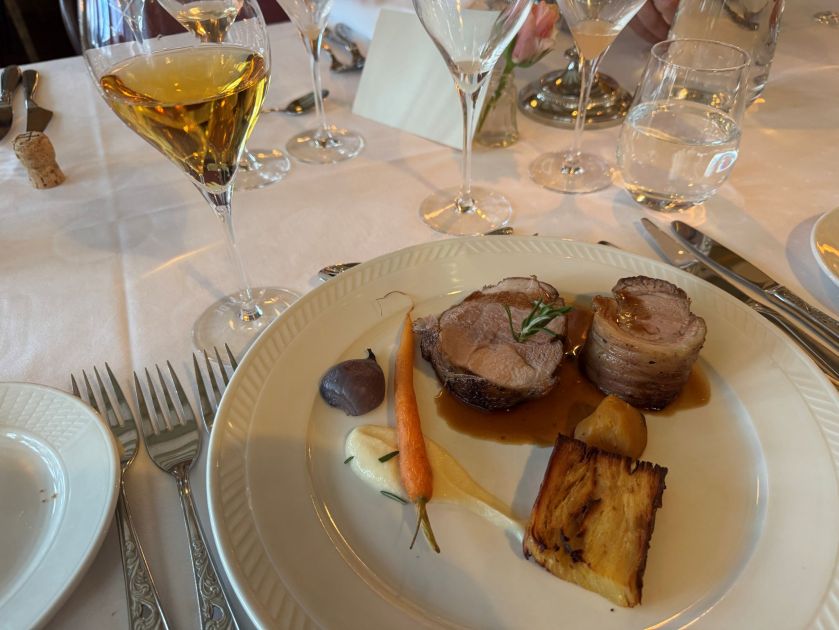
We move on to the Alde set, and an unexpected name on the label: Foxwhelp. Someone nearby is growing them along with some other classic English varieties. This, I later learned, is 35% Foxwhelp, with some Major, Ellis Bitter and others. My brain prepares me for acid shock and wholloping tannins, but it doesn’t come. It’s clean, bone dry, evoking lime zest, tinned pear, pineapple – gentle and rather delicious with just a nice bit of grip from some tannin. Paired with lamb from across the fjord, delicious.
Svans, meaning tail in Norwegian is described as a byproduct of making ice cider. The second-runnings, so to speak, as the juice melts and the gravity drops. The first portion, rich in sugars, is used for the ice cider, but once the sugar level drops, he collects a portion to make this cider. Though at 1.080, still a lot of sugar, yielding an 8.5% sparkling cider. It’s big. Plum jam, vanilla, mandarin peel and rich red apple flesh. Dangerously drinkable, and a good match for the set of three Norwegian farmhouse cheeses and honeyed hazelnuts we are served. God, I love cheese.
For the finale, apples from Hardanger with vanilla ice cream and caramel, paired with an Alde ice cider made from Discovery. It’s all marzipan, nutty, and big cantaloupe fruitiness, riding a huge zing of acid that cuts through a bold, sweet body.
The pairing decisions were well made, highlighting how the local cider and food can work really well together. What an incredibly satisfying end to a long day.
Our evening at the Utne Hotel was only a small glimpse of something much bigger. Across Hardanger at least, and certainly back in Bergen, cider is becoming so woven into the hospitality offer that it feels less like a specialist drink and more like it’s becoming part of the region’s culinary dialect. Hotels and restaurants build pairings around local bottles, farm tasting rooms serve cider alongside regional cured meats and cheeses, and cider-focussed bar serve as gateways to the wider landscape of Norwegian cider.
That integration is clearly important, as it gives cider a role beyond just retail outlets, though it has to be said those are relatively limited in Norway. It seems to have become a way of representing the place, connecting the fjord, the orchards, the cideries, and the table in a single experience. Organisations such as HANEN have helped make that accessible to visitors through Siderlandet, gathering producers, festivals, recommended cider destinations and practical travel information into one national gateway. At the same time, regional initiatives and clusters (a word oft repeated on my visit) of makers can turn visits into a coherent itinerary rather than a random scattering of individual stops.
And it’s the makers themselves that are often central to that experience. This new Norwegian cider tourism is often built around direct encounters. With the kinds of small-scale cideries we see here (relatively speaking), the person pouring your cider either at the farm or at an event is often the same person who manages the orchard, decides when to harvest, runs the press and chooses how the finished drink should taste. This really closes the distance between producer and visitor in a way that makes it feel more personal. As often happens when faced directly with a maker, a tasting becomes a conversation about weather, varieties, sugar levels, family history, landslides and rockfalls (a topic mentioned with worrying frequency), or why one farm has gone fully into cider while another still divides its crop between the co-op and the press. For visitors, this context adds more texture, while for the makers, it turns hospitality into storytelling, and storytelling in turn into part of the cider experience itself.
What Norway seems to have understood particularly well is that cider tourism works best when it’s not isolated from everything around it. A visitor doesn’t simply arrive at a cidery, taste, and leave. Instead, they can walk or cycle between farms, book guided visits, eat lunch in a participating hotel, browse farm shops, stay the night in a historic hotel, or join a packaged cider safari linking several producers. Over at Ulvik, three farms collaborated to create Norway’s first dedicated fruit and cider route, complete with tours, tastings and seasonal events, while across Hardanger, platforms like Taste Hardanger make it easy to directly book tastings, meals and visits.
This kind of coordination lowers the barrier for tourists and brings more value into rural communities. Shopping local never rang truer. The goal isn’t merely drawing people in to buy a bottle, but opening the door to an entire experience. That, perhaps, is one of the smartest aspects of the Norwegian model.
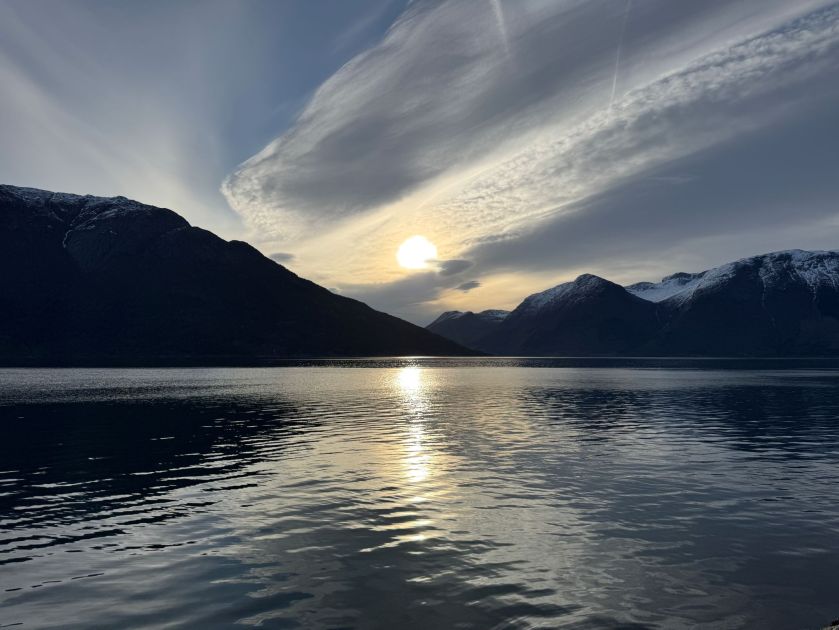
It’s an early start on Friday. We have to get the ferry from Utne to Kinsarvik, then a drive down to Ullensvang where Siderklynga, the local cider makers cluster, is running a set of professional development seminars hosted at NIBIO.
We’re seated in the hall of the research station itself. Coolrooms lead off to the sides, and there is a collection of trunk freezers labelled with cider and apple samples contained therein. Outside there are tractors and front-loaders. This is all about agriculture, the heart of cider itself. But a lot of science too.
The talks this morning are all quite technical, with three international speakers. Greg, who I had travelled with yesterday talks about pasteurisation science, how older models may lead to over-pasteurisation, and new calculations that will give enough protection while potentially saving a lot of energy and time. Even more interesting, how challenge testing can ensure absolute pasteurisation with ascospores from yeast as an indicator. That was a new word for me, and I think the entire audience, as it seems the fact that yeast can produce highly resistant spores in response to stress environments is a relatively new finding.
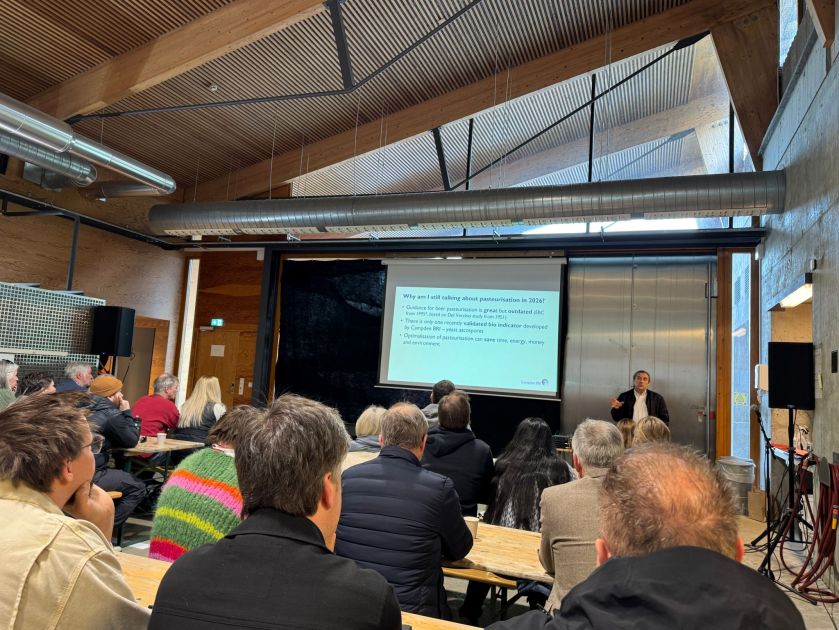
Sigrid from Lallemand spoke about natural strategies to reduce the need for sulfite during cider production. Sigrid is always fun to listen to, and her love for the names of microorganisms is infectious. No pun intended. She spoke about organisms that can help sensoric and storage stability by disrupting unwanted organisms, and inactive yeasts that can reduce the effects of oxidation, improving fruit profiles. Glutathions, another new word for this participant.
And finally, Stefan from Erbslöhe speaking about fining and clearing agents of different sorts, for helping clear and stabilise cider, from traditional “heavy” methods to newer natural products, like pea protein, allowing fining while keeping everything vegan-friendly.
The audience seem very receptive. I’m told a lot of them had also worked in the oil and petrochemical industry, so they appreciated technical solutions to problems.
A lunch of traditional Norwegian Thai food standing in the car park enjoying the sun and chatting, then most of the delegation went back in with politicians that had arrived for a discussion in Norwegian on regulations. We didn’t stay for that…
What became clear at Ullensvang was that the Norwegian cider scene is being built not only in orchards and cellars, or by tourism and gastronomy, but also in seminar rooms and research stations. There is a strongly technical, education-led current running through it. Many of the makers seem deeply comfortable with process, measurement and problem-solving, and more than one person told me that a surprising number had previous or part-time careers in oil, engineering or other technical fields. You can feel that in the way cider is discussed here: not romantically, or rather not only romantically, but as something to be refined, tested and steadily improved.
NIBIO, the Norwegian Institute of Bioeconomy Research, sits right in the middle of that effort. Its field station in Ullensvang feels entirely fitting, this is fruit country after all, and the questions facing cider makers here are inseparable from their fruit farming. What varieties to plant, how to manage orchards, how to understand flavour, how to make better use of the fruit already being grown, all of which falls naturally within its bailiwick. NIBIO is not just producing research but is also offering a place to meet (including regular online seminars, which I was honoured to contribute to a couple of years ago – on perry of course), share knowledge and experience, and allow cider makers to place their work as part of a wider agricultural and scientific project.
An example, with a bit of a diversion on the way. Although there is clearly growing demand for more varied cider styles in Norway, the range of commercially grown apples in Hardanger remains quite narrow. Modern fruit farming prioritised high-yielding dessert varieties with good shelf life and flavour profiles preferred by consumers, and as the new cider scene grew out of the apple farming, so most Norwegian cider appears to be made from the same four apples grown for fresh eating: Summerred, Gravenstein, Discovery and Aroma. If Norwegian cider sometimes feels stylistically constrained, that is partly because the fruit supply is constrained too.
If that sounds like some sort of criticism, I’ll temper it by saying that this perceived constraint also gives Norwegian cider a very clear identity. While a broad range of styles can excite experienced drinkers, tickers in particular, it can also be hard for newcomers to navigate. Buying Norwegian cider is a bit like buying a Bordeaux: you broadly know what to expect. It offers consistency without the homogeneity of macro brands.
But it’s clear that the modern Norwegian cider industry inherited orchards planted primarily for fresh eating, and their ciders follow from that. These varieties are typically high in acid and low in tannin, although here we also see cultural differences, as more than once a maker commented that Discovery had good tannin. Of course it’s all relative, and the Norwegian tannin threshold is low because of the apple culture, but I think that may slowly change too.
Norway did have older varieties with potentially useful traits for cider, but which have largely disappeared from orchards along with the knowledge of how to use them. And here NIBIO demonstrated one of its roles, practical as much as academic, helping makers understand what raw materials they have, and what other possibilities might exist.
A NIBIO pilot project explored whether historic apple varieties and wild apples could broaden the flavour range of Norwegian cider. Working with the Norwegian Centre for Genetic Resources, researchers selected ten older varieties from clone archives in 2022, supplemented them with fruit from private growers and wild apples from Jomfruland National Park, then pressed and fermented trial batches for sensory assessment in Ullensvang. Early results suggested that these apples can produce highly varied ciders, some more successful than others, but the project may give makers a stronger basis for reintroducing older Norwegian fruit into cider production.
An exciting prospect, but as indicated above, there are already some growers with English bittersweet and bittersharp apple varieties, and makers are beginning to experiment with these. But these apples may also fall prey to the technical methods favoured by Norwegian makers. The Foxwhelp and bittersweet blend I had the evening before had relatively little tannin on the palate, and suspecting process may have an influence on that, I suggested to one maker that maybe the crossflow filters are also reducing tannin loads. And it turns out this may well be the case, with one research paper suggesting an 80% decrease in tannin through such filtering processes.
Much like makers in other regions sometime break out of the styles that have defined that region, I wonder if Norwegian makers will start experimenting with less filtering, as Alde has already produced a non-filtered bittersweet blend that had markedly more tannin structure and bitterness. The Norwegian drinking public may not be ready for it yet, but some brave makers might just do it, perhaps shifting that tannin threshold a little higher.
After lunch, we gather the speakers from the morning session to take a tour up the hill to visit the Opedalstunet farm.
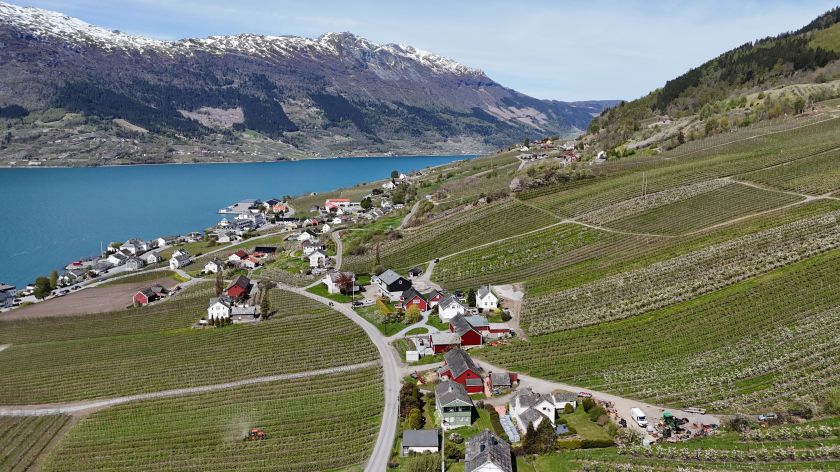
Over here in Lofthus you have a different perspective on the fjord. This part feels different, more open, not so tightly squeezed against the shoreline. The slopes are gentler (again, all things being relative), providing broader stretches that seem to be completely covered in orchards. Apples and cherries in the main, with some plum and pear. Behind us, a hulking wall of stone atop which is the Hardanger Plateau, and over which the Skrikjofossen falls. It’s a most incongruous setting, looking across to the snow-covered mountains on the other side of the fjord, the tiny sliver that orcharding occupies becomes clearer.
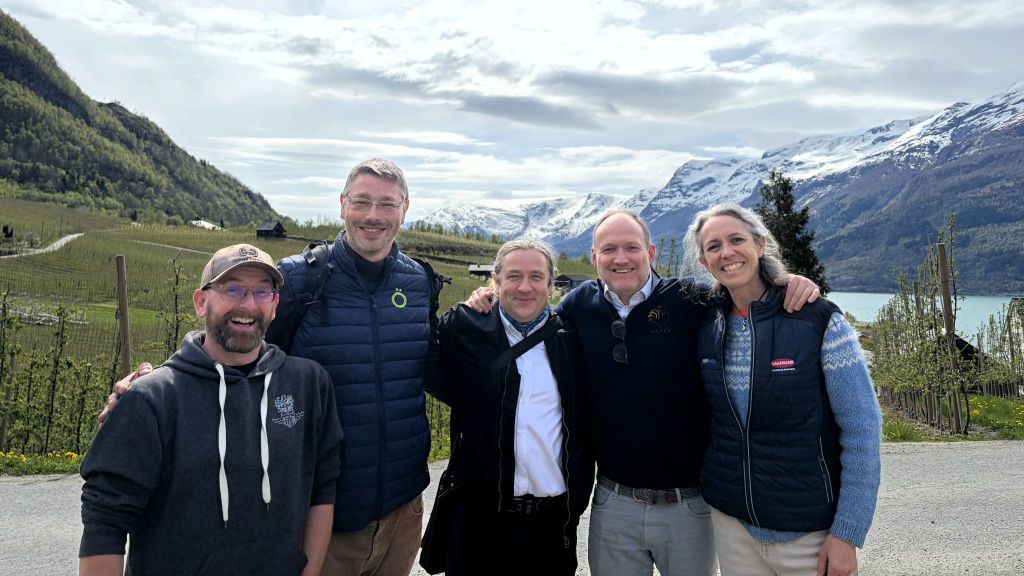
Photo: Sigrid Gertsen-Schibbye.
They were warned we might pass by, but in any case, Matthijs is known, the HANEN card opening all doors. We’re welcomed into the farm shop by co-owner Guro Grønsnes Opedal and shown into the tasting room with a beautiful view over the fjord and the village below. She asks what we’d like to try. Something dry, we say, and she brings out a bottle of Skargerinden, a single variety Summerred that has bottle fermented with a champagne yeast after a primary fermentation with an ale yeast. It’s lovely, crisp and easy-drinking, notes of lime zest, mandarin peel, crunchy apple and biscuity goodness.
We are joined by her husband, Erland, returning from spraying the pear trees, a spray he’s allowed to use once every three years to stop a pest that makes his pears unsellable. We chat about the practicalities of their daily farm life and the move to making cider, the local hotel, tourists and tours. He is 100% fruit farmer. You can sense the quiet confidence of someone who has been doing this for a long time, but there’s also a glint of pride in the cider they are making.
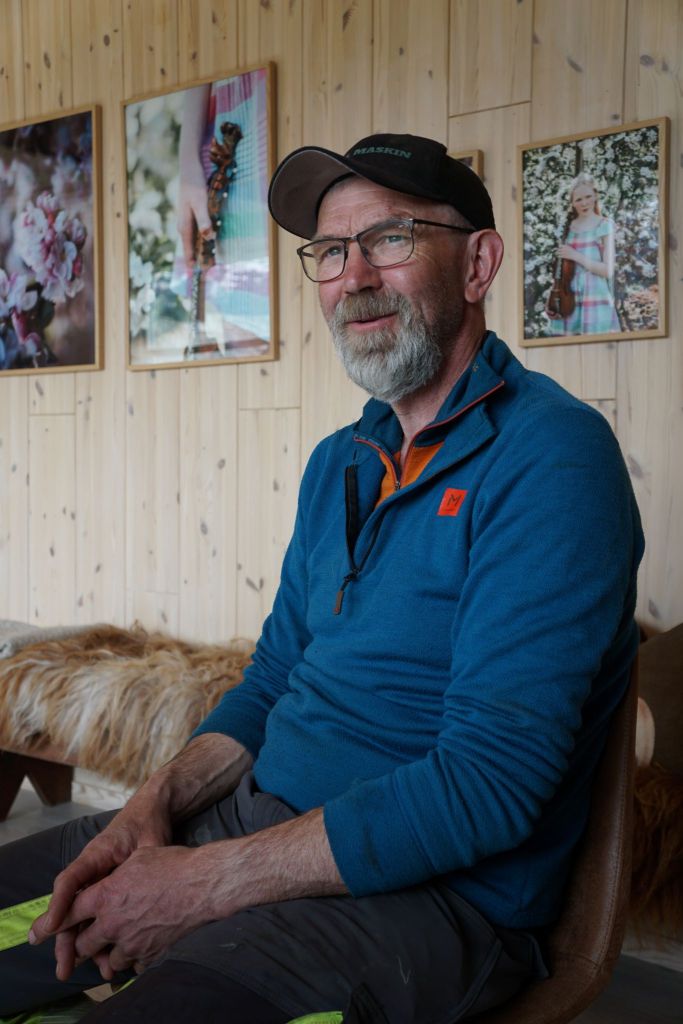
They pour a glass of another cider, that pride is well deserved. This time the off-dry Rabbakjor, made from Gravenstein and Red Aroma, also fermented with an ale yeast. Delicate apple sorbet, lemon meringue, cardamom and a raspberry-like acidity.
Opedalstunet is different to the cideries we have visited so far. It still operates primarily as a fruit farm, with the bulk of the fruit delivered to the co-op and destined for supermarket shelves. They make about 10,000 litres of cider a year, and it all stays very much local, bottles mostly being sold direct or in cooperation with the Ullensvang hotel, with which they do cider tours and large, regular tasting events. Regular in 2025 meant every day during the tourist season, sometimes twice a day, but this year they want to cut back a little, keeping Sunday free, and Monday too, unless there is an urgent need.
A bottle of Solhjul is produced, a blend of Gravenstein, Elster, and Aroma, with 13% raspberry juice added post fermentation. It has a huge raspberry aroma, on the tongue it’s smooth, deep, dark, raspberry, dry pomegranate, a tingle of liquorice. So fresh, so delicious.
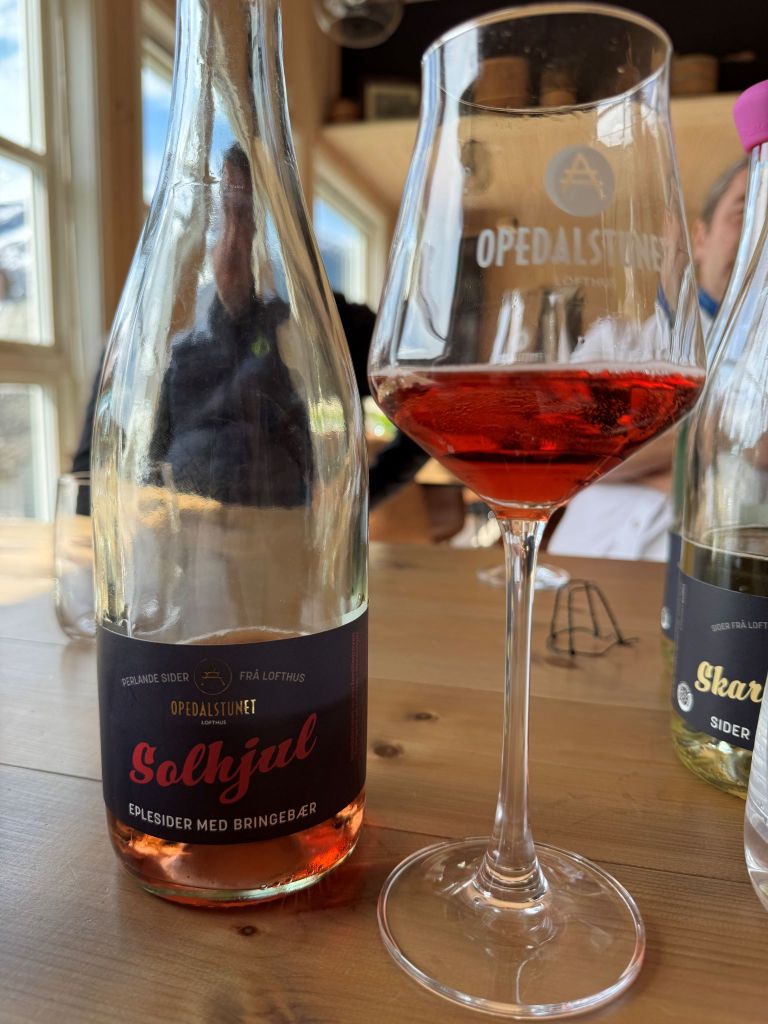
Opedalstunet don’t feel a need to expand their cidermaking operation. They have enough to fulfil their needs and use all their fruit, so don’t have ideas of conquering the Norwegian market. Though they are not alone in the operation, running the farm with help from their three sons, Heine, Gaute, and Anv, but I wonder about continuity. Most of the makers I’ve met so far are young, well, younger than I am, reflecting a renewed interest in the farming life, cider breathing new life into old traditions. But can a small fruit farm and cider support more than one family?
In any case, we must leave to catch a ferry. Ferries seem to set a pace here.
One aspect often pointed out during our cidery visits is that most makers are of younger generations. Many of them have left careers in the cities and large pay cheques in industry and banking, returning to family farms where they see new possibilities, cider linking them perhaps to a more modern, dynamic business life while maintaining a connection to the family traditions of fruit farming.
For many, the fruit farming now serves one purpose, to make cider, but plenty are still following both tracks, delivering fruit for fresh consumption while adding value to their farms by selling fermented drinks. By processing the fruit themselves, whether completely or just the fruit not deemed good enough for the supermarket, they are fully utilising the produce of their labours. As a result, farmers retain a significantly larger share of the total value generated by their farms.
The establishment of on-farm production and farm shops over the past ten years has significantly boosted confidence in the future of fruit farming, and the freedom to develop their own brands is seen as a key factor for younger generations choosing to take over the family farm. HANEN reports that 66% of fruit farmers are feeling greater confidence in the future of their farming, with a real feeling that “farming is cool again”.
But apart from the raw numbers, which already look good and are clearly growing, I wonder if the sense of community, the sharing of knowledge and equipment, the building of clusters of makers where a rising tide truly lifts all boats, is also a factor. I really get the impression that the mutual support networks these makers and their families are building is a huge factor helping to power this revolution in farming and making.
And it’s not just the official organisations like Siderklynga, HANEN or NIBIO. There are informal mutual support networks built between smaller groups of makers. More than once, while chatting with a maker, they reference a piece of equipment that another maker had that they could borrow, or someone who has a filler that can take a magnum sized bottle when their own can’t.
There seems to be an attitude of all being in this together, pushing for the same thing, and they don’t seem to see each other as competition, despite how densely some of them are grouped. Co-opetition might be a fitting word, to borrow from business jargon. In a region where large scale apple farming or cider making is a challenge, cooperation between makers appears to be not just helpful, but essential. But perhaps it is also a healthy side-effect of village life.
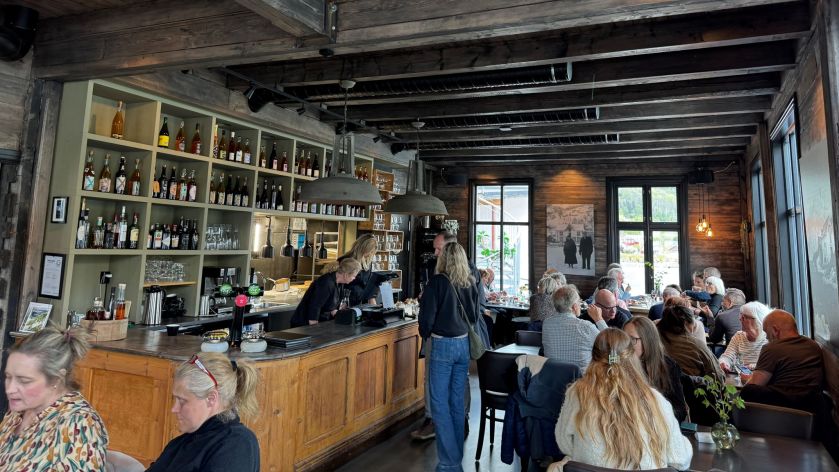
Friday evening is spent at an event at Siderhuset Ola K, in the village of Nå. As a name suggests, Ola K is a restaurant specialising in Norwegian Cider, where alongside a fridge full of wine, and a few beer taps, there is a wall of local ciders behind the bar, and a dedicated cider fridge. It feels fancy and inviting inside, lots of wood, all the tables full, and a large bar where staff are loading squares of focaccia with toppings. Ola K was founded only 5 years ago and since seems to have developed an excellent reputation for tourists and locals alike.
It’s packed, mostly locals it seems, as it’s just the beginning of the season.
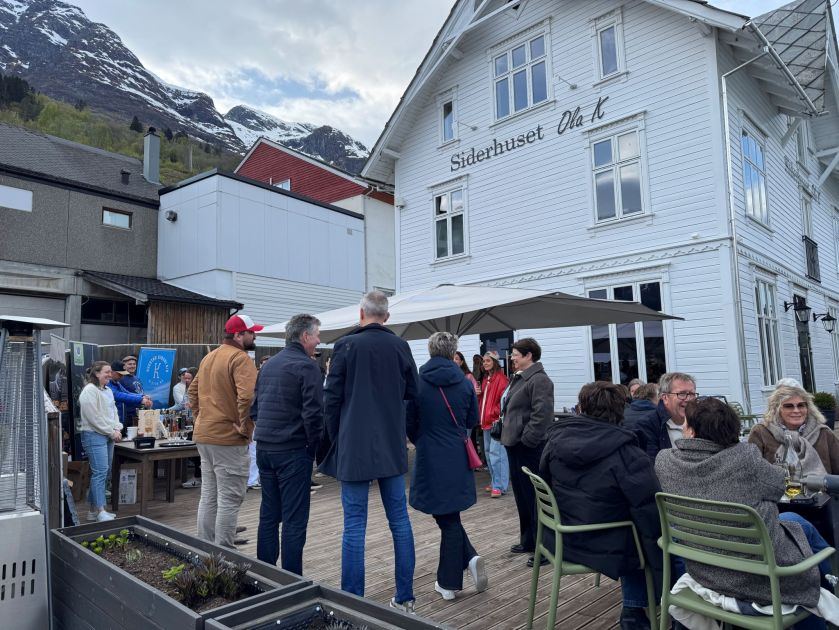
Outside, on the terrace, there is a corner with a sub-cluster of four very local makers, two almost within spitting distance of the venue. Alde, Åkre gard, Kvestad and Store Naa. A mini festival, of sorts, but not so much designed for sampling, more like full-size pours in exchange for bottle caps which are purchased as tokens.
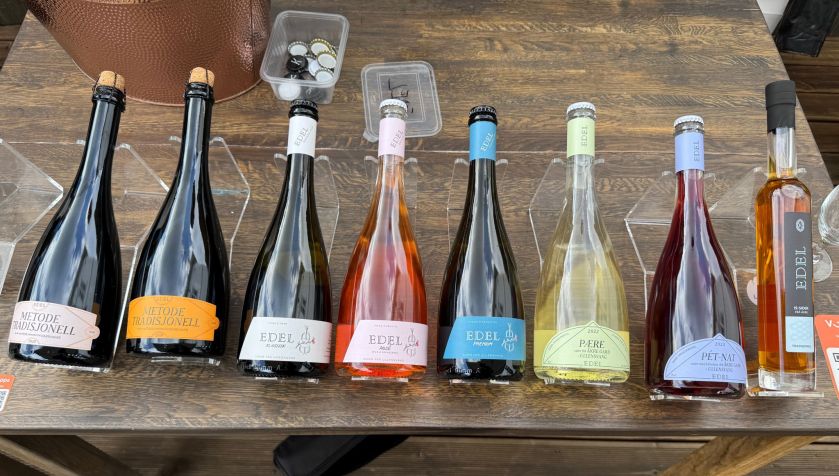
I start with Åkre gard, their ciders branded as Edel Sider in elegantly shaped bottles. I’m already familiar with them as my friend, Benedikt, who now works at NIBIO, used to work for them, and we had many chats about what to do with dessert pears they grow there. I still have a few random bottles in my cellar. Their 2020 Méthode Traditionnelle might be my favourite, nutty, briochey, with highlights of raspberry and cantaloupe. The 2019 has a tick more acid, but is earthier, richer somehow, with a floral and saline character that delights.
I skip Alde, I think I’ve now tried most of their lovely range, but I have a short chat with Abram Goldman-Armstrong, who joined Alde as maker and production manager in 2024, before I step to the right to Kvestad and their Kaizer Sider, named for the band Kaizers Orchestra, a member of which will be playing music later. It’s 8.5%, floral and herbal, with gorse, rosemary, spruce forest walks and a seam of strawberry (discovery?) running through it. I try a couple more, but I know I will be visiting them tomorrow.
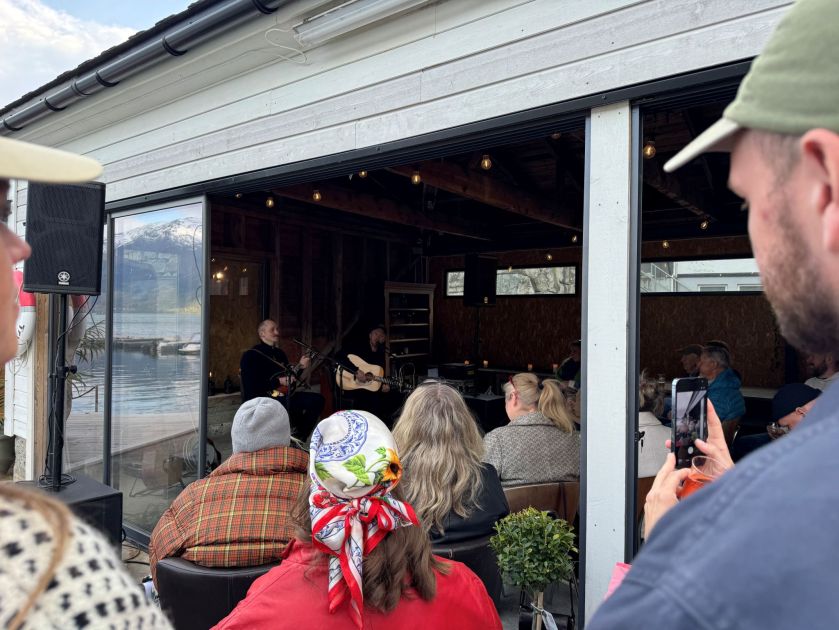
Bernt grabs a few beers for a reset and, with only a quick pang of guilt, we wander over to the shoreside cabin where music has started. Modern traditional, melancholic west Norwegian style. I don’t understand the words, but the feeling seems clear.
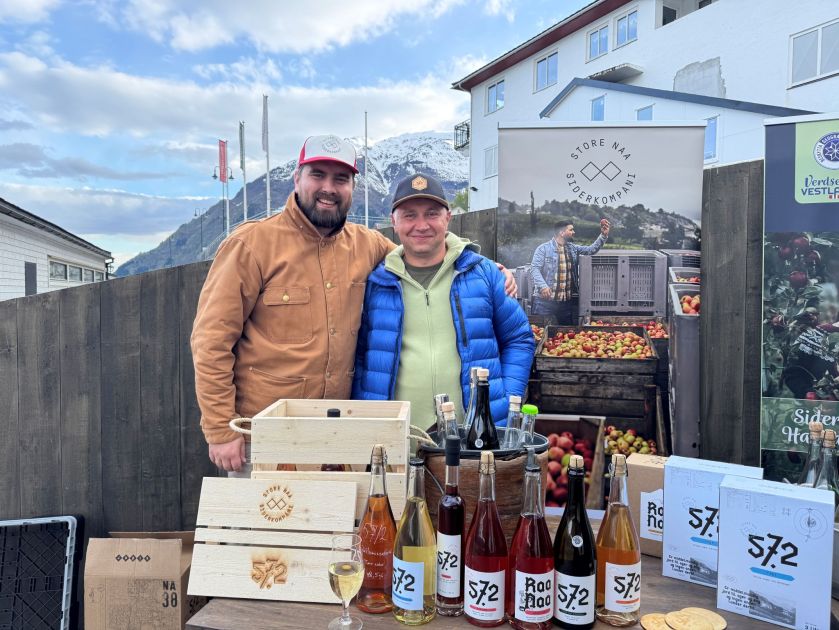
Store Naa I was less familiar with, but their striking labels with the stylised 57.2 on them, indicating their ancient farm and land plot number, really stood out in the duty free and on the bar shelves. I have a chat with the chap pouring and he recommends the Tyst. He pours a larger than usual measure. With a whopping 10%, this has had a lot of sugar added to raise the alcohol, and he explains this is a nod to the fruit wine tradition, where typically the fruit wines were chaptalized up to 17% alcohol. It’s stupidly smooth and dangerous.
Later, when a group of us relax on the outdoor sofas, sharing bottles and chatting, Eirik Nå Aga of Store Naa brings over a cider that has been fermented with a local Kveik strain. Music to my ears, and another connection to a deep, old tradition of farmhouse brewing. It’s super clean, Gravenstein and Discovery, gummi bears and that Discovery strawberry leading the show.
I comment to Olav from Alde that I would have liked to have tasted his Kveik beer, me being a beer geek really. He immediately picks up his phone and makes a call. It is decided, we are heading back up to his farm, with a stop at his neighbour to collect some Kveik beer. This ends up being an entourage walking the 2km up along the slope, with a stop at his neighbour who produces a plastic bottle filled with Kveik beer. He is also enticed out of the house, 20 metres along the road to what looks like an abandoned building, but is a house owned by Olav’s family, where guests sometimes stay. There is light shining from the cellar door, the sound of music and voices. There’s a full-scale party already going on inside, dancing included.
Standing out on the street, we share the bottle of year-old Kveik beer. It is delicious, the juniper used to filter it adding a resinous highlight to the rich, malty beer. I could drink it all night. The brewer, Reidar Eitrheim, learned the technique from his grandfather, and makes it the very same way that generations have had, purely for his own consumption. It was his grandfather who brought that strain with him from Eitrheim, further up the fjord. You can now buy this Kveik strain commercially. I asked how it felt for his family Kveik to now be available all over the world. He said his grandfather always shared the Kveik with the neighbours if they needed some to ferment their beer, so this is more or less an extension of that. It was a privilege to talk with Reidar and drink his Kveik beer.
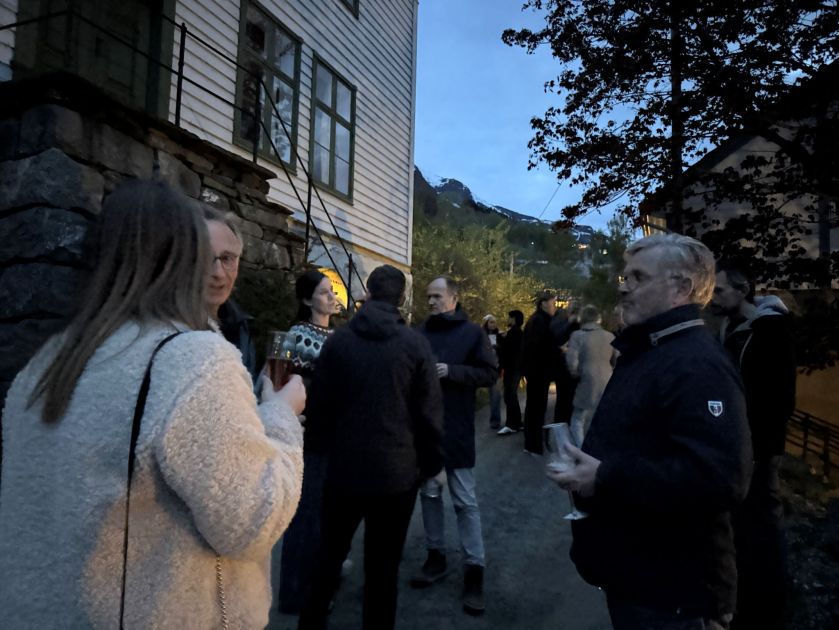
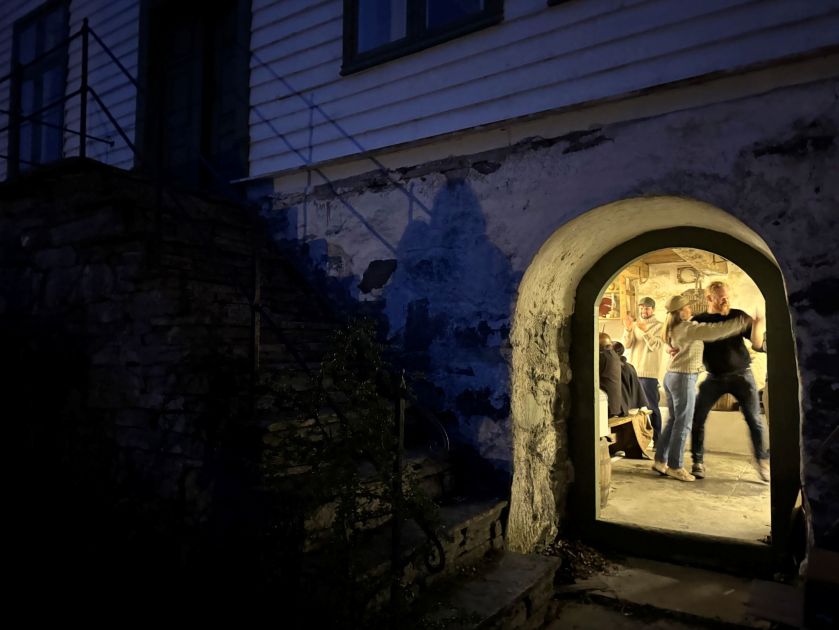
More bottles are opened and shared, lots of Alde cider, and an ice cider from Argentina, courtesy of Abram. The dancing continues, and by 11-ish we decide we should sidle away and not continue the party in the nearby Cinderella bar. It will be another early start tomorrow. Getting old, but man, that was a fun evening, great company, great drinks, as the dark enveloped the fjordside.
While the likes of the Utne Hotel have integrated cider well into their offering, Ola K represents a new style of venue for Norway, places that put Norwegian cider front and centre as part of their offering. And they seem to be growing.
Just a few months before writing this, a dedicated cider bar called Siderbar Bergen, appropriately enough, opened in Bergen. I briefly met Tanja Borge who runs the Siderbar, and it sounds like a brave move to open a bar solely focussed on Norwegian cider. But they are doing all the right things, with daily guided cider tastings and meet the maker events, something for tourists and locals alike, by all accounts.
Even established venues like Bergen Brunsj, a restaurant in Bergen, have taken the rather dramatic step of dropping wine off their drinks list, replacing it completely with local ciders. This was a pretty new move, discussed on our drive from Bergen to Hardangerfjord and, again, indicative of a significant shift in the perception of cider in at least this part of Norway.
I am curious how this will all pan out over the next couple of years, but with the support networks in place for both makers and the various channels selling their produce, Norway seems to be well ahead of the game on this. These are the type of things that you seldom see even in established, traditional cider regions, Asturias being the usual exception. It shows an incredible embracing of this new cider culture, making it an important aspect of the local identity, further cementing it as part of the whole experience when visiting western Norway.
It was a late night, though it could have been later if we’d joined the gang at the Cinderella bar. But we don’t have as an early a start this morning, no ferry to catch, so we have a leisurely breakfast at the Utne Hotel before heading south to visit two cideries, Aga and Kvestad.
Aga Sider sits close to the water, with their own jetty to receive boat-travelling visitors. The main cidery building is a converted chicken house. It’s long, low, and had been extended several times. Mood lighting and paint colour-code each area, from pressing (functional white), to fermentation and storage (pink), to filling and packing (yellow).
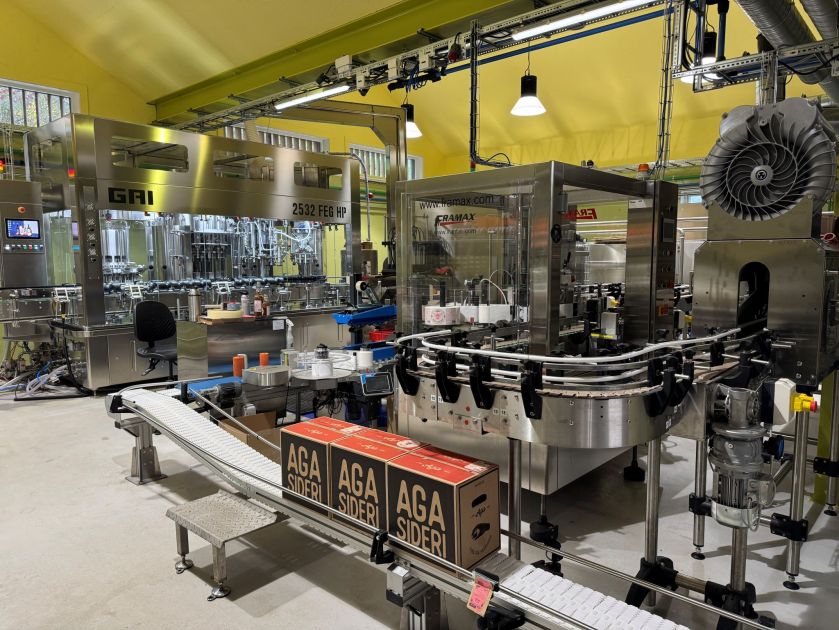
It is by far the most technically modern craft cidery I have ever seen, with an incredibly impressive bottling line, including an inline pasteuriser and a robot arm for stacking filled boxes onto pallets. I lost count of the number of stainless steel fermenters and conditioning tanks they have but of course spotted the ubiquitous crossflow filter. It feels almost over-dimensioned, but they have a plan, building capacity for the future. And well they should.
Aga is the largest of the Norwegian cideries by some margin, with a current annual production of around 200,000 litres of cider, split between four core products, and about 100,000 litres of alcohol free drinks.
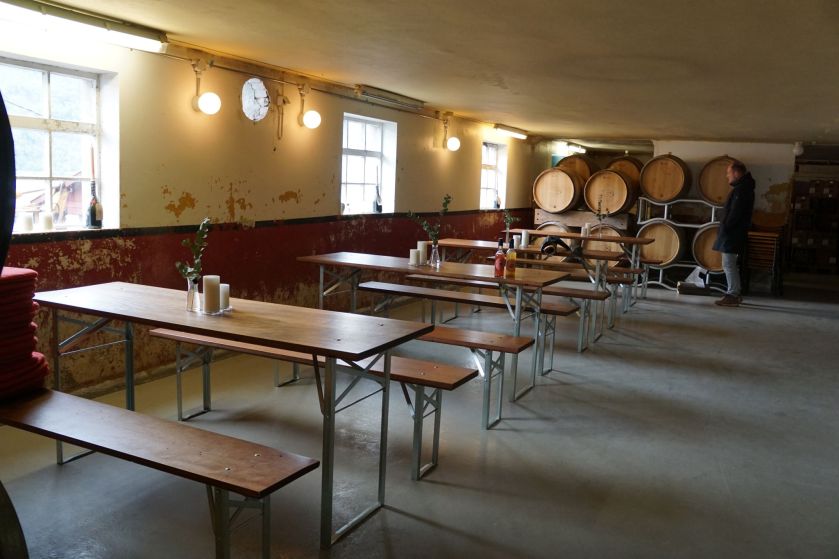
We wander up to the tasting room, via their new tastefully decorated office and meeting room with a window facing the sea. More farm buildings, but the tasting room, former cow stalls that put me in mind of our own renovation-needy outbuildings. Here the character of the original use has been maintained, the chipping paint preserved in place with a clear epoxy coating, foldable tables and benches set out, bookended by the gable walls stacked with oak barrels. A small room beside the entrance acts as the farm shop.
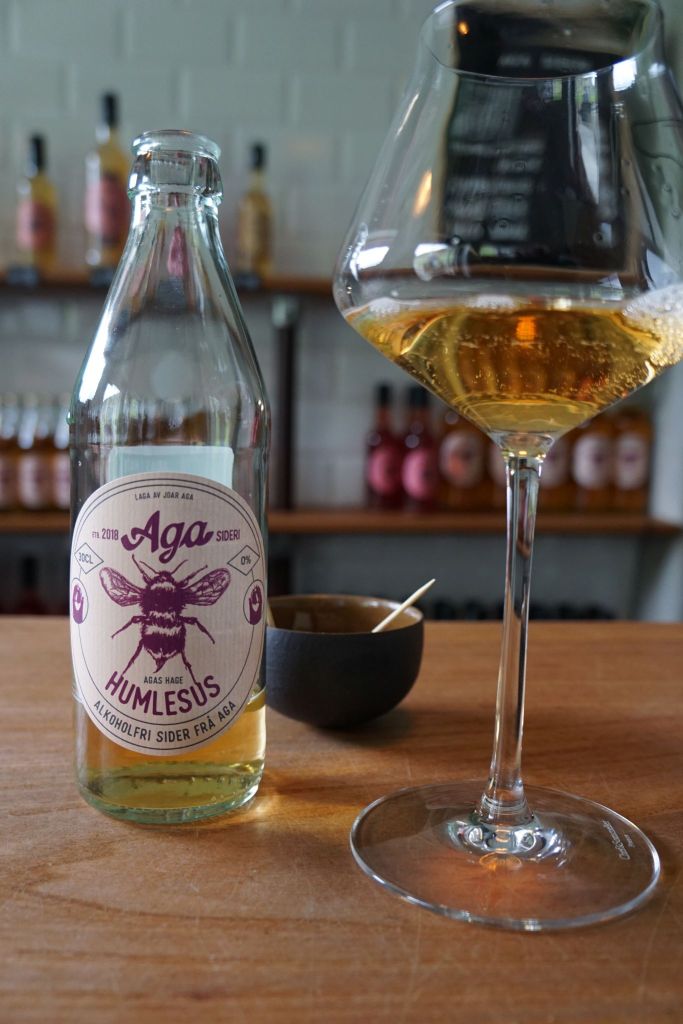
We are treated to an alcohol-free cider that has been dry hopped. It’s probably the best non-alcohol cider I’ve tasted, and is the NA companion to their Humelpung, one of their bestselling ciders, also hopped with Citra.
We’re treated to another delight. Aga provide the leftover pomace from pressing to a dairy farm, making a deal that they would get milk from the cows fed this apple dessert. They then sent the milk to a cheese maker, finally receiving the cheese back after maturation. I love the idea, and it’s perfect with the sweet, hoppy Humlesus.
Cheese in hand, we say our goodbyes to Eirin and make the short drive to the Kvestad Sideri. Kvestad sits a good 220 metres above the shoreline and, standing at the edge of the cider building looking across the steep slope, you notice it! It’s very much a family business, with Ellen and Haakon, their two daughters with their partners, and their cousin Ole Kristian.
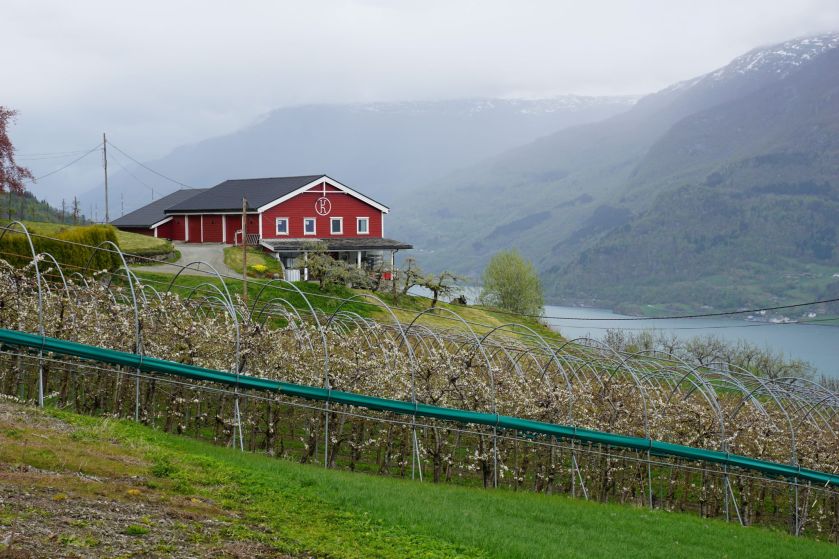
It is Ole Kristian that we meet, a carpenter by trade for 20 years, he’s now fully dedicated to cider making, as production manager and co-owner. His uncle, Haakon, was also in the construction trade, which turns out very useful, as they are building a huge extension to the cidery all by themselves. Stores, more tank space, more stainless steel, less IBCs, an elevator, and a wall of glass providing a panoramic view over the fjord below. And it’s not intended to be a visitor centre, it’s all for increasing production. It’s very impressive.
I like Ole Kristian. He seems shy and admits he prefers to be in the background while his uncle is the storyteller and public face of the cidery. But it is he who crafts their ciders, and he is more than able to talk through what they have done, how they craft their cider, and ideas for experiments and the future.
Like Aga, Kvestad also focusses on a core range, the 1808, which I had tried the evening before, being their flagship. They produce around 60,000 litres of cider and ice cider per year, though with their building expansion I expect that will rapidly grow.
One of the best things I try on the whole trip is a single variety Gravenstein straight from the tank. Just off dry, with massive tropical flavours and a wonderful body that I really didn’t expect. It put me in mind of the very best of Styrian apple wines. I opined that I’d bottle it still as is, so delicious is it, but the plan is to use it in a blend. I should have asked for a bottle to take home with me.
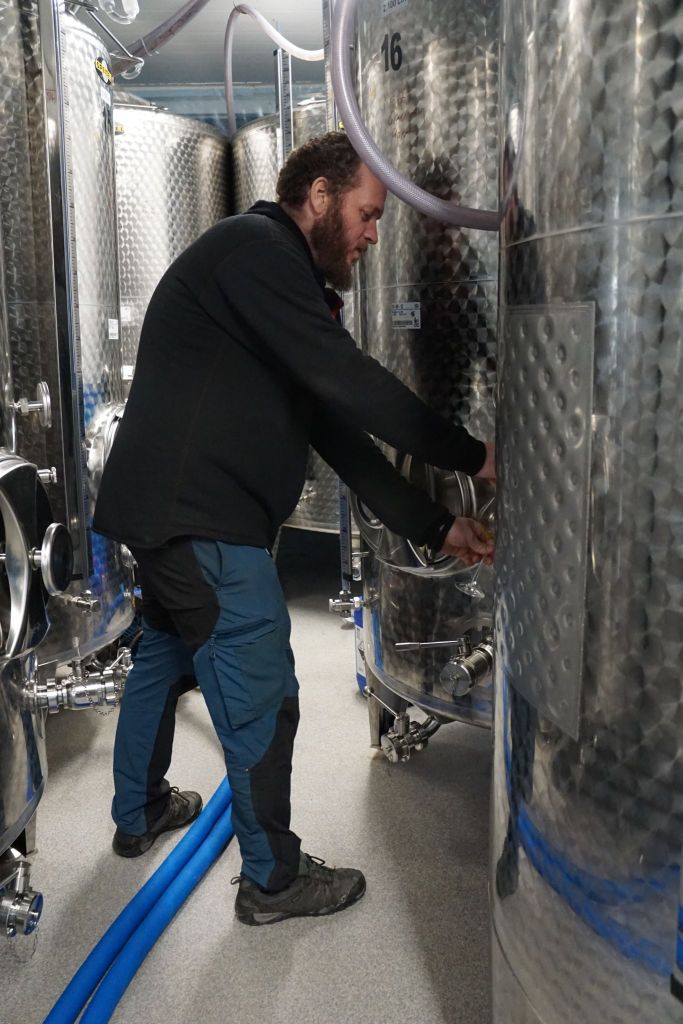
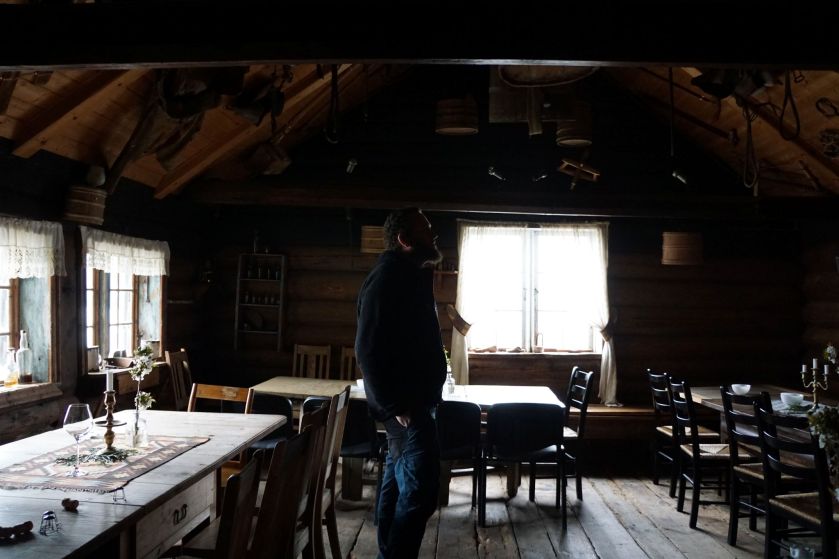
As we wander over to the oldest building in the farmstead, the building that features on their 1808 label, we cross a stream gushing down from the mountain. I was curious about the water supply for settlements along the fjord, and of course it is the glacier and mountain above that provide a constant supply of spring water. This is not just used as drinking water but is also cleverly used as the cooling system for the jacketed fermenters in the cidery. Always cold.
Seen one by one, the cideries around Hardanger are impressive enough, but what kept popping up during our conversations was how rarely any of them spoke as if they were building alone. Again and again, our chats included nods to other makers: those who had helped with a bottling run, who had lent equipment, who brought a tractor over to haul pallets of bottles up the zig-zagging roads, who was building something nearby. For all the individuality of each of the farms, there was a strong impression of it all being a shared endeavour.
Nothing demonstrated this more than at Aga, when I was handed a bunch of Hardanger Sider Notebooks. It’s essentially a beautifully designed cider tasting notebook, of course with information on Aga and their four core ciders, but at the back is a map and a listing of all the cidermakers in the region – 23 at the time of writing, but Eirin told us they are probably due an update as the number of makers increases – with the title “Still thirsty? Visit some of my friends”. I think that really encapsulates the feeling of community and identity in a very practical way.
That Hardanger identity is also encapsulated in the Protected Geographical Indication (PGI) for Hardanger Cider. Approved in 2009, it is a tick stricter than your average PGI, allowing only cider where 100% of the processing is carried out in the fjord itself, but also only 100% made from apples grown there too. Of course, this means consumers know exactly what they are getting and where it comes from, but it was put to me that it is seen as a crucial tool for promoting the value of Norwegian products abroad. One senses there is a much larger long-term goal in action here, and while Hardanger was the first to achieve this status, other parts of Norway may follow suit, given the steady rise of cider making in other parts of the country.
And it was at our next stop, the Hardanger International Cider Festival, where one could see that sense of identity at a different level, encompassing all of Norway.
The rains started while we were en route to Odda, the town at the very end of the Hardangerfjord. We park and take in the view down the fjord, the industrial complex at Eitrheim, all conveyors and pipes and silos, sticking out like a sore thumb into the waters, though I had to admit finding the contrast kind of attractive too.
There has been plenty of heavy industry in Odda too, and the Hardanger International Cider Festival has its home in the halls of a former smelting works. Outside there are food stands, water periodically cascading off the gazebo roofs. Last year, I was told, the weather was fantastic, so everyone was outside enjoying the sun. Today, there’s a large group in a big tent enjoying salsa-esque music, drinking glasses of cider, while outside it’s practically deserted, people dashing their way between food stands, the music tent and the cider festival proper. After a hotdog, we make our way to the main hall where the place is heaving.
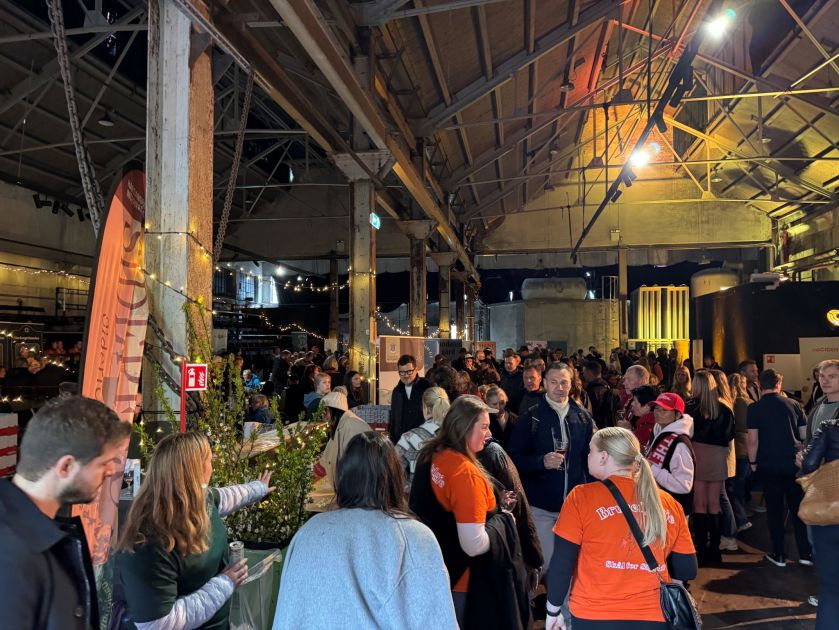
The format is interesting. Like a Cider Salon on steroids, each maker had their own table, but round, with seats surrounding it, and people move from table to table to have a glass of cider and perhaps chat with the maker, but more often than not just socialising with their friends. With the inclement weather, this means that every table is crowded, so stealing snippets of conversation with makers is difficult, as they have to continually serve and advise. Except for the Alde table over in the far-right corner: they seem have a whole team of friends helping, so everything seems less stressed over there.
You get a glass and purchase counters which you can exchange for a drink. These aren’t really sampling sizes, they are proper serves, so I have to be careful in the beginning, as I want to taste broadly to get a better feel for what is on offer.
Though not by design, I seem to speak with only women makers, and all from outside the Hardanger region.
I was eager to visit Silje Osnes’ table, having chatted with her about Ireland and cider while at Ole K’s the evening before. Silje returned to take over the Strupstad farm in 2008, a good 350km north of where we are now sat, closer to Trondheim, and a farm that was once home to her grandmother. In 2020, she founded Tingvoll Sider, leaving her work as a sports teacher to fully devote herself to fruit growing and cider making. With patience, resolve, and no small amount of faith, she has single-handedly brought that family inheritance back into bloom, planting new orchards targeted on cider production.
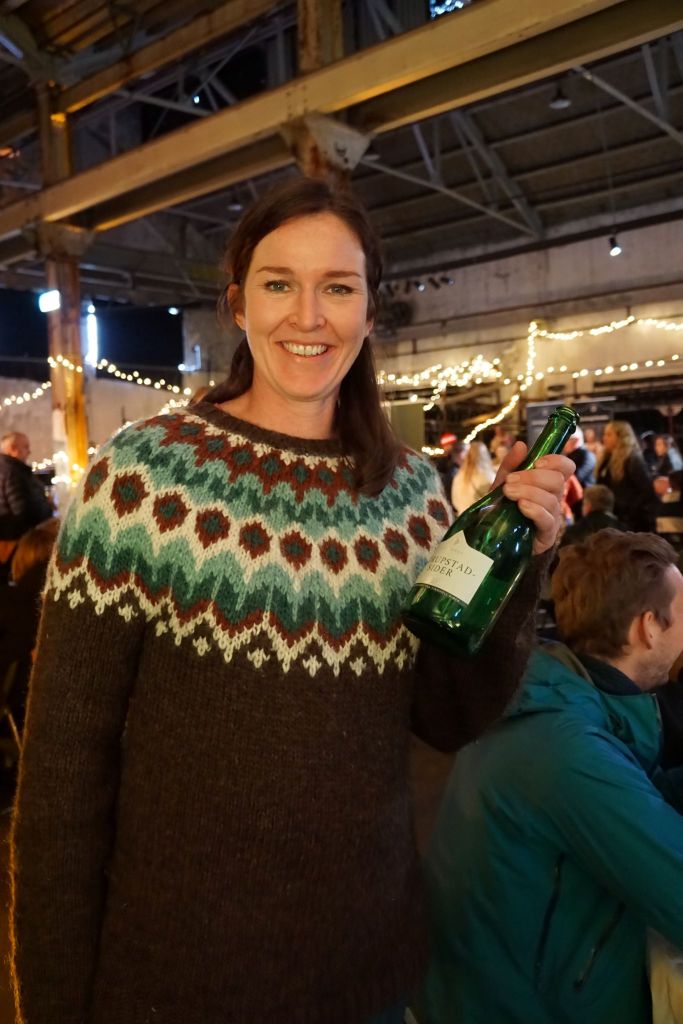
I sample a Strupstad Sider, spontaneously fermented, super clean and vinous. Then her Vintersider, a 9% Elstar and Aroma made from the second runnings of melting juice, the first part of which was destined to become ice cider. Aged in Jack Daniels barrels, it’s honeyed and vanilla-toned, exploding with raspberry freshness, the oak notes adding structure. Then up a notch to her Bråna ice cider. Massive, caramelised strawberry, sweet, with a fruity acidity cutting all the way through. Impressive work.
Matthijs, probably sensing that I might just stay there enjoying Silje’s ciders, prompts me over to Epli Sideri’s table, where I am introduced to Inger Eide, co-owner and maker. Epli’s home is here in Hardanger, at Seske, on the opposite side of the fjord from Nå, with its roots from 2015, when Inger’s husband and his bother began making juice and cider. They’ve changed a lot since then, expanding with a new premises in 2024. My notes are getting rushed, I’m giving up on details, but what I taste is good, a sharp, bready cider with Aroma, Summer Red and Gravenstein, the blood of Hardangerfjord.
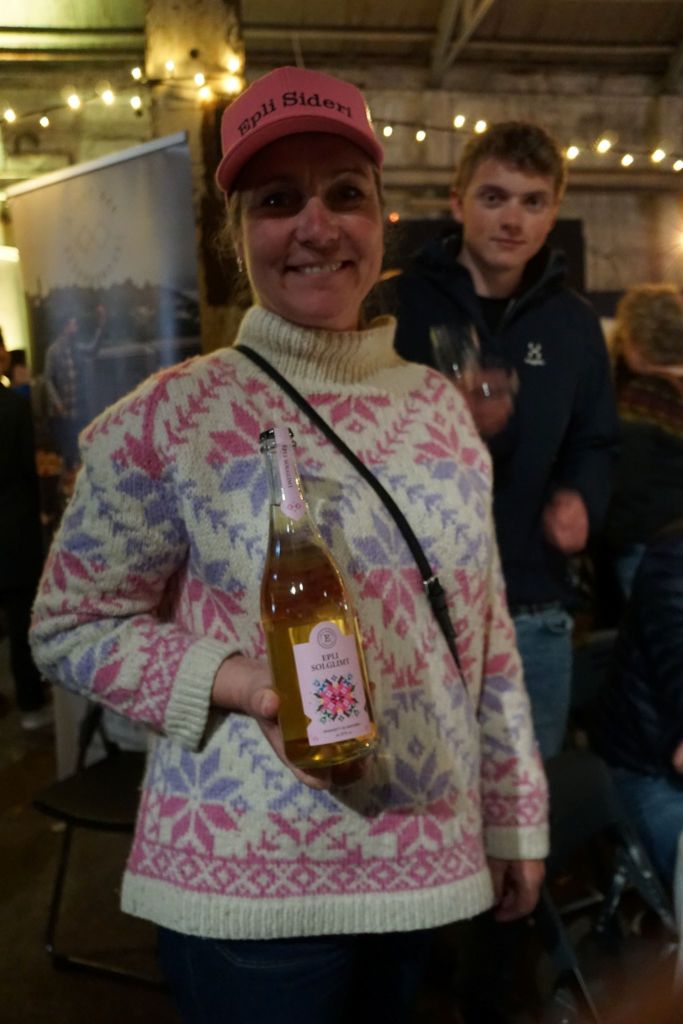
One more stop before we begin the drive back to Bergen. Over to meet Gunn-Turi Ådnegårdfrom Egge Gård, from the village of Lier, not too far from Oslo. It’s based on an old farm that has been around since 1702 and is now part-owned by a larger drinks company, the Gaia Group. Egge Gård boasts a number of firsts for Norway, including the first sparkling wine, made from their own vineyards, and more recently a new alcohol-free ice cider.
We try the Rosé, apparently a new recipe since 2024, when they adjusted it to be drier. I approve. But even more interesting, I’m told that as well as the raspberries that give it its blush, there are also bittersweet varieties like Ellis Bitter and Major in the mix. Interestingly, Egge Gård only produces traditional method ciders. The Rosé is flavourful and has a lovely hint of raspberries. We don’t linger too long, the table is extremely busy, and Gunn-Turi is wrangling the crowds at her table on her own.
While the Hardangerfjord seems to be the beating heart of the new wave of Norwegian cider, it’s great to get a perspective from beyond its shores. There’s a still a lot to discover here.
Ok, one more stop, back to Alde to say goodbye and deposit a smuggled bottle of perry for Benedikt and Abram, so they have something to drink while brewing the next day. Yes, beer. Leaving the festival grounds takes a little longer as we chat with the owner of a new cider bar in Bergan, and I am accosted by very merry youths who needed a lighter, and thought I was from Scotland. We make it out and head for a burger before the drive to Bergen, with one last ferry, where I am dropped at my hotel, ready for a quiet evening.
What a day!
I know, that was a lot to take in, and that’s exactly how I felt on this whistlestop tour. It is a lot to take in! What stays with me most is probably the sheer speed and scope of how the Norwegians have created a new, modern cider culture. In little more than a decade since farm sales were permitted, Norwegian cider has moved from almost nothing of commercial scale to possibly one of the most dynamic drinks stories in European cider. A big bang, as HANEN describe it. Considerable investment continues to flow into the cideries and all that surrounds them. The number of producers has been multiplying steadily, while the number of individual products made has exploded from just 5 in 2010 to an estimated 175 in 2025. Sure, by the standards of traditional cider countries the volumes may look modest, but the pace of change is remarkable. It might sound a bit grandiose to say that cider seems to have become an expression of a modern rural Norway, but that’s how it feels when you are there.
What makes these changes especially compelling is that Norwegian cider hasn’t developed in isolation, just a drink on the shelf. It has been woven into a broader experience of place, something that feels remarkably complete for such a young, modern cider culture. I’d say that the clear integration with tourism and gastronomy isn’t a side-thought, it’s basically the whole point. In that sense, Norway has done something many longer-established cider regions still struggle to achieve: by design, it has made cider part of the cultural and economic fabric of a region, not just a drink.
But despite all the figures, tasting notes and anecdotes, I am not sure Norwegian cider can be fully appreciated at a distance. You can taste the bottles at home and read articles like this, but context makes a difference here. You almost have to stand on those narrow, fjord-side strips of orchard, take the ferries, meet the makers, and eat the food, to see how closely the cider is tied to the landscape and to the people shaping this story. Only then does it fall fully into place. Norwegian cider is not only a drinks category in rapid ascent, it’s a modern culture being built in real time, and part of what makes it so exciting is that when you visit, you can feel that happening all around you.
This rather long article grew out of a sponsored press visit to Hardangerfjord, hosted by HANEN and Siderklynga Hardanger. As always, I retained full editorial independence, and every opinion here is entirely my own. I’m deeply grateful to my guides, Matthijs and Bernt, for making the trip possible and for helping me experience so much over those three days surrounding the Hardanger Cider Festival.
All photos by Barry Masterson, unless otherwise stated.
Discover more from Cider Review
Subscribe to get the latest posts sent to your email.


A brilliant report, Barry. The detail you have recorded is superb. I loved reading this. I am massively envious of the Norwegian cider industry. How wonderful to all be pulling in the same direction, to be so deeply supported by stakeholders. In another ten years, how large might their production be?
LikeLiked by 1 person
Thank you, Thomas! Glad you enjoyed the read. It really is remarkable what they have achieved in such a relatively short time. Growth is definitely being built into the system!
LikeLike
This was a great read! I moved from the UK to Norway 2 years ago and never had the opportunity to make cider. We live in Telemark which has an equally strong culture around apples, second only to Sognefjord. I have got ahold of Bramley’s Seedling, Ashton Bitter, Ellis Bitter, Red Foxwhelp, Dabinet, Yarlington Mill and Red Foxwhelp. As you say, Norwegian cider is distinct to other countries due to the abundance of dessert fruit. I have missed the tannic and less acidic ciders of the UK so hopefully can scale this up, they seem to be thriving for now! The key benefit here is that land is actually affordable for younger people with an interest in it, with prices and density in the UK I don’t think we could have ever even attempted it. There is one here called Lindheim Ølkompani that is doing some exciting things with cider, hopefully it can continue to go from strength to strength!
LikeLiked by 1 person
Thank you! So glad you enjoyed it, especially given your local context. Those UK varieties you mentioned Zion are also being grown near Hardanger, though I didn’t quite catch who or where. But will be interesting to see if they start being used without filtering.
LikeLike
I LOVED Norway cider and it was interesting to meet with their cider culture again through Berry’s perspective. I definitely want to visit Hardangerfjord one day!
LikeLiked by 1 person
Pingback: (ingen tittel) - Siderlandet