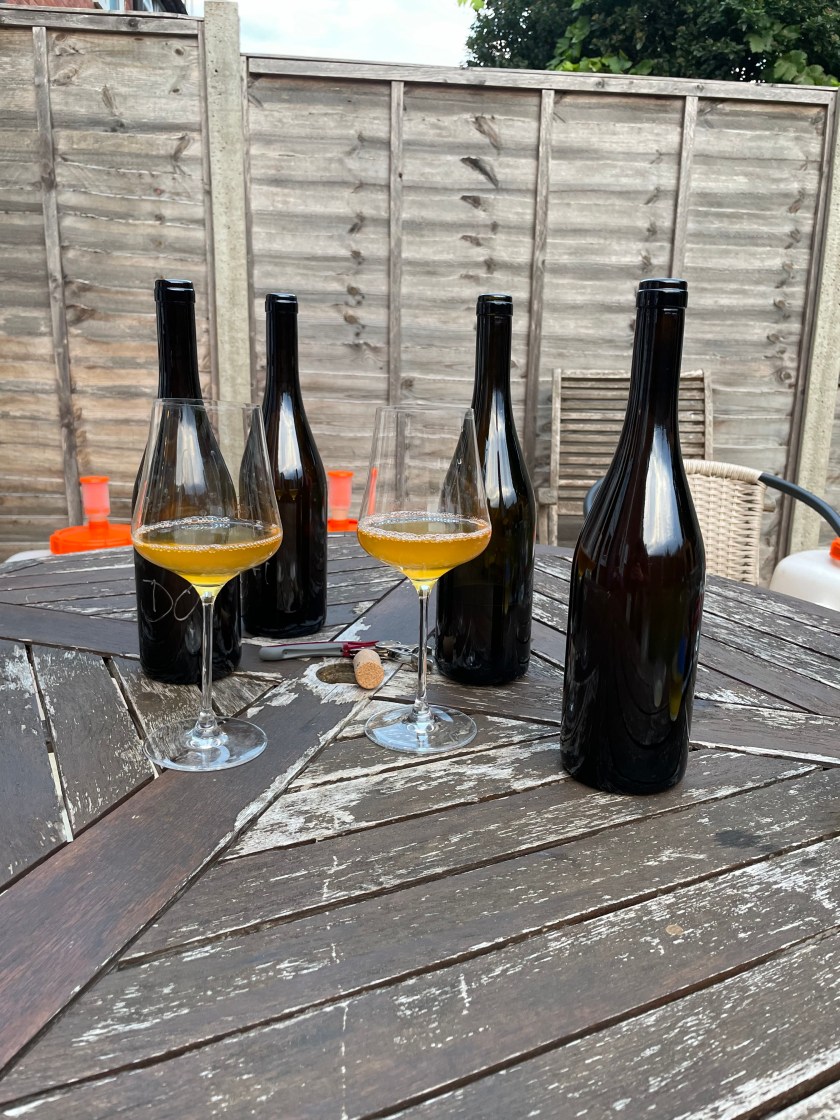
I should begin with a confession. No, perhaps ‘admission’ is closer. I am (please, please let it be so) in a short(ish) time going to release my first commercially-available ciders and, with the exception of five conditioned kegs, they will be fully-fermented and entirely still. So it wouldn’t otherwise be unreasonable for someone reading this to think that, taking to the keyboard properly for the first time in goodness knows how long, I am writing on the subject mentioned in the title out of gimlet-eyed, hand-rubbing self-interest.
But here’s the thing. I am in Frankfurt (at the time of writing this sentence at least). I have spent most of Thursday, the majority of Friday afternoon and, in a few short hours from now, will spend more or less the entirety of the rest of Saturday afternoon tasting much of the best of European cider across almost every conceivable style and category and country. Pét-nat perries that float like clouds, rumbling Dutch fortifieds anointed with oak, the sonorous bass of Norman keeves and the high-toned, off-dry trilling of lightly-sparkled German Goldpärmane. Ice ciders oily with richness and honey; bright rosé from Canada fragrant as late spring.
And amidst all this flavour and texture, this sweetness and light and bubble and inventiveness, the cider that stops me is one seemingly otherwise ignored. A still, dry Norwegian blend of international apples. A brush of bitterness, a whisper of acid and a pink-green-yellow blush of many-shaded fruit. It smells of cherries and petrichor; it tastes of strawberries and apple skins. It speaks in tones that, if not gentle, are hushed amidst the pomp and thunder of the other bottles. A cider that does not lay itself out completely before you in the quick ten-minutes of judging or the hurried sip of a busy tasting. A cider that asks to be unpicked, but which will tell you, if you take the time, entirely of itself.
I think about this again at the apfelwein tavern as we order bembels full of dry cider, measured by the number of gerriptes their content can fill. Drunk without thought, with abandon, a companion to the schnitzel and schweinshaxe, the chops and shoulders and ribs and wurst. The white asparagus at this time of year. The ubiquitous green sauce. Cider is the reason these places exist, but is not, for most customers, the focus. Rather it serves as a facilitator of cheer; a greaser of the gastronomic wheels. It, too, is still, until you cut it – as, after a while, you should – with sparkling mineral water; a benediction of wilful sacrilegiousness; a check to po-faced reverence. The apfelwein houses of Sachsenhausen can’t match, for theatre, the txotx of the Basque country or the long-pouring escanciado of Asturias. But there is nowhere outside Herefordshire where the culture of drinking cider so absolutely fills my soul. And if the apfelwein were anything but what it is – or, at least, what it begins as – still, dry, straightforward; served from earthenware jugs into thick, stubby little diamond-patterned glass beakers, I cannot imagine it resonating with nearly the same arresting twangle of heartstring.

Still cider is almost defiantly resistant to fashion. I have lost count of the makers – great makers, makers whose bottles you will find squirreled into every spare cranny of roomspace in my house – who have told me that great cider should, perhaps must, be sparkling. Everyone who hears about my cidermaking intentions asks me if I’ll also be making anything with fizz. Friends who aren’t especially cider drinkers will sometimes innocently describe still cider as ‘flat’. I recently learned that Little Pomona have, for commercially understandable but nonetheless heartbreaking reasons, decided to distil the entirety of their Foxwhelp solera – the source of what I hold to have been three of the greatest dry, still ciders, indeed greatest ciders of any sort, ever made. Not enough people had been interested, compared to those caught by co-ferments and traditional methods.
In the UK, for the overwhelming most part, still cider is the preserve of the back-bar bag-in-box; rarely the cider its maker is most interested in, often (though certainly not always) kept in conditions that vary from indifferent to disastrous; conditions those same pubs would hold unthinkable for, say, cask beer. If we are talking about aspirational cider, celebration bottles, the sort of thing you’d get out for special occasions and converting the uninitiated, still cider barely enters the conversation. And yes, ignoring the shedful of my own handiwork, by far and away the better part of the bottles in my collection open with a pop. I’ve written before, here and elsewhere, that the bottle that sent me down cider’s rabbit hole was a traditional method from Chalkdown – as far from still as it is possible to get. And no, I don’t think that any still cider would, at that time, have had the same effect. Back then I would probably have called it ‘flat’ myself.
‘Nowhere to hide with still cider,’ a friend of mine said, when I hadn’t yet made a drop, and when Three Wells only existed as a fragment of vague intention. And of course there is nothing ‘wrong’ with bubbles. They are fun. They are almost inherently joyful. But more than this – as my friend was alluding to – they do a job. They add structure and mouthfeel; their carbonic acid brightens and lifts – let’s not forget that the ph of some bittersweets can reach as high as 4.5 (a number that leaves some of my wine friends aghast). Bottle-conditioned ciders with only five grams per litre of sugar to condition them are barely sparkling at all; by the time they’ve aged a few years the bubbles are virtually an aside – but you would unquestionably notice if they weren’t there. Still cider lives and dies entirely on its own merits. None of us who drink cider with any regularity can say that we have never encountered a still expression that didn’t call for a little more zip and lift.
But this, to me, cuts to the very heart of why I cherish great dry, still cider so deeply that I have chosen it to be (for the time being) the focus of my own production. There is nowhere to hide – but why should it want to? I want my cider to be wholly known; to be entirely itself, a picture of apples and yeasts and time and nothing else. An expression solely of the fruits themselves and the way they express themselves in glass. How can we advocate for cider, celebrate the diversity of apple varieties and inflections of terroir, revel in its history and thrill at its potential; how can we suggest it as the extraordinary, spellbinding, complex drink that we know it to be if that brilliance, those spells, are conditional on the presence of bubble or sugar?
By no means all of the most arresting moments in my cider and perry drinking have been conjured by expressions that were dry and still. Look at the praise I’ve lavished on dessert ciders, bottle conditioned ciders, pet-nats and traditional methods in these digital pages alone. They collectively weave a tapestry of astonishing wonder that makes our drink enduringly compelling.
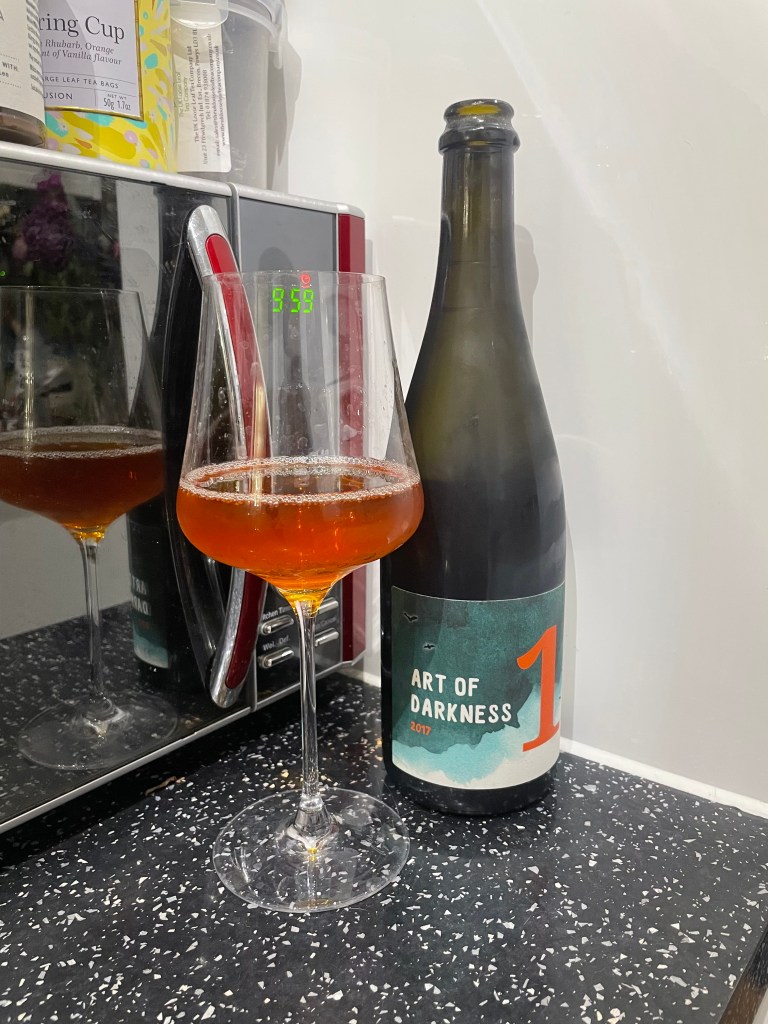
But when I think back on some of the most heart-stopping, soul-thumping moments in my personal liquid record, the concentration of them that were simply the result of diverse apples fermented until dry and then left there without further adornment is almost remarkable, given the relatively small portion of the ciders reviewed here that they comprise. Ciders like South Hill’s Goldwin, my favourite cider in any style of 2025. Like the near-peerless year-on-year expression of Eve’s Albee Hill. Like the Foxwhelp-Discovery blend that so caught me off guard from Rull Orchard, and the beautiful Blossom from Find & Foster, a masterpiece in subtleties, poise, complexity and detail. Like the Yarlington Mill from Naughton that made me want to ferment those same apples from that same orchard. Like the Art of Darkness 2017 trilogy from Little Pomona that were, and remain, my favourite dry, still ciders of all time. Like so many more besides that this article doesn’t have room for, but which I would return for another glass of in a heartbeat.
I was biased before I even became a cider drinker. I’ve spent most of my professional life in wine; dry, still drinks made from fermented fruit held a special place in my heart long before I found myself lost in apple orchards. Aside from the pleasure of actually drinking it, the idea of apple varieties, landscapes, regional traditions, the cycle of seasons and the mindset of maker all adding up to the glass in my hand – still, dry, unvarnished; apparently simple yet achingly complex – has always summoned, for me, a particular romance.
But dry, still cider is special. It has to be – or why bother with cider at all? It is the ultimate defence of the contention that apple varieties matter and can be great; that drinks made solely from these fruits can bring the same complexities of aromas and flavours and textures as those made solely from grapes. It is special because it can be the main event, something that holds the room, or can be drunk with careless joy as the natural side-act to food or company. Because it is as home in the gerripte or the pint glass as it is when swirled in something stemmed and terrifyingly fragile. It is special because it is cider at its most vital and fundamental and revelatory. The least that cider can be and everything cider can be, caught in a single sip. Cider with nowhere to hide. Cider that doesn’t need to.
Discover more from Cider Review
Subscribe to get the latest posts sent to your email.


Hello Adam,
I like your latest article but have a few points to make. I ,too, really like Still cider but rather more medium than totally dry. In the present heatwave, it is difficult to keep cider in BiB or a pouch sufficiently cold, unless refrigerated which is probably going to be too cold. I noticed this last year at two beer and cider festivals I went to, and had to ask for a lump or two of ice. I know that this might appear heathen, but with some ciders at 6-7% I don’t mind reducing it down a bit. This coming Saturday I am off down to Hay on Wye for their festival so anticipate the same problem down there.
At home, I store my drinks in the garage which is normally quite cool but at present about 25%.
Guy Vowles. CAMRA representative for Cheltenham.
PS -From still to bottled carbonated. I notice quite a bit of difference in carbonization. Certainly bottle fermented ) pet-nat, seems to be less fizzy but some others state light carbonization? Any thoughts. ________________________________
LikeLike