My connection with cider comes from a childhood in one epicentre of cider culture (in Hessen, near Frankfurt) and a longtime link with another, the West Country of England. Cherishing and keeping these cultures alive is a mission, and one I’m glad to play a small part in, but perhaps much more difficult is the creation of a new cider culture entirely.
One such nascent culture is Hungary’s. This Central European country has a strong tradition of apple growing, both domestically and commercially, but is not typically associated with cider. However, it is now home to dozens of cider producers as well as a cider makers’ association—and a cider salon! It was at the Orchard Inn in Bristol that Hungarian cider maker Ancha Gergely of Abaliget Garden Projects proposed the idea to Cider Salon maestro Tom Oliver. Then, she followed up by turning this not-just-a-pub-idea into reality on 18 April 2026, with both Tom and Ria Windcaller from the inimitable Cider Chat podcast (check out her episode interviewing Ancha) as special guests.
Visiting a new country is one of my favourite things to do, and I am prone to taking a drinks event as my impetus. When I heard the first Cider Salon outside the UK was taking place in Hungary, a country whose cider scene I was completely unfamiliar with (beyond having tried Ancha’s delicious ciders at several Bristol Cider Salons; see here for Jack’s review of three), I could hardly let the opportunity pass me by. The fact that it was taking place not in Budapest but in the smaller southern city of Pécs also piqued my interest.
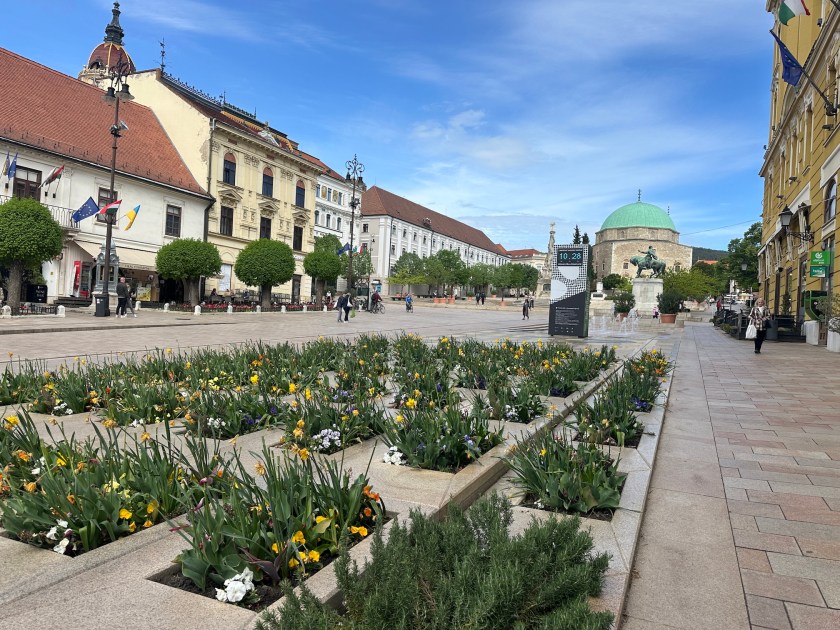
After a few days soaking in the lovely, leafy capital—often literally, in its famous thermal baths—I boarded the train south for my date in Ciderville. At the suitably festive pre-Salon dinner, we tasted Ancha’s single-variety Kanizsai with its gorgeously tropical nose, as well as a cider she’d conditioned using homemade sour cherry juice, which turned the cider salmon pink. We also tried two crystal-clear bubbly numbers from Bright Cider, who make cider in Etyek, the historical sparkling wine region on the hilly side of Budapest: one with a bit of quince, and one a single-variety Húsvéti Rozmaring. This Hungarian heritage apple (Ark of Taste entry here), whose name translates as “Easter Rosemary”, is so named because it is said to keep until Easter and have a pleasant aroma. Ancha uses it as well, including for single-variety cider.
All of this paired well with the food, which in my case was duck broth with crisp springtime vegetables followed by schnitzel served with herbed potatoes and salad. Brought together at a convivial table in the 5th-largest city in Hungary, delegates who’d travelled from various parts of the country as well as Sweden, Italy, the UK and the US—some old friends and some new—chatted about the usual gamut of topics, from national taxation regimes to the perils of voles. The excitement about what felt like the launch of a new cider scene was palpable.
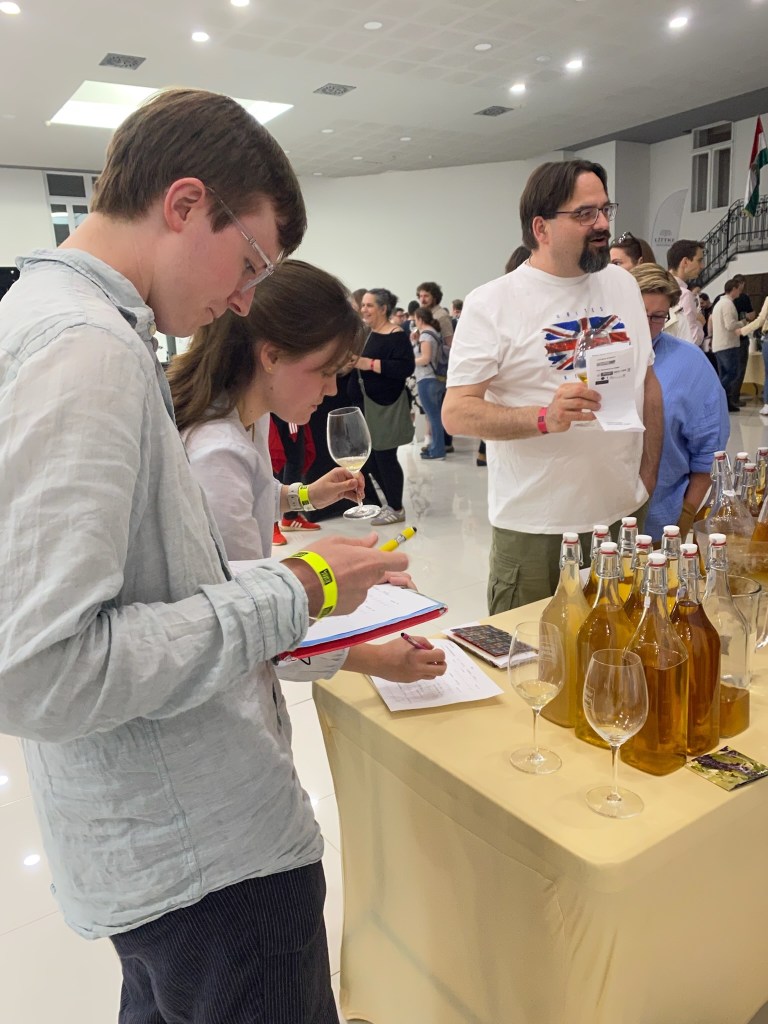
Those who have attended the OG Bristol Cider Salon will be aware of certain rules and conventions: it lasts strictly three hours (it’s intentional that you leave in frustration, says Tom), there may or may not be spittoons present (see Adam’s previous coverage of this issue here), and all ciders will be presented in 750ml bottles. I must say I enjoyed the slightly more leisurely pace of a 5-hour event—and I still didn’t make it to all the producers! There were no spittoons on the tables here either, although that was due to the venue failing to provide them as promised. Finally, the formats were slightly more varied at this Salon, presumably to showcase the entire breadth of the current Hungarian cider scene; most producers were presenting at least some of their cider in wine-bottle format regardless.
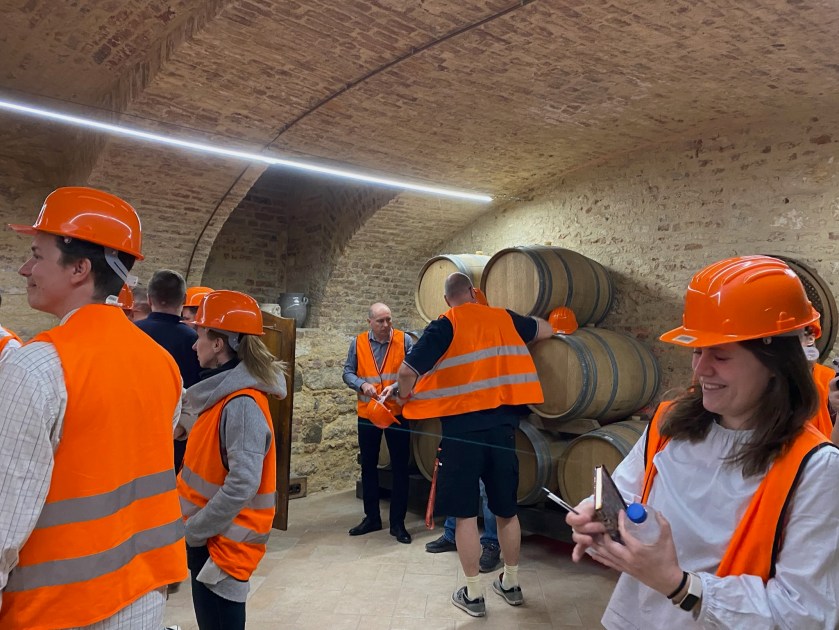
What a Bristol Cider Salon has never started with, as far as I’m aware, is a tour of a huge wine cellar. Our venue for the Salon was Littke Palace, where Hungarian wines have been turned into methode-traditionelle “Champagne” since 1859. True, the tour guide gave us the outdated Dom Pérignon version of the Champagne origin story (for a brief version of the updated narrative—starring cider—see e.g. this article of Adam’s), but it was a privilege to wander the multi-storey network of cellars and admire everything from a hall of bottle-studded riddling racks to the tile-lined charmat tanks which were used in the Soviet era of nationalisation.
Those tanks have been empty for quite some time, but Hungary is still a wine country, with its cider scene just getting going. The makers in attendance varyingly told me that Hungary had no cider culture, or that it had once had a culture of (chaptalised) “apple wine, not cider”, and only in certain parts. More than a few don’t yet have their license to sell commercially, and were using the Salon as more of a networking, learning and advertising opportunity. Also, only one of the 28 makes their living entirely from cider (of course, this is not unusual in the craft cider scene): BudaPrés, whose cider is poured in many Budapest restaurants and whose annual cider production is around 300,000 litres.
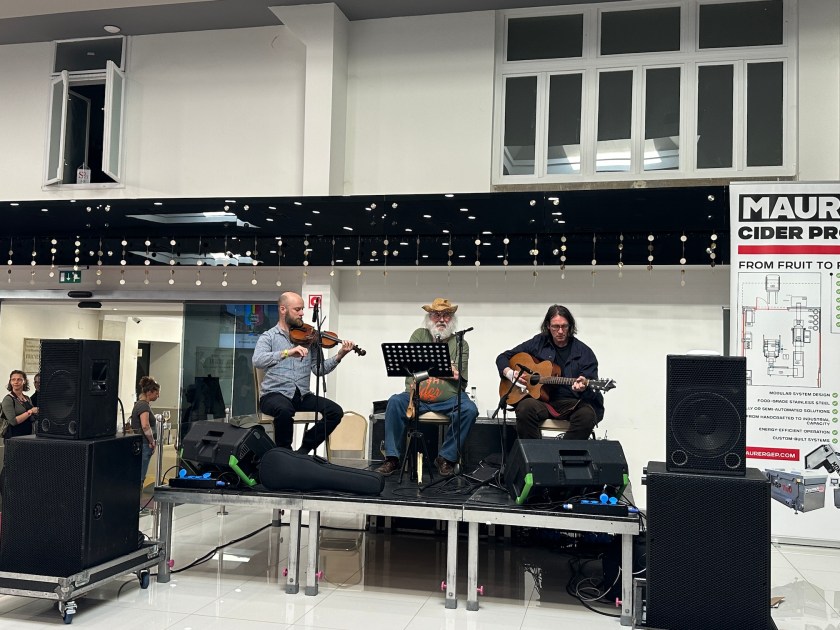
These kinds of events don’t allow for extensive tasting notes; instead, you’re either getting a feel for what cider can be, as was probably the case for many of the local punters, or forming an impression of a certain vintage or cider scene while Andy Rouse and the Simply English serenade you with Scrumpy & Western in the background (not something I expected at the Hungarian Cider Salon!). That said, I always find it worth recording whatever sticks in the memory, jotting down a line or two per cider and some interesting details about the maker’s methods or philosophy, to follow up with in future. Now to rattle off some favorites…
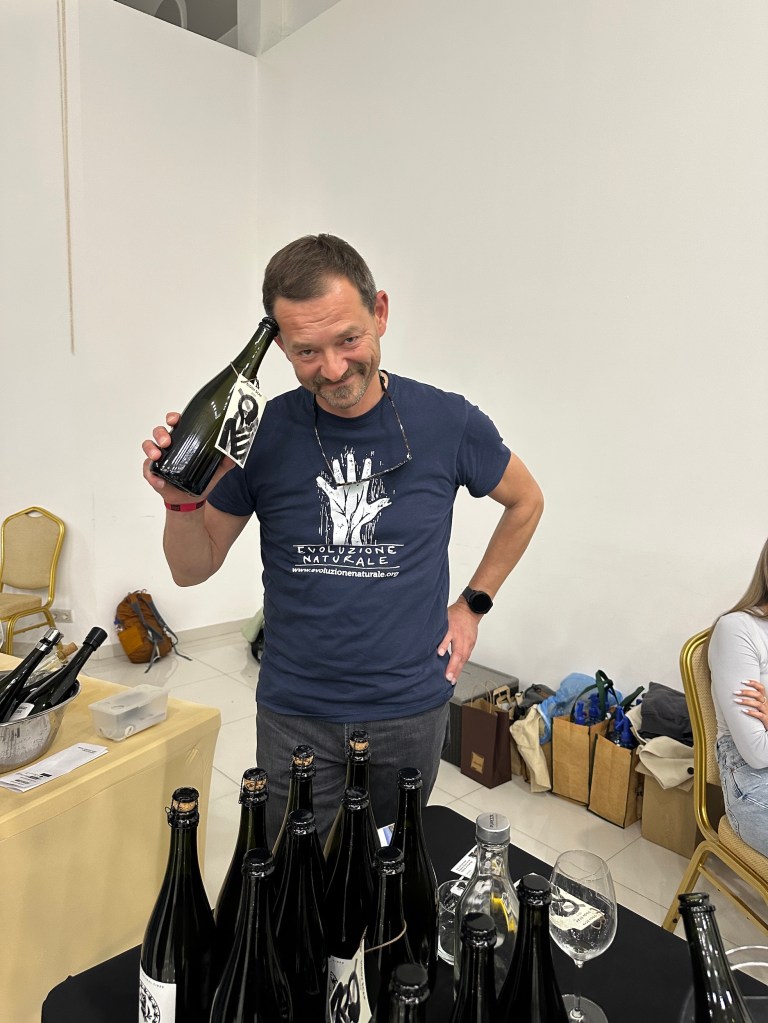
Bohorina is by all accounts currently the only cider maker in Bosnia (countries other than Hungary were represented at the Salon; surprise!). Julijan makes a more elevated line in 750ml wine bottles and a line in smaller bottles aimed at the everyday consumer in bars etc. He is clearly passionate about history, his bottles adorned with references to everything from Bosnian medieval monumental tombstones, or stećci, to Operation Overlord (i.e. the Battle of Normandy), for which his cider using French varieties is named. He told me that his area is in fact home to old tannic varieties—a rarity outside the historical cider regions in western Europe—but that they were traditionally used for distilling. His Didov Šćap, or “grandfather’s walking stick”, one of my favorite ciders of the salon, references both the fact that he is using his grandfather’s seedling orchard for his ciders and that the priests in the medieval Bosnian church were known as “grandfathers”. It was truly dry, pet-nat, and citrussy, with a delicate stemmy bitterness; it would have been excellent with hearty food.
Bohorina’s multiple-product line approach was mirrored across the Salon: more and more cider makers, especially in countries with newer (fine) cider traditions, are targeting different markets from the start, e.g. by presenting their cider in both wine bottles and cans or 330ml bottles. Several makers at the Salon were also making dessert ciders; I enjoyed Ancha’s pommeau, which uses cryoconcentrated juice and had lovely syrupy notes that reminded me of blueberries and maple, and Bright Cider’s Elixir ice cider (also cryo-concentrated), which paired laser-sharp acidity and something almost liquorice-y with its quince character.
Another approach to variety is Ormànsàgi Richi’z Cider’s: Richárd makes ciders with all kinds of wild pomes, which he primarily adds to the cider for maceration after primary fermentation. The base cider is made with crab apples as well as eating apples and has a delightful tutti frutti-ness. As for the additions, medlar gave some sharp and woody notes, while Cornelian cherries lent a juicy currant feel, and hawthorn turned things a little rosy, with a gentler wood character.
An honorable mention goes to Madore’s all-Topaz selection (interesting to see another maker favoring this modern disease-resistant dessert apple; I know Floribunda uses a lot of it). My favourite was the “Extra Dry”, which had a creamy, tropical-fruit nose and some almost herbal notes on its high-acid palate. Englishman Keith learned cidermaking at Orchard Pig; Madore is his 750ml line, while his smaller-format Mad Dog ciders are adorned with a British Bulldog.
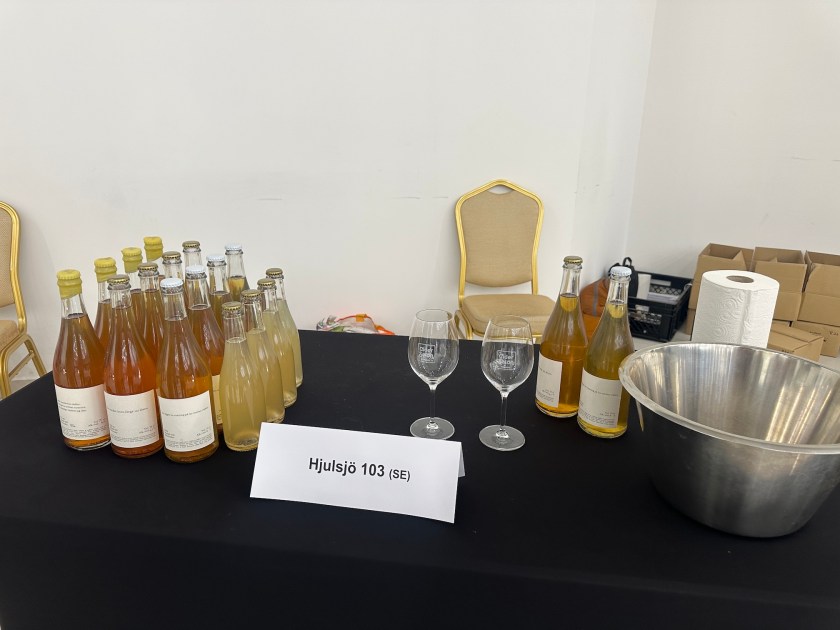
A standout maker of the Salon for me was Hjulsjö 103. I didn’t expect to end up learning all about a small corner of mid-Sweden at the Hungarian Cider Salon, but that’s the joy of the small world that cider is. In chilly Bergslagen, an hour north of Örebrö, Märta and Magnus live and run a bakery, a cidery, a coffee roastery, and a ”one-room hotel”. Märta told me all about how they are working to save the hardy seedling apple trees that dot this former mining frontier—one is as old as 1690—and are working with the harsh climate, for example by grafting only onto seedling or full standard rootstocks and accommodating a very short growing season. Hyper-local from the beginning, the couple started their journey pursuing old Baltic apples from countries like Sweden, Finland and Estonia, but are now grafting almost exclusively apples that they’ve found within a 30-minute drive of their home. All their products, which take their names from lines of old Swedish poems, were wonderfully complex; I will zip through my impressions:
- Just-bottled single-wild-tree perry: Buckets of rosewater, elderflower, and other juicy perry pear notes.
- Jag är omvälvd av dofter, såsongerna avlöser varandra, och ständigt vandrar jag däri (“I am overwhelmed by scents, the seasons succeed each other, and I constantly wander therein.”): Nice warming barrel influence from the old red wine barrel, currants and spice.
- Det ligger en viskning på lur mellan träden (“There’s a whisper lurking between the trees”): Bitter orange, decent tannin, sour plums.
- Det suckar ännu länge uti löven (“It still sighs for a long time in the leaves”): Soft tannin, apricots, something nutty and bitter.
- A secret black currant-infused cider at the end that captured the elegant, dewy-green sweetness of that unique fruit.
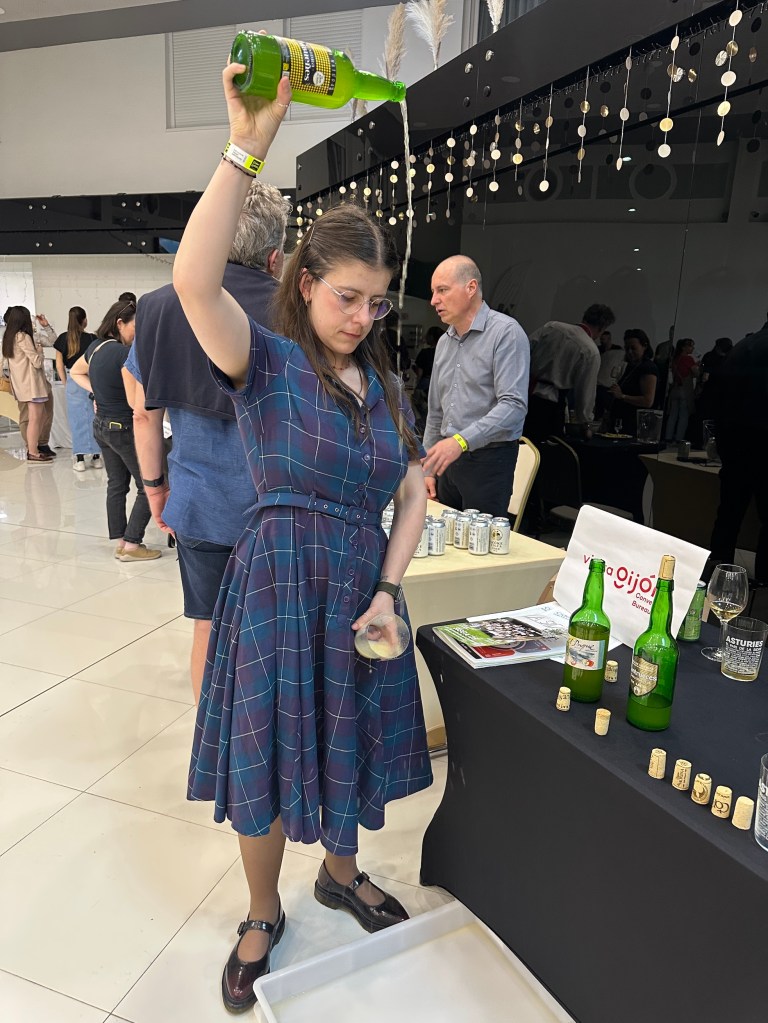
This was a central European Cider Salon in the broadest sense—if you draw a line north or south from Pécs, you’ll pass through most of the countries that were represented—the Asturian delegation excepted. It was also a real flag being planted for Hungary as a cider destination: some things, such as a cider bar and a dedicated cider shop, may still be in the country’s future, but the potential is obvious. It was fascinating to see the diversity of people attracted to cider making in Hungary, from winemakers to schoolteachers to retirees, as well as the event’s ability to draw international makers and visitors. Our visit to Ancha’s cidery open day the following day (more on that below) only reinforced our excitement about Hungary’s growing cider scene.
This is also the first time I’ve taken part in a research project at a cider tasting event. Agriculture PhD student Mátyás Gergely is investigating wild pears in Hungary, including for their perry-making potential, and my partner and I were among those successfully entreated to score the nine intriguing single-variety perries he’d brought on everything from sweetness and body to “alien taste”. There was no shortage of the latter in this mix of wild foundlings: many were naturally super-sweet, one tasted 100% like lychee juice, and one had distinct allspice notes. I can’t wait to taste where these pears end up.
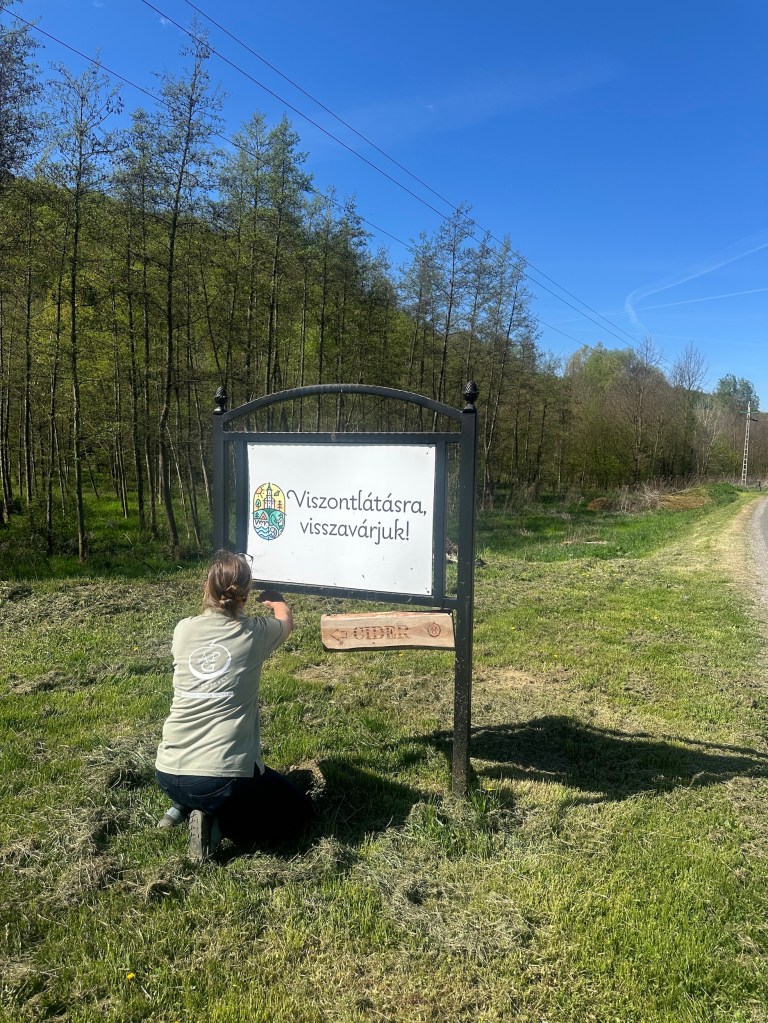
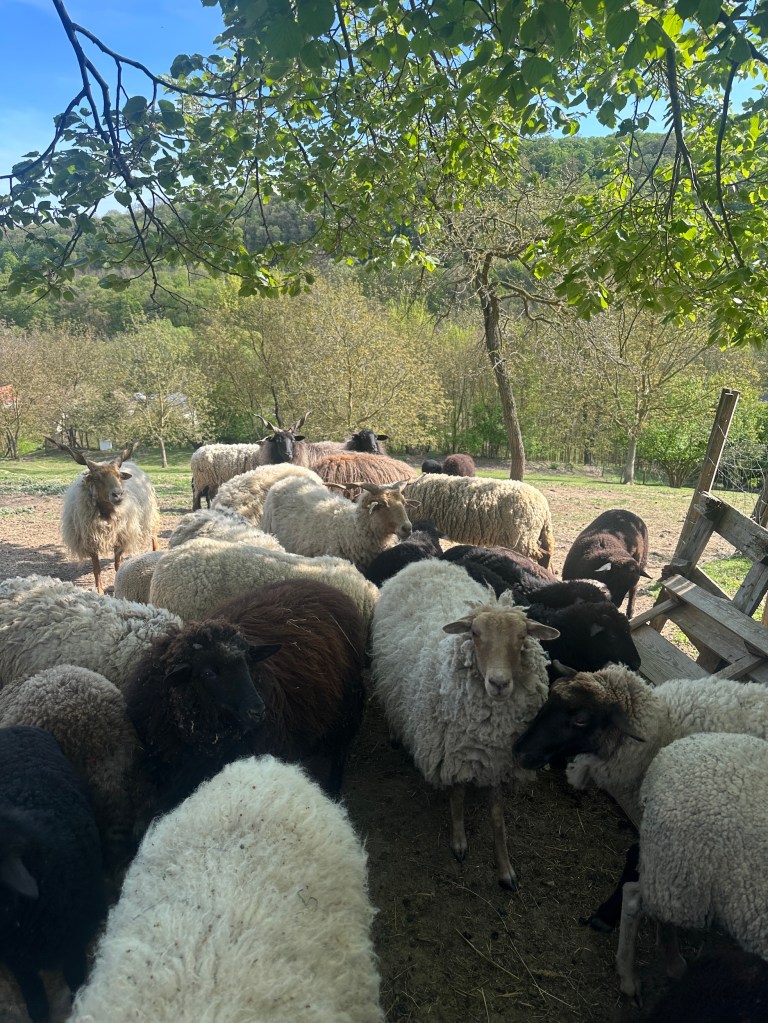
The next day, we take a long and winding bus ride through the verdant springtime hills to Abaliget, a village of a few hundred people half an hour’s drive from Pécs. When we got off the bus, I couldn’t resist straying off the path to the cidery to follow a flock of Racka sheep, with their multi-colored coats and uncanny twisted horns, who were wandering across a field track towards new pasture. Only later did I realize that these sheep were in fact Ancha’s. Around the corner, there she was, characteristically practical, affixing a wooden “CIDER” sign to the bigger “Welcome to Abaliget” one: we’d arrived.
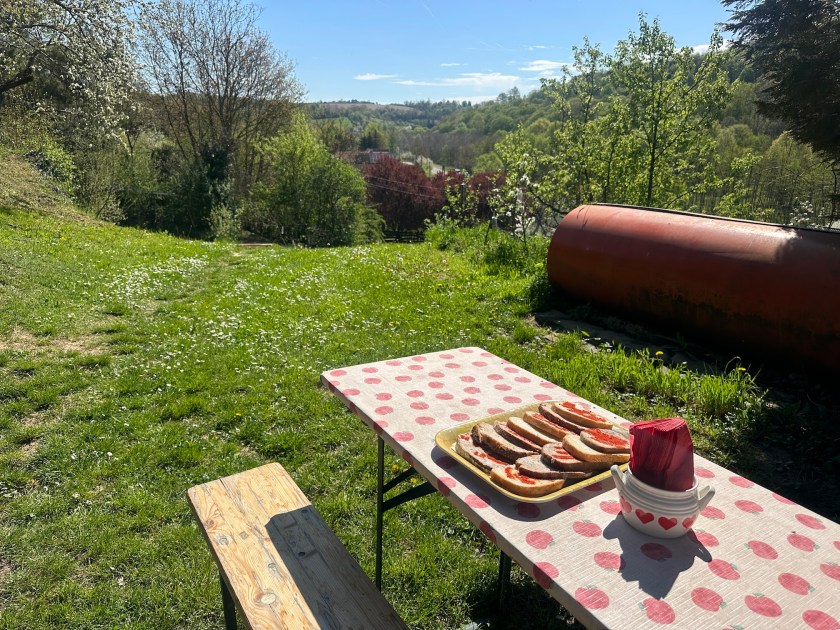
As visitors to the free blossomtime open day, we were welcomed with traditional Hungarian lard-and-paprika bread, which paired excellently with the less-traditional builders’ tea with farm-fresh milk also on offer (not to worry, the cider followed close behind!). Abaliget Garden Projects is housed a veritable cider compound, with different structures for different purposes. As Ancha tells it, every village in the hills around Pécs used to have at least one village vineyard on a hill, and part of her cidery is in a 1941 brick building built for making and storing wine. It comes with a little vaulted fermentation chamber built into the side of one of the property’s many steep hills.
The sloping, tree-studded property, today flooded with spring sunshine, extends over 6 acres (slowly expanding through acquisitions from the neighbors). Here Ancha and her family keep horses, several dogs, those striking Racka sheep, and hundreds upon hundreds of apple trees, as well as pears, quinces, plums, etc, almost all planted for the cidery. Oh, and there’s a tree nursery, which aims to supply the up-and-coming cider makers of Hungary with all kinds of Hungarian and international apple varieties (as well as, later, apples, juice, and/or cider). At last count, the farm was home to about 800 varieties of fruit trees, including 521 apples and about 200 pears. Depending on your constitution, this is either a dream come true or far too big of a project; Ancha takes it in her stride.
Our tour started in the cidery, where we learned all about Ancha’s cidermaking process. As her trees aren’t fruiting quite yet, she gathers fruit from trees in the surrounding area, storing a small library of them in crates after pressing for child and horse treats, as well as demonstration purposes. She uses an old two-bed rack-and-cloth press, a veteran of Austrian wine-making, and pumps the juice into the stone-vaulted cellar next door for fermentation in stainless steel, glass or plastic. She’s also got three barrels on the go: whisky, red wine and Tokaji. She told us that she usually lets the first bubblings of the fermentation subside for a day or two before sulfiting and inoculating with yeast, and that she prefers to rack multiple times for clarification, rather than filtering.
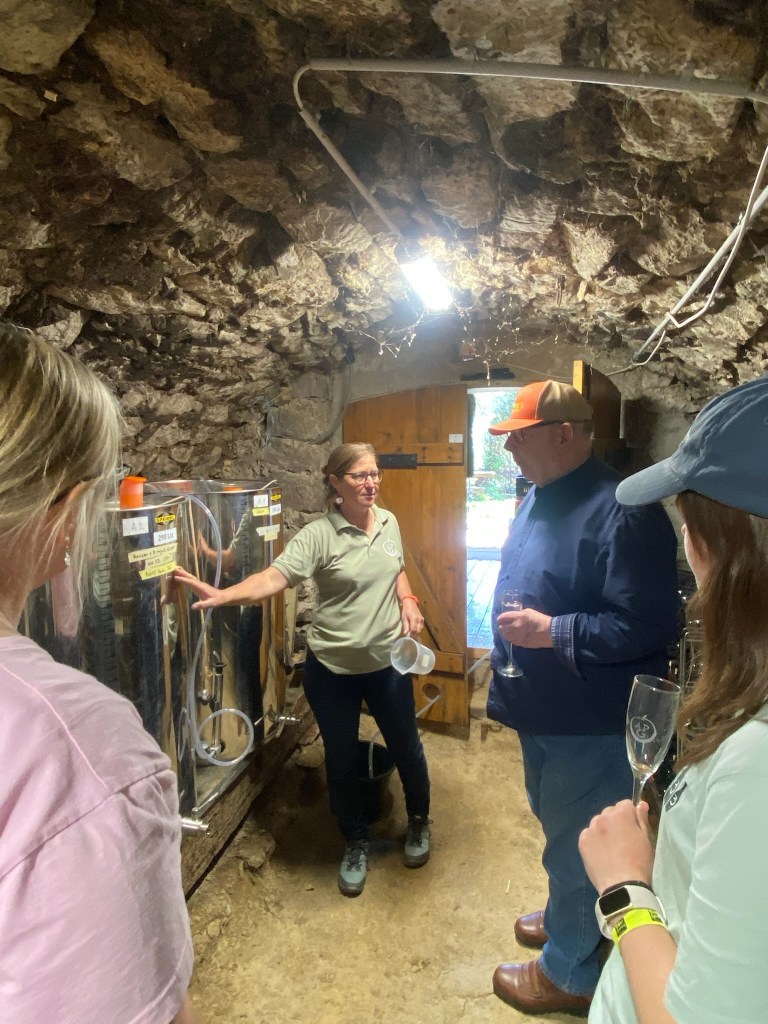
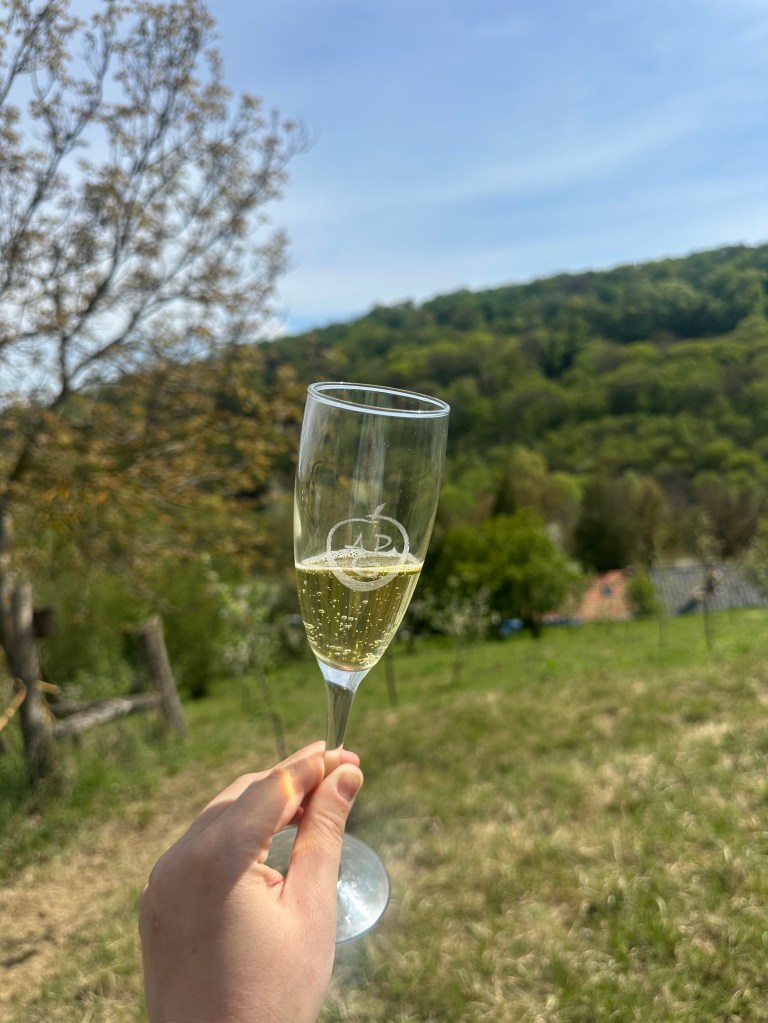
We snagged some tasters, among which were a deliciously rich, cinnamony, and still slightly sweet cider made from “the seedling apples behind the church”, a zippy, rosewater-y wild perry that might end up méthode traditionelle, and Ancha’s “base cider”. Tom and Ria had arrived post-brunch with Ancha’s husband Docky; and we discussed the merits and possible futures of the various things we were tasting before heading up the steep hill into the orchard, flutes in hand.
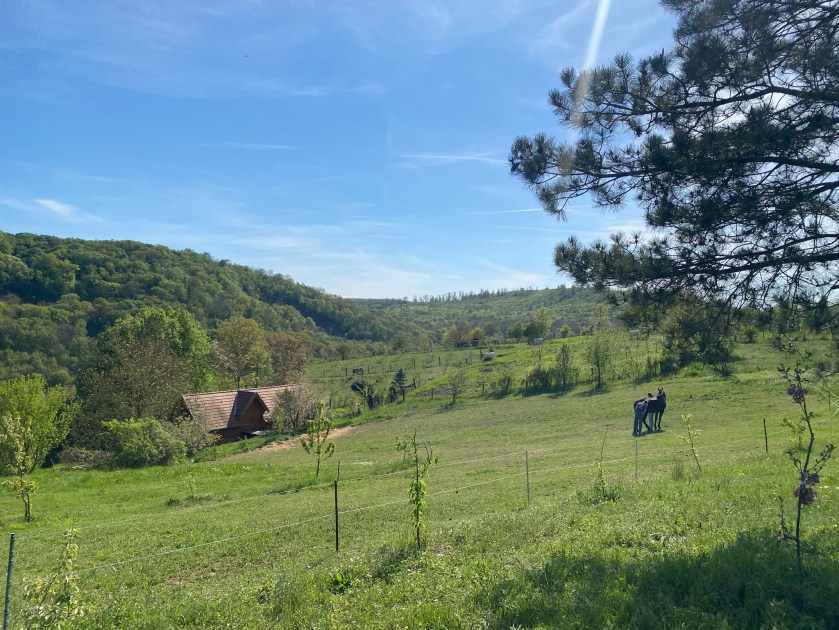
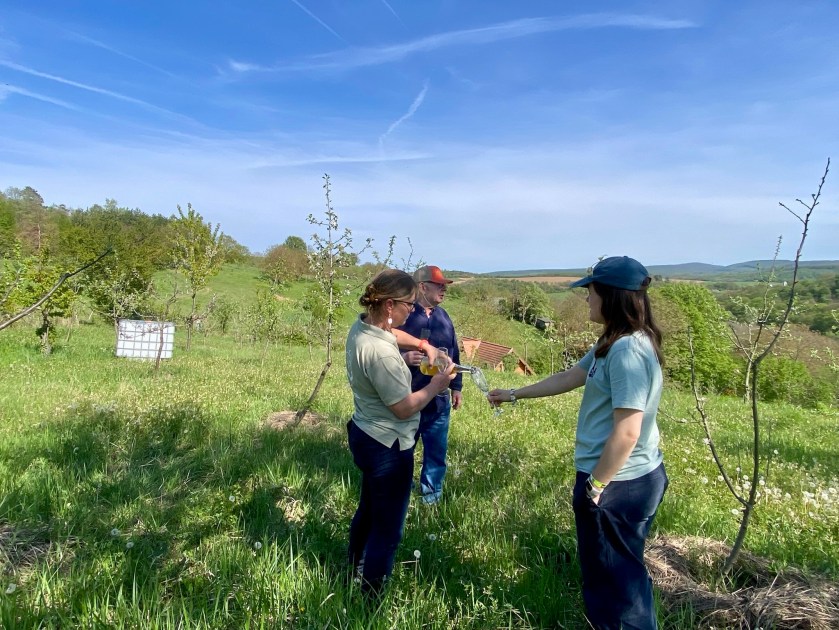
It was a landscape made for roaming: we marvelled at the extent of Ancha’s projects, met all the animals, and sipped the ever-flowing cider. There was so much thought in everything, from the multi-stage tree planting (grids of standard-rootstock trees interspersed with smaller trees that will be removed before the longer-lived standards need the space) to the digital system used for tracking the locations of all those varieties. It’s clear there’ll be quite a crop here once these trees start fruiting; I’m greatly looking forward to trying the cider that comes out of Abaliget Garden Projects then. In the meantime, you can catch Ancha at Bristol Cider Salon in August.
After several hours of walking, we were back on the beer garden benches outside the cidery tasting more cider. Among other things, Ancha passes around tasters of her homemade medlar compote alongside medlar-tinged cider. Before we left, I picked up the bottle of “Old John,” an SV Jonathan, reviewed below. The day and our southern Hungarian sojourn had flown by…all that remains to be said is egészségére to the future!
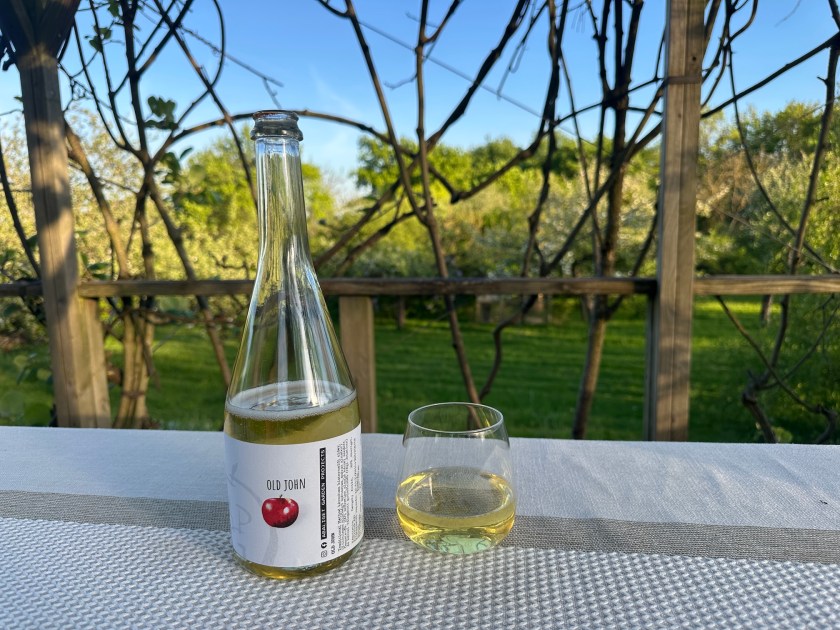
Abaliget Garden Projects, Old John 2023 – review
How I served: Quite chilly, but I was sitting in the sunshine.
Appearance: Straw yellow, clear and with a good sparkle; not too lively.
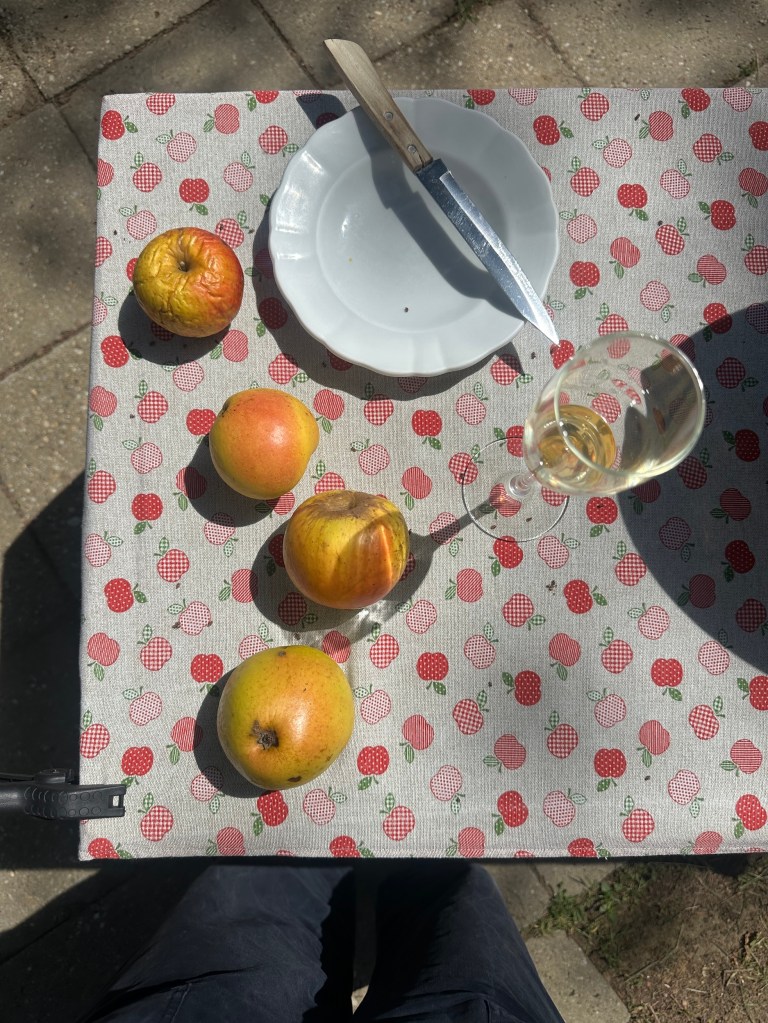
On the nose: Clean Apfelwein vies: banana, pear, and stone fruit with a bit of bread dough. Evokes a yellow, mealy apple. Something a little flinty.
In the mouth: Much bubblier than I thought, very dry but creamy. Apple juice and skin and, surprisingly, quite a lot of bitterness. Then, again unexpectedly, hints of sweetness and vanilla on the finish. Like many ciders of this style, this’d be great with salty, meaty food.
In a nutshell: Nose, palate, finish and texture all give what feels like different perspectives here; a complex and beautifully executed Jonathan.
Discover more from Cider Review
Subscribe to get the latest posts sent to your email.
 Cider Review