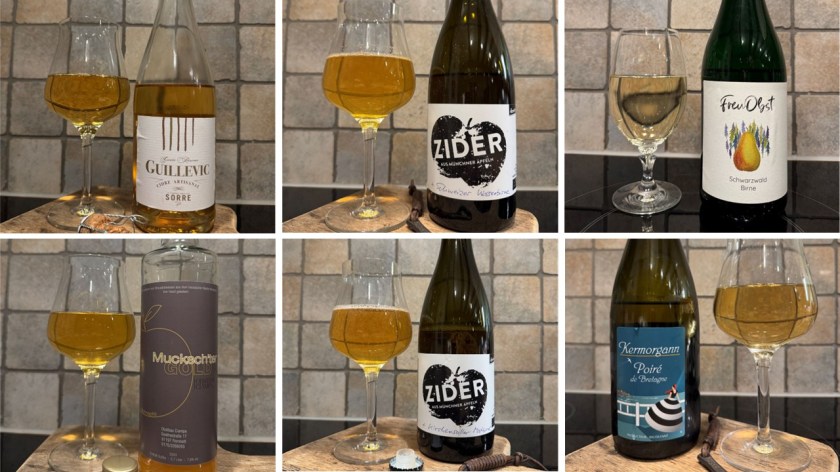
There’s nothing new about this, we’ve all been there. You get a nice bottle of cider, or maybe it’s a beer or wine, and you think to yourself “yeah, I’ll keep that for a special occasion”. And this happens again and again, ad nauseam, until you’ve got a stash of special bottles built up that you’re almost afraid to dip into it as that special occasion just never came.
It’s a funny thing, really, that with some things we think we need an excuse, when the fact is they have been made to be consumed, enjoyed, shared.
In my case, when prowling the cellar for a drink at the end of a day’s work, I usually end up just reaching for a bottle of pils from the stack of crates because I feel I should be sharing the large bottles of cider, or if I open one I must be making notes, and that sometimes feels like work. It’s a terrible attitude when you have a cellar full of cider; it’s made to be drunk!
So I’ve taken inspiration from my friend and fellow Beoir co-founder, John Duffy, better known on the Interwebs as TheBeerNut. John has one of the longest running beer blogs I know of, and every post contains some sort of tasting notes. He was also the inspiration when I started blogging about beer in 2008, a time when beer blogging felt a true network of like-minded souls.
But even with John’s prodigious pace of sampling and publishing, some bottles get stuck in the hoard, so he began a separate blog called Stash Killer just to open those random bottles. I liked the idea so much, I asked if I could borrow the name for a title for a series of posts doing exactly that and he graciously gave permission to steal. I mean, ok, sometimes I do need an excuse to open a random bottle!
So here we go, a selection opened over the course of the past few weeks, and only one opened on Christmas Day. No specific theme other than I wanted to open them and most were grabbed at random, however, looking at what ended up on this list, I suppose there’s a kind of theme, as they’re mostly German makers, but that’s fairly representative of my stash.
What bottles have you randomly opened over the holiday season?
Freuobst – Schwarzwald Birne
We’ve met Jakob on these pages before, and sampled through six offerings back in August 2024. Based down in Freiburg, in an area better known for wine, but bordering on the Black Forest where fruit trees probably do better than vines.

How I served: Straight from the cellar, about 14°C.
Appearance: Crystal clear, white gold, petillant.
On the nose: Broad, pillowy, winegums and jelly. Something slightly rubbery, and a faint waft of permanent marker.
In the mouth: Huge fruit! Big, bold tropical fruits, concentrated, sweet and chewy. Jelly beans in liquid form, blended with tinned mandarin syrup. A faint nibble of tannin brings in a light scaffold to hang it all off. With low carbonation and low acidity, it runs the risk of feeling slightly flabby, but the sheer depth of fruit carries you on regardless.
In a nutshell: The aroma belies the sheer fruit-bombiness of this perry. A great one for lovers of the tropical fruit flavour grouping of perries, and that definitely includes me.
Rob’s Zider – Zider (with Kirchensaller Mostbirnen)
Back in medieval Europe, apparently the Bavarian peasantry was better known for drinking perry than beer, but it no longer even registered in their cultural memory now. But Robert Schimkat has been making ciders incorporating perry pears, much like the Most tradition in neighbouring Baden-Württemberg. While his labels don’t normally differentiate between what has been added, he kindly indicated what was what on a few bottles he sent me… oof, over a year ago maybe? It was time I opened some.

How I served: Straight from the cellar, 14°C at the time of drinking.
Appearance: Clear burnished gold with a steady stream of bubbles.
On the nose: A faint hist of volatile acidity up front, otherwise a very delicate aroma. Lime zest, green apple flesh, a twist of blueberry yogurt.
In the mouth: Dry, slightly astringent thanks to those Kirchensaller Mostbirnen. Did I mention they are tiny tannin powerhouses? Takes a moment to open up, a little breathing helping things along the way, showing juicy citrus fruits, all mandarin juice and lime zest. That blueberry yogurt suggested on the nose comes through on the long finish. Gently grippy, biscuity, with a kind of lychee jelly lingering on the tongue. Thankfully, despite the hints on the nose, no real volatile acidity, the main acid flavours coming across more as lime juice on the tongue. Perhaps the breathing helped. All wraps up with a woody bitterness, Sandalwood, my notes say, with lingering cream soda and lime.
In a nutshell: I like that this style of cider iof the Most tradition is being made in Bavaria again. Delightfully dry and “Pelzig”, a wonderful German word describing the furry feel of astringent perry. Perhaps a little austere, but fun.
Rob’s Zider – Zider (with Schweizer Wasserbirne)
This variation includes one of the most common perry pear varieties to be found across southern Germany, the Schweizer Wasserbirne, which as the name suggests originates from Switzerland, that former powerhouse of perry traditions. I would love to know if the apple components stay constant between the variations.

How I served: Straight from the cellar, 14°C at the time of drinking.
Appearance: Same as the previous sample, clear burnished gold with a steady stream of bubbles.
On the nose: Softer, gentler, no volatile acidity, but also delicate. Muted raspberry, toast lime and cantaloupe. I am suspecting the lime elements are from the apple base, which will be acid led.
In the mouth: True to the nose! More berry-focussed, blues, hot raspberries, toasted, yeasty bread. While also appearing quite steely up front, there’s a comforting almost… oily coating of red apple flesh, grape tannin, that blueberry again. Softer tannins as to be expected comparing the Wasserbirne to Kirchensaller. As it breathes and warms, opening up to broader sweeps, rounder, with a pleasing herbal bitterness creeping in, bay leaf with oregano.
In a nutshell: Love the texture, mysterious, intriguing. While it tries to keep its flavours secret, allowing it to warm a bit opens it up beautifully.
Domaine Courcoux – Kermorgann Poiré de Bretagne
I have no idea where I got this. I suspect a visiting maker or perry fan left it behind in an exchange or as a gift. It was sitting on the cellar floor for quite some months, so grabbed it while passing one evening.

How I served: From the cellar to outside the back door for 20 mins, with temps there being just above freezing.
Appearance: Rose-tinted white gold. Almost still.
On the nose: A fruit bomb! Stewed pears, syrup, overripe honey melon, melting vanilla ice cream.
In the mouth: Al of the above. It’s pretty sweet, low tannins, just a touch brushing along the back edges, with an appley-strawberry-like acidity being just enough to temper that sweetness and lend a little structure. Lush, sweet, with a rather interesting ginger spiciness closing things off.
In a nutshell: I much prefer dry perries, but the spicy character with the pleasing fruit acids took the edge off what would otherwise be a sugar infusion. I finished the bottle, which is a good enough indication!
Obstbau Ciampa – Mucksch’ter Gold
I do remember where I got this. It was at the Cider World 2025 EXPO, after a nice chat with the makers at their booth. Cider World is a pretty intense affair, so much to try that you come close to palate fatigue if you’ve had too many Apfelweine, but I do recall enjoying what I sampled from the lads, and it’s now nice to taste in peace and quiet.
Obstbau Ciampa are primarily fruit growers, but being only 30mk north-northwest of Frankfurt, still in the gravity well of the Apfelwein tradition. But far enough away to perhaps have their own identity.

How I served: Straight from the cellar, still 14°C.
Appearance: Pale amber, still, very slight haze.
On the nose: Kinda typical for an Apfelwein, there’s apple juice, a touch of cellar, but also an unexpected almost tannic nose, lightly phenolic, bitter orange peel and a touch of new leather. Intriguing!
In the mouth: A shock of initial acid, but it’s broad, juicy, well-rounded, invoking warm orange juice. The apples are clear, a base of rich, ripe red apple skins, licks of liquorice and herbs in a stew. Despite being likely fermented to dry, a full, rounded body holds up those acids very well indeed. But the main thread passing through it all is big orange pith and a ginger spice that feels so lush.
In a nutshell: Just so well rounded and simply delicious. A fine sipper on a midwinters evening. Love that orange pith backbone.
I enjoyed the rest of the bottle with green olives, soft fatty cheese, thinly sliced spicy dried sausage and a rustic Besenbrot, and it held up to that combo just perfectly.
Sorre – Guillevic Cuvée Reserve
Ok, this one was not quite a random selection. I was looking fo rsomehting a little lighter in alcohol after Christmas dinner (which was alcohol as I needed a break following the previous day’s investment in imperial stouts). This was one I received from a customer, as we did a kind of exchange when he came to visit, but Guillevic is an apple I am familiar with.
I’ve grafted a few trees of this variety for my own collection, but it was earlier this year at Cider World where I first samples some single variety ciders from Brittany made with this variety. They were dry, acid-led and very delicious. How would this lower alcohol example with considerably more residual sugar compare?

How I served: Straight from the cellar, just below 14°C.
Appearance: Pale amber, still, very slight haze.
On the nose: Juicy. Rosewater, reminding me of Turkish delight and strewed apple with raisins.
In the mouth: Pow! And there it is. Famed for its acid, its just the perfect foil to the sweetness of this 3% cidre. Strawberry jam with a zingy raspberry and lemon acidity. It’s oddly warming, with lemon verbena and a sprig of thyme herbalness. Tingles on the tongue like an after dinner sorbet.
In a nutshell: I lean to the dry side of the cider spectrum, but a wonderful balance of sweetness, acidity, blended with those fruity-herbal highlights made it a hit for me.
I enjoyed the rest of the bottle with green olives, soft fatty cheese, thinly sliced spicy dried sausage and a rustic Besenbrot, and it held up to that combo just perfectly.
Discover more from Cider Review
Subscribe to get the latest posts sent to your email.
 Cider Review