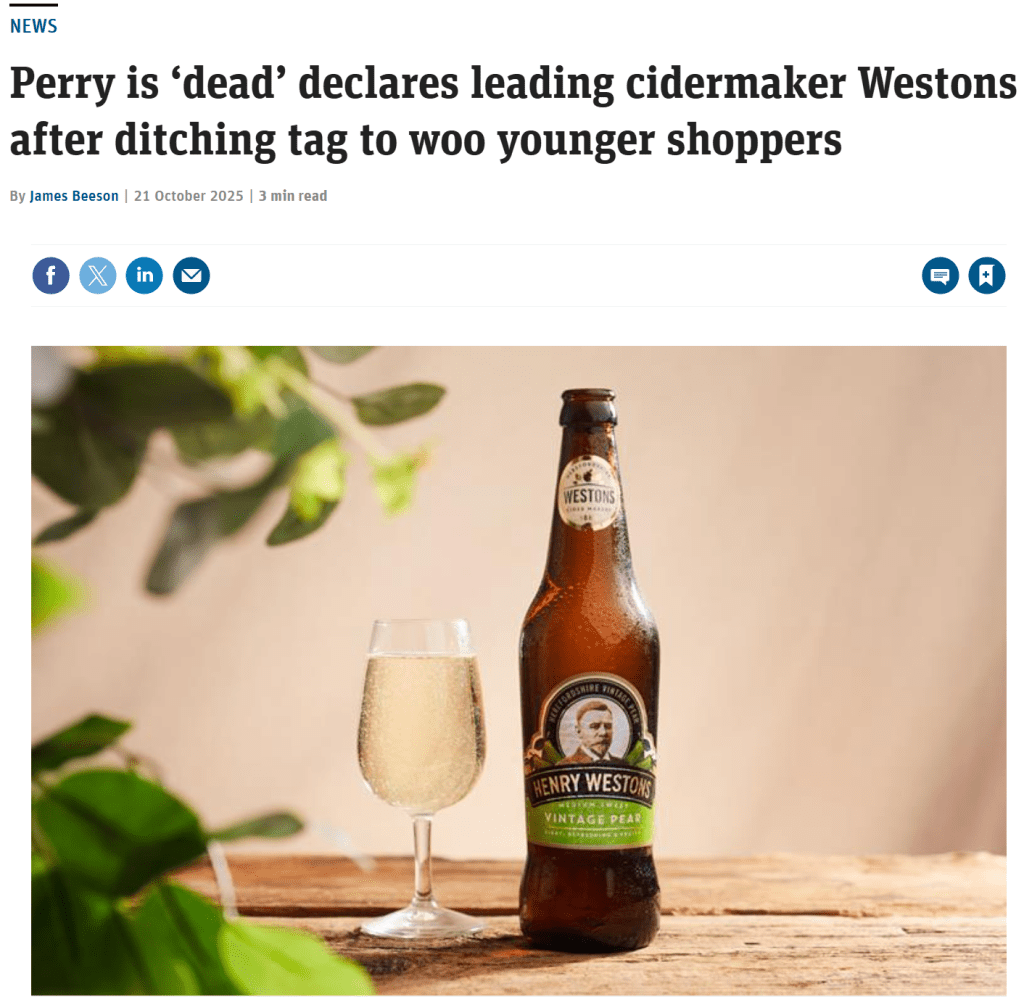
You’ve probably seen it doing the rounds on social media, an article by James Beeson in The Grocer, reporting on cidermaker Westons declaring “perry is dead”. The justification given is choosing to rebrand their historic Henry Westons Perry as “Vintage Pear” and defining it as “pear cider”, apparently to woo younger drinkers. While the sales figures may look impressive, with sales of Vintage Pear having reportedly soared by 488%, the decision to abandon the term “perry” is not just a marketing strategy. It is a deliberate severing of ties with centuries of English and European heritage, particularly the unique legacy embedded in the west counties of England.
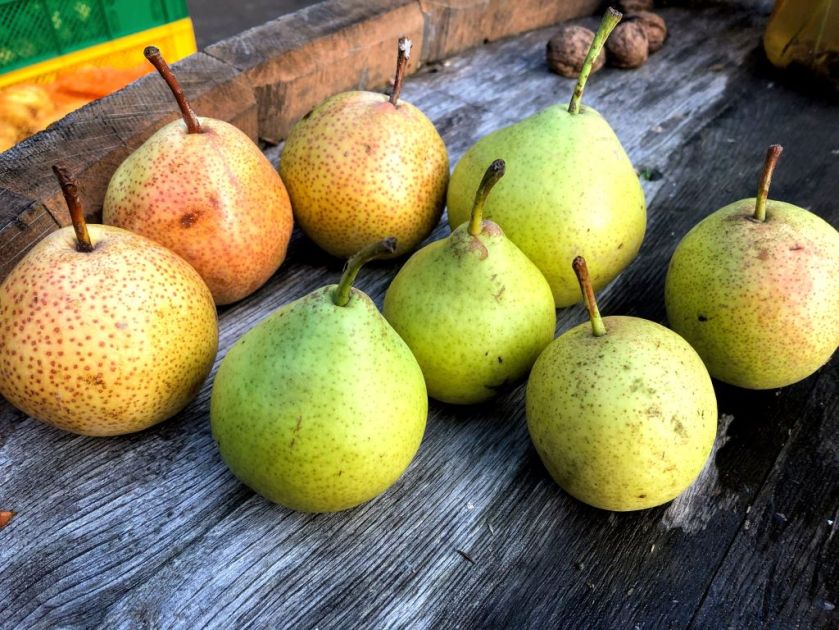
Perry is not simply “cider made from pears.” It is a drink with a distinct identity, born from specific varieties of perry pears that developed and were selected over centures. A great many classics originated in Herefordshire, Gloucestershire, and Worcestershire, regions steeped in orchard tradition, but also from a band that stretches right across central Europe, from France, through Germany, Luxembourg, Switzerland and Austria. Its production methods, taste profile, and cultural significance are markedly different from a generic “pear cider”, which to me invokes the pear-flavoured alcopop invented in Swedish factories.
To suggest that “people didn’t know what perry meant” and that the term needed to be retired is not only dismissive of consumer intelligence, but also of the dedicated growers, producers, and enthusiasts who have championed and preserved perry for generations. Education, not erasure, should be the response to confusion. Replacing “perry” with the bland “pear cider” dilutes centuries of craftsmanship and complexity into a generic marketing catchphrase.
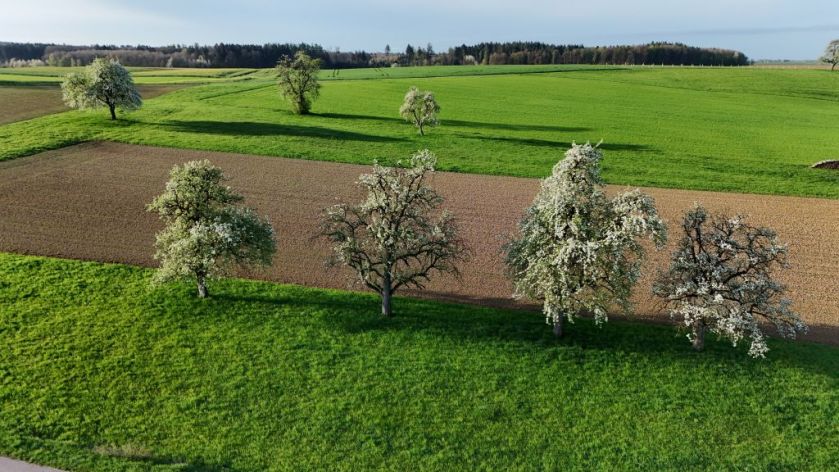
The west counties of England are one of the core ancestral homes to perry production. Orchards of rare and venerable perry pear trees dot the landscape, some of which are hundreds of years old. These trees represent a living connection to our agricultural past, one that is increasingly endangered as commercial pressures push for sweeter, more “accessible”, and more marketable products. By discarding the perry name, Westons is not just rebranding a product; it is turning its back on its own roots and those of the entire regional tradition.
Personally, I find it a really strange move, given it comes at a time when food and drink heritage is increasingly recognised as an essential part of cultural identity and rural livelihoods. This year alone, there was a dedicated PerryFest in Hereford, and before that the Three Counties Cider and Perry Association ran the first ever International Perry Championship at the Malvern Autumn Show. And of course, last year my friend Adam published the first ever book dedicated to Perry which, I believe, has done absolute wonders in explaining exactly why perry is such an important, culturally significant part of our shared European heritage. And from personal communications, it seems the increasing amount of cider makers now starting to make perry is really encouraging! For three years, Cider Review ran a perry month, with dozens of interviews of makers. In 2022, the Meet Your Perrymaker response was so high, that even with daily posts, we had to extend perry month into the following month! There is a wealth of material highlighting how alive perry is on these pages.
Perry seems far from dead. Pyrus Invictus!
One would think it is incumbent upon established (and let’s admit, pretty large) producers like Westons to protect and promote the uniqueness of perry, not wash it away for the sake of a quick sales boost. The move is especially troubling coming from a company that touts its family history and traditional production methods. You cannot claim authenticity while simultaneously erasing the very tradition that underpins your reputation.
Rather than declare perry “dead,” Westons should lead the way in educating new drinkers about its heritage and distinctiveness. Younger consumers are curious, discerning, and increasingly interested in authenticity and provenance. There is a growing appetite for unique and storied drinks, something that perry delivers in absolute spades.
It is not too late for Westons and others to reconsider. Instead of erasing perry from the shelves and from memory, let us protect, celebrate, and revive it. Our cultural heritage, and our taste buds, demand nothing less.

Discover more from Cider Review
Subscribe to get the latest posts sent to your email.
 Cider Review
Hear hear!
This whole thing just strikes me as a lazy ‘we can’t be bothered to inform our consumers what our product actually is and why it’s unique.’ Although when you still hear people talking about ‘brewing’ cider and calling anything remotely dry scrumpy, what hope does perry really have.
LikeLiked by 1 person
Absolutely, Mitch! It’s easy to explain these things if one wants, and marks them out as even more special, something to be treasured.
God, as a former brewer, that “brewing” of cider really gets my goat up :Dh
LikeLiked by 1 person
Pingback: TCCPA’s Perry is Alive Campaign | Cider Review