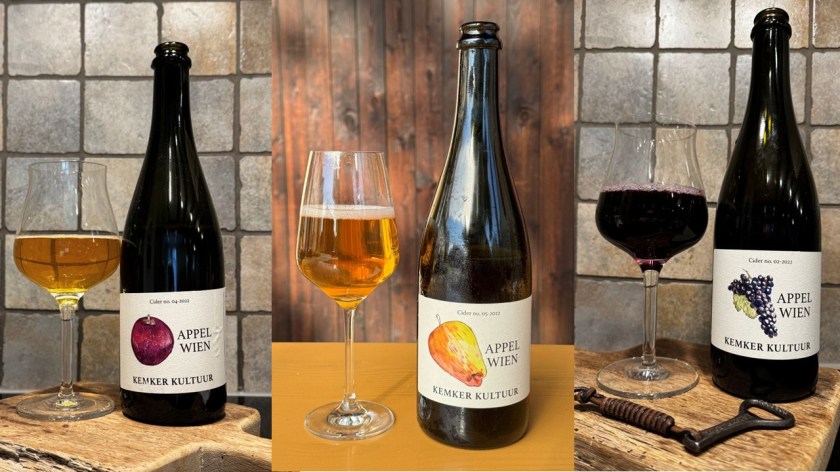
Nestled in the agricultural, and admittedly rather featureless landscape surrounding the city of Münster, North Rhine-Westphalia (I lived there for two years, I am allowed say it), Brauerei Kemker stands as a beacon of artisanal brewing, a synthesis of historical reverence and contemporary creativity. Established in 2017, then moving premises to buildings on a farm in 2018, they have grown to become a distinctive voice in the revival of farmhouse brewing, representing a homage to the agricultural and fermentation traditions of the Münsterland.
Also going under the moniker of Kemker Kultuur, the brewery was founded by Jan Kemker and his wife Nicole with the intention of breathing new life into the forgotten brewing customs of rural Germany. Their inspiration springs from historic farmhouse practices and the vanished gruit tradition of Münster, hence the desire to create a farm-based brewery. But that 2018 move to a farm with trees opened up another possibility: cider.
In 2023, Jan and Nicole acquired a farm of their own, cementing the farmhouse links, and expanding their work to 16 hectares, including four hectares with existing meadow orchards, and now planting new fruit trees using agroforestry approaches. The brewery’s location on a working farm means their farmhouse beers and ciders are authentically connected to their environment, not merely “farmhouse-style” but truly rooted in place. Their orchards, fields, and hedgerows supply the crucial ingredients for both their beers and ciders.

The Kemkers have a fascination for wild fermentation, an approach that lets each batch of beer reflect the unique character of the land and season. Commercial yeast, chemical additives, and shortcuts have no place in their process; instead, patience and time shape each drink. Their farmhouse beers are created in harmony with natural fermentation cycles, never rushed, always honouring the tradition from which they came.
This philosophy also extends to their approach to cider. Rather than emulating mass-produced, filtered and sweetened ciders that would probably sell more easily in northern Germany, the Kemkers draw inspiration from the rustic ciders of northern and central Europe: dry, unfiltered, with a sense of place in every bottle. Each batch is a reflection of that year’s harvest, the varieties of apples available, and the unpredictable beauty of wild yeast.
And it is this that is perhaps the most defining aspect of Brauerei Kemker’s cider, their commitment to spontaneous fermentation. This wild process takes time, and the results are never entirely predictable, which is exactly as intended. Wild fermentation can yield ciders that are complex, dry, sometimes funky, with layers of flavour that reveal themselves gradually, though it is not without risk.
Having received some early iterations some years ago, I can attest to that, but processes and experience mature, and as Jan and I have had several exchanges in the intervening years, I ended up with quite a stash of Kemker beers and ciders in my cellar, the bulk being from the 2022 vintage, released late last year. Or maybe it was early this year! Anyway, I had been saving drinking and writing them up till I got to visit the brewers/cidery on one of my occasional trips to visit my day-job employer in Münster, but those visits are becoming rarer, and I just can’t wait any more. So, I’ve broken into my stash while on holiday this past couple of weeks, and present here my honest impressions.
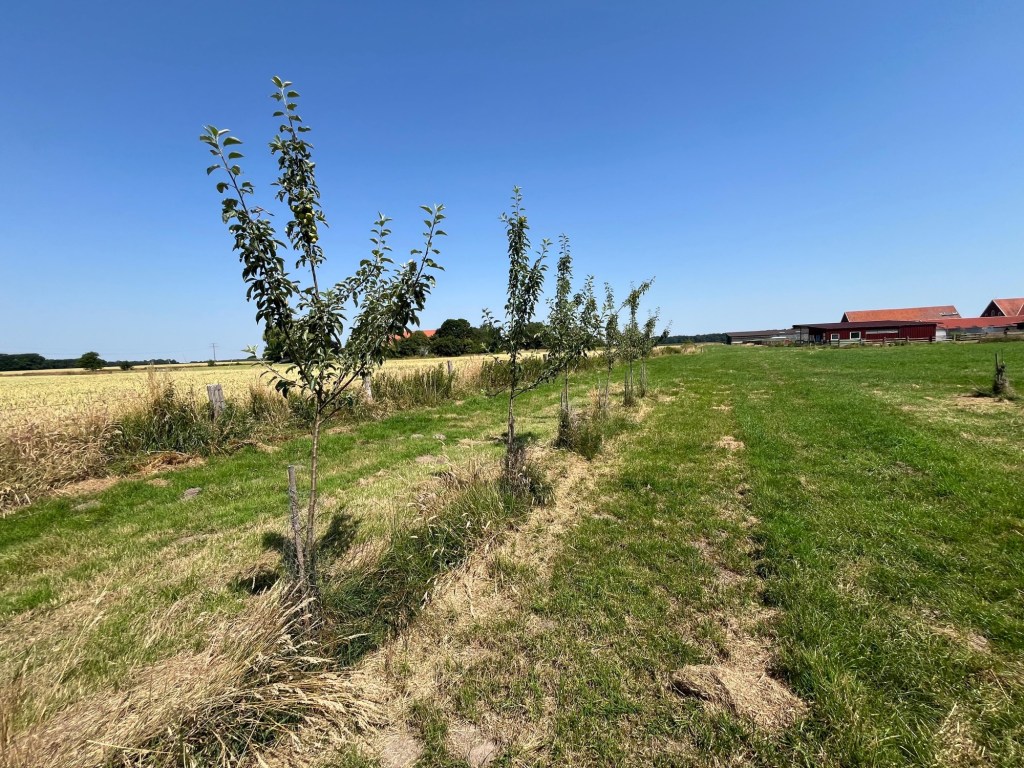
As a general note, all Kemker Kultuur ciders are bottled unfiltered and unfined. They do not add sulfites, sweeteners, or artificial carbonation, so I believe it is pét-nat/ancestral method/méthode rurale all the way.
I tried to avoid reading the labels before tasting, but in the intro of each cider I provide some of the more pertinant info on the label, read after the fact. Let’s go!

Kemker Kultuur, Appel Wien No. 01-2022 – review
Effervescent cider made from apples and quinces. Fermented in oak barrels for 12 months. Oh, don’t let the odd spelling of Apfel Wein bother you, Appel Wien is the old Plattdeutsch dialect from that region.
How I served: 20 minutes out of the fridge.
Appearance: Burnished gold, slight haze, gentle fizz.
On the nose: A big, juicy, pillowy nose. Quince to the fore, offering pineapple cubes candy, green grapes, herbal notes and a touch of vanilla.
In the mouth: Quite astringent on the first sip, with a bitterness combining with acid-forward apples. The bitterness puts me in mind of Angostura bitters, though dialled down, with apple drops, lime zest, something almost cola-like, with a vanilla-oaky backdrop such that the whole thing really suggestd cuba libra to me. And I do like Cuba Libras! Long, lingering herbal flavours, thyme an dlavender, and a lasting quinine bitterness.
In a nutshell: There’s a lot going on in this, luscious yet arrestingly bitter drink. A quencher when allowed to breathe a little, and a damn good aperitif.
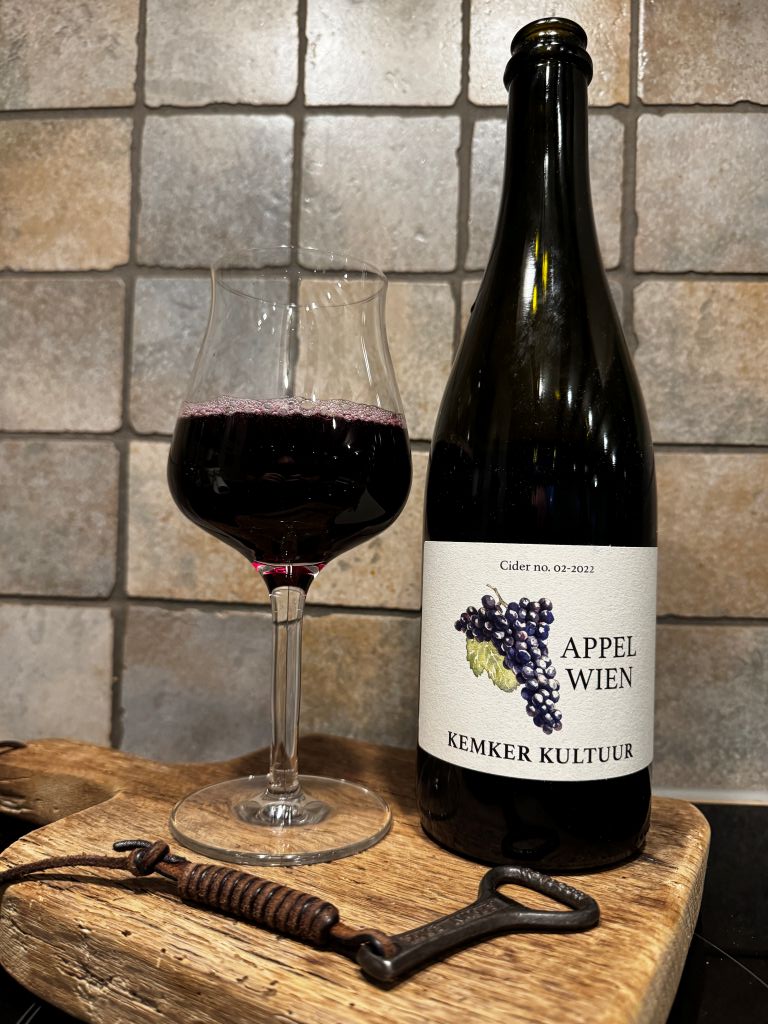
Kemker Kultuur, Appel Wien No. 02-2022 – review
Described as a semi-sparkling wine from apples ad grapes, this is a result of macerating Dornfelder grapes with the fermenting cider, pressing them out 4 weeks later, then matured for nine months in barriques.
How I served: A couple of hours in the fridge (recommended serving temp was 8-12°C), but note there is a second part to each section, as I also tried at room temp next day.
Appearance: Like engine oil, so, so dark, like undiluted Ribena. Low to no CO2.
On the nose: Demure, given the strength of the colour. Spice, elderberries, blackcurrant and sour cherries. It fits how it looks!
Allowed to breathe and warm, it opened up, more forward, liquorice, elderberries, blackberries.
In the mouth: Really quite astringent. Though the acid from the German apples comes up front, an astringent, tannic grip hits the throat on the swallow, and does not release easily. Fresh elderberries, blackberries, a crack of black peppercorns, aronia berry astringency and green bell pepper lingering on the finish.
Having left it overnight, resealed, and at room temp, it is a different beast, many of the same flavour notes, but softer, with a better perceived balance. Jammy blackcurrant (with blackcurrant acidity) and hints of liquorice. Less astringent.
In a nutshell: Quite a journey! Served cooled and freshly opened, a tick too astringent for my tastes, I felt it might be better with food, or needed more body to carry the grape tannins, though a fun combo. Allowed to breathe and at room temp, it felt more full-bodied, rounded and just lovely! Try it after decanting and allowed to breathe.

Kemker Kultuur, Appel Wien No. 03-2022 – review
Made with apples and a small amount of quince and medlar, also one year in an oak barrel.
How I served: 15°C. Yes, I used a thermometer.
Appearance: Pale gold, light haze, petillant.
On the nose: Delicate – hard to pick up much, but when it opens, pineapple, lemon zest, perfumed quince and something floral, leaning towards lilies, perhaps. Gala melon.
In the mouth: Acid-led, in the direction of lemon peel and green apple flesh. A pleasant tingle on the tongue, a mix of acids and a certain herbal-spiciness, part cinnamon, part oregano. More of that gala melon found on the nose, and a long finish, with lingering oregano and lime zest.
In a nutshell: A charming blend, perhaps somewhat simple and straightforward, but just really nice to drink, and that’s the main thing. Loved the lime and oregano finish.
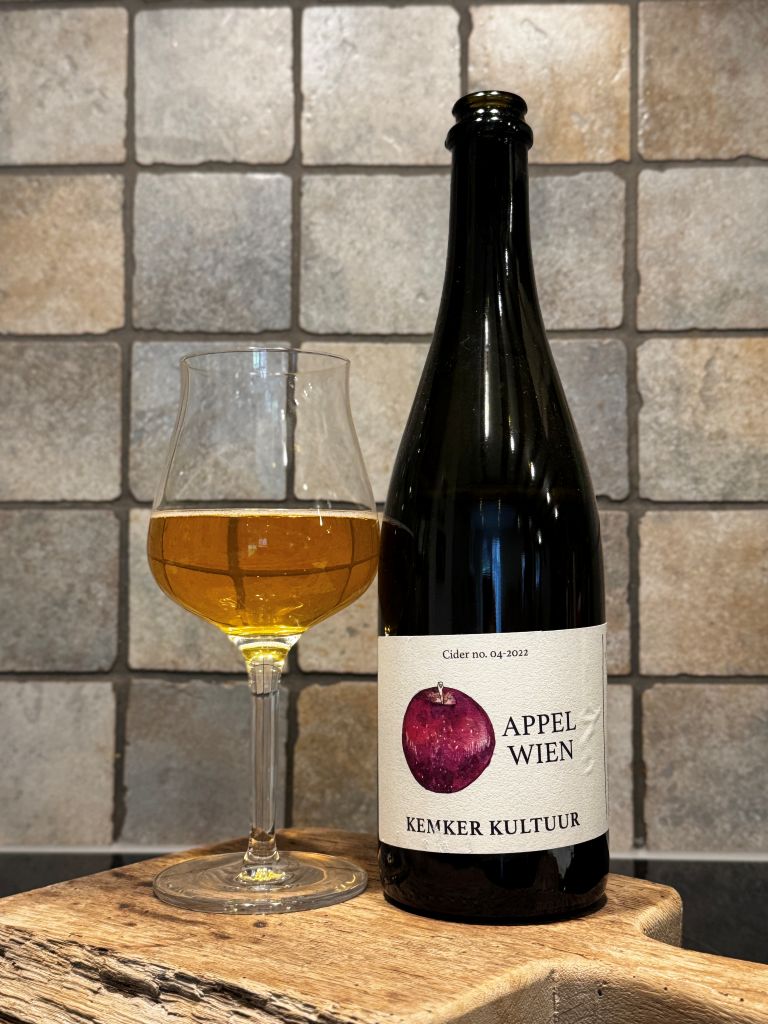
Kemker Kultuur, Appel Wien No. 04-2022 – review
How I served: 30 mins in the fridge, 16°C (I decided to ignore the recommended temps).
Appearance: Gold, clear, sparkling.
On the nose: Vanilla oak, green apple, lemon merengue, a touch of very ripe lychee. Warming and inviting.
In the mouth: Like it’s sister, the 01-2022, the 04-2022 has a bitter note right up front. It is striking as you do not often get bitter notes with German fruit, so it makes it especially interesting to me. Crunchy ripe green apple skin, hints of raspberry, cherry cola, lime zest (ok, this must share some DNA with the 01-2022). The bitterness might be described as like chewing on raspberry seeds with a sip of rich pomegranate syrup and bitter orange peel. I have to admit, I resealed and service cooled the next day, and it worked just as well!
In a nutshell: I like this. A lot. Broad, comforting dark berries, lime zest high tones and a Seville orange bitterness making it incredibly moreish. Recommended.
I later had this with a calabrese salami and ‘nduja pizza with chilli honey, and it was sublime!
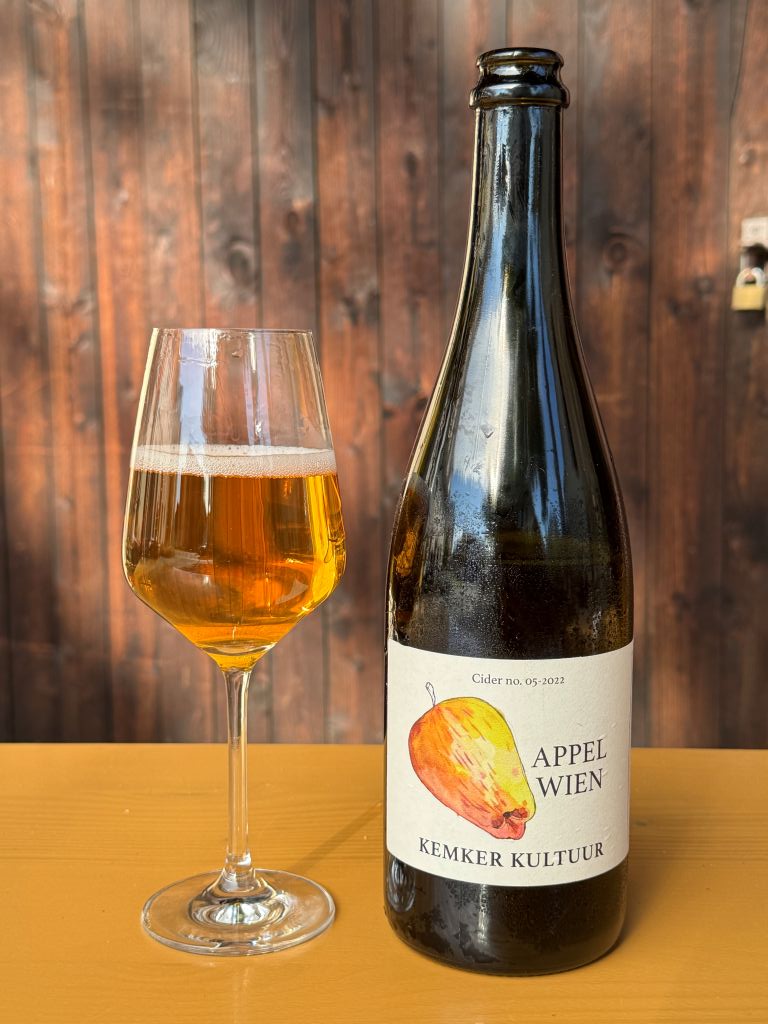
Kemker Kultuur, Appel Wien No. 05-2022 – review
Fermented in oak and cherry wood barrels for one year.
How I served: An hour out of the fridge.
Appearance: Amber, clear petillant.
On the nose: Light phenolics, mandarin peel soaked in brandy, something slightly solventy catching the breath, but fleeting, resolving to an orange oil with marzipan.
In the mouth: My first reaction was literally saying “oh wow!” out loud. Feels rich, full-bodied. Big, broad acids rolling across the tongue, akin to laying an entire mandarin orange peel across it. Needlepoints of almond, lemon flesh, and that cola again, cherry this time. The finish feels sweet, though it is probably not, maybe just a tiny amount of residual sugar. But a thick, rich, ripe red apple flesh backbone just gives it so much volume. A long, lemon-lime and dark cherry marzipan finish closes it off. Wonderful.
In a nutshell: Such body and depth of flavour, balanced with lovely citrussy acids makes this an absolute winner for me.
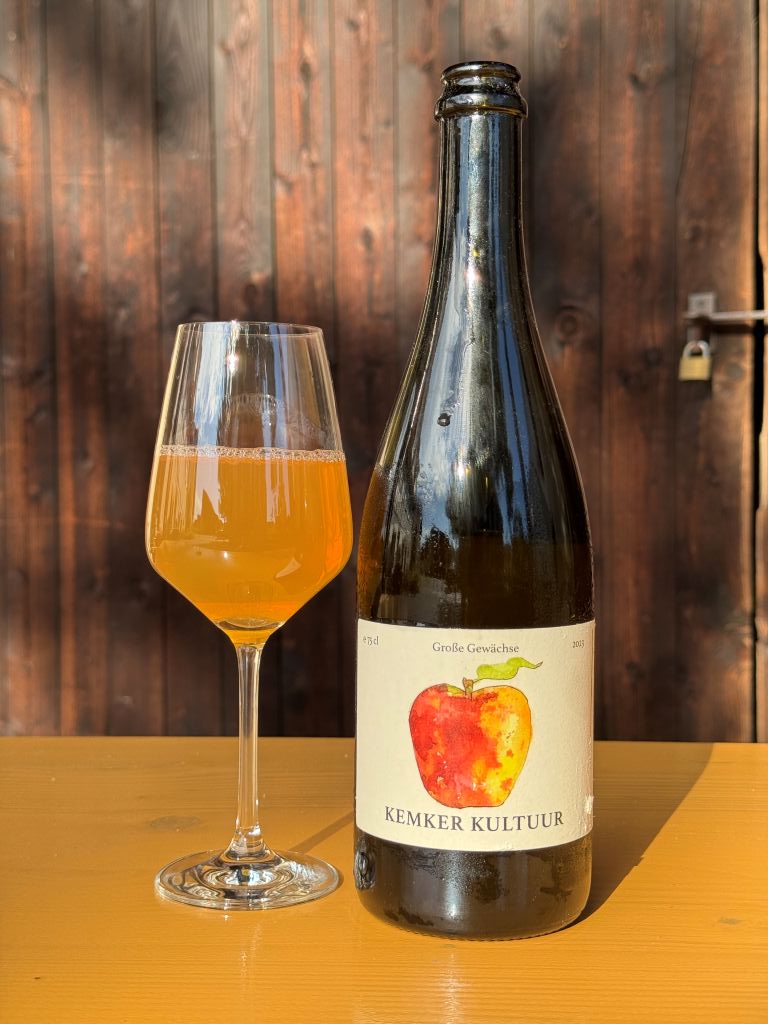
Brauerei Kemker, Große Gewächse – non review
As I try not to read the labels before tasting something, this one caught me out. Opalescent, making me think there mut be pear in the mix, dull gold-amber and still, and a nose shouting ‘quince jelly!’ and masses and masses of apple juice, my first sip made me think it tasted just like juice ,so maybe it hadn’t fermented. And sure enough, it is juice! A very tasty blend of apple, pear and quince, and the kids next door polished it off in a blink of an eye and asked if my friend could send more. Well, it was very good!
Conclusion
In the past few years of what I like to think is a quiet cider revolution in Germany (yes, I have very rose-tinted glasses), now and again I have seen breweries dip their toes into making cider. Bitburger did it, which to me was a sign that the big boys saw cider as a growing potential market. Positive, in a way. But some smaller craft breweries did it too, but often just treating it like a side-line to their beer, made quickly, sometimes with concentrate (see Insel Brauerei’s recent release), or loaded with unfermentable sugars to mimic what some Germans seem to think cider is (something that is always sweet and fizzy). So Kemker’s approach is refreshing, as it is a completely integrated part of the farm and their philosophy.
Brauerei Kemker’s approach to cider making, like the beers they brew, is a blend of history, ecology, and a touch of artistry. By honouring wild fermentation and the integrity of their land, Jan and Nicole have created ciders that are expressions of time and place. In a world increasingly dominated by uniformity and mass-production, it is the small makers like these that really excite me, with ciders that are reminders of what is possible when nature is allowed to lead and tradition is cherished. I’d encourage you to seek these out, if they are available in your country. And while you’re at it, get some bottles of their Saison!
Discover more from Cider Review
Subscribe to get the latest posts sent to your email.
 Cider Review
Thanks for another great article Barry.
I love Brauerei Kemker’s approach so will keep an eye out for any of their fermented goods!
LikeLiked by 1 person