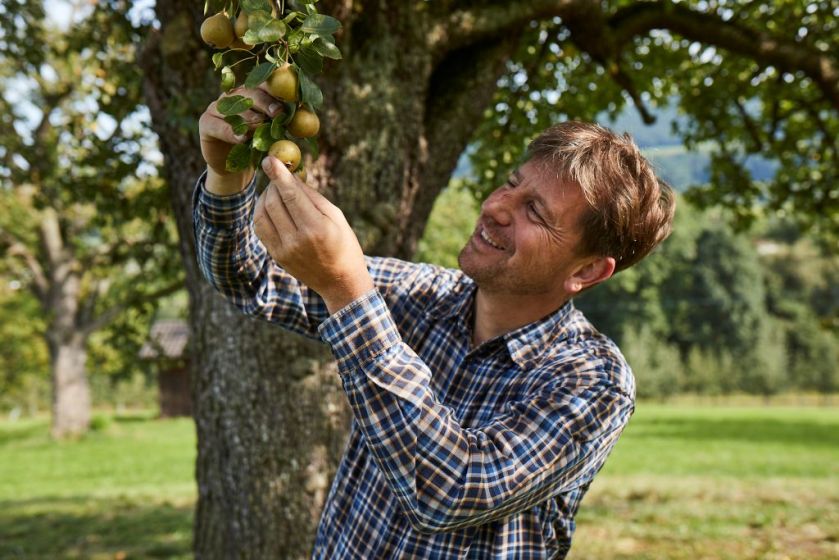
If you ask any serious cider geek to name a German cider maker, there is a fair chance that they will mention Jörg Geiger. His is a name that the likes of Tom Oliver mention when the topic of German cider and perry is raised, and with good reason. For 30 years, Jörg has been making some of Germany’s best perries down at his ‘Manufakur’ at Schlat, some 50km East of Stuttgart, very much in Swabian territory.
It’s a region that has a long history of making cider and perry (Most and Birnenmost in the local language), and an area that is still home to the highest concentration of traditional meadow orchards anywhere in the world.
While he is probably best known for his perry made from the Champagner Bratbirne – more on that below – for the past number of years he has been developing a huge range of non-alcoholic drinks, such that NA cider, perries and alternatives now represent the bulk of his output.
For all these reasons, I have been itching to get an interview with him for some years now, and this month I was lucky enough to be able to get in direct contact and throw a few questions at him. So without further an ado, let’s meet Jörg Geiger.
* * *
Cider Review: Jörg, thank you for taking the time out of your busy schedule for a chat. Let’s get straight into it. You are very well known in cider circles in Germany, and I know that when German cider is mentioned outside Germany, your name is one of the first that other makers will mention. But how did you find your way into cider? I assume you grew up in the Swabian Most tradition?
Jörg Geiger: Yes, my family was indeed making Most when I was a child. I grew up surrounded by the traditions of Swabian fruit culture. The pressing of apples and pears was a natural part of the rhythm of the year. My childhood dream was to grow Stuttgarter Gaishirtle, an old pear variety, and to reawaken people’s enthusiasm for the flavour of old varieties. At first, I distilled many old varieties, then in 1995 I started to produce a sparkling wine from the Champagner Bratbirne with traditional bottle fermentation – so not just reviving an old tradition. I simply wanted to show that old varieties can make sense if you revive the tradition of working with the fruit.
CR: As far as I recall, you worked in gastronomy before you turned to making cider and perry. Were you a chef or did you run a restaurant?
JG: Yes, that’s right – my professional journey began in the world of gastronomy. From 1986 to 1989, I trained as a chef and then spent several years working abroad, where I was able to gain valuable experience – not only in the kitchen, but also in understanding quality, precision, and true craftsmanship.
Following that, I trained as a hotel manager, and in 1992 I had the privilege of working with Georges Pralus, the inventor of the ‘cuisson sous vide’ technique. That experience was incredibly formative – it taught me how technology, artisanal skill, and creativity can come together in the service of culinary excellence.
In 1993, I returned home to take over my parents’ restaurant, ‘Lamm’, in Schlat – which included not just the inn itself, but also the surrounding farmland and a small, traditional fruit distillery. That blend of gastronomy, agriculture, and craft distilling would later become the foundation for everything I do today.
CR: An incredible journey! What made you jump from gastronomy into being a drinks producer?
It wasn’t a sudden jump, for many years, the development of our drinks ran in parallel with our work in gastronomy. It was only in 2018 that we discontinued the classic à la carte service at Gasthof Lamm and shifted our focus to event-based dining, which we still continue today. The turning point came when guests began asking for alcohol-free alternatives beyond the usual soft drinks or water. In response, we started experimenting with juice blends to offer something new and food-friendly, and in 2003, that led to our first creation: ‘Rotfruchtig’.
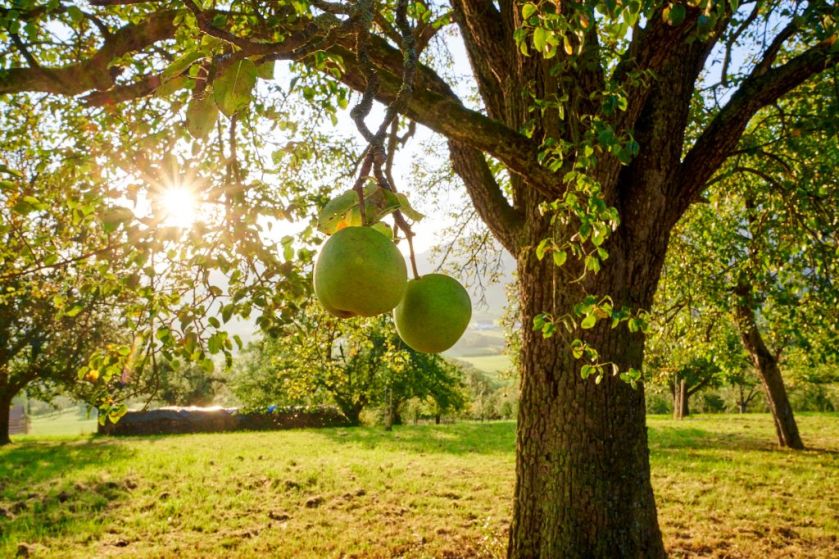
At the same time, something else was happening that deeply moved me. I realised that through this work, I was able to give farmers and orchard owners a renewed sense of pride in the fruits and trees their great-grandparents had planted. That inspired me to take things further – to bring real value back to the region and to show how much untapped potential lies in our traditional meadow orchards. That combination of culinary curiosity and regional responsibility ultimately drew me deeper into becoming a full-time producer.
CR: But you still run the restaurant?
JG: In the restaurant, we only welcome guests around 50 times a year for special menu evenings or guided tours, all of which can be booked online via our website. You just can’t do everything at top level at the same time in the long term. It’s a shame, I’ve always enjoyed gastronomy too, so I’m all the more pleased about the evenings when we can bring our specialities closer and also about the great response. That gives me even more strength.
CR: How would you describe your philosophy of making? What is it that drives you and your approach to making cider and perry?
JG: Value old fruit varieties, understand the importance of growing on vigorous rootstocks because only these, together with an intact soil microbiome, are able to form resilient trees whose fruit ultimately tastes much better. Not making every product every year, but always working with the necessary humility in the face of nature. Technologically, we are always on the lookout for ways to improve a little and at the same time try things out in micro quantities – Eisapfel [an ice cider], Birnengold, Holzapfel [wild apples], or our sweet wines produced using the port wine method.
CR: You have a huge range of products, and it seems to be increasing every year with all sorts of innovations, particularly in the low- or no-alcohol field. Can you tell us, what is your annual production of cider and perry, and non-alcoholic products like your PriSeccos and de-alcoholised products?
JG: I’ve been alcohol-free for 23 years now. In the beginning we were mildly ridiculed, but we have resolutely gone our own way. Sales of alcoholic products have declined slightly, even for us, and the non-alcoholic share has risen to over 90%. Of course, we have also invested heavily in this area and brought all the technical possibilities in-house – we want to remain a leader in quality and innovation.

CR: Maybe it’s also good to explain to our readers what the PriSecco product line is, and how it was conceived?
JG: My aim was to rethink non-alcoholic with the aim that non-alcoholic is just as exciting as an alcoholic product, but independent and different. Old apple varieties provide great acidity and perry pears provide the necessary tannins to create an original product based on two stable pillars.
CR: I have been meaning to do a parallel tasting of some of your single variety pear wines with their de-alcoholised sisters, as I was wondering how much of an organoleptic difference there is between them. What is the process you use for removing alcohol, and how to maintain the complexity?
JG: Dealcoholisation works with vacuum distillation, where we extract the alcohol at a temperature of 28 to 37°C by shifting the boiling point using a vacuum. Despite our own plant with its technical refinements, the product changes completely. Acidity increases, flavour is lost. This is where our expertise is needed to bring complexity back into the drink without using bought-in flavours.
CR: So it is vacuum distillation and not something like spinning cone columns that you use?
JG: Yes, that’s correct – we work with vacuum distillation, not spinning cone columns. This method allows us to gently separate aromas and alcohol at significantly lower temperatures, preserving the delicate fruit character and complexity of our raw materials. It’s a process that aligns perfectly with our philosophy of craftsmanship and respect for the natural qualities of orchard fruit.
CR: As you mentioned the drink is completely different following the removal of the alcohol, how do you ensure that the flavour profile is what you want it to be once the alcohol is removed?
JG: We ensure the desired flavour profile through careful analysis and continuous adjustment. Once the alcohol is removed, we fine-tune the composition by balancing juices, spices, flowers, and herbs. This allows us to bring back complexity, structure, and depth to the drink – always with the goal of creating a harmonious and food-friendly experience.
CR: As a gastronome, it’s clear that food pairing and the whole experience of food and drink combined is important to you and your overall concept. When it comes the norms, the perceived tradition is to pair wine with meals, but to be fair, I think cider/Apfelwein fits well as a lower-alcohol alternative. But with your no-alcohol products, does this present a challenge in breaking preconceptions?
JG: We have been training sommeliers and restaurant staff very successfully for over 10 years now, and many of the starred restaurants now use our non-alcoholic companions as an alternative.

CR: As a perry fan, I have to ask, what are your favourite pairings with your Champagner Bratbirne Schaumwein or your Karcherbirne?
JG: The Champagner Bratbirne with alcohol is something I often recommend to enjoy on its own or as an aperitif. It also pairs beautifully with sweet-savoury starters – for example, a game terrine with a mild fruit component, or pan-seared pikeperch [zander] with crispy skin.
The Karcherbirne, on the other hand, is a fantastic match for Asian cuisine – its subtle fruit notes and vibrant acidity complement the spices and umami elements wonderfully. And of course, it’s also a pleasure to drink on its own.
CR: Your pear wines are very elegant and well rounded. Given the sheer amount of tannin and acid that a pear like the Grüne Jagdbirne has, I was very surprised at how soft your single variety perry was, well, compared to mine! What processes are you using to achieve these results?
JG: In order to make a good product from perry pears, you have to master the ripening process and turn green tannins into soft ones. How to do this was already written in books 150 years ago: dig holes in the ground, fill them with pears, cover them with brushwood and leaves and the pears would start to sweat. That’s exactly what we do, but we have been refining this process for almost 30 years. Tannins are the sensory backbone of the pear and also form the shelf life, they just have to be ripe.
CR: Yes, pressing at optimal ripeness is really important, but given how fast some pear varieties will blett and turn to mush, it can be a challenge to time it right. I assume you are not literally burying tonnes of perry pears int holes in the ground these days, but rather better, modern storage conditions?
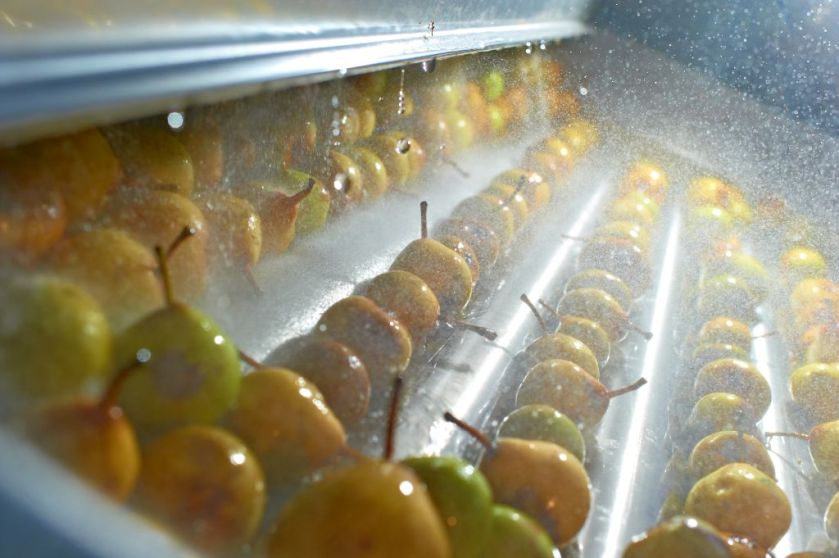
JG: Yes, exactly, we no longer rely on traditional methods like burying the fruit. Instead, we use specially designed ripening rooms that allow us to closely monitor and control temperature, humidity, and airflow. This way, we can bring the pears to optimal ripeness without losing their structure, and press them at just the right moment to capture their full aromatic potential.
CR: I also understood that you use classic wine-maker’s techniques, like Kieselol/Gelatine to remove unwanted tannins?
JG: That’s right, we do use classic winemaking techniques like Kieselsol and gelatine. Depending on the product, we may want to preserve more or less of the tannins, and we can control that precisely through the dosage and the sequence in which these fining agents are added. This allows us to shape the mouthfeel and balance of each beverage according to its intended character.

CR: It certainly seems to work! I recently gave a talk that touched on the rich history of orcharding and cidermaking that the Swabian region has, in particular the Streuobstwiesen, with your region having the highest concentration of remaining meadow orchards in Europe. I know you are buying in fruit from regional growers, but do you also have your own orchards?
JG: We cultivate around 18 hectares of meadow fruit ourselves. We carry out rootstock and variety cultivation trials and have also been breeding perry pears for 5 years. Our aim is to give something back to the region through our foundation for the preservation and promotion of old fruit varieties.
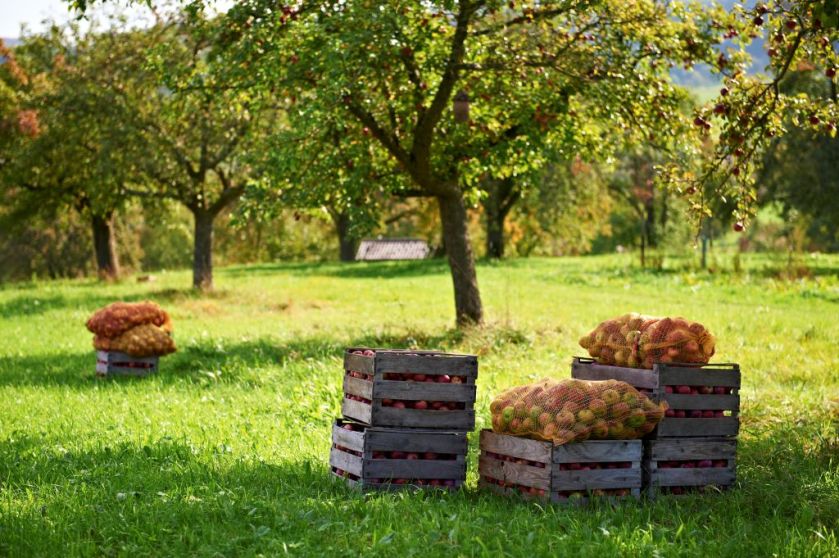
In the Manufaktur [the cidery], we process the harvest from around 35,000 old meadow fruit trees, which almost 400 owners often deliver to us as single varieties.
CR: Another thing you are quite well known for is your work on the preservation of the Champagner Bratbirne, and through what I like to call conservation through use. You even got it listed in the Slow Food Germany ark. What was it that drew you to this regional pear variety?
JG: The pear was given its name as early as 1797. In Pastor Christ’s handbook on fruit tree cultivation and fruit science, it was given the name Champagne wine pear. From 1823, it then appears as the Champagne roasting pear. As early as 1760, the production of a sparkling wine from the Bratbirne was described in Plattenhardt. In other words, it predates the production of sparkling wine in Württemberg.
The Champagner Bratbirne fascinated me for several reasons. First and foremost, it’s an exceptional fruit in terms of its sensory profile: it has high acidity, pronounced tannins, and a remarkable aromatic complexity. Qualities like these are rare among perry pears and offer incredible potential for structure and depth, comparable, in some ways, to grapes used for fine sparkling wines.
But beyond that, I was drawn to its story. This is an old, almost forgotten variety that once held value and then fell into obscurity. Working with it became something of a symbolic project for me – a way to preserve and elevate traditional orchard fruit, to give it new life through craftsmanship, and to show just how much cultural and flavour potential still lies in our meadow orchards.
So really, it was both the unique taste and the heritage of the Champagner Bratbirne that inspired me to work with it – and to make the non-alcoholic Champagner Bratbirne our flagship product.

CR: And you fell afoul of the famously litigious Champenois, who objected to the word Champagne being used on the front label of your Champagner Bratbirne wines. How did that come about, and what was that experience like?
JG: Following the judgement of the Federal Court of Justice, we are allowed to label sparkling pear wine made from the Champagner Bratbirne fruit variety, but not to emphasise it in a prominent way. In 2007, we reached a court-approved settlement with the CIVC and put a lid on the issue – the variety is now on the back label and all other forms of use are permissible for us.
It was certainly not detrimental to our PR in the beginning if someone seriously stood up for our regional identity, but it was always important to me to turn a simple perry sparkling wine with a good name into a unique product that also inspires sommeliers.
CR: I always say that although you lost the case, it meant that the Champagner Bratbirne became more well known than it was before the case, so a win of sorts in raising awareness of the rarity of such pear varieties.
I read that one of the outcomes of this dispute around the name of the pear was the founding of an association for the preservation and promotion of old fruit varieties, that a group of you called “Rettet die Champagner Bratbirne”, Save the Champagner Bratbirne. So what kinds of measures are being taken in your region to preserve such varieties, as well as the meadow orchard tradition?
JG: Today, the Save the Champagner Bratbirne association produces an annual orchard calendar, but has also helped drive the propagation of old perry pear varieties.
In 2006, we co-founded the WiesenObst [meadow fruit] association. Today, all our delivered fruit comes from certified WiesenObst areas, so we have brought a high standard and transparency to the utilisation of orchard fruit. However, it is important to guide the producers. Knowledge transfer in workshops or online formats is the basis.

CR: Let’s turn to the industry as a whole, and cider traditions in Germany in particular. In the past 6 or 7 years, there seems to be an increase in interest in cider in Germany. Or at least inside the bubble it feels like it. What has been your experience?
JG: I would like to believe that too, but I don’t really see the upswing. Too many bad products dominate the shelves at low prices, especially imported products based on concentrates are not helpful in building consumer appreciation – I strongly advise looking outside the bubble.
CR: Where do you think it is it all going?
JG: The orchards will die out in the area as there is still a lack of added value across the board. Cider and perry are largely made from concentrate and some of today’s producers will no longer be around in 10 years’ time because sales will ultimately be too low.
CR: That is a remarkably bleak! Do you not think the increase in the number of small cider makers in Germany is somehow encouraging that the traditions will continue? There seems to be more makers making products from 100% juice, though they are small.
JG: Yes, that’s true, there is a growing number of small cider makers in Germany who are working with 100% juice and real craft. And I do find that encouraging. It shows that there is a new generation rediscovering the value of traditional methods and old fruit varieties.
CR: In your Swabian region, where there is still a living tradition for Most, do you think there is a difference in perceptions of what traditional Most is versus a modern artisanal cider scene?
JG: Yes, absolutely, there is a clear difference in perception between traditional Most and what is now emerging as modern, artisanal cider.
In Swabia, Most has deep roots in everyday rural life. It was, and often still is, seen as a simple, homemade drink, part of the culture but not necessarily associated with refinement or craftsmanship. For many, it’s more about tradition than taste.
Artisanal cider, on the other hand, is often positioned differently: it’s about careful selection of varieties, controlled fermentation, balance, and complexity. It speaks to a different audience – one that is curious, often coming from a wine background, and looking for quality and origin in the glass.
Our task, and perhaps our opportunity, is to build a bridge between the two: to show that Most can evolve without losing its soul, and that the orchard fruits of our region deserve both cultural pride and modern appreciation.
CR: By the way, I only recently saw that you have a branch in the UK. How have the British been taking to your alcohol-free products?
JG: The response from the United Kingdom has been very encouraging for us. There’s a growing openness and curiosity when it comes to alcohol-free options, especially those that go beyond simple soft drinks and offer real complexity and structure.
British consumers, particularly in the gastronomy sector, are increasingly seeking out sophisticated, food-friendly alternatives, and that’s exactly where our creations come in. The depth of flavour from traditional orchard fruit, combined with our wine-inspired production techniques, resonates strongly with people who value quality, craftsmanship, and authenticity.
We’ve also seen great feedback for our innovations based on dealcoholised wine. Some of these have already become part of our UK range and have even received recognition from official juries – for example, our ViSecco Sauvignon Blanc was awarded Gold at the World Alcohol-Free Awards.
CR: Very impressive, and great for our UK readers to know they can more easily access these creations. So finally, what does the future hold for Jörg Geiger?
JG: Hopefully we will discover a lot of new things and show people that it’s not just a matter of food production, but that we can also produce the necessities of life through the way we farm.
CR: And long may it continue. Thank you so much for taking the time to speak with us!

* * *
The German cider scene has two main historic heartlands: Frankfurt, which is the more obvious of the two, and the Swabian region, which I have written and spoken about before. While Swabian makers might not be as well known outside of that region, Geiger is a very respectable ambassador for the art of cider and perry, and for the deep-rooted Swabian cider and perry culture.
I’d definitely encourage you to get your hands on some Geiger ciders and perries. I covered a couple in my Great Big German Perry Tasting, but as of writing I have only sampled a couple of the non-alcoholic products at the likes of Cider World. However, I will rectify that and report back, as at the time of publishing I have just placed an order for a selection.
You can find Manufaktur Jörg Geiger on Instagram in German or in English via the UK branch.
All photos courtesy of Manufaktur Jörg Geiger.
Discover more from Cider Review
Subscribe to get the latest posts sent to your email.
 Cider Review
Pingback: Six Low- and No-Alcohol Alternatives from Manufaktur Jörg Geiger | Cider Review
Pingback: Purbeck Cider’s Zero and Gold | Cider Review
Pingback: A Schwäbischer Cider Tasting Box | Cider Review