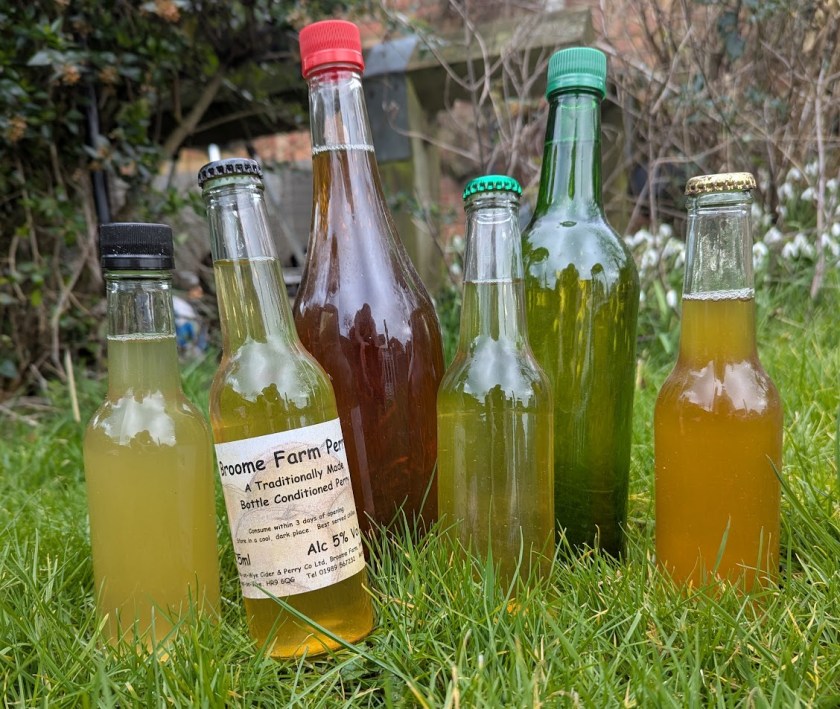
Aging potentially improves cider. Complex reactions involving sugars, acids and phenolic compounds (such as tannin) can alter the aroma, colour, mouthfeel and taste of cider and perry. Aging changes cider, but does not categorically improve or worsen it. If we follow the example of wine, low pH (more acidic), or higher levels of phenolics have greater capability to age.
When is the best time to drink a particular cider? Some are best young and others develop as they age. As with most things, it probably comes down to personal preference. Taste is after all subjective.
What happens as cider ages?
In general, colour will shift more towards a brown hue and may become darker or paler depending on tannin levels. Fruity and floral notes will likely shift more towards earthy ones, structural elements will be more integrated with tannins coming out of solution, acidity softening, bubbles diminishing and residual sugar becoming less prominent.
Tannins, acids, sugar, alcohol and aromas will all evolve over time but rather than moving together, each element morphs at its own pace.
Oxygen
It’s important to touch on oxygen as it is essential to the production of cider and will impact how it ages. The choice of fermentation vessel, barrel aging and type of closure all impact oxygen exposure. Oxygen is an important reactant for a number of biochemical processes – not all beneficial.
Tannins
We’ve previously touched on tannin before (https://cider-review.com/2024/11/23/cider-science-101-understanding-tannin/) but in summary as cider and perry age, the interaction between tannins and flavour/aroma compounds evolves. Tannins undergo polymerisation, which alters their capacity to bind with volatile compounds. This process can lead to the slow release of bound aromatic compounds, allowing the cider or perry to develop new layers of complexity over time. Furthermore, oxidation during aging transforms tannins, creating quinones that can interact with aldehydes, phenols, and amino acids, producing new aromas such as dried fruit, leather, and nuts.
Acids
During aging, the perception of cider’s acidity may change, even though the total acid levels are relatively constant. This is due to the esterification of acids – when they react with alcohols to form esters. This may result in a perceived decrease in acidity and production of new aroma compounds. There may be a point in the aging cycle where tannin levels drop and acidity becomes more prominent again.
High levels of acids prevent oxidation of a range of compounds, thereby slowing the aging process. There are many types of acids in cider – predominantly malic but also citric, lactic and the oft-dreaded acetic. Malic and citric acids are particularly susceptible to bacterial degradation. Small amounts of acid, including lactic and acetic, are lost through esterification. The reactive alcohol does not have to be ethanol; there are many alcohols present in cider and perry.
Alcohol
Alcohol acts as a preservative but levels in cider aren’t high enough to protect against unwanted microbes such as acetobacter. Higher alcohol levels offer more protection than lower though and will slow or inhibit growth. Alcohol levels will also impact a cider’s aroma, as many aromatic compounds are far more soluble in alcohol than water. The higher the ABV, the longer a cider’s aromas are likely to remain in solution. Alcohol will also impact taste directly, as ethanol contributes a subtle perceived sweetness especially at lower concentrations (~4-5%) that counteracts astringency and softens the perception of acids.
Aroma
The transformation of a cider’s aroma during aging is likely to be the most pronounced and complex. A number of key aromatic compounds are susceptible to oxidation or hydrolysis including esters (e.g. red berry and white flower notes), terpenes (rose and lemon notes), and thiols (e.g. grapefruit, guava and passionfruit notes). New esters are also created, as are other compounds such as norisoprenoids, which have recently been identified in cider but contribute aromas such as petrol, eucalyptus or black truffle to wine.
One of the many things that attracts me to cider and perry is the opportunity to taste rare or historic varieties in a way that can’t be replicated elsewhere. Who wouldn’t want to taste a perry made from trees that have been around since Napoleon or a cider from a tree where there is only one known of its particular variety? Or a time capsule into the past with ‘forgotten’ bottles of cider and perry such as the Bollhayes Traditional Method early 2000s bottles that were on sale within the past few years or the more recently rescued Last Hurrah release from Kevin Minchew via Tom Oliver, or Little Pomona’s Take a Dive into the Archives – covered wonderfully by Jack here: https://cider-review.com/2025/03/29/the-vault-opens-a-journey-into-little-pomonas-archives/.
Such a time capsule was what I received for Christmas this year from my wife, Milly.
I am notoriously difficult to buy presents for. Cider is the foremost of my hobbies and I have a strong sense of FOMO (and faux pommeau) so will tend to buy new releases on launch when I can get them. I also have a habit of only drinking a cider once, rather than going back for case after case. Suffice to say I was surprised on Christmas morning to be greeted with a wrapped box emanating from which was the distinct sound of filled drinks bottles. It transpires that Milly had been in cahoots with Albert Johnson of Ross-on-Wye Cider and Perry Company to curate a selection of ciders gathering dust in the barns of Broome Farm. Thus I present to you the ‘Magical Maze of Mysteries’ a walk through time of ciders from Broome Farm, many of which do not have a name. Alas, I cannot share these fine nectars with you but it would be remiss of me to at least not share the tale. In a similar vein to Jack’s dive into the Little Pomona archives, I’m not intending to rub anything in anyone’s general direction, merely document a unique piece of cider history.
Green bottle – Bog Blend
First up we have ‘Bog Blend’ and the only one of the bunch I’ve had before. The last was at the 2024 Ross Cider Festival when Albert produced a bottle at the end of Adam Wells’ rum tasting. This is supposedly one of Mike Johnson’s favourite ever ciders and who am I to disagree? The apples are unknown and were likely pressed between 2015-2017.
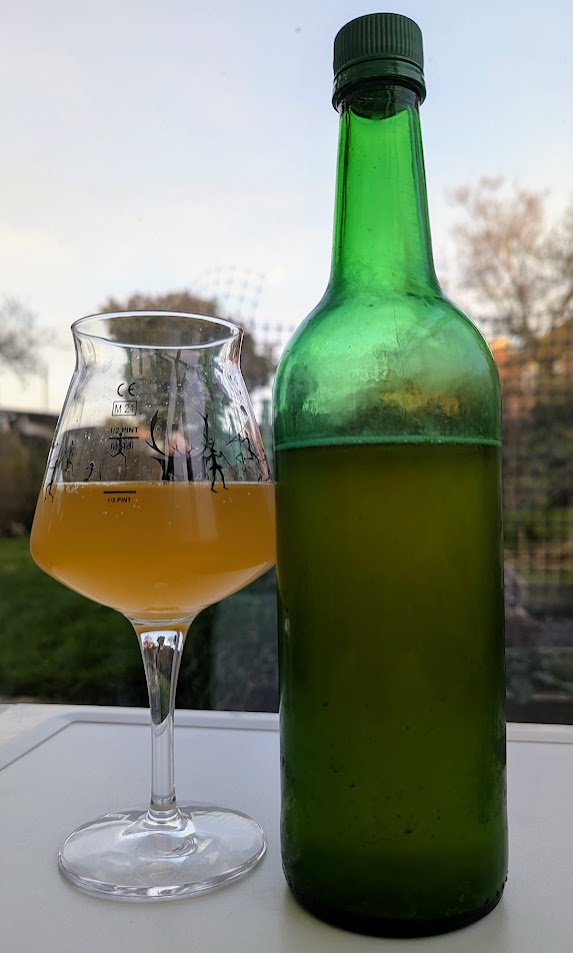
How I served: Straight from the cupboard under the stairs. Coolish so probably similar to barn temperature.
Appearance: Hazy golden-orange with a soft fizz.
On the nose: Autumn smoke on the nose followed by red apple – all of it from skin and flesh to stalk and leaf. Dried red berry notes too.
In the mouth: Bags of rich, soft tannin. Slightly woody with notes I can only describe as pineapple core and dandelion stem. Something almost peanutty too. Great balance between the acid and tannin.
In a nutshell: Has definitely stood the test of time. The essence of Broome Farm bottled.
Red top cider
Next we have a Dabinett single variety, date unknown. This last saw the light of day at a Manchester Cider Club in 2022. At that meeting Albert was presenting 9 different Dabinett’s, but one of the bottles was inadvertently swapped for a Bulmer’s Norman/Kingston Black blend, so this is the rogue spare.
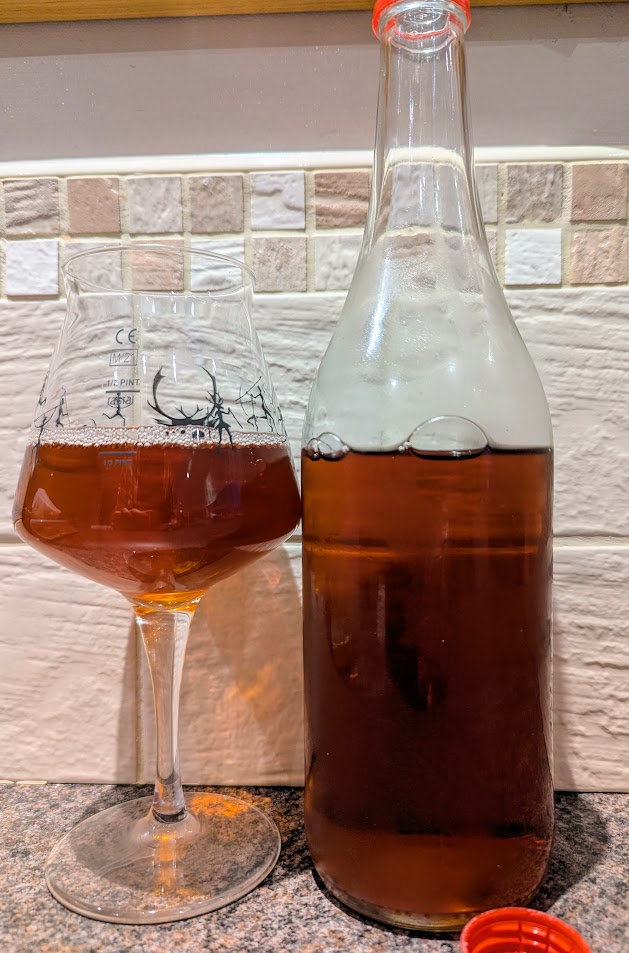
How I served: As the Bog Blend
Appearance: Deep amber-brown. Still
On the nose: Sweet cherry with a slight sherrified note. Rich, sticky apple with a touch of violet.
In the mouth: More cherry with a hint of marzipan that was drifting towards Bakewell tart. Bitter tannin with very little astringency. No real sweetness at all but felt almost syrupy.
In a nutshell: Never has a cider looked more like it tastes. I would have loved to have compared this when it was young.
Next up are a set of small bottles of cider and perry from between 2010-2012. Vintages and varieties are also largely unknown.
Rust top
The notes I have say this is a dry, still cider blend – probably with a little bit of sugar prior to pasteurisation.
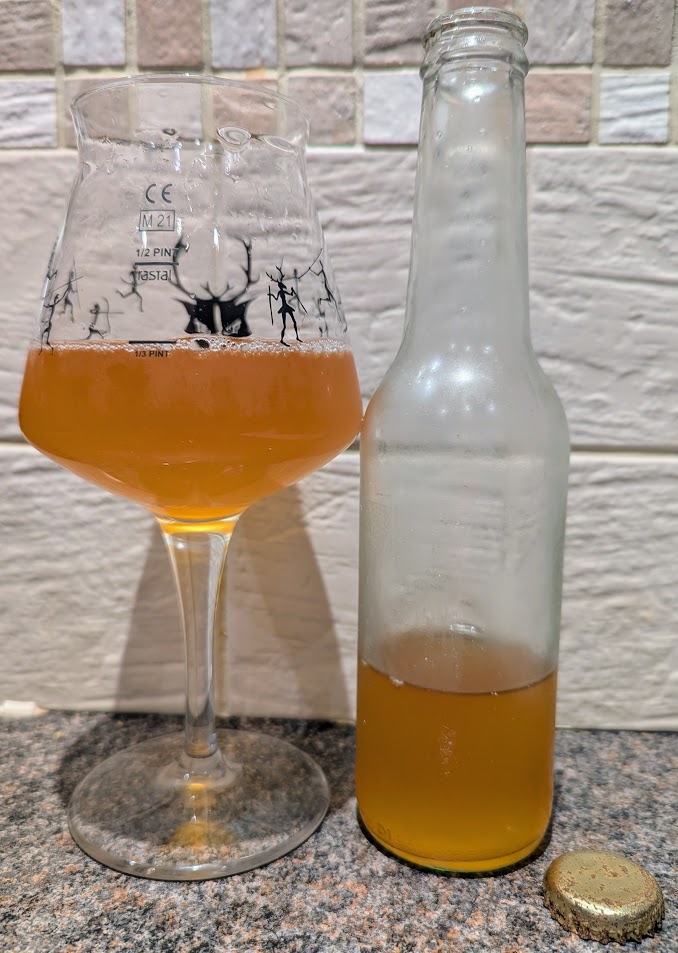
How I served: Fridge overnight then out on a cool kitchen counter for about an hour.
Appearance: Hazy amber-orange. Still.
On the nose: Peach juice, slightly musty, Waxy – almost like lipstick, baked apple and a floral note that was between rose and honeysuckle. Intriguing.
In the mouth: Touch of sweetness but with some real rich acidity. Very soft tannin that only seemed to touch the tongue.
In a nutshell: Lipstick is a new tasting note for me but I’m here for it.
Now dear reader, this is where things go slightly awry. You see the notes that came in the delivery mentions six bottles (two large and four small), however a rogue seventh bottle manifested itself within the box! What should have remained were two green topped bottles (one cider, one perry) and a black topped perry. The seventh bottle also had a black top…a mystery within a mystery.
Green top cider
This one was described as a Ball’s Bittersweet S.V, possibly in barrel but not certain. Likely bottle conditioned.
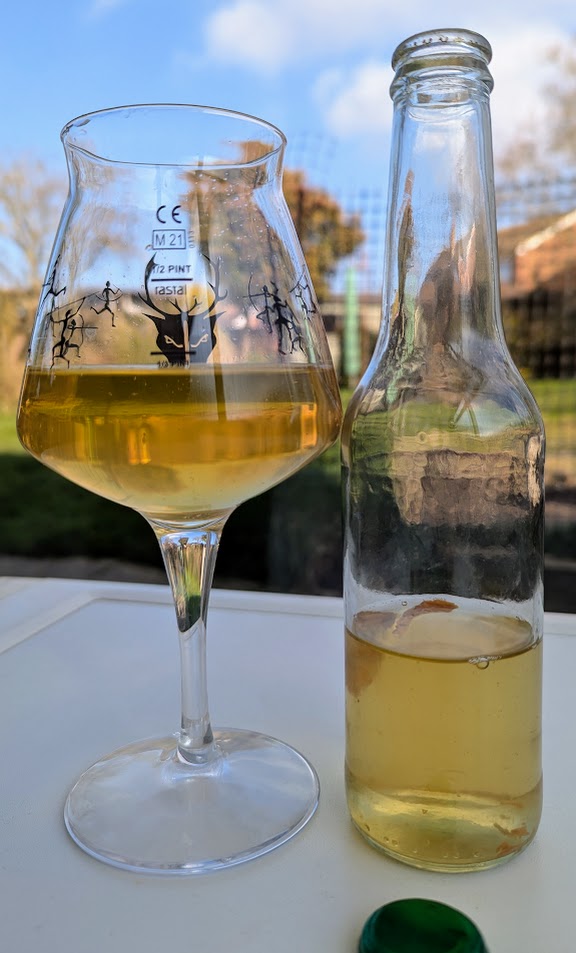
How I served: As the other small bottles.
Appearance: Pale golden-yellow. Soft fizz.
On the nose: Lightly scented. Slightly floral. Rich apple.
In the mouth: Very fruit forward with wonderful juicy acidity in the mouth.
In a nutshell: Hard to believe this is over 12 years old, given how fresh and vibrant it tasted.
Next up we have…
Green top perry
A rum cask perry of unknown pears.
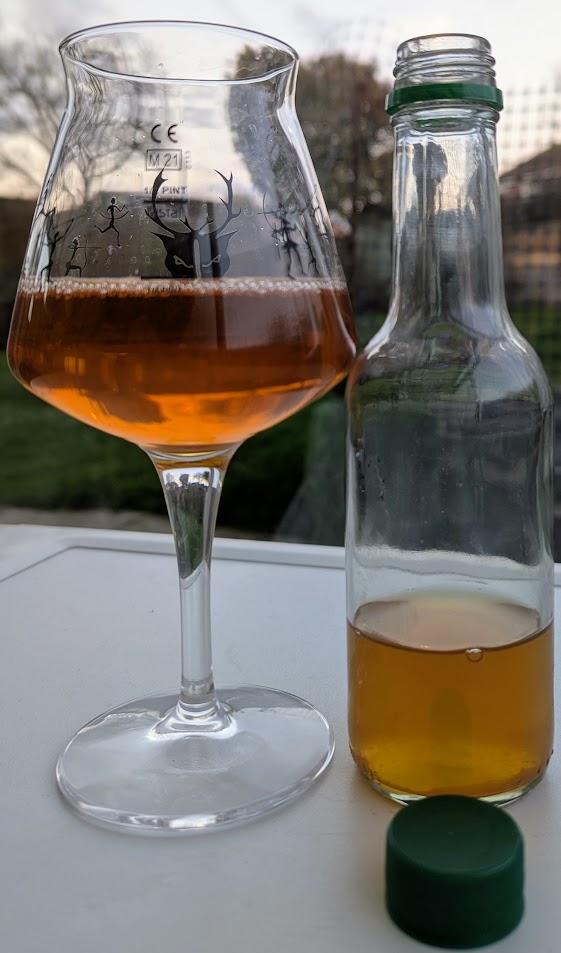
How I served: As the other small bottles.
Appearance: Sunset orange. Still.
On the nose: Spirit forward. Apricot, Straw and sweet cured bacon with a muted, slightly musty note.
In the mouth: Bags of juicy fruit with some sweetness (perceived or otherwise). Touch of apple core. Pillow soft tannin and rich acid.
In a nutshell: One of my favourites of the box. I do enjoy a cured meat note in cider and perry. Does make me wonder if cider or perry has the most aging potential.
Black top perry (Broome Farm Perry)
The final note in the box was for a black top perry that is a potato pear S.V. A variety I have never had before.
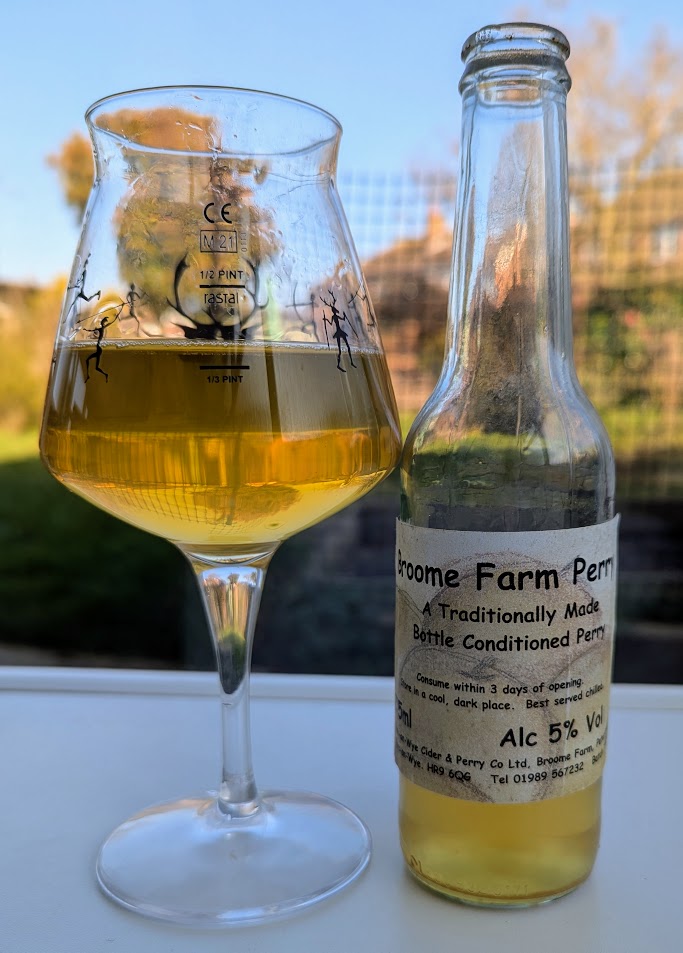
Appearance: Golden yellow. Very slight fizz.
On the nose: Honey, lime leaf and pomme skin.
In the mouth: Rich acidity, touch of gentle sweetness and some very soft pillowy tannins.
In a nutshell: Life in the old dog yet.
Black top
The rogue, seventh bottle.
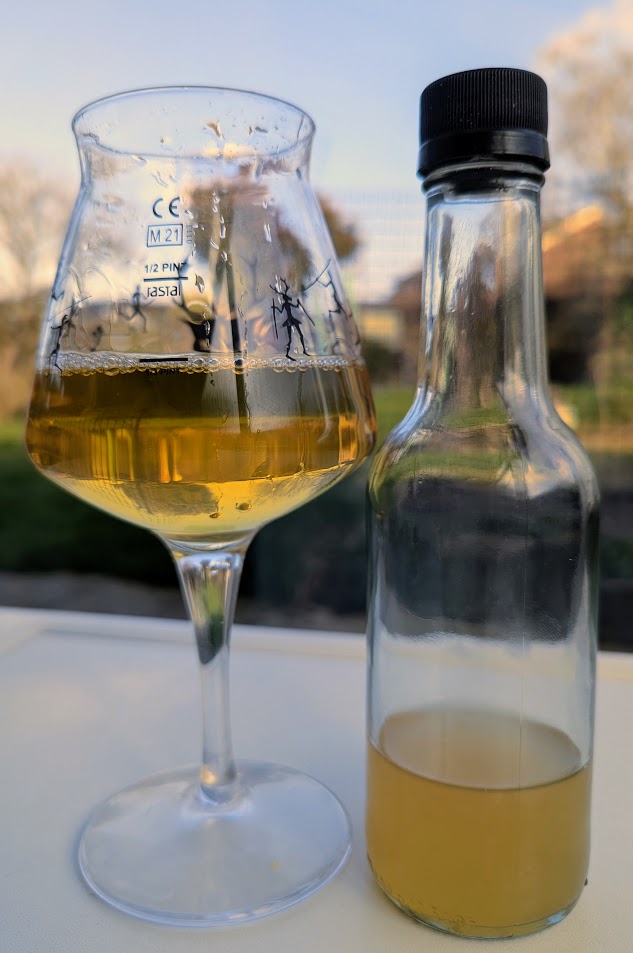
Appearance: Pale green-yellow. Still.
On the nose: Fairly muted nose but hints of dried leaves and tree sap. Touch of pineapple rings too.
In the mouth: Medium-dry with some fairly complex tannins. Rich, juicy fruit.
In a nutshell: Part of me isn’t convinced that this is the rogue one and instead is the potato pear perry with the Broome Farm Perry being the rogue inclusion. I have some nagging doubts over the two green cap varieties too, but I’ve nailed my colours to the mast.
Conclusion
Overall, this was a wonderful trip through time and one that’s unlikely to ever be repeated.
I can see why Bog Blend is a favourite of Mike Johnson’s but I think my top pick of the bunch was the green crown cap small bottle. It was such a vibrant, fresh tasting cider that truly hid its dozen plus years aging.
I feel this adventure goes to show the longevity and aging potential of cider. Here’s to many more adventures to come!
Discover more from Cider Review
Subscribe to get the latest posts sent to your email.
 Cider Review
An excellent article; thank you Andrew. When I started out, all the books I read claimed that ‘cider doesn’t age’, which is plainly not the case. I’d encourage every cider maker to lay down an archive to test that statement. The only problem is that now I’ve only one bottle left of the very first cider I made – do I drink it now or keep it another year?
LikeLike
Thanks Paul, it’s certainly a difficult problem. Always tempting to just keep it for one more year.
I’d have loved to have tried some of these fresh too as a comparison.
LikeLike