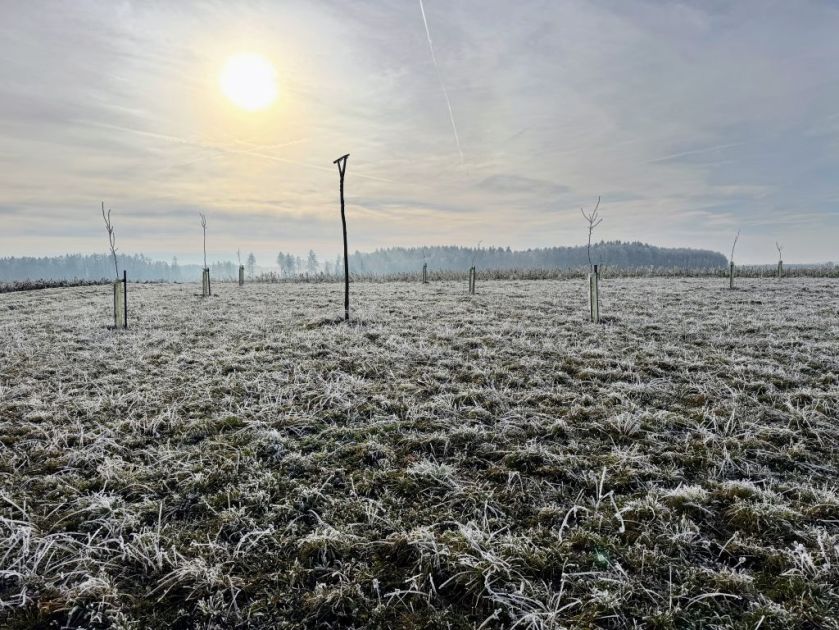
Happy New Year, lovely readers!
If you read the recent Review of the Year article from some of our contributors you will have seen that 2024 was a record year for Cider Review. With 23% growth in the number of visits to the site, we broke 100,000 views (105,129 to be exact), which feels rather significant for the relatively niche topic we cover here.
So thank you so much to all of you for reading the work published here, and thank you to our contributors for helping Cider Review grow with more voices.
Adam started a tradition for Cider Review to take a break in January, as it was mostly just he and James at the time. But a bit like how apple and pear trees need a certain amount of chill hours in the winter to ensure a good blossom and harvest, we think it is fair to keep that tradition, take a little break, step back, take stock of what has passed and plan for the coming year. So that being said, just be aware there will be fewer new articles published in January. I was going to say none, but I know some authors will be champing at the bit, so the door is left slightly ajar.
However, this means that the cold dark evenings of January is also a good time to catch up on what was published on Cider Review in the past year.
- You can browse everything that was written in the past year in order (just keep hitting the “older posts” link at the bottom to load more).
- You can also browse by author by clicking the links on our contributors page that was added this year, so you can get a feel for each writer or discover someone new to you.
- You can use the tags on the site to find related content, whether that be a particular country or apple or pear variety.
- And of course the search tool!
Please do look though the back catalogue. It’s an incredible resource, and if you are any way interested in the tapestry of world cider, there will certainly be something that will grab your interest.
And please, do give us feedback! We’d love to hear what you’d like to see more of on the site in the future.
Here’s to a great 2025. Wassail!

Discover more from Cider Review
Subscribe to get the latest posts sent to your email.
 Cider Review
Chill hours are something we are all going to have to get to understand better. Warmer winters are a significant threat but none of us know how much impact they’ll have. Most of the older varieties require around 1,000 chill hours. For those who don’t know, that’s a temperature between 0C and 6C. Frosty hours, as in Barry’s pictures, don’t count! Don’t ask me why not but they don’t. I’ve been recording our chill hours in south-east Somerset since 1st December – I didn’t start early enough! I’m also unsure when one can say the start date is. All leaves off trees? After today it looks like we’ll have 250 on the clock so there is a long way to go. Nothing tomorrow but there’s a reasonable chance of quite a few this week.
The bottom line is that northern hemisphere varieties are going to come under pressure, and this is why some of the southern hemisphere varieties like Gala are starting to dominate people’s thinking as to what the plant. That’s for dessert fruit, but what of cider varieties?
LikeLiked by 1 person
You are making me think I should have written about actual chill hours and vernalisation for fruit trees and not writers!
It’s a topic many may not think about in this time of climate change. I shall have to mine my temp sensor’s logs for some local data.
LikeLike