Last month, at the Northwest Cider Cup judging afterparty in Portland, I met fellow judges Erik and Storie. The pair happen to run Press Then Press, the USA’s preeminent online cider retailer, and I was instantly keen to order a case from their impressive selection. I had a few days at my grandmother’s house in California planned as part of my trip; it was time to fill them with cider.
I can spend far too long editing an online shopping cart, especially when cider and perry are involved. In the end, I usually resort to a self-imposed rule or two. This time, I decided on 1) three ciders made from wild American fruit (seedling pears and apples as well as crabs), and 2) three ciders made from Harrison, perhaps the most-revered American cider apple.
I was particularly interested in what the latter ciders would taste like. Now that I’ve got a handle on your Dabinetts and Foxwhelps, your Yarlington Mills and Kingston Blacks, I want to get a feel for other countries’ prized cider varieties. Moreover, in the USA, where cider made from wild fruit is more common than in Europe (primarily the seedling legacy of the States’ more recent homesteading tradition), varieties named and bred for the purpose of ‘hard cider’ are particularly intriguing.

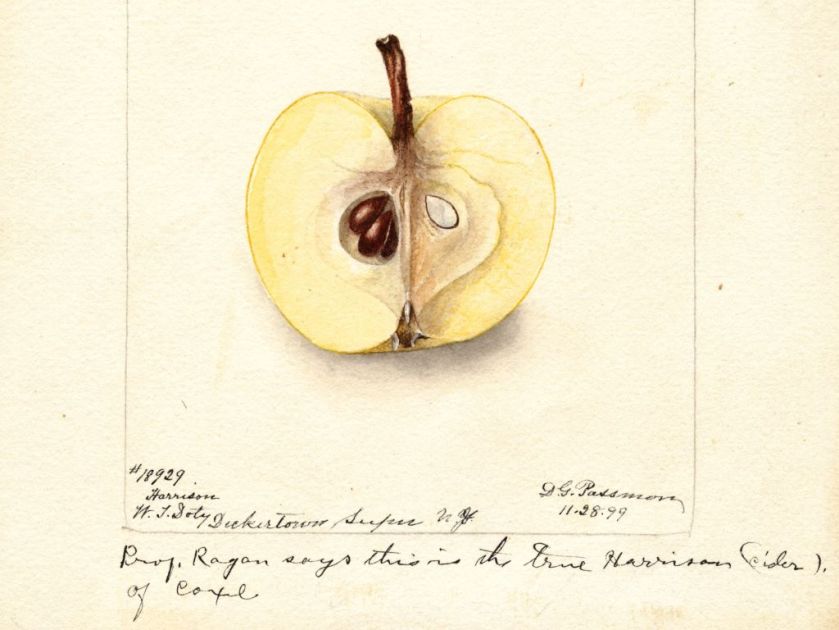
The Harrison apple has the added mystique of having been forgotten. Once colonial North America’s favourite apple, Harrison fell out of favour by the 20th century. The variety was lost before being rediscovered near an old cider mill in Livingston, New Jersey, in 1976. The tree’s identity was then confirmed by noted pomologist and apple historian Tom Burford, known locally as ‘Professor Apple’.
The New Jersey location makes sense: cider making in the state used to centre on this apple, with George Washington supposedly calling Newark’s output ‘the champagne of ciders’ (note, I cannot find the source for this claim). Indeed, while most of the American cider people I met during the judging seemed to naturally defer to British cider and perry varieties as inherently more desirable than their native ones, they’d make an exception for Harrison.
I chose two 100% Harrison ciders which were both naturally fermented and pet nat — from my limited experience, not a combination that’s all that common stateside. Jerz Fresh (9.6% ABV) was made in central California with organic Washington fruit by Durham Cider + Wine Co. Alpenfire’s Burnt Branch Reserve #13 (6.5% ABV) is also certified organic and all-Washington — though not, as they say in the American cider scene, ‘estate’. The Burnt Branch series is made up of Alpenfire’s smallest releases, which are normally cider club and tasting room exclusives: the fact that almost 300 litres plus one cask of this cider were made just goes to show how different the scale of everything is in America.
To these two, I added Blackstrap Batch 6.22 (9.2% ABV), a co-ferment from Liberty Ciderworks, also from Washington (it’s the USA’s premier apple-growing state!). 65% Harrison and 35% Virginia Crab co-fermented with raisins and juneberries (a wild fruit with a cherry-blueberry-almond flavour) and kicked up a notch by the addition of blackstrap molasses, all to mimic a colonial recipe? Consider me sold.
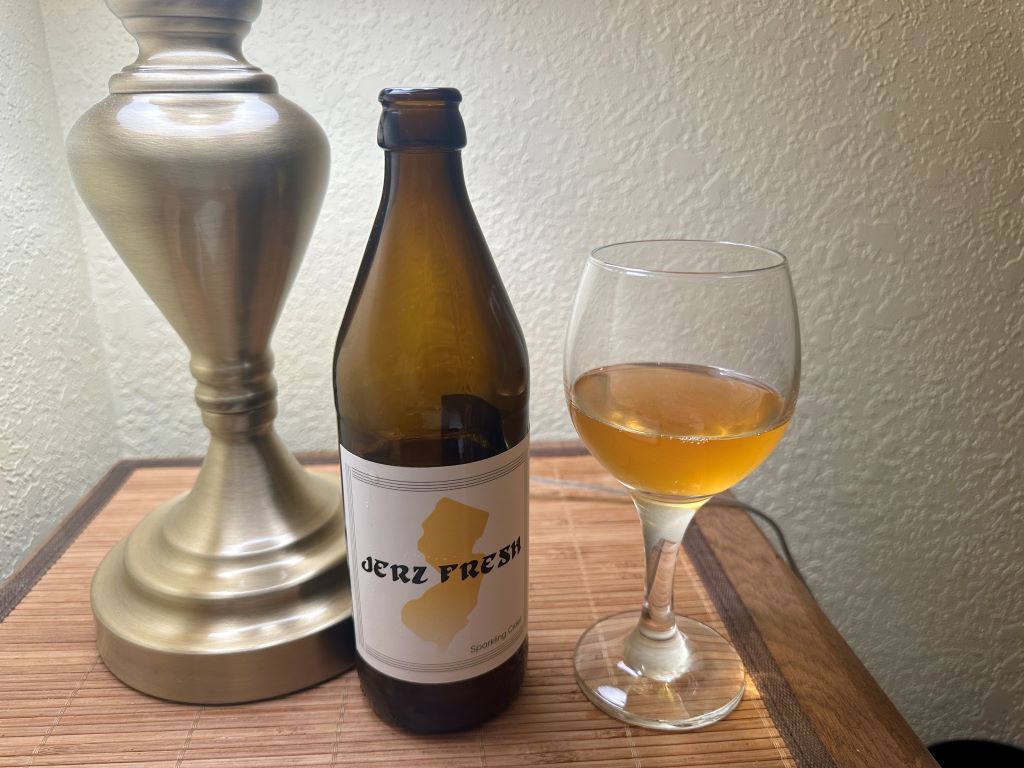
Durham Cider + Wine Co., Jerz Fresh 2019 – review
How I served: Straight from the fridge but sipped over some time.
Appearance: Slightly hazy dark gold.
One the nose: Rich apple nose with benzaldehyde note (almond extract smell). There’s also something of the kriek or lambic about it.
In the mouth: Though dry, this is very juicy and fruity. It’s got a little bit of sparkle and tastes rich and well-balanced. It’s hard to name the flavours: the wild-fermented sour beer vibes follow through, with some vegetal, spicy bitterness, too. Quite a mellow mouthfeel.
In a nutshell: One of those ‘this would be great with pork’ kind of ciders of which I hadn’t had many on the trip. Somewhat like a German Apfelwein with more colour and chew, this was a joy to sip.

Alpenfire, Burnt Branch Reserve #13 Harrison pet nat 2023 – review
How I served: Fridge-cold but allowed to breathe for a while.
Appearance: Hazy straw.
On the nose: Now that’s different! Fresh light apple juice, dessert pear, banana, and fermentation character.
In the mouth: Very light and yeasty, a bit like a less acidic sidra natural (I mean this in terms of the flavour profile, not because it was particularly volatile). Quite green and fresh; am I tasting mangetout?! More conventionally, there’s pear flavour too. A lightly herbal finish, perhaps with a hint of liquorice. Not much body to speak of. Fresh green apple finish.
In a nutshell: Not what I would have expected from the descriptions of Harrison I’d read: light in body; light, fresh, and yeasty of flavour; and without any big phenolics.

Liberty Ciderworks, Blackstrap Batch 6.22 2022 – review
How I served: Just out of the fridge (but it’s hot in California!).
Appearance: Almost-clear dark amber.
On the nose: Red apple, restrained quince, brown sugar, strawberry jam. No crazy intensity.
In the mouth: Gentle sparkle with thick texture (something often lacking in force-carbonated ciders, as this one is). Just short of dry, the apple flavour here is lightly tannic and really quite bitter; however, it’s well-rounded and pleasingly autumnal. Grilled pear, and tiny bit of quince again, but not in a fresh and citrussy way. I think there’s a sherry-like duskiness to the flavour, but perhaps I’m trying to see the raisin here. In the background, it’s got the intense, (to me) almost unpleasant wineyness that I’ve tasted in a lot of American ciders. Don’t get me wrong, I like wine; perhaps I’m just not used to this readily perceptible booziness in ciders.
In a nutshell: I expected more unusual flavours given the recipe, but this was very nice and reasonably well-integrated. I would guess that the molasses was originally simply intended to up the alcohol ante, but I think it adds body, too.
Conclusions
In the event, I ended up trying my first Harrison in a sunny back garden with Erik and Storie themselves, when they kindly hosted my partner Alfie and me for an evening of cider-based revelry in Seattle two weeks after the Northwest Cider Cup. We were lucky enough to share Empyrical’s off-dry Harrison SV, abstract, with the makers themselves; Adam and Elizabeth live in the same neighbourhood. I may be biased, but it was a delightful cider for a delightful evening: loads of bitterness and phenolics, a strongly almond-inflected nose, a rich amber colour, and a decadently off-dry 12.1% ABV (!).
I can see some of that cider in each of the examples from Press Then Press reviewed above — but is that just because I’ve read a lot about what the variety is ‘supposed’ to taste like and am trying to join the dots? Regardless, even in the heterodox co-fermented member of the trio, typical Harrison characteristics were certainly present. I would love to know what the fruit adjuncts were originally intended to add; tannin, colour, and extra sugar come to mind, but perhaps it was just about what was around.
Somewhat surprisingly, the Alpenfire is the odd one out here. According to the bottling info, this was the cidery’s first foray into pet nat; they mostly bottle-condition. I would love to try more of their Harrisons, or perhaps ciders made with Harrison fruit from the same orchard, to see if this bottle is representative.
Is this the exception that confirms the rule? I think I can still posit that Harrison is generally characterised by relatively low tannins and high acid (it is a ‘sharp’, after all); big, boozy phenolics and body; and a spiced almond note. Washingtonian Harrison, anyway. Sadly, it’ll likely be some time before I can complement this review with a tasting of East-Coast Harrisons!
Title image: Passmore, Deborah Griscom, 1840-1911, Public domain, via Wikimedia Commons.
Discover more from Cider Review
Subscribe to get the latest posts sent to your email.
 Cider Review
What a thoughtful writeup Beatrix!
As a maker with only a few batches of Harrison cider under my belt – I have to speculate that microbial identity and diversity during fermentation play a major in the cider’s eventual flavor profile. The phenolic attributes of “Abstract” emerged primarily during MLF, whereas more cleanly fermented “Objective” and “Inversion” contain majority Harrison but are much less phenolic/spicy more fruit forward and slightly astringent.
Being prone to a transformation in character via fermentation – I suspect the differences between new world makers (and elsewhere, old world cider generally versus new) are down to differences in the ways fermentation is initiated and ushered along. Of course terroir may explain differences in fruit…but the flavor of Harrison seems very dynamic in the hands of the maker.
LikeLiked by 1 person
Hi Adam! Thanks so much for taking the time to enlighten the situation further, and I’m glad you enjoyed the article. It just goes to show that even SV ciders have so much more going on that ‘just’ one apple variety. No doubt the dynamism of Harrison is one of the things that makes it so attractive to cider makers!
LikeLike