
The quiet cider revolution in Germany continues apace, or rather it seems that I am slowly discovering more of a hidden world. When one thinks of cider in Germany, the usual association is with Apfelwein and Frankfurt, a kind of closed loop in of itself that doesn’t appear to look outside very much. But over the past couple of years, I have been coming across more and more smaller makers, and some not so small makers, that have just been quietly getting along.
Founded in September 2020 by Ole Klann and two friends, Jannick Kirchner and Jan Thie, Nordappel is one such cidery. Based in Oldenburg in Lower Saxony, up in the northwestern corner of Germany, tucked in between Bremen and the Dutch border, it’s not an area I usually associate with apple growing, and definitely not with cider. However, the north is full of surprises, and Nordappel, Muxaller and Gutshof Kraatz are not the only makers spanning the near coastal band across the northern tip of Germany.
I think it was sometime in late 2021 that I first learned about Ole and Nordappel Cider. He had reached out to a handful of makers in Germany, to organise some chats and share experiences of cidermaking in Germany, and we’ve stayed in touch since. I got to know him a little better last year, when we travelled together to the CiderWorld event in Frankfurt, where he had entered the competition and had a shared booth at the Expo with other makers under the banner of Hochstamm Deutschland, an association dedicated to the protection and promotion of traditional full standard trees.
I asked Ole if he’d mind having a chat about Nordappel, how he started in cider, and where he sees it going, and he kindly agreed. So, without further an ado, let’s meet Ole.
* * *
CR: Ole, please introduce yourself to our readers, your background and how you fell into the cider hole.
Ole: Hello everyone. My Name is Ole and I’m 30 years old. When I was 18 I did not like beer (the usual beverage growing up in Germany) that much. After I finished high school, I started travelling for a year. My first stop was South Africa where I had my first cider. It was a Savanna “Dry” at the Kruger National Park. I enjoyed it very much and started wondering why we, as far as I knew, didn’t have anything like that back in north Germany. During my year of travel it became my first drink of choice and I tried a few different supermarket ciders in Australia and New Zealand. In New Zealand I worked at a few different vineyards around Martinborough and started to learn about winemaking and all the different flavour profiles the fruit, the soil and the microbes can give you.
Back in Germany, a good friend from home and I built a juice press and modified a garden shredder to grind up the apples. The first couple of years I made small batches of 20 liters and really had no exact idea of what I was doing. And the cider tasted pretty much like that. So I started researching and read the books of Andrew Lea and Claude Jolicoeur. And from year to year it got better and people tried it without making funny faces after taking the first sip.
CR: I know that like me, you have a regular day-to-day job, for now at least, and I got the impression that your professional life kind of lends itself well to making cider, too, doesn’t it? I know you are quite mindful of process at least!
Ole: Till 2018 I went to university and studied agricultural science with the specialisation on plant science in Göttingen. During grain harvest time I worked at arable farms to earn some extra money. There and at my job as a consultant for farmers I learned quite a bit about (in-)efficient processes and what a difference it can make for me and others to have a good workflow motivation-wise. The microbiology lectures and the regular chats with my former neighbour who is a microbiologist gave me a good basic understanding of what all the small living microbes can do for you. Maybe it was that particular combination that got me hooked with cider. I have never thought about it like that. I mean “we” are basically creating a beverage that in a way would occur naturally anyhow. So I guess the best job we can do is to make the yeasts and bacteria we want, happy.
CR: Hah! Yes, I often think of the low-intervention process is just giving yeast a happy and safe home to do their work, but we are all interfering in some way, as cider wants to become vinegar! But speaking of yeast, you like experimenting with different strains too, as well as your local wild yeasts.
Ole: Yes, I’m experimenting with a few different yeasts from time to time. Unfortunately, I’m mostly comparing apples with oranges since all our apples have been pressed at different locations and I don’t always have the exact same blends of apples I have in the following year. That makes it hard for me to tell exactly which factor it was that got me to that point. But I guess that’s part of every learning process.
CR: I knew you initially started using some space in a brewery for your fermenting, a good way to get fermenting space without major investment. But I didn’t know how or where you were getting your fruit pressed. So were you using different Lohnmosterei [contract cidery/presser is the best translation I can think of, where you can bring your fruit to get pressed, but not fermented] near where the apples came from?
Ole: That’s exactly what we did till our last harvest in 2023. We worked with 3 different contractors to get our fruit pressed. The last few years I spent a lot of time and gas to bring fruit in and transport the juice out again. That was an annoying part since harvest is the time where I want all the focus on the fruit and the perfect ripeness to press it. When working with different contractors, you quite often have to make compromises.
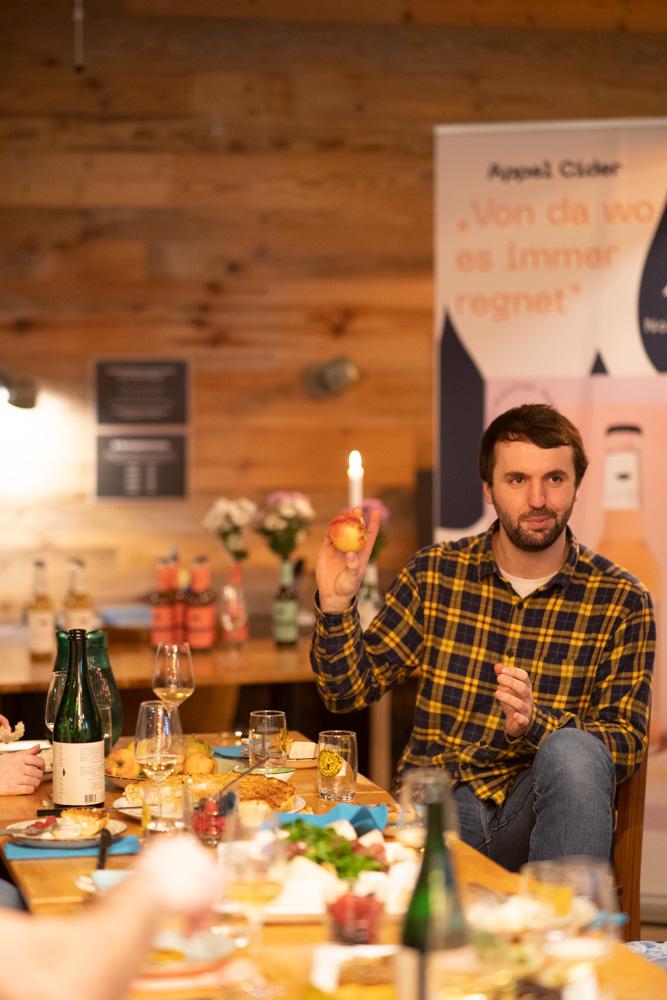
CR: How did using someone else’s brewery space work for you, were there challenges?
Ole: We didn’t have a big budget and couldn’t find a cheap and suitable place, so we were looking for a brewery’s instead, since most of them had the equipment we needed to make the cider. We started making our first batches of cider at the Union Brauerei in Bremen in October 2020. The team of the brewery were really helpful and showed me a lot of how to handle pumps and how to sanitise everything properly. After the fermentation we needed to move the cider out of there and let it age in IBCs for three months in a shed next to the brewery. Right from the start we wanted to make a semi dry cider without the use of sugar, so we back sweetened it with apple juice just before filling. One big challenge definitely was the chamber pasteuriser, were we lost a bit over 10% over our bottles of the first batch due to exploding bottles. That was really frustrating.
CR: Last time we chatted you mentioned you had an eye on a new cidery location.
Ole: Yes! And I’m really excited about it. This winter I got offered the premises of a former Lohnmosterei with a bit of extra space so I can move all the cider equipment to there. Then I have everything in one place. This will save me a lot of driving time through our region. I need to get some work done with the flooring as well as some changes with the tanks but for the rest the cidery is in a mint condition. We plan on moving there this summer. The new place even has its own little apple orchard right next to it. And more space for some apple and pear trees…
CR: Maybe to clarify for our non-German readers, a Lohnmosterei is basically a place where you can bring your fruit to get pressed. There are a lot of them dotted around southern Germany, and people bring their apples to get pressed and usually pasteurised and filled into bag-in-box, so they have their own juice for the year. But also great for making cider, as you can just get your juice pumped straight from the press into the barrel you bring with you. It’s how I made my first cider in 2012 too!
I didn’t know it was such a big thing up north, that’s great to hear. But I should also say though northern Germany is not typically associated with cider making, but we are seeing a few makers like Steve O’Connor in Muxall, and Florian from Gutshof Kraatz, who has been at it for quite a while on the outskirts. Do you find it a challenge to find suitable fruit?
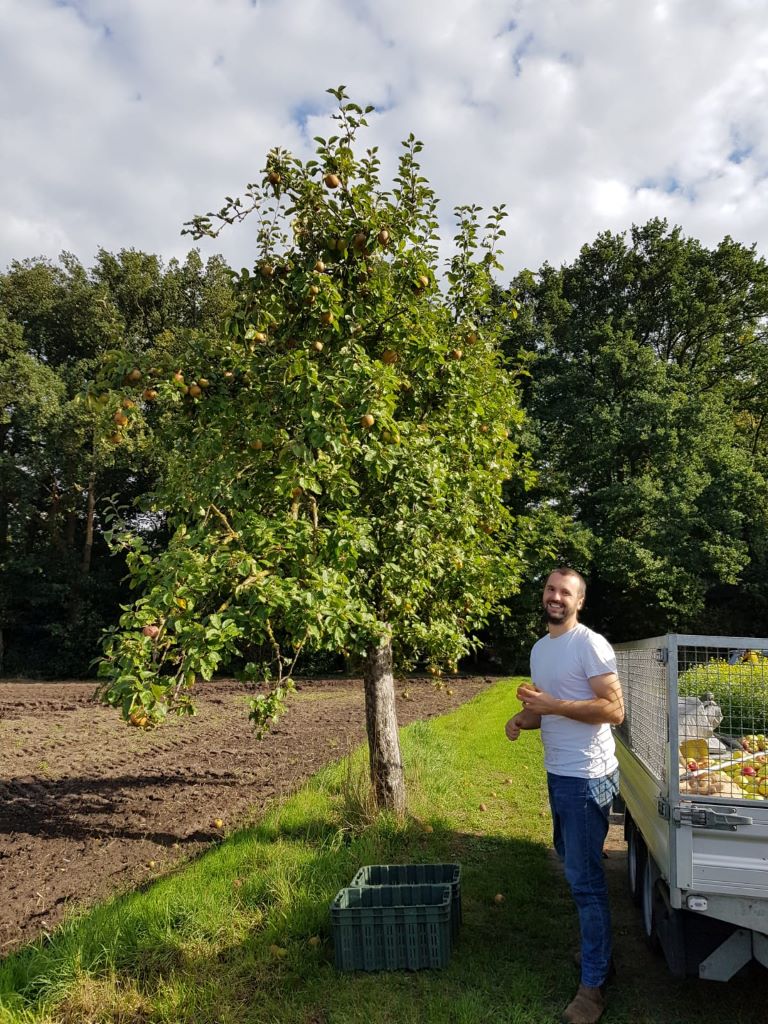
Ole: I got most of my cider knowledge from England and always thought that I need to get those bittersweet varieties to make proper cider. Then at a course of Peter Mitchell I was complaining about that we only had desert apples around our place. But he continuously nudged me towards “make the best out of what you have”. So I stared researching for regional old apple varieties with higher polyphenol content and discovered the several hundred years old agroforestry system of the Streuobstwiesen, which translates into a high standard tree orchard and the use of the grass and flowers that grow underneath the trees for making hay or grazing it with animals. Then I knew, that was the place where I need to get my apples from. In the North-West of Germany we have a very intensive agriculture and a lot of old apple trees were chopped down around the farms during the 60s and 70s. With the area of the “Altes Land” which is the biggest desert apple growing area in Germany so close by, there was no need to grow traditional apple varieties on every farm anymore. That didn’t help either to find what I needed. Long story short, we now have access to a few Streuobstwiesen in a 100 km circle around Oldenburg where we get our unsprayed traditional varieties from.
CR: Every day is a school day, I always thought down at the Bodensee was the biggest fruit growing region in Germany. And I definitely agree, there are many cider-making traditions and regions that do not use tannic apples, and it also took me a while to accept that our regional style is just as valid and with a really long history. So what varieties are you typically working with? Are there any that would be considered local, or at least commonly found there that you think would define your cider profile?
Ole: As I mentioned earlier, the apple growing region “Altes Land”, which is 150km away from Oldenburg, has a long apple tradition including extensive research and breeding activities. Two older desert apple varieties originally from that region that I’m using are Finkenwerder Herbstprinz and Ingrid Marie. The Finkenwerder Herbstprinz has a relatively high polyphenol content for a dessert variety and some great aroma. Unfortunately, its growing area strongly declined since it can’t be stored year-round. At the old orchards we also find some Gravensteiner which is a quite early variety that has some really great floral aromas. We were able to make a wild fermented single variety of that one in 2023. One other variety you brought my attention to is Goldparmäne [King of the Pippins]. We also often use Cox and Boskoop varieties for our ciders. But for about half of the Streuobstwiesen we are getting our apple from, we don’t know all the varieties growing there.
CR: What is your overall current capacity, and how has it grown? Do you plan to expand production?
Ole: We have a tank capacity of about 30.000 litres which is not in full use right now. In 2023 we made 25,000 litres, 8,000 of which were destined for someone else. When we move to the new place, we are going to increase our tank space a bit, since we also need to store some juice.
CR: Ah, right, you use your own juice to back-sweeten some of your ciders, so you have to keep that stored and fresh for quite some time. Actually, where is the next nearest cidermaker to you? Steve in Muxall is quite far away, and even further north, but you’re quite close to the Dutch border, and there seems to be a vibrant cider scene over there…
Ole: I think the closest ones are Kira and Martin Brüggenwirth near Hannover. Otherwise, it is pretty much a cider no (wo-)man’s land, which makes selling cider in our area a bit difficult. At my last visit in Groningen I was at a bottle shop with a pretty impressive international cider and perry selection.
CR: You began with 330ml longneck bottles, and now have a couple in 750ml format. What kind of audience were you aiming for when you started, and has that changed?
Ole: With the small bottles we wanted to create an easily accessible cider experience. Since a lot of people in our area don’t know what cider is, we wanted them to get hooked with a small bottle and then start discovering more. We are selling a lot of our ciders to bars where most of our drinkers are people under the age of 40. So one bottle as one serving is a low risk for them to try a new drink. For us the environmental factor is also an important factor for choosing the 0,33l bottles since they are reusable. A new bottle makes up over 45% of the greenhouse gas emissions of a cider.
The 750ml bottles are the ones for our “Handlese” hand picked selection. These are dry ciders mostly wild fermented and some barrel aged from orchards we manage ourselves. I personally really like them, but for us it is quite hard to sell them to our customers without giving them a bit of background information. Depending on your point of sale, this can we quite challenging. That’s why we started to speak to local wine stores, since they have the ability to inform the costumers before buying it.
CR: And how do the locals take to cider? Do they have preconceptions based on the more industrial brands you find in the supermarkets? I guess they don’t have preconceptions of traditional Most at least?
Ole: We do a lot of tasting and the first question I always ask is: what their experience with cider is? About 20%, mostly under 30, drank the sweet bubble gum water from a Scandinavian brand. Some have had cider in English speaking countries but the majority, especially people over 40, don’t know what cider is but instead know cidre. And the cidre they mean is sweet, fizzy, with low alcohol and a cost of €3 per 750ml bottle. And then I start the tasting with our dry Handlese and quite often I get the comment “oh, this is like wine”. So on the one hand we definitely have a naming problem since we are called the same as the bubble gum fraction. On the other hand, we try to use that moment to explain what we think of cider as a category.
CR: Being able to explain why something tastes the way it does goes a long way. Something else close to my heart that I know you share, is the planting of trees. You’ve set up a Verein (a kind of association or club) that is focussed on planting new orchards. Can you tell us how that started?
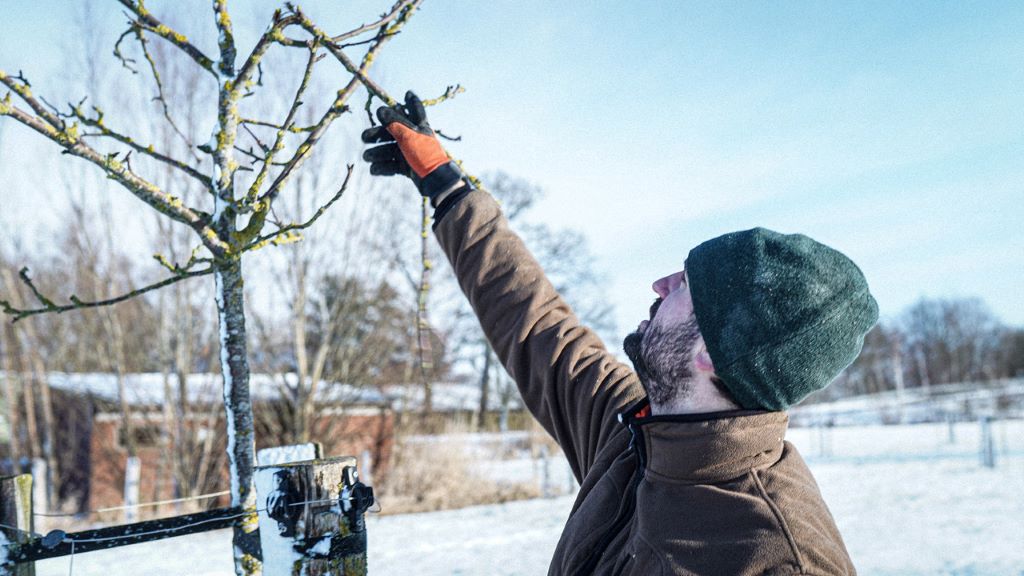
Ole: When I had it clear that all the apples that go into the cider should come from unsprayed Streuobstwiesen, I wrote a small ad in our local newspaper where I was searching for one to rent or buy. About 15 different people from around Oldenburg contacted me in the following days and I could pick the two best out of them. At that point I realised, that quite a lot of the orchards where in bad shape and also a lot of people wanted to plant a new Streuobstwiese. So I figured that it might be useful to start a Verein with the focus on exactly that. I founded that Club two and a half years ago and since then we have planted 210 full standard apple trees on 3 hectares of land. Most of them are traditional “Most” apple varieties and some “Most” pears [perry pears] as well.
CR: It’s really great to hear that, as usually people associate the southern half of Germany as being typical meadow orchard country. I recall reading an old German book that recommended farmers in the north plant more apple trees to make fruit wines, as the grapes didn’t do so well up there. And there you are continuing that! Is there any overall concept guiding what varieties you are choosing to plant?
Ole: We are focussing on old “Most” varieties not only from Germany but some English and French bittersweets as well. All of them as standard trees with a strong growing rootstock to maintain dual use of the land and to raise biodiversity. The different soils and water levels at sites also have a major impact on what varieties we choose.
CR: I’ve something more philosophical to ask you. How do you rate the state of the cider scene in Germany, either in terms of the maker landscape or drinker perspective? Has it changed compared to when you started?
Ole: That is a interesting question but I have to say that I’m very biased on that one. What I’m really happy about is, that a lot of new makers are popping up here and there. That brings more attention to the whole topic of cider which is a good thing. I try to get in touch with new makers that are close by since I’m always interested in what brings them to this great beverage. On the other hand I think that a lot of the small maker are trying to educate the consumer on how they are making cider. And in some cases I have the feeling, that they are a bit to dogmatic about the way they make cider is the only way to do it. As a small, quality-driven maker, I think we have point out what real cider is, a bit like the CAMRA definition. Because as long as consumers don’t know the difference between cider and an alcopop with artificial apple flavour called “Cider”, it is counterproductive to say for example only wild fermentation or bottle conditioning makes a “real” cider. What I would love to see is that all the small producers come up together with one definition of what cider is and advocate it to set a counterpart to the international quantity-driven brands.
CR: That’s a pretty good answer! I agree with you on the issue os possible dogmatism, as I think the main battle is to achieve full juice and excellent quality standard, like not releasing faulty products that bring the overall reputation of small makers down. As long as there’s openness, honesty and transparency, including on who really makes a product, I’m happy! But I think there’s definitely been an uptick in small makers in Germany in recent years, which is a good sign.
Thank you, Ole, for taking the time to chat!
* * *
In the best traditions of Cider Review, some quick tasting notes would be appropriate now. As mentioned above, most bottlings from Nordappel are in the 330ml longneck format, including one with hop extract and another with black tea extract. At the time of writing the latest batches were not quite released, but I had ordered a case of their two Handlese 2022 ciders, Ziglitz and Kleiber, in the 750ml format. I tasted these blind, only looking to the labels afterwards, but here are the highlights.
Both are an orchard blend, though the Kleiber was harvested a little later, so may have a slightly different mix. Well, apple-wise, as it also includes a portion of quince. Both were aged for 10 months in oak, Stiglitz in both an ex-bourbon barrel and a barrique with medium toasting, and Kleiber in a larger ex-Cognac barrel with less toasting.
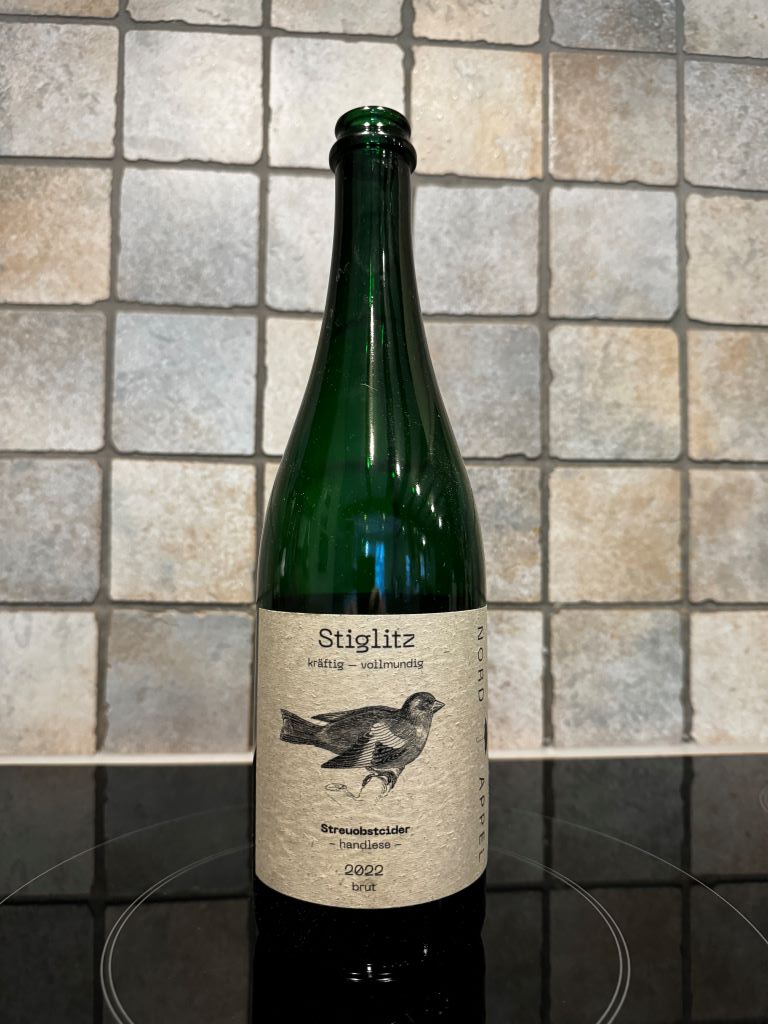
Nordappel Stiglitz 2022 – review
How I served: Straight from the cellar, currently about 14°C.
Appearance: Slightly hazy, pale straw. A light petillant sparkle.
On the nose: Medium intensity, green apple skin, vanilla suggesting a touch of oak, strawberry jam and some higher notes reminiscent of mandarin orange peel.
In the mouth: Dry, but the vanilla effect found on the nose is also present here, giving a slightly off-dry effect. It’s all about the acids though. Pineapple sorbet, green apple skins, orange zest highlights followed by those vanilla tones. Quite a long finish with lingering orange and pineapple with crème brulée.
In a nutshell: With a good dose of fruit acids up front, Stiglitz begins as a zingy refresher, but the oaky vanilla notes lend it a longer, deeper character that kept me sipping. Very nice.
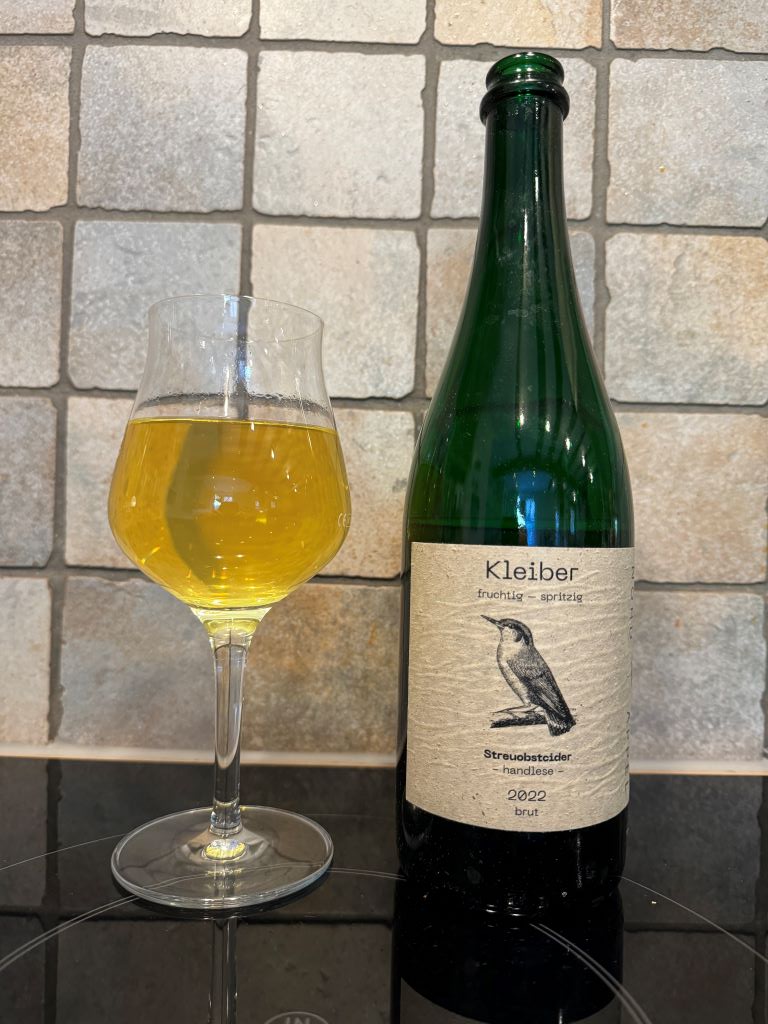
Nordappel Kleiber 2022 – review
How I served: As above.
Appearance: Slightly hazy, medium yellow. Also a light petillant sparkle.
On the nose: Light aroma. Slightly herbal, fresh hop-like notes, lime zest and floral, perfumy highlights. Perhaps a lick of paper.
In the mouth: Dry, medium-to-high acidity and no tannin. Notes of strong green apple skin, apple drop candy, pineapple cubes, lime zest, floral. A medium-long, zesty finish with a short-lived bitterness snapping in right at the end.
In a nutshell: Another quite zingy number, ramped up somewhat by the addition of quince. While it lacks the roundness of Stiglitz, the zestiness of Kleiber makes it a refreshing drink, perhaps more suited to a hot summer day than a damp, early Spring night.
Of the two, Stiglitz is my pick. So much so that I’d finished the bottle before I realised I hadn’t taken a photo of the liquid!
Discover more from Cider Review
Subscribe to get the latest posts sent to your email.
 Cider Review
I like that shit!
LikeLiked by 1 person
Pingback: Cider Women Cider Share 2025 | Cider Review