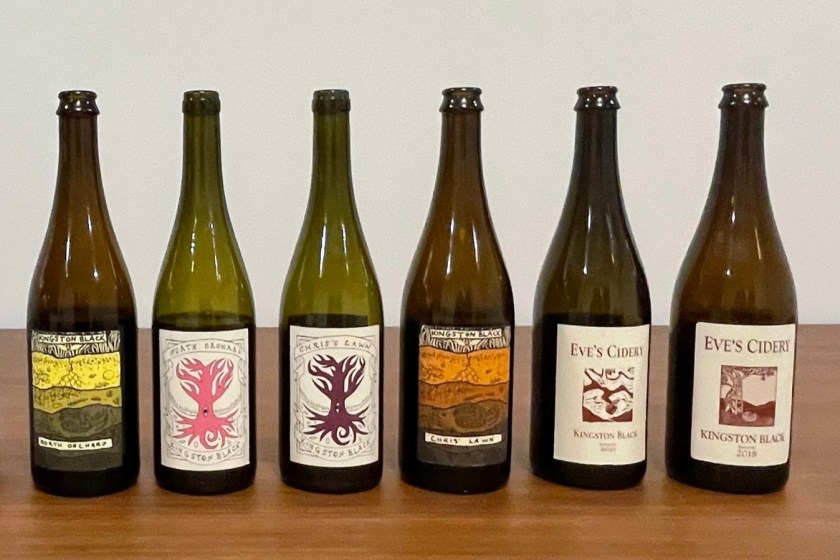
If you’re like me, you regularly open a bottle or two from your cellar, but still nevertheless seem to accumulate a growing collection that needs an occasional bigger culling. Many bottles I’m holding on to are intended to be drunk as part of a specific flight: “Oh I can’t open that wild foraged cider from Vermont tonight because I want to taste it alongside my other several wild foraged ciders;” or, “I wanna save that 2024 to have with the 2025.” Soon you are buying additional racks for your bottles or finding other spots in the closet to squirrel away a case.
One of the issues with this “saving it for a flight” strategy is you will be needing several drinking mates if you are going to be opening so many bottles, and that takes scheduling and coordination, making it less likely to happen regularly enough to keep space in the cellar for the inevitable new purchases. Luckily a few weeks ago, I ran into a friend at a concert in Kingston, New York, and remembered that we had talked about such a stash-killing, themed-flight tasting, so we decided to make it happen.
What would be the theme of our first cellar-culling tasting? Why not a flight of Kingston Black single variety ciders? In retrospect, very appropriate having been spurred to action by a chance meeting in Kingston. As the star of tonight’s tasting, Kingston Black is frequently touted as one of the varieties that works best in varietal form due to its balance of tannin and acid as well as its classic cider apple flavor. One that had the most representation in our cellars. And better yet: we had a combination of Kingston Black SVs from different years, from the same producer (a vertical), AND from different orchard locations at the same cidery, even on the same hill. (A true horizontal!)
Without further ado here are the tasting notes for a vertical and horizontal flight of six Eve’s Cidery Kingston Black varietal ciders:
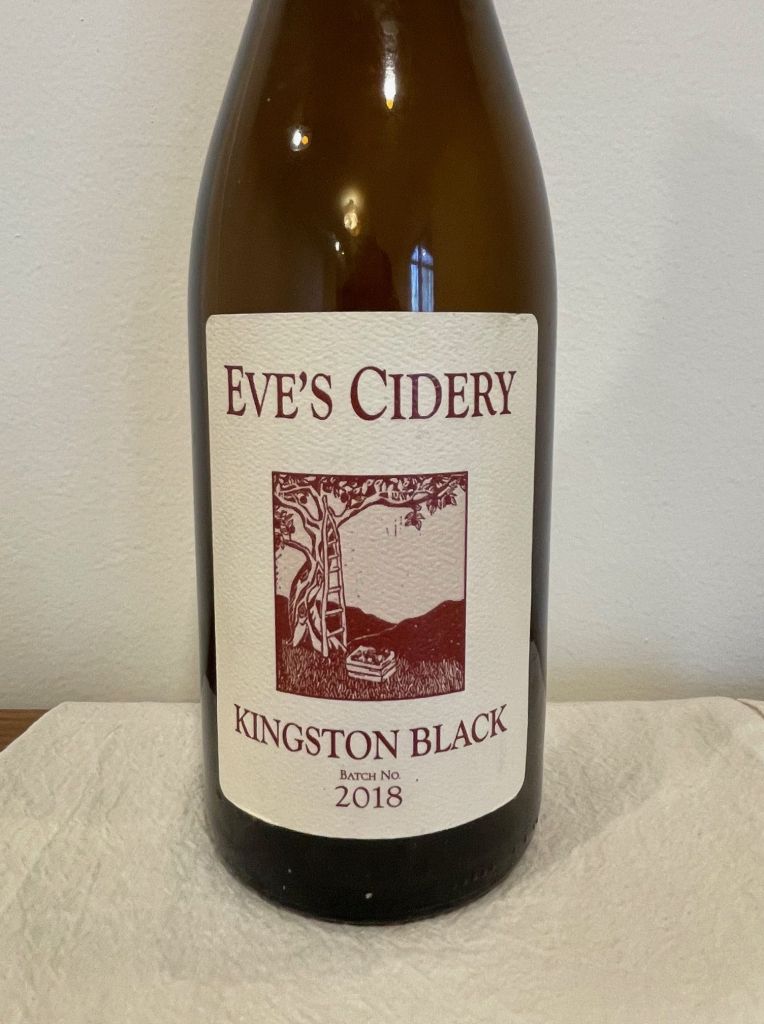
Eve’s Cidery – Kingston Black 2018 (traditional method, 8%)
How I served: Cellar temperature (~55-60℉, 12-15℃).
Appearance: Rich amber honey.
On the nose: Oxidized caramel apple, rosehips, orchard floor, licorice.
In the mouth: Lovely sturdy medium lingering tannins, offset by a nicely balancing medium acidity. Definitely a touch of oxidative character from the older age. Dried apple, oak leaves, calvados barrel, hint of bay leaf.
In a nutshell: This is showing its age a bit; on the musty, earthy side, but still with just enough bright juicy acidity.
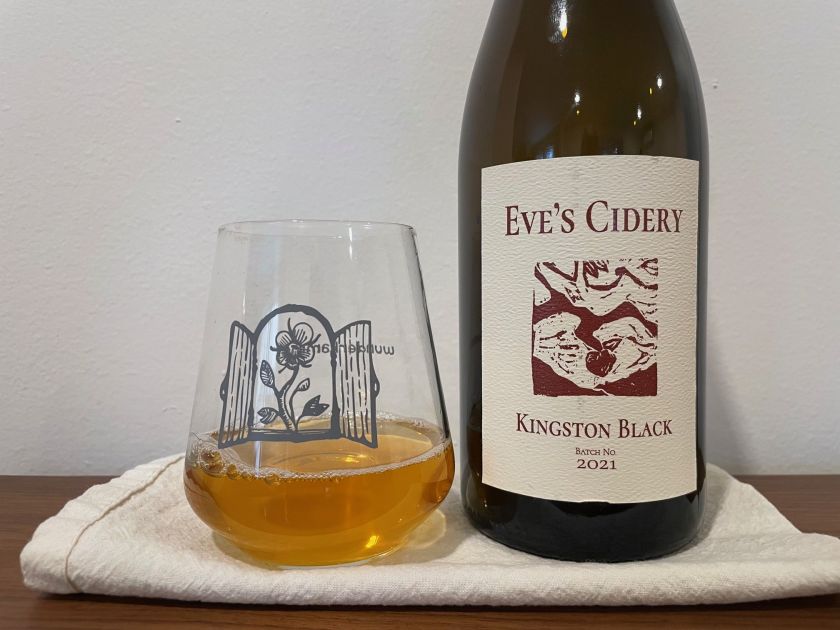
Eve’s Cidery – Kingston Black 2021 (traditional method, 8%)
How I served: As above.
Appearance: Gold.
On the nose: Mead, asian pear skin, anise, stone minerality. Not a low intensity aroma.
In the mouth: A bit more acidity than the 2018, mouthfeel slightly more astringent, dried lemon peel, loquat, long finish
In a nutshell: A bit brighter, more slate petrichor minerality but still a classic fruity English bittersharp profile.
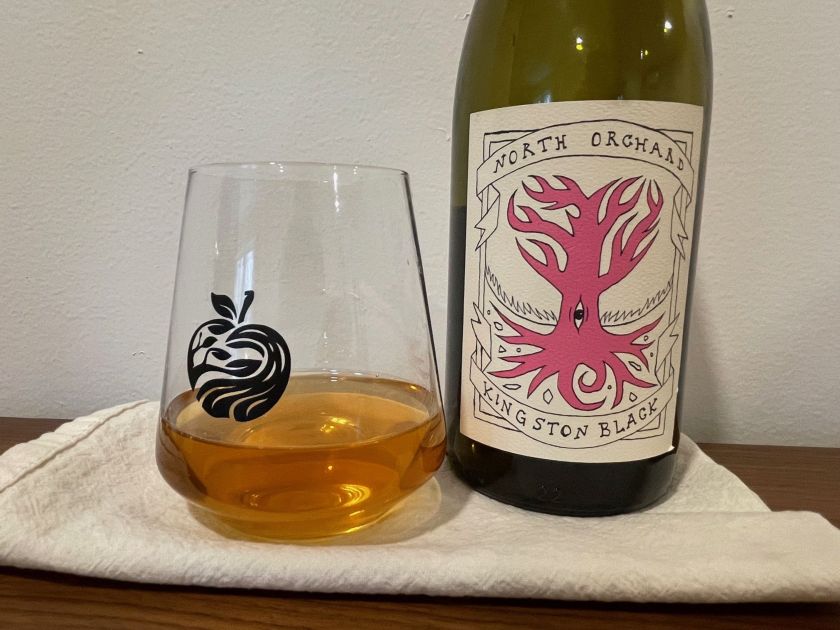
Eve’s Cidery – North Orchard Kingston Black 2021 (still, 7%)
How I served: As above.
Appearance: Gold ever so slightly towards amber.
On the nose: Luscious cider apple aroma predominant, with a background of herbaceousness, a touch of chalk
In the mouth: Amazing balance of smooth but lingering tannins and acidity, a touch of slatey minerality, fruity, hot summer day apricot
In a nutshell: Really fantastic, balanced, still cider with subtle complexity, and a pleasant lingering tannic finish.
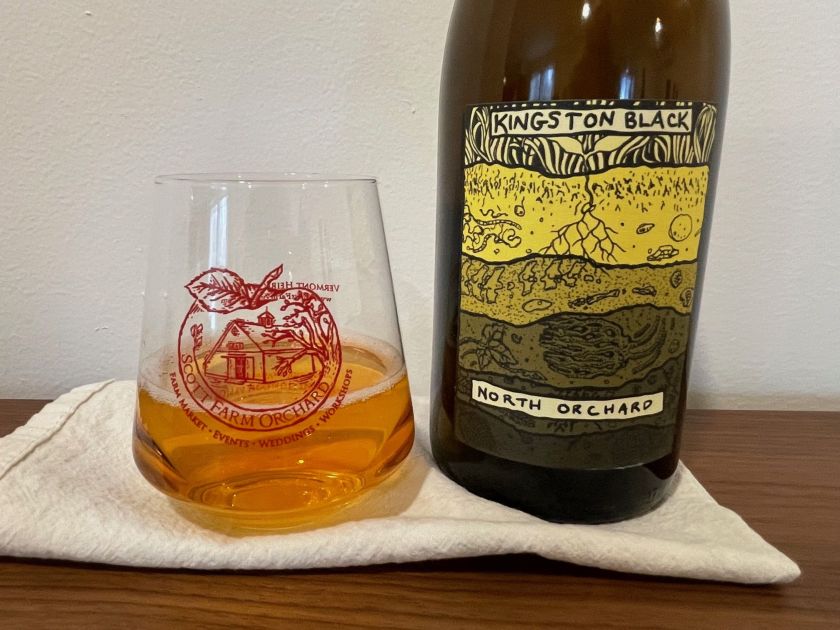
Eve’s Cidery – North Orchard Kingston Black 2024 (traditional method, 8%)
How I served: As above.
Appearance: Strong fizz on pour, lingering ring of bubbles, gold verging on a deeper rose gold
On the nose: Raspberry, potpourri, sea salt. A lovely perfume!
On the mouth: Very dry, more astringent raspberry, brassy bittersharp apple, with a hint of the yeasty white bread aspect from traditional method lees-aging
In a nutshell: Clean yet complex, the raspberry-astringent profile is significantly different than the phenolic west country aspect to others tasted in this range
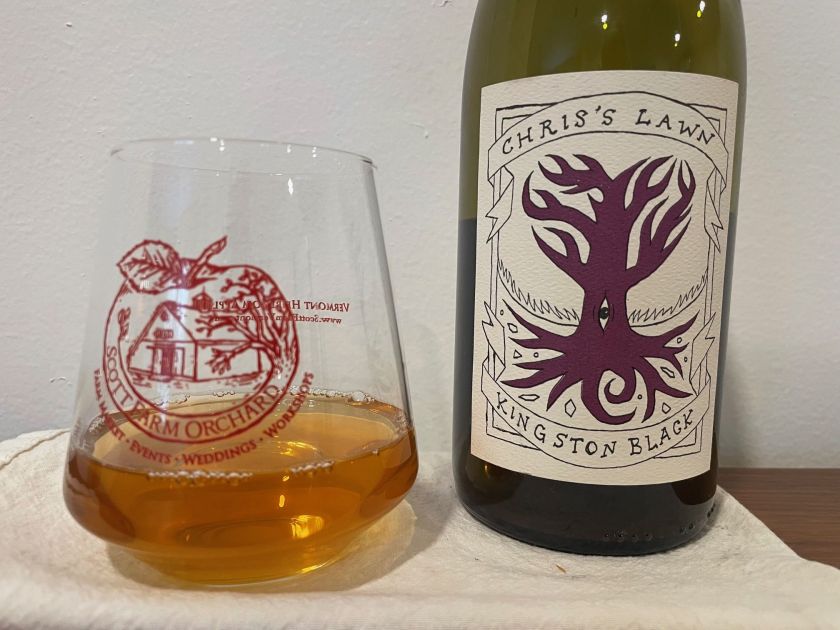
Eve’s Cidery – Chris’s Lawn Kingston Black 2021 (still, 7%)
How I served: As above.
Appearance: Deep gold
On the nose: A more delicate cider apple aroma, wet clay.
In the mouth: More rounded, less acidic, less astringent, with a soft lingering finish, gorgeous wet leaves and red apple with a hint of clay minerality.
In a nutshell: Almost like Albee Hill- well balanced and super drinkable, would pair with a variety of foods. Maybe lacking complexity compared to some of these others but such a classic cider apple flavor.
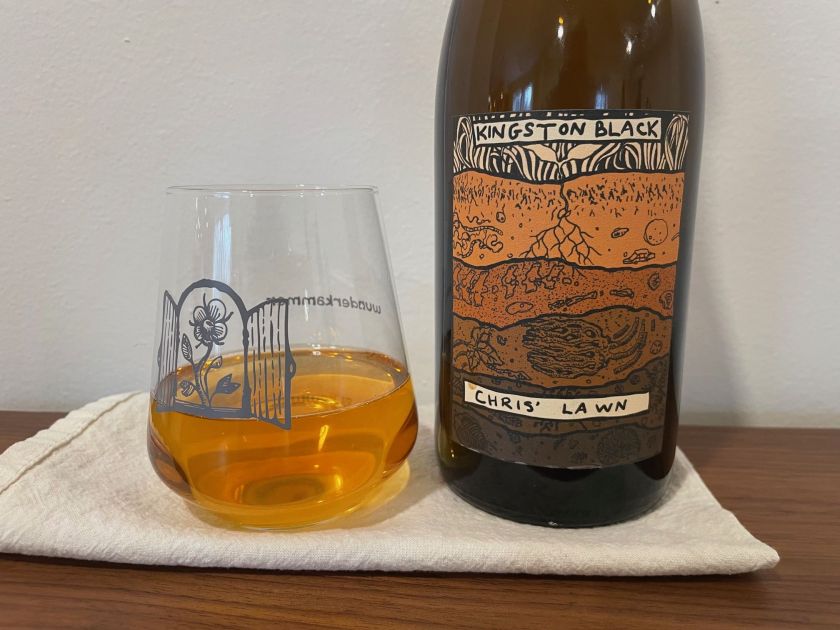
Eve’s Cidery – Chris’s Lawn Kingston Black 2024 (traditional method, 8%)
How I served: As above.
Appearance: Apricot gold.
On the nose: White roses, fresh plastic toy, baking apple, hint of chalk.
In the mouth: Less rustic than the earlier pommages. Persistent acidity to balance medium astringent tannins on finish. It’s giving Northern Spy + Stoke Red.
In a nutshell: Like the other 2024 traditional method, it is very clean, and more fruity and astringent than the phenolics and softer tannins of the 2021s.
In the Eve’s Cider subscription zine and on the labels the orchard blocks are described thus: Chris’s Lawn: planted 2000, large unknown widely spaced rootstock, elevation 1,300 feet, east-facing, poor air drainage. North Orchard: planted 2010, trellised G30 rootstock, elevation 1,100 feet, northeast-facing, windy. Both blocks are located on different parts of Albee Hill, Van Etten, NY.
Conclusions
These are by no means all the expressions of Kingston black in single variety form that Eve’s has put out in its history. There are countless available from other producers in wildly different regions of the world as well. Given that we happened to have these particular bottles on hand, and that Eve’s admirable efforts in putting them out just begs for them to be experienced in vertical-horizontal-flight mode (helicopter mode?), I decided to really focus in on this one variety from one cidery and see what appears over different years and in different microclimates on the same farm.
Results: the main similarity throughout the group was simply the English bittersharp apple aspect. Beside that I was stunned at the complexity of and diversity of flavors from such a narrow-in-scope group. Especially the gorgeous and varied aromas. More than the horizontal aspect (location) I was captured by the vertical differences (effect of age). It seems both the age of the trees and the length of the cider maturation are what drove me to another sip. Generally, I had a slight preference for those from Chris’s Lawn, the older block, and I also feel the 2021 expressions were more in their prime compared to the 2024 versions which certainly could age for another year or two for true maturity of flavor. The oxidized (though still enjoyable to me) quality of the 2018 suggests a 3-to-7-year range might be the best consumption age for these types of ciders going forward.
Notably, I did not come away with a very clear geologically-derived taste difference among the ciders (e.g. would one location always express minerality/slate?). Perhaps there are too many other variables involved in each season to attribute a specifically soil or location-based precursor for the flavors in the glass. Sun, rain/drought, age of the trees, small differences in fermentation/production aspects, all may cumulatively override any location-specific influence when it comes to taste. A landscape painting of the same place at rosy sunset versus during a morning storm will prompt quite different feelings after all. Or maybe I just need to repeat this experiment more often.
A bigger conclusion that this tasting leads me to is that cider is reaching a certain stage of maturity, now able to stand independently alongside the beer or wine industry, where vintage verticals or terroir horizontals have been the norm for quite a long time. Not so many years ago, it was difficult to find ciders that were made full juice with 100% tannic, cider-specific varieties (certainly in the US), let alone single variety versions expressing those varieties. To have such a broad and deep selection available today that celebrates specific apple varieties, specific harvest years, and specific orchard terroirs is something to celebrate. As one of the older fine cider makers in America, Eve’s may be ahead of the pack in being able to offer this kind of range, but there are many just a few years behind, sure to keep my cellar overflowing with helicopter flight ideas for years to come.
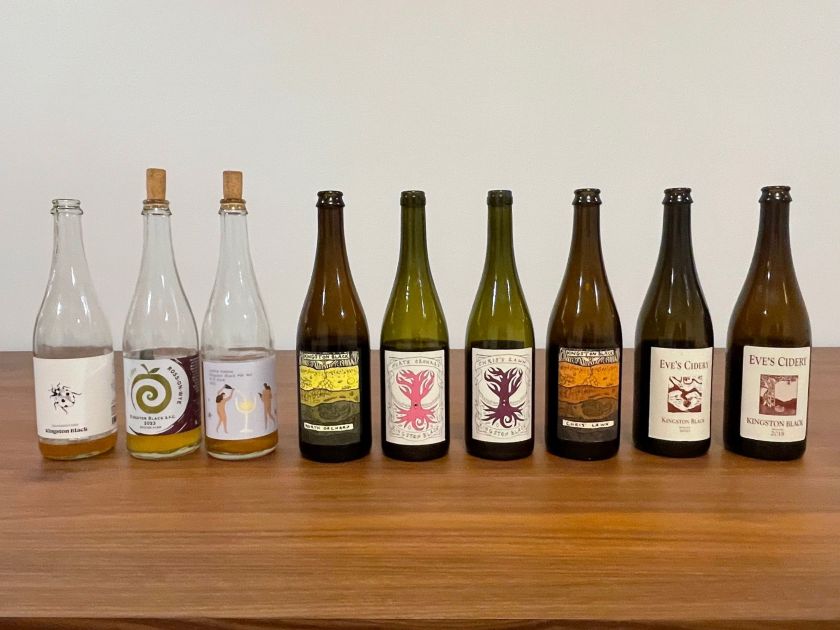
Let it be mentioned that we also tasted three other non-Eve’s Kingston Blacks in the same evening (for palate reference and stash killing purposes, but not reviewed for brevity): Bauman’s Cider, Ross-on-Wye Cider and Perry Company 2023, and Little Pomona’s 2022 Hill Farm Pet Nat.
Discover more from Cider Review
Subscribe to get the latest posts sent to your email.
 Cider Review