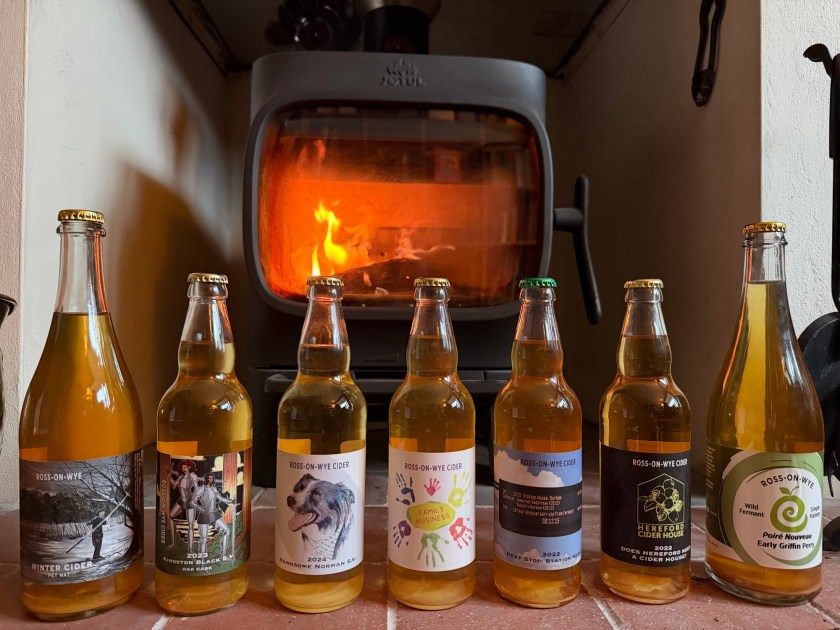
During the month of November 2025, Albert at Ross-on-Wye Cider & Perry Company announced an advent calendar box with a difference: every bottle within would be a 750ml expression of cider and perry. Some of them brand new, some of them deep-dives into their archives. Forget chocolate, chilli sauces, or wonky socks, this was the kind of advent calendar I was after! And, at the time of writing towards the end of January 2026, I’m still enjoying the bottles now. 24 bottles, spread across two very well-packed cardboard boxes, delivered to my doorstep as we entered the coldest, darkest time of the year here in the UK. But, there was also a third box also delivered to my weather-beaten December doorstep. One I was not expecting, but very gratefully received nonetheless. It contained the bottles I’ll be reviewing here today, very kindly sent to me as an end-of-year gift from Team Ross. A Winter release selection of 500ml and a couple of 750ml bottlings. What a treat!
I think Ross Cider must be one of the few producers across the UK to have at least 7 new bottles released over winter. Indicative of their extensive and highly-curated cider barn full of blue, brown, and silver barrels full of precious liquid – a release schedule like this laughs in the face of the hackneyed notion that cider is just for the sunnier months. There’s a cider and a cider apple variety for every month of the year! You just have to know where to find them (head down the road from Ross on Wye to Peterstow and you’re travelling the right direction). Those of us lucky enough to attend RossFest25, and sample the dizzying array of new releases there did comment on the lack of new 500ml bottlings, in the same thematic barrel-aged tastiness of the bottles Adam and I reviewed from the 2024 festival. It turns out, I think, that these are those bottlings for 25/26 Winter, delivered just a few months later than their 24 counterparts. There are some single varieties, some orchard blends, a barrel-aged bottling or two, and, a perry made from a variety I’ve heard of in passing, but never thought I’d be lucky enough to try a single variety of.
It seemed only right to get in touch with Albert Johnson and learn a bit more about the decisions behind these bottles, where they sit in the annual output of Ross Cider, and what we can expect from him further on in 2026.
Cider Review: Hi Albert, thanks for speaking to us. Two years ago, you released those lovely, mostly oak cask 500ml bottlings. A number of us were expecting a new batch at 2025’s RossFest, what happened?
Albert Johnson: Basically, my daughter got a bit older, so I’m slightly less organised. Everything was bottled by RossFest last year at least. The 1st set of releases, back in 2024, they came together so naturally and they were so cohesive. The oak element combining all of them, except for the Major. It was such a successful product that we wanted to try and recapture that. But it’s not normal to have five ciders that are aged between 3 and 5 years old that are all ready to go. I mean, we just don’t have that kind of product in storage. It’s how a cheese producer or winemaker might work but it’s not how many cidermakers are doing things. It was very hard to repeat. We ended up slowly piecing them all together. When I felt there was an outstanding cider that could go into a premium 500ml bottle, then I would bottle it and have it there. The Kingston Black is the one that has been in bottle the longest, that’s been waiting to come out for a little while. We only released five this time, but that’s because there is a cider that was bottled, but isn’t actually ready to come out. It just shows the kind of foolishness as a cidermaker tying yourself down to release schedule that’s very hard in a natural environment to keep up.
So naturally, we’ve doubled down on it, and we’ve emailed all of our trade customers with this year’s planned release schedule. We’ll try our best to fulfil it and hit all those dates.
CR: Good things come to those who wait. It worked out nicely because you were one of the only producers that had a kind of near Christmas winter release of a load of new bottles. It’s not seen from many other producers. From a consumer’s perspective it’s appreciated to have that land on our doorstep.
Going through some of the 500mls – Handsome Norman this time round. Last time it was an orchard blend before of different cider apples with the suffix Norman. This time it’s purely Belle Norman. Is that also handsome Norman?
AJ: Yeah, Handsome Norman and Belle Norman are one and the same variety. The first time we did it in the 750ml bottle, it was an orchard blend from Bridgewell, the nursery orchard where there are a range of Norman varieties. I called it Handsome Norman then because I had commissioned the artwork as a birthday present for Becky, and then I tasted the cider some months after we’d already had her birthday and loved it. We then had this amazing portrait of Norman our dog. I knew from my research before reading about these varieties that Handsome Norman is listed in Hogg & Bull as a synonym of Belle Norman. We’ve only got three trees of this variety, so there’s not loads of fruit, but it was always my desire whenever possible to do a single variety from them. It just so happened then two years later that it actually coincided with a huge crop and we were able to do it.
CR: Is Handsome Norman/Belle Norman your favourite of the Norman varieties?
AJ: It’s a very hard question to answer because they’re all amazing varieties. It’s really a variety that is indicative of a time where flavour was perhaps more the critical factor in assessing a variety’s quality than disease resistance and productivity. The varieties that have been selected in the last 40-50 years have been selected, not for their flavour, but for their ease of working with. Whereas these old varieties, like Sherrington Norman, an amazing bittersweet apple, but the tree is one of the worst trees we’ve ever worked with. White Norman similarly, very hard fruit to manage in a commercial environment because the skin is so thin that it bruises so easily, yet it makes another delicious soft bittersweet cider. I think the Belle Norman fits in that bracket. It didn’t endure as a popular variety, but actually the flavour of these heritage apples is often so desired. So, I love the Belle Norman, but I mean, you know, it is a Sharp, so I don’t think my favourite variety will ever be Sharp. I actually love Bulmers Norman. We’ve got a few cases left of our 2022 single variety Bulmers Norman right now and it’s just so complex for a single variety. I like all the Normans. I think they’re all really fascinating apples. They’re also most likely all Herefordshire-native varieties. So that’s also quite meaningful to a producer like us where there’s not that many Herefordshire
varieties.
CR: Next up are two collabs with bottle shops and bars. What does the Hereford Beer House and Station House/Fram Ferment mean to you on the map of destinations where you send your cider?
AJ: They’re just great places, basically, there’s passionate people running them. There’s a great cider selection at those bars, and I think it enriches our range, and I think it benefits our customers, for us to do these collaborations so that they know when they’re travelling around the country, you could stop off in these places and you can discover some like-minded people that love cider as much as you do.
We’ve worked with Chris and Susie Durham before. It was their 10 year anniversary, in December. I was definitely happy to support that, celebrating the fact that they’ve been running Station House for 10 years. The cider for the Hereford Beer House was a successful sample we sent out to them that they loved, a remote collab you might say, that has worked very well.
CR: Onto the bottling which really surprised me and is already up there on my list of favourite ciders for 2026! Perhaps controversially, I’m not the biggest fan of Kingston Black, a bittersharp apple variety that continually manages to claim to be the best cider apple ever. However, this oak cask Kingston Black…God it tastes good! What’s the story behind it? What was 2023 like for Kingston Black for you? The label by Ruby is lovely!
AJ: It’s great to have Ruby’s artwork on a bottle because she’s such a big part of the company. She did a label as well for the 1st round of releases in 2024, so it was really nice to have that continuity from her. 2023 was a wet season on the farm, and whilst 2024 was a huge year for Kingston Black production, 2023 actually wasn’t that big, so we only had about 500 litres from our orchards. In 2024 that number rose to over 2000 litres from the same trees.
On the low production years you actually get the most intensity of flavour in the drink. This Kingston Black came out with an OG of 1060. It was probably the highest gravity of any fruit in the whole season. There’s one Dabinett pressing that came close. I think that speaks to the fact that because the trees were not forced to overproduce, the quality of each individual apple is really, really high and then hopefully that is coming through in the cider.
CR: Putting that liquid in a oak cask, is it the fact that it’s a bittersharp apple variety, then it’s the interplay with the tannins that elevates it so much, or is it a particular cask?
AJ: I don’t think it’s because it’s a bittersharp because obviously we love bittersweets and oak barrels as well. The right barrel, when it’s subtle, and when it’s kind of cushioning the apple, I think that is where there’s always a bit of an opportunity to upgrade the cider. You’re able to use the oxidation and the wood’s influence to deepen the character of the cider. Kingston Black by itself sometimes can lack a bit of body because sometimes that acidity can be a touch sharp and it doesn’t have enough bitterness to always balance that, whereas when you give it that bigger, rounded flavour from using oak. You soften the elements and add depth where there isn’t flavour otherwise. We’ve got the Kingston Black from the same year in 750ml, which is from the Hill Farm fruit, I think that’s gorgeous as well.
CR: Onto Family Business. I love the label. There’s lots of things going on there in terms of different generations of cidermakers and apple varieties – DNA testing revealing that Brown Snout is the progeny of Bisquet. This tasted so good as well! I know I messaged you at the time saying, I could have sworn it was a rum cask. Is that flavour note coming from the Brown Snout? Does it just give this kind of tropical flavour?
AJ: Tropical is a really good word. It’s so soft and so subtle, and it really brings out the sweetness in a bittersweet apple. When fruits like these are properly ripe, they’re going to have a fruity, sweet flavour. Some varieties like Tremletts Bitter, well it can be sometimes harder to find that flavour, even though they’re in the same bittersweet category. Brown Snout has such gentle tannins, it carries it so well. In 2020, we did put our Brown Snout into a rum cask and it chimed so perfectly because it has those elements. The barrel used for this bottling was just a lovely, more neutral barrel and that always allows the sweetness of these apples to get reflected when it’s a neutral cask, it works really, really well.
CR: The two 750ml bottlings are calling! First up, Winter. A gorgeous label featuring John pruning the orchard in the dead of winter, snow laying everywhere. The original painting is beautiful. We sold lots of it on the bar at Rossfest25 under its previous name, Cider X. How do you feel it’s presenting itself in 750ml compared to keg?
AJ: It’s been another huge success for us. The reaction’s been so good. We’ve taken it to markets. We’ve shown it to non-cider drinkers and everyone just gets blown away by the flavour because it is so robust, it’s boozy, it’s celebratory. It’s got a hint of sweetness. There’s a tiny bit of natural sugar left because it’s a pet nat bottling, but that’s balanced by the tannins from the oak cask and the Dabinett. It’s just a huge cider and people have loved it. I think what I’m really pleased with is that IT IS a winter cider and I think that has helped the sales. People have understood the cider, in a way that they wouldn’t understand if it was just called Dabinett Oak Cask.
Tying it to a season is a great way to give people who don’t know and couldn’t describe cider flavours a way for their brain to process a flavour that’s completely new to them. It’s associative with these other characteristics of winter, things like fruitcake and Christmas pudding, these kinds of warming, hidden sweetness, rich, boozy drinks and foodstuffs. It all fits perfectly into that kind of tradition.
CR: It’s a bottle that effortlessly carries this extra marketing. The label and the name do the heavy lifting and extra work of selling themselves. Just when you think you know Dabinett, a drink like this comes along!
Finally, the Early Griffin perry in 750ml. This went out to your cider club members?
AJ: We only made 25 litres from the 2025 harvest. By the time it had fermented down, there were barely 30 bottles. So it’s all sold already I’m afraid. I wasn’t 100% sure how good it was going to be but I knew it was something interesting for everyone that’s inside the Cider Crew. Early Griffin, it’s the first time we’ve ever used it. We’ve only got three trees. I thought we had four, but when we went to harvest them, one of the trees was so clearly a different pear variety that I just left it there. We managed to harvest the fruit by the skin of our teeth because it’s such an early variety. It doesn’t keep well and I think if we’d waited even another two or three days they would have all been sludge on the floor. I think that’s part of why it’s such a kind of intense drink because some of those tannins have gone a bit far. There’s a Flakey Bark intensity to it.
CR: But a much juicier version than Flakey Bark. it was fascinating, how old are these trees? Why did you decide to plant three Early Griffin trees on your farm?
AJ: I would guess that the trees are around 15 years old. Dad had this idea that he would slowly transition the Strawberry Field away from being apples and towards being pears. As the apple trees died, the pear trees would emerge essentially. He started planting a few perry pears in there around that time. He wanted to put Early Griffin in because it’s a variety native to Ross-on-Wye. It was about reclaiming that history, essentially.
CR: Well, thank you to Mike 15 years ago! Tese trees are now just slowly getting into their powerhouse phase for the next 30-200 years. As long as they don’t catch anything…
AJ: Hopefully, they do seem quite healthy so far. Although their bark is kind of peeling in a weird way, but not in a way that makes me think of disease, but just a strange growing habit I feel like.
CR: Thanks for talking to us today Albert and giving some more context around these bottlings! On to the reviews.
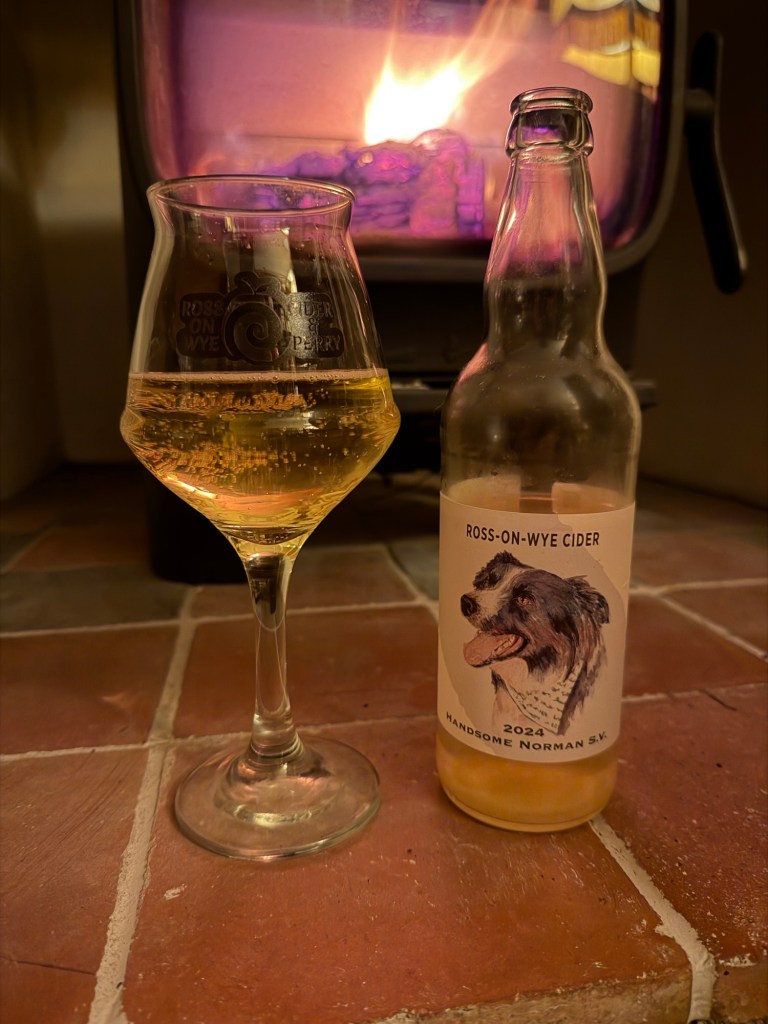
Ross Cider’s Handsome Norman S.V 2024 – review
How I served: A chilly, wet, altogether miserable day sat in the garage. Around 8-10•c I’d say, brought into the house to acclimatise for 15 minutes before popping open.
Appearance: Lemon gold, crystal clear clarity, the glass is now radiant with the cider inside. Gentle effervescence but no mousse.
On the nose: Quite a delicate aroma of gooseberry, raspberry leaf, some hint of sherbet aroma when you open the pack. Similar to Hagloe Crab, if I really wanted to go into a niche aromatic deep dive!
In the mouth: By Jove! It is a candied pineapple cube explosion. Pineapple rings, straight from the tin. Bone dry, on the sharp end of the cider apple spectrum, this would go so well with Mexican food! Burritos, tacos, and a bottle of this cider would be the perfect combination. The previous edition of Handsome Norman was in a 750ml bottle and was an orchard blend of Cider apples with the suffix Norman. This is a single variety of Handsome (Belle) Norman and sitting at 5.1% abv. I’m absolutely here for the showcasing of rare varieties that don’t always get their time in the limelight!
In a nutshell: A singular, slightly tart historic cider variety that will leave you wanting another bottle, and some tacos to accompany.
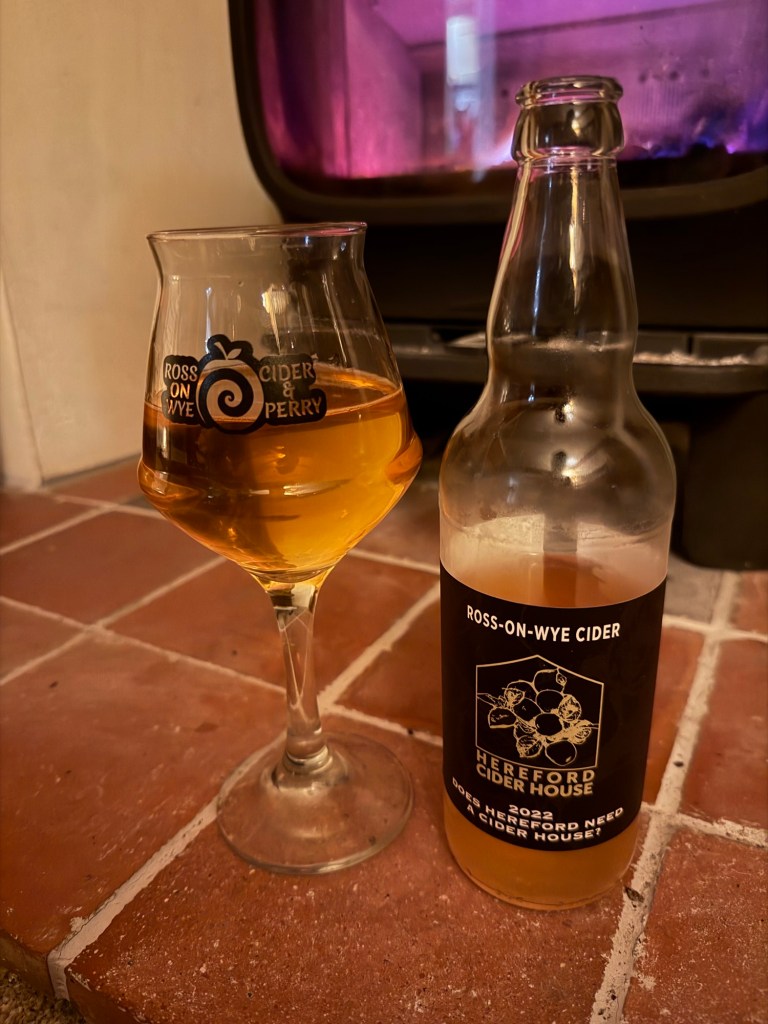
Ross Cider, Does Hereford Need A Cider House! 2022 – review
2022 Foxwhelp, Ashton Bitter & Ellis Bitter
How I served: Afternoon in the garage and then served fireside in my study.
Appearance: Golden syrup verging on amber, very good clarity, gentle effervescence that produced a mousse that hung around for 20 seconds and then vanished.
On the nose: Big, bold aroma! A hint of Christmas Spice, so we’re talking nutmeg, mace, cinnamon, cloves. A whisp of sour cherry and bergamot. It’s a perfumed, winter scent for sure. You could package this and sell it as a Christmas candle aroma.
In the mouth: A really dense, voluminous, full-bodied arrival. This is Richard Burton & Elizabeth Taylor, full of rambunctious, argumentative fun that you can’t move your eyes (or palate) away from. A drink like this could easily be overwhelmed by the Ashton and Ellis Bitter, but Foxwhelp storms in and creates harmony and balance with its Bittersharp bombast. I suspect time has also aided the subtleties here, we’re approaching 3-and-a-bit-years since the 2022 harvest that birthed this juice. You get the sense that mellowness is just around the corner with this bottling, even at 6.8% abv.! Also, visit the Hereford Cider House – it’s wonderful!
In a nutshell: An energetic, dry cider that exemplifies the great work of a Herefordshire producer and drinking establishment.
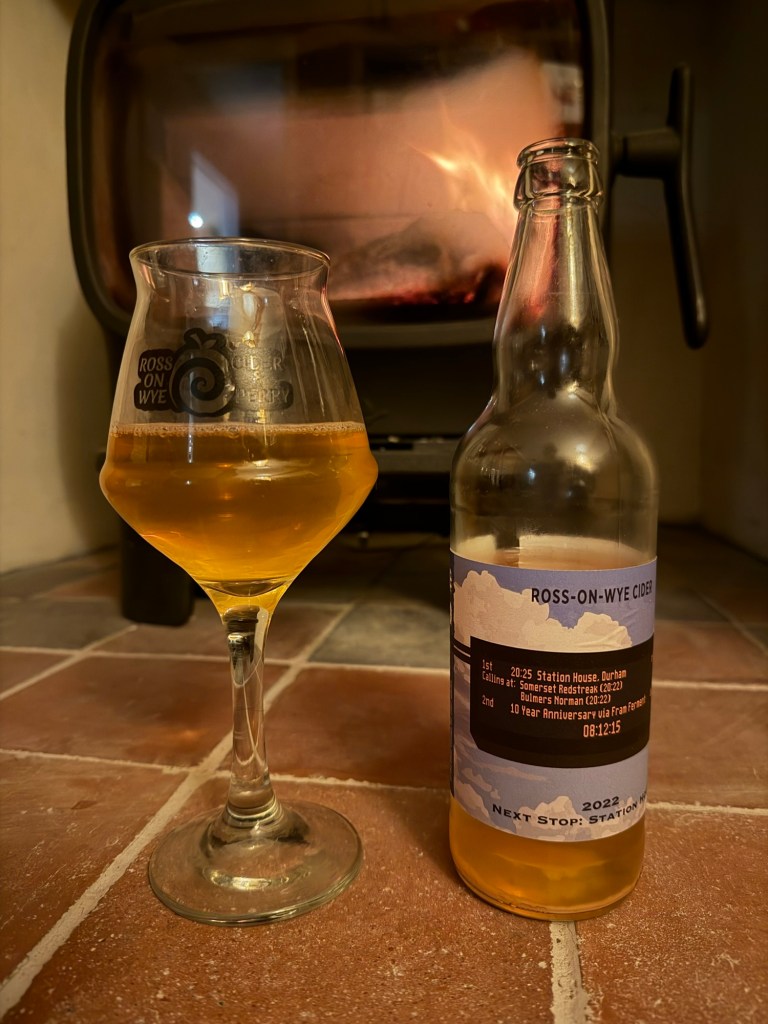
Ross Cider, Next Stop: Station House 2022 – review
2022 Somerset Redstreak & Bulmers Norman
How I served: Day in the garage, served shortly after in the sitting room.
Appearance: Slightly hazy, peachy gold. Barely a sign of effervescence, I’d say near still in its presentation, no mousse.
On the nose: A rhubarb and brioche aroma, slightly yeasty still so perhaps a bit of bottle conditioning to go? But this is a fairly matured vintage of cider, can we lay the explanation at Somerset Redstreak’s door? It has quite often displayed a reductive, ever so slightly sulphurous whiff in quite a few iterations I’ve tried over the years. As it warms in the glass, I’m getting a raspberry and custard tart note, which is very pleasant indeed!
In the mouth: That raspberries and cream note totally continues here. It’s a dry presentation, liquid version of an Eton Mess – all pavlova with strawberry, raspberry and red currant. A very fruity delivery, that puts a smile on my face, it’s somehow warming and very summery. This is a summer cider, 7.1% abv, one to sip on the train up to visit friends in Durham or further afield! On that note, I need to visit the Station House pub in Durham.
In a nutshell: A cider for sunshine, blue skies, and letting the train take the strain to where you want to go.
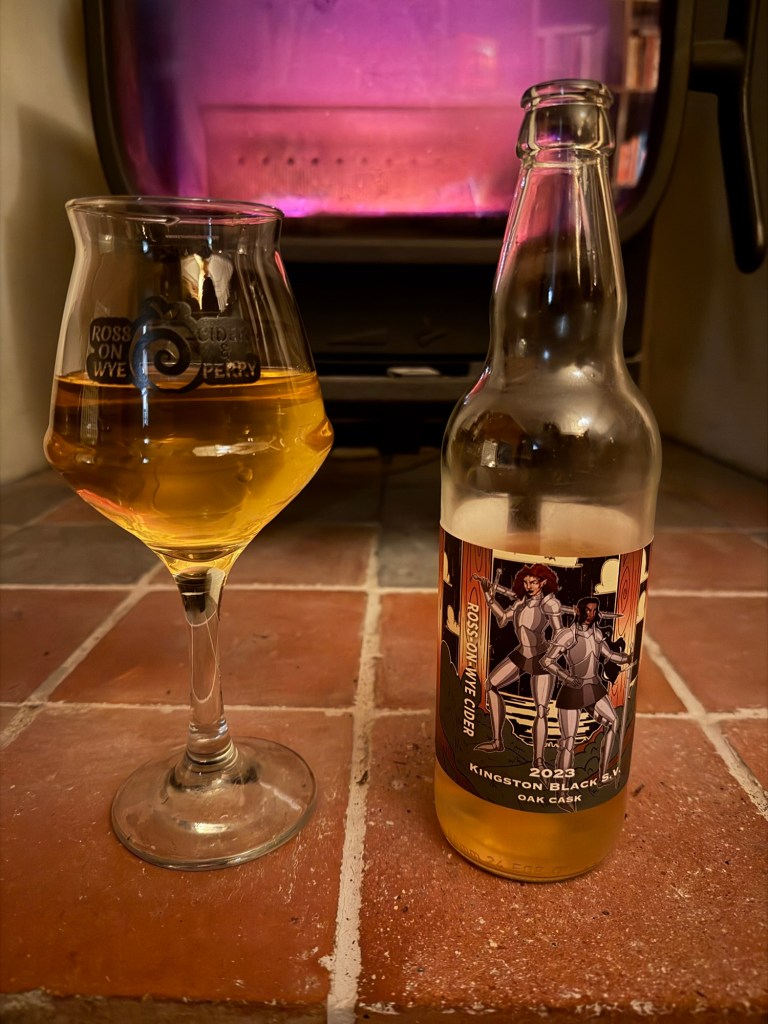
Ross Cider, Kingston Black S.C Oak Cask 2023 – review
How I served: Day in the garage then 15 minutes in the sitting room to get itself ready for optimum consumption.
Appearance: Brassy gold, very good clarity, a slight hiss and pop when removing the cap but in the glass no discernible effervescence or mousse to speak of.
On the nose: This smells so good! A freshly opened packet of rolling tobacco alongside a toffee apple on Bonfire Night.
In the mouth: I’m happy to say that I’m not the world’s hugest most superlative laden Kingston Black stan. It’s a Bittersharp variety that doesn’t always fulfil the brief for my flavour profile. Having said all that, this is quite possible one of my favourite drinks of 2026, and it’s only January at the time of writing! Barrel and fruit influence in absolute harmony. Bone dry, maximum full-fruited juiciness. Soft tannic notes from the barrel that give a slight smoked cheese rind note on the back of every sip. 7.9% abv allows the finish to linger long and wistfully. Lovely label by Ruby Byrne too.
In a nutshell: A gorgeous barrel-aged cider which may well be my favourite expression of Kingston Black, ever!
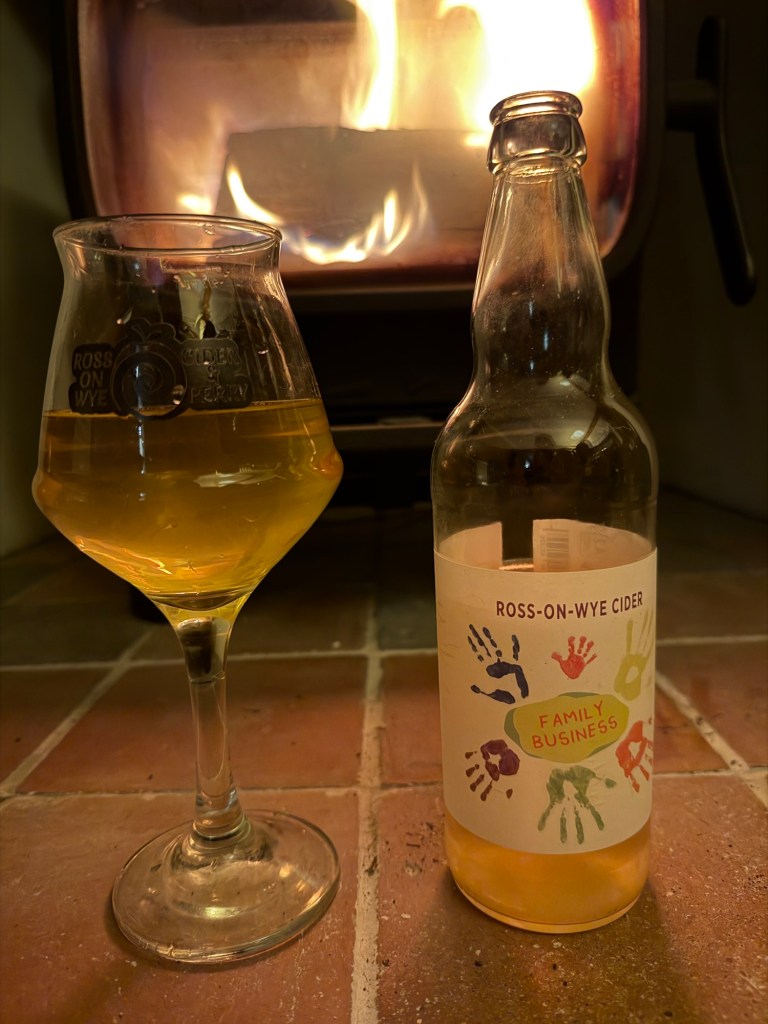
Ross Cider, Family Business – review
2023 Brown Snout & Bisquet Oak Cask Cider
How I served: Day in the garage and then served in the sitting room.
Appearance: Lemon gold, slight hiss on the cap popping but near still presentation style and no mousse.
On the nose: I don’t know what kind of cask was used here but…I’m getting rum! I LOVE Ross Cider’s Dabinett aged in rum cask. This is less bombastic an aroma than that, but very friendly and welcoming indeed. Getting a lime marmalade whiff too.
In the mouth: Apricot frangipane, tinned peaches, pineapple sweet chilli sauce. This is a fruity number. Super soft tannins. 8.4% abv so one of the highest percentages of these winter releases, but you wouldn’t think it from that utter fruitiness. I know I said this last year about Brown Snout, loads of you love it, I need to find out more about it (particularly as I’ve planted a tree in my new orchard). I like that Bisquet is a parent of Brown Snout and this is a Family Business cider. The label is very evocative with the handprints of different generations.
In a nutshell: A fruity, dual blend, barrel-aged cider of two much-loved cider apple varieties.
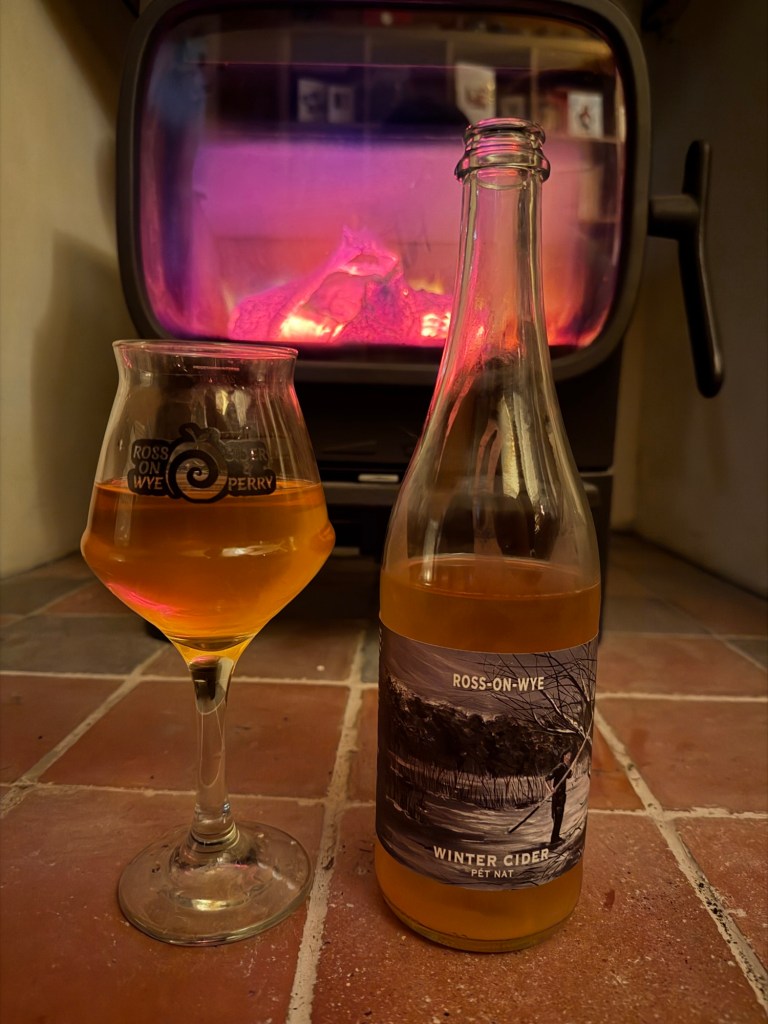
Ross Cider, Winter Cider Pét Nat – review
How I served: A few days in the garage and then served in the evening.
Appearance: Glowing embers of the fire, peachy gold, slight haze, a bit of effervescence when first pouring but settles to near still presentation. No mousse.
On the nose: Ripe apples, stewed plum, slight farmyard note that works very well with the barrel-aged Dabinett at play here. Unpeated oak casks have been used here from Penderyn Distillery in Wales.
In the mouth: On the initial sip there’s a strong perception of sweetness, but that quickly drops away and it’s obvious you’re drinking a bone dry, barrel-aged cider. What I love about this bottling is that it’s not your typical Dabinett cider. There’s something sticky and sweet about this cider which is atypical Ross on Wye in my experience so far. Whilst most of the barrels used in barrel-aged ciders you’ll try in the UK are from Scottish distilleries, this is a rare example of Welsh whisky barrels being used to great effect. This made it into my drinks of 2025 list, so happy to see the Cider X of the RossFest 2025 bar become this 750ml bottled beauty.
In a nutshell: A stewed fruit, mellow vibes, full-bodied Dabinett experience from Ross Cider!
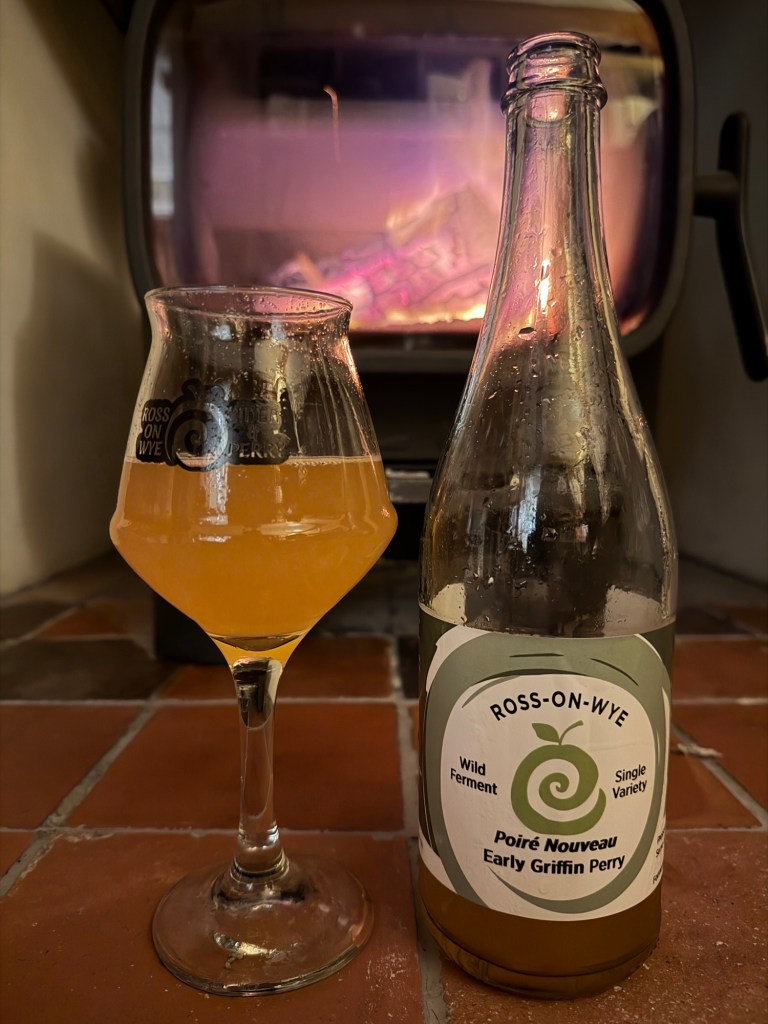
Ross Cider, Early Griffin Perry Poiré Nouveau – review
How I served: A couple of days in the garage to chill down, then served in the study. The bottle gushed out all over the hearth of the fireplace – some really potent effervescence there for about 10 seconds.
Appearance: Considering the rather violent eruption upon popping the cap, the perry in the glass is near still. It was a good clarity in the bottle, but after that exclamation from the bottle, the liquid is now hazy, peachy hue, with a very thin mousse around the rim of the glass.
On the nose: Stewed pears and plums, smells a bit like a rich, jammy chutney. Slight green olive note, a little bit of petrichor. Gorgeous aroma from the glass and now all around my fireplace.
In the mouth: The label describes this Perry’s intense flavour, and I definitely agree. It’s full-bodied to the max. This is very exciting to sip on as I’ve never tried an Early Griffin perry before. There’s some medium soft tannins, but also a good deal of acidity to balance things out. For some reason this is really reminding me of the Japanese snacking treat Umeboshi: salt (and if you’re lucky, vodka) pickled dessert and culinary plums, that end up with a jerky-like texture. 8.4% abv and with a mega quick fermentation time, the pears were pressed Sep 2025 and the perry bottled Nov 2025. Medium dry presentation, there’s elements of a good aged Moorcroft perry here, but it’s quite its own thing. Wow, Albert, you are treating us with this range of perries we get to try from Broome farm.
In a nutshell: A lively Perry, best served well-chilled but after that initial fizzbomb, a drink which rewards the curious with a rich, fruity explosion of flavours.
Conclusion
I’m so pleased to hear that these bottles have been going doing well at local markets and the Yew Tree pub for Albert. Never let it be said that there’s not a willing audience for full juice, bone dry cider (and lively perry) in the colder months of the year. At the time of writing all bar the Early Griffin are available on The Cat In The Glass as well to order. The fact that this was available exclusively to Cider Crew members makes me wonder about joining up as I’m totally up for discovering new varietals in this way! The only other producer I can imagine will be making an Early Griffin single variety perry is Phil at 99 Pines – perhaps there will be a chance for a compare and contrast with fruit from Hartpury, trees that are about ten years older than Albert’s?
In the end, the lack of new 500ml bottles at RossFest25 was more than made up by a dizzying array of options dispensed from keg on the bar. We then got these releases as a December treat to try throughout the cold, sunshine-deprived months of winter. I’ll be seeking out a few more bottles of that oak cask Kingston Black, it now sits there alongside the Bulmers Norman and Bisquet oak cask releases from 2024, a proud winner of time in cask elevating it to something magical.
Two weeks ago I planted out a Brown Snout tree I grafted in early Spring 2025, scionwood from one of Albert’s trees on Broome Farm. I’m thinking the same process will now need to be applied to the Early Griffin perry pear too. It’s yet another perry that I’ve tried whose flavour profiles have confounded me, surprised me, put a smile on my face (and a perry stain over my fireplace). We’re really just scratching the surface with lots of these varieties, slowly rediscovering why they were so prized generations ago, and could be again today. Merrylegs or Water Lugg next anyone?
Discover more from Cider Review
Subscribe to get the latest posts sent to your email.
 Cider Review