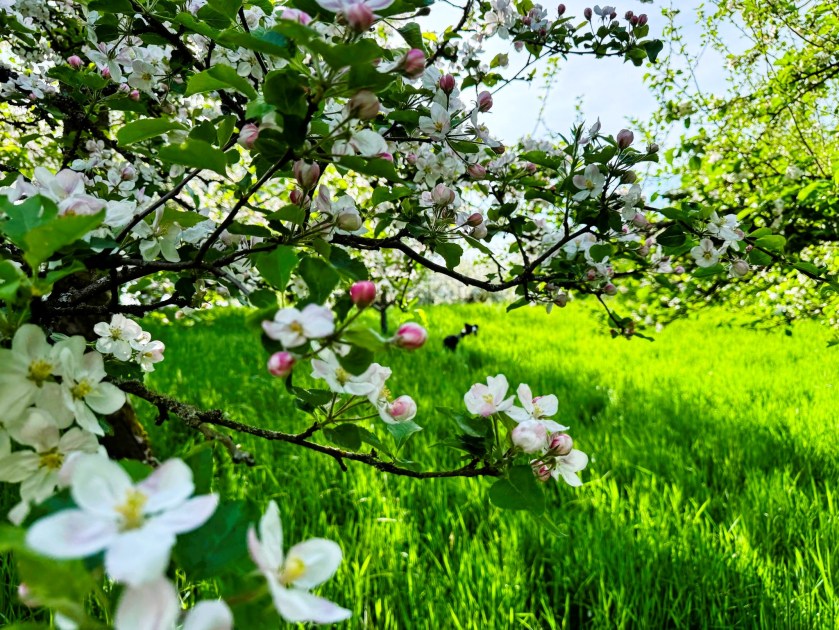
It’s a time of year for traditions, though in our case custom is the better word, as Cider Review has done a “year that was” collective post for the past *checks through the list of 531 published articles*, ok, 2022. I could have sworn it longer than that!
It’s been a good year for Cider Review, and though we didn’t quite reach the dizzy heights we had in 2024 in terms of the number of articles (last year we posted twice a week every week, a blistering pace that blasted our record), we came to within a few hundred of that record number of views and beat the number of visitors. I’m quite amazed! And our reach has grown with an increase in subscribers and an increasingly international audience, and that is slowly being reflected in our content too.
It’s nearly two years since Adam asked me to take the tiller on this ship, and I still recall the mix of excitement and terror as I stepped into a role that had already seen so much passion poured into it. It’s probably fair to say that the rhythm of Cider Review has changed and evolved since then, shifting with the tides of our readership and contributors. Each week has brought its own little set of challenges and small triumphs, whether introducing a new voice onto the site or simply trying to keep up with the ever-expanding landscape made up of cider makers and enthusiasts. All of what we do here is voluntary, and every article represents a big investment of time from our contributors. I think it’s an incredible resource that has been built up by many voices over the years, and I am sure you will join me in thanking all our contributors for sharing their voices.
Speaking of voices, I’m extremely grateful to Jack for being an absolute engine that has helped keep this site (and me) going during 2025, and I am honoured to have had new voices like Kathryn, Kris and Alistair join our ranks this year. I hope that we can continue to broaden the range of topics and appeal, maintaining that camaraderie and creativity that have kept us moving forward, ensuring that Cider Review remains vibrant and ever-relevant, even as our own lives and circumstances change alongside it.
And thank you, dear readers, for joining us on this journey. If you like what we have done, please do use social media to share posts, and encourage your cider-curious friends to subscribe. It’s great to get feedback on how we are doing, and sharing is the only way to spread the word on cider and perry.
Speaking of amazing feedback on our content, both Bea and Laura had articles shortlisted in the cider category of the British Guild of Beer Writers 2025 Awards, with Laura winning the Susanna Forbes Award for best Communication in Cider for her article How do you fingerprint an apple?. Now that’s incredible feedback, and I for one am very proud that we can be a small part of that, and grateful that we are allowed to publish such content. Congratulations Laura!
Thank you for being with us on this journey. Let’s wrap up 2025 with our customary revue from a few of our wonderful contributors, this time in reverse alphabetical order.
Ruvani de Silva
Well gosh that’s been a swift cidery 12 months! Much to reflect on and many delicious ciders consumed. While my cider output hasn’t been quite as widespread and prolific as I’d have liked, this has been the year of what I think it’s fair to describe as my magnum cider opus – a three part history and cultural interrogation of American heirloom cider apples, published on the CAMRA Learn & Discover platform.
Working on this somewhat epic undertaking has been a fascinating and surprisingly emotional journey, and of course, made me incredibly thirsty for heirloom ciders. These apples, as my work aims to demonstrate, are so deeply woven into the fabric of America as to be emblematic of all that has occurred in this country since European colonisation. Learning about and interrogating the means by which apples and cider came to America and the quirks of history that made them symbolic of how America sees itself and how their stories are, in fact America’s story was eye-opening, heartbreaking and completely absorbing. While I don’t often tout my own work, if you’re interested in cider enough to be reading this, I would love for you to brave my nearly 10,000 word exploration of American heirloom cider apples and send me any feedback you have (but no, I won’t be able to give you that hour of your life back so please only do so if you can spare it!).
Researching this project gave me the chance to speak with some incredible cidermakers, cider historians, academics, apple detectives and scientists who are immensely passionate in their commitment to loving, protecting, propagating, and understanding these apples. Many have taken the time and care to fully come to terms with American heirloom apples’ difficult and conflicting origin stories, and have taken important steps to ethically work with plants whose histories are steeped in violence, greed and brutality through education and community initiatives. Acknowledgement and reparative work are now a part of these apples’ stories, opening a new chapter in the history of American cider. Of course, it wasn’t all doom and gloom – did you hear the one about how Rhode Island Greenings originally hail from the Garden of Eden? Or the time the East Bloomfield Historical Society filed a complaint against Martha Stewart for mis-originating the Northern Spy?
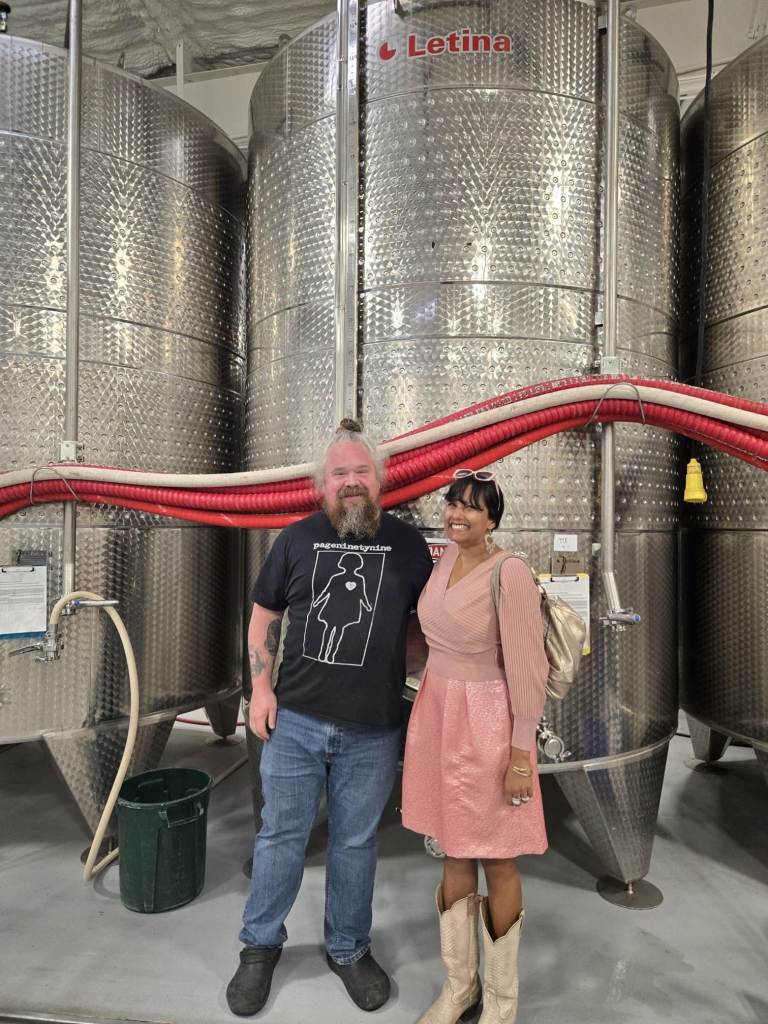
Cider is a drink filled with mythmaking, its social and cultural nature packing it with stories both true and apocryphal, and making it impossible to get bored of. As much as I love drinking and writing about cider, one the things that draws me to it the most are the people who love it. Being a small, niche industry, particularly in the US, means that folks rarely fall into it by accident. People who know cider love cider, they love talking about it almost as much as they love drinking it, and that tight-knit sense of community brings me a lot of joy. A particularly special event for me this year was visiting with Andy Hannas at Potter’s Craft Cider in Charlottesville, Virginia. I had the pleasure of meeting Andy at CiderCon back in 2023, and though I hadn’t seen him since he immediately offered me a tour when I told him I was in town, and was kind enough to spend a couple of hours talking myself and some family through his process, giving us a tutored tasting and generally nerding out happily. While I hope to continue learning and improving my cider knowledge and skillset, it’s our lovely cute geeky community that has me truly hooked. I hope y’all had a wonderful, cider-filled 2025 and cheers to a cidery 2026!
Patrick Mann
There was a lot of soul-searching in 2025 with artisanal cider facing more head winds than ever: increasing severe weather events, reduced consumer spending, the nolo trend. It’s not easy for us to make ends meet in the best of years, so this had us questioning if all the toil and expense was ultimately worth it. Nobody is expecting to get rich at this game, but are the sacrifices outweighed by the intangible benefits?
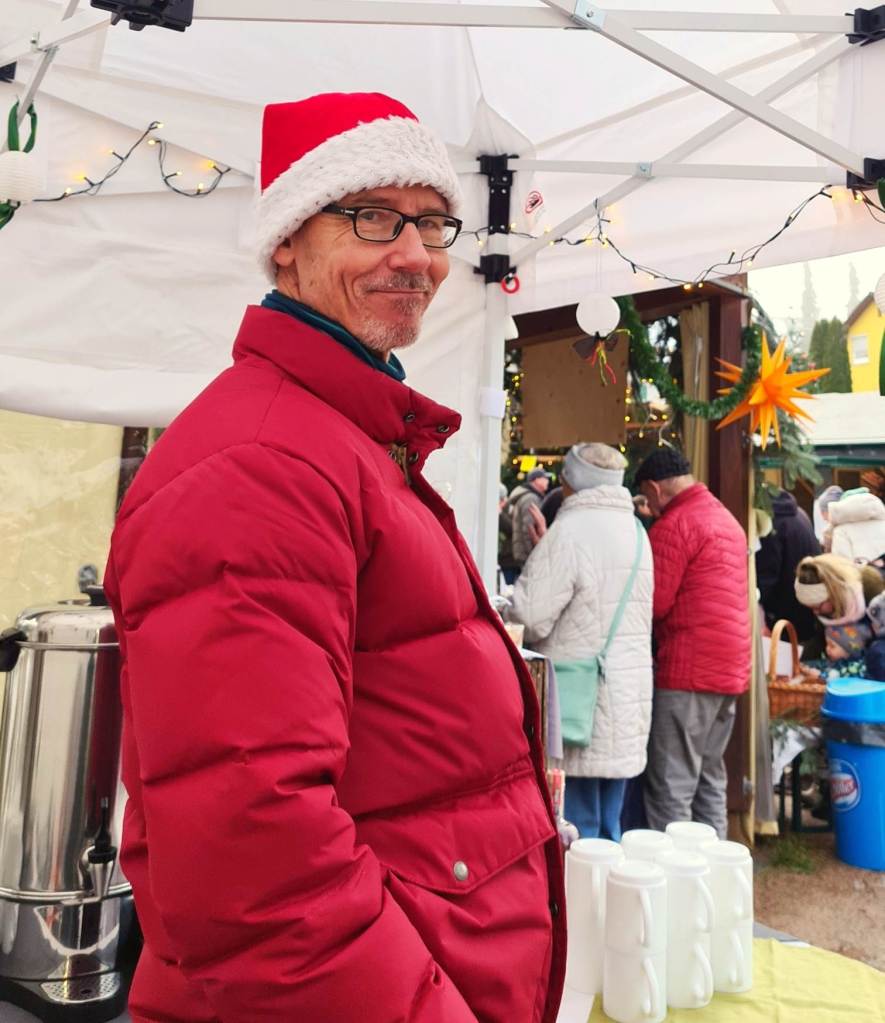
For 2025, our answer was still “yes”: We are always inspired and re-energized when we have the opportunity to meet with like-minded makers and SISGA was a stand-out in that regard. It was our first visit to northern Spain. Anyone who has been there will not be surprised that we had an amazing time, experiencing a culture where cider is so much more than just a drink. Pouring our cider at Pom Pom festival in Brussels was another highlight. It’s a very different scene, but also a joyous celebration of music, cider and community that we love to come back to every year.
Along the way, there were many small moments of bonding with people that appreciate what we make and our values as cider-makers. No matter whether it’s a prestigious account, a drinks nerd, or somebody from our little village that is experiencing perry for the first time – we cherish every one of them.
Finally, a shout-out to Barry for his paean to the small maker, which put into words what I am sure many of us feel, but don’t pause to consider often enough throughout the year. In our own small way, each of us is preserving and enriching cider culture – a contribution that is so much more valuable than what is reflected in the balance sheet.
Laura Hadland
My Cider Review article, How do you fingerprint an apple?, came out 13 months ago now, so it might be a surprise that it is the focus of my reflections on 2025.
In case you missed it, I wrote about the work Barny Butterfield of Sandford Orchards and Professor Keith Edwards of Bristol University. They’ve been carefully analysing the DNA profile of individual cider trees and making some brilliant new discoveries. I also gave an overview of the broader context – including the history of the Long Ashton Research Station.
I’m very proud to say that this deep dive made 2025 an award winning year for me. The article snagged a silver award for ‘other beverage reporting’ at the North American Guild of Beer Writers Awards. A couple of weeks ago, I was amazed to receive the Susanna Forbes Award for Best Communication about Cider from the British Guild of Beer Writers off the back of it as well.
But I’m not writing this, pleased as I am, to show off my accomplishments. I want to use it as an example to show how important Cider Review is in supporting the cider world and helping it to grow. At the British Guild of Beer Writers Awards, I finally had the pleasure of meeting Barny in person. He told me that “the research professionalism of your article has moved the argument on.”
This is seriously good news for cider research – a significantly underfunded aspect of agriscience. Cider Review offered a platform for publicising this research and stressing its significance. Barny has been able to capitalise on that. The momentum it has generated has helped him to make connections with the likes of the National Institute of Agricultural Botany (NIAB) at East Malling and build partnerships with other key businesses like Thatchers to start identifying the future direction of the work.
Meanwhile, pomologist Liz Copas, another key figure in developing the research techniques mentioned in the piece, has been able to make new connections of her own. Working with a partner in America, she has now identified the grandparents, and even the great-grandparents, of some of these wonderful, rare cider trees. She has created a window onto cider in the 18th century.
“There’s enough of us now,” Barny told me. “I’ve got a little group of willing victims and if we can achieve a solid, repeatable source of funding for this very delicate, fragile little industry then that’s a big tick in the box. This is literally about keeping the last bucket in the dam, because sometimes there is just one of these trees left. But we only need one.”
Barny’s infectious enthusiasm has been rubbing off on some other ‘willing victims’ too. Racing driver Ben Collins, better known to some as Top Gear’s The Stig, has been inspired to start planting his own heritage orchard using some of the rare varieties that the project has identified. So from just one tree, we are seeing the seeds of hope that more can be propagated. These historic varieties – useful, flavourful, exciting varieties – can be saved and can proliferate.
It is unlikely that anyone but Cider Review would have accepted my pitch to write about Barny’s project. And thanks to them, we are seeing tangible benefits for cider research which will ultimately, hopefully, result in even more exciting and delicious cider for us all to enjoy.
Kris Kazaks
Any annual reflection inevitably becomes an investigation of gratitude for me. Every year will have at least some level of turmoil or stress (national politics, the economy, climate change, health, family, career- take your pick), so a recognition and remembrance of our blessings in life is a wonderful healing and grounding practice.
Cider has given me plenty of reason to be thankful in 2025. I’m thankful for the growing number of excellent cider producers accessible to me in New York and New England. I’m thankful to have had the means to travel to several cider events, starting new relationships and maturing existing ones with all you wonderful cider and perry nerds out there. (And writing for Cider Review for the first time!) I am also especially thankful to have been able to start my own home orchard after moving house late this summer.
Rather than enumerate the best ciders and cideries I enjoyed this year, I’ll focus on one specific representative bottle. Around the same time I moved into my new home I also attended the Ross Cider Fest for the fourth time. One of the mandatory Herefordshire side quests was a visit to Little Pomona, where I procured one of my favorite celebratory bottles I’ve ever tasted. This past week, one of my friends who came with me to this year‘s Ross Fest visited my new home in the Hudson Valley. A perfect occasion to open that bottle and celebrate and remember and be grateful.
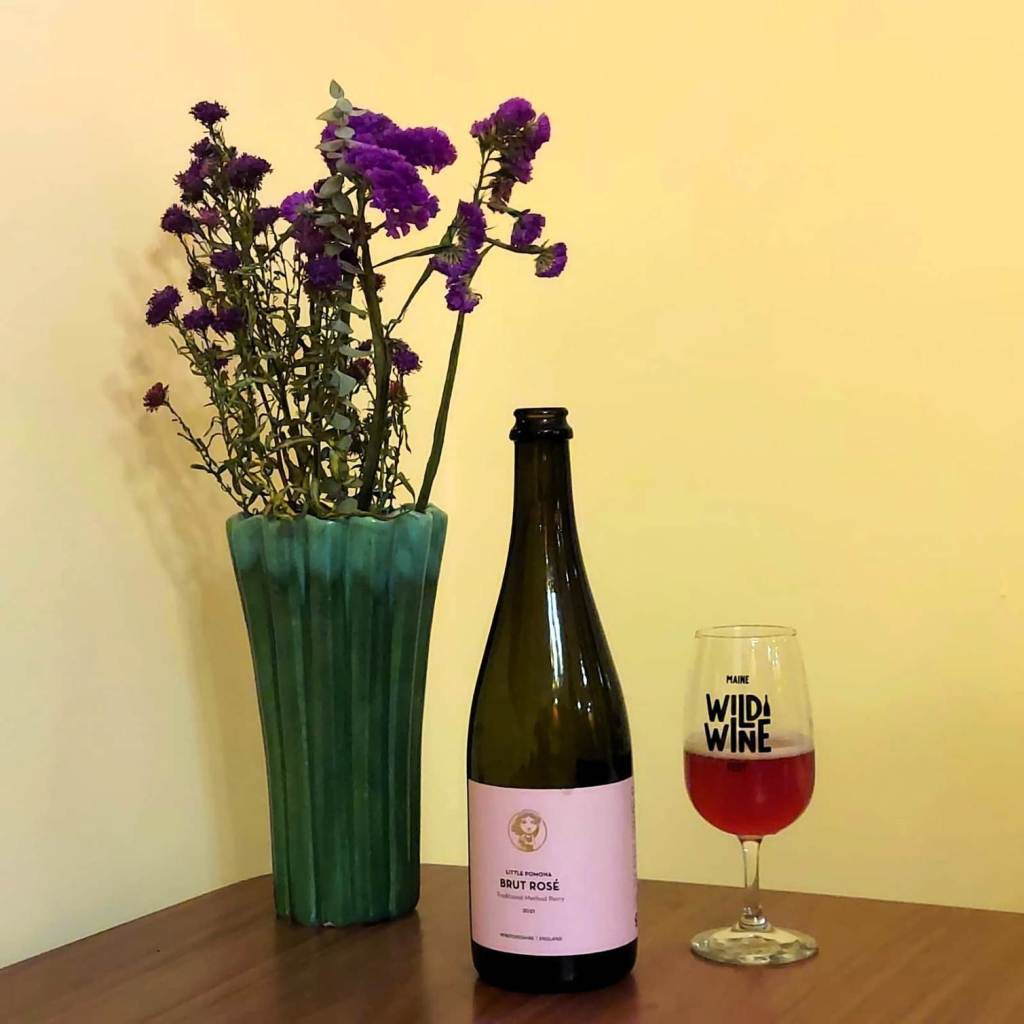
Little Pomona 2021 Brut Rosé Traditional Method Perry
How I served: Basement temperature, chilled in the wintry garage for 30 minutes
Appearance: Highly carbonated upon opening, after a few seconds a nice ring of fine bubbles around the glass. Strawberry rhubarb, maybe a slightly bruised fruit but pleasing earthy red berry jam color.
On the nose: Some jamminess on the aroma as well, but equally floral: hibiscus and lilac. Fairly intense intoxicating perfume. Faint mulling spices. After it warms up a little bit, some crusty bread/traditional method lees aroma develops and less of the ripe red fruit. The damson aroma outweighs the pear overall.
In the mouth: Again slightly stewed strawberry, gently oxidized red fruit, but definitely more pear taste present- pear skin, russet. Firm but polite acidity definitely aided by the damson. Medium-minus astringency on the mouthfeel. Elegant red currant and raspberry notes with a slight hint of savoriness reminiscent of the creamy white of a blue cheese. A mature but playful perry.
In a nutshell: Absolutely gorgeous perry with all the elegance and maturity we now expect from a traditional method from Little Pomona. Complexity + balance. An occasion bottle: for a holiday, to celebrate with friends, to remember Susanna, to feel grateful. This bottle prods us to find more occasions. Here’s to a 2026 filled with bottle-opening occasions and gratitude!
Joe Flannery-Sutherland
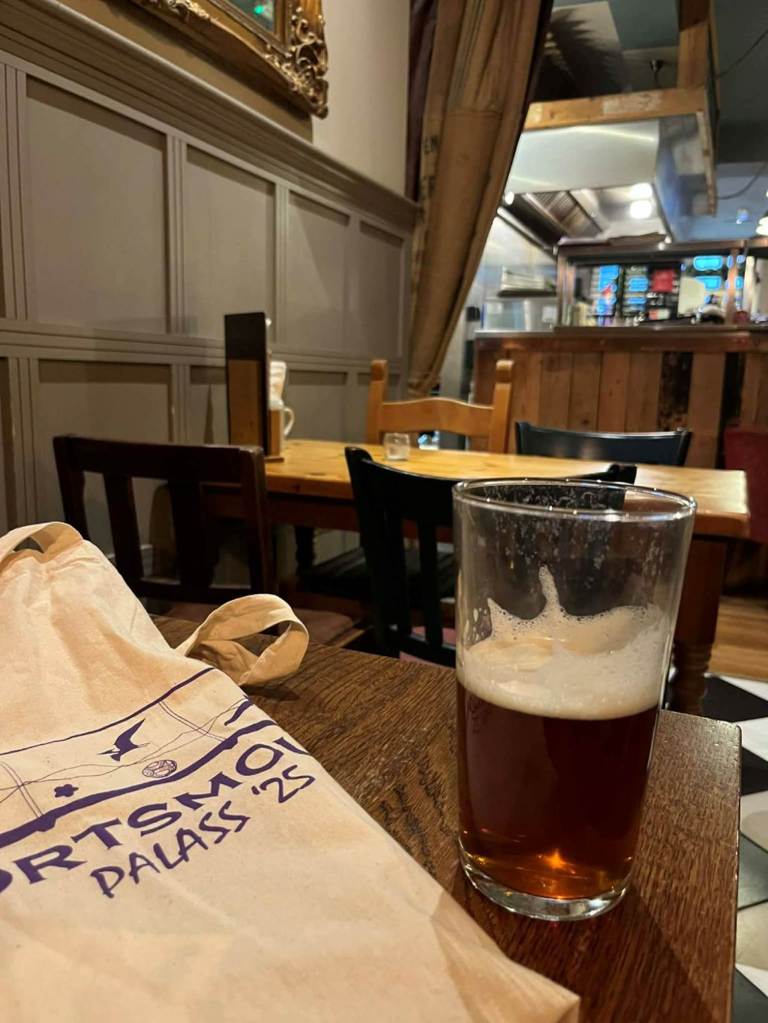
It’s been a year of cider firsts for me. My first articles on Cider Review, my first London Cider Salon, and my first Ross Fest (albeit only the first evening), besides the slew of first bottles from producers around the UK and beyond. I reflect on these personal milestones from a pub in Portsmouth, accompanied by a rather nice pint of bitter, so I am thoroughly letting the side down as we tip towards a new cider year. I hope to rectify this error with new offerings on Cider Review in the near future. Then again, near is surely relative when sandwiched between roast potatoes, gravy, winter indolence, and a few more bottles of aspirational cider. Wishing all the readers a Happy New Year, and a Celebratas Bobl Loeal (for those who know).
Jack Toye
In 2025, cider and perry and the community that surrounds it have continued to enrich my life far beyond playing Fortnite and paying into my pension (though I do like doing both). Earlier on in the year it was time not only to prune some of the orchards I look after, but also to travel further afield and collect scionwood to graft onto rootstock back home in Norfolk. For a first proper year at scale, this has performed well above my expectations and a number of Coppy, Flakey Bark, Top Tree/Cefnydd Hyfryd, and some exciting unknown DNA pears are now ready to be planted out this Winter in their new home. I’m halfway through DNA-testing an old orchard in Gloucestershire, the results of which have revealed Green Longdon and Rock trees, along with a whole load of DNA mysteries – very exciting!
Helping to assemble an assortment of BIBs from different producers for the CAMRA Cambridge Beer & Cider Festival, along with the Great British Beer Festival in Birmingham was great fun – I think I enjoy this as it harks back to my programming days at Picturehouse Cinemas, there’s an element of communal curation to it which is incredibly satisfying to see when those BIBs are all drunk dry. The BEST night was had at the Cambridge Cider & Perry club, going through a selection of Blue Barrel and Toye’s Cider barrel-aged creations with a lovely crowd of enthusiastic drinkers. RossFest in September and London Cider Salon in June are both marked in my memory as high-end events with a strong sense of belonging and joy. It’s not lost on me how special this is to experience in one’s adult life.
Onto to standout drinks of the year for me then. Beverages which have surprised and delighted me, alongside two which didn’t make the final picture as they’d already sold out and I didn’t buy enough bottles! Artistraw’s Flock, an orchard blend with a label depicting a plethora of birds to be found in said orchard, blew me away at Ross Cider Club in April. When it featured on the BBC’s Countryfile programme later in the year, every bottle was snapped up before I moved quick enough to add to cart. [It’s back in stock at Artistraw! Ed.] The same with Ross Cider’s Thorn First Prize, a single variety perry aged in an ex-Champagne cask from Lochranza Distillery. Absolutely delicious but now sold out everywhere. A lesson to buy multiple bottles of drinks which make their mark on you.
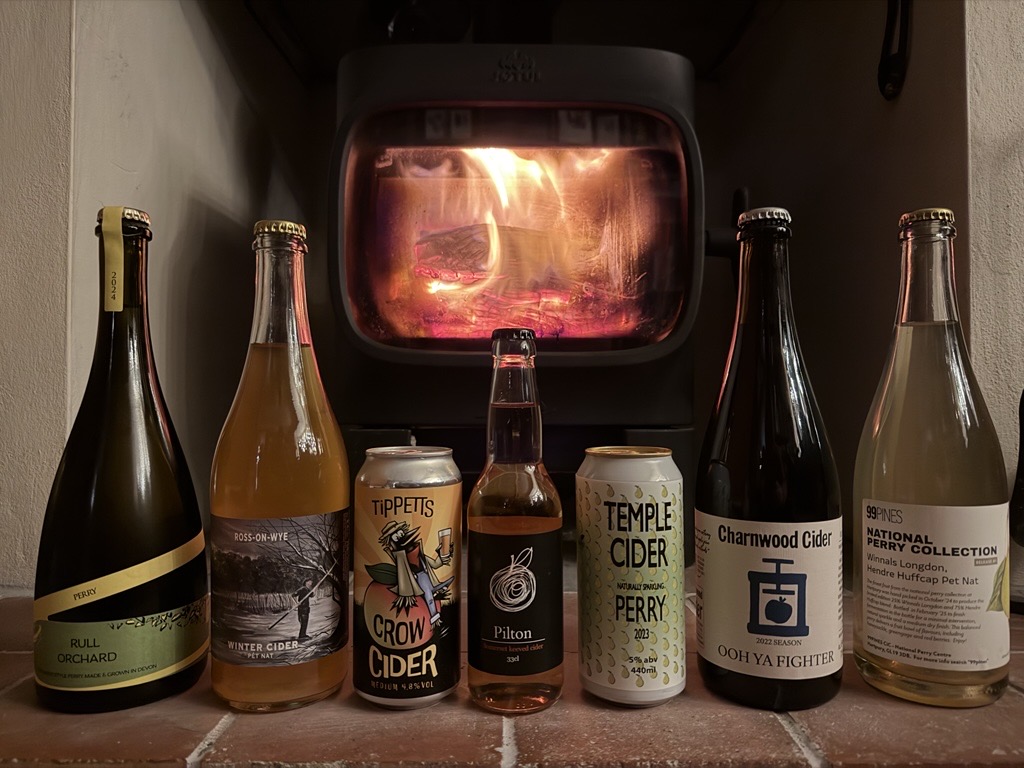
Rull Orchard’s Perry 2024
I finally found a bottle of this in Sandford Orchard’s Breakthrough Cider Maker Awards box, but it now seems to have all gone. Gummy fruits, soft tannin, lime and raspberry notes galore. An outstanding perry from Mike and Clare!
Ross Cider’s Winter Cider
The first of two Dabinett S.V.Cs on my list. I love the ever-changing influence that barrels can bring to cider, this using unpeated Penderyn Distillery barrels from Wales. The artist formerly known as Cider X at RossFest, a real crowd-pleaser.
Tippetts’ Crow Cider
My Mum brought me a bottle of this back from a holiday in Devon this year, it’s now available on Chris George’s Cork & Crown, and in Sandford Orchards Breakthrough Cider Maker Awards box. A near perfect medium cider in canned format. I will be seeking more out from them in 2026!
Pilton’s Somerset Keeved Cider
As the news broke that Martin Berkeley will no longer be making any new drinks at Pilton, I had to include this absolute classic (alongside Tamonshanta) that got me into drinking cider made with a bit more care and precision. We’ll be paying tribute to all that Martin has brought to the craft cider scene in 2026 here on Cider Review!
Temple Cider’s Perry 2023
Blakeney Red and Hendre Huffcap can-conditioned and tasting absolutely delicious. Jo and Paul are working wonders with the format here. Seek them out directly from their webstore, or on Cork & Crown’s shop too. What next, a Coat Jersey SVC in can?!
Charnwood Cider’s Ooh Ya Fighter 2022
My friend Amy hyped this bottle up to me at RossFest, and by the time I tried it, the hype was matched, if not exceeded! The second single variety Dabinett on my list, aged in a neutral vessel, but by jove, the flavour explosion this bottling delivers is out of this world! Supreme.
99 Pines’ National Perry Collection Release #1
What this dual blend of Winnals Longdon and Hendre Huffcap from Phil signifies is something incredibly inspiring to me. A serious level of fruit harvested from the Malvern Showground, that has produced a drink to bring more producers and consumers into the category. It’s darned tasty too!
Wassail, and here’s to a bountiful and fulfilling 2026!
Ian Stott
Connecting with the cider community from the wilds of Cumbria this year has involved a level of commitment to the UK’s motorway network worthy of Eddie Stobart, but the quality of events has made those 3000+ miles on the road worthwhile. Early season highlights included providing a guided Egremont Russet tasting for Bristol Cider Club, a return visit to 3CCPA’s outstandingly curated CraftCon and a trip to an unexpectedly sun kissed Perthshire for Pressed’s excellent celebration of the expanding Scottish cider scene.
The mix of familiar faces and curious newcomers at all these events set a pattern for the rest of the year, with London, Bristol and Stockport Cider Salons drawing enthusiastic crowds, while each maintaining their own regional personalities. Being able to spend time on both sides of the table, as a punter at Bristol and pouring for Little Pomona at London and Stockport gives a great insight into just how knowledgeable many attendees are, particularly those exploring cider from a wine background who’re increasingly recognising its potential, particularly with food. With Chester hosting its first Salon this year, Hungary joining the roster in 2026 and rumours of interest elsewhere, let’s hope this scene continues to grow.
For now, Cumbria lacks its own cider club, but Manchester Cider Club is within reach, and in Nicky Kong’s hands, is setting the standard for clubs across the country. Regularly attracting crowds of up to 50 ,and now with a permanent home at the Balance Brewery tap room, it’s continuing to build on the work of Cath Potter and Dick Withecombe in putting Manchester on the cider map. Outside of club nights, Fell Brewery’s first central Manchester bar, Fell NQ has established itself as the go-to destination for cider drinkers, with a selection of cider and perry in keg, cask and bottle that’s hard to beat, anywhere in the UK
An end of year wrap up doesn’t feel right without choosing a few favourite drinks from the last 12 month but equally, it’s an impossible task, loaded with subjectivity and personal bias. Having said that, if you insist, these are the stand outs that spring to mind:
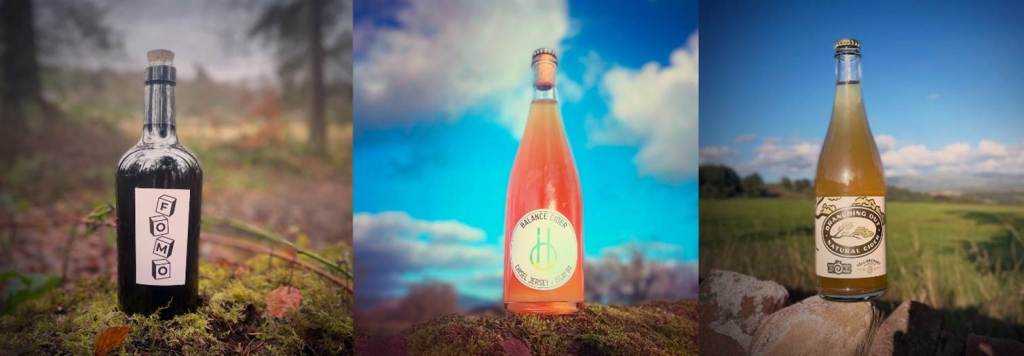
Ross on Wye x Fell Brewery- Branching Out: Always hard to pick a favourite from Ross’s astonishing annual output, but this collab with Fell Brewery is probably the cider I’ve drunk most of this year and the one that’s behind the bar at my local. A blend of Bisquet, Not Ball’s Bittersweet and Reinette d’Obry, makes for a bittersweet-led cider, full of orange peel, new leather and red apple skin. I’ll be drinking this until it’s all gone.
Little Pomona- FOMO- I was so tempted to choose I’m Only Sleeping 2022, to appease my Egremont-loving palate, but James’ spectacular mistelle edged it. Typically for Little Pomona, it doesn’t follow any previously known approach to creating a Pommeau, but we wouldn’t expect anything else.
Nightingale- The Cat’s Whiskers– Strictly speaking, a late 2024 release as a collab with Cat in the Glass, but’s one I’ve enjoyed in keg, bottle and can this year, and there’s still some to be found. Sam’s Egremont Russet releases are always on my must-try list, and this is one I’ve gone back to regularly.
Balance Cider- Chisel Jersey- Islay BA- A Manchester brewery launching an Islay cask aged single variety in a 750ml format as a debut cider release seemed a bold move, but this blew me away from the first mouthful. The companion Yarlington SV was equally good, and with some interesting releases late this year, Balance is one to watch for 2026.
Claire Daniels
How quickly the year passes; memories that seem an age ago brought flooding back as photos are scanned from January to now. Each year we work more to the rhythm in the orchard, aligning with the ebb and flow of the land more intuitively, learning from the years gone by; noting to ourselves where we need to be more attentive. From hedge laying to mulching, planting to watering, pruning to harvesting, pressing to fermenting; eight acres leads us in our devotions.
Once again, we found ourselves planting perry pear trees. Utterly besotted by the trees themselves, but more so by the fermentation of their fruits, we surrender pockets of meadow to their cause. Beetroot Court Wick, Barland, Thurston Red and Merry Legs to name a few, with further ground earmarked to be relinquished in 2026. Soon the orchard will hold over forty Perry trees; few to some, but many in these parts, unlikely to be flush with fruit in our lifetimes yet deserving of their place.
As we harvest; nose to the ground, hands in the sward, the comforting aromas of warm, ripe apples and leaves gently easing into the soil are like a homecoming. We return to trees we are beginning to know well, thankful and glad to gather their bounty once more; old friends who bear witness to the changing seasons more acutely than we do. From our orchard at Rull we now begin to see a harvest we dreamt of as we planted the trees. Some trees thrive where others lag and are reluctant to participate; Yarlington Mill the greatest offender. As small producers with a team of two, and alternate employment alongside, time is often our greatest challenge, this year no exception with additional obstacles to negotiate that life throws down from time to time rendering the best intentions obsolete.
Our community has grown through the year; cider lovers, hosts, hospitality and land lovers delighted to discover fellow enthusiasts and further wealth in their options, as were we! Humbled to have been invited to share our fermentations with Manchester Cider club and Ross Cider club, and delighted to have been welcomed with such warmth and positivity.
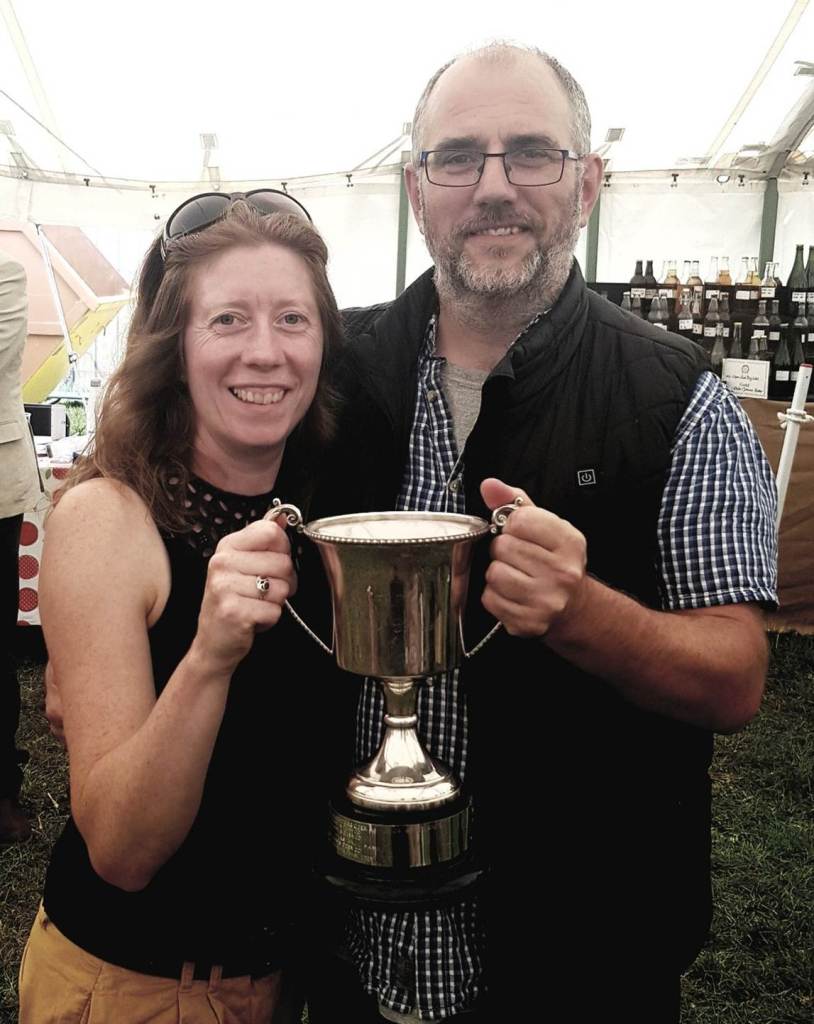
That community encourages us that the passion we invest in our trees, fruit and fermentations is not misplaced. It influences us in entering competitions alongside fellow makers; a triumphant crowd keeping the joys of cider and perry alive and spreading the word to celebrate the vast myriad of flavours created. We were utterly overjoyed to be rewarded with the Arthur Davis cup (for our cold racked, single variety Foxwhelp) bowled over at the Breakthrough Cider awards for our cold racked Perry, and proud to receive accolades from the Food Drink Devon awards (in greatest measure for further recognition as sustainability pioneers).
One of our great joys is, as ever, exploring the fermentations of other cider makers and in savouring their offerings with food pairings. There have been some particularly memorable bottles that we’ve shared this year including (in no particular order, and absolutely not an exhaustive list, but Barry is very persuasive with his word count!);
- Commonwood Farm, bottle fermented perry 2019
- Vagrant, Longarm, 2021
- Little Pomona, Kingston black pet nat, 2022
- Ross cider – Flakey Bark 2020
- Little Pomona, Once in a Lifetime 2
Now nearing the curtain on 2025 we’ll be sitting, gratefully cosy and warm, glass in hand discussing the complexities of the bottle we’ve last opened. Glad of the year that’s past and the friends we’ve made along the way, looking forward to meeting new faces in the cider community in the year to come, and to catching up with familiar ones. Wassail!
Brett St Clair
Maybe it’s having just turned 42 in the past few days but I seem to be in a particularly reflective mood. Not in a maudlin way…at least I hope not. The past year has been, or at least felt cider oriented like no other year, which has been a joy. In fact, I’d say that every positive interaction or achievement this year has been tangentially if not directly cider related.
I’m pretty sure I’ve mused in some form or another about community here on Cider Review before, so forgive me if I’m retreading old ground. The idea of community has been an omnipresent force alongside the positive interactions and achievements. Community or a sense of community isn’t something you really consider when you’re younger, well I didn’t anyway, but it’s very much come into focus for me over the past year. From the London & Bristol Cider Salons to Rossfest to helping bottle here and pick apples there, from apple days to Wassails, it’s been motivational and sustaining during a year that whilst fun has also been really bloody busy!
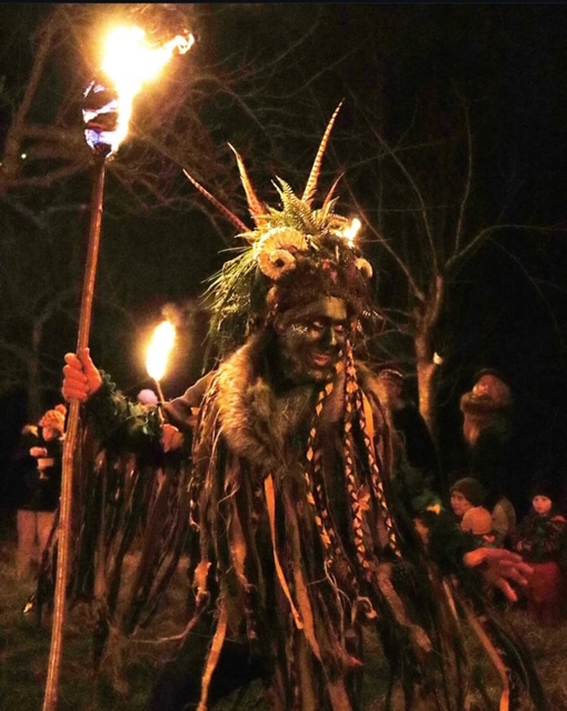
It’s felt like a pretty transitional year for me, and cider too I guess (although when doesn’t it feel like a transitional year for cider?), so I’m grateful for all the conversations, hello’s in passing, drinks, food and words of encouragement and general conviviality from people along the way. And with so many new people entering the Cider Review fold as well, I’m hopeful that next year is more of the same. At the very least I look forward to reading more new perspectives.
Bea Swanson
I started writing for Cider Review in 2024. In that first year of full cider immersion, I spent as much time as I could exploring the scene from my home base in Cornwall. The West Country was a wonderful place to be: for the last year in review, I wrote about my October as a harvest volunteer with three Herefordshire greats: Cwm Maddoc, Little Pomona, and Ross on Wye.
This year was a little different. It started off most cidrous, with New Year’s Eve spent in Ross’s Yew Tree pub, and the first half of the year included lots of cider events—from CiderCon to Cider World and the Cider Salon. I also became a Certified Pommelier in April. The second half of the year has been quieter, mostly because of a big move: my partner Alfie and I are now based in Rome as he pursues his PhD.
Indeed, the highlight of this year has undoubtedly been having a whole new cider world open up to me: Italy. Europe’s second-biggest apple-producing country after Poland, Italy has a lesser-known but fascinating cider history that I’m yet to really dive into, as well as a growing cider scene. For now, I can report that the country’s first cider-only festival, BevoSidro, which took place in Bologna in June, was an excellent place to start.
Organized by the Associazione Pommelier e Assaggiatori di Sidro (APAS), the Italian association of pommeliers and cider tasters, BevoSidro brought together producers from around the country and showcased a breadth of products: from lees-aged traditional methods and 100% quince wines to canned cider flavored with makrut lime leaves, hops and orange peel. A highlight for me was the screening of Cider: The Italian Way, a beautiful documentary featuring several of the makers in attendance.
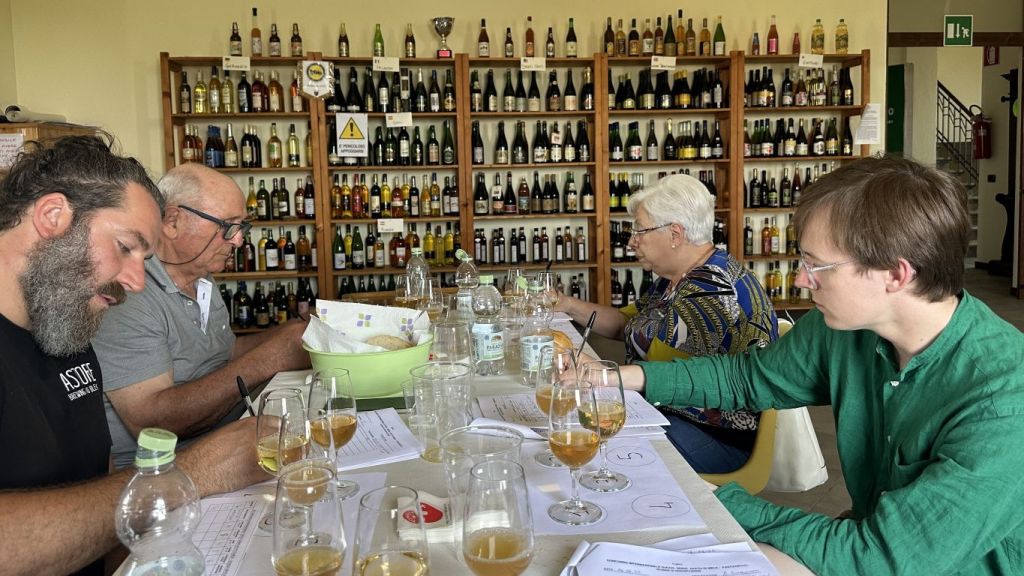
Most of those producers are situated in the traditionally apple-growing north. That’s where Alfie and I headed after the festival, spending a few days in Trentino exploring cideries in and around Val di Non (read more here). We also went over to Friuli in the far northeast. There, we were honored to participate, alongside local growers and makers, as well as our Italian cider guru Marco, in an all-day judging of fruit juices, ciders, and vinegars for the local apple association.
Lasting around 10 hours in a swelteringly hot room and with a lengthy rubric to complete in Italian for each product, this was certainly some of the most hard-core cider judging I’ve done. That said, it was broken up by a long pizza-filled lunch and, at the end, we were given goodie bags of cheeses, jam and salami produced by the head judge’s farm; you can’t complain. Indeed, it’s an experience I’ll never forget.
Back in the big city, we’ve just experienced the long-awaited launch of Rome’s cider club, which is perhaps the country’s third such institution. Instigated by Daniele, who runs the TrovaSidro blog and its very helpful Italian cider map, and his wife Maddalena, it promises to become a monthly fixture in Italy’s cider scene.
This has been Cider Review’s Italian correspondent, reporting for duty in 2026.
Barry Masterson
To be honest, I’m struggling to put together a personal retrospective this year. It somehow doesn’t feel right after a year of such suffering and, to be frank, despair in the world. I know there’s always some conflict or disaster happening on this planet of ours, but it all feels dialled up by rhetoric and actions that more resemble precursors to the horrors of 86 years ago. Perhaps, then, it is simply wise or a self-defence mechanism to seek solace in the ordinary, the simple pleasures of everyday, like physical labour or a nice cider or perry, when every turn of a newspaper page or scroll on social media brings the harsh reality back.
I find that the physical work associated with cider and orchards an antidote of sorts. 2025 began with such work, planting a meadow orchard dedicated to rare perry pear varieties, this time in cooperation with our local council. This is on their land, with a plan to ensure the trees will stay there in perpetuity, or I would not have planted them. This is the second such orchard I’ve planted, the first being a private initiative that I have described here before. I get quite pleasure walking between the rows there, imagining how they will look in 25 years or more.
And so started a busy cider-related year, even though cider is a side-job. It felt very event-centric.
Albert convinced me to overcome my fear of public speaking so, bizarrely, I gave the keynote talk at Craftcon at the end of March this year. And you know what? I really quite enjoyed it. I have to admit to spending a hell of a lot more time reworking that script than I probably should have, but I think it was worth it.
April saw Cider World 2025, my third visit to this big event, and this time invited to join the jury, which was fascinating. Adam and I were put on the same table, mostly getting perries. We might have been stricter than they would have liked, but I think we were fair. I wonder if we’ll be invited back!
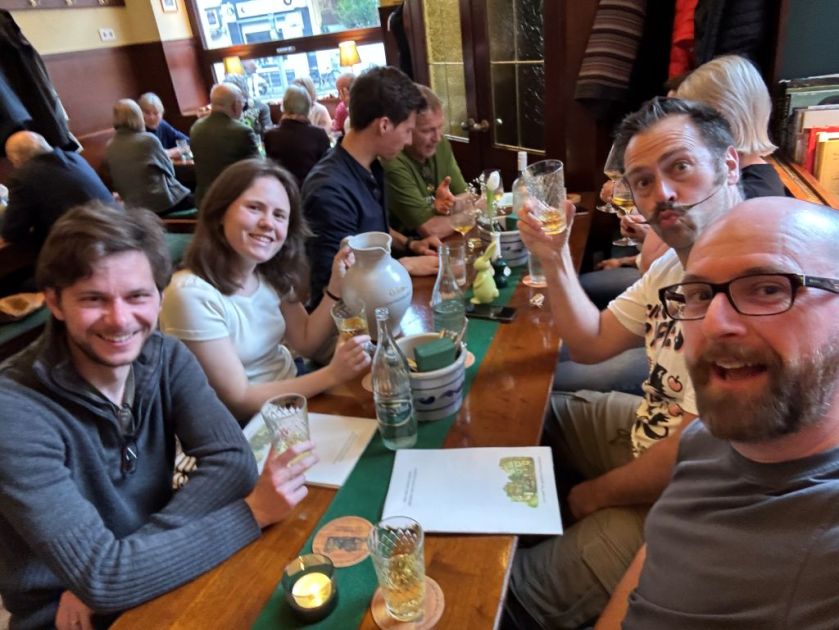
Around the same time, our small cidery became an official partner of the Naturpark Neckartal-Odenwald, with a small launch event on our new meadow orchard. They also ran a new regional Most competition this year, on which I was one of 3 jurors. Judging was a rather harrowing event, as it was done live in front of an audience of entrants. Occasionally the organiser asked for live feedback on a sample! As a third of them were acetic… well, we had to work to control our facial expressions.
But these kind of small local regional events are becoming more important to me, connecting with other regional producers (oddly, I’m the only cider maker in the network) and people who are genuinely interested in local, artisanal products, being some kind of advocate for cider and the forgotten traditions of our region. Maybe we’ll do more markets in 2026, though I have already decided to try to do less events in 2026.
I have to admit, 2025 got to be a little too much on the travel side, so I cancelled a lot of trips I would have liked to go on, like the new Swiss cider festival and Carnivale Brettanomyces, at which I had been invited to speak. But I did visit Rossfest again, at which Albert again convinced me to give a talk, minus the promised projector, but I was somehow able to wing it and appear relaxed. I think. It was fun. But I hope to get to some different events in 2026, even if just as a participant, simply for the connection and sharing of experiences.
One thing I have started retreating from in 2025 has been pomology. I realised that the harvest period, full of pomology events and the only time of the year you really get to practice IDing fruit, just clashes too much with my cidermaking duties, increasing self-inflicted pressure. I have only partially succeeded on that front, as I am again going to be IDing fruit at Gottersdorf, will likely run a fruit show in our village again, and got involved in another project, IDing pear trees on some orchard meadows planted only 20 years ago, but they lost all the labels. This is why I make a map!
So yeah, it’s been a busy but satisfying year on the fruit and cider front, and that’s not even getting into the behind the scenes work for Cider Review! But I’m out of space. Thank you for reading this far!
Adam Wells
One of the most remarkable (if, sometimes, to cidermakers, enraging) things about apple and pear trees is biennialism. That some trees, of some varieties, or at certain ages, have what’s called an off-year, in which they barely produce fruit at all. Stoke Red, for instance. Foxwhelp. Flakey Bark, or at least the Flakey Barks harvested by Ross-on-Wye, sometimes have a couple in a row.
Apple trees, after all, especially tall, old, traditional trees, have a hard job. Certainly compared to vines. Never mind a few bunches of grapes; big perry pear trees might have to ripen a tonne of fruit in a single harvest. And this is reckoning without the heartaches and the thousand natural shocks that British weather is heir to; the blossom-ruining frosts, the storms, the months of rain, the unexpected summer heatwaves and all the rest of it. No wonder the trees are exhausted.
Trees are almost invariably the source of cider’s most predictably laboured metaphors, and of course I’m not letting the side down today. 2025 has been, for me, an off-year. After 280 Cider Review articles between 2020-2024 and various bits and pieces besides, my contribution in 2025 at the time of writing sits at a good round nil. Cider Voice has been silent for the best part of that too, and the only talks I’ve given were the last dregs of the book tour, put in the diary last year.
I have wanted to write. Occasionally I have opened up the laptop, stared at the screen, moved a sentence or two around, even hit the heady heights of a finished paragraph now and again. But for the most part the words haven’t come. Even, alarmingly, when I’ve known what I wanted to write. At events, too, I have felt peripheral. Less able to engage; more inclined to hide. More often than not I find myself straining for what used to come without thought and finding that it doesn’t seem to be there.
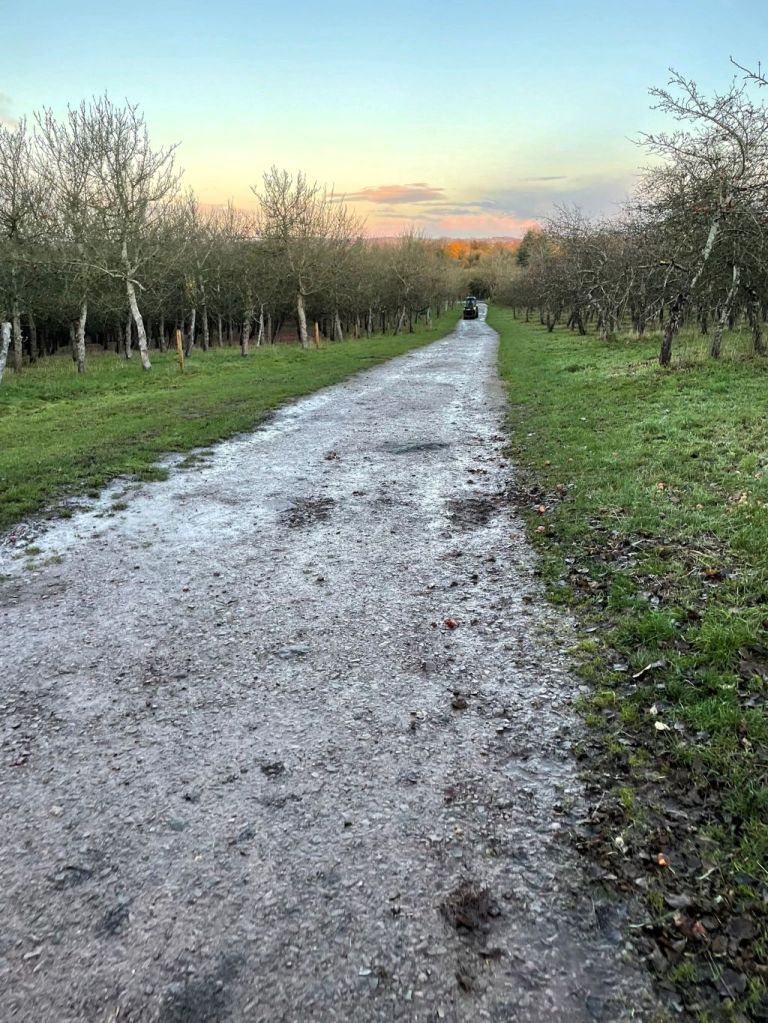
There are caveats. 2024, in cider and perry terms, was probably as busy as I have ever been, and ever hope to be. It was a joy, a privilege, a whirlwind, and probably was always going to take a little recovering from. 2025 has also, not to get into the weeds of it, been a bit of a year. Much has changed, much has needed particular attention, it’s all been a little bit tiring and although (I hope) I’m a little more out of the woods now, I still feel very much in the adjustment phase. I’d like to think that in 2026 I’ll have a little more time, that the words and the motivation will return, but looking back I seem to have written the same thing at the end of 2024. I hope I’ll remain a part of Cider Review, that has been such a big part of the last chunk of my life. That I’ll still contribute and help it grow. But the truth is, I just don’t know.
And perhaps it doesn’t matter anyway, because what a year it has been for the site, and for cider more broadly. I’ve lost count of the contributors who have had their articles published, whilst Jack and Barry have worked marvels keeping the weekly words coming. CraftCon was bigger and better than ever, Rossfest was once again a blast (and really, as long as those two go well, it’s a good year in cider). Makers all over the world have excelled themselves, the quality and volume of great cider continues to rise and little by little the conversation, the awareness is growing. Aspirational cider is increasingly hard to avoid encountering. No essential case from me this year, but the most memorable thing I think I drank was a traditional method Ashmead’s Kernel from South Hill that tasted like revelation. Cider is in a good place. (And perry remains very much alive).
Who knows what will happen in 2026, in cider and indeed the world more broadly? Certainly not me. Perhaps it will be an on year, perhaps an off. Perhaps the words will come and perhaps they won’t. But cider, and Cider Review, aren’t going anywhere, and I know where they are, and so on we turn again. Another year, another vintage, another chance to bear fruit.
Thanks to all of you who have supported the site this year. I hope your 2026 is whatever you need it to be.
Discover more from Cider Review
Subscribe to get the latest posts sent to your email.
 Cider Review
Pingback: Craft Cider vs. Craft Beer: Where Are the Trends? | Cider Review