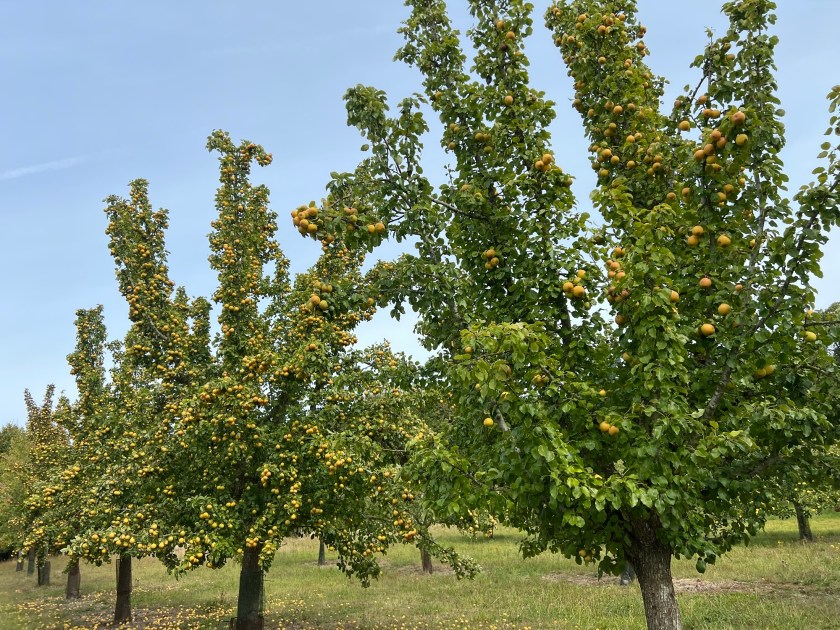
I’ve just passed security at Stansted Airport after a 1.5hr trundle back and forth down aisles of muted passengers. Overhead, air conditioning units and LED lights galore, the odd Christmas tree dotted randomly in corners, alongside signs stating, “No photography” and officials shouting “take off your belts!” How festive. This couldn’t be further from the world of the orchard in early December: leaves mostly fallen from the pear trees, hanging on tentatively to a few apple trees, a sense of calm descending, moisture seeping down into the soil, energy stored in the root systems for the year ahead. I know where I’d rather be, but work draws me out to the Middle East for the week, so I’ve pushed gardening activities back to the weekend I get home. Yesterday as the light faded, around 3:45pm here in Norfolk, I did at least get two trees planted out in what will be our new edible hedge: Rote Linzer and Sychov – not varieties of cider apple or perry pear, but equally curious and delicious in the form of Red Walnuts, the shells being the same tanned brown colour, but the kernels of the nuts exhibiting a bright red, at times, burgundy, flush. I’m drawn to things that you absolutely can’t find in the supermarkets or farm shops, these seem to fit the bill.
As the call for submissions went out for this year’s Producers Summary on Cider Review, it was heartening to include lots of new producers, some who had read our 2023 summaries and wanted in, others who I reached out to through curiosity and respect for their work. A lot can change in a year, reassuring then are the producers we still have with us, and who have sent through their replies to our questionnaire. Some producers however, like the fantastic Ed and Becks at Brollins Cider in Birmingham, are having a temporary year off production, reinvigorated for all the 2026 harvest can bring. Others like Martin at Pilton Cider responded to my request with “we no longer make cider”. I had heard that Martin wanted to retire and had been looking to sell off some of Pilton’s equipment recently. Nonetheless, the UK cider scene without Pilton firmly in the centre of proceedings will feel poorer – so many of us had an early introduction to just how good cider can be through Martin’s ciders (and experimental drinks). Tamoshanta, Queen of the Brue, and the iconic, sunshine-drizzled Max Lux, will forever be three of my favourite ciders. I’m sure there’s a fair amount of stock to see us Pilton fans through 2026, but after that… well, I raise a glass of thanks to all that Martin has done for cider and wish him a very happy retirement from the business. Onto the Harvest 2025 summaries!
Three Wells Cider. Reading, Berkshire, UK
First date and last date of Harvest: We kicked off once again with Foxwhelp picked in the Little Pomona Home Orchard on 20th September, and our last pick was Dabinett from Ross-on-Wye’s Caravan Field Orchard on 29th November.
Total amount of cider/perry made: We’re looking at 850 litres, which is the smallest of beans to most people, we know, but with our restrictions on time availability (we all work full-time jobs, which no longer all follow the same Monday-Friday pattern), proximity to the orchards we mostly use (only one in our home county of Berkshire) and, most importantly, space (our small shed) that’s about the most we could manage. It’s also a notch up from last year (about 720 litres) and covers more varieties harvested from more orchards over more weekends, so we are quite proud.
A highlight of Harvest 2025: There have been so many! First time picking in our home county, first time pressing pears, first Yarlington Mill. We also got our first Egremont Russet thanks to incredible generosity from James at Little Pomona – this is huge for us, as it means we’ll be able to make our most important cider, Triptych, with its originally intended varieties (though we do like the version we made with Dabinett, Bisquet and Foxwhelp last year). We’ve dipped our toe into some yeast experiments for the first time, inspired by both Barry and a few chance conversations with other drinks makers. We’ll continue those investigations more meaningfully in coming seasons, though directed natural fermentation will remain our primary method.
But the biggest highlight has to have been getting all of our gear back to our home cidery and being able to press at home on our own equipment for the first time.
This seems like a very basic highlight, so with Barry’s excellent article on Part-Time Cidermaking in mind, we’ll expand on that slightly. It’s been quite a difficult birth, Three Wells Cider (it’s still being born in many respects – licensing, labels, all that lovely admin still to come). The truth is that making cider at any scale beyond a few demijohns is inherently a matter of a certain degree of privilege and circumstance – key elements being land, access to fruit, a big vehicle and, obviously, money. We’re hugely lucky to have our space, and to be able to afford what we’ve needed, but making cider the way we wanted to – with specific varieties, mostly not grown in Berkshire, at a certain scale, requires a van or large car, which we don’t have, and a decent size fermentation space (which at the time of pressing last year we didn’t have). We also wanted to do as much as we could together, obviously, and since the 3 of us don’t live in the same city, there’s an added element of complexity involved. On top of which we’re doing everything for the first time.
The result has been, inevitably, a slightly peripatetic, figure-it-out-as-we-go-along-mistakes-and-all experience. It’s certainly been eventful and there are probably ways we could have made it easier for ourselves, by compromising on things like apple varieties, scale and so on.
Anyway, the point of all this is that we don’t take for granted how lucky we are and how special it was to have all of us there in our space, using our equipment, pressing apples that we chose to use, and picked together. It’s the result of good fortune, specific plans, and a belligerent adherence to that particular vision. However, it comes out, we’re very proud of that.

How would you describe the vintage of cider and perry produced this year? High SG/low SG, good for ageing etc? As I’m sure all UK cidermaker have experienced, we’ve seen a very hot summer resulting in very high sugar levels, especially in earlier varieties. Our only direct comparison with 2024 so far (until the Dabinett is pressed) is Foxwhelp, which despite being picked a few days earlier than 2024, from the very same trees, went from 1.048 last year to 1.067 this year – some leap!
Since we currently ferment everything to dryness, we’re anticipating high alcohol levels. There doesn’t seem to be a wildly different change in acidity, thankfully, and we’re hoping that the cooler weather and rain in the autumn will stop later varieties running away with sugar and help retain their structure, acidity, phenolic ripeness and so on. A trade-off has certainly been yield. Fruit has been markedly smaller than 2024 (whilst we don’t have much direct comparison the orchardist who grows our Yarlington reckoned they were two thirds normal size) and we’ve definitely had lower yields than expected or hoped for with some varieties.
As far as maturation potential goes, who knows?! There’s no substantive data or research into it, and a few examples of long-lived ciders and perries doesn’t count as conclusive evidence to maturation potential generally, though it has been wonderful to be able to explore cider’s maturation through those longer-aged releases from several producers and retailers in the last few years. With our wine-loving hat on, the alcoholic weight and phenolic ripeness of this year’s ciders, alongside some nice acidity, should hopefully contribute longevity. That said, 2024 was a generally wet and miserable vintage – but the ciders we made from it have huge structure, so much so that there are a couple we won’t release for at least another year. I’d expect 2025 to be a much more forward-drinking vintage, but that’s not to say it won’t also last. As you can see, this is all conjecture! We have absolutely no idea how our ciders will develop and don’t have the confidence to guess! Lots of 2018 ciders are drinking tremendously now, and since that’s a comparable vintage in ripeness, we’d hope for some long lasting 2025s for sure.
99 Pines Perry. Hartpury, Gloucestershire, UK
First date and last date of Harvest: We started Harvest on 23.08.25 with a pear variety called Painted Lady, and finished on 03.11.25 with Butt.
Total amount of cider/perry made: A whopping 3,800 litres of perry this year (over 30SV’s plus blends). 90litres has been ditched already, but rest looks promising! It’s been a fabulous perry haul for us this year, based both on a bumper crop and an amazing band of volunteer helpers (aka Piners). Amazingly we managed to treble the volume from 2024 harvest which we hope will stop us selling out every year and give us a baseline stock to build upon. We also managed to produce over 30 Single Varieties, which we’re hoping is a perry record, so watch this space!
A highlight of Harvest 2025: The highlight of this year was focusing our core efforts over a 2 week period, and the army of supporters that generously used their volunteer leave to pick and press the bulk of the harvest from the National Perry Collections at Hartpury and Malvern, and local heritage orchards.

How would you describe the vintage of cider and perry produced this year? High SG/low SG, good for ageing etc? Although it was a bumper crop, the lack of rain resulted in some varieties giving small fruit, with some refusing to fall and rotting on the tree (strangely, Staunton Squash demonstrated this across 4 orchards). Many however were spot on, such as Butt, Barland and the dependable Blakeney Red. A good vintage year too, with average SVs around the 1.066 mark, topping out at 1.081 for Hellens Early.
Domaine Eric Bordelet. Charchigné, Mayenne, France
First date and last date of Harvest: We started harvest on Monday September 1st for pears -the earliest date that we have ever started. Harvest finished for us on Monday November 17th with the apple known as Damelot.
Total amount of cider/perry made: We harvested 100 tons of Pears, 130 tons of apples and 4 tons of Corme (Sorbus domestica fruit), all of this was possible with the invaluable help of 10 seasonal workers for two and a half months.
What does that look like in juice terms? Approximately :
- 55,000 litres of Poiré
- 53,000 litres of Cider
- 1600 litres of Cormé [Sorbs / Speierling]
A highlight of Harvest 2025: It’s not necessarily a highlight in a good way, but notable – we had limited production in our own orchards due to two hailstorms in June, 10 days apart. Hailstones the size of golf balls! Approximately 80% fruit loss as a result, so much fruit was picked and selected by us outside of the Domaine to keep control of maturity.

How would you describe the vintage of cider and perry produced this year? High SG/low SG, good for ageing etc? Vintage 2025 is a solar vintage, very concentrated fruit, lot of sugar. The resulting drinks will be generous, greedy and fruity. Lower acidities than usual but will be interesting for ageing thanks to the diversity of varieties we grow (40 varieties of apples, 20 variety of pears and 10 variety of Cormes).
All the fruit was high in sugars, more than 1060, really quite dry too. It was the second year in a row with huge quantities of fruit on the trees as well. Many trees cracked under the weight of fruit due to the dry summer. Fortunately, we had a little rain in September which allowed apple to grow a bit bigger.
1785 Cider. Unterkirnach, Baden-Württemberg, Germany
First date and last date of Harvest: Harvest 2025 started on September 17th for us, and we wrapped up on November 7th.
Total amount of cider/perry made: 1000 litres of cider and 2000 litres of perry – which is significantly less cider than we have made in past years. We started harvesting unusually late this year. Partly due to external factors; but also because the wet summer caused fruit to ripen later than usual.
A highlight of Harvest 2025: This was the first year we were able to produce a single-varietal perry from the Oberösterreicher Weinbirne. It is a wonderful perry pear and we have high hopes – but, as usual, the jury is out until it’s finally in the glass, presumably in 2027.
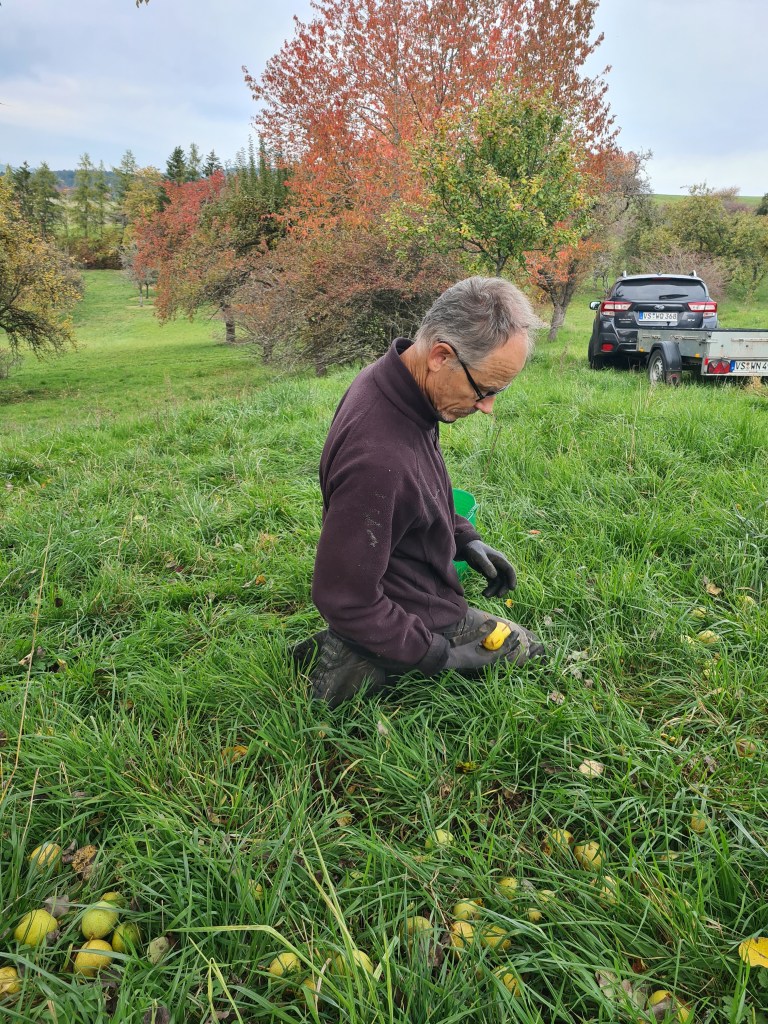
How would you describe the vintage of cider and perry produced this year? High SG/low SG, good for ageing etc? It was another wet summer for us – the third in a row. Fruit set was very heavy and juice yield was high – but fruit quality was compromised due to the high humidity. SG of pears was 5-10 points lower than usual, with the exception of the Oberösterreicher. Apple SG was average. We expect a lower ABV, perhaps a bit more austere perry. It will hopefully be a good cider vintage, since we were very selective in terms of the varieties we picked.
Hesketh Cider. Guilden Morden, Cambridgeshire, UK
First date and last date of Harvest: We started harvest on 7th September. Picked the final fruit on 22nd November (although not finished pressing as of 27th November!)
Total amount of cider/perry made: A sign of how we’ve grown in production capacity.
- 2025: 2100 litres cider, 100 litres perry, 30 Litres plum jerkum
- 2024: 1465 litres cider
- 2023: 985 litres cider
- 2022: 650 litres cider
- 2021: 380 litres cider
A highlight of Harvest 2025: Finding some beautiful old trees near me tucked away in the gardens of villagers. Whilst most of my apples come from my neighbour’s established orchard which I care for, I still get a fair few from local contacts and this year word had obviously got out and I was overrun with locals contacting me offering apples, through this not only did I managed to find some exciting old heritage varieties to work with but also made new friends. A further highlight of this was being contacted by someone who’d brought my cider at a local market and was happy to exchange a box of 3 bottles for about 400kg of late sharps, result!

How would you describe the vintage of cider and perry produced this year? High SG/low SG, good for ageing etc? Ridiculously high sugars, several batches 1.071 – 1.078 on the hydrometer. Easy picking with a lot of clear sunny days (at least until later Nov). Flavours in the more tannic varieties seemed more pronounced at pressing like not necessarily more tannic, just very expressive, time will tell with aging though!
One Tree Hill Cider. Southwark, London, UK
First date and last date of Harvest: The crop was very early started in first week of August – normally last week, majority finished by 13th September – again early.
Total amount of cider/perry made: 30 plus gallons (113.5 litres) fermenting away over winter 2025/2026. – slightly down – due to lack of time to press due to early crop ready at peak holiday time! The apples come from back gardens in Houses in SE London, so they are dessert with odd cooker, so they will be earlier than cider apples.
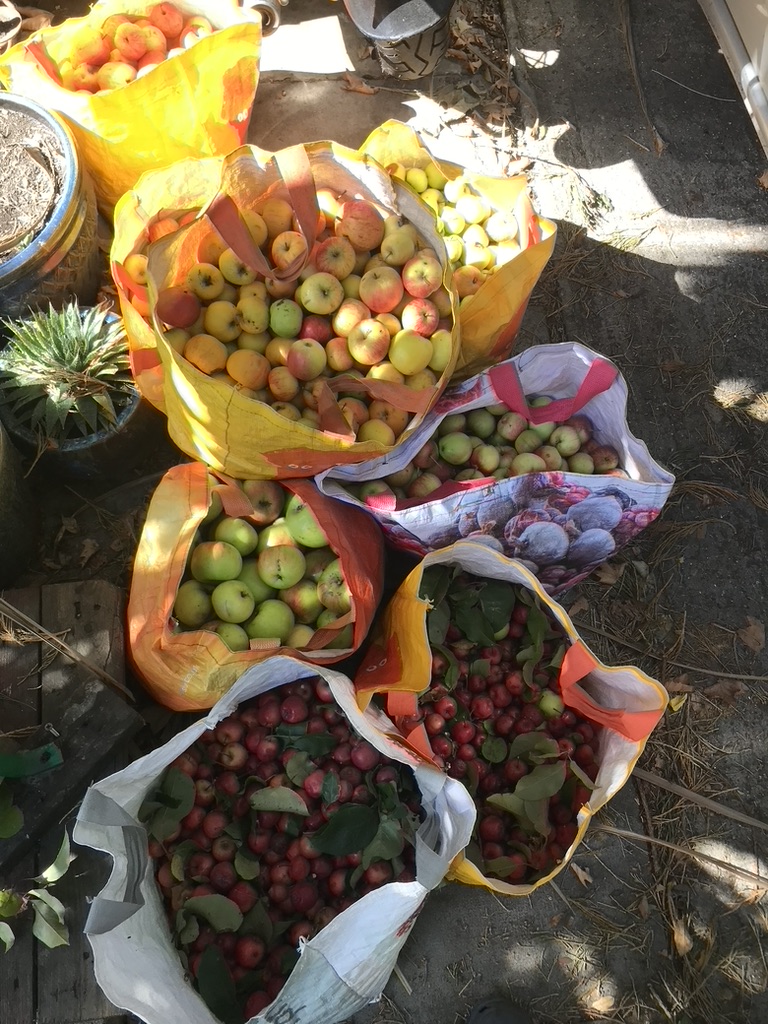
A highlight of harvest 2025: What was amazing this year was crab apples that I pick from a local housing estate otherwise they will just go to waste. They were larger and in large numbers than years before, I collected two large bags and you can hardly see where I’ve been picking. I press them separately, I do not mix them with any other juice, they make a wonderful dry drink.
How would you describe the vintage of cider and perry produced this year? High SG/low SG, good for ageing etc? The Abv was higher about 6%, normally around 5%.
Rawlins Cider. Ilminister, Somerset, UK
First date and last date of Harvest: We started picking fruit on 25th September, and finished up on 25th November.
Total amount of cider/perry made: We pressed 8500 litres, the most we’ve made in a year before.
A highlight of Harvest 2025: Loads of fruit about this year meaning we could do some single varieties we can’t usually do as we don’t typically have enough of each variety.
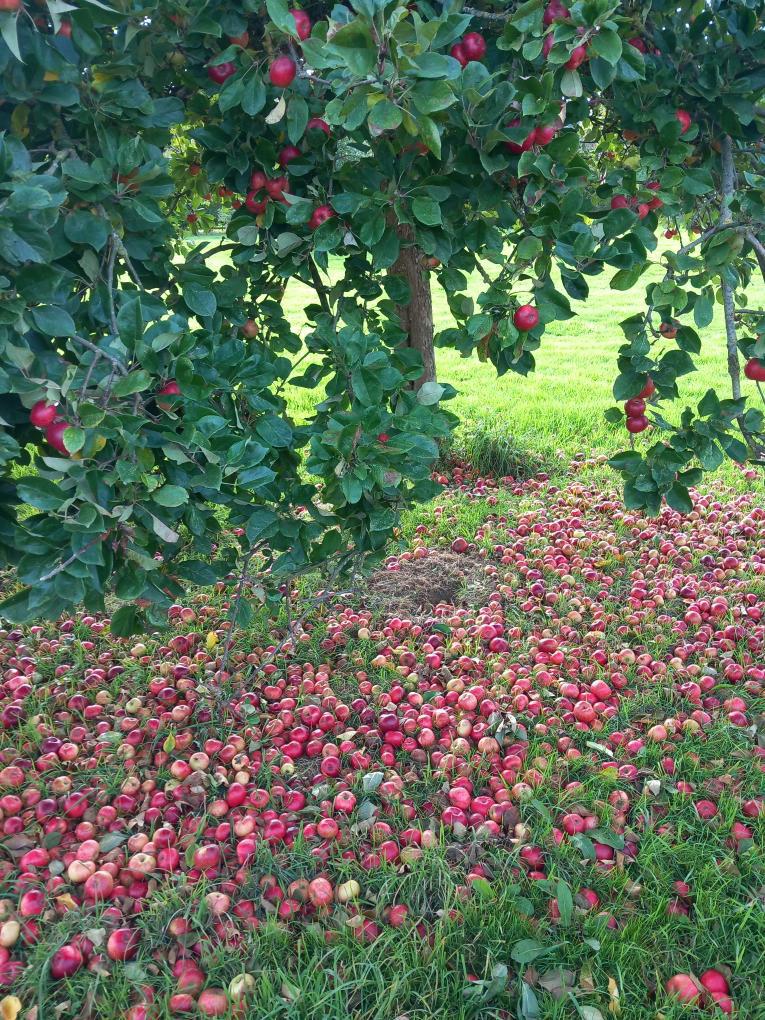
How would you describe the vintage of cider and perry produced this year? High SG/low SG, good for ageing etc? Sugar levels started higher than average from early falling fruit but later fruit seemed about average, due to the late rain I would guess.
Weather was dry for most of our picking and pressing days which was great but the temperature stayed warm making all our keeved ciders earlier in the harvest work very quickly and may possibly need another racking through the winter to slow it down.
Llanblethian Orchards. Cowbridge, Vale of Glamorgan, UK
First date and last date of Harvest: Based on pressing dates, we started harvest on 23rd August 2025 with Gwehelog pears. Finishing up on 20th November 2025 with a blended keeve mix of Ashton, Dabinett, Tremletts Bitter, Yarlington Mill, Bramley, Black Tom, Golden, Ashmeads, Chaxhill & Pen Caled.
Total amount of cider/perry made: Enough for 500 litres of pure alcohol – the new duty system for small producers introduced last year. As I am doing 2,000 litres of sweet keeve this year (which stops the fermentation earlier and is lower alcohol) it worked out at roughly 8,500 litres before the keeve. Technically I could do a little more after the keeve but I have run out of containers now!
A highlight of Harvest 2025: Honestly getting it done! The harvest came early this year by a couple of weeks while I was still doing events which caught me out. I spent the next three months trying to catch up…
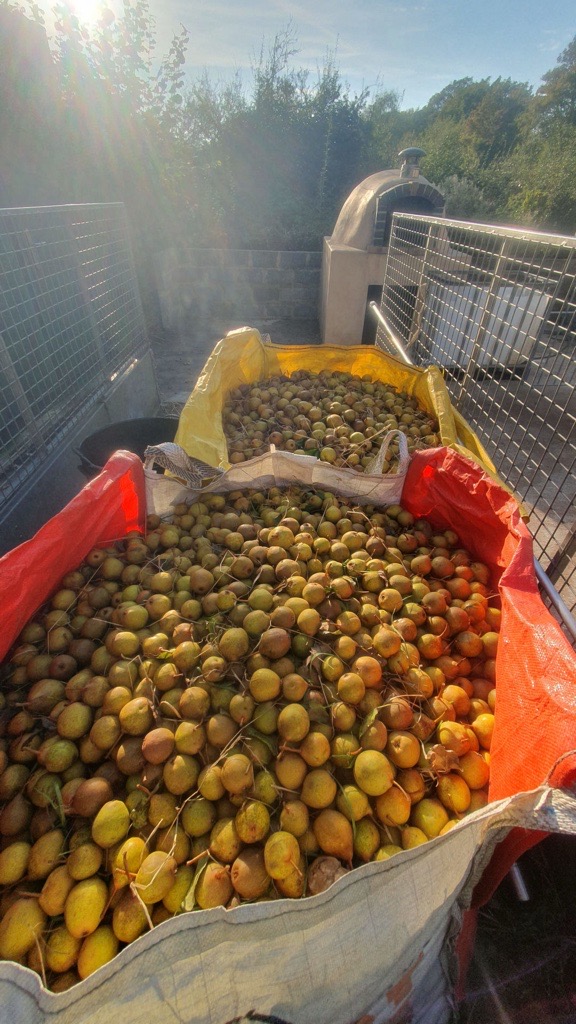
How would you describe the vintage of cider and perry produced this year? High SG/low SG, good for ageing etc? The sugar contents are up this year. The aroma compounds seem up as well, at least with the later fruit so hopefully it should make some interesting cider. Some of the very early varieties dropped too soon, most likely due to stress as it was so dry during the summer. I doubt those varieties will be as good. As alluded to earlier, I am making more keeved cider than normal this year due to the duty changes and the varieties I use for that do seem to be good this year. The Kingston Black has keeved as a single variety successfully (so far!) and the late keeve blend I do has just been racked off the Chapeau Brun.
Wyldland Cider. Monkton Wyld, West Dorset, UK
First date and last date of Harvest: First pressing was done on 30th September – at least 2 weeks earlier than usual for us this year! We have just done our last press at the end of November – so 2 months worth of work this year!
Total amount of cider/perry made: We only produce cider with a blend of cider apples and eaters – no perry (but one day!) – this year we nearly doubled our production due to the mast year and that our orchards were also on a good year so it was a season of plenty for us and so many others this year! we produced approximately 3000 litres of juice – small in the world of cider but a lot for us as we hand pick for each pressing and did approximately 10 pressings this year where we put our twin screw press to the test – a lot more pulp and straw into each pressing this year to get through the apple haul!
A highlight of harvest 2025: We had a great run with the Browns apple which often has just a short shelf life on the floor where we pick from – this year, as we began early we were able to get a lot more Browns into our cider which is an apple we love. We also upgraded our oak barrels this year! A great moment of moving into bigger 400 litre French oak wine barrels which we are really excited about.

How would you describe the vintage of cider and perry produced this year? High SG/low SG, good for ageing etc? On the whole, all our pressings have had a super high sg level! a lot of sugar in those apples that had such a good year! The warm autumn also meant that the cider started to ferment at a pace! So, we have been really careful with our SG testing this year and done early racking to slow down the ferment and to get a great taste at the end of it. We will be aiming to do our usual Pet Nat ciders this year, some still and keeved. I think they are going to be great – 2025 is a good vintage! And yes, we have keeved again this year – the end of the season when the temperatures dropped was a great moment to keeve our final pressings – we are really looking forward to the results there – super sweet at the moment, but clear, racked, and a successful keeving done!
All in all a bumper year – a lot of hard work, but we are really excited to see the results in 2026!
Ayrshire Riviera Cider. Troon, South Ayrshire, UK
First date and last date of Harvest: First harvest day 8th September. Last harvest day 25th November, although we could have had another week on the russets but decided we had enough.
Total amount of cider/perry made: Around 5000 litres in total – mixed variety cider, Egremont Russet, 500 litres from Lagg, Bloody Ploughman and red and yellow pear.
A highlight of harvest 2025: Highlight will be the 1400 litres of Perry, considering we had 120 litres from the same trees last year.

How would you describe the vintage of cider and perry produced this year? High SG/low SG, good for ageing etc? Our SG were around the same or a little lower. But the volume of apples and pears was huge. I wonder if high fruit numbers meant less availability of sugar at the end for each tree. Or perhaps the weather at that particular point in the cycle.
Riley’s Cider. Bowen Island, British Columbia, Canada
First date and last date of Harvest: We started harvest on August 25th and finished on November 30th. (Because we have so many varieties, we have a long harvest 😊).
Total amount of cider/perry made: We had a great year apple-wise and our cider apple orchard that we planted in 2018 (trees are semi-standard) finally produced some apples this year which was very exciting for us.
A highlight of Harvest 2025: Picking our first Nehou Cider apples.
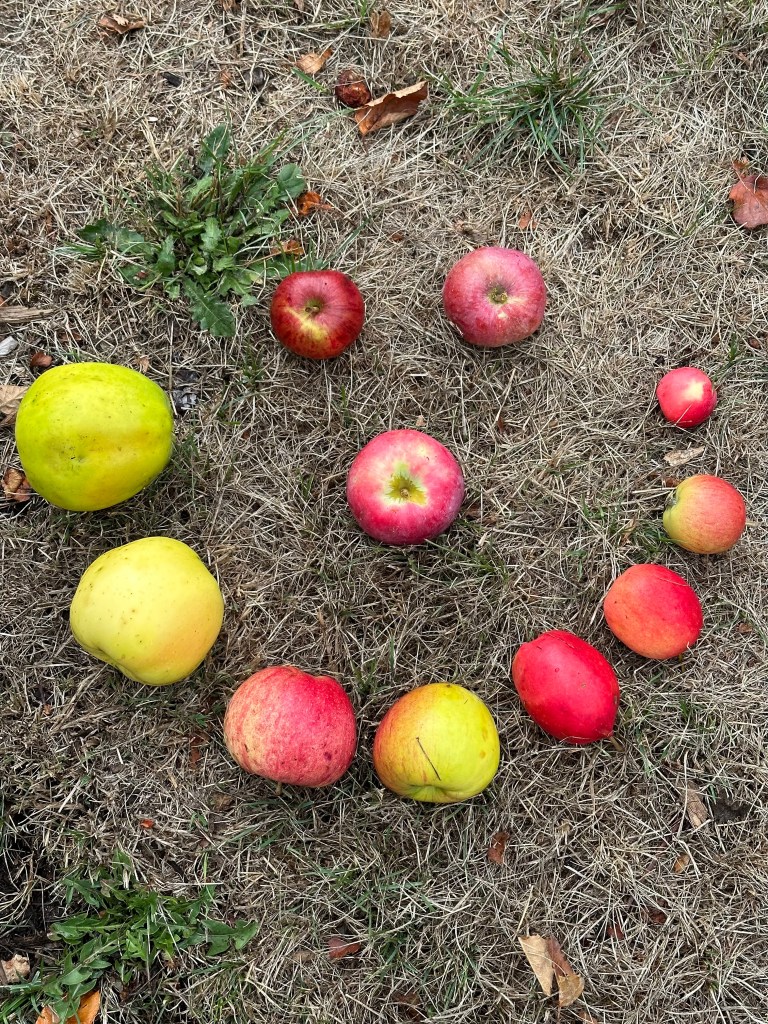
How would you describe the vintage of cider and perry produced this year? High SG/low SG, good for ageing etc? Our Long Lost Apples Cider which is a blend of our Bowen Island Orchard apple collection will have a higher SG and higher tannins as we were able to blend more cider varieties into it this year!
Bauman’s Cider. Portland, Orgean, USA
First date and last date of Harvest: The season was long for us this year, in a good way. Steady moderate heat in June and July meant that brix were at a good level and we began to pick the first of August. Yields were very good, even in some of our newest acreage. We used a higher than usual percentage of the apples for cider, rather than fresh market apples and fresh juice sold in gallon jugs on the farm, since yields were so high. I think we picked the last of the crop about a week ago, so around November 22
Total amount of cider/perry made: We made around 560,000 litres of cider this year, both from our own orchards as well as neighboring orchards and even some in Washington and one in Montana.
A highlight of Harvest 2025: The highlight this year was that nearly everyone on our production and front of house teams made a 5 gallon batch of their own cider. This was a very fun project and got everyone excited about which apples we were picking and what the brix were, since it had such a personal stake for each of them
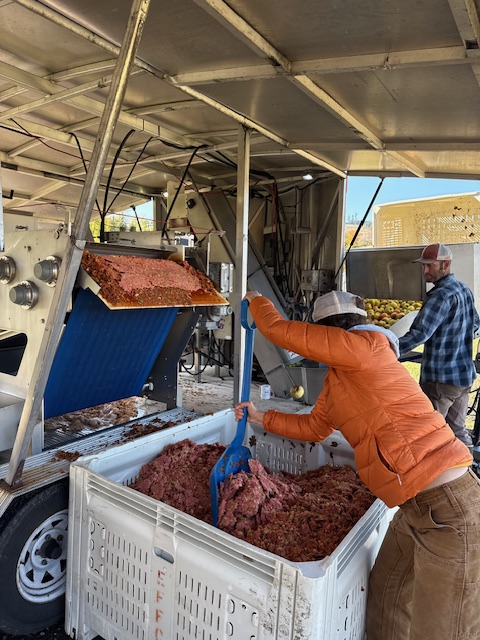
How would you describe the vintage of cider and perry produced this year? High SG/low SG, good for ageing etc? The gravity was pretty standard this year, nothing too extreme, but the yields were very high. Not a lot of drama from the orchard, just apples being apples.
Gould Cider. Truro, Cornwall, UK
First date and last date of Harvest: Started 3rd August with ‘Gladstone’ – as of today, 10th November, we have yet to finish. Still to harvest, gather and process are Bedan, Brown Snout, Porter’s Perfection, Black Dabinet and Vilberie.
Total amount of cider/perry made: 6800 litres, almost all cider, hardly any perry this year.
A highlight of Harvest 2025: Northwood’s flavour was good, a relief as it has been poor quality in previous years and I was wondering whether to replace it. Northwood seems to have benefitted from our wireless version of Terrence Robinson’s pruning and training methods. Kermerrien was pruned similarly and this year produced apples the colours and texture of ripe apricots, a joy.

How would you describe the vintage of cider and perry produced this year? High SG/low SG, good for ageing etc? In the Spring of 2025 fruit set was good and it looked as if we were to have an enormous harvest. However, this Autumn, after an extended ‘June Drop’ from June to August apple fruit size at ripeness was only small to very small probably because of extended rain-free periods in the Summer. Ripening stopped for many late varieties towards the end of September early October. October was the third dullest on record and it may be that the lack of direct sun caused other varieties to go from underripe to off without passing through ‘ripe’. Frederick, some 20 trees, went from underripe to off while still on the tree. Our Bisquet trees produce fruit which when fully ripe have a beautiful lemon yellow background decorated with purple spots with black edges and a silvery grey central dot. This year nearly all were lime green at fruit fall and stayed that way before going off, even after an extended period left under trees on grass. Without apples and pears ripening properly the acid levels don’t decrease fully nor the sugar levels rise as desired. Juices had sugar concentrations of ~12%, lower than previous years. We shall have to see whether our combination of rather difficult growing conditions has made anything acceptable in the Spring.
Vagrant Cider. Penryn, Cornwall, UK
First date and last date of Harvest: We started with Lady Sudeley on 18th August, about a week early, but the fruit was ace, pressed at 1.042. Not considered a cider variety, most people make a delicious juice with it. However, it’s already bottled and I think it’s going to be a nice, light pet nat with just enough structure to carry itself. I have a plan which might involve disgorging and a secondary fermentation next year, we’ll see.
Finished on 14th November with Lord of the Isles and the fruit was ok – checking what’s left now and it’s mush. There are other varieties still hanging on, but I’ve run out of steam.
Total amount of cider/perry made: The quantity of fruit available this year has been insane and I don’t feel I’ve manageed to completely get ahead of that, despite having made more this year than we ever have – we’re still under 7000 litres.
A highlight of Harvest 2025: A highlight of harvest this year was access to a new orchard to us with an absolute wealth of varieties we’ve never worked with before in prodigious quantity, such as Tan Harvey and Winter Stubbard. It’s been particularly gratifying to get so much single variety pressings into tank, so it’ll be fun to see how they can blend into this and that. However, the best bit was the profusion of seedling trees we look at for the Some Interesting Apples project which have historically been blind every year, producing fruit for the first time. Lots of wilding fruit pressings in tank – hard to keep with these pickings when the orchards were so abundant and are far, far easier to pick! Some extraordinary fruit though. We made a cute film with a perfume company too.
Oh, and the book. That was a particularly tortuous thing to try and get sorted at the same time!

How would you describe the vintage of cider and perry produced this year? High SG/low SG, good for ageing etc? Sugar levels in Cornwall seldom fluctuate much. The climate is mild but seldom hot. Consequently, our lowest was 1.042, highest 1.056. Fuit was small though due to lack of rain. Even the Colloggett Pippin, which on a wet year are the size of melons, this year were more navel orange!
Son of the Smith Hard Cider. Omachi, Nagano, Japan
First date and last date of Harvest: We started our Harvest 2025 on August 4th and finished up on November 30th.
Total amount of cider/perry made: Since the processing of the fruit is still in process, the production volume is not finalized at this stage, and although it is an estimate, we expect to produce approximately 15,000 to 20,000 litres. This is above average for our production line.
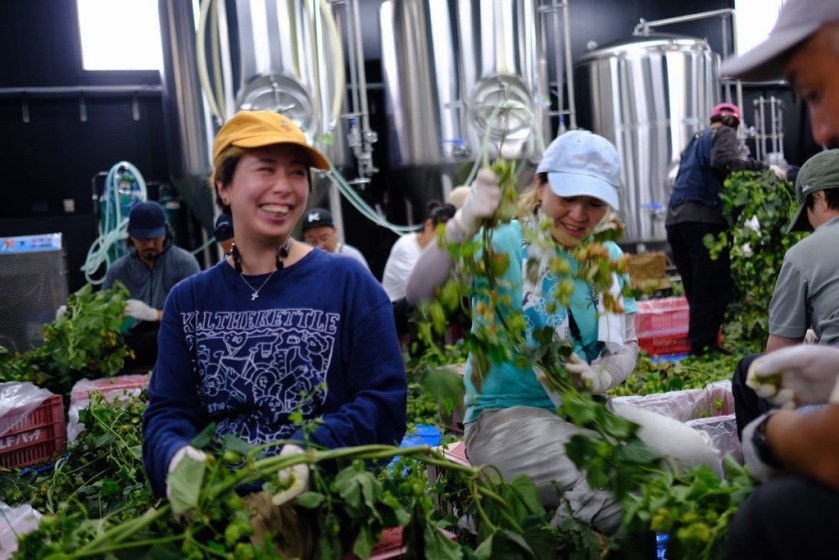
A highlight of Harvest 2025: A crucial point for us is that all of our core ingredients—apples and hops—are grown in-house by us. This year, we were fortunate to have no significant typhoon damage and the weather was generally mild and stable. This calm climate resulted in a stable base quantity of fruit, which in turn allowed us to dedicate time to significant new product development and experimentation.
Among the dozens of batches produced this year, we would like to highlight our standout cider: “FreshHop Express”.
Apples: Dolgo crabapple, Shinano lip, Rinki
Yeast: Wild yeast
With: Fresh Hop Homegrown Cascade 2025 crop
How would you describe the vintage of cider and perry produced this year? High SG/low SG, good for ageing etc? This year’s vintage is characterized by high yield and exceptional quality. It was a bountiful season for the agricultural production of both our apples and hops. The rich personalities of these various agricultural products combine to define the distinct character of the 2025 vintage. For instance, the high yields of varieties like Granny Smith and Harry Masters Jersey mean the vintage is rich in acidity and tannin, making it an excellent candidate for aging.
Discover more from Cider Review
Subscribe to get the latest posts sent to your email.


Another great article Jack. Thanks for hathering up all of these threads from all over the world!
Cheers! Steve Garwood
Ragged Hill Cider Company LLC
LikeLiked by 1 person
Many thanks Steve, glad you enjoyed this one as well! More to come throughout December ☺️☺️☺️
LikeLike
Pingback: Harvest 2025 – The Producers Summary Part 5 | Cider Review
Pingback: CraftCon 2026 – The Taunton Edition | Cider Review
Pingback: The Lady & the Cornish Giant: Investigating Colloggett Pippin | Cider Review