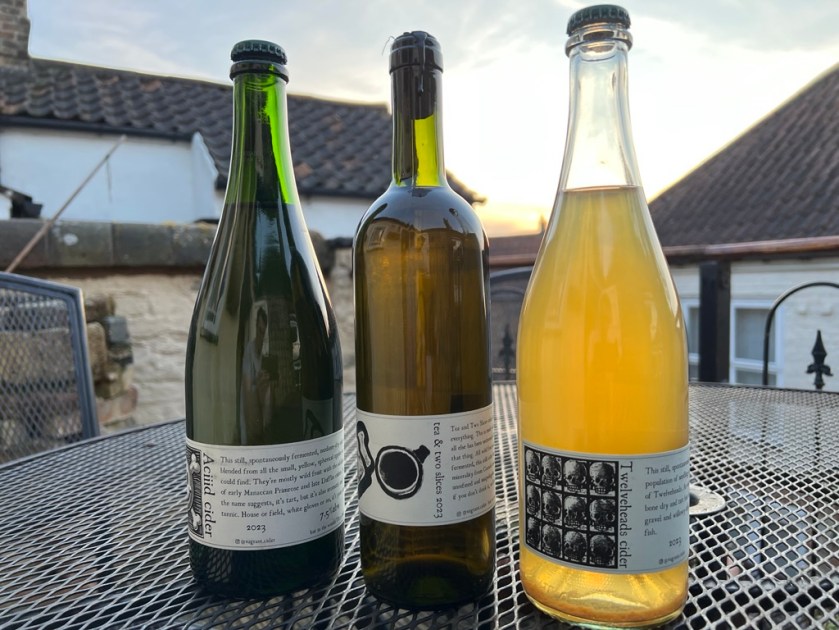
All roads lead to Cornwall. This is not an accurate statement whatsoever. Do not trust this narrative voice! In fact, it’s quite the opposite for the majority of residents in the UK. That a lot of us visit this beautiful county is down to its unique microclimate, different pace of life, and partially the relative inaccessibility of the place. There are three main roads that get you into the county: the A39 to the North, the A30 in the centre, and the A38 from the South. Much like my home county of Norfolk, there are no motorways that can bring you across its boundary lines. However, unlike Norfolk, it does have one of two sleeper train services running into it, direct from Central London (one of Patrick Wolf’s best songs, ‘Penzance’, details a bit of this journey). So, Cornwall wins in that respect.
Where you may have tried Cornish cider before is from the producer Healey’s, and their eponymous Rattler Cyder. It has successfully made it into supermarkets up and down the country. But come off the beaten path a little, trade your supermarket shop for an independent bottle shop or deli, and you might find the likes of Ripe Cider (previously reviewed by James) or Haye Farm Cider (featured in our Harvest 2023 Summary). Delve a bit further down the rabbit hole and you might find online a producer with even more eye-catching label designs than feature a cartoon snake, and a penchant for using wild, seedling varieties of apples in their cider. Vagrant Cider have been on my radar for a couple of years now, but without access to a cider festival nearby, or cause to visit Cornwall, I’ve just looked on in wonder at the range of exciting releases they’ve brought to the market in their home county. Then one day, either my friend Ian (cidersleuth on Instagram) or Ian (cidertroll on Untappd), posted about an order they’d received from a website called DrinkFinder. I used to use this site wayyyyy back in the day to order obscure bottles of Arran Whisky when they still had a good stock of bottles. This time around I checked under the Cider category and lo and behold: there was Vagrant Cider! Get in the basket you beautiful bottles, you’re coming to Norfolk!
When it became apparent I was able to write an article about Vagrant Cider, I started to have a few curious occurrences. The day after the bottles arrived in my flat, I had a dream I was driving down one of those quintessential Cornish roads, narrow, with high hedges up either side (those hedges could have had seedling apple trees in them for all I know). The road kept progressing in the way a dream can keep on flowing, but for some reason I knew I was in Cornwall. Then a few days later, in my waking hours, up pops on Instagram a video showing almost exactly what my dream portrayed: a twisty Cornish road at night, a car driving through it with its headlights catching the hedgerows. And then to top it off, on the evening I choose to bring this article together and type everything up, there on Instagram is Ian enjoying a bottle of Vagrant Cider. In short, I’m seeing patterns in things, and/or more importantly, all roads lead to Vagrant Cider one way or another. In that spirit, I reached out to James Fergusson, the proprietor of Vagrant, to finally find out a bit more about what he does and the ethos behind it.
* * *

Cider Review: Welcome to Cider Review James! Could you tell us a little bit about you and about Vagrant Cider?
James Fergusson: Sure, Vagrant Cider has been running commercially now for around 4 years. It evolved out of working on the Some Interesting Apples project, which I started with William Arnold here in Cornwall. Largely predicated on looking at populations of seedling apples in Cornwall, of which there were loads. I grew up on the Kent/Sussex borders, deep in the heart of commercial fruit production and there are next to no seedling apples there compared to here in Cornwall. We’ve been looking at that now for 7, we’ve mapped nearly 800 wild trees in this narrowly defined geographic area. Vagrant Cider came out of looking at the fruit from those seedling trees and what I could glean from them initially.
CR: Your output is similar then to Andy Brennan over in the US, with his brilliant book Uncultivated, where he writes in great detail about his experience using seedling apples for his cidermaking?
JF: Exactly that, I’ve had lots of conversations with Andy. I’ve been working on a book about the social and historical aspects of scrumping for the last five years, Andy is one of the contributors. There’s an awful lot of alignment between our philosophies towards making cider, and our fine art backgrounds too, they’re weirdly aligned.
CR: Do you think your location in Cornwall is unique within the whole of the UK in terms of finding such a density of seedling apple trees? Any other places in the UK you might find a similar concentration of seedlings?
JF: Not as far as I know. I know that Robbie Fleming up near Fife has quite a good population around him. Spending time around Cirencester at previous CraftCons, there’s a large population of seedling pear trees in the hedgerows (but not so much apple trees in this example). I’m not hugely well travelled but I haven’t had any of anecdotal evidence of such a concentration as around here in Cornwall. There’s something going on between the climate and soil chemistry which means there’s a natural propensity for the seeds from discarded cores to germinate, proliferate, and thrive in Cornish conditions, which is kind of cool.
CR: Do you think intensity of farming has anything to do with it? Where I live in West Norfolk, most of our fields have had their hedgerows ripped up in the Fens, they’ve been modelled on fields you’d see in the prairie states in the US, designed for ever-increasingly beefy bits of machinery. Any chance of seedlings in hedges has gone from around here…
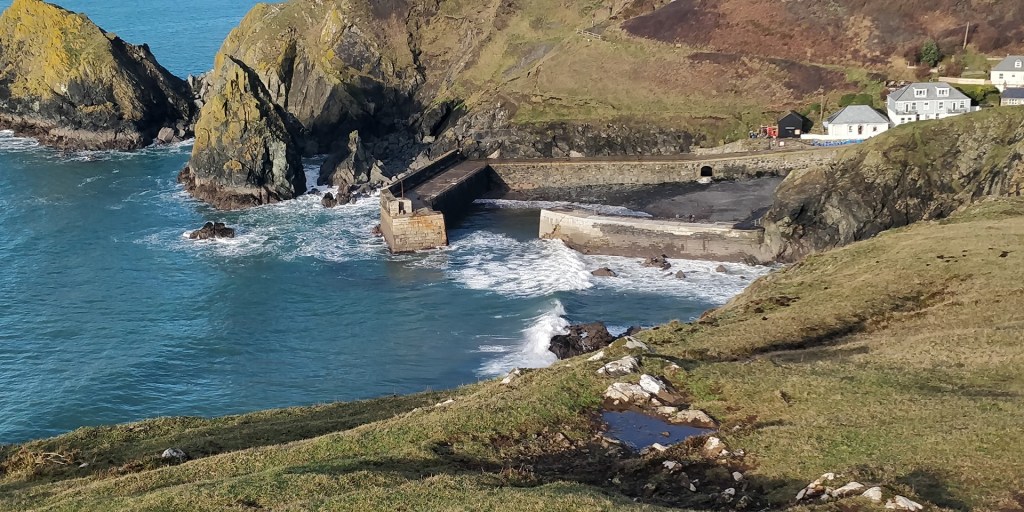
JF: Absolutely there are much less intensively farmed areas around here. Bits of East Cornwall border Devon, and that becomes more intensively farmed, but there’s still not particularly a lot of arable farming down here relatively speaking it’s mostly pasture, so the fields tend to stay smaller. Especially in West Cornwall you have lots of ancient field systems, under half an acre, bounded by dry-stone walls. There’s lots of trees in and around areas of previous mining activities – ground which would have been considered too marginal and has been allowed to run wild over the years. Cores have been discarded on the footpaths that crisscross them over the years. There’s some seedling trees in Cornwall that I estimate to be over 150 years old, which is a considerable age for an apple tree in the UK.
CR: What percentage of what you make is from seedling fruit? 90-95%?
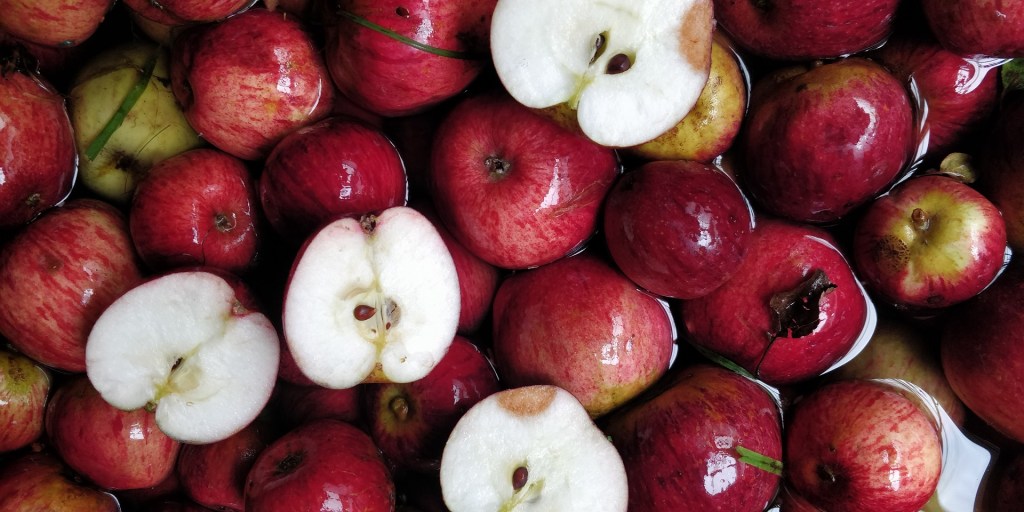
JF: I wish it was! Harvesting this stuff is an utter nightmare. It’s a ludicrous way of running a business. What Albert does at Ross Cider is really nicely set up to make a reasonable quantity of cider and sell it. Making cider from seedling fruit, sometimes it will take me an entire morning to get 30kg of fruit together. It’s completely bonkers. I am starting to get more fruit from other orchards, I don’t have my own grounds, which is partly where the name Vagrant Cider came from. I’m trying to get most of my orchard fruit now from The Lizard. It’s about 50/50 as a percentage at the moment. It’s worth it though, it’s very different flavour profiles.
CR: What’s The Lizard?
JF: Oh sorry, the Lizard is a region in Southern Cornwall. If you think Cornwall looks like a foot, where Land’s End is the toe. The heel is the Lizard. It’s the Southern most tip of the UK sticking out into the English Channel.
CR: Going back to your Fine Art background, your labels are astounding. They’re super eye-catching. Do you make them all yourself?
JF: I do yes. It’s another laborious process. I really like printmaking, using lino prints for the labels. I do the lino cut at a scale of around 400mm square, it then gets photographed and scaled down to fit on a label. But because I’m such a small scale producer, everything is low tech and easy access. I can’t afford to have a professional printer do a print run of 250 labels, so I do it on a laser jet printer at home.
CR: They’re such eye-catching labels. Instantly putting you in the league of James at Little Pomona or Lydia and Tom at Artistraw. Great juice inside, but the presentation is top notch too.
JF: That’s kind of you to say, I’m proud of the little thing I’m building here. My fine art practice has really become the cider business. All the aspects of making cider, from the orcharding and the gathering and pressing of fruit, to the bottling, all of it feels to me now like a fine art practice that scratches an itch which arty people need to scratch.
CR: Absolutely! If not, what’s the alternative? We all go and work in offices for someone else much higher up to make money? You’ve got to lean into these things which bring you joy.
JF: The job which I do to pay the bills and put food on the table is pretty corporate and very office and contract-based, quite combative. So the cidermaking is a welcome alternative to doing that work all the time.
CR: I think that’s where cider and perry-making can fit nicely into different people’s working lives. So we’ve talked about seedling varieties, what about Cornish varieties of cider apples and perry pears, are there any that you use or are on the hunt for?
JF: There’s a few. Cornwall has hardly any pears at all. The perry that I make, I tend to buy fruit in from Kent, specifically Duchesse d’Angouleme, a large old French variety, which I mix with a small amount of crab apple from the North Downs. It flies out. I know of about 8 or 10 wild pear trees in Cornwall which I’m interested to explore. There’s an old walled garden called Prideaux in Padstow which has some ancient Taynton Squash perry pear trees. It’s awesome when I can get to them at the right time and the squirrels haven’t had their fair share already.
CR: You wonder how those trees made their way to Padstow! The village of Taynton in Gloucestershire is about 182 miles away. Who liked that specific variety of perry pear so much to bring it down to Cornwall?
JF: I don’t think anyone knows. My friend Emma is the Head Gardener at Prideaux, and this walled garden is only now just gradually being brought into a state of wonderful production by her. But no-one knows why these perry pear trees were grown here in the first place. It’s anomalous in Cornwall.
CR: On your production style, is it all wild ferment, full juice?
JF: Totally. No sulphites. No added yeasts. All 100% juice. I was listening to the recent episode of Cider Voice, where Adam and Justin talk about their experiences of setting up Three Wells. They’re totally right when it comes to “minimal intervention” – it’s actually more like 85% intervention, cleaning and cleaning and cleaning some more. I’m not at the moment a big fan of barrel-ageing, I’ll probably get shot down in flames for saying that. There are many exceptions of ciders that I enjoy drinking that have been barrel-aged: Tom Oliver’s Out of the Barrel Rooms, with his Rum Barrel-Aged Perry. That was delicious.
CR: This is such a fun, niche rabbit hole to go down when you start to talk about barrel-ageing perry. You’re lucky if you find perry on the bottle shop shelf, let alone one that’s been barrel-aged, and one that’s been done in a rum cask! So mostly in plastic and stainless steel for you?
JF: Yes, that’s right, I tend to mostly use those big blue plastic barrels as they’re cheap, easy to keep clean, to store.
CR: Blue oak!
JF: Ha quite! My batches are small. I made just over 3000 litres in total last year.
CR: Will that see you comfortably over to the next harvest?
JF: No, things run out alarmingly quick. I can’t make enough. There’re various things about the operation I need to change. I can’t get a vehicle to the building in which I make the cider. Everything has to be hauled up a hill by hand to get into the cidery. I have personally and physically reached the limit of what I can make at the moment so I’m going to have to look for a different premises where I can get a vehicle nice and close.
CR: Sounds like you need a shire horse!
JF: That’s on the cards. My wife has grown up with horses her entire life and we’ve been looking at pit ponies and carts as an option.
CR: It would fit in with the Cornish aesthetic for sure!
JF: It would make us even more sustainable. Our electricity all comes from a water turbine. We reuse all our bottles. The horse and cart is the logical next step!
CR: I found your bottles on DrinkFinder, but I had heard of you for a couple of years beforehand. You sit in this lovely bracket of cidermakers who I absolutely want to try everything you make, but I can’t always find it online. Are there any other shops that our readers can purchase your wares from?
JF: No, sadly no. I’m struggling a bit with that. I’d really like to expand the range of places that stock our bottles. I’d love to be on Cat In The Glass and a few more online bottle shops. I’d be really keen to grow online. I’m in a restaurant too, but that’s it really.
CR: Is dry cider an easy sell in Cornwall or do you need to contexualise it for potential customers?
JF: I’m not sure. There’s a massive following for Healeys, on the industrial cider front around here, similar to how it must be for Bulmers in Herefordshire. How popular dry cider is in Cornwall, I’m not sure. There’s still a propensity for folk to go for cheap, sweeter cider, I think.
CR: But without producers like you in Cornwall, in people’s local environment, they don’t get the chance to try it. People don’t just stumble upon Cat In The Glass or Aeble with their online shop. They go there because they’ve already got a taste for it. It’s so important to have producers in every county that are making this style of dry, fruit-forward cider, that can build up an offline fanbase in each area.
JF: It can feel a bit like waving a little flag in the wilderness. You must feel the same where you are in Norfolk? You’ve got Aspalls nearby right? Major, semi-industrial producers.
CR: I feel quite lucky really. I’ve got Whin Hill down the road in one direction, and Marshland Cider down the road in another direction. They’re both producing amazing medium and dry, full juice ciders (amongst a range of other things). You’ve got to be the change you want to see, and I think you’re doing that down in Cornwall.
JF: Well thank you, that’s appreciated.
* * *
Onto the reviews of the bottles.
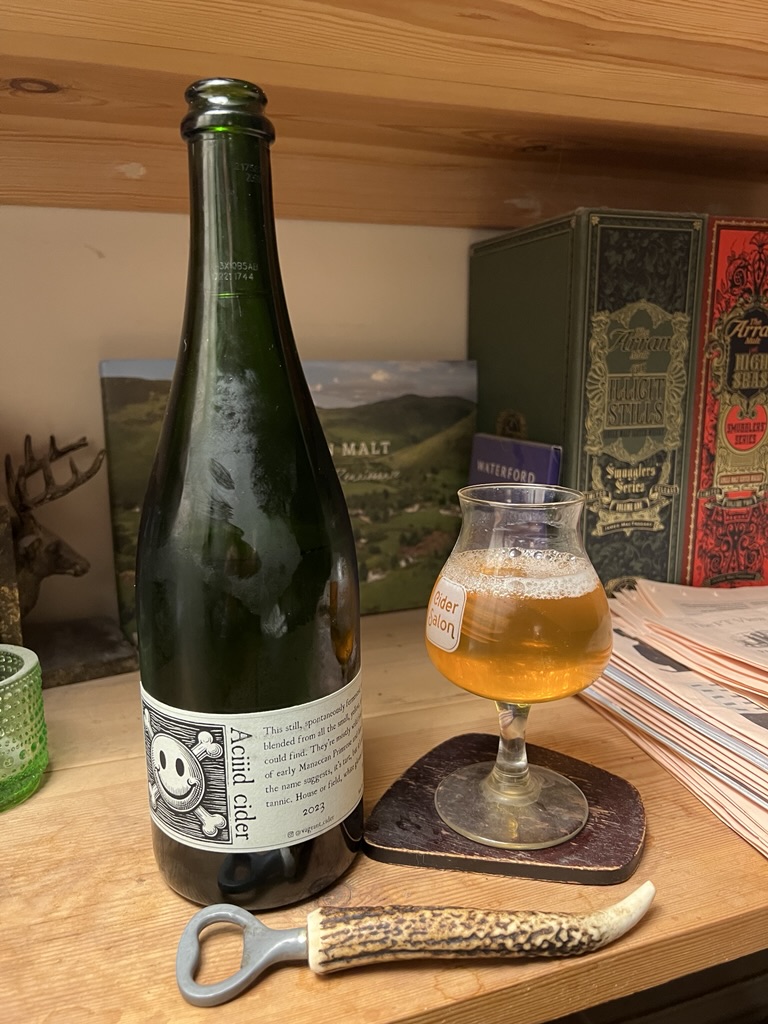
Vagrant Cider, Aciid 2023 – review
How I served: A day in the fridge, followed by 30 mins to wake up to room temperature.
Appearance: Clear, brassy, completely still, with a mousse of largish bubbles that sits around the rim of the liquid. Tungsten street-lamp glow to the juice in the glass.
On the nose: It’s giving hints of russeted apple skin and ginger peel. I feel a bit of the Dufflin aroma is seeming familiar, but I can’t quite put my finger on it from which particular cider. It smells like autumnal hedges on the edge of a field. A delicate rosehip tea note coming through as the glass warms in my hand.
In the mouth: What starts as a seemingly gentle approach, within seconds reveals brilliant body and depth! This is a bone dry cider with the acidity and soft tannins out in force. It’s a sensory experience this – both palate cleansing via the lime juice-esque acid, whilst also tannin depositing on every tooth in your mouth. I’ve never done a shot of tequila followed by a glug from a mug of Assam tea, but I imagine the experience would be similar. This would go sooooo well with fish!
In a nutshell: When Acid met Tannin. Give me malic acid and Cornish fields of gold! Big, bold, and beautiful.
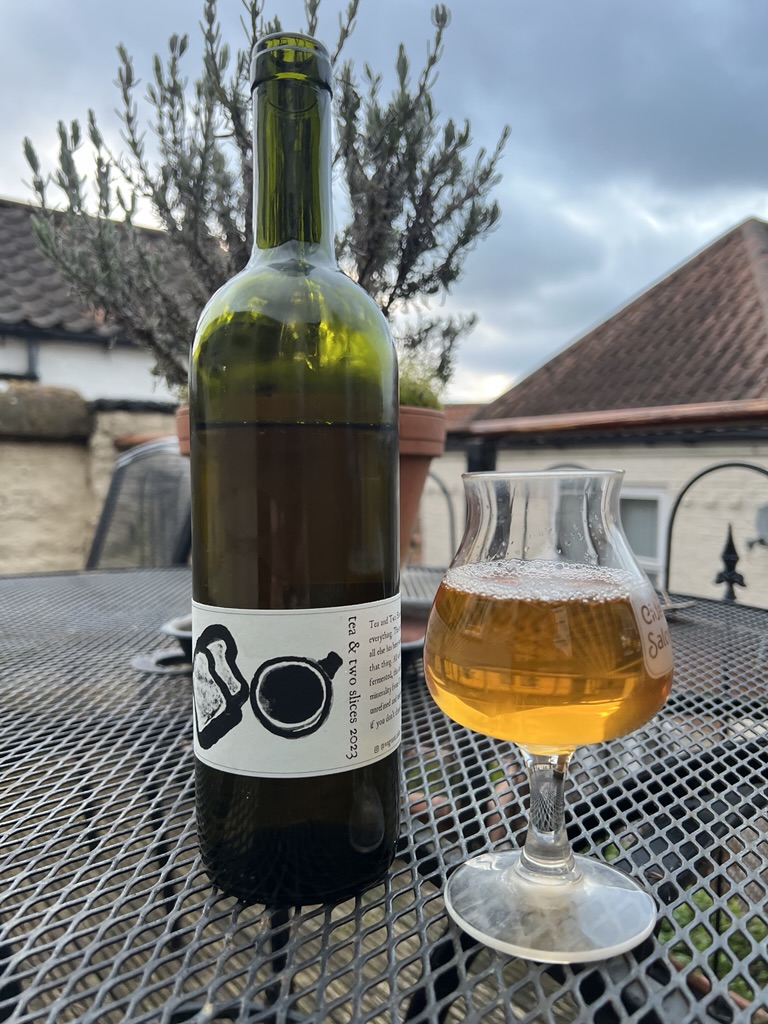
Vagrant Cider, Tea & Two Slices 2023 – review
How I served: Day in the fridge and then 15mins out in a warm kitchen as I was cooking Sunday Roast.
Appearance: Crystal clear clarity, not a sign of effervescence anywhere in the liquid. Brassy gold. From the wine bottle with the cork and wax presentation, I’m getting Deutsche Apfelwein vibes.
On the nose: Orchard floor at the end of harvest, coupled with that apple chewit note from Apple-flavoured gummy confectionary. It smells like there’s going to be malic acid, but that could just be the mins playing tricks after the bottle of Aciid the other day. A petrichor note, orchard floor fresh after the rain. As it warms, a bit of slightly underripe nectarine and strawberry.
In the mouth: Minerality to the max! As Chris George from Cork & Crown says so often in his reviews of ciders on YouTube, it’s like picking a flint pebble from the stream and giving it a good old lick. Or maybe a wet, slate tile if that’s your thing. Good juicy body, with some lingering acidity. And again, a fair thwack of tannin and astringency to this liquid. If I had to associate an apple colour here with the flavour, I’d go yellow – a Hagloe Crab or ripe Golden Noble Apple (but we know from the label this is all a mixture of everything left at the end of portioning liquid into barrels). At 6.5% it carries these flavours well. Pair it with cheese, crackers, and chutney on a bracing walk in Springtime and you won’t go far wrong!
In a nutshell: Idiosyncratic, wild ferment, quintessentially Cornish, still, dry cider!
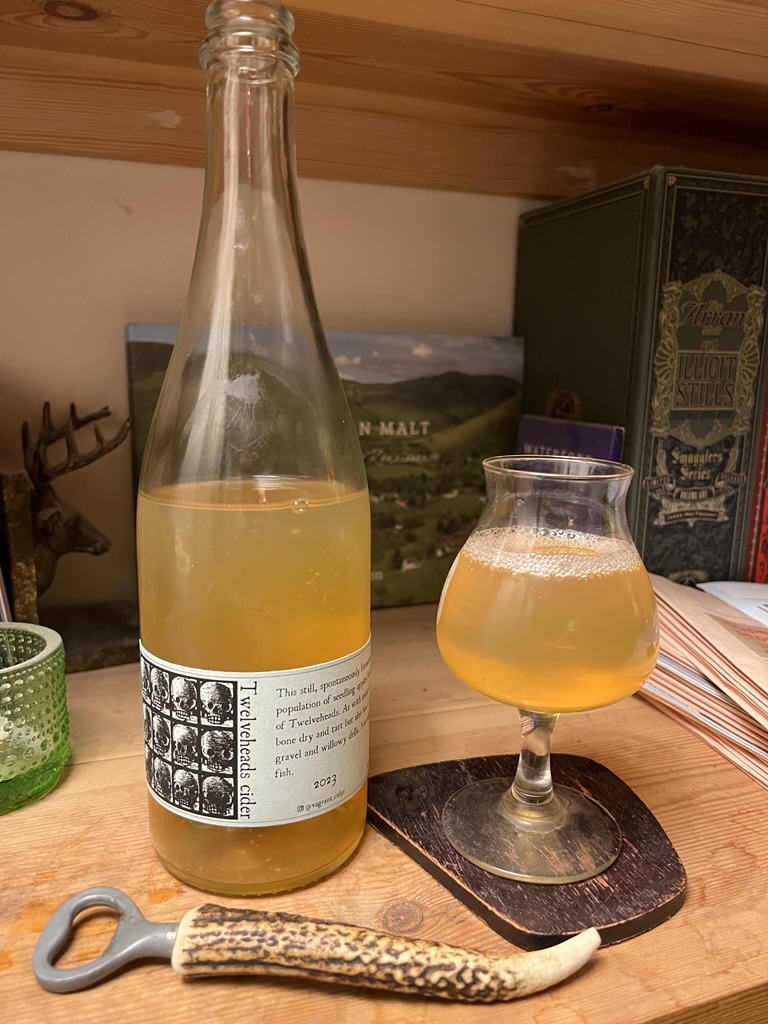
Vagrant Cider, Twelveheads Cider 2023 – review
How I served: Day in the fridge, half an hour warming up in the flat.
Appearance: Mild haze, with a peach hue to the liquid. There was a slight hiss when the cap was popped, but it does appear to be completely still in the glass. A mousse around the rim of the glass, with some big bubbles that refuse to pop.
On the nose: Russeted apple, a fleeting similarity to the nose from Moorcroft perry pears for a short glimmer of time. Something green vegetal as well – when you snap a celery stick in two, that brief aroma. Kiwi skin. Whatever the parentage of these twelve seedling apple trees used for the cider, they impart a very unique, fleeting aroma.
In the mouth: There’s that tooth-coating tannin again, it’s big and bold. I experienced a similar thing recently with a perry from Temple Cider. It’s very pleasant when you really lean into the sensory experiences higher tannin drinks can bring. Something quite greengage jammy about this underneath the tannin. Bone dry and at 7.5% abv. Long finish to each sip. I’m looking for the whisper of smokiness the label describes, it’s there, but more cold smoked, like they do in smoking huts with cuts of meat and fish. That’s something I’ve never picked up on with a cider before, particularly one fermented and aged in plastic. These apples are wild!
In a nutshell: Life is richer for ciders like this. Off the beaten track when it comes to using seedling varietals, this unique Cornish cider will take you on a flavoursome journey down the lesser walked path.
Conclusion
I love that I live in a time when these kinds of bottles can wing their way from Cornwall to my doorstep. I understand that DrinkFinder is due a nice restock of James’ bottles soon, so if the offerings look sparse at the moment, wait it out a few weeks and there will be more to find I’m sure. Would I give these ciders to anyone just getting into full juice, wild ferment, large format bottled cider? Quite possibly the Twelveheads. The Aciid and the Tea & Two Slices are wonderfully idiosyncratic and right up my street when I’m looking for those acidic and tannic flavours to really be brought to the fore. But for an absolute beginner they might be just a little bold I admit. What is the point of it all if we don’t get to experience now taste sensations that challenge our palette and let it grow and develop however?
That the fruit from these seedling trees has found a home in James’ cidery is a wonderful thing. There’s cross-pollination across the Atlantic at play with what Andy is doing. And then hopefully within Cornwall and further afield, what James is doing with this fruit will inspire another generation of curious cider and perry-makers with a mission to showcase their local seedling fruit. The real breadcrumbs treasure trail moment for me in the conversation were those Taynton Squash perry pears in the walled garden at Prideaux. If any of our readers know how they came to be there, I’d love to find out more, and to also visit the garden to see how it’s being brought back to life. I’m a sucker for a walled garden. As I type these final words of the article, I can only profess how happy I am that Vagrant Cider has found its way to me at the start of 2025. I look forward to trying lots more of their releases in the years to come.
Discover more from Cider Review
Subscribe to get the latest posts sent to your email.
 Cider Review
I find the DIY, almost guerilla approach super inspiring in how it shows you don’t need access to traditional orchard fruit to create something interesting. As a Cirencester resident I feel like I need to get out and find these seedling pears now!
LikeLiked by 1 person
Heya Mitch, couldn’t agree more! You never know what you’ll get with these seedling varieties. One thing seems certain, they’ll be hardy things to have competed with everything else that 21st century life throws at them. Good luck on your seedling pear hunt ☺️
LikeLike