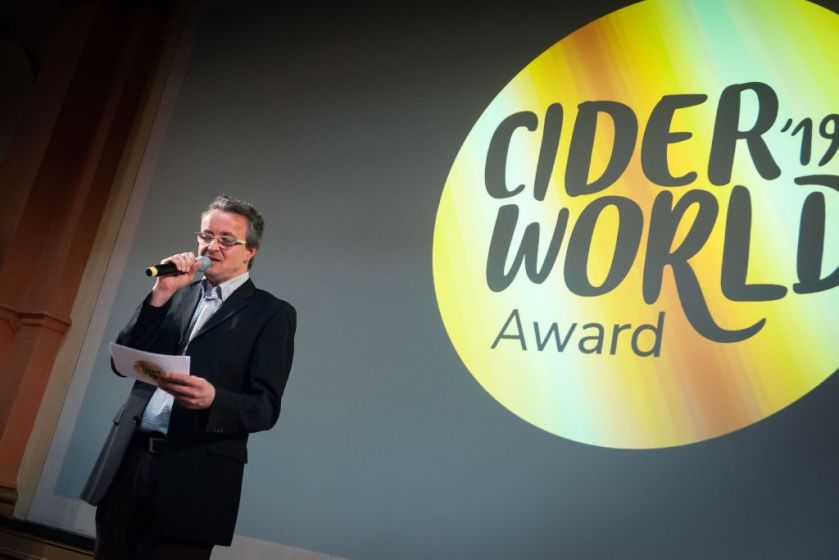
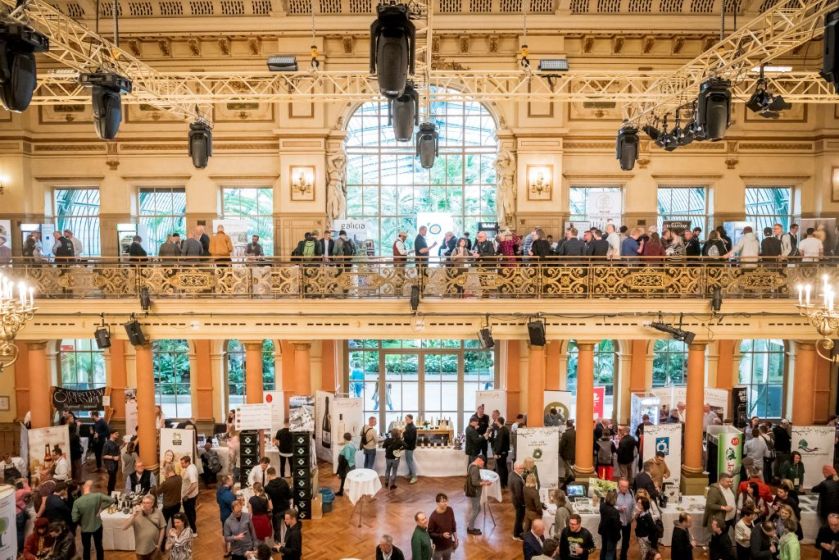
Unless you’ve been living under a rock for most of the past decade, if you have any interest in the European cider scene in general, you’ve probably at least heard of CiderWorld. Held each year towards the end of April, it is the biggest cider trade show and awards in Europe. Last year Adam did a huge blitz through tasting notes he took at his first CiderWorld visit last year, and that was just a drop in the cider ocean that you’ll find there.
I have attended the past two years, though was dismally bad at keeping notes, but since then it was on my wish list to get an interview with Michael Stöckl, the brains behind the whole thing. We’d shaken hands a couple of times, and the topic of an interview was broached in person last year. Finally, in the middle of January this year, we sat down in a Teams call and chatted for an hour-and-a-quarter. I recorded that call with transcription, and the result was 14,600 words in German. But don’t get scared! Here I present our chat in a translated and shortened form, with the mmmms and laughter removed, and a whole chunk cut out where we went off on a ping-pong back and forth about Austrian pears, ciders, and other weird and wonderful stuff, that might have been hard to follow as text (and difficult to translate!). Just for conciseness, you know.
However, this is still a long one, so maybe make a cup of tea or coffee, or open a nice bottle of cider or perry, and settle back for a nice long read. On the way you will learn about how CiderWorld got started, why the Awards are designed the way they are, the awards that existed before it got more formalised, how the attitudes of traditional makers are hard to change but younger Apfelwein makers are opening things up, how sometimes nature protection can go a bit too far, and much more besides.
So, sitting comfortably? Let’s meet Michael.
* * *
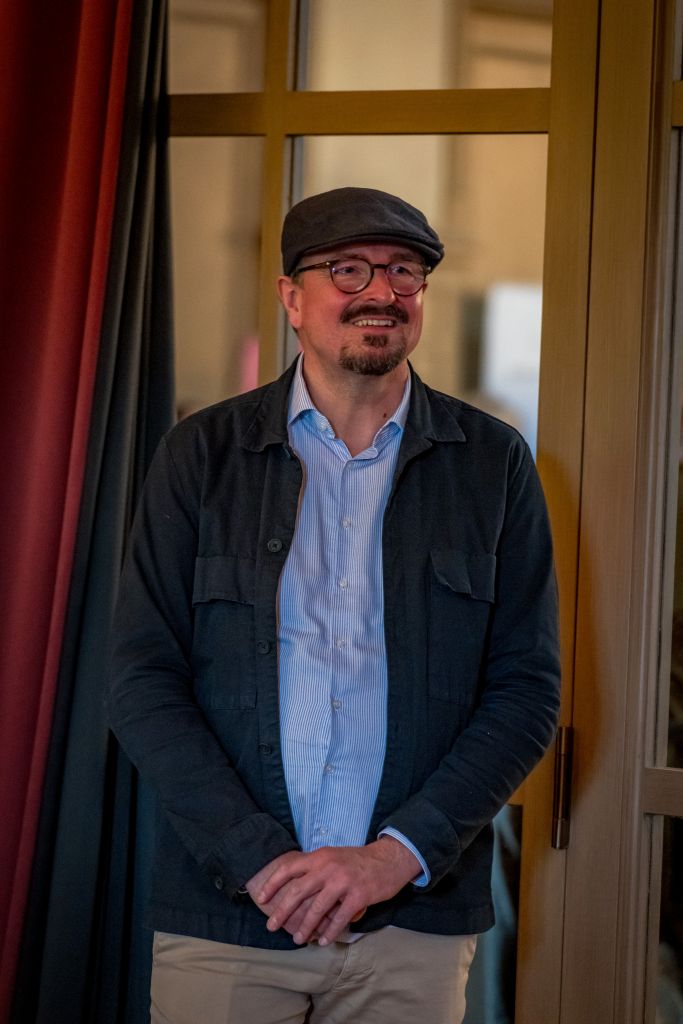
Cider Review: Michael, thank you for taking the time to have chat. Normally I’d simply ask an interviewee to introduce themselves and how they got started into cider, but with you it might be quite a long and complex tale! But let’s start at the beginning with your personal cider background.
Michael Stöckl: Yes, I’m in gastronomy and am a sommelier by background. I did a classic gastronomy apprenticeship in a restaurant, worked in Michelin-starred restaurants, as deputy sommelier at the Schwarzer Hahn in the Deidesheimer Hof, for example. I also worked at a winery, so basically, I started out in the wine and gastronomy branch at the beginning of the 1990s.
During my work as a sommelier, I was involved in the emerging cider revolution in Hesse and worked with Jörg Stier, Jürgen Krenzer and Jürgen Schuch, for example. At that time, I created an Apfelwein menu for my father’s restaurant, which I thought was kind of funny. I was working somewhere else at the time, but I helped him a bit in the wine cellar, and we started doing cider menus and had different producers on the menu at once. That was completely new at the time.
The first cider evenings, as we called them, so menu evenings with accompanying food and drinks, those were the first things that went on. I think the first cider evening was with Jörg Stier that we organised in the Landsteiner Mühle – that was the name of my parents’ inn, which I later took over.
CR: Ah, I had read somewhere that it was your grandfather began that restaurant, but it was actually your parents…
MS: Yes, with my father. But both my grandparents were involved with apples, and my great-grandfather. He lived in South Tyrol and had a vineyard there in South Tyrol, a huge vineyard and orchard, so one half of my family comes from Tyrol, the other half is from Kronberg in the Taunus, near Frankfurt. And my grandmother, who came from an old cidery with a 1000-seat Apfelwein garden, and I don’t know how many barrels of Apfelwein in the cellar. In the 1920s even the Posssmann company bought cider from my great-grandfather.
CR: Oh wow, that’s quite some history!
MS: Yes, it was all very close together, so that means apples and Apfelwein are in my blood, so it’s genetic. Then I developed this scene from the beginning of the 90s. I became a sommelier in wine but I always did it parallel, wine and cider together, and at some point, after I did my sommelier training, in 2000, 2001, when I became an IHK-certified sommelier, I immersed myself a little more in the Apfelwein scene in Hesse. Then also internationally, but more in Hesse. I went to various events and symposia and as a sommelier I always had my opinion on what Apfelwein actually is, classic or traditional and perhaps how it could develop further.
Then there was an Apfelwein day in the Odenwald. The German Press Agency was there too, and they then found, with my somewhat heretical and polemical things that I once let loose in terms of Bembel, Gerippte and Apfelwein culture, back then in my young madness, that I was then dubbed Germany’s first cider sommelier by them.
CR: Yes, I read about that and found it very entertaining! So the first German cider sommelier, but when was that, it was some time ago?
MS: That was around 2002.
CR: So back then, was Apfelwein considered an old-fashioned drink, just something old men drank? At least that was my experience even recently with Most here in Baden-Württemberg.
MS: Yes, at that time, Apfelwein sales and turnover were in a total slump. In the 90s, that was the time after the Heinz Schenk TV programme, Zum Blauen Bock, which was still around in the 80s, and then we had Kelterer Höhlen and Possmann, who sold cider like crazy all over the country, because many people in Germany drank it back then.
Even outside of Hesse, and with the advertising platform provided by this Heinz Schenk zum Blauen Bock show, which was advertising cider once a month on Saturday evenings, even then, when there seemed to really be a lot of it, sales actually went down as well.
So that was a crisis for Apfelwein. Then, of course, things like wheat beer or Pinot Grigio found their way into the beer gardens, even in Hesse, so people were drinking less Apfelwein, even in the home territory. At some point it was just totally out of fashion to drink Apfelwein – then the bembel, the geripptes and the Apfelwein pubs just for all the old men.
The food in the local pubs was just ok at the time, and then a few restaurateurs and winemakers set out to create new things. Jürgen Krenzer with the apple sherry or the idea of a single variety Apfelwein was discovered again. That’s what single-variety Apfelwein is all about. It all started in the 1990s, although single-variety cider is nothing new. It already existed in Hesse in the 19th century, just like sparkling Apfelwein. The oldest sparkling wine cellar in Germany is not a winery with sparkling wine, but a cidery with an Apfelwein!
CR: Indeed! Sure in England the first sparkling wines in the world were ciders!
MS: Yes, and that was mostly already lost by the Second World War – this tradition had already been lost during the First World War.
There were huge cideries that even exported to England and sold Apfelwein as German cider in the USA. And these large cideries went bankrupt when Apfelwein production was banned in Germany during the First World War and never really got back on their feet. It then became smaller and smaller. In other words, there were only these small cider houses in the form of these cider taverns, some of which still exist in Frankfurt. That was more like the 1920s.
And then, during the Second World War, everything was set to zero, but then a new culture developed. But things like single-variety Apfelwein, apple dessert wines, whatever existed 100 years ago, that was all forgotten. They just went for mass production; they just produced a cheap pint of cider to serve the people.
CR: I read a report from 1903 by the American Department of Agriculture, where the author had travelled around Europe to observe the cidermaking situation in England, France and Germany. At that time, Frankfurt was the most advanced in the world, so they referred to the cideries as cider factories because they were so big, really modern compared to England and France where it was more agricultural at the time. That’s very interesting.
MS: Right, exactly. We left those days with the First World War. Those cideries no longer existed after that.

CR: We’ve have lost a lot of things over the years. But when it comes to the new generations, you mentioned people were coming up with different kinds of creations, better food, more offerings for their customers, and I guess you were one of the forerunners of this trend. You were one of the first here to create a cider menu in a restaurant with cider pairing with food. But how was that received at the time?
MS: Yes, people were very interested, so we had quite good success with it. I even took over the pub from my father at the beginning of the 2000s, and then sometime around 2005 I renamed it as an Apfelwein Restaurant. In other words, we always had one or two cider recommendations with every meal. But a la carte, so not just set menus, but multi-course menus, but you could really just order it as you wished and then we just sold cider like crazy. Also for the guests at home, as we sold things by the bottle. I think at some point I had 100 items on the menu with different ciders at the end, and that was very exciting and then more and more international ones were added.
That was the initial spark. At the time, I was working with Dieter Walz, Apfelwalzer was his product, but it no longer exists, he has retired. But he made a sensational sparkling apple wine in the Odenwald. He’s still alive, he’s almost 80 now I think, somewhere between 70 and 80. But back then, he was invited to Spain, to the Sicer. The Sicer was the very first cider fair that ever took place in Europe. That was 2007, and he asked me to represent his product there because he couldn’t make it himself.
And so it was at this event I came into contact with 64 exhibitors from I don’t know how many countries, and I got to know the most exciting thing for the first time in my life: ice cider. I didn’t even know that existed, yes, Cidre de Glace. There were people from Canada, and we didn’t believe that it was even possible to press frozen apples and so on. They told us about it, and I said I can’t believe you, so they said, why don’t you come and have a look? So in December 2007 we, Andreas Schneider and I, actually flew to Canada to go on a little tour of this cider world in Quebec with Stuart Pigott, the wine author. Unfortunately, Stuart got stuck in a snowstorm, so Andreas and I had to do it alone, and there we met the inventor, Christian Barthomeuf from Cidre de Glace and a few other cideries. We were so enthusiastic about the subject that on the flight back we said we had to bring this kind of cider to Frankfurt and that’s when the idea was born that we should organise something in Frankfurt.
Well, then it was Christmas business at the restaurant. Then it was January, February… Andreas was pruning the fruit trees, I was putting together my summer programme for the catering trade and at some point, it just so happened that Dr. Petra Roth, the Mayor of Frankfurt, wanted to talk to us, to ask us if we would like to organise an Apfelwein festival in Frankfurt. Or rather, she asked if we could help with the existing Apfelwein festival, which was called the Stöffchefest at the time. She was looking for help as she didn’t like the festival anymore. It was considered old-fashioned and not nice at all, and was held at the Römer in Frankfurt [the town hall in Frankfurt] and she wanted it to be a bit nicer, and asked if we had any ideas?
We said, well, we don’t want to tell Frankfurt makers how they should organise an Apfelwein festival. We had another idea, yes, well, that’s madness, if you don’t want to advise them yourself, then you can forget it, so then we said to Mrs Roth, no, we have something else in the drawer.
We had a concept and asked her for an appointment at her office in Römer. We went and suggested the idea of a cider fair in the hall in Römer and she immediately said yes, she would support it and would be happy to be a patron. That was September 2008, and our first fair was held in March 2009.
CR: Ah, so 2009 was the first one. I had read of this Apfelwein im Römer fair…
MS: Yes, it was called Apfelwein im Römer until 2013, and in 2009 I think we had 27 exhibitors from all over Germany and one from Normandy, that was Eric Bordelet.
[a brief pause here as I make appreciative noises and we both laugh]
Andreas had already known him well back then, we were good friends, and I had already listed his products in my restaurant for a long time. He said he’d come round and help a bit, and he was just so keen. So he helped carry tables and anything that needed help. That was really sweet, and that’s how it all started.
But in 2013 the new Mayor, Peter Feldmann, came in and raised the prices for the event space in the Römer so much that we had to close the trade fair. It was no longer financially feasible. That was already our main business, everything was like that, in addition to Andreas‘ fruit farm and my catering, we did it in winter, when there is time, so January, February, March, we prepared it and we have all the time, while the ciders are fermenting in Andreas’ cellar and I had nothing going on in the catering or in the country, it all only really starts again at Easter.
Yes, so then we moved to the Gesellschaftshaus in Palmengarten [in the botanic gardens] in 2014. In 2016 Andreas and I went our separate ways, but I continued it as CiderWorld, because at some point we could no longer keep the term Apfelwein Weltweit [apple wine world-wide], which was what we called it when we moved to the Gesellschaftshaus. It had become so international that you couldn’t advertise abroad with Apfelwein Weltweit. It simply wasn’t possible.
CR: From a marketing perspective I supposed it was much better to use the word cider as an international term. I anyway consider Apfelwein to be a regional variant of cider…
MS: Yes, yes, and a French person understands that because cider and cidre sounds so similar and it’s similar with sidra and cider. But Apfelwein, it’s simply the case that Apfelwein is actually mainly called that in the Rhine-Main region around Frankfurt. In the Moselle it’s called Viez, in southern Germany it’s Most, also in Austria or Switzerland. In other words, the term Apfelwein is actually used more for central Germany, so it was very local.
Of course, we knew that if we renamed it, we’d get into real trouble in Frankfurt. So all the Apfelwein makers, but also the consumers, said no, we’re not even going there, what are they doing with our cider fair, they can’t just rename it to English!
But we always kept the claim “CiderWorld – Frankfurter Apfelwein Messe” until around that time, but that didn’t work at all, but anyway, we’re still there, the fair still exists and they still come to taste it, even the ones who really shouted.
But that’s the way it is, one just has to dare. That was in 2017. We then added the awards in 2018. We developed it together with Hochschule Geisenheim University and the Weinräte agency. That was because we needed someone to help us a bit with all the results stuff and so on. So how do we get the analyses and so on? And that’s where my friend helped me, with his agency in Geisenheim, and it worked really well in 2018 We had something like, I don’t know about 100 submissions right away, or 120, I’d have to look it up.
It worked well, we immediately had an international jury and the special thing about the CiderWorld Award is that we don’t have that many categories. So we don’t have classic German, classic English, classic French, Breton cider, and all that, but we have sparkling, still, sweet, mixed, non-alcohol and spirits.
We just said no, we’d rather do it in such a way that we have people sitting at the respective tasting tables who are familiar with the things that are typical of each country. So we have one table that takes Sidra, one table takes Cidre from Normandy and then there are French people at the table or Spanish or English people, because they know it best. If we’re supposed to rate Spanish sidra in Hesse, it doesn’t work here.
CR: Yeah, it can be difficult to evaluate some ciders unless you are familiar with the style or have been trained.
MS: And so it works well, and it’s also interesting that, for example, the products that win here are also at the top of other awards, or where products that don’t do so well here also have a similar ranking in other awards. So the scale and everything works, and that’s why we’ve done it right. And since we worked together with Geisenheim for the awards, the special thing is that they analyse it. No other award does that to the extent that we actually put every product we receive into the laboratory.
CR: So they are measuring sulphite levels, residual sugar, alcohol…
MS: Yes, that’s right, especially a few important value limits, for example alcohol is important because the alcohol information on the label often doesn’t match the actual information. That has a legal function and we just don’t want that anything can go wrong.
CR: At least there you have a half percent to play with each way on the label…
MS: It’s also a problem with the jury, because we specify how much alcohol the wine has and what if the label says 6.5%, but in reality, it has 9 or 8%? It can happen.
CR: What? So much of a discrepancy?
MS: Yes, and then as a judge you think OK, he’s got six and a half, Then it has to feel like this or like that. And then maybe it tastes much better, because alcohol is of course a flavour carrier, it makes the body more voluminous, and if it has 2 percent more than expected or indicated, then of course you rate it differently and that’s not fair. That’s why, for the sake of fairness, we’ve given this analysis in advance.
CR: Ok, so expectations are not set completely differently. I’m all for total transparency.
Then there are also things that are difficult, such as SO2. So we have some things that are over-sulphited, and we always have to disqualify these products if they exceed a certain limit. We take them out of the classification and tell people that they have to do something.
Also total acidity. In the wine law, a product with less than 3 grams of total acidity is no longer sellable, so we check everything so that the press can’t say afterwards what nonsense you’ve been up to.
So that’s the award and we now always have around 180 to 200 submissions. That’s also what we can manage.
CR: It’s funny, I always thought it had existed longer, at least it feels like it has been around for a long time! So 2018 was the first time for the Award, so this will be the eighth year of it?
MS: The eighth, yes. But there was an award before that. It was called Pomme D’Or in Frankfurt, but it was run by a different organisation. And they were a bit of a link, yes, they started at the same time as our fair, Apfelwein am Römer, and at some point around 2011, the Pomme D’Or suddenly landed on us.
Initially they did it in the autumn, but suddenly it was on the same weekend as our Apfelwein am Römer event. And then, of course, they looked at our list of exhibitors, wrote to everyone and said they were organising a menu evening with an awards ceremony and all that, and Andreas and I almost lost our minds
CR: Oh! That’s feels like a bit of an asshole move…
MS: Yes, I mean, we didn’t think it [a competition] was possible. We didn’t want to do it back then. It was too much work for us at the time as it was our sideline. But it really caused us problems, and the award was so bad – no transparency, no clear criteria, it was kind of weird.
They tried to sell as many of these menu tickets as possible to make money, and so they gave all sorts of prizes, along the lines of filling the room where they were doing the paid menu, so at some point I said to the man who did it, ‘I’d like to take part in it to get a bit more control over the thing’. Of course that wasn’t possible, because he had his own ideas, but he then took my suggestions, but they didn’t materialise very well. He made it worse, as they say in German [the word he used was Verschlimmbessert, which I cannot directly translate!].
And then in 2017 it got so bad that we said enough is enough, now we’re making our own award. So his award was dead, and we made the Römerhalle the place for the new awards.
CR: But this time doing it right?
MS: Yes, and that’s why we’re so strict about it, because everyone in the Apfelwein scene said at the time, what a funny thing this Pomme D’Or is. Those who got a golden Pomme D’Or were happy of course, they didn’t care, they just wanted the label. You still see it on websites from time to time, people still use it. But the last Pomme D’Or award was in 2017.
So, that’s the story of the award and since we were already working with the University of Geisenheim, we said okay, we need a Cider Academy, a kind of training course for, let’s say, start-ups, career changers or people who take over a cidery from their father but have never learnt the craft of cidermaking, and they get a crash course.
CR: But that runs separately to CiderWorld and the awards, other than the fact that there are some presentations and exams taking place on the same days at the same location, otherwise it runs as a normal training course at Geisenheim?
MS: Yes, exactly. It has little to do with CiderWorld as such, we help them a bit with advertising and so on. We are part of the venture, but I don’t give any lectures there.
CR: Ah OK. So it’s not part of your organisation, so to say, but you assist with it.
MS: We help out a bit. My aim is always to put as many pieces of the mosaic on the picture as possible, to put together a puzzle. What is cider, what can it all be, and what is its path?
CR: Of course, because you also have a CiderWorld cider week…
MS: We have CiderWorld, the CiderWorld Award, and then CiderWorld Shop is still being added, then the other things that I still do on the side and always try to do as much as possible. But it’s always in the same direction, whether it’s further development, that a transfer of knowledge takes place. That’s also so great at CiderWorld when people can exchange ideas, and this year we are doing CiderWorld Forum for the first time.
CR: Ah, I read about this just this morning, in a mail sent out from CiderWorld. I’m really happy there’s more being added to it, as I always thought one day feels very short, or at least the EXPO as a trade show feels short as there’s so much to cover. But last year was interesting as you also had masterclasses with Gabe Cook, Hilker and Schmitt and so. And other things going on, like the Cider Academy and the ACA Certified Pommelier exam, which I sat just before the Expo began, and thankfully passed. But with so much to see, and so many people to talk to, and the networking being really important to me, it just feels short. So this Forum idea sounds like a great addition. What can we expect from it?
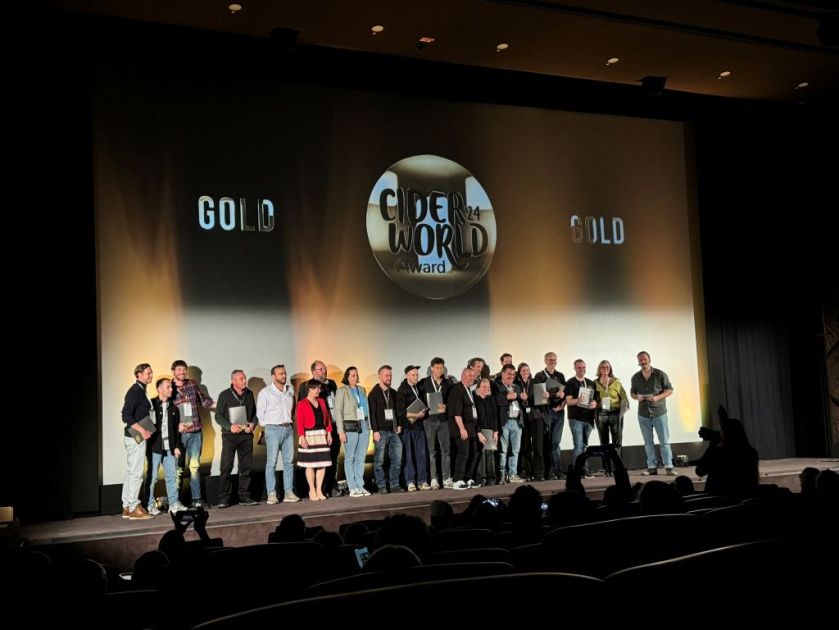
MS: Yes, we want to organise 3 presentations on the Friday before the Expo. The whole thing will take place in the cinema where we’re also holding the awards ceremony, which is really practical because we already have everything there. The technology, the screens, everything is already there in the cinema, so it’s easy to work there.
CR: And it has a very nice ambience.
MS: A very nice ambience. We did the preview tasting for the first time last year, before the awards ceremony. I think you were there too, at the Friday event?
CR: I didn’t attend the preview tasting, but I was there for the awards and after-drinks.
MS: Yes, exactly. We preview drinks in 2018 at the very first Awards, so we’ve done something like that before, but it was very, very awkward so we stopped. But in the cinema, we simply put the bottles on the bar tables and so on, and now you can try everything that was submitted to the awards.
So it’s really only the products that were submitted for the Awards, but at the Expo there are even more products that haven’t been submitted, or from producers that weren’t in the awards, and it was such a brilliant event that we said okay, now we’re adding the forum with the aim of perhaps eventually organising a really big forum that might last several days or, I don’t know, that it might grow… So those are the goals, at some point it was be CiderWorld with the Award, then it would be Forum and CiderWeek, so we’ll have to see whether we can merge them or whether individual events will appeal to other target groups.
My aim with CiderWorld is also to appeal more and more to these sectors, that is the retailers, the restaurateurs, so that they can no longer get past it. Networking with each other, but also with the outside world. And it’s such a difficult topic, you know that yourself, that cider is a niche, and here in Germany, when it comes to Apfelwein/cider, and it’s growing. But if it continues to grow at this level, it will take a while before it gets really big. It doesn’t have to, there aren’t enough apples and pears and so on for everything you would need. But the point is the reputation should always be there. But more and more sommeliers like Hilker and Schmitt and others are opening up to the subject, and wine merchants are starting to buy things, which is exciting.
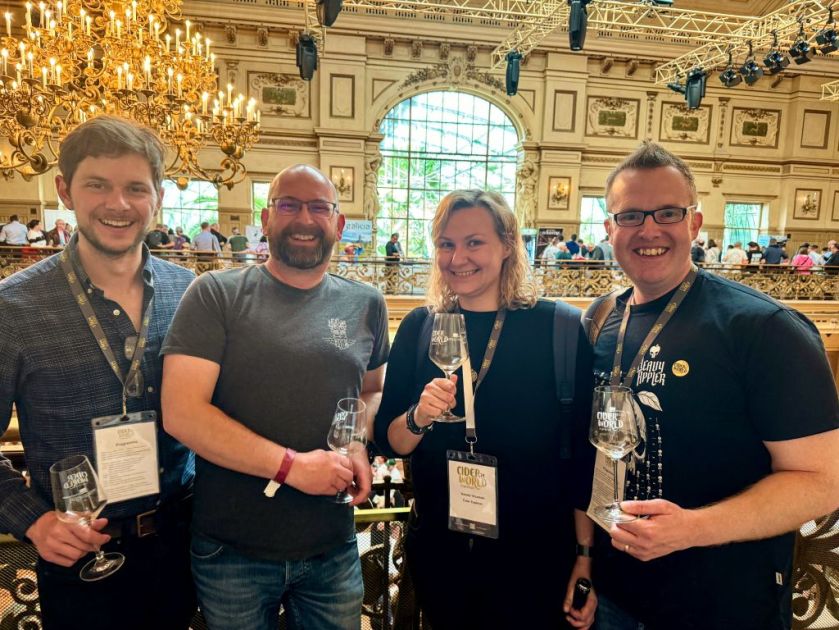
CR: Yeah, you can see sommeliers taking notice, Hilker and Schmitt in particular here in Germany. I was interviewed by a famous German wine podcaster, Christoph Raffelt on his Originalverkorkt-Podcast podcast last year, and that resulted in a group of wine lovers from the Weinstraße booking a tasting with me. That was really interesting to listen to them talk about the ciders and perries in the same way they’d talk about wine, and comparing them to wines they knew. And then they bought a shit-load of perry, so that was even better!
I suppose you went a different way as Apfelwein was already in your blood, and then you became a sommelier but returned to Apfelwein…
But yeah, it’s interesting how your work is constantly growing, and you manage all these different events. I have to ask, are you still active in gastronomy?
MS: Well, I closed my restaurant in 2017. That was the time I joined CiderWorld full time, so to speak. We founded a new company after Andreas left – we organised our last event together in 2016, Andreas Schneider and me. And then I founded the new company with Christine, who had been our employee until then, and then I joined full time and do everything around events, I don’t know, I’m more in the event business now.
I also help out at the Grüne Soße [Green Sauce] Festival in Frankfurt, which is another job I do. With CiderWorld it’s still a bit tight, we don’t earn that much money with it, but it’s enough for me in my life, but there are many, many things that we just add to it now. I’m also a consultant for other brands and so on…
CR: Ok, so you’ve built this structure that you can use to assist with other events that in turn supports your own activities in promoting cider. Clever.
MS: Yes, that’s it. All of these building blocks, like the Forum, are now being added, as we are simply trying things out so that it remains interesting. What is also important is that when a cidery from Sweden travels here, for example to CiderWorld, they can’t immediately expect someone to say great, I will now order 2 pallets from you every month for the next 10 years. That’s difficult.
CR: I can relate. I’m relatively local, and for me is it also difficult.
MS: The greatest interest is actually the network, the community, which is important for the young cidermakers. It’s a bit of a shame that colleagues from Hesse, Frankfurt and so on haven’t quite understood what we’re actually doing with CiderWorld. It’s so exciting to meet people from all over the world. Discussing how they make the cider, putting themselves behind it, discussing ideas of this or that, the ones that go.
It’s such a shame that we open so many doors and they don’t go through. It’s a bit of a shame, but little by little people figure it out, especially the younger ones, they understand it…
CR: It’s interesting that you say this because this is something that I’ve commented on before. And I’m saying this is both as a maker in a different region of Germany, but also as somebody who is interested in global cider culture, but I always got the impression that the Frankfurt region is very closed. I don’t want to say inward looking but it’s very hard as an outsider to break in because Apfelwein has such a strong cultural meaning. I mean you’ve got a skyscraper that looks like a geripptes glass! So it’s the only place in Germany I think that has a… okay, Trier has a Viez culture but it’s very small, but Frankfurt was the last remaining place where there was a real living cider culture in Germany, even though I can tell you in the medieval times in southern Germany perry was really important, and more recently Most in this region, but it remained an agricultural thing. So it’s just amazing that Frankfurt, where it was more industrialised, bigger, more advanced, was the last place where it lived and is basically became a national drink. But it makes me wonder, and I’d love to know your opinion on this, because I often wonder what the Frankfurters think of the Apfelwein and the Most, and the Viez coming from different regions of Germany. Never mind the English side or the French side of things. What do you think the views of these other traditions are? Is it a case of “well, ours is the best”, because I often notice this kind of regional chauvinism, or with countries it can be the same, you know the English or French might think their cider is the best and the only way, is it the same thing for Frankfurt?
MS: So what I experience is that technically, in traditional regions like Asturias, Britain, Normandy, maybe Herefordshire, or Frankfurt, it’s very difficult to do new things. It’s very difficult, this stone in the shoe that we have here. With this tradition some people who say no, you just can’t change that.
I think that’s the problem. So, where cider works well is in places like Berlin. Yes, cider has difficulties in Frankfurt, unless you change the location. Where cider works, for example in Frankfurt, there is the Naïv craft beer store and restaurant with craft beer, but they also have cider, but not Apfelwein. They don’t have even a glass of Apfelwein, just cider, so flavoured cider and whatnot. It works wonderfully there.
CR: For me Apfelwein is just a still cider, just a local style of it…
MS: Yes, yes. But these, I’ll say “hipsters”, who go to Naiv, yes, they would never drink Apfelwein, it doesn’t work at all.
CR: Because it’s considered old fashioned and…?
MS: Conversely, craft beer in local Apfelwein pub doesn’t work either. It’s a shame somehow, but the great thing about CiderWorld is that it all comes together. At CiderWorld we have traditional Apfelwein, Perry, Sidra, everything there is can be there. The main thing is that it’s made from fresh apples or pears.
CR: Maybe just to stay on the topic of Apfelwein, and this idea that it’s traditional, that maybe some might not want to drink it as it is seen as old fashioned or so, do you think it’s changing at all? Do you think that in the past ten years, or since you’ve been involved with your initial cider menus and now the past years with CiderWorld, do you see the attitudes of the maker’s changing in any way in terms of what they are doing with their products?
MS: Yes, definitely. Let’s take the 3 or 4 biggest cideries in Hesse out of the equation, but all those who work in smaller production are pursuing an idea. They want to make a good product, to have a pure product anyway. They want to educate themselves, to keep learning about cellar technology, to see how they can do it better. That’s the set-up, and the other direction is how do we market it?
Labelling, for example, is an important topic, so that you say OK, what’s the name of our wine, our stuff, so we make really great business? I’m just thinking of products like Dicke Bertha or Bembel with Care.
CR: That last one I know, it is everywhere here, and a great marketing success.
MS: It’s a big cidery, not the biggest yet, but I think they’ll soon be the biggest because they produce as much Bembel with Care as they do. It’s a good product, it’s not insanely good, but not bad, it’s at least made from apples.
CR: It’s cheap, refreshing and everywhere.
MS: Refreshing and it’s good. Yes, well, I don’t need the cherry and coke-flavoured thing, but never mind. For example, I’m in Cologne at the moment because my partner lives in Cologne, so I regularly travel to Cologne, and now you can get Apfelwein in the supermarket here. You couldn’t get that 10 years ago. With Bembel with Care, you can get Apfelwein here in the refrigerated section at Rewe in Cologne.
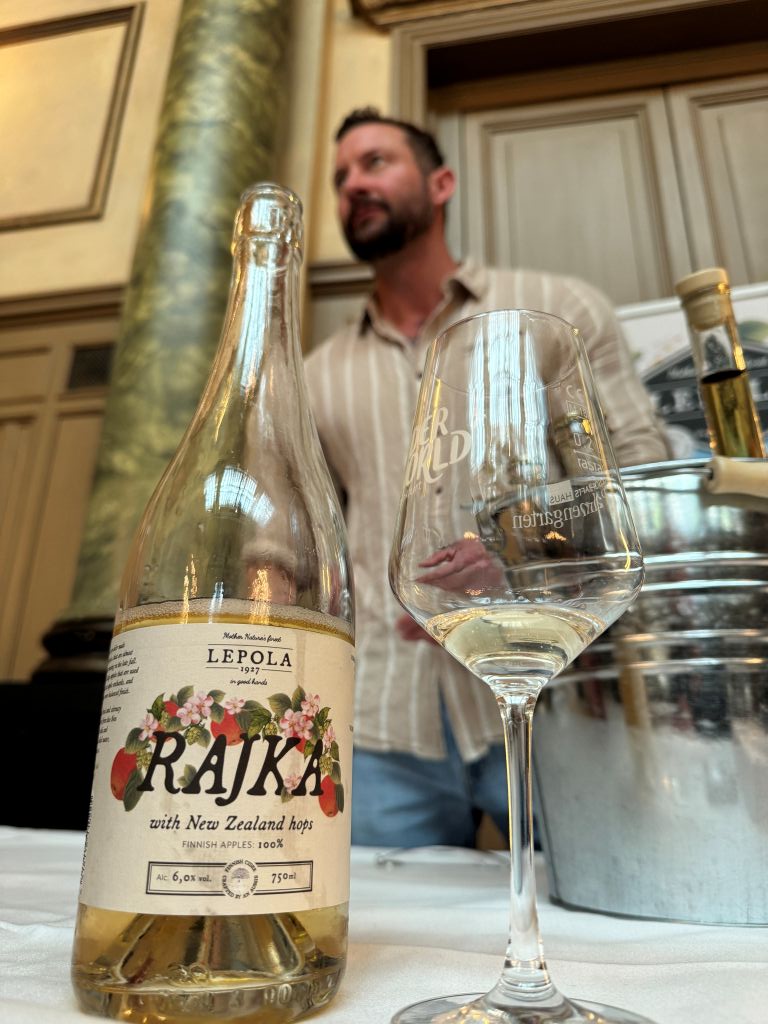
CR: We even find it in our village supermarket.
MS: Yes, and I think that’s actually sensational, because then this topic of cider also gets out into the country a bit via such a cool brand. So, these are also stories that I think are good and new.
And I also think it’s very interesting that there are still a few restaurateurs, those who say “hey guys, I need something new here, I can’t just sit here with geripptes glasses on the table, I need a new idea” and then cider is a good topic, it can just as well be a small one that is produced here in Hesse, just a different idea of the product…
CR: Something that can be presented differently somehow…
MS: Yes, presented differently, the same basic product, fresh apples from orchards in the region, but you can simply do it a little differently in terms of the cellaring technique. A little more carbonation, a little more residual sweetness, I don’t know, add a little apple juice for residual sugar, whatever you do with it, you just do it, and that’s how you get beautiful new products. Apfeltau, for example, is also a wonderful new product. They freeze the cider, so it’s ice distillation, not like cider de glace, where we process the frozen juice or the frozen apples, but they concentrate the finished wine, and all ideas like that. So it’s cool, yes, and if it stays sustainable, well we all have to stay on the ball about what it is and what it will remain.
I mean, we’re in competition with people like Somersby and Bulmers and the like, which is unspeakable. But I’m quite confident. Carlo Hein from Rambourn Cider has managed to force Bulmers out of the supermarkets in Luxembourg.
CR: Oh really?
MS: Yes, with his product, with his Luxemburger cider in the small bottles, he has managed to ensure that there are no more Bulmers. It works!
CR: There are also local threats to the integrity of cider and what it is. In Lidl we bought a can of “cider” made by Eichbaum, the brewery in Mannheim, that was made of 21% Apfelwein, plus concentrate, water, sugar, syrup… It tasted awful, even the Somersby tasted better with its 51% Apfelwein content. But I find these things a real danger.
MS: Yes, it is. That’s exactly the way it is with me, I’m also in favour of always saying please don’t use concentrate. I mean, I know a few people who are members of this European cider association, the AICV, including Carlo Hein, and he’s beating his hands on his head over what’s being discussed, because they now want to make a cider directive for the EU. So defining what is cider in a directive!
CR: Oh no…. I’m glad that you mention this, because I wrote an article about the definition of cider exactly because when I read the definitions from the German umbrella group for fruit wines, it’s just unbelievable. This shows a complete lack of understanding for what cider actually is. You know, they say that it must be sweet, it must be low alcohol, it must be sparkling. It is totally ignoring global cider traditions. So English cider isn’t always served in a pint from a tap. It isn’t always 5%. So all these artisanal makers, like the Tom Olivers or the Ross-on-Wyes are producing still ciders, dry cider, sometimes presented like wine or bag in box. So it’s absolutely a scandal if they do something like this. I’ll send you a link to this article.
I would rather say it full juice as much juice as possible, no concentrate, no sugar, no water. That’s just not going to happen though.
MS: There is no concentrate in in the wine industry, they always produce from juice.
CR: And that’ the way it should be. I’d love to speak with whoever is making these definitions, as it is totally ill-advised and badly informed… But that’s a different topic, I get really frustrated when I think about it.
MS: Yeah, it is a scandal. It’s really difficult, and it’s just a lobbying thing – the big 3 are in it, that’s Heineken, they own Bulmers, it’s Carlsberg, they own Somersby, and it’s Kopparberg from Sweden. These are the 3 big players, and they are now trying to determine this regulation. Fortunately, Daniel Emerson from Stonewell Cider in Ireland, and the boss of El Gaitero, sits on the board of the AICV. Actually, the boss of El Gaitero is the president of the AICV, the vice president is Daniel Emerson, and Carlo from Rambourne is a member.
CR: Ok, that’s good to have such people at that level too.
MS: They are quite good speakers for that, and they counterbalance the big companies that are also members, wanting to use this channel to try to ensure that their understanding of cider ends up in the EU directive.
I mean, we also have that with the Hessischer Apfelwein label, there was a scandal in 2016 or 2015, I don’t remember, but I still had my own production in my own pub. But the Hessischer Apfelwein was this blue EU label from the GDA, and it said that 51% of the apples that were processed had to come from Hesse. And then it came out that the big cideries couldn’t do it.
They did use just apples, I’ll put that on record now, so it has nothing to do with the debate about concentrates at the big cideries in Hesse, but they just got the apples from Poland, Hohenloher Land, Thuringia or wherever, not locally.
CR: Are there simply not enough apple trees in Hessen?
MS: Yes, there actually aren’t that many here. The best thing was that the Hessian Apfelwein Association once said at a public meeting that yes, there are so and so many hundred thousand liters of Apfelwein produced in Hesse, so that means there are so and so many thousand apple trees in Hesse.
If I’ve done the maths and something is wrong, because either I know how many apple trees we have and that results in so many hundred thousand liters of cider, but they’ve done the maths the other way around and everyone has said well done. We were thinking it can’t be so! But that’s how politics works, Barry, that’s how politics works, and it’s a huge lie.
CR: And every year is different. I mean, last year we didn’t have any apples due to late frosts, so we lost almost everything, and I don’t know what it was like in Hesse, but if it was the same there, they have to get them from somewhere else.
MS: Of course. So small cideries have a real problem, but that’s just the way it is. But here, that’s such a lie, when you look at apfelwein.de, it says Streuobst here, Streuobst there and it’s enough to make you cry. But now we’re starting a bit of an initiative, and we need to get a few more people together to tackle the problem [Streuobst equates to fruit from traditional meadow orchards].
We have a new orchard meadow ordinance from Baden-Württemberg and I am against it. I’m in favour of organic farming and all that, but a meadow orchard is not a biotope, it’s first and foremost a form of cultivation for growing apples. It is an orchard. And you have to do something to it from time to time, you have to be allowed to mow it, then maybe you have to spray something in the cherries at some point, which is okay. Something that is organic, of course, but nothing is allowed in the Streuobstwiese now.
And that is madness. It’s not a biotope, it’s not a primeval forest, a meadow orchard is a form of agricultural production, and it has to stay that way. You can say that if I do it organically, then it has to be done this way and that way, if I do it conventionally, then it has to be done this way and that way, that’s fine. But the traditional meadow orchard actually doesn’t need any big things, no chemical interventions or anything, because it’s a closed system.
It works, but it shouldn’t be possible for them to write into the regulation that you’re no longer allowed to mow the thing.
CR: Well, that makes no sense, as then it isn’t a meadow any more. It should still be a working meadow, just with fruit trees. I mean, it’s one of the oldest forms of agroforestry. I probably feel that way because I am also planting new meadow orchards, and they need to be managed to develop as a great place for nature, and a source of fruit.
MS: Exactly, and that’s what we have. I always think it’s just fanatics who always demand this, so that’s what I’m doing right now, we’re going to initiate a counter-movement like that. The orchard has to function in such a way that we can also work with it, because otherwise the biotope won’t be of any use to you because the trees will fall down at some point.
CR: It certainly has to be managed. The whole problem with the huge loss of meadow orchards in Germany over the past 70 years was that they were not being looked after and maintained. I guess we’re going off topic here, but for example, I have a meadow management plan agreed with the nature protection agency, and we are required to mow once or maybe twice a year, to ensure that it actually develops into a traditional meadow. It’s going to take years, and I hope I live long enough to be able to harvest something from the trees there… But yeah, it’s something that you have to work with, and it’s a traditional form of orchard management.
MS: Yes, it is agriculture and not jungle.
CR: Ok, we’re going to step back again, before we get into trouble.
MS: Yeah, ok, I run away sometimes….
CR: It’s an interesting topic, and maybe something we should come back to another time, in terms of how Streuobstwiesen are used as a marketing tool. I often think it is overused in Germany as a marketing because it doesn’t necessarily mean the resulting cider is good quality, and I think some might hide behind the term, but now we’re getting into a different topic.
So maybe going back to Apfelwein from your region, it became a UNESCO status of intangible cultural heritage, as did Viez last year and the Asturian cider culture. This has sealed the cultural importance of what Apfelwein is. But what it is that makes Hessische Apfelwein so special, either for you personally, or in general.
MS: Yes, on the one hand it’s the tradition, so this history in Frankfurt, which is very special with the Apfelwein bars. This gastronomic feature is unique, that’s great. So it’s how you enjoy the Apfelwein there. And the Apfelwein bars are getting better and better, I think. The cuisine is getting better, the ciders are getting better.
What makes it even more special is that Apfelwein is a completely different taste to cider or cidre. I think when it’s done well, it’s a really refreshing wine. So, if it’s a great Apfelwein, it comes from acidic apples, and I think that’s the difference between Hesse and Brittany, where they have more bittersweet apples. Though they have, Guillevic, and Amorique, two apples that are acidic. And that’s my favourite cidre, I have to admit, when they’re made from these apples, because they’re so similar to Hessian Apfelwein. Of course I grew up here, so naturally I’m always close to Apfelwein.
Sometimes there is also bitterness, when you have Speierling Apfelwein [made using an addition of sorbs] or very bitter apples, that’s also the case here, but it’s actually the acidity that’s so much fun and if it’s preserved, so if there’s not so much acid degradation during production, then it’s perfect. I think that’s typical of the Apfelwein and I really enjoy it. It’s refreshing.
CR: Sauer macht Lustig.
MS: Yes, it’s funny, but that’s how I’m shaped, I guess, but I think the acidic apples are the difference.
I’m also interested in what the Norwegians do, for example, I think that’s cool too, but it’s just that they have dessert fruit varieties, they’re so annoyed that they’ve destroyed the old varieties and then planted Aroma, Discovery, Summer Red and everything else.
They’re lucky that they only have a short growing season and that’s why the ciders are more acidic. Because they just lack the tannin, that’s the point, that’s always a thing, that when you make things from dessert fruit, you have to put something against it somewhere in terms of flavour components, whether it’s residual sweetness, more alcohol, more carbon dioxide or whatever, so you have a flavour component that somehow compensates for the missing tannins.
CR: Though it has to be said, I think the, although I really like tannins – I mean, I like perry pears and bite into them – but with the apples, many people seem to think typical cider has lots of tannin. But there’s only two regions where this is true, the west counties of England and in France. The rest of us poor mortals have acidic apples.
MS: Yes, and that’s the good thing about the Certified Cider Professional project from the American Cider Association, that you perceive the difference, that there are bittersharps, bittersweets, I don’t know what kind of apples, but you have different categories at the end of the day.
CR: Yes, of course, and you can make good cider from all these varieties. Although I as I recall, in Switzerland they have also reduced the thresholds of what they define as bittersweet or bittersharp, compared to the Long Ashton Research Station definition. In England, for example. But yeah, it’s all relative.
Ok, so that’s those questions answered. But apart from Apfelwein, if we can park that, what would be your next favourite style of cider? I think I can guess…
So what I really, really like is good Cidre. My absolute favourites are the products from Domain Lesuffleur. It’s a bit like an orange wine too, he does nothing to it, and it’s great stuff, I think it’s sensational.
The ciders that they have in Herefordshire are also really great. So these bitter ciders, that’s also something that’s super exciting for me, but also sometimes difficult, because that’s not quite my style. So I thought these Ross-on-Wye things were really cool, Little Pomona too, there are a few things that I find exciting. And I’m an absolute fan of the products from Canada, so Cidre de Glace, the original made using frozen apples. There are European copies, they’re good too, but…
And when it comes to pears, I’m feeling at home with sparkling perries, so I find that exciting, yes, but I’m not such a big fan of the Mostviertel stuff. They’re often too, I’ll say it, too much embellishment, too much “technique,” and that can be a little boring.
CR: So technically they are superb, but I know what you mean, There is perhaps some of the character of the pear lost from heavy wine-like processing. But I understand that now that they have gotten quality back under control, because for years their Most had developed a bad reputation, that some makers might start opening up and be more relaxed again.
MS: Yes, the next generation is probably about to break that up a bit and give it a bit more character. I think that’s also important. it’s easier of course making mass-market products where you don’t have to explain much, but which are simpler in taste.
CR: We have covered a lot of topics I didn’t expect to cover, and it’s been great fun chatting with you! But perhaps to wrap up, I have to ask, what does the future hold for Michael Stöckl and CiderWorld?
MS: I would like to travel more in other regions and do even more international networking, as a presenter or as part of CiderWorld. We also support NICA, for example, the Nordic International Cider Awards that have now been held twice, and we are there too.
We wrote software for our CiderWorld Award during Corona, and it’s so good that when the judges see it when they’re sitting on our panel, they say that they need it at home. So maybe we do that and export software for cider awards too. It costs a bit of money, we have to travel there with a team, so we haven’t done it remotely yet and it doesn’t make sense, because it’s good to have someone there to help set it up.
But perhaps do other formats, maybe even organise CiderWorld events in other cities. So that’s exciting for me. Maybe do it somewhere else, perhaps in a guest country. This year the CiderWorld guest of honour will be Styria [the region in Austria].
CR: Oh that’s interesting! My neighbour comes from Styria, though he’s been here for 50 years or something. I hadn’t realised that they had a cider culture there.
MS: Yes, it goes in the direction of Lower Austria, so in the direction of the eastern quarter, but they mainly make cider, so it’s more of an apple region. The pear region is more like the Mostviertel or the Mühlenviertel, so in Upper Austria.
CR: So that wasn’t on my radar at all, so I really look forward to trying some Styrian ciders at CiderWorld this year!
MS: Well, those are the plans for CiderWorld, maybe let it travel, make it bigger, but always let it grow slowly, that the motto. And that we now mix up the producers a bit here in Hesse, that they rebel a little bit against this meadow orchard dictate, that it becomes a little more relaxed, as we spoke about earlier, so things like that. I’m not a producer, but I can maybe help it further as a mouthpiece.
CR: Well, you certainly have a very large platform in the region, if not globally, and I can’t wait to see how it continues to develop in the coming years.
Michael, thank you so much for taking the time to chat with me, I really enjoyed it, and I look forward to seeing you in person again at CiderWorld 2025!
MS: Let’s celebrate a great drink!
* * *
CiderWorld runs from the 25th to the 26th of April this year, with the Expo trade show being on Saturday, the last day. Our own Adam will be giving a talk at the inaugural CiderWorld Forum on Friday afternoon, and Gabe Cook will again take on the role of MC at the Awards ceremony, a task he is eminently suited to. And full disclosure, I have been invited to join the jury this year, so I am really looking forward to seeing the operation of the Awards from the inside.
I can certainly recommend attending if you can get to Frankfurt, and to stay there for a few days to get the most out of it. You can find more information on the CiderWorld website. Hope to see you there! Do say hello!
Discover more from Cider Review
Subscribe to get the latest posts sent to your email.
 Cider Review
What a great interview. Thanks so much to Barry for writing and translating such a huge conversation, and Michael for giving up his time. I have been aware of CiderWorld for years now as a UK based producer, but fascinating to hear the story behind it. It is very cool! One day I hope to attend, but I doubt I could justify/afford the fees to exhibit.
LikeLiked by 1 person
Thanks Thomas, I’m glad you enjoyed the read. As a small maker myself, I understand your hesitation. But even just attending the Expo is well worth a trip. There’s a lot to fit in in a relatively tight timescale, though. I’m looking forward to seeing how the forum develops!
LikeLike
I’m in the same boat; and will just be going to the Forum and Expo. Perhaps the Forum could grow in the future to provide an opportunity for small makers to meet, network, and learn from each other.
LikeLike