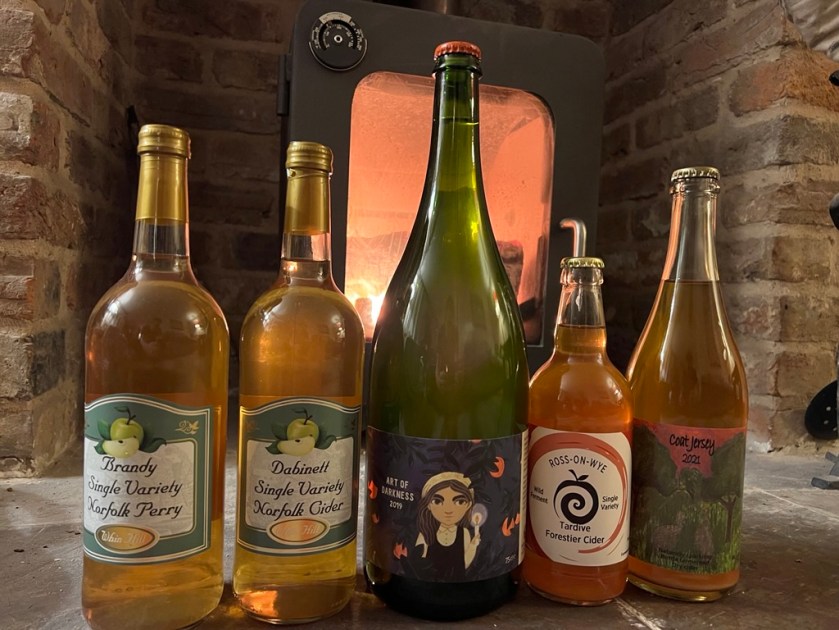
It’s the winter solstice, the hibernal solstice if you will, in the UK today. The shortest day of the year in terms of sunlight, and that’s only if you don’t find yourself under cloud cover. The whole day can feel like murk and gloom has won. Will we ever spin closer to the sun again? Well, yes, from tomorrow onwards in fact! On this darkest of days however, in a fictional coaching inn, somewhere on the roads between Norfolk and Kent, two weary travellers meet, surprised to find this inn stocks only the finest, most delicious tannic ciders and perries available to mankind. Perhaps this is a bit of a fever dream from my mind that weaves in elements of Withnail & I, Ghost Stories for Christmas, and all that is good with the world of Cider Review. Either way, the winter solstice can do funny things to your mind, and I needed a literary framing device that allowed Andrew and I to have a chat over some unashamedly tannic ciders and perries after his first article on Cider Review made it successfully out into the wild.
The windows of this coaching inn bar are single glazed, the condensation on them starts to freeze on the inside of the panes, where the meagre warmth from the inglenook fireplace dominating the room doesn’t quite reach. No need to think about the building’s energy rating, think about the atmospherics within the bar itself. Sat in front of that wheezing, ancient fireplace, our two weary travellers mull over the selection of ciders and perries on offer. How odd, they think, not to see a single lager, stout, ale, or alcopop on sale. It’s just tannic cider and perry. Maybe it’s a sign of things to come? Perhaps it’s a vision of times long gone? Could it be time, omnipresent readers of Cider Review, to eavesdrop on their conversation and listen in to what they have to say about the drinks on offer…
Jack: Your inaugural Cider Review article went down really well! It seemed to capture people’s imaginations and longings for a deep dive into the world of tannin. Were you pleased with its reception?
Andrew: It came across well, people have responded really positively to it. It was an area that had had mixed coverage in the cider media. Some of the slight misinformation around tannin that had come out on this topic had inspired me to write the article. Now that’s done, I’m thinking what else can come next, possibly one on acid?
Jack: Good call! I’ve felt like people have been more comfortable talking about acid in cider and perry, but I’d never seen that level of focus on tannin in an article before. I’m not coming from a scientific background whatsoever, so there’s an intimidating aspect to some of these big, scientific names for tannins, at least to a layman like me.
Andrew: There’s a few labels that are thrown around that are not entirely accurate too. In the scientific profession, tannins are a very specific type of molecule. Most of what we can talk about can end up not actually being tannin. They can be a type of polyphenol, which might as well be tannins…but it’s all down to a precision of language. Things like malolactic fermentation gets thrown around a lot. What it actually means in practice would be interesting to explore – how acids change in ciders and perries, what they actually do.
Jack: I found your article was informative, to have some kind of greater base level of context when someone says “hey, this is a bittersharp, or a bittersweet”. I understand the bitter element of it just a little better now. I don’t profess to ever want to be as knowledgeable as you on tannin in a scientific way, but it really did help break those things down in my mind.
Andrew: The big thing for me that I still struggle with is the difference between bitterness and astringency – making sure that you’re trying to distinguish between the two, because they do come from different places. That’s one area where people can conflate the two together and assume that one follows the other, but it doesn’t necessarily mean they have to.
Jack: I always think of bitterness on the tongue, astringency on the side of the mouth…is that right?
Andrew: That’s probably the easiest way to think of it. Bitterness is a taste sensation so will be driven by the tongue. Astringency is that drying feeling which could be anywhere in the mouth, but you could distinguish the difference on the sides of the cheeks rather than the tongue. You’ve got no bitterness that you can detect in your cheeks.
Jack: Our cheeks are famously not made of tongue in a weird Frankenstein manner!
Andrew: No, quite!
Jack: You managed to engage cidermakers, cider enthusiasts, and general scientific boffs all in one article which was great to see.
Andrew: Tom Oliver is hopefully going to use it in one of his CiderCon talks. So it’s been really nice to see the wide reach the article got.
– A brooding barman approaches with a drink, the first offered to our now more settled travellers –
Andrew: It looks like Whin Hill’s Dabinett. It’s an odd beast. It was unlike any Dabinett that I’ve ever had. The odd thing for me was that it reminded me a bit of the Tardive Forestier cider, which I’m sure we’ll get to later if I know this bar’s selection. That’s unusual given how different the apple varieties are. It was that kind of slightly woody, coriander seed note, which is really unusual for Dabinett. It reminded me also of Dandelions.
Jack: As in Dandelion and Burdock?
Andrew: No, when you squeeze the stem of a dandelion flower, you get this slightly pungent smell and it was a bit like that. But then it was really fruity at the same time: stewed peach and roast pineapple notes, which pulled me in a completely different direction to the woody note. What about you, what did you get?
Jack: I’ve had their single variety Dabinett for the last four years, the 2021 tasted like this, the others taste very typical Dabinett. There’s something peculiar going on here. They’re fermented in neutral plastic containers, like Ross Cider have, they’re then racked off into IBCs, and then racked again into stainless steel in the cidery. So completely neutral all the way. Those tanks aren’t ex-coriander seed storage tanks or anything, they’re completely clean and neutral. This flavour appears every other year, I don’t understand it. I know that Mark sometimes adds a small fraction of sharps like Bramley into the mix. I wondered if that extreme malic acid twang might be interacting with the tannin? It’s not my favourite Dabinett single variety I’ve ever tried.
Andrew: I’d definitely go back and try it again to see what it’s like from another season. It was unusual but didn’t put me off. I wonder if there are the extremes of climate differences for where they’re growing the fruit in North Norfolk compared to the West Country? Tannin levels do vary, and the climate in the East of England is very different to the Three Counties.
Jack: The site where the orchard is in Stanhoe is mostly sandy, loamy soil, a bit of chalk. Mostly wheat, maize and asparagus grown in neighbouring fields. 2023 was a bit of a middling year, weather-wise from what I remember, if this is from that season.
Andrew: Dryness can put pressure on the trees and drive tannin production in plants, it’s a stress response. Whether it’s that or the interplay between adding a small amount of sharp apple juice in with it too. It’s interesting it cropped up in different vintages too.
-The unnamed barman hovers around, offering up Whin Hill’s Brandy single variety perry-
Andrew: The Brandy perry for me was really different in terms of how tannin is presented in apple vs pear. It was the first Brandy single variety perry I’d tried. It was a play between the sweetness and fruitiness initially, alongside some savoury elements that crept in. I enjoyed the leathery notes that came from juice too.
Jack: These two bottlings of Whin Hill’s are I think are both from last year’s releases, they have the old style label on them.
Andrew: I do think that’s a downside not to see the vintage year on the label.
Jack: I think it shows the batch number which you can then trace. The version I tried for Perry Month was a more recent batch, the tannins in this bottle we’re trying are absolutely softened compared to that one back in September. I find Brandy a really interesting varietal – you’re drinking a perry with another drink’s name, it can lead the SEO down an odd route when you’re searching for it online. The trees were quite popular with allotment growers and smaller orchardists up till the mid-twentieth century in the Three Counties. But because the trees aren’t particularly big, and lend themselves to being grubbed up, well…they got well and truly grubbed up and the variety subsequently has become quite rare. In Charles Martell’s book on perry pears, he mentions this rarity until a recent replanting, some of which I think are the 40 or so trees in Mark and Lisa’s orchard in North Norfolk. It’s cool that this variety has been adopted over in East Anglia.
Andrew: Moving away from the dessert fruit, coming back to that more tannic fruit that would have been there before. For me it is an interesting variety with lots of different fruity flavours, a strong sense of cherry.
Jack: I got that exact note too, cherry blossom and geranium…
Andrew: Perhaps a bit sweeter than I would normally go for. But good to see the quality that is coming out of East Anglia. You have a similar issue to me in Kent, a lot of the local producers tend to use dessert and culinary fruit which is more acid-driven.
Jack: Yep, and there’s nothing wrong with that, but we are sat in a tannic cider pub right now and I feel like we’ll be kicked out if we keep mentioning acid.
- The barman reappears. In his hand, a 750ml bottle with Guinea Fowl illustrated on the label. –
Andrew: It looks like Temple Cider’s Coat Jersey. A new one to me. Much different to anything I’d tried before. It had this rolled oats, porridge note on the nose. Lots of that orchard floor, autumnal notes. I found it thinner in the mouth than I was expecting for a tannin-driven cider. The flavour was great though.
Jack: I reviewed this one right at the start of 2024 and tried it for the first time at Bristol Cider Salon in 2023. I too had never heard of the variety back then and it was strongly tannic. Time has mellowed this cider loads in the bottle. I found it more enjoyable than previously and what I love about it, is that it’s a variety I don’t see from anyone else other than Temple Cider. That’s exciting as it’s how these varieties survive by more people having an opinion on them and trying them year after year. Without single variety bottlings like this, Coat Jersey would probably just get lost in an orchard blend or grubbed up because producer and consumer wouldn’t care about it.
Andrew: For me, those single varieties, the really unusual ones, are what really excites me with cider and perry. You get it with things like Ross Cider’s Flakey Bark, the scarcity of the surviving trees. Coat Jersey, and Temple Cider were great to discover on this exploration of drinks. There’s such a range of varietals that don’t always get the limelight, and they may end up getting rolled into a blend as they exhibit these more extreme characteristics. But sometimes you’ve just got to lean into that and celebrate the extremities, as Foxwhelp does with acid. There’s room for that with varietals that showcase that from a tannic perspective.
-The barman shuffles over again. It’s a 500ml bottle this time, underneath a cloth. He looks reluctant to part with it or hand it over. The reason is not clear. Our travellers have to take it. –
Andrew: You and I may be the only single variety Tardive Forestier drinkers perhaps on the planet at the moment! Do we keep the secret and not let on how good a cider this really is? It’s definitely not for the faint-hearted. It’s mellowed a bit since the last time I tried it but, it’s still pretty fierce.
Jack: It’s still that same bottling from 2022 of the 2019 vintage, Albert hasn’t released another batch yet I don’t think. There was an episode of CiderVoice where someone messaged in to big-up this Tardive Forestier bottling, everyone at first thought it was me, but it was you! Ever since, this bottling, and this variety of cider apple has been a unique, peculiar unifier between us. My friend Clifford, who has an orchard out in Normandy, gave us a bit more info on the variety. It’s a French variety, Tardive means late in the season, and Forestier means woody, or from the woods. I think there’s a really important place for these late season apples in our drinks landscape. We live in an age where lots of things are instant, and desired as quickly as possible. The start of harvest is lovely, when apples like Discovery start to appear, and you can rush to try and make a cider or perry by Christmas. But there’s something to be said for a variety like Tardive Forestier, which sits at the other end of the scale. I agree with you, it has completely mellowed now. It’s really pleasant and juicy now.
Andrew: I got a burnt orange, coriander seed note from it. It reminds me of a Cypriot Stew which is made with coriander seeds and red wine. It has these hints of pine, almost a Christmas tree element to it. Along with a medicinal, phenolic note to it. It’s a slow cider, slow to develop. I suspect you can keep it in bottle for another decade, and it would develop slowly over time. What it then becomes, I think we’ll have to buy some more bottles to see…
Jack: I love that tasting note and hint at a Christmas tree. It’s something the cider industry at the moment is missing. You get all these Christmas ales released at this time of year, some to age for yonks, others to drink right away. I think something like this, released at Christmas, but you don’t have to drink all your bottles right away, you could keep some back for festive periods in the future, would be a really good idea.
Andrew: Albert definitely needs to do a 750ml Tardive Forestier at some point in the future. It has that absolutely unique quality to it. It does remind me a bit of the 2015 Tremlett’s Bitter they released, the fierceness of the tannins is tamed over time. This is the one that’s on the Ross Cider website that never seems to move in terms of stock, but deserves to. More people need to get out and try it.
Jack: You mentioned Flakey Bark perry earlier, and with that drink, there’s a good story attached to it, its rarity is undoubted, and it’s so positive it’s being grown a bit further afield now like in Barry’s orchard in Germany. But don’t tell me that Flakey Bark perry is less violently tannic than this Tardive Forestier, it was mega tannin at this year’s RossFest, and people were buying 750ml bottles of it over and over again at the bar. If you get the story and context set around it, I’m sure it can sell.
Andrew: There’s a cult following for Flakey Bark, and definitely with a variety like Foxwhelp, we need the same for this tannic apple too. Maybe it’s seen as old fashioned, that level of tannin, but that’s part of the joy of cider, it’s revisiting these older varieties and discovering them again.
-The firelight is fading. The barman brings the final bottle over. It’s a magnum, green glass, adding to the mystique of the 1.5 litres of liquid held inside.-
Jack: Ah now this is one of my favourite bottlings from Little Pomona, one of the best vintages of it too, the 2019 Art of Darkness, Ellis Bitter and Ashton Bitter in barrels. What do you think?
Andrew: This is up there with my favourites from Little Pomona. It’s such a complex cider, that really is unlike so many others out there. That sense of incense and perfume, you don’t find it in many other makers or varieties. It’s such a complex cider. Following a theme here, the tannins have mellowed a lot. It’s still rich, filled with the fruit that was always there, alongside a juicy acidity. It’s full to the brim with superlatives.
Jack: Would you normally reach for an Ashton Bitter and Ellis Bitter blend?
Andrew: Most of the ciders I drink would tend to be single varieties, so I wouldn’t usually gravitate towards this blend. If I were to go for a blend it would have more bittersharps or sharps in it, so that itself was unusual. James is an alchemist at times.
Jack: This is spot on in terms of elevating varietals that happen to be very tannic. It screams *Winter Solstice* and the darker times of the year. This encourages that notion that there’s a cider or perry for all times of the year, and tannin can go a long way to helping that.
Andrew: I always find that interesting, I associate cider with Autumn and Winter, not with the Summer. I know that’s different to the consensus view. The tannin in these drinks is what I enjoy more, and that’s Autumnal in my mind. For all the good it did, Magners does have a lot to answer for in terms of promoting this notion of cider with ice in hotter times.
Jack: There’s a place for it in Summer for sure. It’s interesting you’re associating it more with harvest time than kick back and relax Summertime. Well, what a brilliant bar we’ve been in.
Andrew: Just scratching the surface of what there is out there in terms of tannin-forward ciders and perries!
The feverdream coaching inn, filled to the brim with tannic cider and perry, fades into the dying firelight of its own metaphorical existence. Herein follows the regular reviewing part!
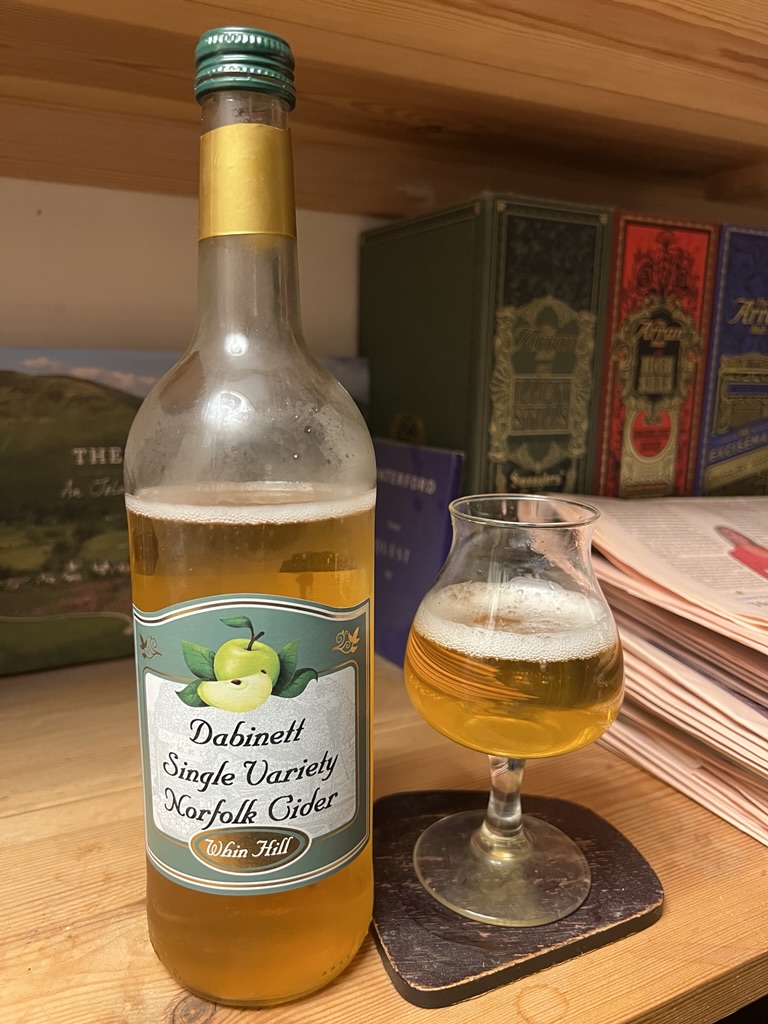
Whin Hill’s Dabinett SVC – review
Andrew’s review
How I served: Cool, ~8°C
Appearance: Straw to pale gold
On the nose: Apple stalk, dandelion stem and dried orange. Touch of stewed peach and pineapple too. It’s an unusual nose but captivating.
In the mouth: Fruit forward with some sweetness (it’s badged as medium) that drifts into wooly tannin turning woody on the finish.
In a nutshell: Unlike any Dabinett I’ve had before.
Jack’s review
How I served it: A couple of hours in the fridge in the evening before serving.
Appearance: Similar level of mousse to the Brandy Perry to be honest.
On the nose: It’s really giving off the same curious nose as the 2021 Dabinett did (reviewed here). There’s a coriander and nettle note, which is not at all what I get from any other Dabinett SVC other than Whin Hill’s from season to season. I’m wondering as this is the old label, is this also from that 2021 season?
In the mouth: I’m harking back to my tasting notes from the 2021 Dabinett from Whin Hill’s here again: grassy, resinous, tannic.
In a nutshell: Very atypical Dabinett.
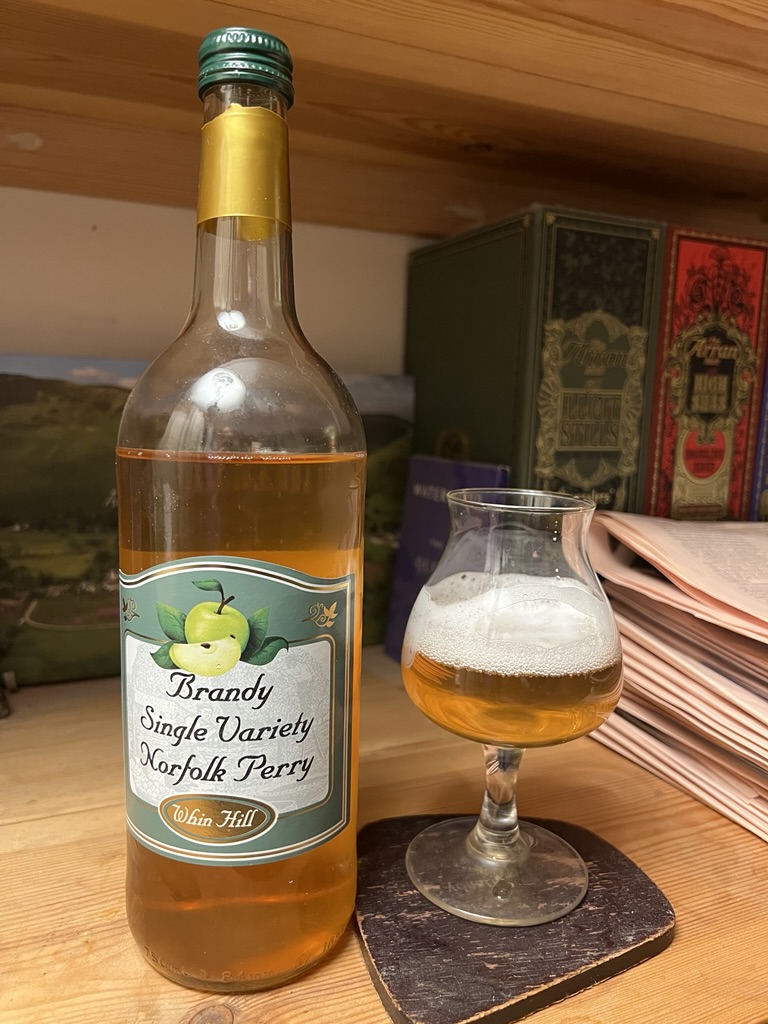
Whin Hill’s Brandy SVP – review
Andrew’s review
How I served: Cool, ~8°C
Appearance: Rose gold
On the nose: Wildflower honey, apricot jam and old leather on the nose.
In the mouth: Touch of sweetness to start but drier end of medium followed by some rich acidity. Plenty of fruit – fresh cherry and juicy pear. This then opens into some complex tannin – soft and pillowy on the cheeks but rasping on the tongue. Spirit like finish.
In a nutshell: A summer walk at sunset in a glass.
Jack’s review
How I served it: 45 mins in the fridge after work.
Appearance: It poured super effervescent, the mousse only collapsing in on itself after about 15 seconds. Drops after to reveal a lightly sparkling liquid, pinkish orange sunset crystal clear, with the remnants of the mousse in a ring around the edge of the glass.
On the nose: All sort of high, estery fruity notes popping out of the glass: geranium, pear and cherry blossom. Followed by a faint whiff of ginger and lime.
In the mouth: The tannins in this have absolutely softened since I last had a bottle of this at the end of August. More of the fragrant estery notes to the fore, with a soft astringent finish. A bit like letting a wafer biscuit (for cheese & crackers) slowly dissolve in your mouth – one lathered in a glorious pear jam mind you. Am guessing lightly back-sweetened, just off-dry.
In a nutshell: If you want tannins, from perry pears, from North Norfolk, then this is the bottle you’re after!
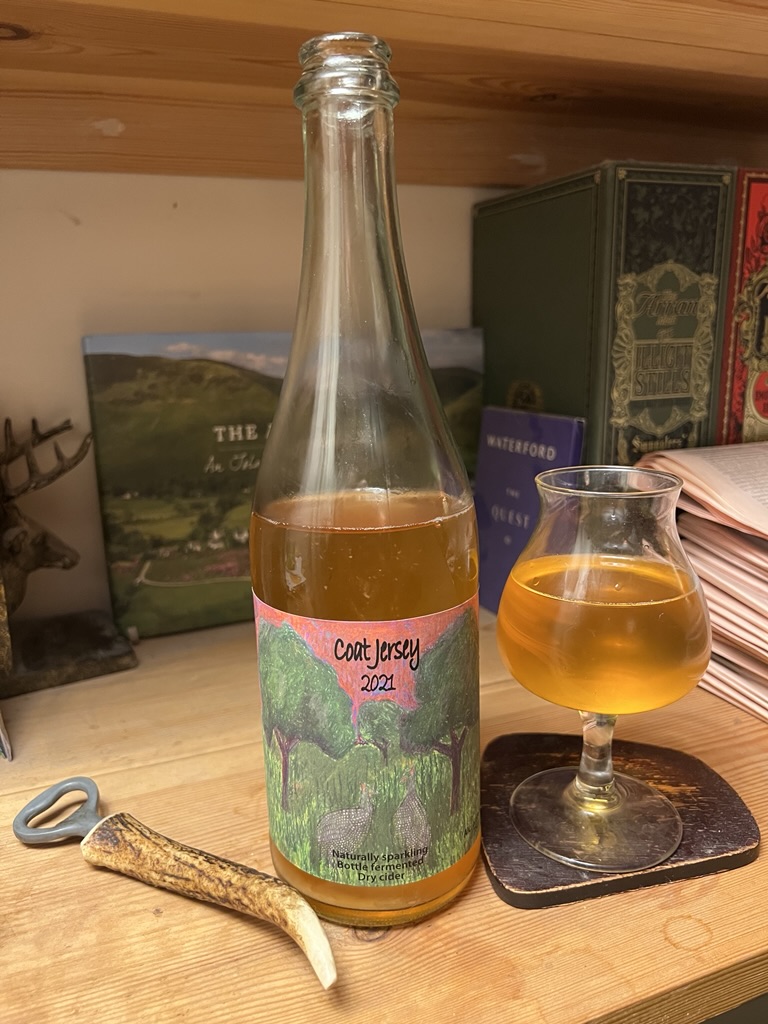
Temple Cider’s Coat Jersey 2021 – review
Andrew’s review
How I served: Cool, ~10°C
Appearance: Beaten copper
On the nose: Orchard floor, autumn leaves and rolled oats on the nose.
In the mouth: A tad thin. Fuzzy, tongue coating tanning balanced by some soft acidity.
In a nutshell: Coat jersey is a new variety for me and one I’ll look out for again.
Jack’s review
How I served it: Day in the fridge, 30 mins out in the kitchen whilst cooking before serving.
Appearance: Sunset orange hue, brilliant glow to the liquid. An energetic mousse that pops and fizzes away in 5-10 seconds. Great clarity, no real haze.
On the nose: Raspberry leaf, cranberry juice, and a faint whisper of nutmeg.
In the mouth: Tannin and a fair dose of acid too for this bittersweet variety. Got a juniper note going on now, stewed apples and juniper (well maybe, apples poached in gin). It’s mellowed in bottle since I tried it at the start of the year. Soft astringency to the aftertaste. Bone dry, 6.6% abv, and all the better for it.
In a nutshell: A herbaceous, juicy cider variety, captured in bottle to enjoy long after its original season has passed.

Ross Cider’s Tardive Forestier 2019 – review
Andrew’s review
How I served: Cool, ~11°C
Appearance: Brazen brass
On the nose: Burnt orange, coriander seed and hint of pine. There are some medicinal phenolic notes too.
In the mouth: It’s foot to the floor tannin that lingers for a long time. It feels woolly but with a piney note that develops on the finish.
In a nutshell: Probably the cider that inspired this article. Fantastically complex, everyone should try this.
Jack’s review
How I served it: Half an hour in the fridge
Appearance: The long-lost tannic sibling of Irn Bru. It’s positively shining steel girders and Glasgow! Good mousse to it when pouring which dissipates quickly in the glass. Great clarity on this one – no fog lights needed.
On the nose: Cloves and nutmeg, quite the festive aroma. A similar inviting apple strudel aroma to some Major or Yarlington Mill SVC’s.
In the mouth: This has been in bottle since March 2022, and at 5.3%, we’re starting to see those wildly strong, woody, Scot’s Pine bark distinctive tannins mellow. This is far juicy than I remember for the first 5 seconds on the palate and then…tannin and astringency galore coats everything.
In a nutshell: The cider apple drinks cousin to Flakey Bark single variety Perry? If you enjoy that tannic beverage, you’ll love this cider.
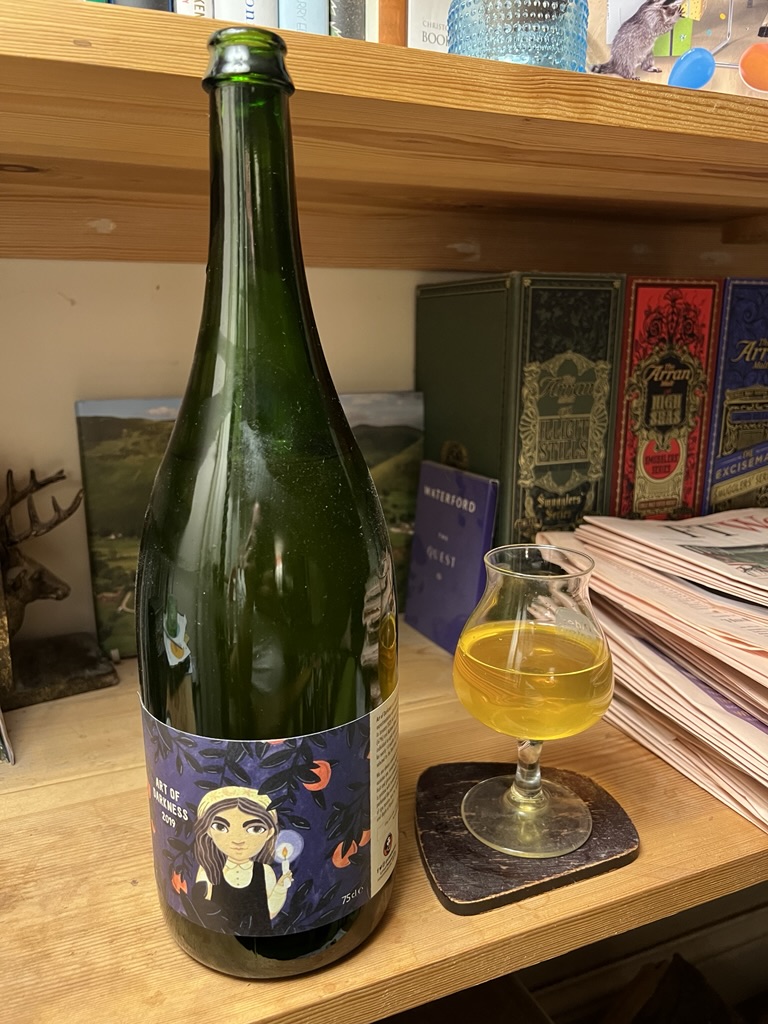
Little Pomona’s Art of Darkness 2019 – review
Andrew’s review
How I served: Cool, ~10°C
Appearance: Burnished gold
On the nose: Incense, barrel perfume, rich peach and baking spice.
In the mouth: Great balance between some juicy acid, soft ripe tannin and plenty of barrel…
In a nutshell: A blend of Ellis Bitter (67%) and Ashton Bitter (33%). A cider for cold, dark nights to sit and think of the dawn ahead.
Jack’s review
How I served it: Hour and a half in the fridge (after my last pressing of apples of the season, a fair reward).
Appearance: Straw gold, crystal clear, no mousse to speak of. A beautiful shining clarity to it.
On the nose: I’ve had this bottling once a year since its release, so this is developing a gorgeous nostalgic aroma of a cider I know I love. Honeysuckle and spirit cask. Apricot jam. Just divine.
In the mouth: Dry and full-bodied with that cask influence giving a perception of sweetness that falls away to reveal a mild astringency on the palate. There’s so much flavour here in the 7.2%abv!! Alongside that honeysuckle note sits a lovely Dijon mustard creamy floral note. I absolutely get that incense note too. Ellis Bitter and Ashton Bitter paired perfectly.
In a nutshell: Light a candle to the passing season. This is a rich sipping cider that would sit perfectly alongside venison or nut-based dishes.
Conclusions
Andrew: I’m based down in rural Kent, surrounded by Henry VIII’s mother orchard and commercial apple producers, and tannin-driven cider is not the easiest to get hold of. When Jack asked me to contribute to an article he was planning as a broad tasting of tannic cider I jumped at the chance.
I never fail to be amazed at the depth and breadth of flavour that cider and perry presents and tannin plays a crucial role in shaping these. Single varietal ciders and perries are a big draw for me too and I was excited to try some makers and varieties I hadn’t had before.
Jack: We finally got Tardive Forestier on Cider Review! No sooner had we conducted this fun, slightly fantastical chat on tannic drinks, Andrew messaged me a screenshot from the Ross Cider shop which showed only 3 bottles left on sale. Let’s hope there’s some more vintages of this on the way in the future.
I know this time of year can be tough for some of our readers, from here on in it’s brighter days ahead till June 21st 2025 though, something to take solace in. I really find there’s nothing better at this time of year than sitting down in front of a flickering flame – be it candlelight, firelight, even a video of a yule log streamed from YouTube to your TV – and an accompanying glass of tannic cider or perry seems a real treat of a way to spend an evening. If you’re lucky enough to have Andrew there to talk to about all things tannin, even better!
Discover more from Cider Review
Subscribe to get the latest posts sent to your email.
 Cider Review
Always a pleasure to spend an evening in the Cider Review Arms.
Thanks for the write up Jack.
LikeLiked by 1 person
A cockles of the heart-warming article. Save me a place at the bar!
LikeLiked by 2 people
Pull up a pew and settle down for a good chinwag ☺️ Glad you enjoyed the article ☺️
LikeLike
Pingback: Winter Solstice 2025: Abide With Tannin | Cider Review