
Last May, the job that actually pays the bills sent me to Riga at short notice to attend a conference. I’d asked a friend for advice on what places to visit, as I knew she’d know the scene there, but I also pinged a chap I had been following on Insta for some time, a maker in Latvia with a cidery called Mr. Plūme. As it happens, he was the Mr. Plūme, Māris Plūme to be exact.
Māris very kindly said he’d drive in to Riga to meet me, show me around and have a chat. In the end, we went to one bar and sat outside for most of the night just talking about apples, pears, rootstocks, cider making, the Russian war on Ukraine and the trials and tribulations of being a small cider maker in a country that doesn’t have a long tradition of cider. A really lovely man, I was sorry I didn’t have more time to actually go and see his cidery. But I did say I would love to interview him for Cider Review, and this month of international coverage seemed like just the right time! Although for a maker, anything coming in at harvest time can be a complete pain in the ass, so I really appreciate him taking the time for this. I know you will too.
* * *
Cider Review: Māris, please introduce yourself, and tell us how you fell into the world of cider.
Māris Plūme: I am a cider maker at Mr. Plūme cidery in Latvia. I started making cider in 2010. Some years before I tasted some supermarket French cider (which was real cider from the taste I remember) and I realised that I really loved the taste of it. The decision to look into cider came in 2010 while I lived in Berlin and tasted some Latvian home-made cider in a gathering with Latvian friends. That evening, I learned to love that rather dry and sharp cider. That made me think, why the hell isn’t it our national drink as we really have the abundance of apples in our country?! So, I started googling about cider and in few months’ time landed in Domaine Dupont in France as a trainee for a month. Then went to the Mostviertel in Austria and worked whole autumn at the Distelberger family’s Mostbauernhof. Late in November that year I moved back home to Latvia, bought some apples and did my first fermentation trials. Then I met Dace (now my wife) and we tasted my creations together. She also liked real cider. The next autumn of 2011 we both went to work at the Distelberger farm. After that we started developing our cidery without loans and investors on my parents’ property. Since the fall of 2013 we had an official company and started selling cider the following season.
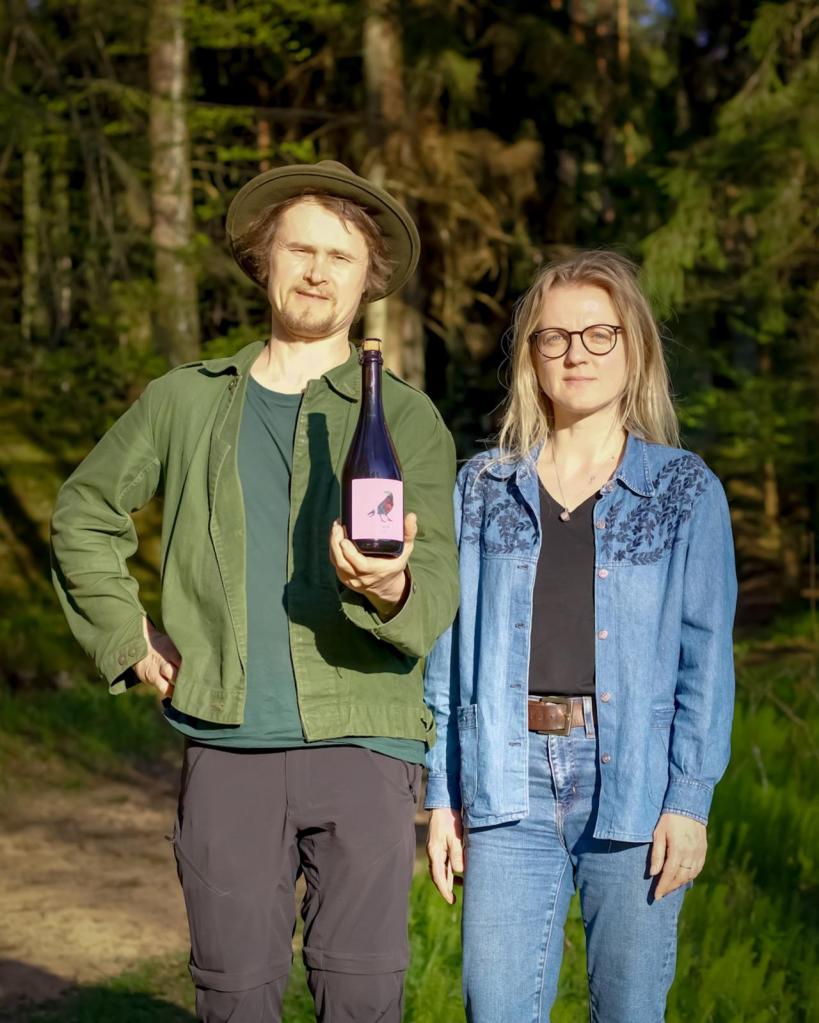
CR: And as you mention Dace, like most small cideries, Mr. Plūme is not just one person, but a team effort, and like many I know, based on a couple. I assume she has a pretty significant role.
MP: Honestly, she has a significant role here too from taking beautiful pictures, social media content to boring paper work – which nobody sees and appreciates – to even decision making in cellar where I always ask for her opinion when some blending or when other important decisions in making certain drink are to be made. Also, her help in maintaining and harvesting in orchard is massive. Designing leaflets or making labels is often done by her alone or together. So yeah, it’s not just me, it’s us. And nowadays I like to say that Mr. Plūme is not me, but ‘the mysterious guy’ living in our orchard. So yeah, it’s a brand under which there is two of us.
CR: The unsung heroes that actually keep a cidery running. I have to say, I really love your label designs, so it’s great to hear that that is all happening in house. I can safely say that if it wasn’t for my wife’s harvest energy, I would be making a lot less perry!
We had a good chat last May about the state and history of Latvian cider when we met in Riga, and how cider was not really a historical tradition in Latvia. But let’s start with the apples, as we also spoke about local varieties that are adapted to your growing conditions. Was apple growing, even for eating apples, much of a thing in Latvia in the past, or where did the current orcharding come from?
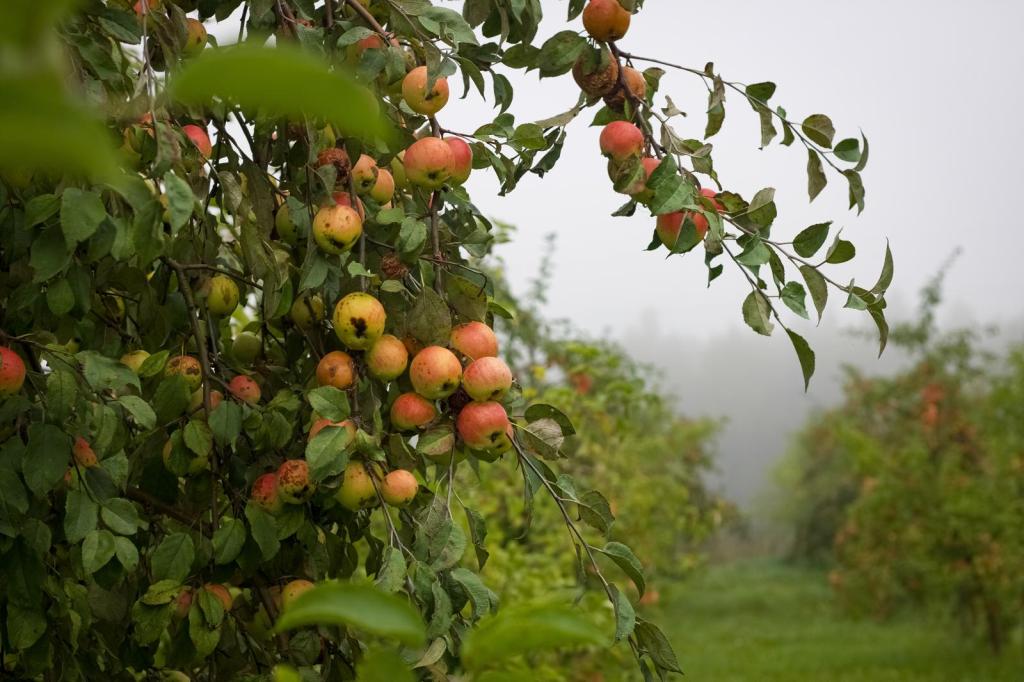
MP: Every house in the countryside has at least 3 full size apple trees of age 40-80 years old growing in their backyards. Often 5-10 trees. On ‘on’ years people are panicking, what to do with the harvest. Many apples are dumped as food to wild animals near forests, but here is our opportunity to trade them for bottles. The varieties are mostly older ones like Sīpoliņš, Antonovka, Lietuvas pepiņš, Safrāna pepiņš, to mention a few. These are great for acid dominant ciders like our still cider series where we mostly try to emulate modern white wines. We always add some bittersharp malus silvestris wild apples that we get from our ‘apple safari’ sessions. There are also commercial apple growers who grow typical varieties for this region like: Auksis, Zarja alatau, Belorusskoe malinovoe, Rubin, Antej, Sinap Orlovski. These are still quite useful if no better options are around. We plan on eventually using apples and pears only from our orchard (and some safari) and this year we are pretty close to that.
CR: Something I really loved hearing about was your foraging activities, what you just described as your ‘safari trips’, finding seedling or wild apples that you then use to great effect. What do you find so appealing about these apples?
MP: Yes, seedlings on the roadsides and remote areas are part of our ‘apple safari’ expeditions where the ultimate goal is to find local cider apples with ‘tasty’ tannins and possibly lower acidity. We were inspired to get out there and look for Latvia-born cider apples by Claude Jolicoeur when we met him in Austria while participating in cider festival there on 2015 at the Mostbirnhaus.
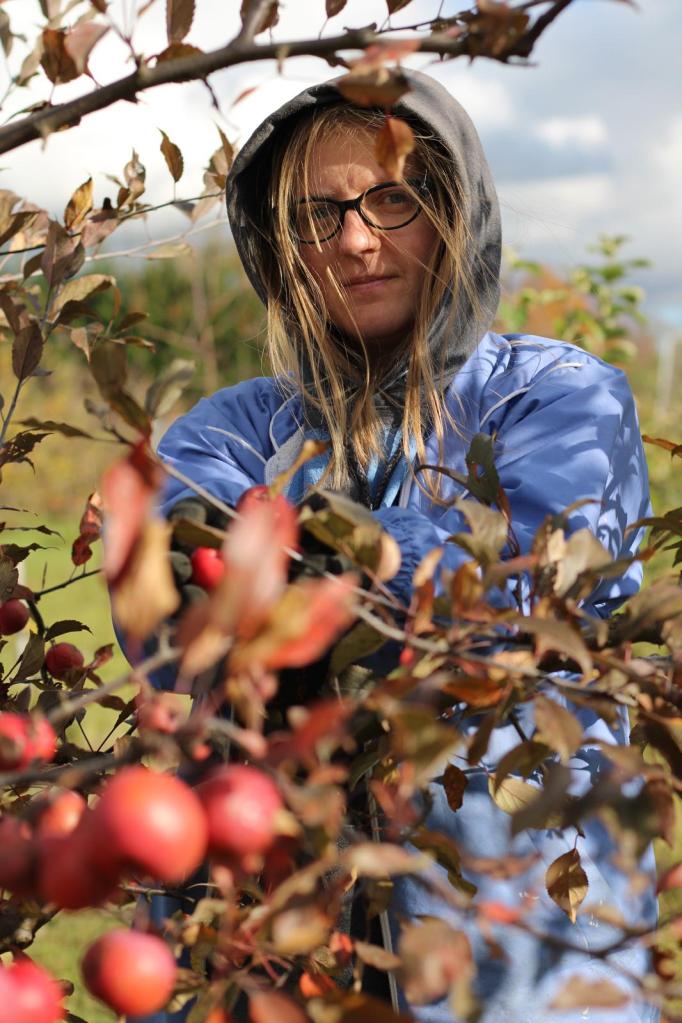
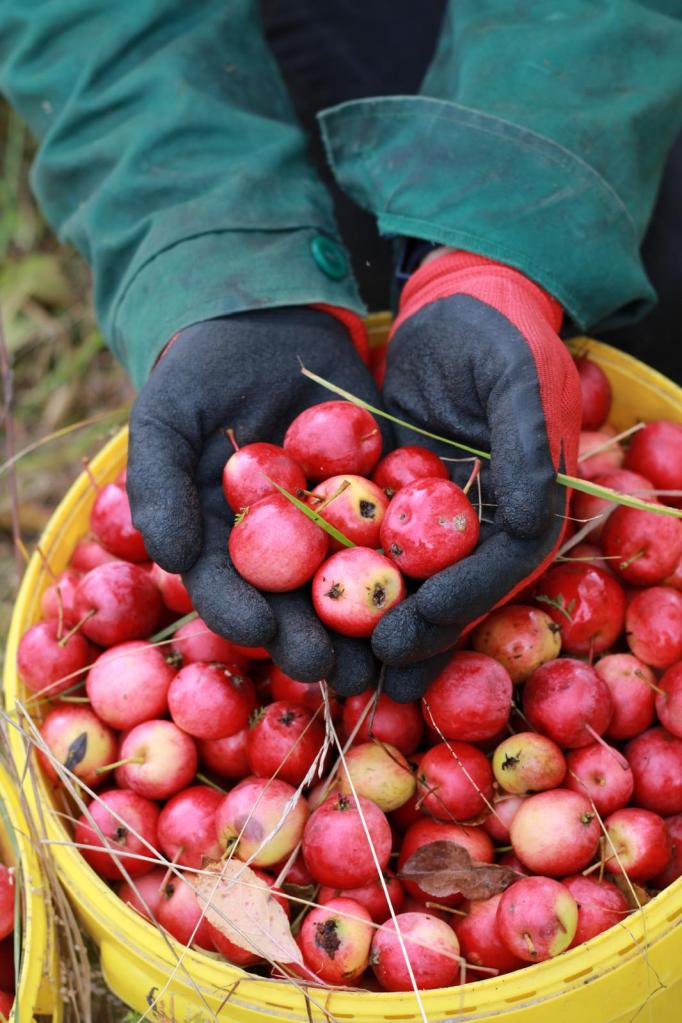
CR: And you have also propagated them into your orchards, right?
MP: Yes. We have propagated one bittersweet and one bittersharp apple of our own finding. Also one sharp, high sugar pear. All of these we have tested in small SV batches, and they were really great. Now the worrying part is how productive and reliable they will be in orchard conditions. At least our pear finding ‘Aizputes bumbieris’ (or Aris’ – the shorter and easier name I’m considering for it) seems to be performing really well. The apple trees haven’t produced much yet. I hope its just because the trees are still youngish.
CR: Ok, now you have to tell me what ‘Aizputes bumbieris’ translates as.
MP: ‘’The pear from Aizpute’. It’s a town name where we found the mother tree, and Bumbieris is Latvian for a pear.
CR: Noted for future use! You have also experimented with growing apple varieties from England, and was it Germany and France too? Some bittersweets as I recall, but you had quite mixed results given how your growing season works there. Can you tell us a little about your trials?
About 8 years ago we top-grafted Dabinett about 1m high on some local variety in which we’d lost interest. It’s very productive although gets some serious frost damage on colder winters. Still, it seems to recover afterwards and giving good crops every year. Then we heard from a colleague, Jānis Matvejs from Abuls cidery, (whose work we respect a lot and with whom we do scion wood exchange and compare notes on varieties and making methods) that Yarlington mill has no frost damage in our country whatsoever, so we top-grafted that about 5 years ago. But as its quite a late variety, we harvest it the last. And so far it seems it manages to ripen also in our weather. Inspired by success of these 2 we also started trialling French bittersweet varieties and the so-called ‘girls’ series of new English cider apple varieties. From those many were failures. But some seem to work.
CR: And of course we spoke about pears, your ‘bumbieri’. I was thrilled to find out you are also making perry. Indeed, you gave me a bottle to take home with me that I still haven’t opened at the time of doing this interview. Like me, you also planted some English perry pear varieties, didn’t you? But your perries right now are from local trees?
MP: Two years ago, we started trialling some English perry pear varieties. But we have also 12-year-old trees of Dorschbirne [a classic Austrian perry pear variety] and Gelbmöstler [originally a Swiss variety]. We do blend them with low acid Nashi type pear Tem Bo Li that we also grow. And we also use fruit from one wild pear which has very small, very acidic low juice yield fruit. Then, as I mentioned before we blend in also our self-found variety Aris.
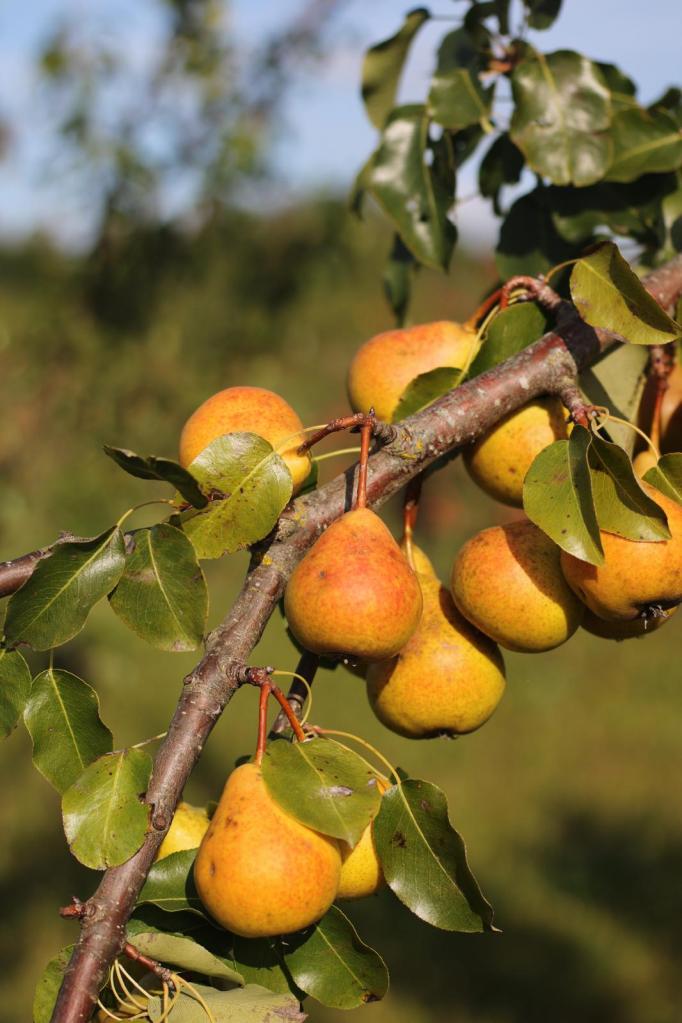
CR: Can you tell us some of the English perry pear varieties you grafted, and how they have coped with your climate?
MP: Brandy so far excellent. Blakeney Red got significant cold damage. I also want to get Thorn and Winnals Longdon. I’ve spoken with Claude Jolicoeur, and he thinks these might work for us, as his weather is colder [in Canada] and he grows these.
CR: A lot of what you do with your orchard is experimenting to see what varieties will take to your growing conditions, and of course you’ve had mixed results. You mentioned two varieties, one from Austria and one from Switzerland. How did you land on those?
MP: Already in 2012 we asked professionals (back then we still did not know how to do it ourselves) to graft for us some Mostbirnen from grafting wood we got from our friend Toni Distelberger. So we were pleasantly surprised that varieties like Dorschbirne and Gelbmostler (which Toni suggested as the most suitable for our winters) did survive and grew well. These and Tem bo li are the ones with which we started our perry making in 2019.
CR: Let’s move from the fruit to the cider. Can you describe your approach and philosophy to making cider and perry? What is it that guides you, what have been your influences?
MP: We are focusing on quality, not quantity. We use methods from minimal intervention wild fermentations, to very ‘clean’ cultured yeast fermentations where we clarify the juice prior to fermentation similarly as its done with modern white wines, with sterile filtration prior to bottling. And also quite often we mix those very different approaches by, lets say, clarifying the juice prior the fermentation but then continuing with wild fermentation and little intervention. We are not religious about one or other approach, believing that both of them can lead to great drinks if best fruit are used and its made with understanding of choices and methods used. But, yeah, we’ve noticed too, that great varieties of perfect fruit quality tend to make great drinks by themselves. So, we focus on learning which of great varieties grow well in our orchard.
CR: It sounds like your approach to make some perries close to white wines is something else that you brought back from your time in Austria, as it struck me that the Mostbarone, that band of makers in the Mostviertel part of Austria, strive for highly technical, super clean and bright perries.
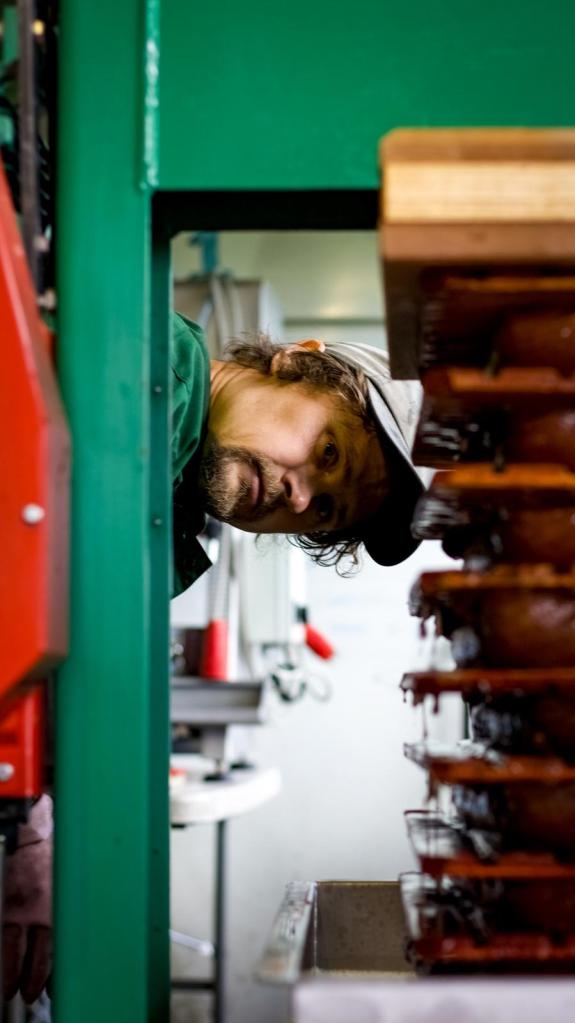
MP: Yes and no. When we just started, we really tried their ‘fresh and fruity’ approach on our apple ciders. But later we gradually started partially moving away from that style, by on purpose adding more tannic fruit to cider, sometimes macerating the pulp. But, yes, still keeping it ‘clean’. With pears we do only partially their way. We do macerate pulp for 24 h which is an English technique. Austrians never do that. We do want to have tannins in perry, they on the other hand remove the ‘Gerbstoff’ as Tony calls them [the German for tannin – Ed.]. But when it comes to fermentation we go for clean and reliable cultured yeast fermentation. But probably one day, when we’ll have more perry pears at hand, we’ll try some wild fermentations too.
This year I let the fruit properly blet, I want to explore what it adds to the drink. Austrians never blet them on purpose. I think, the new perry will be more like English ones, not too sharp with nice rounded tannins. At least I hope so. Also, this time I will make it bottle conditioned with low pressure, no yeast removal. At least now I think we’ll go that path for perry 2024.
CR: I think even in England there are various opinions on if, or even how far bletting of pears should go before pressing. Personally, there are some varieties I do not want to blet, and others that would certainly benefit, so horses for courses.
So you do both spontaneous fermentation and selected cultured yeasts. Would you say you use one more than the other?
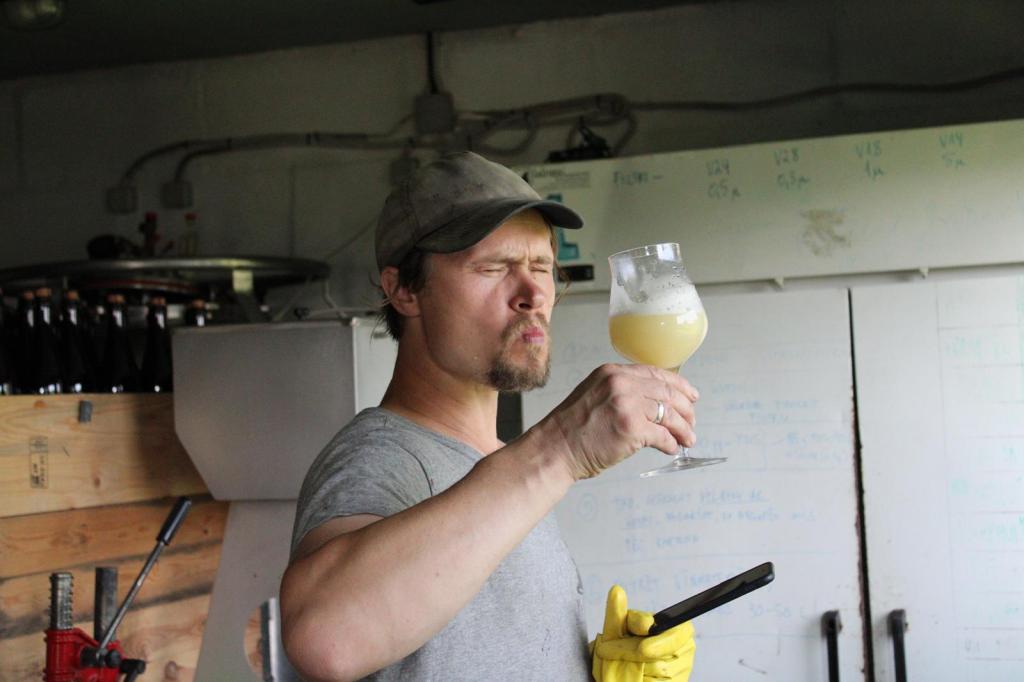
MP: Most is selected white wine yeasts, but we do a few wild fermentations every year too. We love wild fermentations, but we don’t think that our customer is ready to enjoy only wild. The fruitiness and winey cleanness that is achievable with cultured yeast is very widely appreciated in our country.
CR: As I recall you are also doing some traditional method ciders?
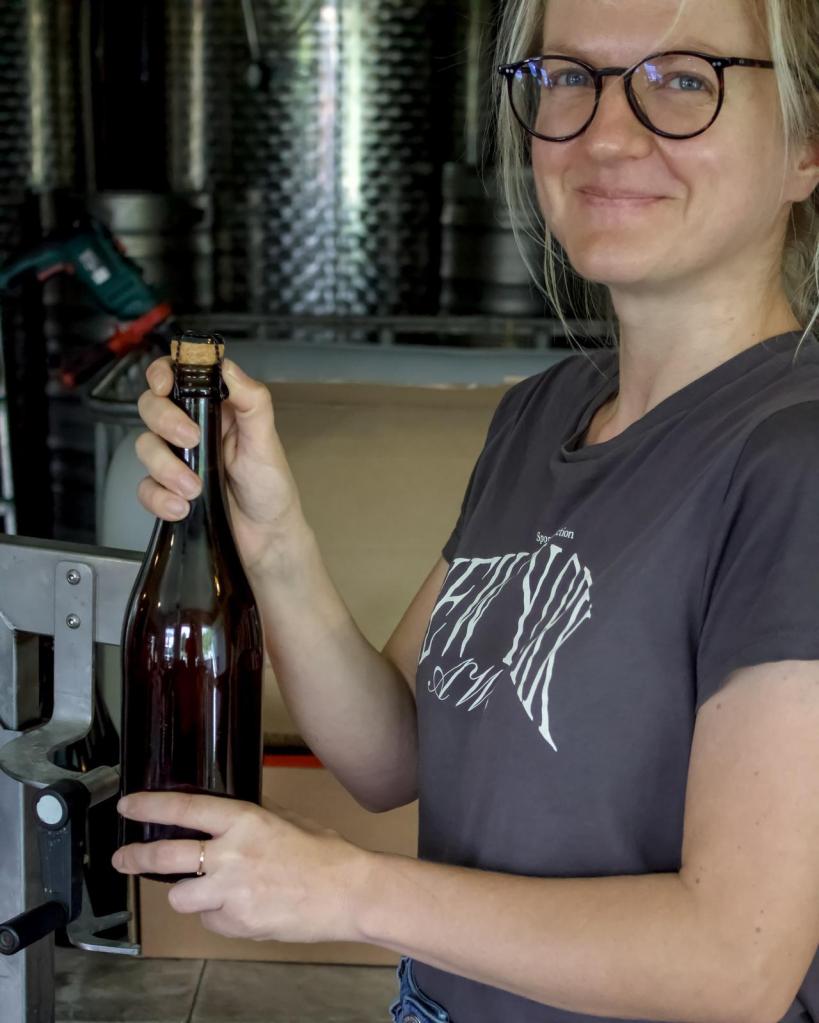
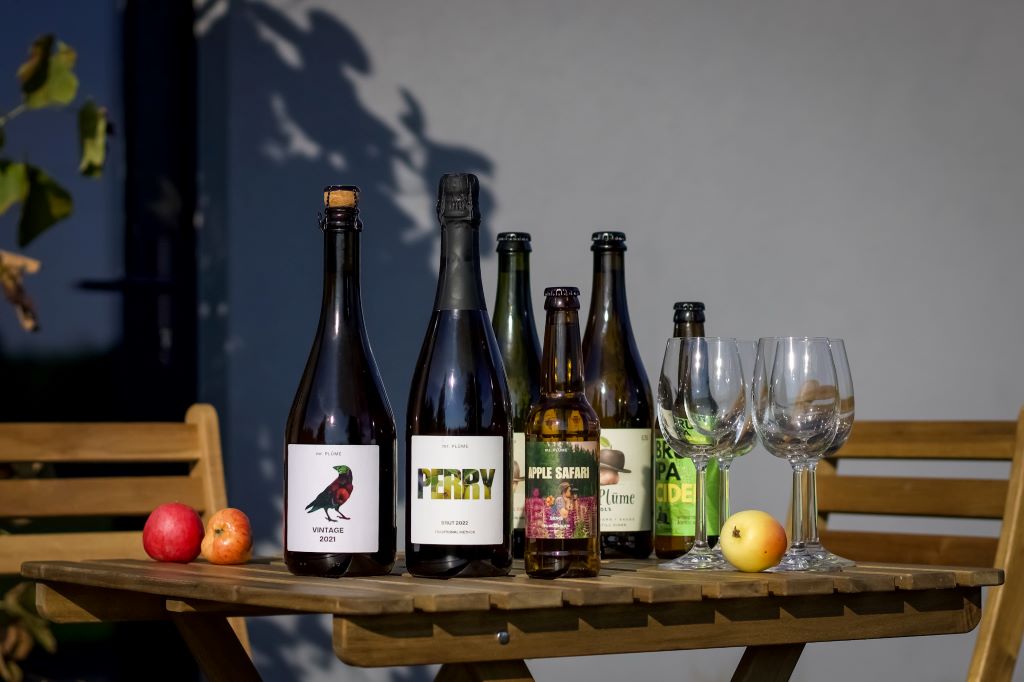
MP: not a lot, but yes in last about 3 years we make some traditional method perries and ciders. We think that Champagne is a great drink, and we are looking at how to make lower abv quality ‘champagne’ from local fruit. We do riddling and disgorging by hand, quite low tech. Slow and labour demanding processes.
CR: When we met last May we spoke at length about the difficulties of selling cider in countries where it is not traditional or, in my case, where the tradition has been largely lost. It sounded like last year was particularly hard for you. Where do you see the major barriers for cidermakers in Latvia?
MP: Last winter was bad, because fear of war coming closer made people cautious on spending. Summer went quite ok though. But the Russian war on Ukraine affects the mood in our country a lot. Hoping for the just outcome where the West finds courage not to give in to bullies. The future of our cidery and our region depends on the outcome of this war.
In our country one can sell quality made semi-dry or semi-sweet ciders presented in 0,33l bottles or on tap quite well for bar-going youngsters as long as the price is low and profile of drink is easy going, fruity. It’s much harder with serious stuff like tannic, wild fermented pet-nats or brut traditional method perries where we ask for fair price above 10€ for 0,75l bottles. In this area there are very small audience who appreciate it and are willing to pay that price. Part of the problem I think is that supermarkets are loaded with good quality wines from the ‘New World’ under €10 in the shop, so people assume that cider simply doesn’t deserve to charge more than that kind of wine. Also, the prestige of cider is low among wine drinkers. The wine snobbism is definitely there. But we try to educate whoever visits us at our cidery or speak with customers in farmers markets. The situation is not very favourable for quality, high-end ciders and perries at the moment, but it is improving. Slowly. Too slowly. But we try to be patient and we don’t plan switching on doing something else. Cider and perry is our religion!
CR: Amen! There seems to be a few quite large, industrial makers there. Does that help raise awareness, or does it set a false expectation on price or definition of what cider can be?
MP: if you mean those concentrate alcopop style cider producers, then I don’t think they help the image of cider much or at all. Often on the contrary. There are also a few bigger ones who make natural flavoured ciders in our country and those I see as a good thing as they provide entry level, easy accessible ciders for new generation of cider drinkers. Maybe I am naïve, but I hope that at some point the same audience will start looking for higher-end ciders.
CR: Hope springs eternal! You mentioned making some products that go into kegs, as I saw in the bar you brought me to. Do you do cans too? How do these differ from what you put into 750ml bottles, and what is the split between kegs/small packaging and large bottles?
MP: Cans not yet. But in kegs we put now a cider called ‘Apple safari’, which is good entry level cider of good acidity and sweetness balance with some tannins coming from wild apples and cider apples from our orchard. We also sell it also in 0,33l bottles as well as our hopped cider which we call ‘Brut IPA cider’. The latter one is a bit like a borderline drink, you either love it or hate it, as it is bone dry, bottle conditioned, quite heavily hopped cider. These type of drinks are about 70% of our annual volume.
CR: Ah, so this is what basically pays the bills so you can also explore the more creative side of your making?
MP: Exactly. We would be happy if we could make only ‘high end’ stuff like probably a few cider makers in England and France do, but as we rely mostly on local customer, it’s not possible for now. And those 70% of our products are not bad at all, just not so interesting for spoiled connoisseurs like you and me for example but perfect for ‘normal’ people.
We also make a bit of fruit wine – dry rhubarb wine as ‘white wine’, semi sweet black current wine as red wine, apple/blackcurrant mulled wine mainly for sales arround Christmas time – and a bit of strong spirits. But our main passion of course is cider and perry.
CR: And your total volume is?
MP: We make about 10,000 litres of cider and perry annually.
CR: I have to admit to our readers that while we were chatting in the pub earlier this year, I was pretty much just drinking local micro-brewed beers, and they were delicious. In fact, you were too! But there were ciders from you on tap and in the fridge, alongside some other makers’ offerings. We spoke at the time about how the scene there has changed in the past ten or so years from basically nothing to, well, why don’t you tell us what has been happening over the past ten or so years?
MP: The Latvian cider scene started in 2010 when first ‘real juice’ cidery opened thanks to changes in laws of alcohol production. Before that, only big factories where allowed who mostly continued from soviet times with no interest in the craft what so ever. We started officially at the end of 2013 and I think we were 4th or 5th cidery at a time. Now there are close to 20 cider makers in Latvia. In the first years the second biggest challenge after teaching the difference between real cider and alco pop style cider was explaining to ‘cider knowers’ why our ciders don’t taste like those in Normandy or England for example. We had to teach a lot that our acid driven ciders (at a time it was the only style available) are just as real as those from France and that we cannot make them taste like French ones from our apples. But later on, when we and others started bringing back awards from international competitions, the trust in our ciders started to grow. At the time we started releasing our first wild fermented ciders with reasonable addition of tannic apples and so it helped prove to ‘cider knowers’ that we actually know a thing or two about cider making.
By 2017 there were already about 10 cideries in our country and the styles were very different already: the main style to this day I would say is clean, aromatic, acid dominant sparkling semi-dry or semi-sweet ciders. Also naturally flavoured ciders is a big thing since then. There are at least 3 producers who specialize now in this style and are the biggest producers by volume. Then nowadays we have also at least one of those minimal intervention dry tasting cider makers. At least few who grow and use cider apples. Us and maybe occasionally some others who try their luck in perry making too. Some, including us make also traditional method or pet-nat style ciders and perries. So, nowadays the range is quite diverse if you know where to look. But still the shop shelves mostly display alcopop style ‘ciders’, but also naturally flavoured ones and acid dominant real ciders start to appear on shop shelves more and more. The craft ones of wild fermented stuff made from specific varieties are still only in some craft beer shops or bought directly from producer.
Ah, almost forgot, in the town of Kuldīga there is a shop named ‘Fine cider and Wine’ where you definitely can find the widest range from Latvian and even Estonian ciders. They sell also online. Ah, and I definitely have to mention the Lithuanian shop in Vilnius called ‘Sidro istorijos’ where you can find almost all ciders produced in the Baltics.
CR: You’ve been over to Asturias recently for the SISGA event, and came back with three silver and a bronze, not to mention SISGA Festival Ambassadors. What did you win for, and how was the experience?
MP: We won silver for our Perry 22’ and for our Pearadise 2023 co-ferment of red-fleshed crabs and nashi pear, wild fermented pet-nat. Silver also for our still, semidry cider. Bronze for sweet still cider. SISGA is always fun and very personal. It’s organized by Fernándi family: Anzu, Carmen, Aymara and Marcos. With help of others of course. We always feel very warmly welcomed there. Highly recommend to take part in it. And Asturias as such is a paradise for a cider geek: food is amazing, cider is almost literally floating on the streets, ocean coasts with huge cliffs, weather not too hot but never cold either and their cider culture is unparalleled to anything I’ve experienced so far. It’s the core of Asturian identity. We just love to experience it over and over again.
CR: You seem to have entered quite few competitions over the years, do you find it helps with sales, or is it more about the affirmation that you are on the right track, or more about networking?
MP: Its all of that. It definitely helps getting taken more seriously by locals. It also helps seeing how we look on a global landscape, and sure going to festivals and competitions means meeting producers from all over the world. A fantastic opportunity to finally meet in person someone whom I’ve been following and admiring only online thus far. And it turns out we are all made from the same material experiencing the same or very similar difficulties, overcoming the obstacles similarly. And it’s an opportunity to speak with someone who understands what you are talking about when you wanna go in deeper conversation about cider or perry and all that geeky stuff…
CR: Given where you are now, if you could go back to visit yourself 14 years ago when you began this journey, what advice would you give to yourself?
MP: Do as many tests on varieties and methods as possible. In the first few years we could have experimented more, although we were always quite curious about things.
CR: Completely random question: what would you plant in your ultimate fantasy orchard, if your climate wasn’t a factor?
MP: If I wasn’t limited on one (or two) persons physical capabilities I would test all the cider apples and perry pears out there. Also, I would ‘apple and pear safari’ the whole world and graft all of the best finds in our orchard. I really do believe that the best fruit are still somewhere in the bushes hiding from ‘greedy’ cider makers as a random seedlings. I would make single variety from all of them. Then make well thought-out blends the next season.
Probably I would also grow few grapes. I would definitely love to try to make barrel aged Chardonnay.
CR: Well that’s quite the dream! And I have to admit I’ve been considering planting grapes too! But, we should probably end it there, though I think we could chat about all sorts of themes for much longer. Māris, thank you very much for taking the time out of what I know is a very busy time of year for you, and best of luck with the rest of the harvest!
MP: Thank you, Barry, for choosing to interview me. You know how to ask the right questions which for me as a cider maker are the most interesting. It’s an honour to talk about our cidery and our new but diverse cider scene in Latvia. Cheers to cider and perry geeks worldwide!

* * *
Bonus material
While doing the first part of this interview, the Latvian word for pears (singular: bumbieris, plural: bumbieri) tickled some brain cells and I sent Maris a link to the article I wrote about the Lost Perry Culture of the Westpfalz, as there, perry was called Beerebumbes. Māris noted that in this article I had listed some local dialect names for various pear varieties, one of which was ‘bumbeere’, which he noted was remarkably close to ‘bumbieris’. Not being an etymologist, I couldn’t answer his question on whether this might be related. However, his friend Anzu Fernandi, the SISGA organiser, is a hobby linguist, and he gave the following explanation:
“I am pretty sure there are no other languages with a similar word for pear, but that is just because of the etymology of the word in your language. It comes from ancient German, if I am not wrong, middle low German, when they invaded the Baltics. Bumbieris comes from protogerman Bōm(Baum)-birne. So bōmbirne > bombiers > bumbieris”.
I’ve said before that perry pears are the true thread that binds us together across Europe, and there’s more proof! Well, kind of.
* * *
Brilliant stuff, eh? I really enjoyed chatting with Māris, and his well-considered responses, and I hope you enjoyed them too. It’s not easy being a small maker, and when it is their main source of income, I have nothing but respect for the effort that goes into it, so I wish him and Dace all the best as Latvia continues developing a new cider culture.
All photos by Dace Smiltniece-Plūme.
Discover more from Cider Review
Subscribe to get the latest posts sent to your email.
 Cider Review
Pingback: Three ciders and a perry from Latvia’s Mr. Plūme | Cider Review
Pingback: Solstice and Sunshine: The London Cider Salon 2025 | Cider Review