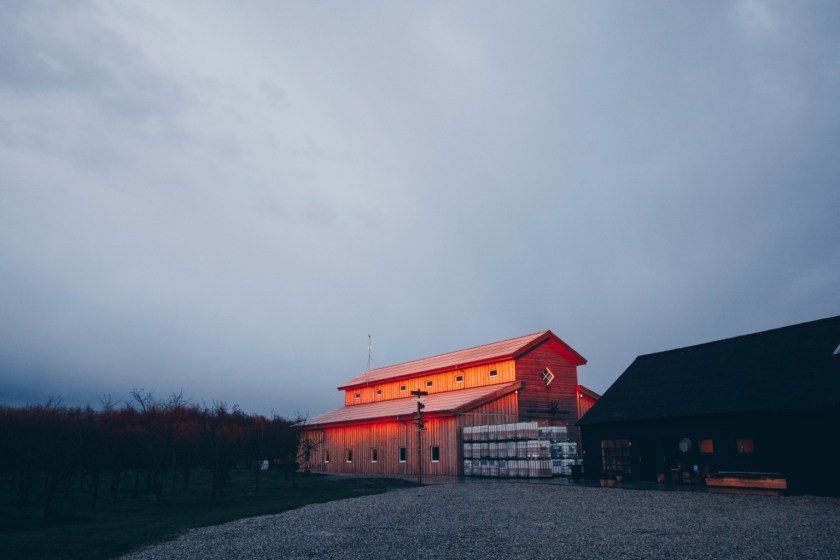
At this year’s Cider World in Frankfurt I was delighted to reacquaint myself for the first time in over four years with a cidery I believe to be one of the very best in the world.
I first came across Cold Hand Winery at CidrExpo in Caen in February 2020. I’d barely started writing about cider at that point, but I was (or rather, believed I was) reasonably well-tasted. But the creations I had tried that day left me absolutely spellbound, and thinking about them for most of the intervening four years before I encountered them again.

Cold Hand are ice cider specialists and – fair enough – it’s now well established that ice cider is one of my very favourite things. But there are ice ciders, and there are ice ciders, and Cold Hand’s fall very much into the latter camp. Not merely for their depth, intensity and elegance, though in these respects they nonetheless occupy the very top rank. Rather what sticks in my mind when I think of Cold Hand is the inventiveness that they show within the ice cider category.
Sure, there’s their classic ice cider – cryo-concentrated, unctuous, still cider with outrageous levels of residual sugar – the sort of thing you pair with you most gluttonous of puddings, or sip as slowly as you can through a long and luxurious evening. But then there was the fortified ice cider. The traditional method rhubarb wine. The sparkling ice cider. The ice cider fermented to near-dryness and bottled still. Reader, I was intrigued.
Encountering them once again in Frankfurt, theirs was the first stand I visited and, as I wrote at the time, remained my pick of the stands even at the end of an exceptional day’s tasting. What’s more, this time I had the opportunity to chat to Cold Hand’s Astrid Lind Kahr, who kindly consented to be interviewed for a Cider Review international month feature.
Better still, I discovered just the other week that some of Cold Hand’s creations are imported to the UK and indeed the excellent Old Shoe in Sheffield has – be still my beating heart – Malus Danica available by the glass.
[Editor’s aside – after publishing this, Mike from Quality Ferments, the importers of Cold Hand to the UK, got in touch to say they’d soon be opening a direct-to-consumer online shop besides their nationwide wholesale arm. So Cold Hand for all! Watch that space.]
Anyway it seems the perfect time to properly feature Cold Hand here on the site. Without any further ado, over to Astrid.

Cider Review: First of all, tell us a little about yourself and your work at Cold Hand Winery
Astrid: My name is Astrid and I’m 27 years old. I came to the winery for the first time 8 years ago. Coincidentally, on the same day that the new production hall at the winery was inaugurated. I had just finished high school and was therefore looking for a temporary job.
With the inauguration of the new production hall, it became possible to welcome even more guests to the winery for tours, wine tastings and dinners, and Jens quickly realized that it would be nice to have extra helping hands. I started straight away, and I came in the evenings and in the weekends and helped Jens with the different tasting he held – washing dishes, serving plates, pouring wine etc.
Jens got busier in wine production, and during my first year at the winery I hosted more and more of our tastings – that meant telling a lot of good stories about our winery!
After a year, I began my studies. I have a Master’s degree in Aesthetics and Culture from Aarhus University, and during my studies I have been very interested in food culture and sustainability. I stuck to my job as host at the winery alongside my studies. When I finished after five years, I started working full-time at the winery. It has been almost 2 years.
Today, it is not tastings that I do most. Today, I am responsible for our sales, and I’m in contact with all our restaurant customers and wine dealers in Denmark and abroad.
CR: How did Cold Hand start?
Astrid: It was the love for the acidic Danish apples that made Jens Skovgaard dream of apple wine. Not cider, not apfelwien – but a new and more vinous kind: Danish, cryo-concentrated apple wine.
Jens and his wife Charlotte were principals at a Boarding school in Denmark. Here, Jens made a gastronomic line, so that he could share his enthusiasm for good food, and in the kitchen at home he made a lot of experiments.
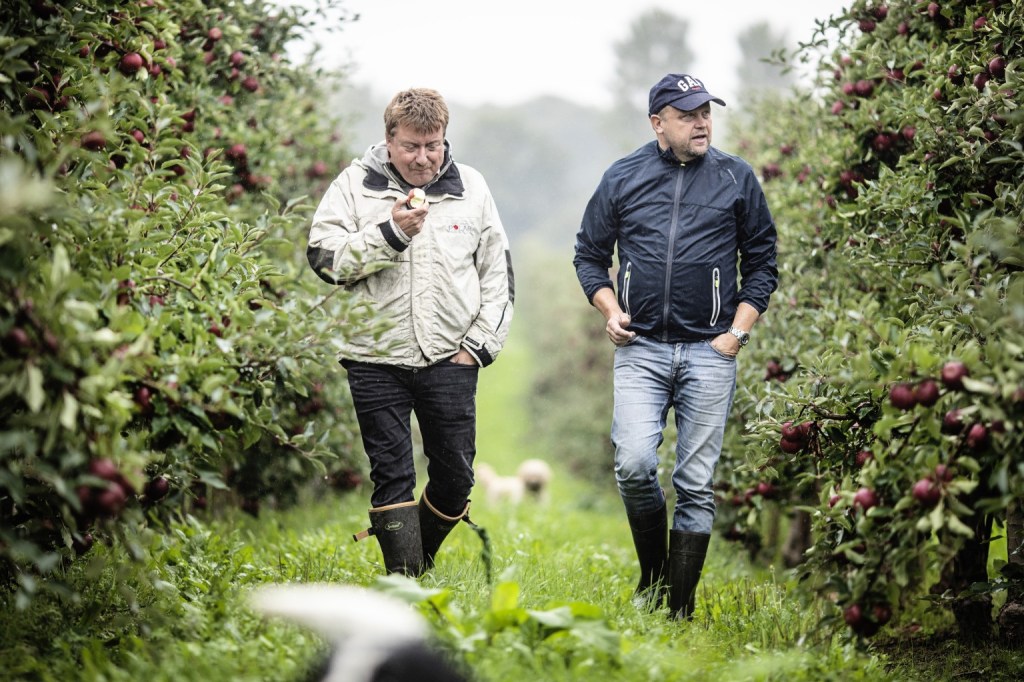
For several years he had experimented with making wine and cider from different fruits and berries. It had also turned into attempts to make wine from grapes, but to be completely honest, it was more fun with apples. No matter what the weather is like, every year we can harvest the world’s best apples in Denmark!
Jens pressed all the fruit and berries the school garden could grow, but then it was that on Christmas Eve in 2004 he had an revelation. He got a book Mine æbler (in English: My apples) written by the Danish apple enthusiast Ritt Bjerregaard, and in this book she writes about her own organic apple orchard.
Jens was sold. He wanted a real apple orchard too! Jens signed up for a weekend course where he could learn how to graft apple trees. Three apple trees were included in the price, but over the next year he added another 700, and the apples piled up. The apples were pressed and turned into must at a pace so that the bottles had to be replaced by bigger containers, and one day Jens fills a container with 25 liters of apple must.
Jens placed the container in the freezer. Fortunately, it went wrong!
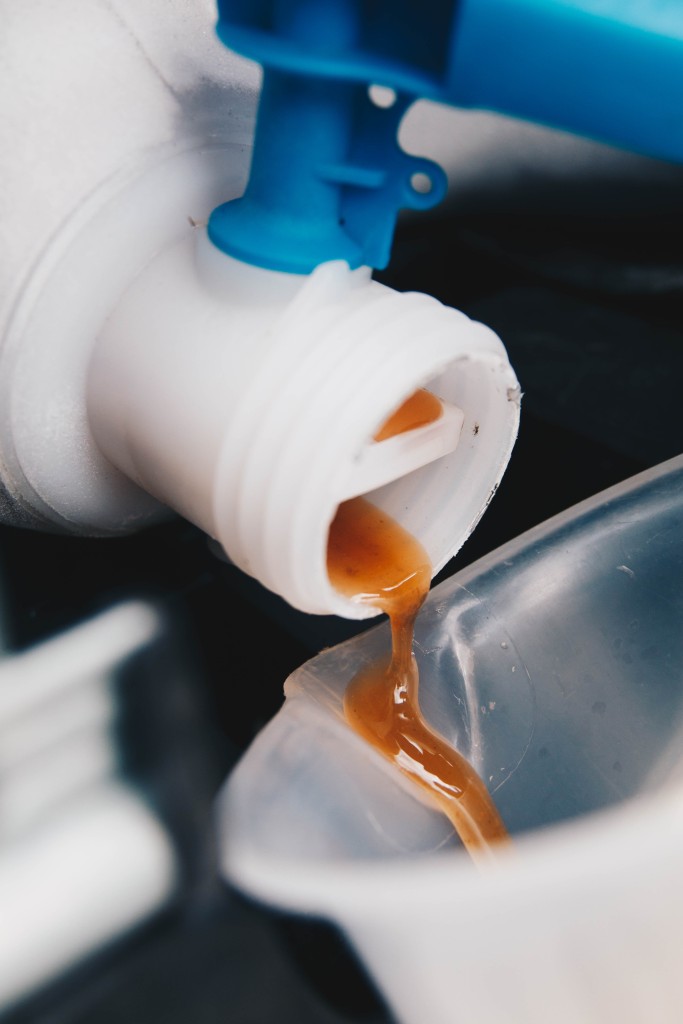
Jens had forgotten all about the fact that water expands when it freezes. This meant that the container in the freezer cracked and a syrupy liquid seeped out at the bottom of the freezer – a liquid he dared to put his finger in and taste. And to Jens’ great surprise, it tasted fantastic!
The thick and sugary apple syrup set off a series of experiments, and in 2010 Jens makes his first cryo-concentrated apple wine inspired by the accident in the freezer. Since then, Jens allied himself with the fruit grower Flemming.
CR: What is the cider scene like in Denmark? Has it changed at all since you started making cider?
Astrid: In Denmark, we do not have a long tradition of cider in the same way as in, for example, England or France. Cider is still relatively unknown in Denmark, and many Danes actually associate cider with alcopops such as Breezer, Smirnoff Ice and Shaker.
However, a lot has happened since Cold Hand Winery started. In the last 15 years, more alcohol producers have appeared – both cider producers, wine producers, breweries and distilleries. This means that today there are more of us to create awareness that we can also make high-quality drinks in Denmark!

CR: What varieties of apples are you using and where are the orchards? Can you tell us about some of the flavours and characteristics of the varieties?
Astrid: At Cold Hand Winery, we work exclusively with Danish fruits and berries. This also applies to our apples. We work with many different apple varieties. Each apple variety has its own unique characteristics, and several of our apple wines consist of a blend of different apple varieties. We especially like the good old Danish varieties such as Ingrid Marie and Filippa.
CR: What inspired you to focus on ice cider? Can you talk us through your methods for making it? And how much do you make every year?
Astrid: As described earlier, the dream took off by accident when a large container of frozen apple must leaked in the freezer. Jens had invented a new method for making the world’s best dessert wine – he thought. He moved the production from the kitchen table into the garage, where he began to do more experiments with plastic containers filled with frozen apple must. After several years of experiments in the garage, Jens and Charlotte chose to resign as principals at the boarding school. Now Jens’ method had to be tested on a large scale.
It was then that he discovered he was not the first.
In his search on the Internet for answers to the many questions that arose in his new life, he came across Francois Poulliot – an American music video producer who had left the wild life of New York behind and moved to Canada, where he had making apple wine since 1994. With the Canadian winter as one big freezer.
Despite the disappointment of being overtaken from the start, Jens wrote to him and told him that he would follow his example in Denmark. And he just had a few technical questions. Francois Poulliot answered kindly and in detail but ended by writing that Jens could forget all about that production method with the winter we have in Denmark. It was in the spring of 2010 – the year when, from November, we had the wildest winter in living memory.

So, Jens wrote to him in February 2011 that we now had 10,500 liters of apple must that were frozen to the ground in the cold outside in the orchard. It became our first apple ice wine, and it was the Canadians who taught us that the method is called cryo-concentration.
Perhaps you have heard of – or tasted – Eiswein in Germany or Austria. These are sweet dessert wines made from grapes that have been allowed to freeze into ice on the vines. They must not be picked before the temperature in the grape is minus 8 degrees, and they are still frozen when pressed. This means that not much liquid is pressed out of the individual grape – the water remains as frozen crystals in the grapes. However, the precious drops have a high concentration of sugar and acid. You can achieve basically the same result with cryo-concentration.
The water in the must freezes into crystals at minus 17 degrees, while the sugary and acidic juice stays liquid and finds its way to the bottom of the tank. After a month, during which we follow the concentration of sugar in the syrup the must has now become, we begin to slowly raise the temperature to minus 1 degree. Then we can tap the syrup without the water thawing and diluting the sugar content. And it is the sugar that must turn into alcohol when the syrup has fermented for a few months. When the refractometer shows 35 brix, the sugar concentration is perfect – 400 grams of sugar per liter. We are ready to tap.
Today, cryo-concentrated ice wine is the base of the majority of our wines. We produce approximately 70,000 bottles annually – a mix of both sparkling wines, ice wines, still wines and fortified wines.

CR: You’re one of the only producers who uses ice cider in a number of different ways – fermenting it to near-dryness, making it sparkling, fortified. Can you talk about some of your creations, how they differ from each other and why you chose to make so many different variations?
Astrid: Not all fruits and berries are suitable for cryo-concentration. When you cryo-concentrate, you intensify the taste of everything – both the sweetness and the acidity. Fruits such as apples, pears and quinces are particularly suitable for cryo-concentration.
Cryo-conceration is a method we use for many of our wines. The first wine we made – and still make – is called Malus Danica (it means Danish apple in Latin). Here we add nothing – no yeast, no sugar. The apples are harvested at optimal ripeness and immediately after being pressed for must. The must is frozen and after that it is thawed outside at sub-zero temperatures. The frost binds the water in the must, while sugar, acid, aroma and colour drip off like thick syrup. The concentrated apple syrup is spontaneously fermented in the winery for 12 months. The result is an ice wine with an intense taste of apple.
The next thing we did was to make a fortified wine named Feminam. Here, the concentrated apple syrup is spontaneously fermented in the same way as when we make Malus Danica. However, the natural yeast in the concentrated apple syrup cannot ferment higher than approximately 10% vol. We then add our own burnt [distilled] eau de vie, raise the alcohol to 19% and put it in used French oak barrels for 3 years.

The cryo-concentrated apple is also the base for several of our dry wines. For example, we make several dry sparkling wines based on the cryo-concentrated apple. Here, the procedure is that the concentrated apple syrup is spontaneously fermented and then bottled according to the traditional method.
One of our newest creations is a still wine made from apples. And in the future, we think this kind of wine will be something we will sell a lot of.
Cryo-concentration is a great way to get the best out of the apples, pears and quinces, and today we have about 15 different wines based on cryo-concentration. Why? It tastes wonderful!
CR: Makers of ice cider in other countries have expressed concerns about the impact of climate breakdown on their ability to make ice cider. Eleanor Leger has talked to us about the reduced number of cold hours she’s seeing in Vermont compared to 10-15 years ago, for instance. Is this something you’ve seen yourself, and have you had to adapt your varieties and making at all as a result?
Astrid: There is no doubt that the Danish winter is changing… When we made the first ice wine back in 2010, we had a really cold winter, and that meant that the apple must for the first apple ice wine froze outside among the apple trees. Freezing a pallet tank filled with apple must requires several consecutive days with freezing temperatures both day and night, and that is becoming increasingly rare here in Denmark. Today we freeze our pallet tanks with apple must in a freezer containers instead.

CR: You call your creations ‘wines’ rather than ‘ciders’. What’s the thinking behind that?
Astrid: As described earlier, we do not have a long tradition of cider in the same way as in, for example, England or France. Many Danes associate cider with alcopops such as Breezer, Smirnoff Ice and Shaker. The choice to call our creations ‘wines’ rather than ‘ciders’ is therefore rooted in a desire to differentiate ourselves from the Danish idea of cider – we make something completely different!
In addition, the base in many of our wines is cryo-concentration. A classic cider is not cryo-concentrated.
CR: These all seem like drinks that are intended as an accompaniment to food? Is that the case, and what foods do you like to pair with each one?
Astrid: We make many and very different wines, which are suitable for food in many different ways, while others can easily be enjoyed as a glass in itself!
A dry sparkling apple wine such as the one called Pommus is suitable for fish and pork with cabbage and apples. An apple ice wine such as the one called Malus Danica is suitable for cheeses with sweet garnishes and for an apple dessert. We also make different wines from cherries and blackcurrants. Wines made from these dark berries are very suitable for chocolate desserts!
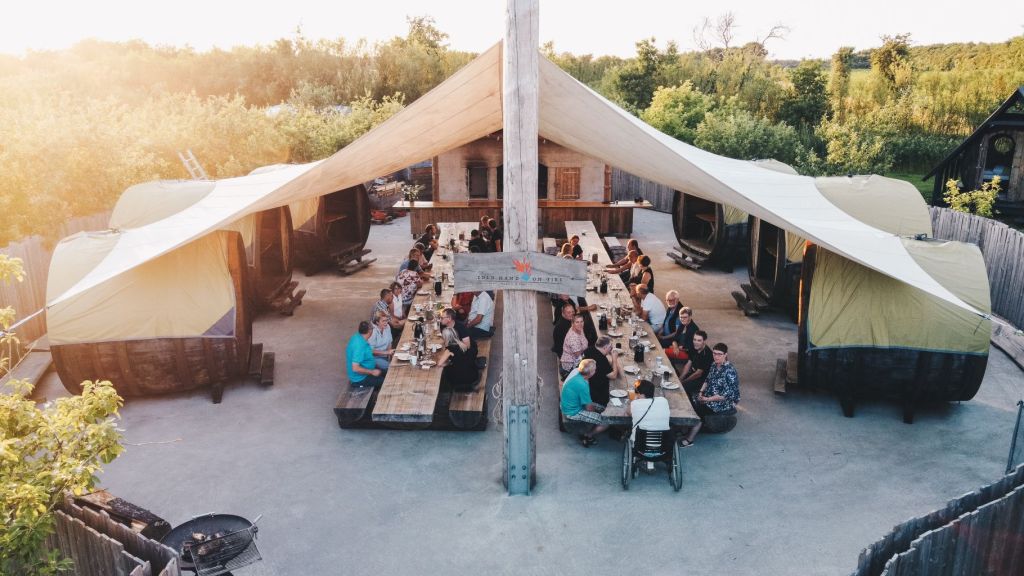
We have many dinner events at our winery. Here we serve a menu with several courses, cheese and dessert, and we have wines to match it all.
CR: Are there any new creations or projects you’re working on at the moment? Can you tell us about them?
Astrid: We have been making dry and semi-dry sparkling wines for many years, but a few years ago we started making sweet sparkling wines – sparkling dessert wines! The restaurants and wine shops have received these wines very well, and we have just finished with two new variants. One variant is made from a blend of pear and quince and another variant is made from a blend of apples and blackcurrant, and in the winery we are working on another variant made from a blend of apple and cherry.
CR: Can we find your creations outside Denmark? Where are they exported to and do you have plans to increase exports?
Astrid: The wines are served in top restaurants and bars around the Nordic region, and we can send wine directly to Sweden, Norway, Germany, France, the Netherlands. We also have a good importer in the UK, so people there also have the opportunity to get their hands on our wines.
Recently, we got the our first products approved in Japan, so that will definitely be something we will work on in the future. China has also started to show interest in our wines, so hopefully people there will also have the opportunity to enjoy Danish fruit wine in the future!
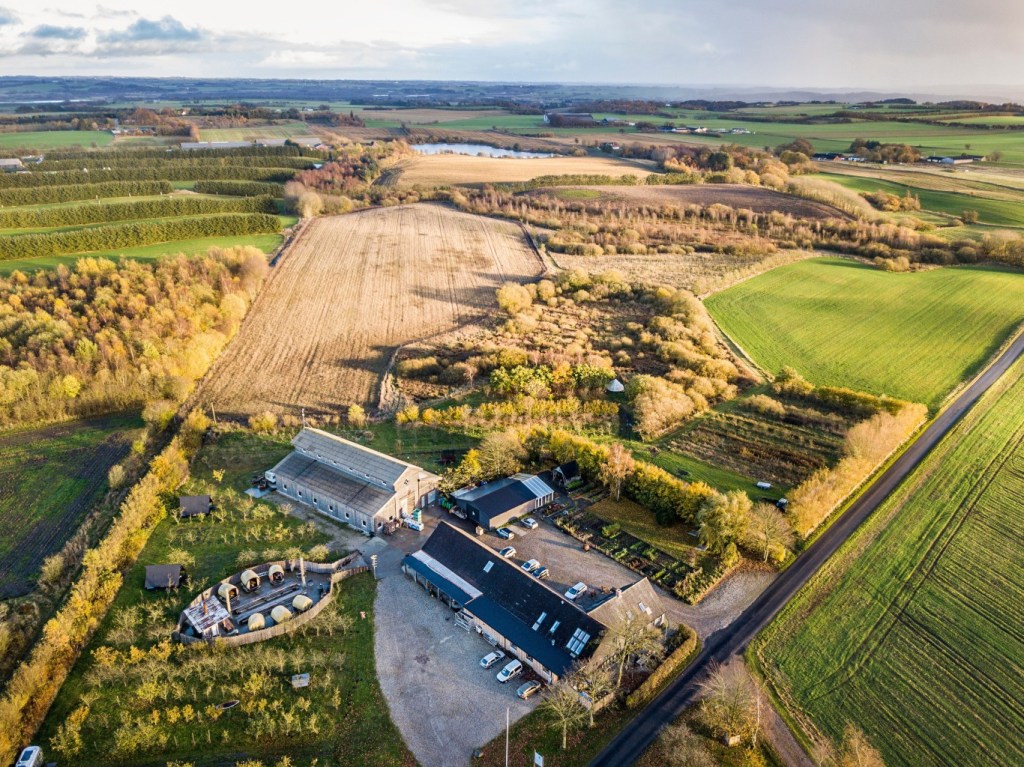
Many thanks indeed to Astrid for providing both fascinating answers and all the photography used in this article.
Discover more from Cider Review
Subscribe to get the latest posts sent to your email.
 Cider Review