No posts yet.
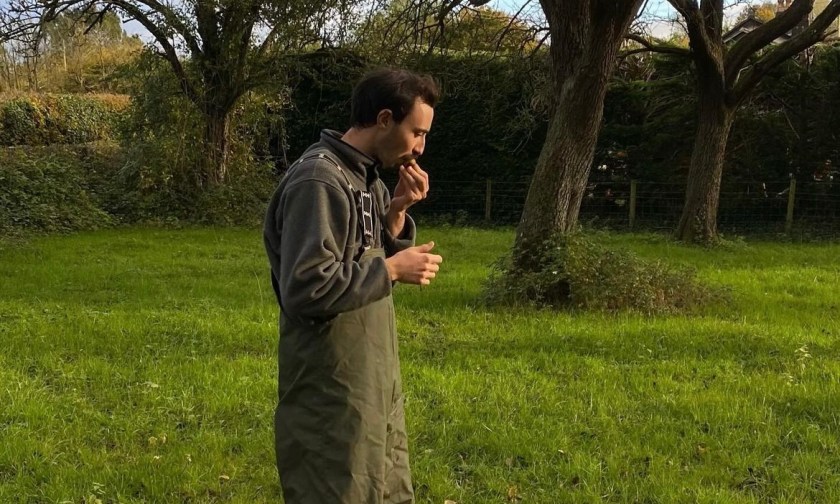
Up until recently if you were looking for Stockley cider that’s the phrase that might have greeted you on his Instagram page. I think I underestimated just how new this new producer was. When I met him for the first time at a tasting at the Old Pharmacy in Bruton I instantly recognised him as someone I’d seen at a previous salon(s), maybe Bristol, maybe London, who knows. I was there to try his ciders, not to play which hall have we crossed paths in before, so I didn’t ask. All I knew through word of mouth was that he was using apples from some of the same orchards as Wilding Cider, that alone was enough to pique my interest.
But beyond this and tasting his ciders that day I knew next to nothing. Nothing online, no website, just whispers from other people. The man was an enigma. With the Bristol Salon coming up and knowing that I’d be buying some bottles to review, I reached out to Rob to see if he’d be up for talking about his cider in his own words. With Wilding holding one of their monthly open days on their farm on Limeburn Hill, I invited him for a busman’s holiday of a chat in Beccy & Sam’s home orchard. Coincidentally the day of his first Instagram post introducing himself and his cider which helped inform the chat. The conversation has been edited for clarity.
* * *
Cider Review: Tell me a little bit about your background, how did you first come to cider and cider making?
Rob Stockley: My cider journey started when I was a teenager, living on my parents’ farm. They had some apple trees in the garden, I just thought, why not try making cider out of them? I wasn’t a beer drinker, and so that idea appealed to me. I wouldn’t say the first batch I made was any good, but it definitely got me hooked. Seeing that fermentation bubble away and how it changed the flavours was really interesting. From then on, it was as a hobby, using whatever apples I could find.
CR: So you weren’t even really coming to it from drinking perspective necessarily, it was more like the apples are there let’s turn them into cider.
RS: Definitely to start with, although cider did appeal to me because I didn’t like beer, but the process was also what I really enjoyed and found interesting. And because the apples were available to me. In my 20’s I did think about making cider as a career. But making it myself didn’t seem to make sense so I was looking to work for a cider maker. But at least in the last five years, there has been some progression, particularly in the fine cider scene. That positive change definitely contributed to me eventually deciding to give it a go, especially as I had no other career direction. I’d been doing different jobs before and nothing else really interested me.
CR: What kind of jobs were you working before?
RS: I never really had a career in mind. I studied business at university with the intention of running my own business. But when I finished the degree, I had no direction apart from an interest in food and drink; so I ended up going from job to job. I worked in places like Dorset Cereals and a business that made spice kits. After that I worked in a coffee roastery and now I’m working at a bakery.
CR: You did your first introductory instagram post yesterday and mentioned that making cider has confirmed for you that you could never do a desk job. Having never worked a desk job myself I can appreciate that feeling of not bringing yourself to have to do one.
RS: When I moved to Bristol seven years ago, I needed a job quickly and so I got an office job through a recruitment agency. I did the job for a year, but I didn’t enjoy it, and it definitely confirmed to me that that wasn’t what I wanted to do. And so since then, I’ve focused on more hands-on jobs which, and I definitely prefer that. Jobs that allow you to work on your feet, work outside more. Working with the seasons is definitely something that I’ve really enjoyed.
CR: You’ve worked three, coming up to four seasons now with Beccy & Sam Leech of Wilding, how did that first come about?
RS: I’d been really enjoying their cider for a couple years before I started working for them, and then one day I saw a post from them on instagram looking for someone to work for them. I got talking to Sam and that’s how it started.
CR: So over the past few years you’ve been balancing the seasonal work there with everything else?
RS: Yes, so the first year I managed to have a sabbatical at the job I had at the time. That was also the plan for the second year but when I had finished the seasonal work at Wilding my other work was no longer available. So I had to find another job and since then, I’ve just been balancing a part time job with my own cider business and working at Wilding.
CR: What point did you decide to get set up and start making your own cider?
RS: I did the 2021 season with Sam & Beccy, and then it made me think, okay, maybe I can do this. That’s when I started thinking about how I can make it possible and trying to figure that bit out. At the start of 2022, I decided to take the plunge. Luckily my parents had some space in a barn on their farm which I managed to convince them to let me use and help me set it up. It wouldn’t have been possible without them, especially with the cost of rent at the moment. Having to pay rent on a space without selling any cider for two to three years just wasn’t feasible in my position.
CR: There wasn’t any defining event or particular catalyst then, it was it just the combination of that 2021 season and thinking to yourself this could be viable?
RS: I think it was the combination, I guess the catalyst was working with Sam & Beccy. A lot of the 2022 fruit was from orchards that Sam & Beccy maintain. So the fruit was there, I had the space, and the job I was doing at the time wasn’t fulfilling. And so it just sort of made sense to go for it. I didn’t want to regret not doing it.

CR: So are you collecting fruit from your family’s farm as well?
RS: Yes, so they rent a farm in North Dorset, it’s in a village called Leigh. There’s three orchards in the village, which I believe is quite unusual for North Dorset. But they’re all quite young. The trees are between ten and fifteen years old, and so I’m not getting loads of fruit from there. I’ve only managed to make one tank so far. So most of the fruit I’m getting is from Somerset.
CR: What’s the approach you’re taking to the cider making if you can sum it up?
RS: I’m handpicking west country cider variety fruit from unsprayed traditional orchards, completely natural. It’s full juice, low intervention cider with nothing added. I’m also using the rural method of cold racking for residual sweetness. [Ed: for clarity, the rural method is another term for ancestral method; cold-racking is an entirely different process. See our taxonomy for definitions.]
CR: Do you think then that rural method is the best showcase for those Somerset apples?
RS: I definitely really enjoy it. I think it’s a good way of getting a natural sweetness in cider and the sweetness balances well with the tannins in the bittersweet cider varieties that I use, so I think it does showcase it well. I think I prefer it to keeving especially as I don’t want to add anything to the juice which you typically have to do to get consistent results with keeving.
CR: Going forward have you got any plans to go outside of rural method?
RS: I really like the results of rural method, in theory its a simple process, so the bulk of what I make will be made this way. Having said that, I have made some dry and still cider and I would like to try making ancestral method cider which does include some racking to help clear the cider before bottling. But ultimately I like residual sugar ciders and so does the general public.
CR: It’s easy going, it’s approachable.
RS: That’s it. And cider with a little bit of sweetness is probably my preference as well; off dry to medium dry, particularly with all the tannins. I think it’s important to make cider that I enjoy drinking myself. And ultimately If I enjoy it, then it’s easier to sell.
CR: Are you tied to the 750ml presentation, or are you going to be thinking outside of that?
RS: At the moment, it’s just me, so it’s the easiest and quickest way to bottle it. It also stores better than BIB’s and it commands a higher price point, which I think it deserves. But I’m interested in the idea of kegging cider. I feel that keg conditioning is a great way to present rural method ciders and it can work well in pubs and bars.
CR: Yes, then you’ve got of avenues that to go down with that. Now there seems to be a thing, especially over the past or six months to a year, some talk that the 750ml is ‘over’. What’s your take on that?
RS: I haven’t seen it personally in sales as I’ve only just started, but I have heard that from some makers. I guess as people have gone back to pubs after the pandemic, they will be buying more draft cider as that’s what is mostly available in pubs. But then I have heard of strong 750ml bottles sales in the last year from other makers, which I believe are driven by restaurants.
CR: I mean, personally the 750ml is my go-to choice still, I think it’s kind of the perfect size, and showcase for cider.
RS: I agree. I can also see the appeal of smaller glass bottles, like a 375ml glass bottle. The size is more approachable for new drinkers. But I think the price would put people off as they still require a similar amount of work from the maker to bottle if it’s done manually. And the glass bottles aren’t that much cheaper than 750ml bottles even though they are half the size. So it’s definitely hard to make them work financially.
CR: It’s a weird thing, that paradox of the consumer saying, we want aspirational cider, but can we have it a little bit cheaper please?
RS: Yeah, I agree.
CR: Who are your influences beyond Wilding. Who are your go to ciders that you enjoy?
RS: So there’s a lot of makers I really enjoy. From the rural method makers I particularly enjoy Skyborry ciders, I think they’re quite an underrated maker but they only seem to release amazing ciders. I also enjoy the ciders from Artistraw and Smith Haynes and I always go back to ciders from Tom Oliver. I think they are all making residual sugar ciders that can be just as complex and interesting as dry ciders but far more approachable. I enjoy still dry ciders, particularly from Little Pomona and Ripe and I would love to age cider in barrels like what they are both doing.
CR: You’ve just released your first three bottles and started taking them out into the world, how’s that been, how are you feeling?
RS: It feels really good, it feels like it’s taken a long time as I picked that fruit over two years ago now. It’s also quite strange only talking about them now as I’ve completed another harvest since then, and I’m now thinking about the next harvest. But it feels really good to get it out there and get people tasting it. I’ve been really happy of how it’s been received, because I feel like you can be your own harshest critic.
CR: Absolutely.
RS: So it’s been good to hear the positive feedback, as I wasn’t sure what people were going to say. Even though I’m really happy with them, you just don’t know do you?


CR: How did it feel with the first tasting at The Old Pharmacy, stepping in with established producers like it, especially like Burrow Hill.
RS: Yeah, and they were right next to me as well! It was quite daunting at first, especially with some established producers there. But hopefully it will be the start of more Somerset cider maker events. Everyone was so nice and welcoming. It felt like a nice friendly group of people, everyone gets on really well, it’s good community.
CR: That’s the really nice thing I’ve noticed more than anything else, everybody supports one another.
RS: Yes, that’s been really nice. Everyone’s happy to chat about all the ups and downs and just give advice. It’s been really positive.
CR: Have you got any other releases planned from the first season
RS: So there is a fourth cider which I actually have also released at the same time. The last two tastings I’ve only been able to bring three ciders. But there is a fourth cider, Dulcet, also from the 2022 vintage. And there is still a couple more from the 2022 vintage which aren’t quite ready, but hopefully will be released at some point in the future.
CR: With the fruit from the second harvest are you looking to emulate the styles of these releases. Do you have a game plan going in or are you just kind of letting the fruit lead you?
RS: It’s a bit of both, I had an idea of what I want to do, but they will be quite different. The 2022 and 2023 vintages have been very different and so I’ve had to adapt to that. Because the sugar levels were lower in 2023, I’ve fermented everything drier so that there’s still a good alcohol content. I also had less sharp apples so fermenting drier has helped keep a good balance with the lower acid. I’ve been working with different orchards as well so I’ve had to learn how that fruit behaves differently especially to the cold racking method. It’s been quite interesting, and it’s going to be an ongoing learning process, seeing how different orchards, varieties and conditions affect the fermentation.
CR: Just using Wilding as an example, I always find it interesting with bottles like Run Deep or Commix each year, it’s a variation on a theme, and it’s always exciting to see them come back year on year, but then also there’s the limited releases and different bottles that when they’re gone they’re gone.
RS: I’d like to eventually have a few ciders that I release every year when I’ve got some more consistency in the orchards that I pick from. So that you can see the differences each vintage has on the cider. I would also like to make ciders focusing on different varieties even if they aren’t single variety ciders, but I’m still just trying out different blends and seeing what I like and what works.
CR: Does the idea of single orchards blends interest you more than blending from across the whole harvest?
RS: Single orchard blends are very interesting. You can start comparing vintages from the same orchard and also how orchards affect the cider. But for me it also simplifies the blending process as it limits what quantities and varieties I can play with in each blend. With my 2023 ciders nearly all of them are single orchard blends, some focusing on a few varieties. So those are my main two focuses of how I want the blends to be.
CR: Lastly, how do you feel about coming in to the cider scene at this point in time? How it stands at the moment? Because for me it seems like the best of times, there are so many new producers doing exciting things, but also, there’s kind of that post lockdown/post Covid slump as well.
RS: That’s a tricky one. I’m optimistic but I realise there’s still a long way to go and I think it will take a long time to get there. Its positive to see more and more restaurants stocking high quality cider. And there’s more cider focussed shops like The London Cider House and the new Fine Cider Company shop which makes me hopeful. I feel like the more people that are exposed to aspirational cider, the better it will get. This is because the majority of people, I introduce to fine cider are amazed at how good cider can be and how different it is to macro commercial ciders. I often hear people say this is the year cider is going to get big and then it doesn’t. But I feel there has been an improvement year on year, just not at the pace that we would like it to be.
* * *
Rob Stockley is @stockleycider on Instagram
Discover more from Cider Review
Subscribe to get the latest posts sent to your email.
 Cider Review