
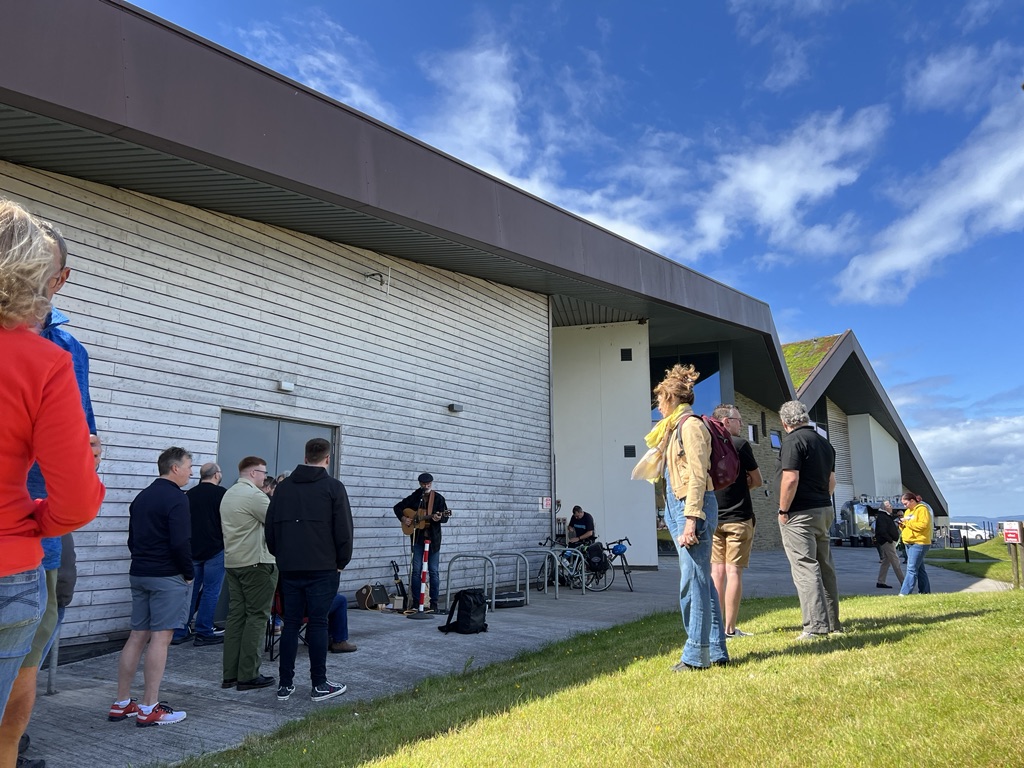
Picture the scene: a sunny day towards the end of June on the south end of the Isle of Arran, situated on the west coast of Scotland. A light, warm, salty breeze carries itself across the grounds of Lagg Distillery – enough to keep the midges at bay and to ensure the visitors to this year’s Malt and Music Festival are kept cool. By 10:00am my friend Andrew had got the stove going out the back of his work campervan in the car park of the distillery.
“Fancy a brew, Jack?”
“I wouldn’t say no, thank you, Dr Smith!”
I was wearing the effects of the previous night’s revelries all too plainly on my face. I always try not to mix my drinks at the distillery’s White Stag Dinner, the formal dining affair which opens each year’s festival. I think on this occasion, with some certainty, I had failed at this endeavour. Tea was an absolute must-have! A small queue had already started forming towards the front left-hand of the distillery building, affectionately known as the Cider Shack by its staff. This bit of Lagg Distillery will, if all goes to plan in the coming years, have far more of an apple-themed operational existence, but for now, is the mailroom for both Lagg and Lochranza distilleries. With FOMO kicking in, quite unnecessarily, I wandered over to join the queue. Just under an hour passed and the doors to the Cider Shack swung open – the festival’s annual single cask bottling was on sale, along with its companion Harmony bottling (inside a dinky little guitar case). As well as whisky at the festival, there was another bottling on-sale at the distillery that I saw nearly everybody adding to their purchases: Lagg Distillery Orchard’s inaugural small batch craft cider!
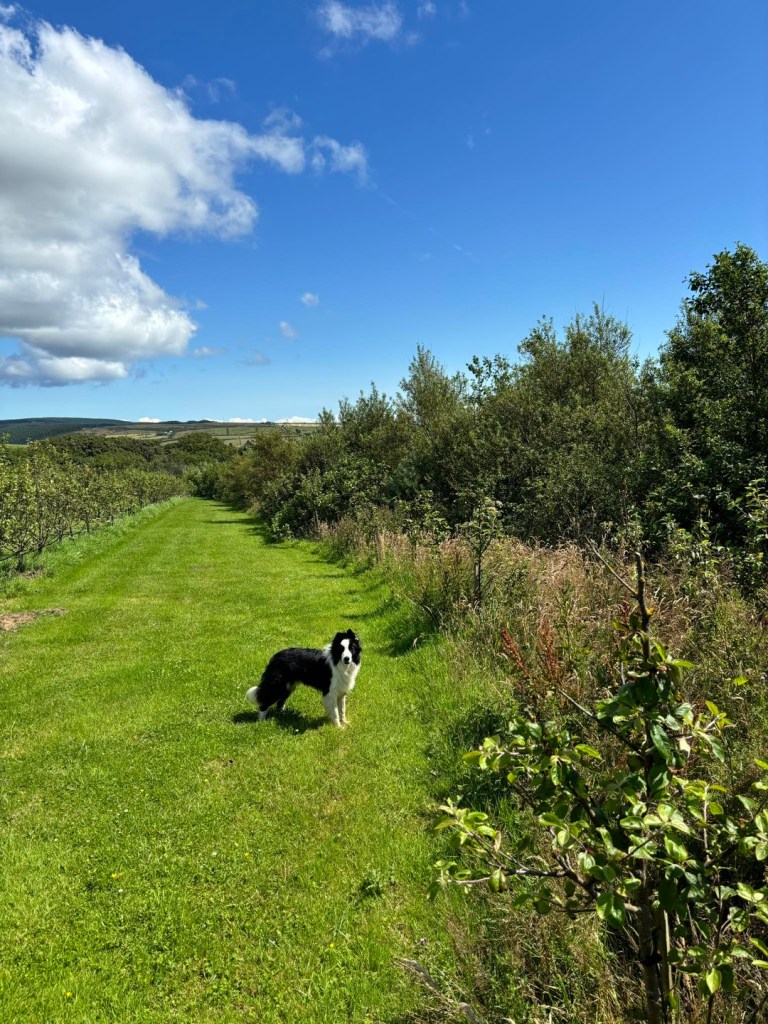
From 2017 onward, just over 2200 apple trees have been planted in the grounds of Lagg Distillery, with varieties including Michelin (Bisquet), Dabinett, Harry Masters Jersey, Tremletts Bitter, Porters Perfection, Stoke Red, Ashmead’s Kernel, Orleans Reinette, Jane, Jonagold and more. This has turned what was once an exposed field that saw a mixture of barley and then wheat planted on it every few years, into site that includes a North Orchard, a South Orchard, a mixed-tree shelterbelt, a large pond, and a distillery building covered in a natural sedum roof. In short, a massive increase in biodiversity can now be found on this land compared to 8+ years ago. The site still maintains an incredibly windswept and elemental feel to it when a keen breeze is blowing right through you from off the Firth of Clyde and out to the Irish Sea, but there are now trees – lots more trees!

Planted on Malling Merton rootstock MM111, suitable for semi-vigorous growth, these trees could in theory grow to between 5-8metres in height but are being purposely pruned to around 5-6ft (imperial and metric measurements are welcome on Cider Review) to create a stronger bush or hedgerow style in the North and South orchards, as a protection against those prevailing winds. In the shelterbelt surrounding the south-eastern and eastern fringes of the distillery’s land, the trees (a mixture of Dabinett, Harry Masters Jersey and Jane) are being left to grow au natural along with willow, birch, eucalyptus and pine. These trees are already taller than I am (6ft 3”) and are really thriving in this mixed hedgerow setting. This setting is familiar to the origin stories of many a Gribble and Styre variety of apple and seems to be conducive to these trees being much happier in a mixed (and sheltered) communal environment, than the rigid, formal lines that make up the majority of the orchards here.
Michelin/Bisquet, Ashmead’s Kernel and Tremlett’s Bitter are two varieties that have taken very well to their new homes on the Isle of Arran, and after 6 years, in the Autumn of 2023, produced enough crop for Distillery Manager Graham Omand to engage the help of his groundsmen Davy Ballantyne and Andrew Earle to pick their first crop of apples. I asked Andrew about this experience, taking part in the first harvest of apples from the orchard he had helped tend to and nurture alongside his colleague Davy:
Andrew: “Harvesting the apples was a pleasant experience with a bit of help from the local primary school kids (three of them were mine). We had this great feeling of accomplishment as we finally had a crop to harvest and we were looking forward to the end result – we weren’t disappointed!
As you know, the landscape here is very challenging due to the exposure to the wind off the sea. We noticed the significant damage to the trees in the orchards where the windbreaks were not complete. We’re currently designing new windbreaks to fill the gaps using willow trees to reduce exposure. These join the wide variety of natural trees on site: eucalyptus, birch various pines as well as gorse and broom bushes.”

The ensuing cider was made up the water and around the corner on the mainland in partnership with Ayrshire Riviera Cider – one of Scotland’s emerging cidermaking talents, following the full juice principles we like to celebrate here on Cider Review. Run by Allan Thomas and Billy Malcom, we got a few words on what it was like to help produce the first ever cider from this new orchard on Arran.
Allan: “We’re delighted to have collaborated with Lagg Distillery, part of the Isle of Arran Distillery Group, to provide an excellent new addition to the drinks range produced from the island. Their distillery tour at Lagg highlights that Arran was known as Apple Island in Gaelic throughout history. The introduction of a large orchard on their site shows their commitment to cider production and potentially the distilling of that cider to produce a Scottish Calvados.
This is the second collaboration we have participated in after last year’s work with the National Trust for Scotland at Culxean Castle. We also used a cask from Arran’s other distillery at Lochranza to produce a whisky cask variety of our Blue Label cider that has been equally well received.”
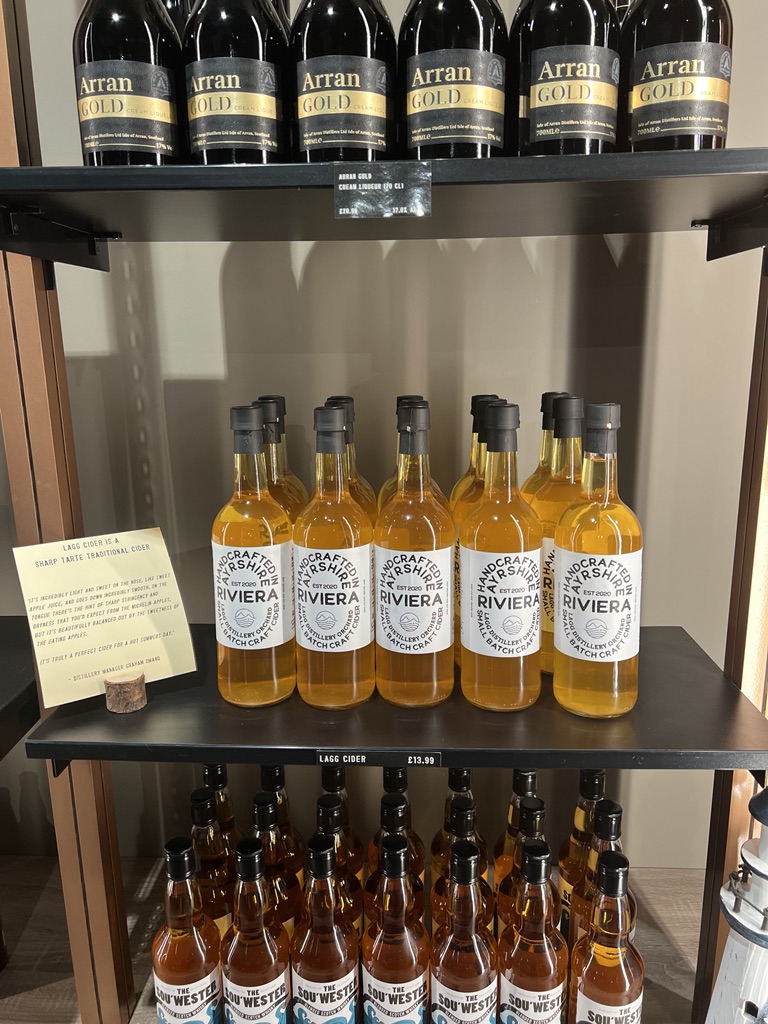
Initially released towards the end of May 2024, the stock of 750ml bottles that Graham had available for sale (just over 300) were selling at such a pace that he purposely held bottles back so that when we visited the Malt & Music Festival at the end of June, we could still try this inaugural release. I had friends take a couple of cases back to Belgium, Germany, Holland, and…the other end of the Isle of Arran. It was brilliant to see the reception a new bottling of 750ml cider can get in 2024. It’s presented in a dry, still format, something not everyone on the island and at the festival might be used to, but it was provoking a healthy debate amongst friends there previously used to ice cold, sparkling, from the tap style cider – and that must be a good thing. Now the dust has settled on the festival and the cider’s release, I asked Distillery Manager Graham Omand on his thoughts on Lagg’s first cider release:
Graham: “Firstly, it was a bit overwhelming when we received all the cases of fruit from the orchard – those trees were planted years before we even started producing spirit at Lagg. Although it was only the first crop, it felt like something momentous in the site’s history.
The initial reception was incredibly positive, a lot of locals came from around the island to buy a bottle, the price was an understandable point of contention, but with this being our first ever crop and with such limited supply, people were understanding.
This first release was a very simple start as we did not want to overextend ourselves. The blend choices we made might have been too much in favour of the Michelin apples, which are our biggest crop right now. Maybe we can mix it up a little in the future. In the end we are a distillery, we’re not yet experts in the high craft of cider making, but we hope to one day reach those heights!
For the future at least, I hope to make the next release a sparkling cider rather than still. The still presentation is seen as an atypical choice for most cider drinkers up here in the west coast of Scotland.”
Onto then, the review of this first cider from Lagg Distillery’s orchards, the first of many more to come!
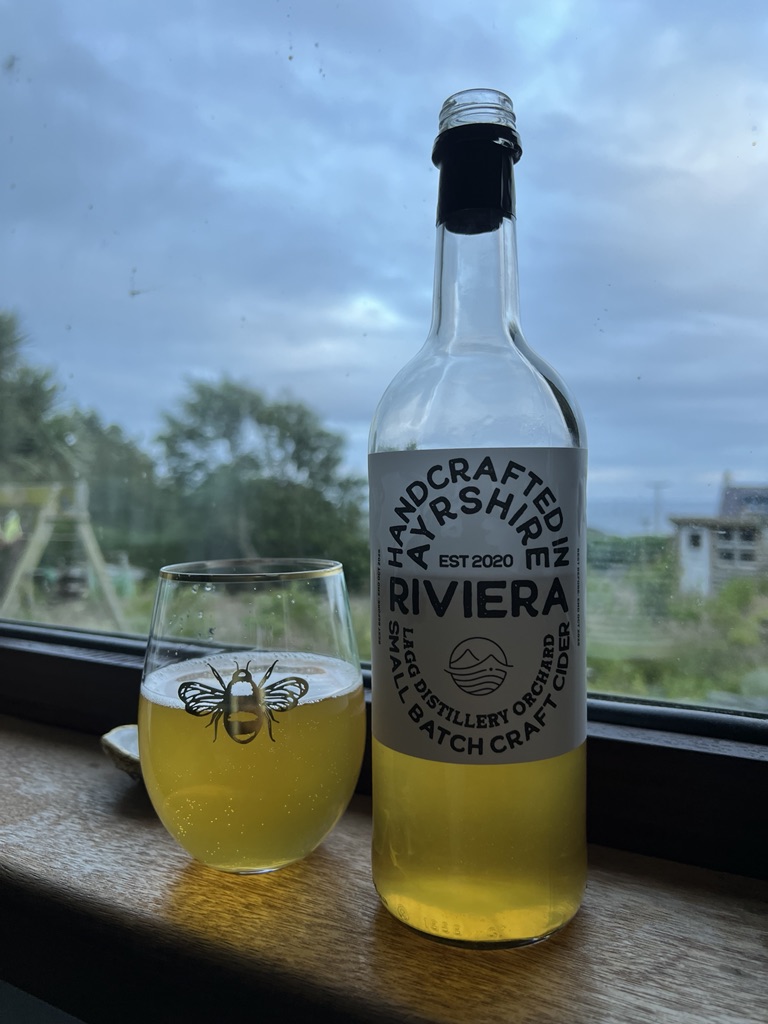
Lagg Distillery Orchard. Small Batch Craft Cider (7.6%) review
How I Served It: 30 mins in the fridge.
Appearance: A translucent hazy sunset hue. Lightest notes of effervescent sparkle. Thin-rimmed mousse around the edge of the glass.
On The Nose: There’s that definite Michelin/Bisquet note – soft tannins alongside a juicy estery rhythm. I think a bit of Tremlett’s Bitter coming through too. As an orchard blend of both cider apples and dessert apples, there’s a fainter tart and sour appleade/apple chewit note humming away underneath the main Michelin notes.
On The Palate: There’s that beautiful magic trick that dry ciders like this play – bone dry but juicy as anything. A bit of bottle conditioning going on here, as a slight prickle of effervescence gives rise to a very mild coating of tannin on your gums. It’s the specific part of an apple crumble where the fruit filling meets the slightly undercooked, buttery part of the underside of the crumble topping. Really yummy!
In A Nutshell: What a bold, brave, beautiful statement of intent from the team at Lagg Distillery and Ayrshire Riviera Cider. Bringing out 750ml bottles from the first harvest this orchard surrounding the distillery has produced. Fans of dry, near-still cider across the globe will not be disappointed by this!
Conclusions
I appreciate Graham’s point about presentation and price point. At £13.99 a bottle, this sits comfortably in the range of 750ml, large format cider bottles for the UK market. But for a local community perhaps used to only Inch’s, Strongbow, and Thatchers on tap, as well as Thistly Cross from 330ml and 500ml bottles (that’s all I saw on the island this summer in its pubs and restaurants), it might seem a bit abstract at first. If it hadn’t sold well within the first few weeks, I’d have said there might be a bit of work to build the audience for it. However, the fact it nearly all sold out before the festival suggests there’s a real hankering for something like this – a drink made using 100% Arran ingredients. The island already has Arran Milk Stations dotted across its main villages, selling 100% Arran milk from dairy herds that graze on its fields. It has a great butcher that uses as much meat from the island as possible and supplies the local Co-Op supermarket. Now it can lay claim to having a cider AND whisky producer on the island as well.
All of this is said with regards to the community that live on Arran, and is not fully acknowledging the international visitors the island receive year round. Lagg Distillery already attracts a wide and varied array of visitors who want to travel to discover great food and drink. In that sense, the visitor centre shop, and perhaps in the future, a keg line in the café or at future whisky festivals, is the perfect place to showcase your latest cider offerings. It’s no surprise then that this first release has flown off the shelves and been enjoyed by so many folk. How many cideries in the UK share their land with a relatively humungous distillery next door bringing in customers to see both products? Perhaps it’s something to consider for places like the English Whisky Company in Norfolk, and the Lakes Distillery in Cumbria – get planting those orchards now! And at Lagg, well it’s very exciting to me to think of the potential these 2000+ trees have growing within them as more and more reach fruiting maturity and their output increases year on year!
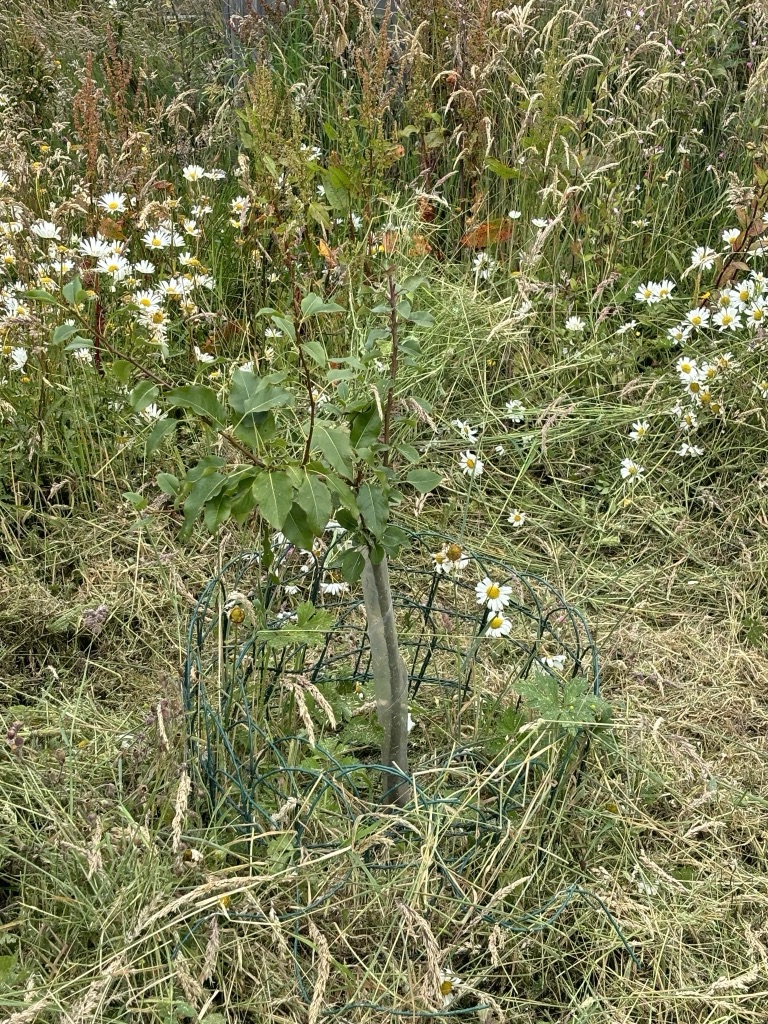
Of course, it wouldn’t be Cider Review without mention of perry. I noted that all the fruit trees in the orchard that have gone in sine 2017 were apple trees. I’m pleased to report that as of March 2024, a perry pear tree has found its way up to the orchard at Lagg, courtesy of my grafting efforts in 2023. It’s from the remnants of an old orchard by the banks of the River Ouse in my home town. Not matching anything on DNA records back in 2022, it is growing in a few other places in Norfolk, and now, the Isle of Arran too. It may even be joined by some companion perry pear trees in the years to come. For now, it looks to be thriving!
Discover more from Cider Review
Subscribe to get the latest posts sent to your email.
 Cider Review
Pingback: Step forward, Ayshire Riviera Cider company! | Cider Review