
Nearly every drink has its own dogma or ritual associated with it, a neat set of rules on how to best enjoy a particular beverage, how it’s served, what vessel it’s served in, a guideline for the uninitiated, a welcoming familiarity for those who already know. Cider is no different. Although, as the sometime Robert Zimmerman wrote, the times they are a-changing. The increased popularity of craft cider especially in the past five years has meant small producer led cider has started moving away somewhat from its beer adjacent positioning in the realm of pints and half pints, and more towards wine style measures, glasses and presentation in 750ml bottles. From a visual & gustatory point of view, I think it’s something that improves cider and its perception immeasurably. But one piece of dogma seems to still remain entrenched in most people’s minds. The idea that cider must be served chilled or worse ‘ice-cold’. And it’s an idea that seems to have only really taken root in recent history.
Back in the early 2000’s cider had a renaissance thanks to Irish brand Magners. A massive and massively expensive PR campaign, to the tune of somewhere in the region of £30m, suddenly put cider on the same footing as beer in the public’s mind. Huge billboards of young twenty-somethings enjoying cider in orchards were omnipresent sights and helped make cider something that I don’t think it could have ever claimed to be before, it made it trendy. Suddenly cider was the popular choice of a new generation of drinkers, both men and, more importantly, women. And how did all of this come about? Three little words, ‘cider over ice’. This new trend of putting ice in the pint glass to be served with a pint-sized bottle was halcyon days for Magners and for cider in general, until of course, as in all big business, other macro producers copied the idea and saturated the market with knock-offs. In time Magners dropped off as the go-to cider, its presence in pubs and bars superseded by the rise of fruit ciders, a category that now sadly accounts for almost a third of the UK cider market.

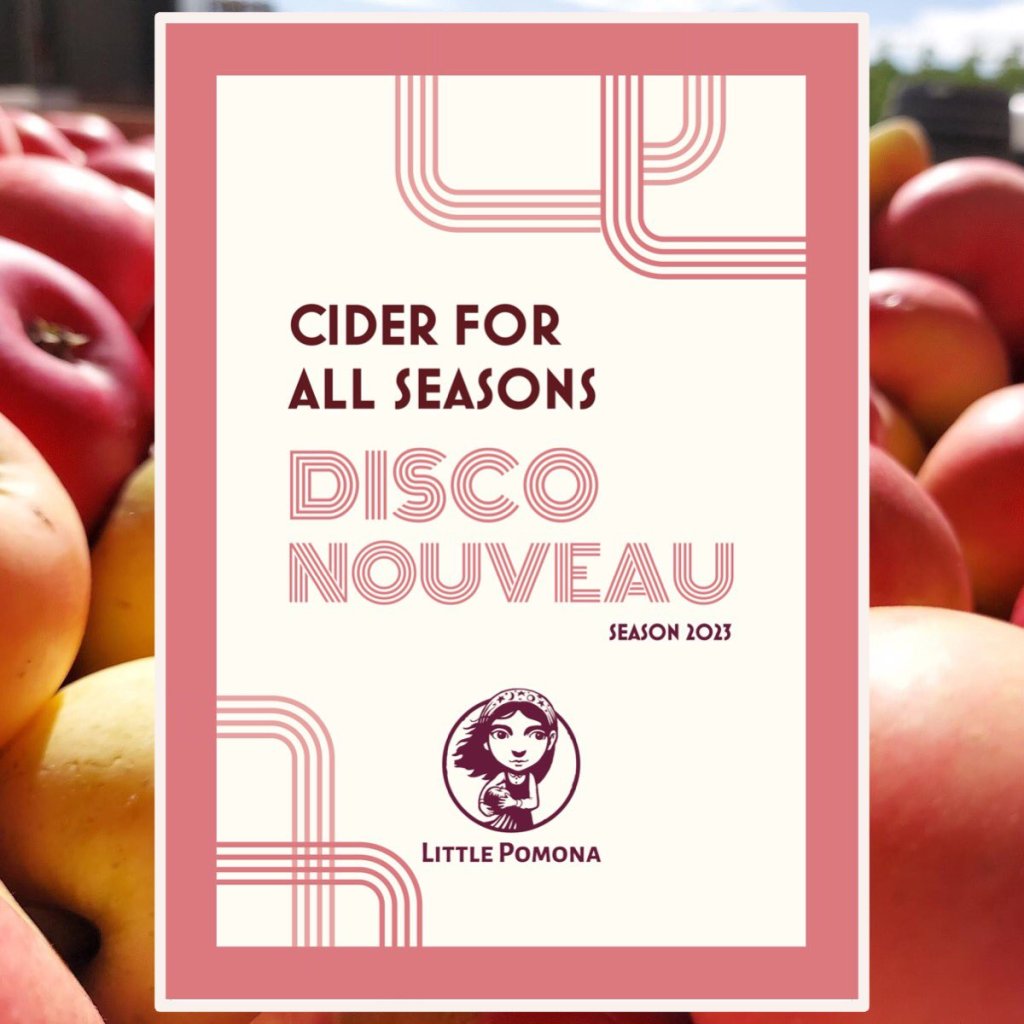
The ‘cider over ice’ campaign is by no means the only factor behind the idea of well chilled cider, there is of course a myriad of reasons going back way before this, but for far-reaching and long-lasting effects the campaign has massively influenced a generation of drinkers and the effect from it has been twofold. It also instilled the idea that it was a summer drink, a seasonal beverage to be enjoyed communally, outside when it’s hot. Of course there’s nothing wrong with that picture, cider should absolutely be enjoyed with friends on a hot day, but in the bigger picture of the drink itself, it’s a reductive notion that it’s only for a certain time of the year, and one that persists over 20 years later. Wine and beer are generally seen as perennial rather than seasonal, maybe certain styles like a rosé or a stout have seasonal connotations to them, but they don’t define their respective drinks as a whole. Cider should be exactly the same, and the perception needs to change. This year’s ‘Cider for all Seasons’ campaign by Little Pomona, launched to coincide with the release of the latest vintage of their Disco Nouveau, aimed to redress this perception. But more still needs to be done. Fine cider shouldn’t be thought of in the same terms as macro cider, but intrinsically the same notions of chilling and seasonality still carry through to it, mainly unconsciously, but still detrimentally.
There is a far simpler and more calculated reason behind macro producers wanting you to chill your cider of course. As The Cider Critic pointed out in his article Sugar: Cider’s Dirty Little Secret, chilling hides a multitude of sins. Huge scale, factory produced, concentrate using, back sweetened ciders are effectively made to a recipe, they’re made to be consistent, they’re made to be closer to Coca Cola, another overly sweet beverage that needs super chilling to be some way drinkable, than they are to small producer craft cider. The cold poorly making up for the lack of any depth of flavour, it makes an uninteresting drink more palatable and centres the focus on the idea of refreshment over nuance.
The fact is, temperature does play a massive part in how we perceive flavour and aroma, not just in drinks but food as well. This is all to do with how volatile the molecules are in any given thing. Water is an easy example, it carries flavour and aroma pretty well, say a stock for instance. But at low temperatures water isn’t that volatile, so that flavour is muted and the aroma isn’t really that interesting. When you’re simmering the stock however the molecules are extremely volatile, they’re smashing into one another because they’re moving around much more actively, filling the kitchen, and your olfactory system with its aroma. The flavour of it will also be far more assertive because of this. Alcohol is far more volatile at lower temperatures. Unlike water, pure ethyl alcohol will boil at 70 degrees Celsius and only freeze at -114.1 degrees Celsius, hence why distilled spirits of any kind always have a much more dominant aroma at room temperature than say a wine or cider. When it comes to cider, in extremely crude terms, we’re talking about a mix of alcohol and water (when I say water, I’m talking everything in the cider that’s not alcohol, not most macro cider that really does contain a quantity of water) in varying proportions, and possibly sugar as well. Sugar being something that plays its own very interesting role in the perception of temperature depending on what form of sugar it is. But the quantity of alcohol to water in cider means that at something like fridge temperature (3-5 degrees) the molecules aren’t very volatile, as a result you may not be getting the best out of your drink. Raise the temperature slightly to something closer to cellar temperature, say 8-13 degrees and you’ve got something that’s still cool, still refreshing, but organoleptically far more pleasing.
Luckily more and more producers are writing serving temperature suggestions on their labels. But I’m in agreement with the Cider Critic who, in his article The Devil’s in the Details, talks about it being something that, along with tasting notes and food pairing suggestions, is often being forgotten. It feels like the most missed of opportunities when it’s not mentioned on a label, and yes, I realise space is a factor with the artwork and all the other info that goes onto them. But at the same time the producer has guided the cider from the apple in the orchard to the bottle in your hands and then stumbled at the final hurdle by not suggesting how best to enjoy it. That’s to say nothing of some bottles that it’s absolutely essential to chill well in the fridge before opening. For instance, a bottle of Le Père Jules I picked up from Bristol’s The Cider Box, that I was luckily pre-warned to give plenty of time to chill, still possessed a shotgun-like recoil to it even after a night in the fridge. Or a recent incident where a bottle shop hadn’t chilled a bottle of Oliver’s Yarlington Mill long enough, leaving me covered quite literally head to toe in a tsunami of Yarly when I opened it. The bartender giving me a wry smile and a cuttingly rhetorical “gotta love bottle conditioned aye?” as they came over to pass me the blue roll. And I’m reminded of the multiple episodes of Neutral Cider Hotel during lockdown where Grant Hutchison of æble Cider Bar managed to cover his laptop with an over exuberant bottle, much to my amusement, and presumably the Apple support team’s as well.

Wine feels like it should be analogous to cider in respect to serving temperatures as they’re comparable to one another in many other regards. But dig a little deeper and it isn’t always a straightforward parallel. Germany through into Eastern Europe, the Basque Country & Northern Spain, the US, as well as the south-east of England and Scotland’s rapidly growing cider scene all produce ciders that are comparable in style to white wines. But the West Country, Brittany & Normandy all produce cider that usually contain a confluence of two things in varying degrees that are typically divergent from one another in wine. Sweetness & tannins. A tannic red you’d always think of as served at room temp. Add sweetness to the equation however, or in the case of a bottle of Gwatkin S.V Stoke Red that I had recently, a lot of sweetness, and you’re suddenly dealing with something more akin to red dessert wines like a Maury or Banyuls that buck the room temp trend and definitely need some chilling. The American Cider Association recommending similar when it comes to ice ciders, treat them like a German Eiswein or Hungarian Tokaji.
That’s not to say that some ciders don’t benefit from being served at room temperature especially when it comes to drier styles, Little Pomona’s Old Man & the Bee for one. Find & Foster’s Root, a bottle deliberately styled after a red, that if you haven’t tried yet it’s absolutely coming into its own right now since its release in ’22. Or if you were lucky enough to grab a bottle, or even luckier to grab and keep a few bottles of Wilding’s limited release of their still Dabinett & Foxwhelp 2019, a bone dry cider that aged fantastically and is a completely different beast to their recently released ’22 rural method iteration of the blend. And while we’re talking rare, unique and wine influenced, my friend and scholar of all things Brook House farm, Ian Stott, recently waxed lyrical about one of his and my all-time favourite bottles in Orange Cider: The Evolution. As he puts it “it’s a cider that rewards the leisurely drinker, increasing in complexity as it warms from fridge to room temperature”. As a fellow leisurely drinker myself, I think the chill lightly and allow to warm as you go along often brings the best out of a cider. When you can sit and let aroma and flavour notes come to you, rather than studiously trying to decipher them the minute the liquid hits the glass, it feels like a more relaxed and natural undertaking, both of you having the proper time to breath.

As I’ve mentioned above, there are certain ciders which benefit from serving at room temperature, but often, just like over chilling a cider, serving some ciders at room temperature can be completely detrimental to your experience of a drink, and nowhere is this more so than in bag-in-box (bibs). James & Jack have already covered the advantages and shortcomings of it as a packaging medium in their piece, so I won’t try and relitigate the matter, only talk to my own personal experience. I should caveat this by saying I think the issue with room temperature here is storage at rather than serving at. I’ve had some wonderful ciders and perries at tastings and trade events, drinks that I think are fantastic gateways into discovering (and discovering more) small producers presented in a very approachable way. Sadly, out in the wild I have to say I’ve never had a great experience with bibs. All too often relegated to a counter-top behind the bar rather than the fridge or cellar, it’s inexplicable to me why it gets such short shrift. They are by their very nature reliant on stable storage conditions and are usually the only available alternative to the draft line of whatever macro cider the pub is contracted to. Being served a glass of warm, less than top condition cider is what results in so many peoples negative perceptions of the drink, and it’s something so frustrating because it could so easily and quickly be rectified.
I’ll finish by quickly touching on a drink that depending on your personal thoughts might be completely antithetical to everything above, or it might just be the exception that proves the rule. I speak of course (or maybe I should whisper it?!) of the Cider Slushie. The perfect gourmet burger of a drink, the flawless intersection of adult tastes and childlike mores, it’s a devilishly thought-out concoction. Hell, it’s only a matter of time before someone with more business savvy and less culinary rigidity than me comes along tops it with whipped cream and the ubiquitous salted caramel drizzle and unleashes it upon the masses, and then there is but one guarantee, none of us will see heaven. It is without a doubt a novelty, but as novelties go it feels two or three steps in the right direction away from popping ice in a pint of cider. And as long as we’re enjoying our cider year-round in whatever guise, not just as a summer drink, then what’s wrong with a little seasonal slushie soirée every now and then?

All photos by Brett St Clair, unless otherwise stated.
Discover more from Cider Review
Subscribe to get the latest posts sent to your email.
 Cider Review
What’s wrong with a little seasonal slushie soirée every now and then? Absolutely nothing. And a perry slushie too, please, while you’re at it — with chopped lychee and sherbet sprinkles instead of the salted caramel drizzle, I think.
A great first article, Brett — welcome aboard!
LikeLike