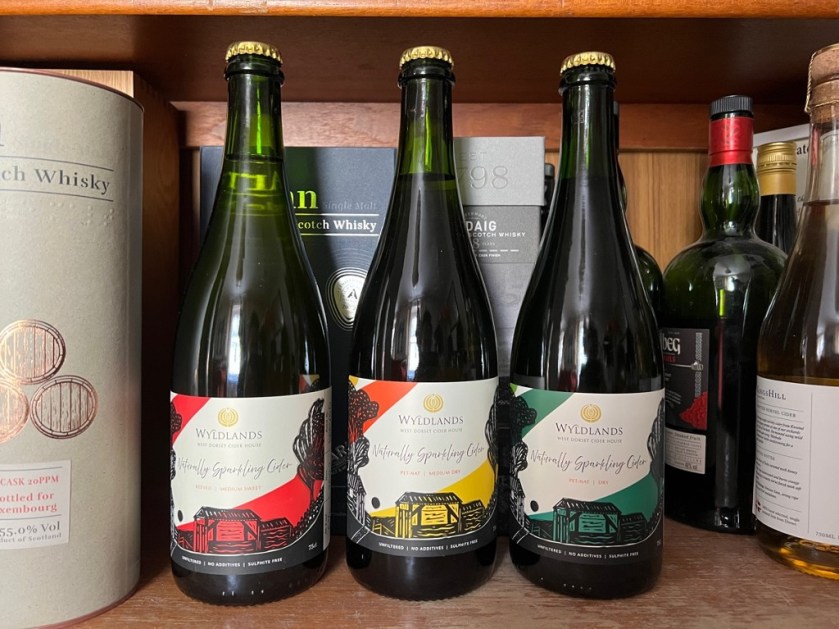
I started the year off shining the spotlight on Temple Cider. A few weeks ago I turned my attention to Purbeck Cider. Now, it’s time for Wyldlands Cider, from the charmingly named parish of Monkton Wyld. The linking factor for all three cideries? Dorset! A county in the southwest of England, coming in at 32nd out of 48 English counties in terms of population density, nice and rural, with a plentiful and vibrant history of cidermaking. If you’ve read Liz Copas and Nick Poole’s excellent book The Lost Orchards – Rediscovering the forgotten cider apples of Dorset, you’ll know already that this area was once a veritable behemoth of cider production in the UK, with as many indigenous and idiosyncratic cider apple varieties as there are to be found in the likes of Herefordshire, Gloucestershire and Worcestershire. Alas, the technological progress that came about in the second half of the twentieth century also saw a great abandonment of this style of orcharding and cidermaking…
Thankfully, the tide is turning! Evidenced by these three cidermakers profiled here on Cider Review (and quite a few more) in these first 6 months of 2024, bringing craft cidermaking back to Dorset. We might soon be able to try a single variety Golden Ball, Matravers, or Frome River cider again across the UK with this reemergence of craft cidermakers and an expansion of quality online bottle shops throughout the UK. There’s always a silver lining to every cloud.
It’s useful to ponder for a second on the power of collective thought. I grew up on the east coast of the UK in Norfolk, and always from a young age, knew of the West Country as where cider was from. (Never mind that there was a collective amnesia for the history of cidermaking in Norfolk, with the loss of Gaymers and all its associated orchards under contract). This vision of the West Country persisted as somewhere that really grew a lot of apples and made a lot of cider. (Never mind that this collective memory was based on a time probably 80-100 years before I was born). The notion in my family and friends when I was growing up still existed long before I’d even had the chance to try cider from this beautiful bit of the UK. That more entrepreneurial urban expats are relocating to these areas, and bringing life back to the cider industry in Dorset and beyond can only be a positive thing.
I reached out to Jules of Wyldlands Cider on her Instagram account – the algorithms of the app very helpfully encouraging me towards cidermakers I hadn’t heard of before. Subconsciously, however, I think I already knew of her work – I turn again now to the final page of The Lost Orchards book, and there is a photo with the caption “a new generation of small-farm cidermakers at Monkton Wylder Cider“. They’d been in my head all along! Jules very kindly sent through three bottles of her latest cider releases for review and also agreed to take part in a little chat, the details of which follow.

CR: When did you set up Wyldlands and what was the catalyst for you becoming cidermakers?
Jules: We set up Wyldlands in 2018, my husband Anson and I, along with our friend Harry, who works with us. Anson and I moved house to Greenlands, in Monkton Wyld, down in the West Country, and with it came this old twin-screw press and an orchard. The previous owner came down the first autumn after our purchase and said, “why aren’t you picking the apples from the orchard?!” So, our cider production started then. It’s improved year on year. Lockdown came very early into our journey too, which allowed us to improve further on our production method.
CR: What kind of varieties of apples are you working with from your orchard?
Jules: We started out using the orchard at our home. It contains around 25 trees, they were all planted around 25 years ago, so they’re in a great state of production right now. We’ve needed more apples though, so we went through that stage of asking neighbours and friends for apples from their trees, but we’ve now whittled it down to using an orchard just outside Lyme Regis in Dorset. That’s been really great for us. We blend all our ciders, no single varieties – they’re a mix of Kingston Black, Browns, Yarlington Mill, Dabinett, Tom Putt, Tremlett’s Bitter, Stoke Red, Ashmead’s Kernel, and Dunkerton Late Sweet. Something we quite like is to mix a few dessert apples in like Russets too.

CR: Let’s talk barrels! I see you use a selection of barrels to mature your cider. What’s the thinking behind using wooden barrels exclusively?
Jules: It’s a very deliberate choice to mature the cider in oak barrels. We like the flavour they impart, the authenticity for the style of cider we’re making. We don’t use plastic to mature, only to transfer from one oak barrel to another. We might branch out into stainless steel in the future, but for now they’re a mixture of ex-red wine, rum, and whisky barrels which come from all over the place.
CR: Thinking about presentation style, what was the thinking with starting in 750ml bottles?
Jules: Right from the beginning we made a dry, farmhouse cider from the barrel. But it wasn’t what we totally wanted to do. We liked it, but we thought it could be better. So, Pet Nat sparkling ciders was always on the to-do list. Putting them in 750ml bottles means we can buy that toughened glass and do a secondary ferment in-bottle. I think the presentation looks great – standing us up alongside certain wines and fine ciders, which is where we want to sit. We don’t yet put the cider into cans and haven’t found a suitable 500ml glass which could take the pressure from the secondary ferment. We would love to try them in cans and 500ml glass in the future!
CR: What’s the history of cidermaking in your local area? Are there any other cidermakers nearby that make you feel part of a cidermaking community, folk that you can go to for advice?
Jules: Great question! The history in the local area of cidermaking is really big. We’ve inherited this old orchard, that was replanted in the late 1990s. But they have been making cider in the cider barn we use for over 100 years (we’ve got some lovely old photos of a previous owner with a pile of apples next to him). There are so many old orchards around here – a lot of them abandoned. Lots were left after World War II. Some have been replanted, a lot just aren’t being used anymore. We’ve got really good terrain for it, small fields, good soil, all working well for apple trees. This is a great area. We sit very close to the Somerset and Devon borders, in a rolling hillside area that presents shelter in areas for trees. Heading out over the border to Somerset there are a lot of bigger, commercial orchards. Community-wise: it’s huge! That’s why we are where we are. We wouldn’t have been able to do it without them. The old owner of our house, and the friends of his too, are all part of a big cidermaking community, and they’ve been so helpful in getting us started – Anson, Harry and I. That has fed into other cidermakers in the area. We’re close to the nursery Adam’s Apples. So, we’ve bought more trees from there, which will be fantastically productive in another 20 years or so. James Crowden, the renowned cider writer, is local to us – he’s been to a few of our cider pressings, as has Nick Poole. It’s a vibrant cidermaking community here. We owe it to everyone who comes and helps us in the Autumn. The community is the best thing surrounding cider.
CR: What does it mean to win the Arthur Davis cup for Best Cider at the British Cider Championships at this year’s Bath & West Country Show? It’s so soon into your cidermaking career!
Jules: It’s so exciting! I’m a little speechless still and overwhelmed by it. It means it’s not just us who like it. It’s great to see it push further out, outside our lovely community. It’s wonderful to be recognised in a very competitive but flourishing industry. We’re a small maker, so it’s great to stand there and compete with some of the big boys.
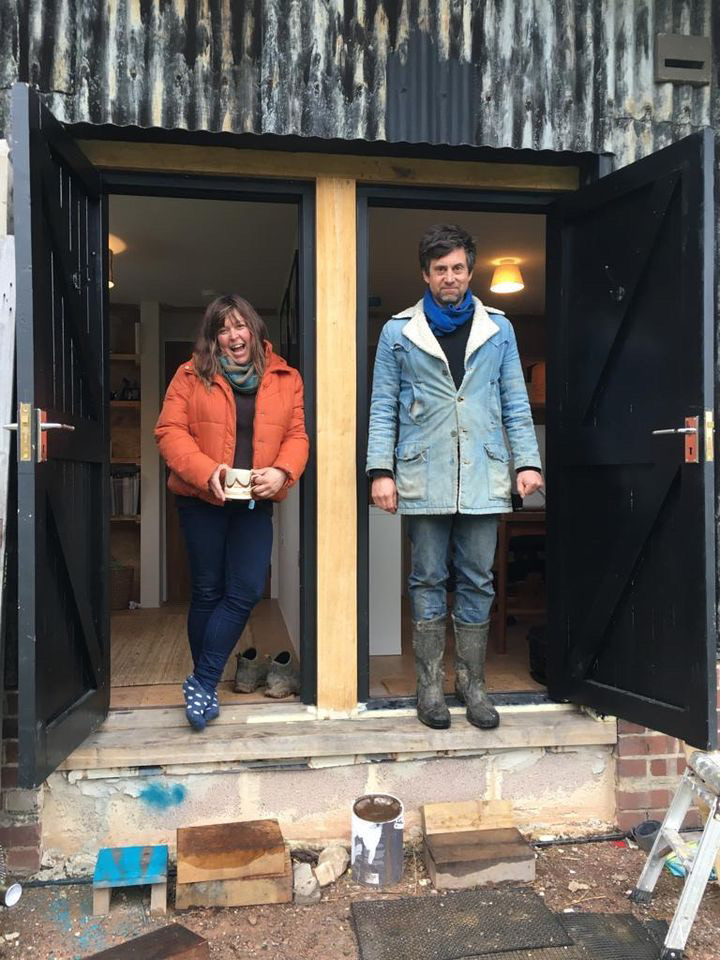
CR: What’s the plan for the year ahead over summer and into harvest for 2024? Are you looking to expand into some new markets?
Jules: Our plan is to try and sell all the cider we’ve made and to get our name out there. We’ve been quite quiet and slow to gently head into the industry. We’re not a big producer and probably won’t ever be huge, we’re just trying to gently sit in a market that suits us. Maybe that means getting into a few restaurants, it would be lovely to see Wyldlands on a drinks list for people to choose. I also need to build a website so you can order the cider online. In terms of production, it’s going to be a better year for us in our orchards. 2023 was less successful in terms of weather, the SGs were down in the fruit, it was quite wet. So, fingers crossed for a better year this year. We’ll see how it goes, and we’re really happy to take it slow.
My thanks to Jules for taking the time to talk, and for sending over the bottles to review. Now let’s delve into those bottlings and see what Wyldlands cider tastes like!
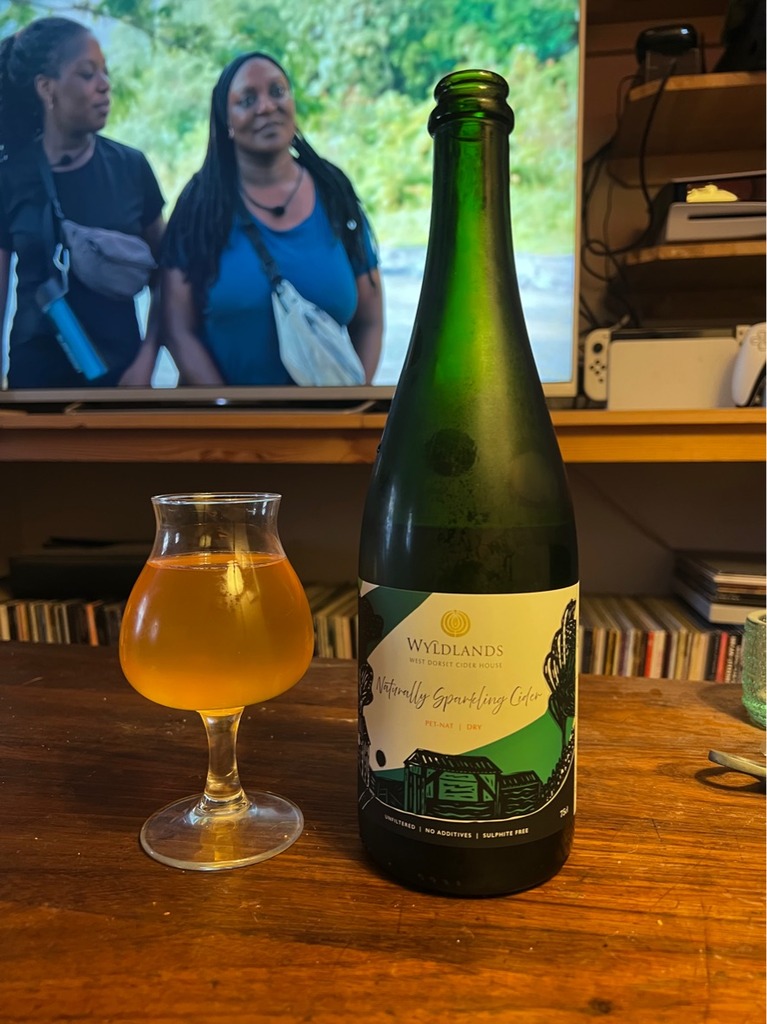
Wyldlands Pet Nat Dry (6.5%) – review
How I served: Popped open after an afternoon in the fridge.
Appearance: Hazy orange gold. Super slight effervescence – this is not one of those Pet Nats that’s gone in bottle at too high an SG.
On the nose: Orange and allspice, clove, slight bit of vanilla pod. It’s reminding me of Yarlington Mill, with something else slightly sharper
In the mouth: Full-bodied and viscous, some lovely soft tannins at play here. That allspice note continues. The olfactory senses are firing at full throttle with each sip. Pronounced note of spiced apple crumble infusing the palate and nostrils.
In a nutshell: A beautiful and poised expression of a Dorset cider apple orchard blend. Great presentation and statement of intent from a new cidermaker.
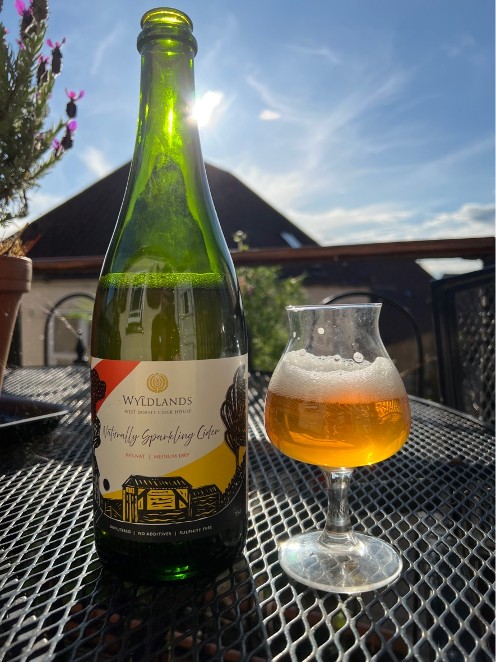
Wyldlands Pet-Nat Medium Dry (6.5%) – review
How I served: An hour in the fridge, served at somewhere down around 10 degrees Celsius
Appearance: Jaffa Cake jelly centre. Much more noticeable effervescence than its pet-nat dry sibling. Light mousse/mantel on the rim of the glass.
On the nose: Loose leaf pipe tobacco, clove, cinnamon bark, apple crumble with lots of Demerara sugar sprinkling over the top. Beautiful aroma.
In the mouth: Starts with the merest prickle of fizz on the roof of the palate, followed by a rich, viscous tannin that coats the tongue. It’s almost as if it were going to become slightly astringent, but then stepped back and decided no. Picking up a bit more of the barrel influence on this bottling – the label states vintage Rum, Bourbon and Red Wine barrels used.
In a nutshell: Something to sip and savour as the evening drifts away. A mellow, meditative cider that I can see myself going back to again and again.
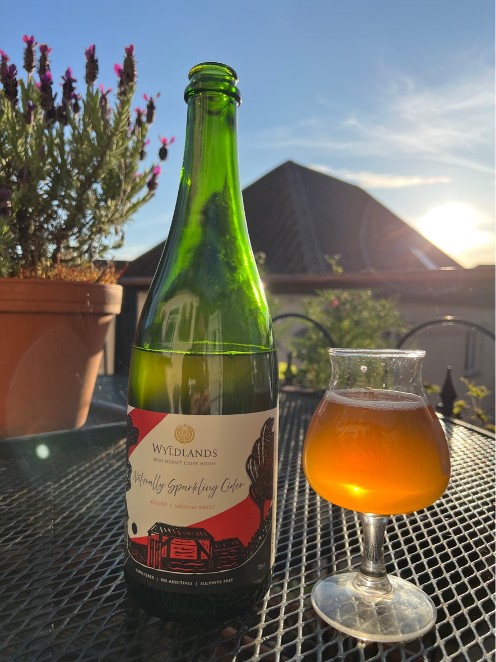
Wyldlands Keeved Medium Sweet (6%) – review
How I served: 2 hours in the fridge then out onto the balcony for an evening sip.
Appearance: The haziest of the three ciders, a little bit of suspended sediment in the juice is giving off a gorgeous embers from the fireside note. Very light effervescence here, no discernible mousse to the liquid.
On the nose: A slightly rummy note, toffee apple. Quite restrained.
In the mouth: There’s that residual sugar from the keeving process. I think this would really appeal to those with a sweeter tooth, it’s like a sweet cider lacquer over the palate. Personally, I skew to a drier mouthfeel, but I could see this being really crowd-pleasing.
In a nutshell: Capturing some of that residual sugar present in the apples and saving it from being consumed by the yeast is a noble cause, and a fair bit more work than just letting the cider ferment fully to dry. It puts this Wyldlands release in with the likes of Pilton Cider and Llanblethian Orchards who regularly release great keeved expressions. If you’re the kind of person who skews more Medium Sweet in your cider drinking, lean into this bottling, you won’t be disappointed.
Conclusions
I’m very happy to report back that Dorset has added another top-quality cidermaker to its rostra. We may never get back to the levels of cidermaking once experienced in the county in terms of numbers of producers and volumes of cider made, but with the emergence of each new cidermaker on the scene, so too a part of the restoration of the culture and accompanying acres of orchards under careful stewardship in the county.
I agree totally with Jules on her mission for this year to get some of her 750ml bottles into restaurants across the UK. They would sit perfectly on a drinks menu alongside a list of wines from all over the world, and a burgeoning UK wine scene that has been embraced by the population with relative ease – think of the likes of Chapel Down, Winbirri, Wythall Estate, Chilford Hall etc. As Felix and Aga are showcasing at The Fine Cider Company, there’s no reason cider and perry can’t play on these stages too – they just need their advocates behind the scenes helping to elevate the drinks to a wider awareness. Who knows, perhaps in 80-100 years times, the collective memory of the 2020s will be a of a time when cider and perry really took off, with orchards being planted all across the UK to help cope with the rising demand for this delicious, evocative, fantastic beverage. Imagine!
Discover more from Cider Review
Subscribe to get the latest posts sent to your email.
 Cider Review
I’ve tried two of these now and they were both lovely- the medium dry went down very easily indeed.
LikeLiked by 1 person
Ah lovely to see you’ve been able to get your hands on them. Really good bottlings, with a bright future ahead for the cidermakers ☺️☺️☺️
LikeLiked by 1 person