This is one of those pieces that I feel I ought to write whilst also not being entirely sure how to. It is all a little bit too big, too much, too overwhelming to look at, like eating the metaphorical elephant. Not to mention it’s almost entirely solipsistic, for which I’ll have to ask your indulgence. When I try to think of it all at once, I’m not entirely sure where to start.
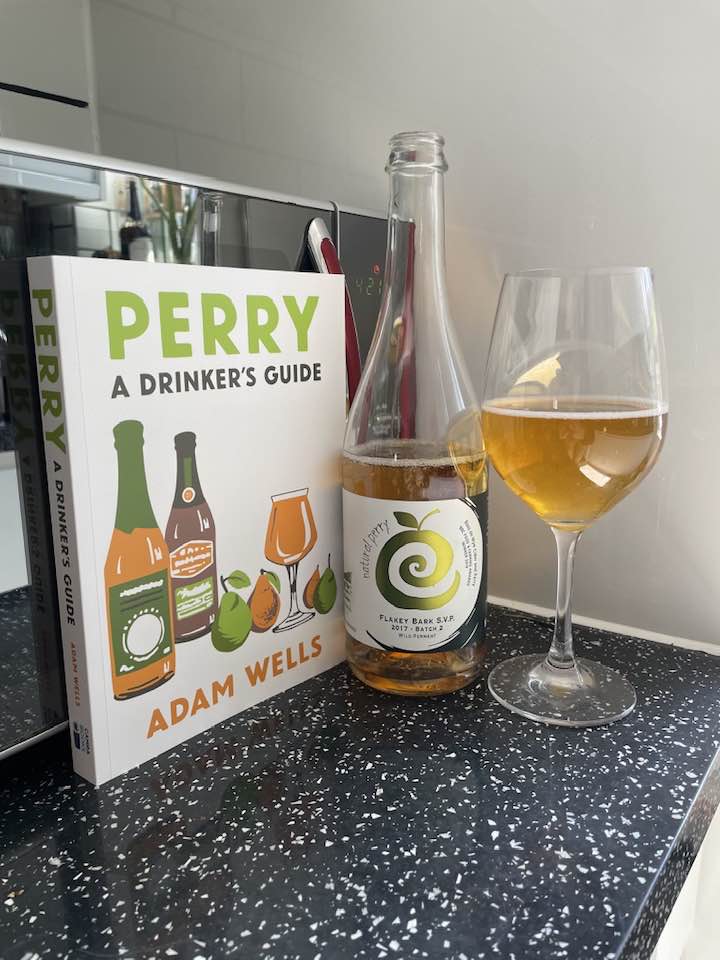
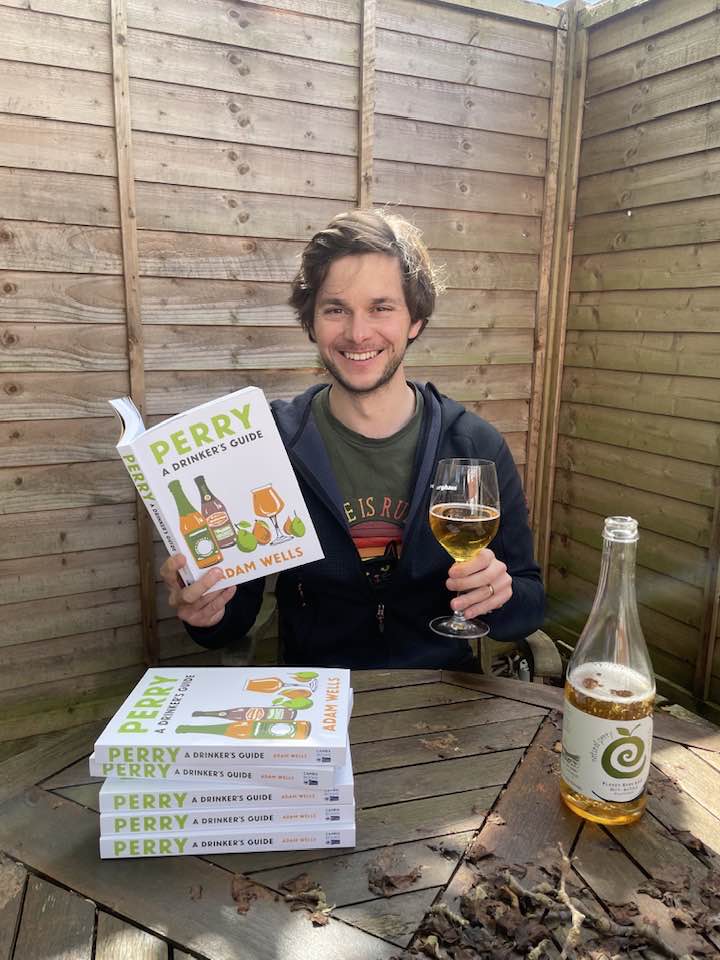
So how about here, simply: I have a book out. Not in the works, not coming up: as of today it’s officially launched. It’s real, it’s printed, it’s 288 pages long. It smells of paper and acrylic and whatever it is they use for binding. It’s called Perry: A Drinker’s Guide – though the colon doesn’t really exist except in my mind and has proven grammatically interchangeable – and you can buy a copy here if you would like one. (And I hope you would!)
Separately, not unrelatedly, and in an astonishing piece of auspicious timing, it is this website’s birthday. Exactly three years since our inaugural post. If it had been distilled from grains and aged in oak casks in Scotland it could now be legally called whisky. Which, given it evolved from a column on malt-review.com, is a surprisingly apposite analogy. We are now, officially, a mature blog.
Come June I’ll have been blogging for one website or another about one drink or another for nine years. And although the subject has changed a little across that time, broadly the motivation has remained the same: to look under the rock of drinks made with care, and to ask a question that has always been fundamental to my own interest in such things: ‘why does it taste like this?’
But although I’ve rarely admitted as much – at least not in print – a large additional part of my motivation for blogging was simpler. I wanted, from the deepest ventricle of my fluttery little heart, to write a book.
I have wanted to write a book for as long as I’ve been able to write. To me, storytelling has always been the pinnacle; the raison d’être. My parents claim that before I could read – and I was a slow starter – I’d memorise bedtime stories and repeat them to myself with embellishments on long car journeys. I remember the first one I wrote, aged five, and I’ve never wanted to be anything as much as an author since.
But a large and important part of growing up is the rationalisation of childhood dreams. Allowing some of them to slip fondly away; understanding there are things that are more important, and that the greater part of life’s happiness is, in any case, not found in the momentary ecstasies of long-hoped-for things finally accomplished, but in the ordinary moments of joy we find along the way and, most of all, in the people we are lucky enough to share them with.
And I discovered, anyway, that blogging was something I love. I’m long enough in the tooth to remember when bloggers were considered a distinctly second-class of scribblers, but everything about the nature of blogging has always appealed to me. It was a place I could shape my opinions and play with my tone of voice. A place to be reactive, to learn, to explore what I really thought about the various worlds I inhabited. A place to make mistakes – and I’ve certainly made plenty of those. But importantly, a place that became an end in and of itself.
And so somewhere amidst the hundreds of posts, the trail of websites and the endless string of indulgent, purple prose, the dream of a book was quietly filed. Not quite ditched entirely, but certainly tucked away on a dusty mental shelf. I remember having lunch with my editor on Malt in 2018 and being quite surprised when he asked me where I wanted to go with my writing. I didn’t really know how to answer him. As a funny aside, it has taken me, in part, to writing for him professionally. So, for the record: thanks, Mark.
But as time passed, perhaps inevitably, much of the innocence and joy I found in blogging about whisky curdled into cynicism. I found myself writing more about what I saw as the opacity and shoddy practice, the incongruous ‘premiumisation’ and lack of curiosity and care within the industry than I did about the wonder and delight that I gleaned from the drink itself.
Aspirational cider, as far as my writing was concerned, was an unexpected saviour. Where I had come to see whisky as broadly undeserving of its ubiquitous fanfare, here was a drink worth so much more than it was allotted. A drink with virtually no regular coverage; a drink whose general reputation was plainly at odds with the gorgeous creations of craft and care that I found myself encountering. A drink whose makers were happy to offer bewildering levels of access and transparency – who welcomed me to their cideries, and often their homes, when I had no real connection to cider whatsoever, when I was just tweeting about it every so often and wittering in ignorant excitement at what I found myself stumbling over.
World’s Best Ciders by Pete Brown and Bill Bradshaw was among the most life-changing books I’ve ever read. It was a map to all the writing about cider I have undertaken since. Even where it left me with questions – but what do these different apple varieties actually taste like? – it was a lantern to my feet. The opportunity to meet people like Susanna Forbes, Gabe Cook and, most importantly, James Finch only deepened my curiosity – not least because again, almost uniquely to cider, there was no gatekeeping of knowledge from these established experts. Every question I put to them they answered with absolute generosity; often more fully than expected and in ways that opened fresh avenues of exploration.
What’s more, the cider community – British initially, internationally later – could not possibly have been warmer in their acceptance and welcome. Never mind that I had hardly a couple of years’ experience of aspirational cider. Never mind that I worked in wine, wrote for a whisky website and presented opinions and questions that were often specifically designed to challenge. From my first article I was made to feel at home, and that has remained the case ever since. I often don’t think people within cider realise how special that is, or how special they are. But believe me, you deserve to.
Perry was something else entirely. A drink whose online presence seemed a near-total blank. Even those who had blogged extensively about cider before I came along seemed rarely to touch on it. What’s more, where every drink I had ever become interested in previously had books I could turn to as primers; starting points for discovery and curiosity – World’s Best Ciders of course, libraries of tomes on wine and whisky, books on mezcal, rum, gin, beer, even mead – for perry there was nothing. If I wanted to know what varieties there were, what styles they were made in, where pears grew, why they were so difficult, why this drink tasted as it did, I had to ask a maker or one of the experts I’ve already mentioned.
On long weekend countryside walks during the covid years, Caroline and I would take a 750ml with us and share it on a bank or the edge of a field somewhere. More often than not it would be perry, and I remember once, as we drank something whose flavours seemed to evoke the very autumn countryside in which we sat, exclaiming at the nonsense that something like this; so elegant, so flavourful, so shifting and elusive and idiosyncratic; so patently full of soul was so little-known, was so generalised about, that it didn’t have its own book. She asked me why I didn’t write one then, and I told her that no one would ever publish it. Two years later, with no publisher in sight, I began trying to write one anyway. Today, thanks to CAMRA Books and more people than I have space to list here, it turns out I was wrong.
Perry: A Drinker’s Guide is my attempt to write the book that I wish I could have bought when I first stumbled across aspirational perry six or so years ago. It is both a concentration and an expansion of everything I have written about perry in these digital annals. It is informed by my background in wine, is written from a perspective and with an approach that began life in my whisky blogging days, and is inspired, of course, by a privileged view to the inspirational scene of aspirational cider and the ways other advocates have lifted that scene themselves. But, first and foremost, it comes from the wonder and glory and joy that is perry. It is the sum of everything I have tried to do and think and develop for the last 10 years, and it attempts to provide some answer to that fundamental question: why does perry taste as it does?
It has, I hope, all the basics that someone new to the drink might find useful in navigating the subject for themselves. The history of perry and the growing of pears. The varieties of those pears and the flavours found within them. There are chapters on making, on styles, on serving and food pairing. There’s a whole section on countries and regions, and over 100 individual perrymakers profiled, though I’ve shied away from listing specific perries, or they’d have sold out before we went to press. At the same time, I hope there is more than enough depth that any reader of any level of perry experience will find plenty new to discover within it. There are facts, there are opinions, there are characters and stories. When I started writing in 2022 I thought I knew all I needed to fill a book, and most of the writing process was spent discovering that I barely knew the half of it.
Perry’s story is truly, almost unbelievably, remarkable. It is bigger, I think, than any of us know; I’ve written about it several times a month since 2020 and I’ve barely scratched the surface. The book is only a starting point for a much broader conversation, and itself only follows on from the undersung work and advocacy of so many makers and writers and campaigners and drinkers who have come before it. It is a comma, rather than a full stop – we’ll have to keep talking, keep writing, keep discovering the untold breadth of perry and sharing it with as broad an audience as we can. I’ll be doing that here on Cider Review – which I suppose is a point worth making: I’m not going anywhere. I still love blogging about cider and perry. It brings me joy. I’ll be doing this here for as long as I can. With the book now written I hope to be able to do it even more.
But perry has a book now, and I’m unbelievably proud to be its author. Inevitably – it’s me – I worry occasionally that it’s a niche of a niche, that it might be a vanity project, that it somehow isn’t quite proper. But on Saturday I saw people starting to receive their pre-ordered copies and the worries and unworthy thoughts blew off like an orchard’s morning mist. It isn’t every day that lifelong dreams come true, and I’m more grateful than I can say to everyone who has brought it about.
So here we are. A book. The story of perry. I hope you enjoy it, I hope you read it with a perry to hand, and I hope most of all that it inspires you to buy another bottle when you’ve finished.
Discover more from Cider Review
Subscribe to get the latest posts sent to your email.
 Cider Review
What an absolute total delight. Congratulations on a marvellous achievement and I’m so excited to share this book in the world and encourage my friends to buy it!
LikeLike
Thanks so much Thomas. Really hope you – and your friends! – enjoy the read and thanks for all your support of this site for the last three years. Adam W.
LikeLike
I just recieved my preordered book today in Sweden. Its a absolute masterpiece of a book. I took a fast read an blow up about 200 pages. Mostly skipped the producer pages for now.
The reason I even bought the book is even more of a story. But the small farm I live on since 6 years back, it holds a enormous pear tree in the middle of a small field. And then a second one in the field border. Almost every year there is this enourmous crop of unedible small pears on the ground. And even here, the swine (wild boars) wont eat them. Pears are sweet at first second, then astringent like you filled your mouth with sand atferwars. But 3 years ago I saw some BBC video about people living like the Victorian age. One episode was about cidermaking. So from there I gradually browsing through the internet. To find anything to do with pears. This come that. And it ended up last year with 3-400 kg harvest, that wais painfully pressed into juice. Although the 2 trees probably had a yield of 800-1200kg in total. But the amount of mosqiouto and other bugs made it impossible to force myself to collect more. Anyway. It went into fermentation. It was tasted really bad off the first racking. It was very unpleasant due to the amount of active fermentation still going on. But with time it got better. I found out about Cider review sometime during the winter. And I must say I am happy that I did. Reading all your articles and your book have been amazing so far! I also hope to send you some bottles, for some feedback in future. They are stored and is having the champagne method at this moment.
Cheers from Sweden!
LikeLike
Pingback: The vast, remarkable world of perry | Cider Review