
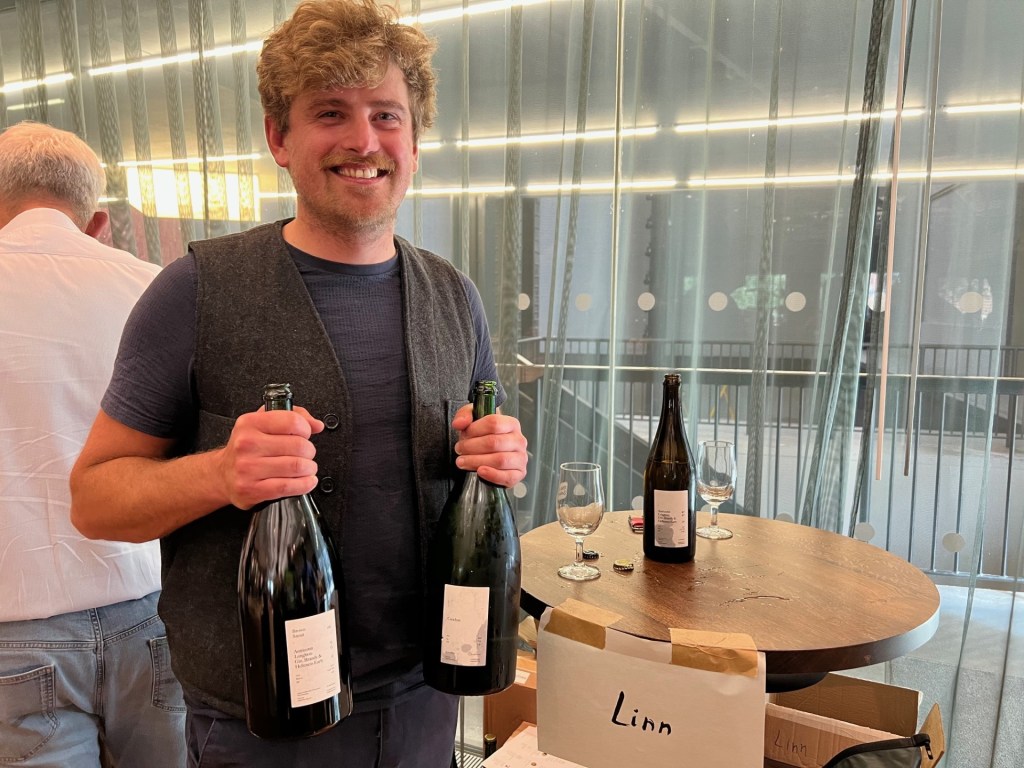
A real highlight of visiting the London Cider Salon at the start of October this year was discovering one of the plethora of new Scottish cidermakers on the UK Cider & Perry scene: Linn Cider – aka Jack Arundell and his partner Eilidh Izat – in-person alongside the Southbank of the River Thames, many a mile from their home in Fife, Scotland. Brandishing a stylish pair of magnums and a 750ml bottle showcasing their wares, I was instantly enraptured by the bravado of bringing such a large style format all the way down to London, and the clean, matter-of-fact lines detailing fruit and proportional quantities used in each blend, proudly displayed on the labels of their drinks. The liquid inside did not disappoint, and I left the event with a bottle purchased from Felix and Aga’s Fine Cider Co event shop. Now a month and a bit later, I’ve had time to try several of Jack and Eilidh’s drinks, and reached out for a Cider Review hustle, bringing this producer onto our digital pages as the year draws closer to its candlelit end.
I should note now at this point, I’ve found making cider and perry here in West Norfolk an incredibly wet affair this year. If it’s not the tail end of one storm passing above, it’s the wet tendrils of the approaching one that has been lashing down on the fruit and fruit-picker in my neck of the woods. Heaven knows what it’s been like up in Scotland where the full force of Storm Babet et al was really felt. Specific gravities have returned to a somewhat lower level than 2022’s sun-kissed heights. I find myself wondering whenever interviewing Scottish cidermakers, just how a Major or Golden Noble, Yellow Huffcap or Gin pear would fare growing so far North into our British Isles compared to the flatlands of West Norfolk. It’s always a pleasure to find out, and without further ado, over to Jack from Linn Cider to explain more.

CR: Hi Jack, where abouts are you based?
Jack: We’re based in Fife, just over the water from Edinburgh, in Aberdour. Our cidery is on the hill up above Aberdour and looks across the bridges over to Edinburgh. It’s a really beautiful spot.
CR: How long have you been making cider for?
Jack: Linn Cider was set up in 2021, after my first proper year of making cider in 2020 with my friend Christian. We did that in the first year of the pandemic as a cool project and way to actually get outside. It quickly became something really enjoyable and successful, something that I wanted to continue doing. After that project came to a close, Eilidh and I set up Linn, which we see as a long-term project of which we’re just at the beginning of right now. It’s something which we’re building slowly for the future. I always have in my mind that we all have a limited number of seasons available to us, I’m just trying to make each one count and build on each year. Maybe in 10 year’s time, we’ll be where we want to be, but for now, we’re just taking things slowly.
CR: What got you into making cider?
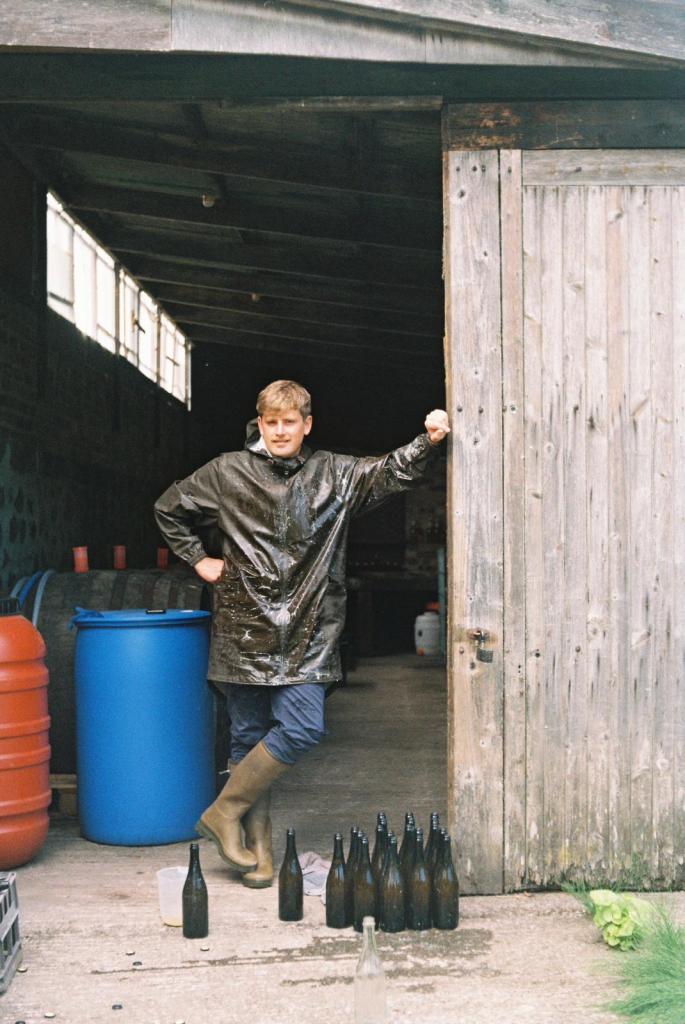
Jack: Previously I was a chef – I was interested in all things food and wine-related. Based in Scotland we’re not really going to be able to make wine, but…we can make cider! And I love making things. When I stopped cheffing, to help run a couple of businesses with Eilidh, there was initially a bit of a creative void. But the cidermaking has truly filled that creative spot for me now.
CR: When we met right at the start of London Cider Salon, I was really struck by your use of Sherry Casks to mature your cider in. I don’t think I’ve met that many producers stating specifically they use this type of cask. How do you come by your casks? Is there a cask management policy you’ve got on the go at Linn Cider?
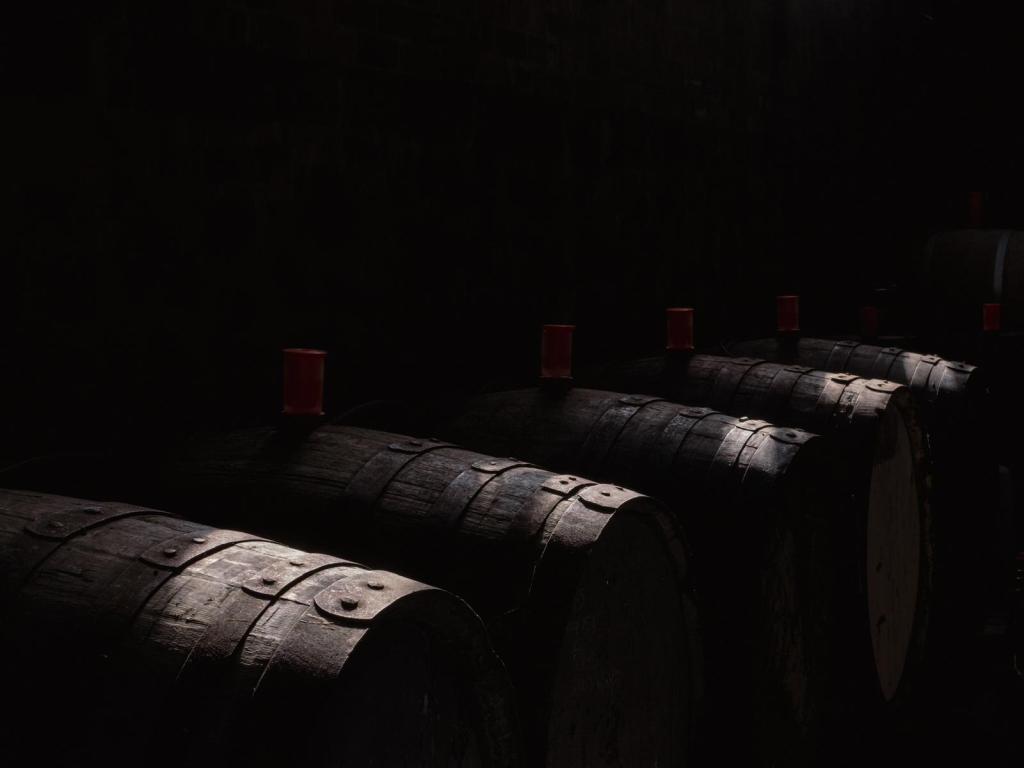
Jack: The Sherry Casks came about because I like Sherry Butts, aka 500-litre capacity vessels. Often with the quantity of fruit I press, I can fill one of these in a day. I don’t have much temperature control here, so that volume of cider in the barrel really helps with fermentation as it can get quite cold, quite quickly here. The casks come from a local supplier who buys direct from distilleries in the area. I always look to get older casks, preferably that are not freshly emptied. I don’t want to impart whisky flavours on the cider. More, the qualities you get by maturing in an oak barrel.
The quickest, cheapest and most effective way for me to do that is to use these barrels from the Scottish whisky industry as they’re readily available here. They do seem to provide the things I want, namely micro-oxygenation and a softening of the high acid fruit, which I use from Scotland. I really enjoy some of the notes a sherry cask can add. I think the sherry notes still come through from an old barrel. It is noticeable on the perry I make too. A hint of sun-kissed raisins, which I’m almost certain is from the barrel. I think more people should use sherry casks for maturation as they complement cider and perry really well.
CR: Scouring your Instagram page, I must ask…have you also been harvesting apples from the Isle of Harris (a famously tree-depleted isle)? What’s it’s like to source apples on the West Coast of Scotland? Are there plenty of apple trees waiting to be re-discovered by an eager cidermaker or two?
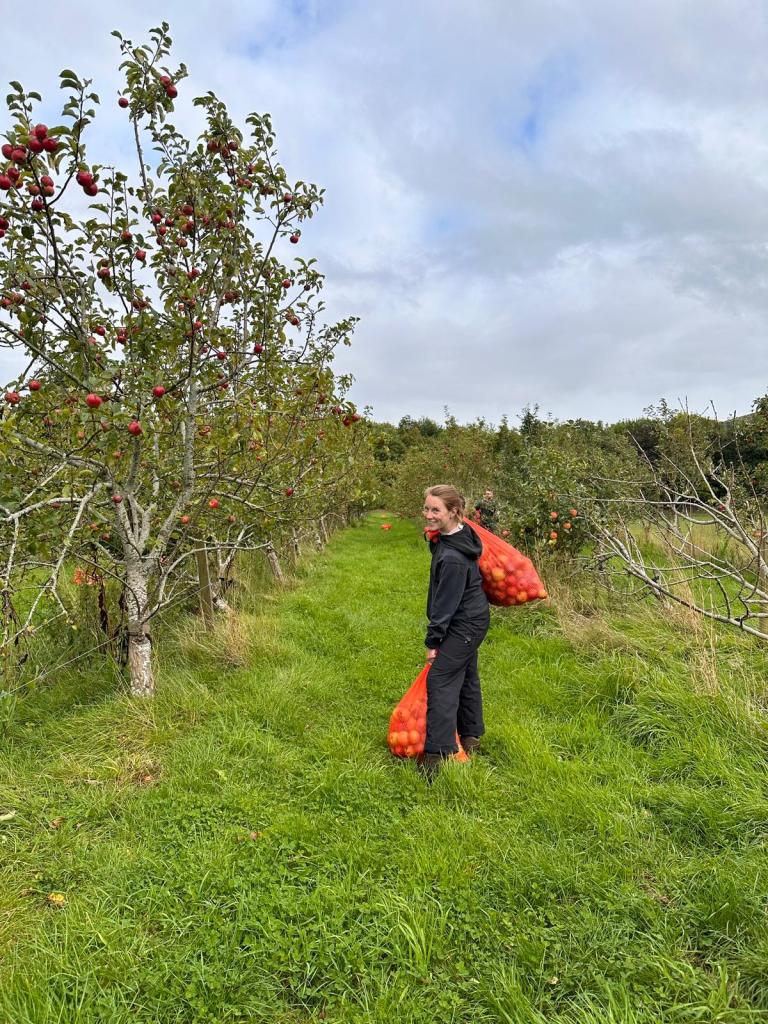
Jack: We’re always on the search for apples. And yes, we have found a few trees on the Isle of Harris, although I haven’t yet made any cider from the apples from those trees. I’m really hoping to plant some of my own trees out there. I recently spent a bit of time building my own house out there and we will plant an orchard there in the near future. We’re researching how this will work in practice as it’s very windy, rocky, and exposed, so it’ll be an interesting place to plant trees. We’re hoping it will be a unique expression of the place. This year, we managed to pick apples from the West Coast through a family friend. It’s an orchard of 20 cider trees which were planted around 20 years ago. A mix of bittersweets and although the cider I’ve made from there so far has a fairly low sugar content, I’m excited to see where that goes. That will be my first Scottish cider made from Scottish cider apples.
CR: Ah you should check out our article on Lagg Distillery on the Isle of Arran, as they’ve planted an orchard in similar conditions to those that you describe on Harris! Let’s talk 750ml and 1.5litre bottles! I was super impressed to see you had brought magnums all the way down to London Cider Salon – what an undertaking! How are these larger format serving styles being received in Scotland, and further around the UK? Your label design is simple and elegant, I think it really stands out on the bottle.
Jack: Thank you, we produce all the labels ourselves. In our day-to-day lives we run an architectural practice, so we try to give everything we work on a really nice aesthetic – that has influenced the label design for sure. I think the whole thing with magnums in particular is equal parts foolishness, equal parts fun. One of my ciders, which was only sold in magnums, is now totally sold out. A lot of it went to restaurants with tasting menus, places that like the drama and the show from pouring from a magnum. In the future I’ll always bottle a small portion of the cider and perry in magnums for that celebration option. The 750mls in Scotland are going down really well too. People are sharing it like they would a bottle of wine. It makes sense to be in 750ml.
CR: Any plans for a BIB or keg offering for Beer & Cider festivals, or a canned version of Linn Cider to play with the presentation style?
Jack: At the moment, no plans to release in BIB, though I am definitely tempted by keg as I could keg-condition in a similar way to bottle conditioning. That could be an interesting way to increase the audience for our cider. I haven’t done it yet as I don’t have the equipment. With the quantities of cider I produce, most goes straight into bottle. I like the impact a bottle has on the cider. The bottle brings the cider together, bringing cohesion especially when it’s a cider and perry blend. I’d also really like to do a canned option – bringing a whole new causal style audience to the drink. It’s something which I’ll work on as Linn Cider grows and as I find time to make a style of cider which suits the can. Right now I’m making cider for bottles. It’s one of the great things about cider, that it can be served in multiple ways.
CR: Some of your fruit is from Herefordshire in England, some of your fruit is from nearer in Scotland (a bit like Caledonian Cider do with their North & South release). Is the plan to expand the number of orchards that you pick from in Scotland, or orchards in general? Where did your evident love of apples and pears come from?
Jack: In 2021, our first season with Linn, it was really exciting for Eilidh and I to use proper bittersweet varietals, instead of the usual culinary and dessert fruit we can readily get here in Scotland. It was a learning experience for us to see how that bittersweet fruit develops. I personally lean more towards an acid profile in my ciders, which will pair effortlessly with food, and then ramp up or tone down that acidity depending on where the cider is intended to be consumed. It’s through the experience of blending the cider, which varieties produce which flavour profiles, that I’ve come to learn which varieties I’d like to share with people through the drinks.
CR: You use a number of interesting French and UK perry pears in your perry and pyders. Are there many perry pear trees up in Scotland?
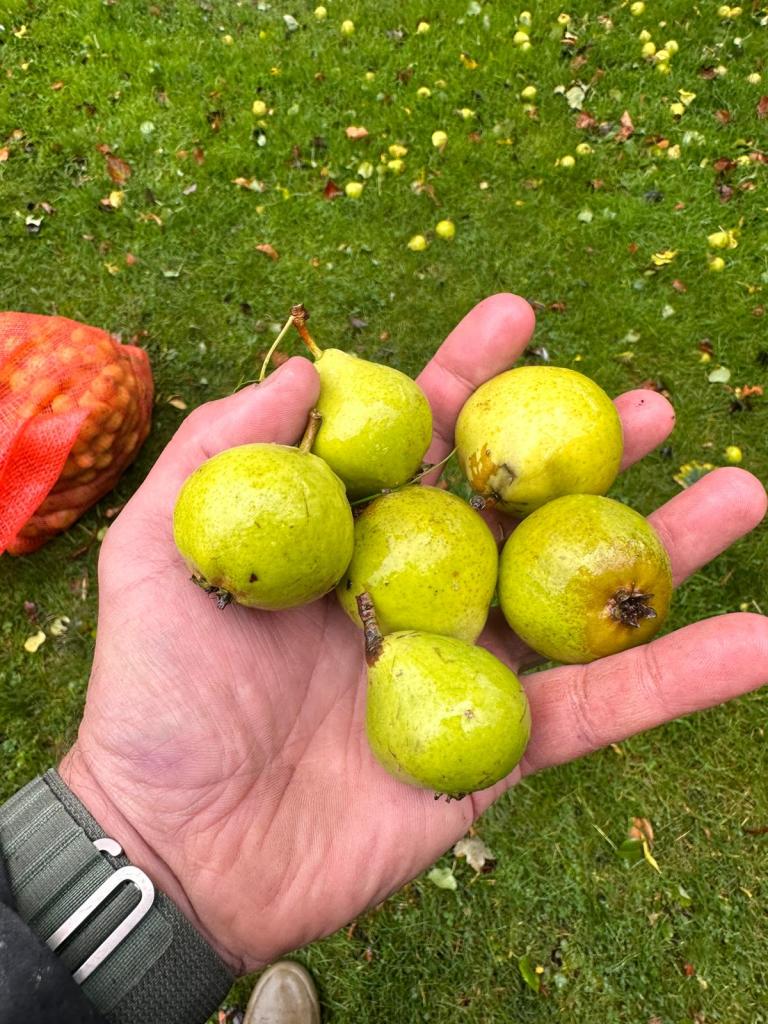
Jack: I pick pears from 6 or 7 trees around Edinburgh and Fife. None of them are dessert pears, most are culinary or crab pears. Usually fairly inedible with a lot of tannin. I’m lucky to have found those trees. Some are very old. There’s a couple of trees in Edinburgh which are in the grounds of a cathedral and I wouldn’t be surprised if they were older than the cathedral, as it’s not the oldest building. The crab pears are brilliant at bringing acidity to the juice. No specific perry pear varieties just yet, but I would love to find some up here one day.

CR: What was the 2022 harvest like in contrast to the 2023 one?
Jack: It’s been really wet in Scotland, both for picking apples, and for housebuilding. Not ideal. The season this year has been OK, not quite as high sugar levels as 2022, but the fruit is looking good. I definitely need a new pair of wellies. Part of picking fruit is about enjoying the occasional misery of the situation when it’s wet, knowing it’s worth it in the end. You look back fondly on those first few days of harvest in shorts and t-shirts under the sun. Now, in November, it’s all about waterproof trousers, a coat, a couple of t-shirts on underneath. As each harvest passes, you tend to forget the bad bits I find. I’m sure in 2022 there were some challenging moments where I was praying for it to be over, but by the time it comes back around again in September the following year, you’re ready to go again.
CR: How do you view the Scottish cider scene? It’s incredibly exciting to us here at Cider Review to see the explosive growth of makers there these past few years.
Jack: It’s really exciting to be part of it. We had our second Pressed cider festival, it’s amazing to be in the room with everyone there. Every maker has a really different style up here so you get a huge variety of ciders. Each one is unique and beautiful in its own way. That’s what I love about Scottish cider. The term is too big, there’s so many distinct areas and climates up here that we may need to start to distinguish them into smaller regional areas. What’s amazing down in England is the tradition and the distinct identity that certain regions have. Slowly that will emerge in Scotland too, depending on the momentum that each area has. I’m hyped about it. There’s a good feeling up here, with a lot of us helping each other out. Not being scared to give each other fair advice. We’re all egging each other on. Ryan at Caledonian Cider seems to be the OG 750ml cidermaker here in Scotland, big respect to him on the Black Isle! He’s still producing inspirational ciders, which we are all trying to achieve ourselves too.
As a small producer, it’s easy to see you don’t make a huge impact individually, but collectively, since 2020, there’s definitely been a lot more Scottish cider seen down in London and around the UK. It brings a big smile to my face seeing Scottish cider moving south and being seen alongside some of the more famous producers from England.
CR: As this is an interview near the end of the year, is there any plan for a festive cider/perry/pyder release? You see loads of craft beer producers releasing a seasonal pumpkin beer around Halloween, and then a festive release for December. Surely cider and perry needs this too?
Jack: Well I think that loads of people should buy my drinks as Christmas presents. I think that ciders could absolutely be made for different seasons. I have been experimenting with a Douglas Fir & Cider co-ferment, which would have a hint of Christmas in it. I’m a bit terrified to release it though, so maybe not this Christmas but 2024.
CR: Thank you for taking the time to speak to us Jack.
Discover more from Cider Review
Subscribe to get the latest posts sent to your email.


Pingback: From The Barrel To The Bottle – Two Linn Cider Releases | Cider Review
Pingback: The thriving Scottish Cider Scene! Two new releases from Linn Cider. | Cider Review