
Perhaps the biggest dichotomy around Cider Review is that we cover drinks which, in the UK, are almost overwhelmingly drunk at the pub. Yet in the combined 10 years that James and I have been writing about cider, we’ve barely touched on the pub once between us.
There are a few reasons for this. In the first instance, I don’t particularly want to take notepad and pen to the pub to make tasting notes, and in the second, even if I did it would be far harder for you, the consumer, to buy any given bag in box that I might review and harder still for you to discover a specific keg conditioned offering. I’ve never seen any point reviewing the likes of Strongbow or Westons (though saying that I’ve managed to cover both) – since if this site exists for any reason, it’s to underline that there is more to cider than these ubiquitous macro offerings. And of course, for much of the time I’ve been writing about cider and perry, the pandemic meant that I was unable (or unwilling) to visit pubs in any case.
But the real reason, as I mentioned in this recent article for Pellicle, is that being blunt, I generally find the pub to be an absolutely terrible place to drink cider.
Drinking cider at the pub is so often just a dismal, depressing, joyless pursuit. For the overwhelming part the ciders you are likely to find are the aforementioned macro offerings. Absolutely great if you like them, and I’ll drink them in a pinch if there’s nothing more exciting available. But it’s the equivalent of being a beer lover and being confronted only by the likes of Foster’s and Carling.
What’s worse is that, more often than not, if there is an ostensibly better option – a ‘real/craft/high juice cider’ – the experience is even more demoralising. Far too often it’s a Trojan Horse – something like Lilley’s; artificial, sweetened to within an inch of its life, couched as a level up but in reality anything but (again, if that’s your jam, great!, it just isn’t mine). Then there’s the frustration of something overtly faulty being on sale – and the publican serving it insisting that ‘that’s how real cider is meant to taste’. Or something that left its maker in perfect condition, but has been kept terribly; somewhere far too hot, left at low-fill for far too long, and now offers a poor representation of that maker’s work.
I go into more detail in the Pellicle article, but the upshot is this: there is simply barely a single pub in the UK where the cider offering is even in the same league as the beer offering in terms of quality – never mind quantity. There’s nothing more irritating than going into a pub that does beer beautifully, serves only perfectly-kept stuff from excellent breweries, and finding that their cider selection is watered down, faulty or simply anodyne.
Cider’s presence in the pub is itself a mixed blessing. A positive, because it has exposed so many more people to cider. And a huge negative, because it has been the major factor in the ‘beerification’ of British cider – the relentless dilution, because cider naturally ferments to a strength unacceptable to the average beer drinker, and too high for the pub’s vessel of choice, the pint glass. The attempt to create ‘brands’ that are consistent day on day, venue on venue, year on year, and which eschew the natural inconsistencies of a harvest-based product. Etc etc and far more besides.
All of which, on top of my new-found love of a whole host of beer styles (good old Mild) means that I almost invariably ignore cider at the pub these days. It’s just not worth the hassle.
But the real shame is that things could, and should, be so much better. Pubs can do cider so, so well, given a chance. Visiting The Yew Tree in Peterstow is one of cider and perry’s great experiences; that range of keg and draught and bottled ciders all served in perfect condition and at perfect temperature. A pure joy. Keg conditioning – the route to serving live cider at the pub, cider that can literally age and improve as the pub keeps it, from a vessel that can be re-used over and over again, has existed for four years now, is undoubtedly the most potentially exciting element of pub cider in the UK, and to my mind is woefully under-deployed by makers, considering how easy it is to do. Draught bag in boxes are not difficult to keep well with a bit of time and care – certainly far less work than cask beer. Things don’t have to be as they are.
Anyway, the point of all this grumpy, rambling pre-amble is to express my intention of engaging with cider and perry as served in the pub a little more than I have to date. There’s no doubt it’s the most important arena in which improvement of cider quality could make a meaningful difference to the drink’s overall perception. And as much as I grumble (reasonably, I think) about the state of cider in many pubs, there are absolutely a few which showcase just how brilliant and exciting a pub cider offering could be.
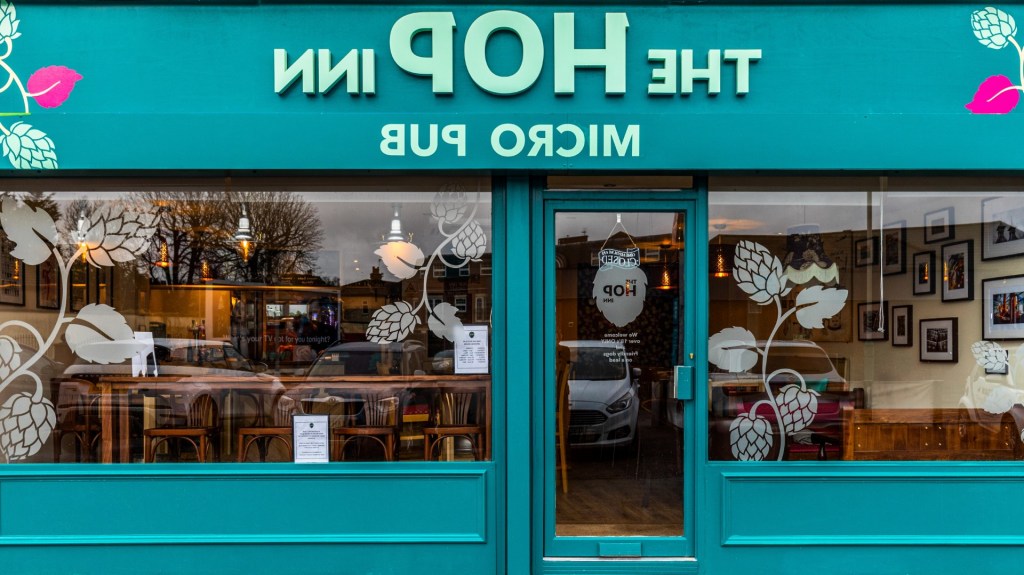
One of the best, by common consensus, is the Hop Inn in Hornchurch. After all, it’s won CAMRA’s Cider Pub of the Year twice in a row. Alison Taffs, its co-owner, is certainly one of cider and perry’s most important figures, doing incredible work with CAMRA’s Learn & Discover Programme, co-founding the London Cider & Perry Club and much more besides.
Alison was the first person I reached out to when I wrote my article for Pellicle, and my only regret was that I didn’t have space to include more of our conversation in that article. Now that it’s published, I’m delighted to share it in full here, lightly edited for clarity. Huge thanks to Alison for going into such detail, and outlining such a clear path to a brilliant pub cider and perry offering. If every pub looked after its cider in the way she lays out below, we’d be in a golden age indeed.
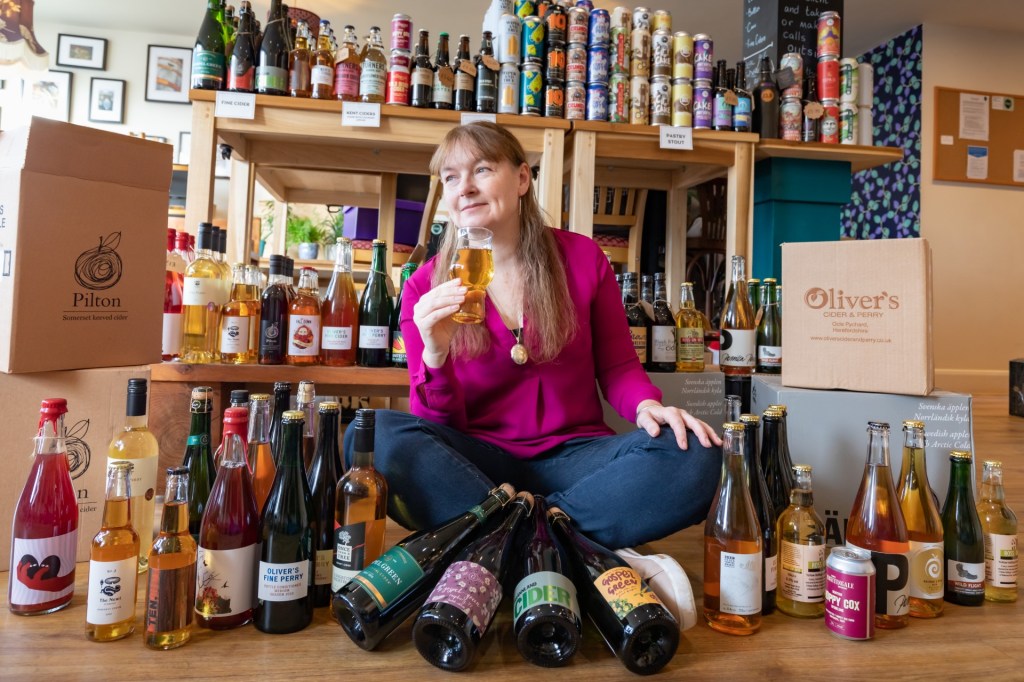
CR: Jumping straight to the point, what are the most important storage considerations in terms of Bag in Box?
Alison: The bag in box has got a huge place in cider service in pubs. Obviously you don’t want warm cider; that is without a doubt. I get slightly alarmed when I see bag in box cider sitting on the back bar or stuck in the corner of a pub room. It just isn’t particularly appealing at warm temperature, so that’s the first and most important thing.
Depending on the style of cider, we keep the majority of our cider in the cellar so we serve it at cellar temperature. When we work with more tannic ciders we keep them away from the cooler, so they’re a little less chilled. But the fresher culinary apple style we want to be a little cooler so we jiggle them around in the cellar accordingly. Cellar temperature is critical to make it appealing and enjoyable – particularly in hot weather.
CR: You made a good point there about different temperatures – we sometimes treat bag in box cider as a bit of a monolith but of course you’d want to treat say a Dabinett from Ross on Wye differently to a Discovery from Nightingale. Do you think a one size fits all approach is sometimes applied?
Alison: The big hope is that we can get people understanding that they have to look after their bag in box – that’s the primary focus, given where we are in the world, as you know, where we see things like boxes of Lilley’s stacked up in a room with central heating.
What we’d like to see is people being a bit more sensitive. So if there’s a particular cider that’s very tannic and full and will taste better not in the cellar, on one or two occasions we’ve tucked it in a cupboard that is cool, but not as cold as the cellar. So that can happen, particularly if the cidermaker speaks to me and says ‘actually that’ll taste better’ and I’ll test it and say ‘yep that does taste better’, in the cool back cupboard rather than in the cellar – but remember that this is still cool, this is not in the heat of the room.
So the temperature should be thought about, and if you’ve got the ability you should. Now I do understand that some pubs are severely restricted in terms of what they can do. But if you are able to manage it those temperatures are very beneficial to enjoyment.
CR: What are the biggest challenges of the format?
Alison: People think that once they’ve opened it they can keep it forever. It can give people a bit of false confidence or there can be a bit of a lack of awareness about the fact that you do need to keep an eye on your bag in box cider and perry and that it does need tasting.
We have a ritual in the pub where we taste our cask beer 7 times a day. What we try and do is make sure we’re tasting our ciders and perries on a regular basis as well to make sure they’re tasting good. Particularly when they get low inside the bag in box you can start to get a bit of a change in their flavour and quality so it’s really important to keep an eye on them.
CR: Do you think in terms of keeping that there are parallels with cask beer in terms of awareness of how to keep it?
Alison: Yeah I definitely do. As you know Adam we’re still trying to get people to understand what real cider is and the next step is getting them to understand which ones to choose and to serve them at their absolute best.
It’s astonishing to me that people think that once you’ve opened it like that you can just keep it forever. I’m always very worried when I go into pubs and I see like 20 bag in boxes stacked up in back rooms and things. Because we have quite a number – we’ll go up to 10-12, but that’s in a pub that sells a lot of cider – as you know we’re UK Cider Pub of the year, and we’re quite busy – but if you’re small and quiet and you don’t sell a lot of cider it’s a very bad idea to have lots of boxes open.
It’s a bit of a scattergun idea; just open loads and loads of different flavours and think they’ll be fine forever and they’re absolutely not. It’s the same approach as when I go into a large pub and I see like 25 keg beers on. Because keg beer doesn’t keep forever either; it’ll degenerate in quality. So if you have hundreds of keg beers on and you’re hardly serving them, that’s not a good thing either. Everything really needs looking after and bag in box cider is no exception.
CR: What do you think is the time limit ideally for bag in box – obviously allowing for variance from cider to cider depending on apples and style and so on?
Alison: It really depends, because some are pasteurised and really stable, whereas some are much more natural. So for example I only order Albert’s [Ross-on-Wye] bag in box in 10 litres – I never have 20 litres of his ciders – because I know they’re going to be fresher and better if I keep them in 10 litres. So I can open those, serve them through in a timely way and they’re going to still be really good by the time they’ve finished. Whereas some of the ciders that have been pasteurised will hold really cheerfully for longer.
We don’t tend to hold them for more than a month, but some of the more stable ciders will hold for up to two.
CR: What are the benefits of bag in box?
Alison: Flexibility. It’s incredibly flexible; you can offer a fantastic range and they are remarkably good value. They’re too cheap really – that’s the main issue I think. Because they’re so ubiquitous and available there’s an expectation that they’re going to be cheap and I think part of that, as always with cider is that the cheap end of the market drives the price down.
People see Lilley’s at a certain price and they expect all bag in box to be the same, whereas there’s a big difference in the way they’re produced and the scale of production and the quality of what’s been done. So I’ve started charging a little bit of a premium for some of my more expensive ciders, because they’re more expensive to me and frankly I think people are quite happy to pay a little more for some of the more unusual and special ones.
CR: One of the issues I find – with all cider but perhaps especially with a lot of bag in boxes because they’re maybe served in places that aren’t so cider focussed – is quite a lot of faulty liquid being packaged and sold. How much of a problem are faults in cider?
Alison: We’ve had a few issues with bag in box, but I’d say only a couple really. I’d say this goes without saying but the main thing is, when you open it, always always taste it before you begin serving it. Make sure it’s tasting as you’d want it to. Tasting is really important and you absolutely shouldn’t serve something that isn’t right. On the handful of occasions it’s happened to me I’m in a fortunate position where I know and have been able to contact the cidermaker. And on the one occasion I haven’t been able to contact the cidermaker I’ve gone back to my wholesaler and said to them ‘look, this isn’t right.’ And they happily took it back.
So buy from good people, communicate with people and have the confidence to say ‘look, this is faulty’. And I admit, if you don’t have the confidence, if you’re not certain about what’s faulty and what’s not that is tricky – and something I’d like to see happen and would be very happy to be involved with is perhaps CAMRA offering some more guidance and tastings certainly for people running their festivals. Because we do find where people – quite rightly – try to source local, small-scale farmhouse cider sometimes there are some faulty bag in box. And that’s a separate conversation.
But I know there’s been some work going on. I’ve been part of an advisory group along with Dick Withecombe and others to try and have some really clear guidance for cider bar managers at CAMRA festivals so they do know and understand what faults are. But I think that nothing beats practice and practical experience, so some kind of training on offer for people to help pick up faults would be amazing.
I’ve had the opportunity and experience of having Gabe’s training on the Pommelier course, but that was a bit easier for me because, like you, I come from a wine background, so I was used to picking up faults on the nose and palate.
But it is tricky for people if they haven’t done it a lot or they’re not confident, so I would say if possible get yourself involved in a CAMRA cider bar, because those people should have a good idea. There’s some really clear guidance out there now that the advisory group’s putting together and hopefully in the future we’ll be able to do some training sessions for them.
CR: It’s brilliant that CAMRA have updated their policy so that faulty ciders won’t be served at festivals. How educated are consumers and indeed publicans on the subject of faults in cider?
Alison: I think in a nutshell, as with cask beer where people know how to keep it, how to spot faults, how to taste – that’s where we serve delicious cask beer, and it’s the same thing with cider. When people are confident to know what they’re doing, how to taste it and serve it and know what they’re looking for we have a delicious cider.
I think a lot of the problem we have is where people are served something that’s possibly at the wrong temperature, possibly been open too long and probably maybe even had a fault to begin with, that’s going to create a disaster. The person will go ‘I hate cider, it’s disgusting’, and you think ‘God I’m not surprised given what you’ve just been drinking.’
So the key thing as always is getting publicans and people who are serving cider to know what they’re doing. That was my call to arms at the Three Counties CraftCon. Reach out to freeholders; landlords who are able to choose their own products, like micropubs and freehouses, and as cidermakers, communicate with them, coach them, help them, give them a bit of support and encouragement and let them have a taste of what you’re making.
Because that’s the way you’re going to break through and I think if cidermakers can help to encourage that education as well in their local patches that would be fantastic.
CR: What do you see as the standard consumer’s perspective of bag in box cider?
Alison: If we’re talking about really standard consumers they’ve probably got no idea about them because the majority of consumers think cider’s the fizzy stuff that comes off the tap in a chain pub. And as you know that’s never going to be still, it’s going to be fizzy and nine times out of ten its going to be Strongbow or Thatchers or whatever. That’s what the majority of people think cider is.
When we start talking about bag in box we’re talking about the type of people that go into freehouses and go into micropups and that’s a smaller fraction of the general population, and of those people, a lot of them will go for the fruit flavoured ones. When I sit in a lot of micropubs that I have a huge amount of respect for in terms of the beer they serve, unfortunately all we hear is customers ordering Lilleys Berries and Cherries or Gin flavoured cider or whatever it is, or at best they’re drinking Seacider in peach flavour. There’s a long way to go really.
CR: Do you think the state of BiB in the UK is partially responsible for perception of traditional cider as a bit rough and ready?
Alison: I think the word ‘scrumpy’ still gets banded around a fair bit with relation to it. On my side of things I don’t find it a very helpful words because it has connotations we all know – the tropes we all know – and what I’d like to present is a much more exciting, complex, clean product. That’s the way we approach it.
Nine times out of ten when we give people cider for the first time we disguise it by giving them a taster in a wine tasting glass – maybe a keg cider – and we say ‘what about this’, and they think it’s wine. And that’s very often the way we break down the barriers. And when we have craft beer fans who love sour beers we might give them a Little Pomona, something that’s delicious and tart, and they get it that way.
The other thing we haven’t mentioned is just how wonderful it is to be able to give people samples from bag in box. It’s the thing that restricts us heavily – I love 750 ml bottles, I know you do too; we adore them because we’re wine people and we love that. But the reality is most people won’t want to buy a 750 ml bottle at the pub, they want a third or a half or a pint. So being able to give them a little taster is the absolute gold for that, every time. I can give them three little samples and find out what kind of cider they like.
We do this all the time; we bring out little tasting glasses, saying ‘try this one, try this one, try this one – which one did you like?’ ‘I liked the one in the middle’ ‘oh well you like that style of cider then, try one of these and then we’ll pick things around it’. That’s why we’ve got so many beer drinkers that now drink cider in our pub because we’re constantly giving them tasters and they’ve finally found the thing they like.

CR: Going back to cider often being treated as a monolith and also to something you touched on there. In pubs, cider has come to be seen as a bit of a ‘pints’ drink. But a fully-fermented bittersweet, say, that hasn’t been diluted with water or back-sweetened with juice, is going to clock in at 7-8.4%, and a pint of that seems fairly heavy going. Do you think the way these ciders are served needs consideration – you wouldn’t serve imperial stouts by the pint, for instance?
Alison: Definitely. We know that the challenge of the beerification of cider is that people think of it as equivalent to beer when actually natural cider is – I know we’re not ‘allowed’ to say it – a much closer style of drinking to wine.
For me, when we open the 750ml bottles of cider or perry we’ll serve them in wine glass measures, so for example we had Little Pomona Perrykin on the bar recently and we were serving that in 175ml measures in a wine glass, and people have a completely different approach to that than they would do if we plonked it in a pint pot. So it definitely makes a difference.
We serve all our thirds and halves in goblet glasses. So again you get that sensory experience in the nose and so on because you’re drinking it in a much more suitable container than a straight-sided pint pot.
And I agree with you – I would not want to drink a pint of something from Ross, or Phil Turner’s wonderful 8% Egremont Russet. It’s a wonderful drink but I wouldn’t want to drink a pint of it any more than I’d want to drink a pint of German Riesling.
CR: I guess it comes back again to not thinking that one size fits all with cider
Alison: Yeah I mean I’d love if we could start serving draught cider in wine glass serves but legally we’re not allowed to. Legally it has to be served like beer – in third of a pint, half pint, two thirds and pint. Which we do all of at the Hop Inn. that’s the other thing by the way – in a lot of pubs the smallest measure you can buy is a half. With us you can sit and have three thirds, and that is a great way of drinking your way through all the fascinating different bag in box ciders.
Overcoming those prejudices and mindsets and getting people to think about things a bit differently is key. One important thing for us is we do table service so it gives us the opportunity to have those conversations in a way that’s very difficult to do if you’ve got people rocking up to the bar. It’s such an ingrained sense of habit that you’re contending with with pubs. I wouldn’t fancy my chances standing behind the bar of a Wetherspoons trying to convince someone to try a third of something or saying ‘why don’t you have a half of this in a goblet glass’. So we are in a lucky position in terms of our setup and the way we serve – it gives us the opportunity to have those conversations with customers.
CR: And I guess that gives you and the drinkers more opportunity for versatility as well. Which producers are doing draught cider especially well?
Alison: I coalesce around a group of people who make great cider, first and foremost. Because if they make great cider they generally take a lot of care over what goes into their bag in box as well. So I wouldn’t say that there’s any one producer – all the guys I use are making great bag in box too.
The truth is it’s probably the only way I’d be able to get hold of a lot of the ciders – people like Orchard Revival, the wonderful Tim Andrews in Gloucestershire, he’s producing bag in box cider which allows me to serve his sensational cider and perry. I probably wouldn’t get it any other way, so I’m very excited and happy to get that. Other people I might be able to get their stuff in bottles, but people can come to me and drink his stuff in bag in box and they wouldn’t be able to get it any other way.
So that excites me because of that rarity. People like Steve Town at BeardSpoon who brings me cider specially; he makes so little of it but he knows we sell a lot of it so we’re able to get it. So those things I suppose are the most exciting, because they’re things that are hard to get or drink in any other way.
If we see an increase in people getting passionate about good cider they might even travel for it in the way they do with beer. The way people get excited about a beer and will come and find it; on something like Real Ale Finder they’ll see a beer and think ‘alright, I’ll travel, because I want to go and drink that’. And it may someday be the same way with ciders, and bag in box is a big way of us being able to do that.
CR: What are the key ways you feel improvement could be achieved regarding Bag in Box – both from producers and publicans?
Alison: Well from my side I think ‘let’s be realistic’. The producers can make contact with free houses and micros that they can develop relationships with. There aren’t going to be many pubcos or brewery pubs where they’re going to have impact at all, because those pubs can’t choose what they serve anyway.
But the ones, if you have any around you at all as a producer, that you can make contact with and develop a relationship with – literally go and see them, drink some cider in their pub and take them some of your cider. That’s the way you build relationships. And that’s the way you slowly get your cider out there.
If you travel around Kent as we have recently you’ll see plenty of Turner’s and you’ll see plenty of Kentish Pip because that local market has developed and that’s terrific to see. You can’t achieve that in a brewery pub or a big chain pub – it’s going to be downright impossible. So reach out to your freehouses and your micropubs, because that’s got to be the key.
In terms of general education, I’ve set up London Cider Club and part of the reason for that was to get people talking to each other and get makers talking with drinkers. And we do have a couple of publicans that come along, which is brilliant, because what a great tool for a publican to come and meet a cidermaker, taste their wares and decide to order from them. That’s the kind of thing I was hoping to happen. So yeah just try and get the message out there and educate people.
CR: Speaking more broadly, what does a good pub cider offering look like to you, and how did you go about cultivating one yourself?
Alison: What we try to do is represent different styles of cider. I very carefully don’t write sweet, medium, dry on my board because I want to have a conversation with people. There’s such a lot more to say about ciders.
We try to really focus on the source, what types of apples are being used, what style of cider is it, where’s it coming from – we really try to focus on the whole story. We also do give people a bit of an idea what it tastes like; we do our own tastings when we put a cider or perry on, just to give people an idea of what type of cider they’re going to get.
Really it’s just about making sure you’ve got something for everyone. And to begin with, if you’re starting out with real ciders, and you’re brave enough to put some non-flavoured ones out there, go for a light juicy style and something a bit more tannic and traditional. Even if you’ve got two or three different styles, that’s the right way to do it.
We try and wean people off banana and artichoke flavour and get them on to the natural, delicious flavours!
CR: Can you share some words on keg conditioned ciders. What are your thoughts on them, have they been a good thing, have people engaged with them?
Alison: Just to say a word about keg cider in general actually – the steel keg ciders as well as the keg conditioned. We regularly take cider from people like Tom Oliver that isn’t necessarily keg conditioned but is very delicious. We put three keg ciders on recently at the same time – one was keg conditioned from Ross, one was Maison Sassy Rosé, which was incredibly popular with non-cider drinkers – we made a lot of converts there.
We put on lots of different styles, so we have fresh and juicy sparkling Kent styles – Kentish Pip, Nightingale, things like that, and they bring people over all the time. So the natural steel keg ciders do a great job. I get hold of cider from Novar in Scotland, from The Newt in Somerset, so we try and show a wide range on our keg as well as in bag in box. Some people don’t want to drink still cider – they want sparkles. So getting different types of cider that are sparkling is great.
But the keg conditioned stuff is even more exciting, because you’re obviously offering complexity; there’s a story, you have a conversation about how it’s live, you can make more of a connection with your cask ale drinkers – it’s just enormously exciting.
Discover more from Cider Review
Subscribe to get the latest posts sent to your email.
 Cider Review
Another great article Adam! Thanks for your advocacy for fine cider. It was very interesting to hear about pub culture relative to cider in the UK and understand how different it is from the US. I was especially fascinated to hear that there is a serving standard in the UK that only allows cider to be served in pints. How unfortunate. There is no legal standard pour like this in the US.
LikeLike
Cheers Steve. Great to hear from you! Yeah the pints thing is difficult, and reductive for sure. Of a venue can sell whole 750s at a time then they can put out wine glasses, tekus or what have you – but for the most part we’re not there yet.
The association of cider and pints really has been a massively mixed experience. But for the most part my own view is that it has been one of the driving forces in raising dilution and moving away from traditional bittersweets. I really hope we can continue to show that there is another possible way. I think Alison has provided the perfect model to demonstrate that there is!
All the best
Adam
LikeLike
I photocopied this and gave a copy to my local pubs cellar manager who knows beer and it’s keeping inside out but knows little about bibs or cask conditioned versus keg cider or keeping cider in general. He found it most illuminating and helpful.
LikeLike