Title image by Dylan Byrne.
Following on from Adam and Rachel’s excellent call to action article, CraftCon and Cider Communication two weeks ago, and with the letter A key on my laptop keyboard constantly popping off its plastic casing (arghhhh vowels and how much we rely on them!), may I humbly present Anna’s, Ian’s, and my own collective musings on CraftCon 2026. It’s Anna’s first, my second, and Ian’s third CraftCon – a nice spread of opinions and interpretations to follow. I shall also take this opportunity to bestow a very warm welcome from all of us to Anna, as she joins the Cider Review writing crew. As our Editor Barry will often mention, we’re always after new writers who wish to showcase their unique slant on the world of cider and perry to the wider Cider Review audience. The more the merrier!
Anna’s First CraftCon Experiences
As a relatively new drinks enthusiast who hasn’t gone beyond a few homemade infusions, I signed up to this year’s CraftCon on impulse just before ticket sales closed, unsure if I was making a good choice. Maybe I should have waited until I had more to offer, but I’m glad I went. Not only was there a bewildering range of kind and talented UK makers, but I also didn’t fully appreciate how international the event would be, with particularly strong representation from North America and northern Europe. The organisers did a great job in drawing in such a varied selection of what cider can be!
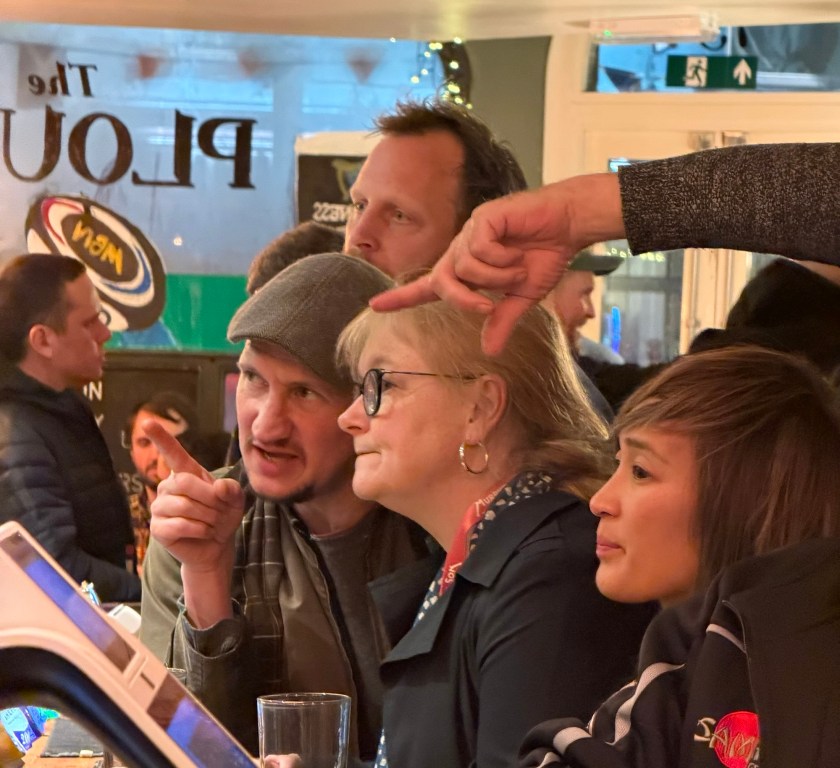
Arriving in Taunton the evening before things kick off, I wander down to check out the CraftCon takeover of the Plough Inn close by the conference venue. The guy who picks the drinks here gives me the lowdown on boxes upon boxes of West Somerset cider behind the bar along with choice orchards and makers to visit around his end of the county. Look out for the Somerset pub trail coming up this July to September! I’ve already chosen my half for the evening purely on the basis of its dragonfly label and it turns out that’s what my guide is drinking too. The Plough has a neat narrowness that means that, with the number of ciderheads packing its gills, you cram into conversations you might otherwise feel you were intruding upon.
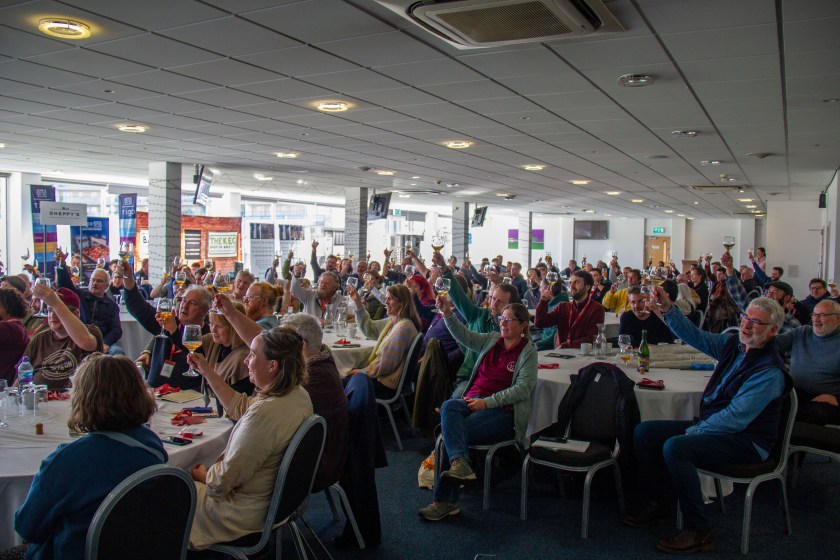
Our non-pub venue, the cavernous Somerset county cricket club, takes a little adjusting to the next morning. After some transparently aimless milling about a kind fledgling maker takes pity on me, seeing in me a fellow introvert. I want to reply ‘no, just inept!’ but I’m not about to spurn solidarity. The more hobbyist and microscale makers I stumble upon, the more I warm up. Their dreams feel a little more legible to me even as I remain in awe of their skill and diligence. I am not in any danger of the impressive commitment some delegates have – I met someone who moved to Wales in a caravan to pursue his orchard. I’m still weighing up whether I can brave a tent for a couple of nights for Ross Fest later this year. But I think my general reticence is based on a real lack of skin in the game that I hope I can start to remedy.
I’m grateful to come across someone I recognise from Reading Cider Club, Harry, here with his fellow cidermaker Will and a bottle of their sharpie-labelled perry. Riding an uncharacteristic urge to be useful, I offer my services as stooge for the bottle share later that day. I stand ready to start off a cider bidding war despite swimming in free samples until I get removed from the building, bringing their wares as much attention as possible. All publicity is good publicity! They politely decline. Desperate/enterprising makers out there: you know where I am (at Reading Cider Club, most likely).

Before getting onto her blind tasting session, I was relieved to hear that Alison Taffs is, in her own words, a ‘lightweight’, someone who loves working behind a bar in part because it requires a lot of tasting without the capital-D Drinking. One reason I haven’t gotten into fancy booze earlier is the (I hope) misconception that the only way to really get them is to drink more than I want to. Lightweights of the world, come over to my house for a tasting so I can actually get through a 750ml of weird-ass cider I loved in thimbleful form eight months ago. Each step we take on Taffs’ systematic approach to blind tasting cider – appearance, nose, palate, then finish, with illuminating rundowns of primary, secondary and tertiary characteristics gives you confidence in your ability to make sensory judgements without oversampling.
One of the exciting things here is that, particularly for drinks like cider, this lexicon is still developing. Bringing our collective vocabulary up to par with whisky and wine, drinks which, for better or worse, really know how to sell themselves doesn’t need to mean losing sight of the particularities of apples and pears and what they bring to the drink. For her work in progress, Taffs is particularly keen to see updates from our community on perry character and flavours in keeves and ice ciders. If you still feel fresh from your conference sessions on these themes, this could be your time to shine!
The first item on our blind flight was so green and vinous that on first sniff I had it tagged as a sauvignon blanc smuggled in to wrongfoot our all-cider expectations. This didn’t turn out to be true. One of the buoying take-homes of this talk for me is that sitting back, sipping again and seeing what actually presents itself to your eyes, nose and lips can be much more rewarding than trying to have it all worked out from the jump.
Tasting our way from clean green to banana farmyard via an aside on body odour notes and an impressive spit trick to test acidity levels (if you have to catch yourself from drooling, it’s got some zest in there) I overhear some triumphant reactions to correctly guessing the maker/apples/vintage. I can’t lie, this must be satisfying – but by the end, it’s almost beside the point what the actual drinks are.
Precision can only get you so far. If you know your Butt from your Bulmer’s and can pick up notes of blueberry liquorice and soporific whiffs of myrrh but you can’t talk up your favourites enough to get your friends to share them with you, you’re missing out on a whole lot of fun. I’m excited for more people to feel their way around this method and help connect more people with great cider.
I wish I’d had Alison’s tasting method to hand during a session on ice cider. This relatively new style of cider, developed in southern Quebec in the late 1990s, has more range of flavour and texture than I realised or fully managed to process during our talk and guided tasting. Eden Cider’s Eleanor Leger combines the romance of New England heritage apples with pragmatic manoeuvring around the changing climate. A sliver on a map follows the narrow band of North America in which you can still (just about) produce ice cider using the natural cold most makers favour.
Freezing the juice of ripe apples concentrates the flavours before defrosting to melt the rich syrup out, leaving the water behind as ice. Leger repeats this freezing process again and again, slowly fermenting the juice to bring forth ‘the soul of the apple in liquid form’ and get to the balance of acid and sugar you’re looking to sip. This method of cryoconcentration (as opposed to cryoextraction, where you leave the fruit to freeze solid on the tree, with more vinous results) is, for Eden, a truer expression of the apples they have in hand.
For high-tannin apple enjoyers used to fermenting to dry, deciding when to arrest fermentation may not be intuitive, Leger warns us. It’s also getting harder to consistently reach the freezing temperatures needed for long enough to do this outside, increasingly forcing makers to resort to expensive and energy-intensive freezers. Later, I’m impressed to meet a Nottingham winemaker with freezers full of cider himself. I accept I’m not about to make ice cider myself, more’s the pity, but I have found someone who might wanna hear the tips and tricks I’ve picked up! Along with a refreshingly technical maker’s guide to her main specialism, Leger bookends our tasting with two of her own blends using the same varieties in different years, showing off the possibilities of barrel ageing with apples that can stand up to oxidisation with higher acid.
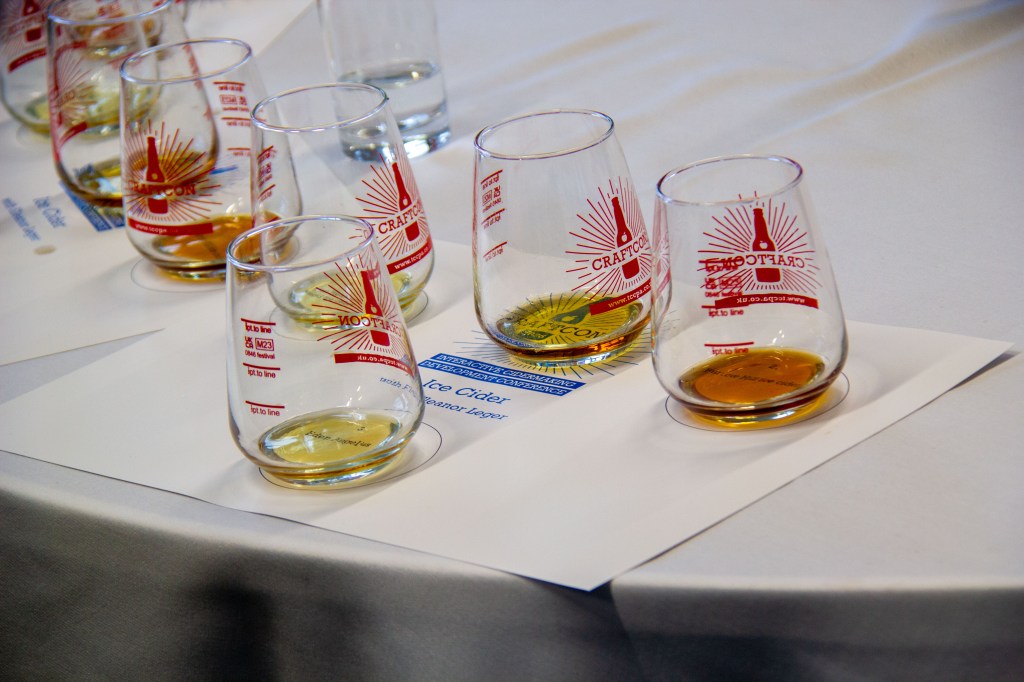
While Eden focuses on their local dessert apples in the ice ciders they produce, the second of a flight of four in our tasting is Burrow Hill’s West Country take on the North American form. In other words, it has tannin! I sit up straighter, feeling (rather grandly) like the extra texture in the Burrow Hill Kingston Black SV has given me a tannin silk bonnet or fur stole as a last flourish of distinction. The finish is longer than my delusions of grandeur. I get a grip on myself and graciously accept it’s all the ice cider’s elegance, not mine – more like a grande dame brushing past you while you’re just grateful to be in the same room. It’s also the most moreishly nutty ice cider I’ve tried so far.
I’m not trying to underplay the varied charms of mountainous mid Wales, wild West Cornwall or Vermont when I say it was refreshing to hear from Chava Richman of Welsh Mountain Cider, Vagrant’s James Fergusson and keynote speaker Eleanor Leger about the more difficult places and moments of cider making. The mud months of a New England spring and the realities of not having enough cold even in the depths of winter are just as real as the marshmallow world of snow we more readily associate with that climate.
As Albert Johnson of Ross on Wye has it, answer the questions the apples you’re given are presenting to you – not the apples or the times or the conditions you wish you had. Fergusson and Richman have a knack for discovering or doggedly planting apple trees where, in theory, they have no business to be. How do you describe the influence of scrubby, overgrazed fields, bare old quarries like ‘the surface of Mars’ and surprise sand dunes on the apples’ expression? James modestly explains ‘Cornish apples tend to be dual or triple purpose and do none of these things very well’ but this tricksiness only underscores his ambition with what he’s got. Of the hundreds of varieties he’s come across, maybe 29 pears and 43 apples could be suitable for cider. His goal is to foster a new tradition of cidermaking in his region, one based on varieties that have already proven a hardiness and will to survive.
With their expertise, I hope someone is ready soon to open a department of Cursed Terroir Studies. I look forward to following Welsh Mountain Cider’s unscientific cider variety experiments (450 in their orchard and counting!) and the National Trust orchard James Fergusson is filling with the most successful seedlings from his Kestle Barton trials of local unknown varieties.
The cider-stuffed corner of the Long Room come evening grows cavelike as the bottle share got going (not coincidentally, also where I was lurking). I picture someone coming with a torch to pick out your next cider sample, like when you’re late to the cinema and you’re guided to your seat through the dark. Without a tighter plan on things to try, I trust in my guiding stars of thirst and opportunism and keep one eye open for new-to-me countries.
As it happens, I make a beeline for an Alde Sider’s Issider on the strength of an entirely different Norwegian cider I haven’t got out of my head since the only other bottleshare I’ve attended so far (Lingebakken’s Bakkesider 2024 Disco). I have jam on the brain and on the nose, having recently catalogued over a dozen jars I really ought to use before I lug them on another house move. But this is as concentrated a nose I’ve ever nosed and the high-wattage damson jam follows through on the tongue without flab or superfluous sugar (to be fair, sugar is rarely superfluous, much as we’d like to believe we’re above it). I was genuinely tempted to try to take the empty bottle back with me to huff whatever aroma it had left. I’m basing my fanboying on just two samples total, but is there anything we can do to lock in a Norwegian cider symposium next year?
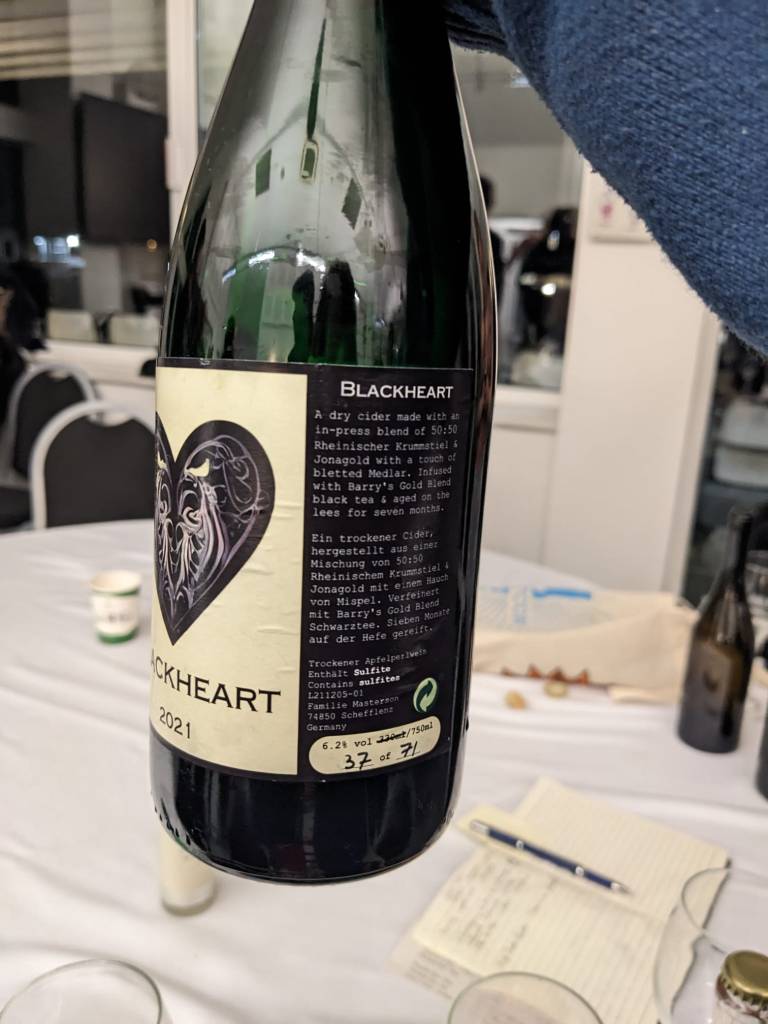
I got on a little less well with my first Japanese cider, finding it hard to get much beyond mega-aniseed. Maybe sipping it in a negroni sbagliato to replace the prosecco or standing in for the absinthe in a sazerac would bring out its best. Always a sucker for orange wine vibes, I pick up Bauman’s cider amber to compensate a little for missing the US cider symposium. It’s warm and cuttingly floral, as if marmalade bloomed out of the ground and its petals were spreadable (my range of tasting notes is still limited to preserves but I need to change it up a bit for plausible deniability). I want to be a lizard on a hot stone doing nothing but warming myself with this and the sun. Will and Harry’s farmhouse blend reveals a lovely seam of minerality on the finish, a quality we hope has potential for development with longer in the bottle. My head is turned by the black tea and medlar Kertelreiter’s Black Heart 2021 is made with, though as it turns out it’s more subtle than I assumed. No bad thing, but a bit beyond my appreciation in the blink-and-you’ll-miss-it frenzy of the bottle share.
My contribution to festivities is Skyborry’s Breinton Magic and Oliver’s Land of Hope and Dreams perry. In all the excitement, I forget to actually open …There was just so much to go at but I hope they got quaffed eventually.
Oliver’s, I picked because it’s a keeve, the subject of the one talk I couldn’t get on to (I was pleasantly surprised I could get onto nearly everything I was interested in, including two tastings!).
Claire Daniels of Rull Orchard kindly gave me a peek in at what I missed: four samples of Rawlings keeved cider to taste! Simon Rawlings offered ciders of differing vintage and blends, and Phil Palmer offered a personal journey through Palmer’s Upland keeved ferments of 2025, with tips on monitoring ferments and when to apply keen attention. Yann Gilles stepped in to underpin the makers’ intuition with the science behind the craft. Yeast activity was examined at a micro level in relation to the stages we makers recognise, through our macro relationship with our fermentations.
With the wider considerations of climate change and levels of orchard nutrition at play, Claire said she’d left both inspired to apply what she’d learned about orchard nutrition in her 2026 harvest… and contemplating the future of spontaneous keeving in the rising temperate climate of the UK.
I hope that by this time next year I’ll have got my hand in with some orchard volunteering experience, a few more drinks experiments, and a whole lot more tasting. With bags of facts, finds and new approaches cramming my notes, I still feel a little green and a little too thirsty for firsts. It’s time for me to settle in at home, pick an apple or maker and try, try, try again.
Jack’s Second CraftCon Experiences
Held in Taunton, Somerset, this year, at the county cricket club grounds – I must say from the off that I’m 38 years old, a UK resident, and I’ve never visited Taunton before. It’s not by design, purely by accident. I live in Norfolk, it’s quite a schlep to get over to Taunton (via London and Reading, or, as often seems to be the case for me, via Birmingham, land of incessant roadworks and HS2 development). I’m pleased to have ticked this list of county towns off my list now, I’m sure it will come in handy in a future pub quiz as county towns are a tricky one to remember (they’re not all as easy as Cambridgeshire and Oxfordshire). The venue presented the opportunity of a definite increase in space this year, we had the run of three substantial rooms across the cricket club for the various tracks of discussion, networking, and sustenance. Emma and Leo of Blue Barrel Cider came via train, it sounded very relaxing, and with the ever increasing price of fuel, a very sensible option I may consider in the future.
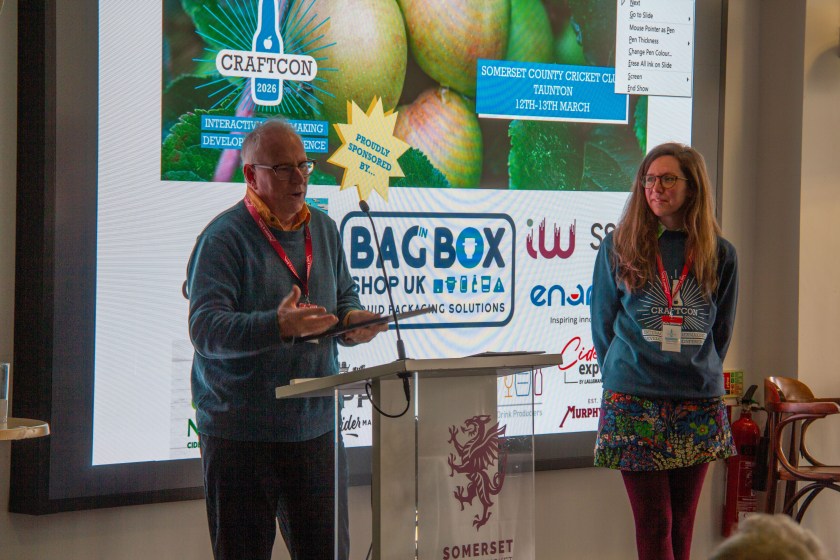
Track-wise I chose a culture and orcharding approach, but CraftCon allows you to go down a technical route, a sensory route, or a mixture of all three. As mentioned above, Anna and Ian will also give their thoughts on the presentations and panel discussions that they were part of too. It was lovely to start the event with author James Crowden being presented the Susanna Forbes Award for Outstanding Contribution to Cider Culture. Last year, my good friend Alison Taffs of The Hop Inn and London Cider Club (amongst many other strings to the bow), was the first recipient; James continues in this emerging tradition celebrating great advocates of cider culture. His most recent book, Cider Country, is an informative and optimistic view of this cider culture we all care passionately about – well worth a read over Easter if you’re looking for a book to purchase.
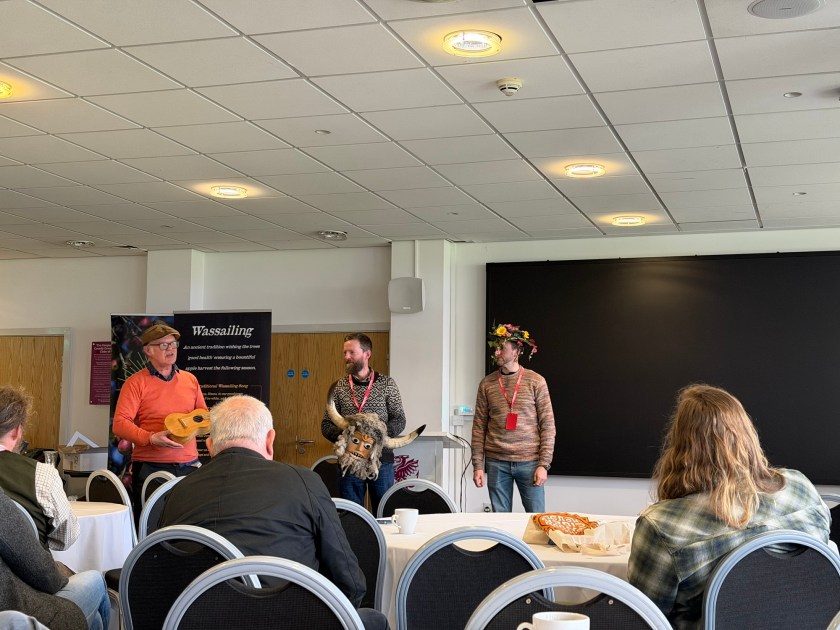
On that literary theme, the first presentation I attended, Old Apple Tree, We Wassail Thee, was led by Martin Maudsley, author of Telling The Seasons, a book that I can also heartily recommend (this is turning into Cider Review weekly book club!). I’ve helped run a wassail at my friend Ben’s orchard for the past 6 years, but there was an absolute plethora of history and other activity around the wassail I learnt from Martin’s presentation. Rings of Fire, Wassail Kings & Queens, shotguns blasting into the night sky, a chant of “Ollllllllllllllllld ciderrrrrrrrrrrrr”, even some nude elements (which I’ll be staying well clear of in January, thank you very much). He was an extremely engaging presenter, and even convinced our lovely co-founder of Cider Review, James Finch, aka The Cider Critic, to don a wreath-cum-headpiece and dance around a little crab apple tree in the room. Indoor wassailing! Now I’ve seen it all!
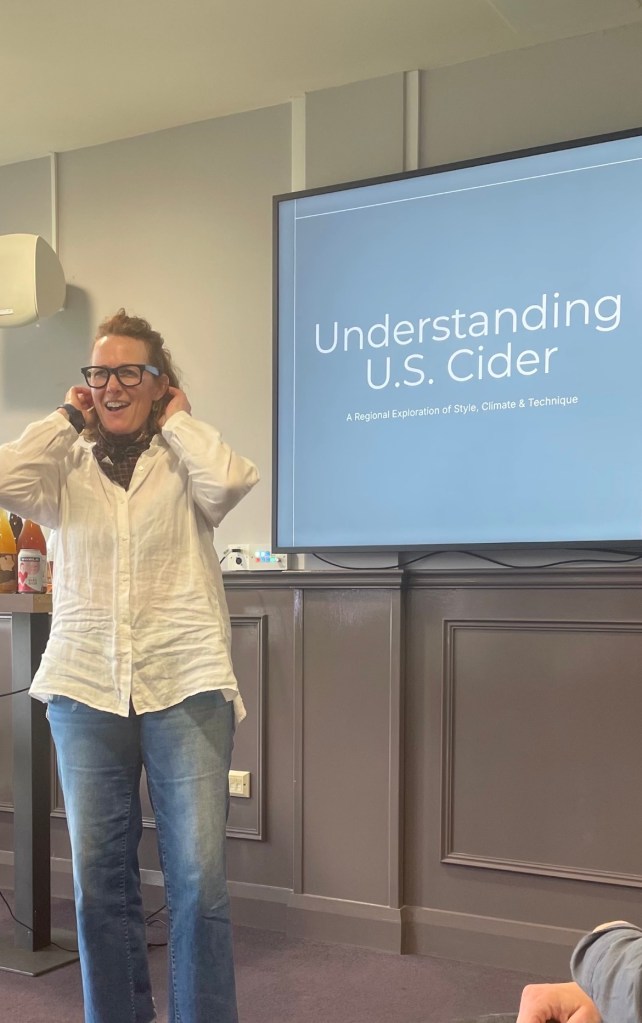
Chava Richman, of Welsh Mountain Cider, and James Ferguson, of Vagrant Cider, gave an excellent duel talk on Orchards at the Edge, highlighting the resilience and slightly bonkers places cultivated and seedling apple and pear trees can grow. As someone who has been taking a perry tree or two up to Lagg Distillery’s magnificently exposed orchard on the Isle of Arran for the past 3 years, I can wholeheartedly identify with their optimism and persistence that these trees will and can surprise you with the versatility of where they decide to thrive against all odds. I finished Day 1’s sessions with Understanding U.S. Cider: A Regional Exploration of Style, Climate & Technique. This was my first sip of cider on the day, and whilst it was lovely to sample beverages from different regions of the USA, the total standout highlight for me was realising it was Christine Walter, owner of Bauman’s Cider and President of the American Cider Association, leading the tasting. I’ve corresponded with Christine for Cider Review’s end-of-year harvest summaries, and she’s always been so helpful and giving of her time. She is a brilliant public speaker, and just like our very own Ciderologist on these shores, Gabe Cook, could make a talk about paint drying on the wall engaging and entertaining. To see US cider through the lens of Christine’s gaze was a real pleasure!
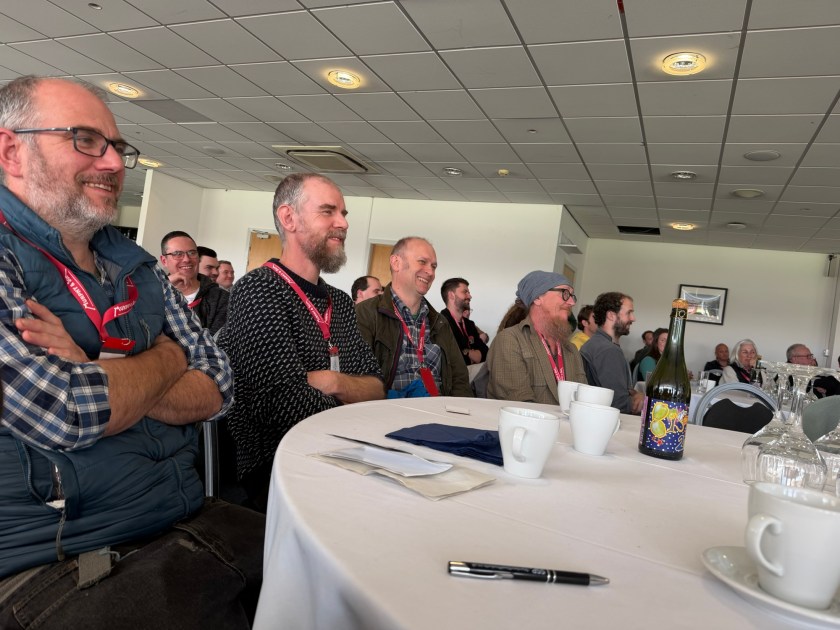
The legendary bottle share. Much more space than last year. Softer wall surfaces so less ear drum-obliteratingly loud than last year. I sat down on a table with Meggy’s Cider, Downham Cider, Swift Cider and Perry Co, Three Wells Cider, the London Cider House, Ian Stott, and Gillian Hough ( all good things cider and perry at CAMRA). There was more than enough brilliant cider and perry samples to see me good for the whole evening. I’m grateful for the single variety Pint perry I brought along this year to not have mouse – a memorable for all the wrong reasons moment from the previous year, as Barry can attest: “Oh god, that’s incredibly mousey!”, or words to that effect.
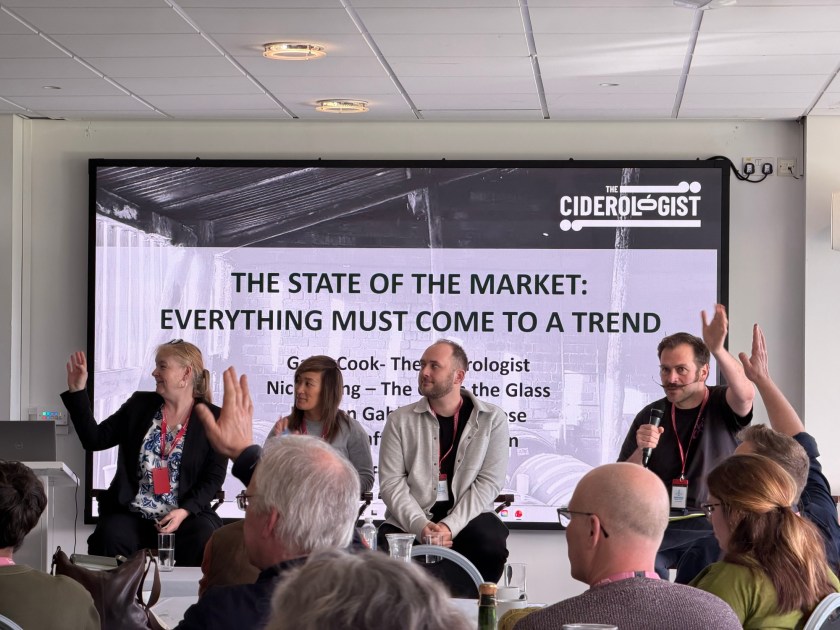
Conscious of a self-imposed word count here, Day 2 featured a great talk by Geoff Newman of DEFRA, but more importantly, Chibler’s Cider, on Preserving Traditional Orchards; a brilliant follow-up to his Modern British Cider stance on terroir from Gabe Cook entitled Terroir, Typicity & Taste (he is now/again a believer); a poignant look at 20 years of cider-related photography from the incredibly talented and humble photographer Bill Bradshaw in IAMCIDER: Twenty Years Outside the Glass; and finally a panel discussion entitled Everything Must Come To A Trend, hosted by Gabe and featuring Waitrose (Jordan Gabbini), The Cat In The Glass (Nicky Kong), and The Hop Inn (Alison Taffs). Not forgetting the presentation of the TCCPA Jean Nowel Bursary for Aspiring Cidermakers (this year with a very welcome perry-related theme): Matt Smith of Swift Cider and Perry to DNA test a number of rare old perry pear trees in his area; Geoff Newman of Chibler’s Cider to go commercial and bring his lovely cider and perry to a festival near you; and Jon of Meggy’s Cider to replant the gaps in a heritage perry pear orchard near his site of production in Usk, Monmouthshire. All in all, a jolly good two days of conferencing!
Ian’s Third CraftCon Experiences
Cirencester, Hereford and now Taunton. My third CraftCon, and with each year, a slightly longer road trip from Cumbria, although it’s now reached a level where even a surprise move to Lands’ End wouldn’t dissuade me from attending in future. 2026’s CraftCon saw more new faces than ever, an increasingly international audience, and a programme so packed with interesting offerings, that the FOMO is real, when it comes to making those important pre-conference session choices.
Ever tempted by anything involving free booze, my selections were heavily weighted towards the tasting sessions. Christine Walter of Baumann’s Cider’s presentation Understanding US Cider (covered elsewhere by Jack) made for a fascinating hour, accompanied by some excellent examples of regional styles to illustrate the impact of fruit availability, terroir and local approaches to cidermaking. The one and only downside of the session was that it meant I missed out on keynote speaker Eleanor Leger’s ice cider tasting- as I said, some tough choices to be made!
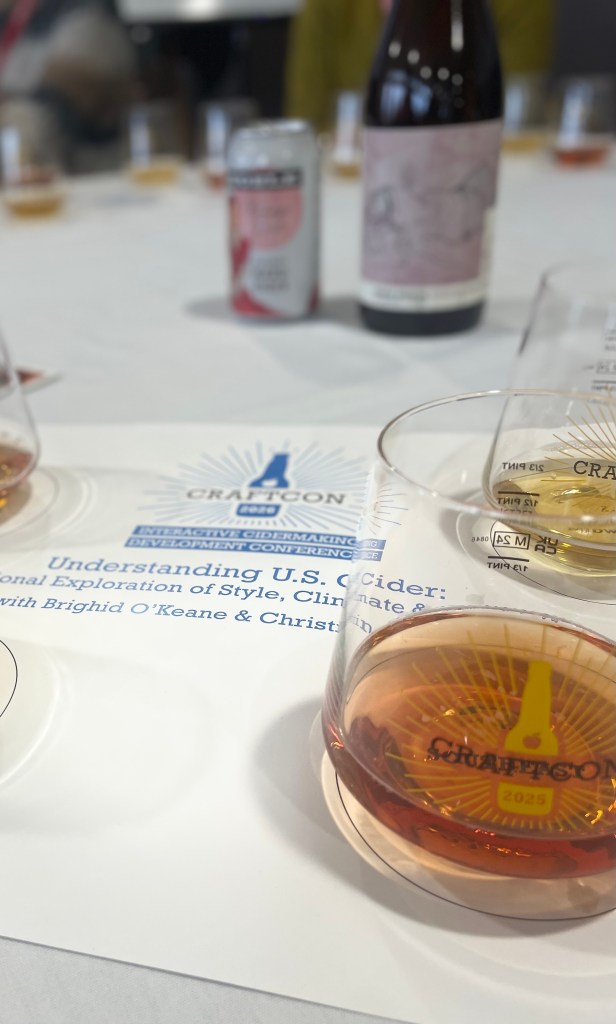
Moving beyond cider appreciation, to faults analysis and prevention, Thursday saw a crowded room gather to hear a truly expert panel presentation from Brighid O’Keane of the Cider Institute of North America, Steven Trussler of Brock University’s Cool Climate Oenology and Viticulture Institute, along with cider consultant extraordinaire Yann Gilles and the practical experience of Christine Walter. Discussion included the prevention and treatment of both oxidative and reductive faults along with a Q&A in which no question went unanswered, often from more than one perspective. It’s rare (certainly in the UK) to see such a breadth of international academic and practical expertise available in this way and surely a sign of the increasing significance of CraftCon further afield
Friday’s tasting opportunity was the always excellent Alison Taffs’ session Exploring Blind Tasting, focussing on the use of a structured approach to tasting, based on the WSET methodology. Using three ciders and a perry to illustrate a broad range of sensory characteristics, Alison’s step-by-step approach to analysing each drink and encouraging discussion raised some interesting points about perception and subjectivity. Even among a group of experienced makers and drinkers, there was limited consensus on which of the drinks was perceived positively or negatively, demonstrating just how much we rely on external signifiers, rather than judging each drink on its own merit. More power to the elbow of structured and thoughtful tasting, although whether the WSET or the American Cider Association’s approach is preferable is a discussion for another day.
Filling the hours between days one and two at is never difficult, with the evening bottle share prior to dinner being the must- attend event of CraftCon. With over 200 bottles open and two hours of drinking time, even with the best of planning, it’s only ever possible to try a fraction of what’s on offer and to be fair, recollections are often hazy.
Predictable highlights included Eden’s icer ciders, Jack Toye’s increasingly impressive perries and Vagrant’s always enjoyable range of Cornish surprise bottles- a Lady Sudeley SV anyone? Other standouts included a Meggy’s Cider Brown’s SV- my first taste of Jonathan’s range, and now on my list of makers to explore in more depth and, finally an opportunity to taste a couple of Three Wells pre-releases, which are just as good as I’d expected.
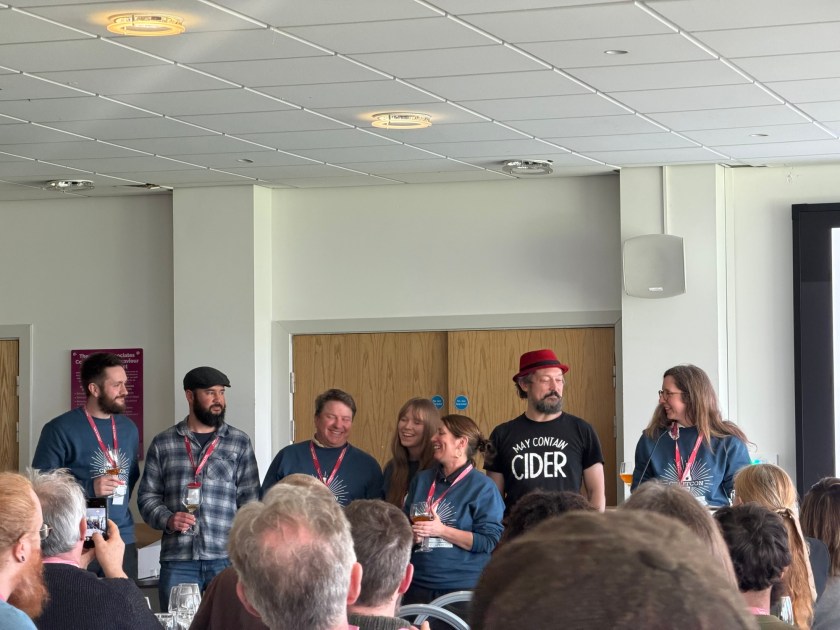
My take aways from this year? Although CraftCon is growing, it’s as welcoming, inclusive and collaborative as ever. Cider makers seem to recognise that a rising tide lifts all boats and welcoming so many new faces into the fold can only be a positive thing.
Discover more from Cider Review
Subscribe to get the latest posts sent to your email.
 Cider Review
hello – Phil from Bignose & Beardy Cider – could we please use a couple of the photos from your CraftCon report on our social media?
LikeLiked by 1 person
Heya Phil, anything from me that’s fine, Anna and Ian would need to check with. Can send you some in HD on Insta if you want?
LikeLike