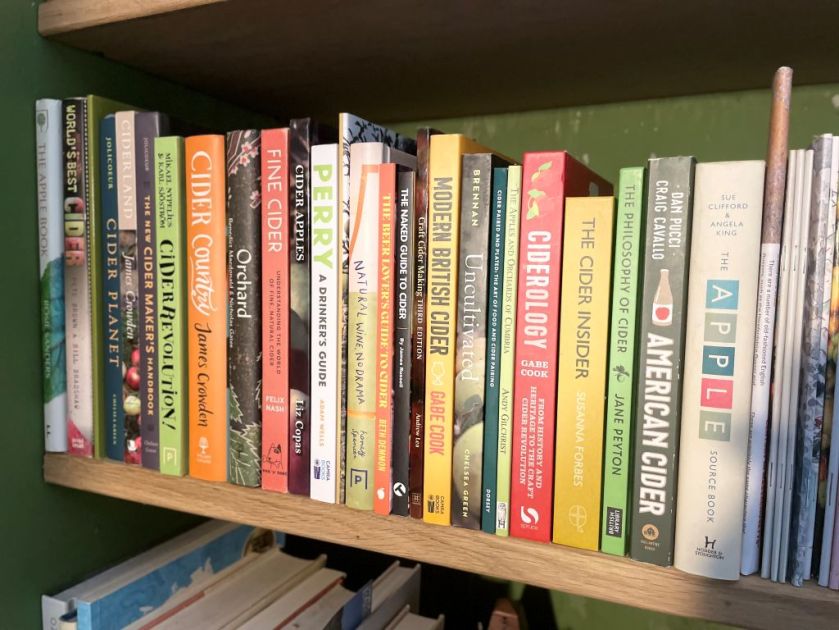
We seem to be in a golden age of cider and perry books, not just in terms of quantity, but in quality too. Gabe Cook, Susanna Forbes, Felix Nash, Adam Wells, James Crowden, Pete Brown, Bill Bradshaw et al have set a high bar, and with the recent arrival of James Ferguson’s wonderful A Vagrant’s Pomona, it’d be no surprise if some of our cider bookshelves are starting to creak a little.
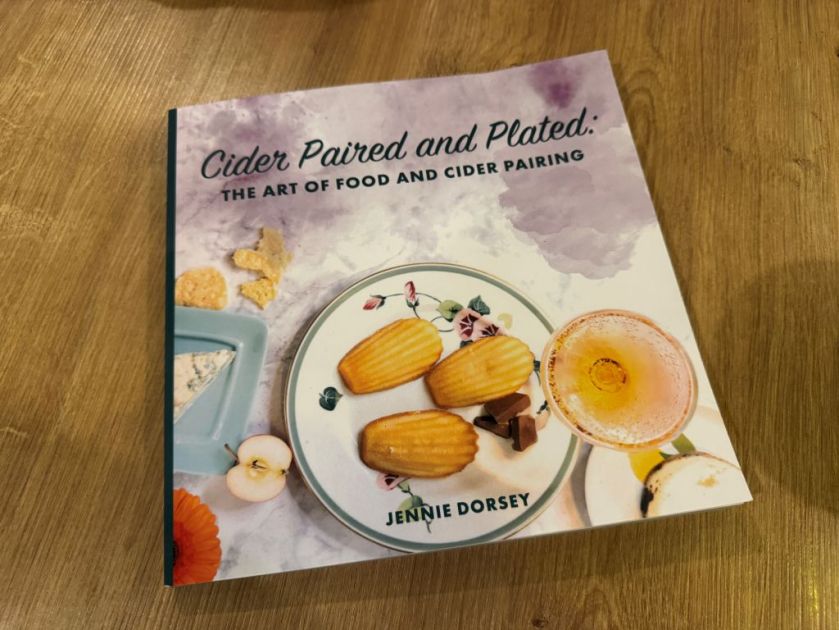
Cider history and chemistry, production techniques, orcharding and tasting notes are increasingly well-documented, with welcome new additions each year, but I was particularly excited to learn of the publication of Jennie Dorsey of the American Cider Association’s new book Cider Paired and Plated: The Art of Food and Cider Pairing at the start of this year. An area with huge potential for exploration, cider and food pairing has certainly been touched on by other writers, but the first book exclusively dedicated to this fascinating subject makes for a welcome addition to the cider canon.
Although we’ve yet to meet in person, I’d previously crossed virtual paths with Jennie in her role as Director of Education and Program Development at the American Cider Association after taking part in one of her online workshops. With her book in hand, I was quick to reach out to her to learn more about her story behind it, and to explore her ideas on cider and food pairing.
* * *
Cider Review: Hi Jennie, great to catch up with you! As I write, you’re only recently back from this year’s CiderCon. How was it for you? Any particular highlights?
Jennie Dorsey: CiderCon® 2026 is my 15th CiderCon®, and I always find renewed energy and a sense of place after the commencement of the annual international cider convention. Not only is it a convergence of deeper industry conversations, but it is also a joyful time to raise a glass and celebrate our wins with our cider families far and wide. This year had many highlights, but the focus on orchard expression, regional identity, and, importantly for me, how cider deserves a place at the table stood out, not only in conversation but also in practice.
CR: You’re currently Director of Education and Program Development at the American Cider Association- can you tell us a little about what your role involves and what led you there?
JD: As Director of Education and Program Development at the American Cider Association, I oversee the certification pathway from Certified Cider Guide™ to Certified Pommelier™ and beyond. I also run the Licensed Educator program, helping Certified Pommeliers™ share their love of cider through pre-certification events. My role blends curriculum development, sensory standards, exam structure, and industry outreach.
I began my love of sensory education at 15 in the coffee industry and have followed that path through many industries. I saw firsthand that cider was chronically misunderstood and desperately needed standardized education.
CR: Your new book Cider Paired and Plated has been an excellent addition to my cider bookshelf, but it’s surely the first to focus almost entirely on food pairing. What inspired you to take a deep dive into the subject and how did the book evolve?
JD: I am so happy to hear that my book has found a good home on your shelf! This book is the first not only to treat cider as the central subject for pairing but also articulate why. That is the most important element. To give others the tools and the courage to make their own amazing pairings. The inspiration came from the frustration I would routinely hear from customers and students alike. Frustration with knowing that something tasted good together, but having no idea why. This book evolved over the years, drawing on the chef’s notes, pairing dinners, academic studies, and extensive personal research. I wanted to move from anecdotal pairing suggestions to something grounded in chemistry, structure, texture, and multisensory perception.
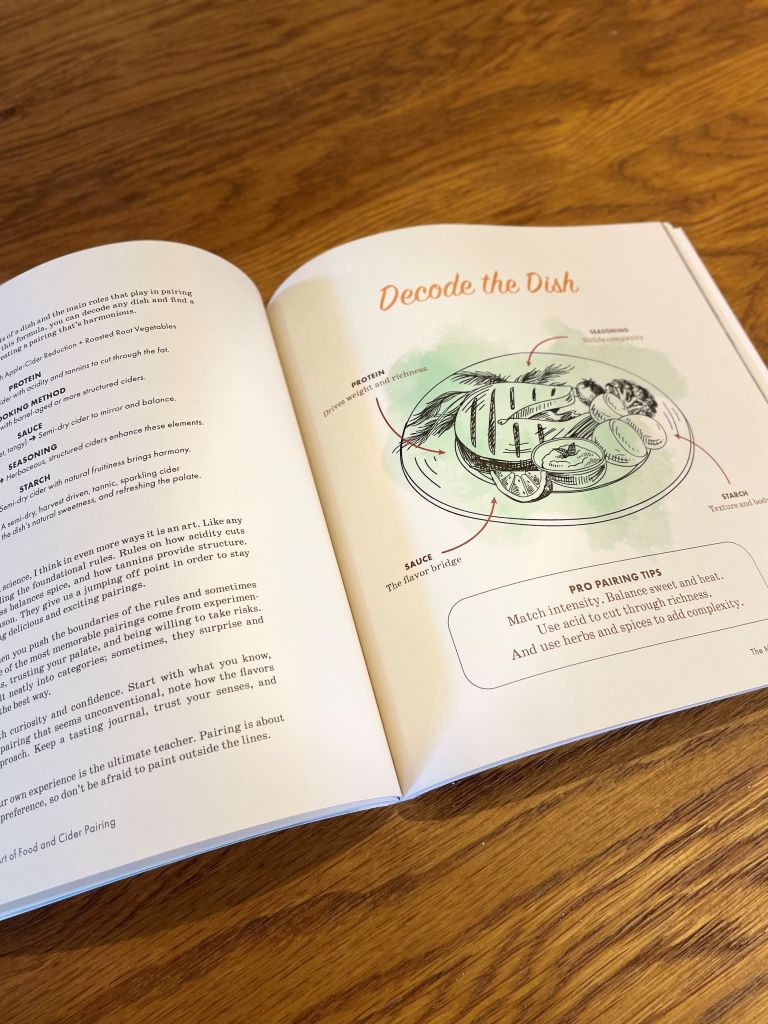
CR: You cover a lot of ground, from the basic chemistry of cider through to practical examples of pairings, but I particularly enjoyed the chapter on flavour science where you move beyond taste and aroma to talk about the impact of sight, sound and touch, including the environment, something Charles Spence’s work has touched on in relation to wine. Are you seeing these ideas being put into practice, or do you feel there’s still some scepticism in this area?
JD: I am so glad that you mentioned the sensory environment chapter. Research from people like Charles Spence has pushed hospitality to think beyond the glass. I absolutely see forward-thinking restaurants experimenting with soundscapes, lighting, and plateware. That said, scepticism remains, but you cannot ignore context. Temperature, glass shape, ambient noise, and even plating color can all influence how the cider is perceived.
CR: I have to confess, the first section I turned to was your chapter on matching cheese and cider, it’s a subject close to my heart! I’m going to put you on the spot- what would be your three dream cider and cheese pairings if you wanted to impress?
JD: Cheese is also very close to my heart. I would share
- A clothbound Cheddar & a high- tannin SV Dabinett Cider
- An alpine-style Gruyère & Traditional Method Cider (neutral oak)
- Aged Manchego & High Acid modern cider
CR: It’s still relatively unusual to see a selection of good quality ciders on menus in UK restaurants, although Felix Nash at The Fine Cider Company is working hard to change this. How does the US compare when it comes to cider competing with wine in dining settings?
JD: In the US, cider is still fighting for consistent placement alongside wine in most restaurant settings. It is improving, particularly in cities with strong local food culture, but wine still dominates most beverage programs. With more education about cider and how to pair it, it is less about competing with wine and more about offering a completely new option.
CR: We hear a lot about how well cider pairs with cheese, meat and fish, but I feel that it’s not talked about as much in the context of vegetarian and vegan food, particularly as it’s almost always one of the most suitable options for vegan drinkers. What would your advice be for someone looking to pair cider with vegetarian or vegan foods?
JD: For vegetarian and vegan pairings, I think cider is actually the most exciting choice. Acidity and tannin are brilliant with plant-based textures! With root vegetables, look at Maillard reactions and match them to a cider with some barrel or phenolic characteristics. With creamy plant-based dishes, a high-acid cider can really shine. The key to pairing vegetarian and vegan dishes is structure first, then flavor.
CR: Although your book’s primarily about the relationship between cider and food, perry shares a lot of very similar food-friendly characteristics. Do you feel perry has the same potential as a pairing for food and are there any specific areas where you think it particularly shines?
JD: I absolutely see perry as having equal, and in some cases remarkable, potential at the table. Perry also holds a very special place in my heart and on my personal table.
Perry particularly shines with more delicate dishes. Perry pairs exceptionally well with shellfish, lightly dressed salads, or simple poultry preparations because it enhances them rather than competes with them. It is also compelling with aromatic and spice-led cuisines. In vegetarian and plant-forward cooking, perry’s brightness complements green vegetables and fresh herbs, especially where acidity is needed to define the dish.
Perhaps most interestingly, perry excels in texture-driven pairings. Its softer tannin structure complements creamy elements such as burrata, fresh salmon sashimi, or velvety soups.
The limitation is not potential, but visibility. Perry remains less widely produced and less frequently featured on restaurant lists. As education grows, I hope to see it positioned not as a curiosity but as a deliberate, strategic pairing choice alongside cider and wine.
CR: From a UK perspective, some of the US ciders we see have flavours that we don’t really see on this side of the Atlantic- I’ve recently seen Pumpkin Spice, Blueberry Basil, Prickly Pear, even Banana on Eva Davis’s @pommesandpints account! Do these more unusual flavours have a place in food pairing or are they for enjoying on their own merits?
JD: Sometimes pairings can be frivolous and fun. As for Pumpkin Spice or Blueberry Basil, I think they absolutely have a place. The question is about balance. If the cider has a sound structural base, those flavors can complement dishes beautifully. A savory herb-driven cider pairs well with grilled veggies or poultry. A fruit-forward cider can echo the flavors of a salad or dessert. There is a line, though, when a cider becomes confectionery, that it is harder to pair.
CR: The ACA Certified Cider Guide and Pommelier certifications both include cider and food pairing education, which your book expands on. Do you see the possibility of a specific certification for cider and food pairing in future?
JD: A future pairing-specific certification is an intriguing idea. The American Cider Association certifications already embed pairing deeply into both the Certified Cider Guide™ and Certified Pommelier™ tracks. A dedicated accolade for pairing excellence could make sense as restaurant programs mature. It would need rigorous standards, not just creative menus, but demonstrated structural understanding.
Ultimately, my hope with Cider Paired and Plated is to equip professionals and enthusiasts with the language and confidence to treat cider with the same seriousness we grant wine. If it is earning shelf space in the UK, that conversation is already moving in the right direction.
* * *
Jennie’s enthusiasm, and confidence in cider and perry’s place at the dinner table shine through, and the availability of her book in the UK will hopefully further raise awareness of their potential to enhance food. Too often, even when cider makes an appearance on drinks menus, choices are limited, and the quality frequently fails to match that of the wine it competes with. As for perry, it may as well be invisible. With such a comprehensive guide to advocate for cider and perry’s potential we may be another step closer to cider and perry being recognised as the natural partners to food they are.
Cider Paired and Plated: The Art of Food and Cider Pairing is available from the American Cider Association. £20.73 inc. international delivery
Discover more from Cider Review
Subscribe to get the latest posts sent to your email.
 Cider Review