
How does geology affect a cider’s character? I put this question to Gabe Cook, the Ciderologist, at the start of my dive down the rabbit hole during a launch event for his book Modern British Cider in 2021. Geology influences many aspects of our lives, at times overt, at others subtle. To my surprise, Gabe’s answer at the time boiled down to “not much” – other factors held much greater sway. Still, I believe there is a conversation to be had here. Geology is revered in the world of wine and has also garnered lively debate for whisky and beer, enriching our understanding and appreciation of these drinks. This is in stark contrast for cider and perry.
In my day job, I am a palaeontologist. My interests lie with the stories that rocks can tell us, those of dead oceans, ancient deserts, and the strange life from these lost worlds. As an enthusiastic consumer of cider and perry, I want to understand the fruits, traditions and techniques which create their spectacular variety. Terroir is the natural intersection, that inimitable sense of place emerging from a landscape’s soil, climate and ecology, and underpinned by bedrock. At CraftCon this year, I sought the opinions of cider makers about the geology of terroir. The responses were encouraging. “It ought to be part of the conversation”. “It can be part of the story”. “I would like to be more interested”. There was also keen awareness that its effects are challenging to pinpoint.
Besides geology, cider character will also affected by rootstock, tree age, orchard management and yeast strains, and its diversity of styles and varietals seems to mute the tone of terroir more readily than in wine. Gabe’s scepticism was well justified. Questions over terroir’s importance are nonetheless rising atop cider’s resurgent tide and geology’s constancy makes it a natural starting point for the conversation. My aim here is to draw together its currently nebulous connections with cider into a touchstone for the wider terroir discussion, supported by analogous insights from the wine world (a strong nod here to articles by Andrew Maltman).
The connections I’ll explore are largely descriptive rather than scientific. Compared to wine, cider has not yet received anywhere near the research time or money needed to properly quantify the effects of terroir on sensory profiles. There is enough, however, to ask some intriguing questions even if answers are not necessarily forthcoming. What stories can the geology of cider tell us and are there clear examples where it shapes terroir? Can geological differences between terroirs truly manifest in the bottle? Do they bear any relation to the sometimes-lithological language used in sensory descriptions? Grab a glass and bring on the rocks!
What’s in a Name
Latitude and elevation set the climatic bounds on where apples can grow. Geology finesses this foundation into the conditions for a viable orchard versus a cider grand cru. Bedrock directly affects soil composition and landscape relief, shaping local climate, water drainage and mineral nutrient availability. Beyond practical influences on orchards, the remarkable stories told by bedrock add their own value to terroir, underscoring shorter anthropocentric tales with an unparalleled depth of time, millions of years ago (Mya) rather than mere tens or hundreds. A landscape lets us define a terroir, but geology lets us understand that landscape in a much deeper way. The rocks set the tempo, and ecology and agriculture play along.
Bottle names and notes show that geology’s influences are not absent from the minds of cider makers. In Vermont, Eden Cider and Iapetus Wines’ Orogenies (literally ‘mountain genesis’) references the continental collisions that created the bedrock of their orchards and vineyards. First, the Taconic orogeny from 470 to 440 Mya as bleak volcanic island arcs beached themselves on the rocky shores of Laurentia, North America’s continental ancestor. Then the Acadian 100 million years later when the Iapetus Ocean was crushed and contorted into the Caledonide Mountains of the Old Red Sandstone continent.
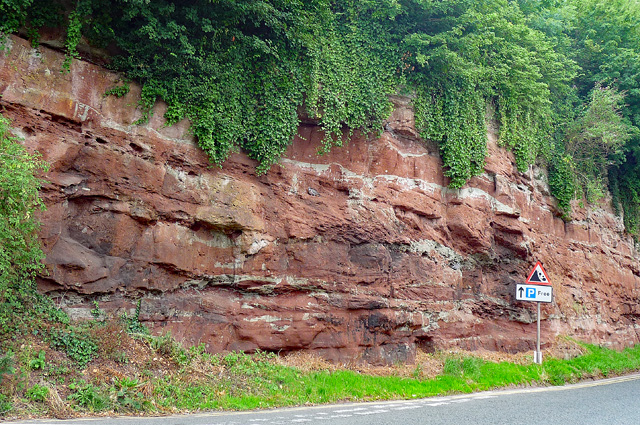
Sand and grit weathering from the bones of Iapetus across the slowly vegetating barrens of the Old Red Sandstone continent now underlie much of the Three Counties and Monmouthshire, southern Ireland, and across Scotland’s Black Isle and Midland Valley. Tracing the Old Red south into Cornwall’s Fowey Valley, Ripe Cider ascribe the salinity of their Salla in part to its proximity to the orchard roots. Over the English Channel in western Normandy, Sydre Argelette and Poire Granit showcase Eric Bordelet’s pride in the clay (argile in French) and granite terroir of the Amorican Massif. Pangaea’s assembly from the Old Red Sandstone continent and its vast southern neighbour, Gondwana, fused this magma-threaded wedge of metamorphic rocks into Europe’s bedrock 350 to 300 Mya during the Variscan orogeny.
As Pangaea drifted northwards, Permian and Triassic-aged New Red Sandstone buried the coal-choked remains of the Carboniferous swamp forests that would fuel Sir Kenelm Digby’s verre anglais furnaces. They speak of a drier time in Europe’s now temperate history, sat amid dune fields and salt flats. In Devon’s Exe Valley, Find and Foster owe the minerality of their Appellation to its New Red Sandstone soils. At CraftCon, Mat Hilton remarked that they harvest from other orchards in the area, but only those rooted in the New Red are chosen for Appellation. In the early Permian, 280 Mya, a hulking mass of granite juxtaposed itself against the nascent sandstones of Devon and Cornwall. Today, Dartmoor’s rugged granite tors stand proud amid weathered New Red dunes, creating a sheltered microclimate at Sandford Orchards. Sandford’s Devon Red tips its hat to the ruddy soils of its terroir, but the rocks of the wider landscape are just as important as those under the orchards.

In eastern Normandy, the Armorican Massif gives way to the younger, softer rocks of the Pays d’Auge. Jurassique by Domaine Antoine Marois is a beautifully blatant homage to its Jurassic limestone bedrock, laid down in the tropical waters of the Tethys Ocean 170 Mya when Pangaea had fragmented along the line of the Caledonides and the seas flooded into its arid heartlands. Julien Frémont’s Cidre Argile and Cidre Silex (flint) recall their clay and silica-laden soils, sat atop the chalk and flint of their Tethyan bedrock.
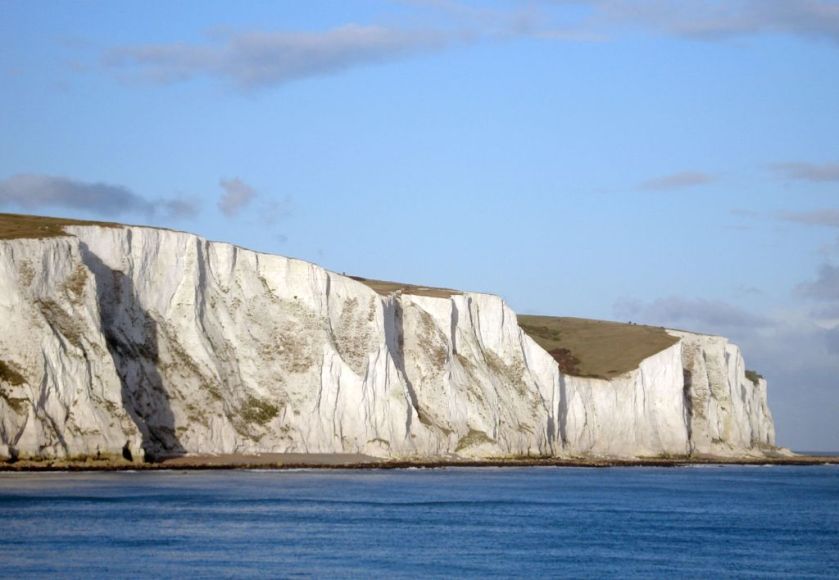
80 million years younger than the limestones of Domaine Antoine Marois, the chalks of northern France and southern England formed in the shallows of Tethys as it spread still further across Europe and Africa in its great middle age. Hampshire’s Chalkdown Cider displays its geological roots like an open book. Here, bedrock transcends national and cultural boundaries as much as it shapes them, uniting disparate terroirs by shared geological histories. Champagne and Hampshire are underlain by the same Cretaceous Tethyan chalk, with producers in both regions making wines and ciders from low-tannin fruits by the traditional method and extended lees ageing. Perhaps we could seek the same terroir in a bottle of Bollinger as in the vintages from Chalkdown Cider.
Despite my best efforts, I found no geological references amongst ciders and perries from Spain, Germany or the Mostviertal, nor from many of the newer arrivals to the modern cider world. My examples are also all newer vintages. Recent intrusions of geology into bottle names and notes may reflect the ‘winification’ of cider over the last decade, a growing vogue amongst makers in the United Kingdom, France and the United States. Consequently, I see a blank spot on the cider map that is ripe for exploration. The Basque Coast’s distinctive geology forms a UNESCO Global Geopark, no less. Palaeozoic massifs underlie Galicia and western Hesse as much as the Domfront or western Normandy. Norway and Sweden sit atop lean bedrock from the heart of the Caledonides. Latvia and the Three Counties alike are rooted in sediments from the lowlands of the Old Red Sandstone Continent. Across nearly 500 million years of continental drift, geographically diverse cider terroirs are united in unexpected ways.
Past Worlds, Current Terroir
Geology’s role in terroir is more compelling when it extends beyond individual makers. As an example, vineyards across the Chablis wine appellation are rooted in shelly Jurassic limestones and marls, deposited around 20 million years after those of the Pays d’Auge. In turn, their wines are ascribed a litany of characters linked to this bedrock: flint, chalk, oyster shells and salt all evoke the tropical shallows of their Tethyan terroir. There is also long-held regard for geology in wider cider terroir. Reverend John Beale remarked in 1664 on the unrivalled quality of Three Counties soil for producing cider apples and perry pears. It would be another 150 years until William Smith, the Father of English Geology, made the first geological map of England and Wales, but the relationships with agriculture and pomology did not go unnoticed. In 1899, Reverend Henry Moore noted:
‘The red marls, whether the Old or of the New Red Sandstone formations, seem especially favourable to the production of fruit. The “apple-tree soil” of Herefordshire is a popular expression. It is a fact that the chief fruit-growing districts of our country are on the red lands of Devonshire, Herefordshire, Gloucestershire, Worcestershire, Cheshire.” [The Connection Between Geology and Scenery, vol. 10, pg. 578].
In 2018, the Devon Cider Makers’ Guild petitioned for Protected Designated Origin status, citing their characteristic red sandstone soils as a key part of their identity. Their bid was unsuccessful but the Welsh Cider and Perry PDO awarded in the previous year owes the character of its orchards partly to the similar soils and bedrock found in Monmouthshire (double standards!). The repeated connection between red sandstone and traditional cider and perry across western England and southern Wales is conspicuous. Historical contingency likely plays some role, but it is hard to imagine how such a culture arose without the exceptional fruit offered by the terroir of the Old and New Red.
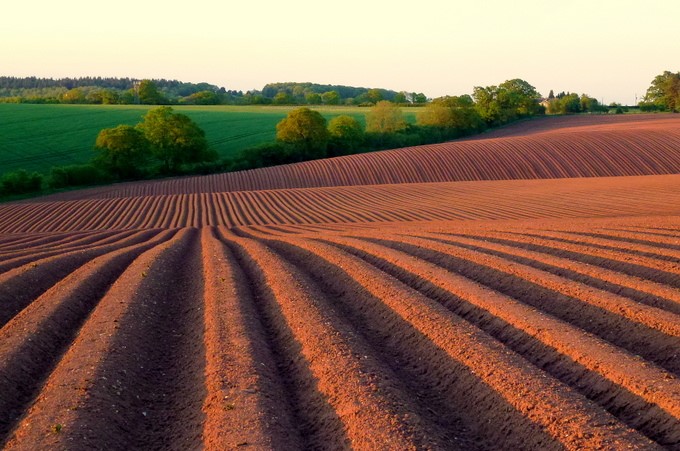
Wider regard for the geology of cider is not restricted to the UK. Cidre Pays d’Auge acknowledges its clay valleys with flint and chalk-rich soils as key to its terroir, while further east Camille Guilleminot, formerly of Calyce Cider, attributes the gunflint character of ciders from the Pays d’Othe, sat between Champagne and Bourgogne, to their similar geological setting. Over in the United States, Dan Pucci assiduously notes the bedrock and soil of the nation’s cider making regions in his book, American Cider (featured in this article’s cover photo). America’s history of apple cultivation is prolific even if its cider culture is a relatively recent revival and here, too, geology did not escape the notice of orchardists. In 1867, John Warder wrote:
‘… it might be inferred, that as the apple may be cultivated upon soils of such great diversity …. their underlying rocks would be equally acceptable, whether these were granites, shales, sandstones, or limestones. Such is not the fact, however, and we have found, in this utilitarian age, that geology has much to do with the planting of an orchard. There are varieties that succeed better upon one rock than upon another, and there are those that fail to be remunerative when transplanted to a rock, which to them is obnoxious, though it may be a very paradise to other varieties.’ [American Pomology, ch. 6, pg. 212].
The United States offers superb examples where geology is a prominent note within the wider tune of cider terroir. The Niagara escarpment arcs for 650 kilometres around the northern borders of the Great Lakes between Ontario, Michigan, New York and Wisconsin. Formed on the tropical fringes of Laurentia around 430 Mya from a mass of coral and plankton skeletons, its erosion-resistant dolomitic limestone stood firm as softer sedimentary rocks to the south weathered away. Warm air channelled upwards by the escarpment face diverts colder winds from the north, creating unusually mild conditions along its length. Although its vineyards are more famous as an American Viticultural Area (akin to a French wine appellation), orchards and cideries across the Niagara Fruit Growing Region also benefit from this geologically sculpted climate.
The western edge of the Niagara escarpment with its iconic waterfall is overlain in New York by younger Devonian rocks. Limestone escarpments grade southwards into softer shales and siltstones of the North Appalachian Plateau, laid down around 390 Mya in ponderous delta systems fed by the weathering Caledonides. Uplifted and exhumed over hundreds of millions of years, glaciers gouged narrow valleys into this sedimentary backdrop, damming them with rocky debris in their retreat to form the Finger Lakes. Nestled within the wreckage of mountains and oceans, they moderate the region’s temperature and humidity to produce high acidity and sugar in its apples. If a sense of place can truly be tasted in a cider, then it is in Eve’s Cidery’s Albee Hill vintages. Their austere minerality and elegant acidity feel as bleak and remote as the glaciers that gouged the Finger Lakes so many hundreds of thousands of years ago.
Southeast of Niagara, geological influences shift from sedimentary to volcanic. Following the 1980 eruption of Mount St. Helens, bumper crops of apples were reported for the next three years. The iron and magnesium-laden ash caused devastation in the vicinity of the volcano, but across Washington and Oregon orchard soils were enriched to an unprecedented degree. Neither is volcanism a recent effect here. In the Miocene 17 to 6 Mya, a plume of magma violently punched through crust of Washington, Oregon and Idaho. An area twice that of Iceland was inundated by a staggering 174,300 cubic kilometres of molten lava. The Columbia River flood basalts now provide the foundations for rich orchard soils. Set against a consistent climatic backdrop, Rick Hastings of Liberty Ciderworks in Spokane attests to the quality of Golden Russet apples grown on in this volcanic terroir for cider making, compared to those from sedimentary soils elsewhere in Washington.
Much of the geological record is biased towards what Laurentia and Europe has to say. Cider, given its historical roots and current market trends is not dissimilar, so I will round off this tour of time and terroir with some unexplored geological terroir in non-traditional parts of cider world. During Gondwana’s death knell in the Jurassic, around 170 Mya, vast balloons of dolerite lodged themselves in the fragmenting continental crust. Today, nearly 40% of Tasmania is underlain by these magmatic intrusions, creating the well-drained, iron-rich clay loams that support the Apple Isle’s thriving orchards and cideries. On a map, the geological difference is stark.

More than 200 million years previously, sandstones laid down Gondwana’s polar shores were folded into the mountain ranges of South Africa’s Western Cape as Pangaea coalesced from all Earth’s continents. Tracing these folds inland from the coast, tough metamorphosed quartzites stand proud at their peaks, trapping ocean breezes at elevation and protecting pockets of younger, softer shales in the fold trough of the Elgin Valley. Geology shapes climate and soil on an epic scale here. Elgin’s shale-fed clay soils and cool conditions give distinct identity to the vineyards of this iconic wine region, but they also produce 60% of the country’s apple crop, supplying the same renowned terroir to South Africa’s two principle cideries, Savannah and Sxollie.
All That Glitters Are Not Minerals
Linking the geology of terroir to a cider’s sensory profile is a murkier topic. In the wine world, the French term goût de terroir (literally, taste of soil) captures this relationship, that geology is palpably part of the sense of place present in the glass. Wine buffs associate the young basalt soils of Etna or the Canary Islands with savoury or even metallic notes in their wines. Chalk and oyster shell characters in Chablis are linked to its Jurassic fossiliferous limestone. Full-bodied Spanish reds from Priorat, heavy with black pepper, liquorice, cinnamon, smoke and slate, are rooted in llicorella soil, an intensely weathered black schist metamorphosed by the Variscan orogeny. Saline sherries from Jerez originate in pale, carbonate-rich albariza soil, weathered from chalks formed across sunken southern Spain before its uplift by the Alpine orogeny as Africa collided with Europe and the Tethys Ocean gave way to the Mediterranean Sea.

At some level, goût de terroir is hardly arcane. Geologically distinctive vineyard soils will inevitably affect grape growth and development, shaping distinctive sensory profiles in their wines. We can also find notions of goût de terroir in the cider world, from the sandstone minerality of Find and Foster’s Appellation or Ripe’s Salla, the slaty austerity of Eve’s Albee Hill, or the gunflint of the Pays d’Othe vintages. In Vermont, Eleanor Léger links the minerality of Eden Cider’s vintages to the proximity of their orchards to granite bedrock, separated by barely two feet of loam. Problems arise, however, when the tempting etymological leap is directly made from geological tasting notes to the geology of terroir itself. The chief culprit is the connotation-laden ‘minerality’.
Like most tasting notes, minerality is metaphorical. An unadulterated Dabinett might stride into a technicolour array of apricot, mandarin, orange, smoke and spice, but none of these were introduced during production. In the same vein, minerality is useful sensory shorthand for longer-winded, eyebrow-raising descriptors like ‘licking a slate tile’ or ‘sniffing a wet pebble’. Geologists admittedly have a penchant for these unhinged activities. A university lecturer of mine endorsed “having a little nibble” to differentiate mudstone and siltstone in the field when in doubt. Just make sure you sample uphill of any pig pens or silage plants if you try this.
Minerality is also broad in its potential manifestations. Stoniness on the nose or slate on the palate both fall within the wider ‘mineral’ bracket. In tests with wine drinkers, mineral aromas were associated with reductive or gunflint aromas, then in relation to acidity and bitterness on the palate when nose clipped. In sensory terms, it is not necessarily straightforward to define.
For something so widely touted, minerality is relatively young concept. At the turn of the millennium, lean, austere, steely, flinty and chalky were commonplace in the wine world. In about ten years, these were largely supplanted by minerality, and it has since percolated into the domain of cider. Who first used the term is unknown, but it is unlikely that they were a geologist. Taken beyond the realm of metaphor, minerality implies a genesis in the bedrock. Where the mind goes, the palate may also follow, and Jurassic oyster shells suddenly materialise in the minerality of Chablis.
Some claim that geology is merely a convenient marketing tool to capitalise on the romance of a landscape shaped by hundreds of millions of years of epic planetary events. I think this view is too cynical. Geology lets us understand the landscape responsible for a given terroir in a very practical way, informing the identities of makers and vintages alike. Still, there are good reasons why geological terminology does not transfer precisely from terroir to tastebud, risking the ire of grumpy geologists when it does slip across.
Most minerals are essentially tasteless. Their crystal lattices are far too recalcitrant to dissolve or volatilise. Lick a polished, freshly cleaned marble tile and all you will experience is the temperature difference against your soft tissue. This contrasts with the organic molecules in cider where ambient conditions fall well within their solubility or vapour pressure to elicit a sensory response, whether as the florality of esters, the mousy taint of 2-ethyl tetrahydropyridine, or geosmin’s earthy petrichor. Lick a slate pebble or nibble a chunk of mudstone and you will likely sense something. This comes, however, from a thin film of organic compounds derived from chemical reactions between the inorganic material and its wider environment.
Minerals in bedrock are themselves far removed from the bioaccessible nutrients which make their way through the tight cellular border control of tree roots. Microbial action, plant root secretions, and the decay of vegetation play key roles in the generation and maintenance of humus, the organic fraction of soil where those nutrients reside. They are a product of the interface between lithosphere and biosphere, subordinate to neither. Minerality, slatiness, petrichor or salinity in turn are borne of biology as much as bedrock.

Counterintuitively, a mineral-rich terroir may even work against the character of a cider. The filters of biology notwithstanding, freely weathering, mineralogically diverse bedrock may produce more nutrient-rich soils than tougher, more elementally monotone foundations. Under higher nutrient availability, apple trees grow with heightened vigour and yield, but it is slow growth that produces the best fruit for cider making. Cider orchards have not historically been cultivated on the premier agricultural land reserved for grains and vegetables. Instead, geologically challenging bedrock and lean soils might be the key. Famille Dupont makes note of this, citing the nutrient-poor Oxfordian (Late Jurassic) marl and chalk of the Pays d’Auge as the basis for the small, highly aromatic apples used for their cider and Calvados production.
What, then, produces minerality in cider? The gunflint tangs of reduction and functional thiols may play a role as might varietal choice. ‘Slatey tannin’ periodically appears in tasting notes for tannic bruisers like Tremlett’s Bitter or Harry Masters Jersey, suggesting that bitterness is a factor in cider minerality as in wine. I will note that ‘chalky tannin’ is invariably used in reference to the mouth coating, grippy texture they produce, rather than something more overtly geological.
For wine, some argue that minerality is not a flavour itself but rather a lack of fruit. Under warmer climates, grapes garner primary fruit flavours from elevated sugar and polyphenol accumulation. In cooler-climate wines, acidity is elevated while sugar and fruit character are more muted and allowing minerality, whatever it might be, to come the fore. Slatey tones in cooler, acid-driven Finger Lakes cider points to the same effect, highlighting the potential role of terroir in creating minerality. Ultimately, though, it is a product of organic molecules rather than minerals and we experience goût de terroir indirectly, if at all.
Taste The Difference
So, the million-dollar question. Does geology matter to cider? I will shamelessly take the cop-out of “it depends on the conversation”. We can definitively say that geology strongly affects the soil, climate and ecology of a landscape, influencing fruit growth and development within an orchard. Quantitative relationships between bedrock composition, soil and topography are well established more generally and nascent evidence is starting to show that terroir and regionality can be detected quantitatively in chemical profiles of apple juice and ciders, although these studies have yet to explore potential links to the rocks beneath.
While a data-driven approach is useful, terroir is ultimately a human experience, motivated by sense rather than science. We seek to understand what we encounter in the glass, and I have hopefully highlighted some useful cases where we might place emphasis on geology as an important aspect of terroir, whether within individual vintages or across entire cider regions. Do we literally taste bedrock in the glass? Almost certainly not. Still, we can recognise a cider’s character as product of its terroir and the constancy of geological setting provides powerful insight into the landscape responsible for that sense of place.
Locating examples where geology is the only major difference in terroir is challenging. It might even be impossible. A drastic change in bedrock composition can lead to cascading changes in landscape relief, then microclimate, then local ecology, then soil. If this is the case, though, then it demonstrates the inalienable power of geology to shape cider. Fellow contributor Chris Russell-Smith argues that even bedrock itself is not immune to human activities. While we are undeniably etching a lasting signature on the rock record, bedrock geology will remain static, and I do not expect terroir de landfill will soon feature in the cider world.

Thus far, I have largely referred to apples and pears in a monolithic sense, despite their immense variety. At this more granular level, there is also practical scope for the role of geology. Time and time again, pomologists have noted that some varietals grow better when certain mineral nutrients are available. Jonagold, Ashmead’s Kernel and Newtown Pippin are much happier with elevated soil calcium. Orchard treatment notwithstanding, this will be controlled by bedrock geology. Virginia-based orchardist Eliza Greenman observed that her Newtown Pippins grew poorly in granite- and shale-derived soils in the southwest of the state, while her predecessors had found success in calcium-rich limestone valleys. The interaction between varietal and bedrock may be vital to the terroir question.
Despite geology’s potency, terroir then often lacks strong connection to what we experience in the glass. Some makers will source their fruits from geographically and so geologically disparate orchards, while, a terroir-led approach is just one option for more localised producers. Funky co-ferments, exotic barrels or a deluge of varietals may drive a sensory profile in a very different direction to what terroir would otherwise dictate. Is this a problem? Absolutely not. Not every cider needs to be terroir-driven, were that even possible, and interventionist styles are just as intriguing to explore.
As a point of caution, we should take care when applying insights from the wine world to cider. France’s grand crus, the birthplace of the concept of terroir itself, have had the time and scrutiny for the complex relationships between bedrock, soil and wine quality to be characterised. Equivalent data is non-existent for cider. Similarly, anatomical differences between orchards and vineyards will affect their interactions with the substrate. Vines can happily thrive in a much wider range of soils without the structural constraints imposed by the weight of a thick canopy of branches. Their deep tap roots are also more likely to reach bedrock while shallow, wide root mats in apple and pear trees, especially on shorter rootstocks, isolate them to a greater degree from the geology of their terroir.
Finally, we are working with an incomplete picture. Cider’s resurgence follows the better part of a century of decline, with widespread loss of orchards across Europe. How those declines have impacted the variety of terroir is unknown, but a decrease seems likely. The signal of geology may in turn be distorted compared to its past diversity, in contrast to wine’s vineyards, crus and climats from past to present.
On the Rocks
Finally, some sensible and some indulgent speculation. To move forwards, we need some testable (or rather tastable) hypotheses for how to locate the signature of geology in cider or perry. Experiments like the One Juice Project, Ross-On-Wye’s True Taste of Thorn or Little Pomona’s Dabinett comparison in turn show that suites of ciders can be assembled to tease apart the factors that create distinct organoleptic identities. Terroir-driven ciders are a prerequisite: low intervention orchards, slow fermentations and limited maturation, where fruit shaped solely by its landscape is front and centre.
For the specific role of geology within terroir, I suggest that we should seek old, traditional orchards, long in root, over thin soils where bedrock will more strongly influence soil geochemistry in the rooting zone. Sloping orchards may best fit the bill as soil thickness will naturally decrease with increasing gradient. While Eve’s Albee Hill shows that blending and wild fermentation need not undermine apparent geological character, a focus on single varietals will aid consistency of comparison, while cultured yeasts may help to isolate the non-ecological signals of terroir between makers. Comparison within years will go some way to controlling for climatic variation affecting cider character, but tasting over a range of years may help to identify the consistent signals of terroir across vintages, one of which we expect to be geology.

Now for the indulgent. Can we still make a geological cider if we cannot isolate its signal within terroir? Historically, mills and millstones were used to create pomace, but the contact time between juice and rock is hardly sufficient to introduce any changes in flavour. Instead, we might look to a Georgian wine-making tradition 8000 years old – qvevri. Fermentation and storage in buried earthenware vessels supposedly induces a stony quality through extended contact. Qvevri has also recently found its way into the cider world, with Tillingham’s Cyder Peaux de Pinot in Sussex, Bauman’s Amphora in Oregon, or Noita’s Chardonnay Qvevri Cider in Finland. Within the distilled category, we could also take inspiration from whisky. “Soft water, through peat, over granite” is the wisdom behind the spring water for making Scotch. While distillation strips away the residual minerals that give geological identity, a new eau de vie could be diluted to regulation ABV using the spring water of its wider terroir. Some PDOs for distilled ciders and perries explicitly prohibit this, but it is not a universal decree.
I will end with a wild leap off the beaten path. Randall Grahm of California’s Bonny Doon Vineyard sidestepped the subtle nudges of soil geochemistry by adding rocks directly to ageing barrels of wine: Noyomo cobbles, black slate and Pami pebbles. In his view, his ‘Rock Quartet’ bore elevated complexity and palate persistence from this visceral infusion of minerals reacting with the organic components of the wine. If this sounds gimmicky, I will argue that Grahm’s experiment is functionally not a great leap away from the qvevri tradition. Direct contact with geological materials, subject to some practical limitations of chemistry, might provide a uniquely potent means of expressing terroir. ‘It’s not red and there’s no rocks in it’, Taunton Cider famously advertised their ‘Red Rock Cider’. Perhaps they were missing a trick.
Postscript
I am not the first palaeontologist to give cider some thought. Ciderius cooperi, a 430-million-year-old lamprey-like creature from Scotland’s Midland Valley takes its name from its only known fossil’s resemblance to ‘a bottle, a barrel and a pair of apples when flattened’. I can think of more charming mascots for cider, but I could not bear to leave this factoid out. Perhaps it can find its way into a future bottle label.
Finally, a thanks all round to the Cider Makers Question Time panel at CraftCon 2025 (Barry Masterson, Tom Oliver, Andrew Lea and Sigrid Gertsen-Schibbye), as well as Adam Wells, James Forbes, Mat Hilton, Tom Tibbets and Albert Johnson for entertaining my questions. Their insights were instrumental in shaping the views in this article.
Pingback
Russell-Smith, C. (2023). Rethinking terroir for the 21st Century. Article on Cider Review (accessed 23.03.25).
Wells, A. (2020). The truth about French cider. Article on Cider Review (accessed 22/03/25).
Wells, A. (2021). One Juice, five ciders. Article on Cider Review (accessed 31.03.25).
Wells, A. (2022). A conversation with Eve’s Cider. Article on Cider Review (accessed 24.03.25).
Wells, A. (2023). A sense of place: tasting terroir with Little Pomona. Article on Cider Review (accessed 31.03.25).
Wells, A. (2024). The True Taste of Thorn: 9 single variety Thorn perries from Ross-on-Wye. Article on Cider Review (accessed 31.03.25).
Discover more from Cider Review
Subscribe to get the latest posts sent to your email.
 Cider Review
Nice work Joe. Lots of different strands pulled together. Cheers Tom.
LikeLiked by 2 people
Brilliantly constructed and explained Joe. I’m glad my off the cuff and slightly lazy ‘not much’ quip has contributed towards the genesis of this piece.
So many elements that contribute towards a cider’s final outcome do have origins in geology, not least soil composition (geography student here 😀).
But the question still remains: how important is the impact of the geology upon a packaged cider’s sensory appreciation versus other contributing factors? Tricky to answer, of course!
Human controlled factors, within the orchard (especially rootstock type and varietal) and the cellar (especially yeast selection), would be of a higher weighting for me. Just look at the incredible differentiation of final liquids from the very same base liquid in the One Juice Project.
The challenging, and exciting, thing is that this discourse around terroir is so nascent. There’s so much to explore, so much to learn, so much cider to taste!
Cheers Gabe
LikeLiked by 1 person
Pingback: Pigs, Pomona & Provenance: – Fine Cider & New British Charcuterie | Cider Review
Pingback: Terroir Incognita: Where Does Cider Stand? | Cider Review