There may be a few of you Cider Review readers who are farmers, perhaps a smaller amount who grow apple or pear trees, but I hazard a guess that most of you enjoy drinking the drinks and finding out all about how they were made, rather than growing the trees in the first place. A chicken and egg situation this is not. Quite clearly the fruit needs to come from the trees, and those trees in question need careful cultivation before they’re ready for sale in nurseries. I was watching a video featuring Charles Martell over the weekend – in it he states that all the effort he’s gone to, along with Jim Chapman, in creating the National Perry Pear Centre is for naught if no-one turns the fruit into the drinks that people can fall in love with again in this generation and ones to come. It’s a profound point. These are agricultural varieties that need to find a use, a purpose, a Raison d’être if you will, to keep being planted. It would take a lot of new arboretums across the country to spring up in order to justify keeping this plethora of cider and perry varietals purely as ornamental specimens to look at, walk past, and snap on Instagram when the blossom is out in full bloom. The success of these trees’ survival is intrinsically linked to widening people’s knowledge of their existence, and the flavour characteristics their fruit can impart on cider and perry.
Say you find such a cider or perry in a bottle shop or at a drinks festival that tastes delicious, and you want to grow that variety yourself – partly to try and make a drink from it in your corner of the world, and equally to help keep that rare variety going for another 100+ years. Where do you turn to? If you’re not too confident with grafting, or if you’ve run out of viable rootstock for the season, your best bet are nurseries. Many you can visit in-person, but if you live hundreds of miles away from said nursery, it can be a bit of a gamble to head all that way just for a browse between the rows of Fillbarrell and Sweet Alford, Blakeney Red and Winnal’s Longdon. Thankfully, most these days have extremely functional web shops with lots of information about the variety, the rootstock, the pollination partners, and what the fruit actually tastes like (for eating, cooking, or fermenting).
Let’s ramp up the niche dial a few more notches. What if that cider or perry features a variety that used to be popular but has fallen quite completely out of fashion? Or was only ever popular in a small nook of the world that is nowhere near where you live. The spotlight from most nurseries is not going to shine on a variety that is planted in only one remnant orchard, from one farm on the hillsides of a Monmouthshire valley, surely? Well sometimes the stars do indeed align and you can find that Crystell or Fig Tree variety and plant a two-year old tree of both in the grounds of an orchard you care for, all before you visit the mother trees for the first time (see my Three Saints Perry & Cider article from earlier in the year). All of this requires an incredibly switched-on pair of tree enthusiasts, who are linked in to all the right sort of people in Wales to provide interesting snippets of scionwood from curious collections of varieties on the brink, grafted with care, and grown with protection. It takes a nursery like Tyn y Berllan, and a couple like Gareth and Nicky John.

* * *
Cider Review: Hi Gareth and Nicky! Tell us about yourselves, where you are located in the UK, and why did you set-up Tyn y Berllan?
Gareth & Nicky: We’re Gareth and Nicky John and we’re based in Pembrokeshire, West Wales, specialising primarily – for the moment – in Welsh apple and pear varieties, along with some old heritage favourites.
We met as teenagers in Cardiff back in the late 80’s. We worked at the same place together for about six years, growing and selling ornamental trees. It was where we first discovered the art of grafting, pruning, and generally caring for trees. Eventually we went off in our various directions with our respective partners at the time but kept tabs on each other over the years through mutual friends.
Gareth’s journey included ordination as a Buddhist priest while undertaking postgraduate study at the University of Bristol, through to working in social care before becoming an agricultural contractor and lorry driver in mid Wales. Nicky became a muse, running off with an artist many years her senior, where they travelled around Wales and the south of England, opening and leaving art galleries in their wake.
We met back up in 2016, Gareth living in Aberystwyth and Nicky in East Sussex. With both of us single at that moment we decided to tie our fates together. We sold up all our belongings to make the move back west, where we’re attempting to make a living from our combined passions of cider drinking, growing trees, and just genuinely loving the history and stories behind the fruit that we grow. Hence the Welsh fruit tree nursery and – we hope – eventually a cidery.
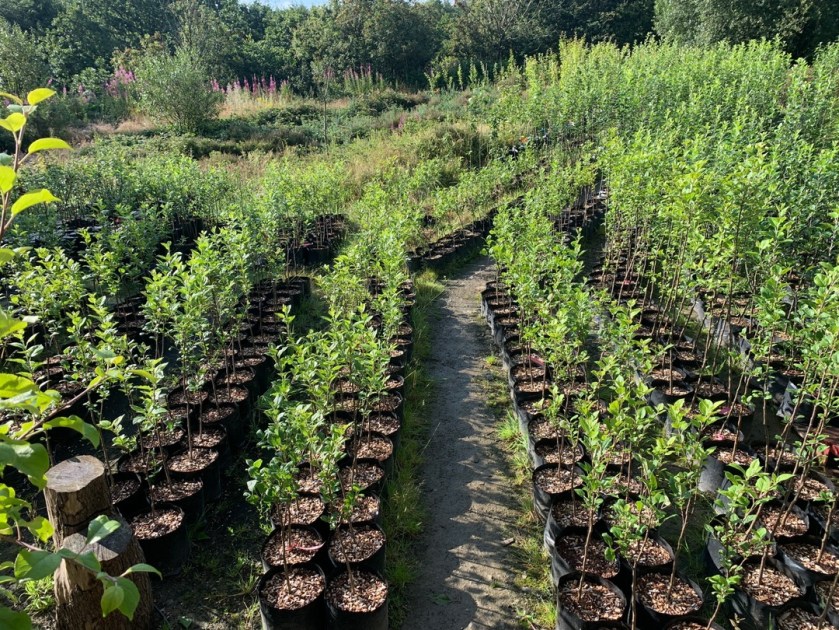
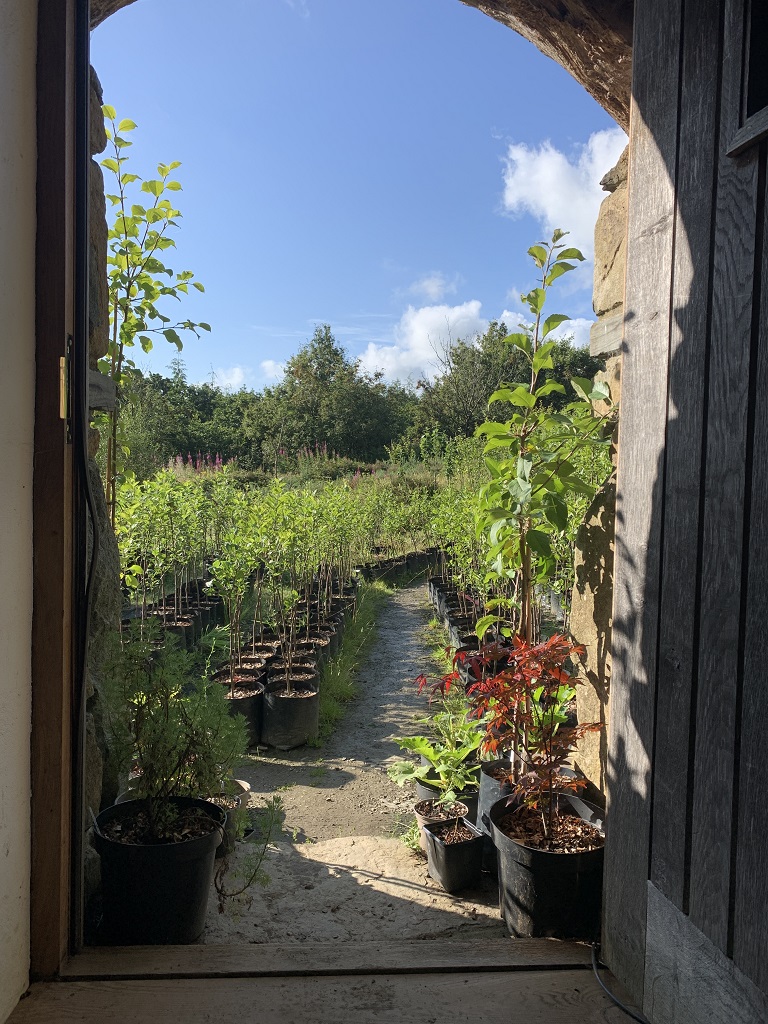
We were incredibly naïve when we set out, which in hindsight was an advantage. If we’d been in possession of all the facts, we probably would have run a mile! We assumed we would find land in at most a few months. Almost four years later we’ve finally found our patch of land. If it hadn’t been for a very dear friend in Pembrokeshire who offered us the use of his land to grow our trees, we wouldn’t even have started the nursery. We’re in the remains of an old quarry in the middle of 65 acres of woodland, which is idyllic, but bizarrely with nowhere to plant out the trees, so all the trees thus far have been grown in pots. As you can imagine, the thought of planting out on our own land is very exciting to us. Lots to do first though!
We’ve been making experimental batches of cider, 100% fresh juice, wild yeasts, fermented in whisky barrels, and so far are very much enjoying the fruits of our R&D! Our aim is to be entirely self-sufficient in that we’d be able to grow all our fruit for cider making. We’re living off-grid, so started off with an old scratter and Normandy press. We now also use a hydro press, and an electric Speidel scratter with a generator. It’s felt like a monumental learning curve at times, but also a thoroughly enjoyable one.
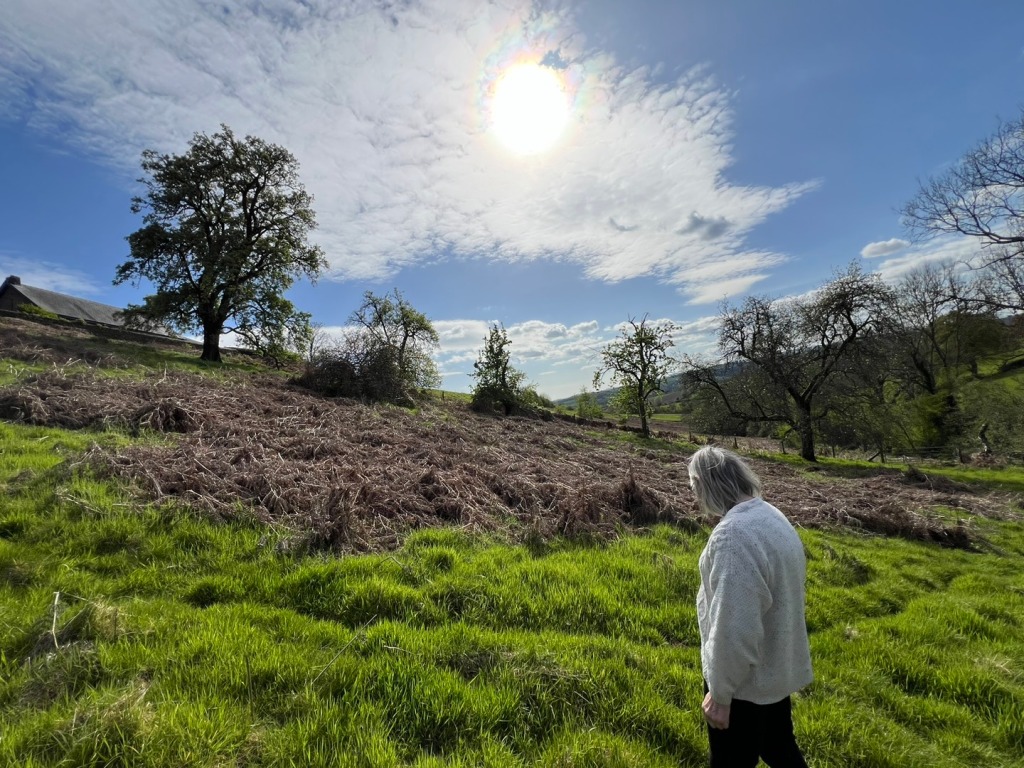
Fast forward to today, we have just started our third year growing and at last bought a few fields in which to set up the permanent nursery and our cider and Welsh heritage orchard.
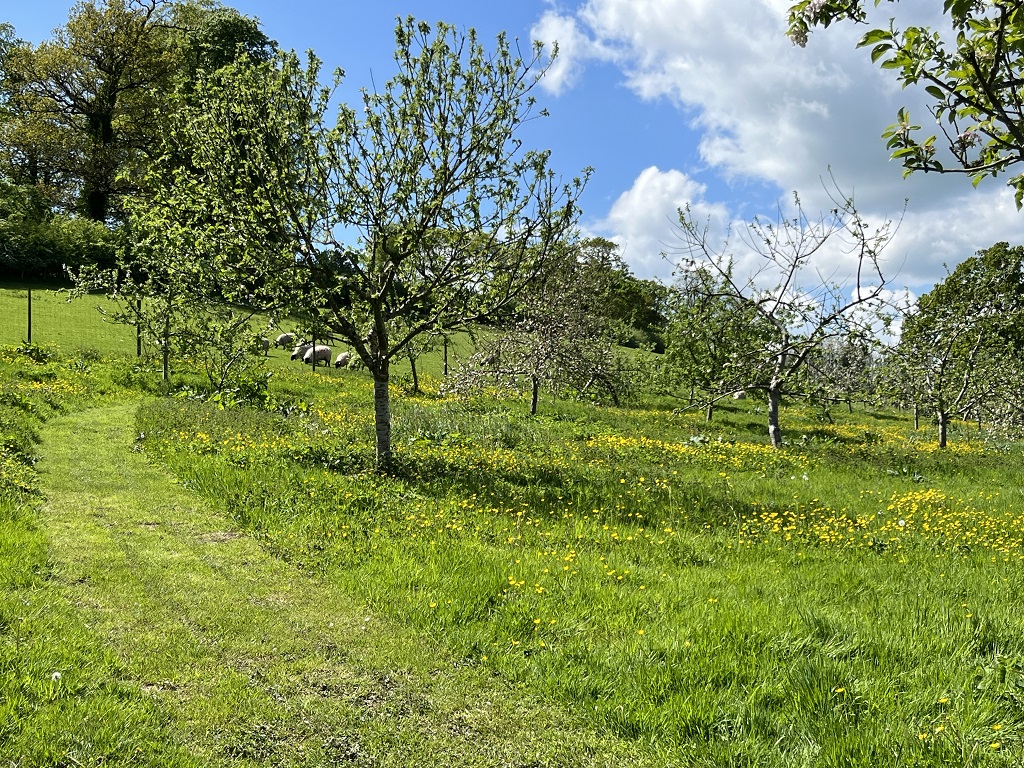
We’ve thought long and hard as to what rootstock we will use for our own orchards, due in part to the location and the fact we’re on marginal land (the tithe map field name is Parc Carreg Fawr, which basically means a field with a lot of big rocks!). For the cider orchard we decided upon M111 for its great anchorage and its toleration of poorer soil and interstem with M9 for the early fruit production and ease of harvest. The heritage orchard will be on traditional M25 for the apples and Pyro Dwarf for the pears, as we’d like to graze animals under these trees in the future. The initial varieties for our cider production will be Welsh varieties such as Frederick, Perthyre, Cummy Norman, Cadwallader, and Breakwell’s Seedling along with some classic varieties including Yarlington Mill, Harry Masters Jersey, Dabinett, Browns and Foxwhelp. The perry pears will have to wait for the time being, it’s tempting to do it all, but obviously time and financial considerations need to be factored in. The aim is to stay small scale; we will not be looking to produce more than 3,000 litres per year, it’s important to us that we continue to enjoy what we do, and not turn it into an ordeal.

CR: Do you have an ideal number of varieties you’d like to grow? Will you focus on supplying varieties that you can’t find in other fruit nurseries? Are there any other varieties that are on your to-do list but just haven’t grafted yet or got access to? I know you’ve got a few new ones this year, but are there any others that you are still chasing, be they culinary, dessert, or cider/perry?
G&N: If Nicky had her way, and we had the space, we’d have every apple that crossed our path. It was Gareth’s idea to focus on the Welsh varieties, particularly as there still aren’t that many producers using solely Welsh varieties in their cider.
Our hope eventually is to be able to offer people every currently recognised Welsh apple and pear variety available and act as a resource for people wanting to graft their own trees. In the recent past we have lost varieties such as Bassaleg Pippin and Forman’s Crew. Gabalfa however, is one of the lucky ones, it was thought to have disappeared but luckily has now made a comeback. The fact that we have lost over three-quarters of our orchards since the end of the Second World War makes it even more crucial that we don’t risk losing any more of our old varieties. We hope in our own small way to play a role in helping to maintain them, especially the varieties that aren’t that widely available.
It’s fair to say that in the past some people have been dismissive of Welsh varieties. Some of that has probably been borne out of a misunderstanding, a large proportion of the Welsh varieties have traditionally been grown for cider, and as many of you know too well, they’re not designed to be eaten, and they’re not always the most glamorous looking apples. Many of today’s apples were bred first and foremost to look good and be incredibly sweet. Recent studies have shown that this can come with a price, the loss of flavour, and sometimes nutritional value. A joint study by Cranfield University and Kew Gardens found that many heritage varieties along with crab and sour cider apples had higher levels of micronutrients than their modern counterparts. Let’s hope we are entering an age where we have more appreciation for the unique flavours of our local heritage apples and worry less about how they look, especially when we know that as recently as 2017 a study found that the UK apple market wastes a quarter of the harvest purely on cosmetic grounds.
We want to celebrate our Welsh Fruit, its history and its cultural legacy; our fruit is in danger of slipping into blandness if we don’t. Luckily there is a growing interest in heritage varieties, and the preservation of these varieties for future generations. There is also a growing movement in establishing traditional and community orchards, planting in urban public spaces and rejuvenating old, neglected orchards. This is in large part down to organisations such as Common Ground and The Orchard Project. Their combined efforts have created hundreds of new orchards and shone a light on the importance of local distinctiveness and rich biodiversity, highlighting not just the ecological but also the cultural significance of heritage apples and orchards. In Wales groups and individuals, who have been instrumental in carrying out similar projects are the Welsh Perry and Cider Society, Welsh Heritage Orchards, Merched y Berllan and locally to us Cwm Arian, who have recently set-up mother orchards around Pembrokeshire.
Farmers are also part of the movement; they know first-hand how important it is to retain a rich biodiversity within our growing systems. There’s increased interest and take-up of agroforestry and regenerative practice in many Welsh farms, marrying viable agriculture with environmental responsibility, using fewer ‘inputs’ and building in natural resilience to their crops, improving soil health, enriching our environment rather than depleting, through biodiversity.
CR: Specifically on Jessica Deathe’s Welsh Perry and Cider apple trees: how did come by choosing them and propagating them? I bought Crystell and Fig pear trees from you last year, I can’t find them available anywhere else – they were quite the find.
G&N: We’ve managed to build up the collection, with the emphasis on trees that we know will thrive in our climate. In west Wales we certainly have more of a challenge in terms of strong winds, higher rainfall and less hours of sunshine compared with many English counties, we basically think of this as a testing ground – if they thrive here, they’ll pretty much grow anywhere.
We’ve been so fortunate to have met so many marvellous knowledgeable people on this journey, who have generously allowed us access to their orchards for graftwood material. Dr Danny Thorogood, Emeritus Prof. at The University of Wales, Aberystwyth, whose Welsh heritage orchard has been an absolute blessing. Kevin Garrod of Monnow Valley Cider, who kindly allowed us access to one of the many orchards he oversees which enabled us to collect some of the more obscure perry varieties, such as Swan’s Egg and Blakeney Red along with a couple of varieties from Jessica Deathe’s orchards, including Crystell, Fig and Top Tree. Tom and Lydia at Artistraw, who in turn had received scions from Wade Muggleton, thus tracing the sharing of material back through a network of apple enthusiasts. We’ve also been greatly helped by Philip James and his amazing gang of volunteers at Dinefwr, with another amazing heritage orchard. We’ve also had people who have contacted us via the website about old trees on their land. We’re always looking for trees when we’re out and about, you never know what you’re going to discover around the corner. The apple hunting bug is an addiction!
Gareth has also been part of a working team of enthusiasts / experts under the umbrella of Welsh Heritage Orchards to help categorise what precisely constitutes a Welsh variety. Is it a variety that was widely cultivated in the country historically, or one that was first raised in Wales? Should it include seedlings found in hedgerows and byways, regardless of historical provenance? Hopefully the work being done will result in an updated and comprehensive Pomona of Welsh varieties that will help ensure the survival of these unique fruits.
CR: Where do you see yourself within the ecosystem of cider and perry makers in the UK (you are a really vital part in my eyes)? How does it feel to be both nursery folk and hopefully soon-to-be cidermaking folk as well? There is a small and fragile network of people – producers, bottles shops, nurseries – that are sometimes doing the most interesting things on the scene.
G&N: We’re hopeful that we can join the niche of small producers using predominantly Welsh varieties to produce our cider and perry.
We feel as though we’re joining one of the most supportive and friendly groups out there, the tree growing and cider making community. We wouldn’t be where we are today without the help and support of that community, which we now feel very proud to be a part of.
We look for inspiration to the likes of Jessica Deathe making her outstanding range of traditional Welsh variety based perrys, amongst them her delicious Devine and Crystell perry. Alex Simmens of Llanblethian Orchard also uses Welsh varieties in his cider, as well as growing Pen Caled, Pig Aderyn, Cummy Norman, and Breakwell’s Seedling, he has a soft spot for the old Monmouthshire favourite, Frederick. Bill and Chava at Welsh Mountain Cider, Tom and Lydia at Artistraw, and Kevin from Monnow Valley Cider, who does so much behind the scenes for Welsh Perry and Cider Society as well as making some outstanding perry in his own right. All people working small scale with a passion for their craft and a recognition of the history and tradition that they follow.
CR: What’s the history of cider and perry making in your bit of Wales? I feel like nationally at least it’s an under-discussed area. It’s fascinating to delve into it in a similar way to this re-emergence of cidermaking in Scotland. I feel that it’s equally happening in Wales and has been doing so for some time, but it hasn’t got the national profile as much yet. Are you grafting exclusively Welsh varieties or varieties with Welsh attachment or are there other varieties across the UK that you’re interested in?
G&N: We have historically been a nation of apple growers and cider makers. Going right back in time we have St Teilo, the patron saint of apple trees. In the tenth century we have The Laws of Hywel Dda, in which the value of apple trees is stated implying the practise of domestic apple tree cultivation. ‘Seidyr’ appears in the very first Welsh dictionary of 1547, so it’s certainly been a fixture during the last four hundred plus years. It’s been very much a part of Welsh rural life, as just as in the rest of the country making half-decent cider was a way of secure labourers especially at harvest time. This was often accomplished by itinerant cider makers travelling around the Welsh farms with their portable scratters and presses.
Historically monasteries in Wales played an important role in establishing orchards. Local to us is St Dogmaels Abbey, founded by the Tironensians in about 1113. Norman monks purportedly brought saplings with them, probably with the purpose of cider making, along with their cider making skills. Today the St Dogmael’s orchard still grows the likes of Pig Aderyn, Pen Caled and Pren Glas, their original names now lost in time as they went on to acquire the Welsh names. These we know today in large part thanks to the current orchard’s grandmother writing up the orchard plan over 100 years ago.
Groups such as the Marcher Apple Network and the Welsh Perry and Cider Society, (started Dave Matthews and Alan Golding) have been key in retaining a lot of the Welsh varieties around and discovering new ones. We also can’t fail to acknowledge Ian Sturrock and Paul Davies for keeping the Welsh varieties out there in the public arena.
We’re not exclusively Welsh with the trees we grow in the nursery, we do have other heritage varieties, and with our own personal interest in cider and perry making we do have a bent towards them in our selection. There’s a ‘rich seam’ running down the borders of Wales and England that has produced many great cider and perry varieties, and we’re happy to have them from either side of the border. Also, historically the highest concentration of commercial Welsh cider and perry makers have been based along this border, although records suggest that only a few Welsh varieties were grown their, such as Cissy, Morgan Sweet, St Cecilia, and Landore (Monmouth Green).
In south Wales too there have always been strong historical links with the West Country. We recently had a request for some Morgan Sweet, a lady from south Wales in her nineties remembered with fondness enjoying them in her youth. A case in point, they are a beloved variety in Wales, although originating in north Somerset. The growers would row over with their crop in August, as it’s an early, just in time for the coal miners annual Porthcawl holiday. They were a soft enough fruit that people with the most challenging dental work could still enjoy them. The name probably derived from the fact that Morgan of Cardiff was the main distributer of the fruit. It was also a favourite for making an early Christmas cider as the fruit ferments very rapidly and is ready well before the main cider has finished maturing.
Carwyn Graves, the author and public speaker, with publications including ‘Apples of Wales’, ‘Welsh Food Stories’, and more recently Tir (Land), has highlighted the historical tradition of apple growing and seidyr making in Wales over the centuries. He describes the distinct national palate that we Welsh have fostered over the centuries of cider making, with a leaning toward the sweeter, fruitier, less tannic more acidic flavours. He also talks of the small Welsh renaissance in cider making back in the early 2000s revitalised in part with the aid of Welsh Perry and Cider Society and coincidentally in the same year as the buy-out of the old Herefordshire based, Bulmers cider, which led to the cancellation of many contracts with Monmouthshire orchards. They in turn decided to start making their own cider and perry with the surplus of fruit.
I think the reason it’s probably not really heard about that much is because most of the people out there producing are very small scale. Many of us are doing this out of a passion, I’m not sure any of us embark on this journey to ‘make their fortune’, we’re just grateful to be able to get by doing something you love, who could ask for more!
CR: The ever-evolving landscape of nurseries like John Worle and Welsh Mountain Cider, (who had a nursery shop up until two years ago but) were really good places to go for very rare and obscure varieties of cider and perry trees. There’s still a couple out there like Adam’s Apples, Tom The Apple Man, Cider Apple Trees, Frank P Matthews, and a couple more besides. What was it that got you into grafting trees and deciding to make this your living when you started out?
If we’re being totally honest it all started out with our love of cider and the desire to make it for our own consumption. The tree nursery was there to produce the trees in order to make the cider. Then our shared history with growing trees in the past led us to take the leap with starting the nursery. Through that we both fell in love with the magic, history and the stories behind the apple varieties and the joy of searching around various orchards for varieties that still eluded us.
* * *
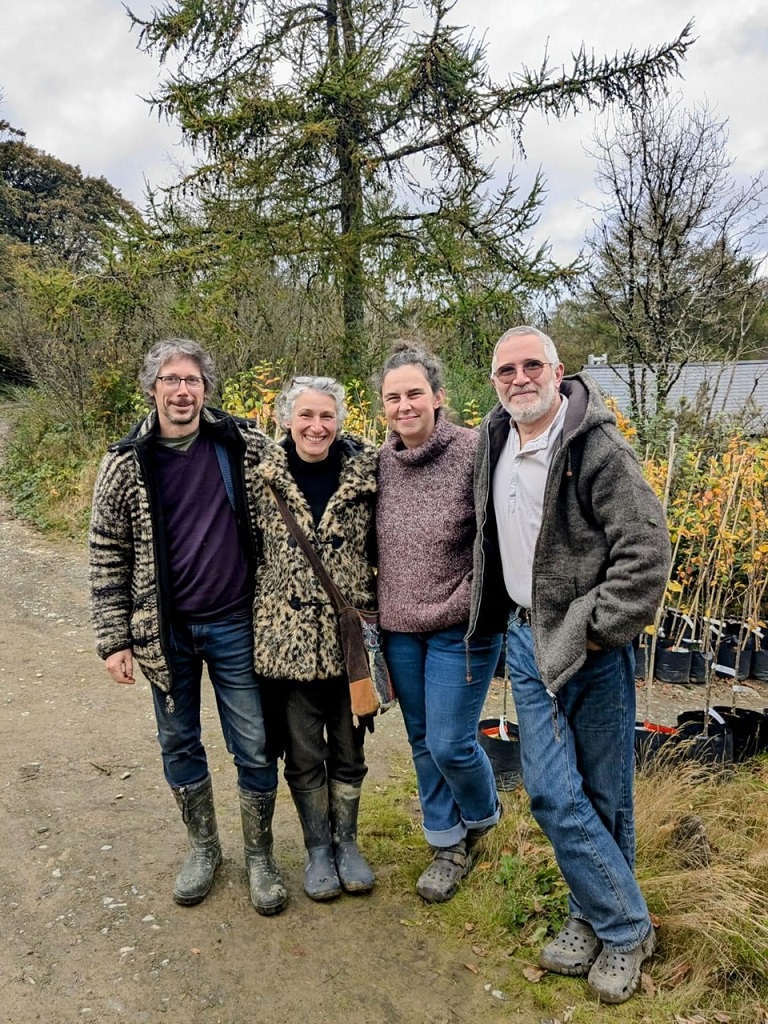
This interview was initially conducted in July 2024, but just a couple of weeks ago, while writing it up at the end of October, Nicky and Gareth sadly announced that for personal reasons they are passing their nursery to new owners and trusted friends, Neil and Dina Kingsnorth. In the interests of continuity, and reassuring our readers that the story continues, I thought it worth having a few words from the new owners.
CR: Thank you for stepping in and keeping Tyn y Berllan going, did it take much convincing to take on the nursery?
Neil and Dina: Absolutely none whatsoever. The apples have been calling us for many years. Over a decade ago we spent a week with Tom Adams (“Tom the Appleman”) in Oswestry, immersing ourselves in apple grafting, after which Neil ran The Orchard Project for a few years, coordinating activities creating orchards in town and cities across the country. After a move to Pembrokeshire Neil also ran an orchard enterprise project in the county and together, we’ve created and designed quite a few community orchards in England and Wales as well as putting apple trees in pretty much every garden we’ve designed in our time as nature-based garden designers. We’ve been building up our experience and skills over the years and have run training in pruning, grafting and orchard care over more recent years.
We started our own agroforestry tree nursery last year, focused on trees that are well-suited to a changing climate, or that build resilience and fertility into the soil. The only reason we didn’t include apples and pears right then was because we didn’t want to step on the toes of brilliant nurseries like Tyn y Berllan. So, to be given the honour and opportunity to take the reins and keep a brilliant, Welsh heritage nursery going was irresistible.
CR: What are you looking forward to grafting over winter? Any old varieties that are new to the nursery catalogue you’re seeking out in particular?
N&D: Nicky and Gareth have pulled together the most wonderful array of varieties. A remarkable collection of Welsh varieties in particular, some of which we are going to need to familiarise ourselves with! We plan to keep their dream alive of offering the full Welsh Pomona, once that’s been finally agreed upon by the Welsh heritage orchards group. That means we’ll be seeking out a few more, yet to be confirmed varieties soon, to add to their already wide selection.
We particularly love the story of the local Poppit Sands apples, which were found growing wild in sandy, salty soil near the beach. They taste pretty good and given their history, have got to be carrying some resilience in them.
More broadly, alongside some of the all-time greats, we’d like to make sure we continue to offer access to a growing set of some of those harder to get varieties.
We’re also interested in building up the Pear collection, including an improved selection of Perry pears. We’d love to hear from your readers with their own recommendations for what we should offer.
CR: Do you have a favourite variety you’ve worked with over the years that has a good story attaching you to it? Have you helped save any varieties?
N&D: Well, it’s not a cider apple or an eater, but Neil has a particular passion for “Malus sieversii” – or “the Mother Tree” as he calls it. It’s the wild apple of Kazakhstan from which all of this wonderful apple diversity originates. Almost every domesticated apple still carries its genes, yet the wild tree is endangered in its original habitat now. Neil’s been trying to get hold of it to graft for years but it’s been protected by all sorts of UN quarantine rules. We finally got hold of some graftwood from the Botanic Gardens in Edinburgh and grafted it last year.
It’s taken well but from a nursery point of view, the bad news is that we’re banned under UN rules from selling it! But we’ll be giving away trees in Pembrokeshire and keeping some to graft from and give away in future years too.
As for edibles, the Orchard Project itself worked with Frank Matthews many years ago to create a variety called “Core Blimey” which is a wonderful tree, and we’d love to include that in the mix if we can get the rights to sell it
* * *
Well thank goodness for Nicky and Gareth, and then in quick succession, Neil and Dina! As we see all too often in cideries, with little or no viable continuity planning, businesses that enriched the cider and perry scene and were cherished by aficionados across the globe can all too quickly vanish from the scene. Not, in the case of Tyn y Berllan – phew! The foundations of a really interesting, idiosyncratic nursery have been formed here, and heritage Welsh apple and pear varieties stand their best chance of being cultivated and enjoyed by future generations as a result.
Linking back to Charles’ thoughts on the National Perry Pear Collection, I also recently enjoyed listening to a series of audio clips, not quite podcasts, more an audio archive on the Peoples Collection, Wales. This one was from Dave Matthews, one half of the much-missed Bartestree Cider alongside his wife Fiona, and in it he says much the same as Charles. Re-discovering these trees and creating an up-to-date Pomona is only the first step. It’s then up to different makers to plant them, gain name recognition for the varieties in their bottlings and BIBs at drinks festivals and beyond. Then when you know your Berllanderi Red from your Gwehelog, that’s when the variety’s future is secured that much more than a precarious time throughout the late 20th and early 21st century. Tyn y Berllan is absolutely an instrumental part of that process, and if you have the space, or know someone with a bit of land, I wholeheartedly urge you to buy a tree or two from them this winter and get planting, for the future!
*All photos courtesy of Tyn y Berllan, other than my one of the Crystell tree.*
Discover more from Cider Review
Subscribe to get the latest posts sent to your email.
 Cider Review