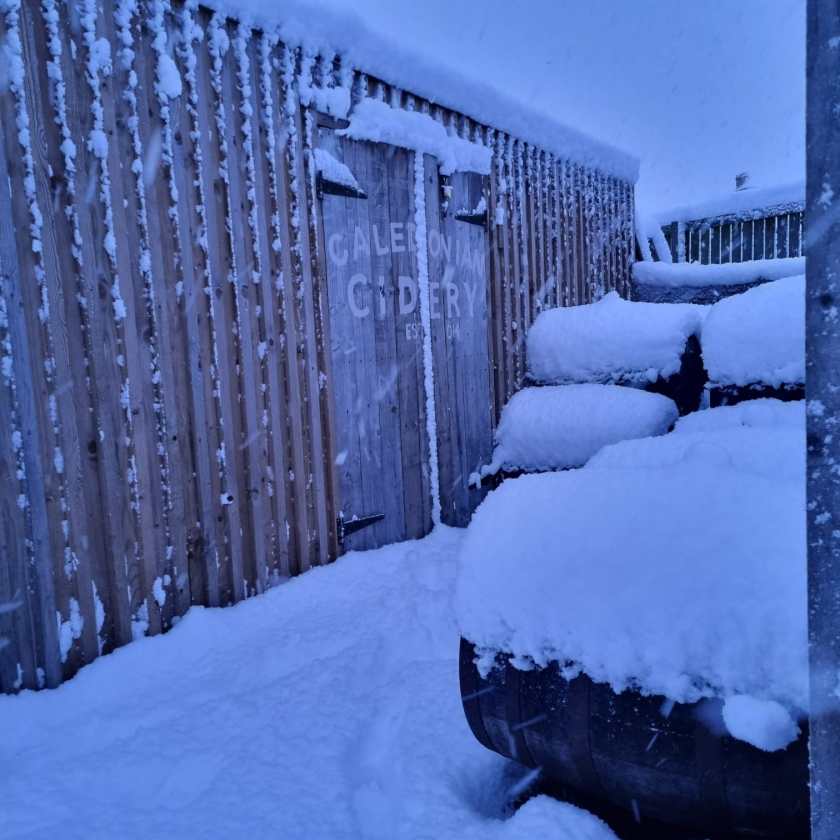
There’s something inherently comforting living down here in Norfolk and knowing that 510 miles north of me is a cidermaker I can always rely on to make consistently interesting, innovative, and irresistible ciders. I refer of course to Caledonian Cider Co, and the wonderful Ryan Sealey, who has spearheaded the emergence of craft, full juice, fermented-to-dry cidermaking in the county of Ross and Cromarty, up in beautiful, blustery North-East Scotland. Whatever difference a week or two we might get for apples ripening between the Three Counties, Kent, or Norfolk – add another fortnight-to-a-month on for Ryan’s operations. As I write this, the seasons are turning here in East Anglia. I’ve just returned from a weekend on the Isle of Arran, (“It’s a grand thing to get leave to live,” as Nan Shepherd once said) where Autumn had definitely established itself for 2023 – down here in Norfolk it’s just starting to let itself be known, tiptoeing alongside the final glorious sunsets of Summer. I hadn’t heard from Caledonian Cider Co in a while, but their Islay Cask release is an annual staple on my to-buy list. Back in August, a few new bottles from them appeared online at Cork & Cask, a fab independent bottle shop up in Edinburgh. I put an order in, and it seemed like as opportune a moment as any to reach out to Ryan and see how Caledonian Cider Co is faring in 2023, with its output from the 2022 harvest now reaching the shelves.
CR: Hi Ryan, how’s everything going at Caledonian Cider Co, and how was the 2022 harvest?
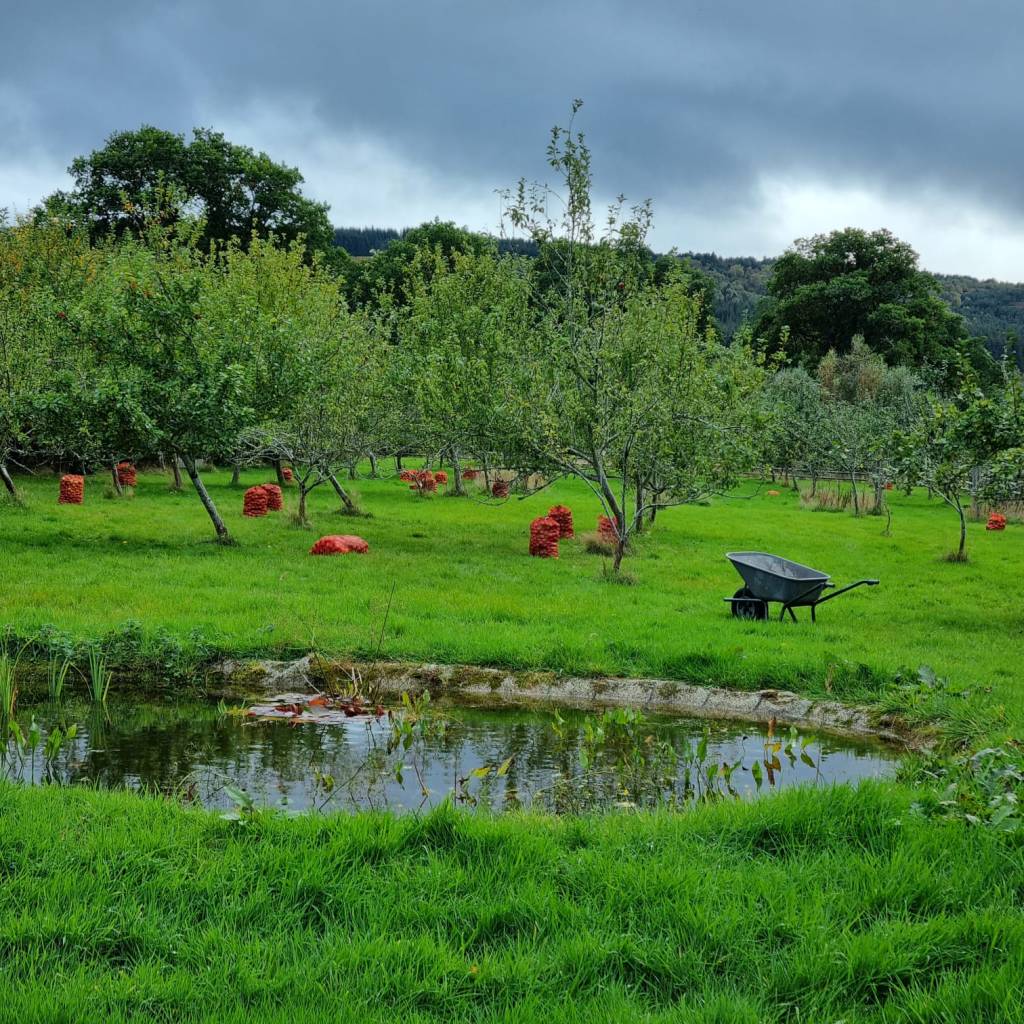
Ryan: It’s all good up here thanks. We’ve got a couple of weeks to relax – between the Summer markets and the games days finishing off, before the harvest starts rolling round again. It always catches me by surprise every year! In terms of Harvest 2022 that was an On Year for us. Since 2018, when we had that crazy hot Summer, most things around us have gone biennial. Meaning we get a huge crop one year, and the next it’s about half the size. It doesn’t impact too much on releases like North & South. But it does impact on what single cask release I can put out, the one offs and more experimental ones. Last year was a big year and I made the decision to not turn any apples away, regardless of just how many I was dealing with. We got so much fruit in I had to get a couple more 500 litre Sherry Butts in (a real joy to move around and work with I can assure you…) from up at Dornoch Distillery as there was so much juice to work with. The upshot is that last year, I made enough cider to cover any shortfall in this year’s crop. This is the first year we’ve really had cider left over to go into the following year, allowing us to experiment with cross-vintage blending – something I’ve never been able to do before. We just don’t have that much space to do this usually. It’s nice to be small-scale and just over the other side of the garden for me, but it’s an extra challenge to work around the space factor when it comes to maturing cider for a wee bit longer. I was at Pressed the other week, the Scottish Cider showcase, and the maturation of cider is something other cidermakers like Naughton and Seidar are doing. Their maturation is lot more structured and planned than mine tends to be. Purely because I don’t have space in the shed to really store things for any length of time! I would have to stop selling cider for a year to get that vintage properly conditioned where I want it be. But then I would need twice as much space – something to work on.
Crop-wise last year was very good. Our local bittersweets were really good quality. Great mouthfeel, with a slow fermentation. The majority of them went into the New Year sitting at Specific Gravities of around 1.0040 – 1.0045, great soft tannins. I haven’t put anything out with my local bittersweets this year. It’s been the local culinary ones so far. Strange Bru will be out in a month or two’s time, the first using local bittersweets. It’s tasting really good. Probably going to be around 85% Major /15% Dabinet. The Katy apples I got in for my This Is Ceitdh release, with my wife on the label (a good source of discussion between us!), they fermented a lot faster than usual. Temperature will have played a part, but it raced away in the cask so I bottled it slightly higher SG than I normally would, around 1.006 – 1.007, giving it a bit more fizz and lifting the aroma a bit. I find that things that ferment fast like that can lack a bit of aroma compared to the slower fermentations, so the added fizz helps elevate the aroma.
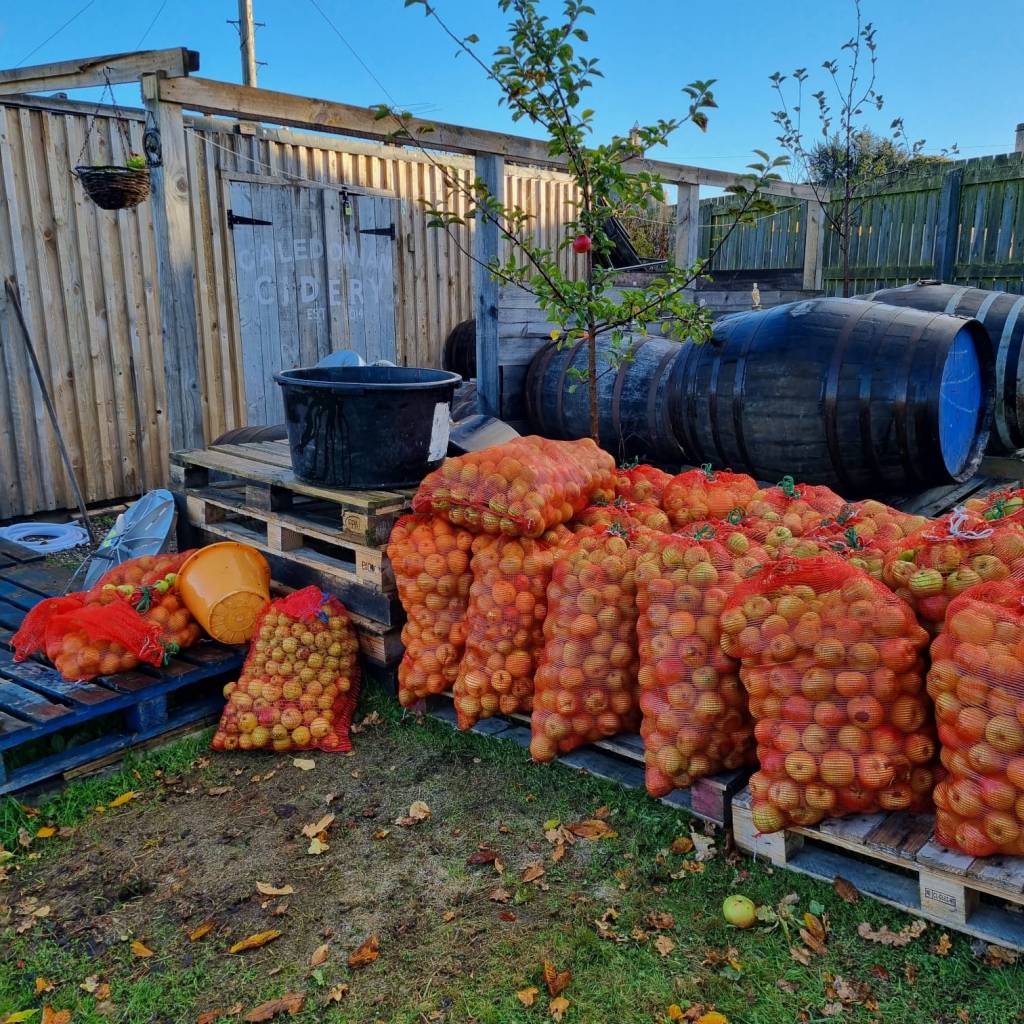
The cider apples I bought in from Ross Mangles in Somerset, specifically for the North & South blend, were more astringent than the last couple of years – a mixture of Dabinett and Yarlington Mill. The tannins just seemed a bit harsher than usually which meant I used a portion of my local bittersweets, which I don’t usually use, to tame those tannins down a wee bit. It’s not meant to be a high tannin cider. It’s supposed to be juicy and easy drinking. As a result of that I’ve got quite a bit of Yarlington Mill cider left from the Somerset crop which I’ve put into cask to sit on it for a few months. That will be fun to play with going forward.
The other standout for the harvest was that we managed to actually get a crop from that ridiculous orchard above Drumnadrochit just West of Loch Ness. It crops so infrequently, that it’s a wonder I bother with it at all. We got enough Ellisons Orange to do a single variety called Tha Sin Blasda. As well as enough crop of Keswick Codlin to do another single variety bottling, this one is still sitting in the cask. It’s got a really interesting acidity to it. Similar to Bramley, but a thicker mouthfeel. The cider hasn’t got a name yet, but it may get bottled around Christmas. It would lend itself well to a higher level of fizz. Watch this space for the Keswick Codlin release!
CR: Thanks Ryan! Can you tell us a little about this brand new cider from you, Dearcan Dorcha 2022 (great name!)
Ryan: Dearcan Dorcha, Gaelic for Dark Berries. I was going to call it Dark Fruits, as Strongbow Dark Fruits is really popular around here. I thought, take the idea, the essence of Strongbow Dark Fruits and mess around with it. Do a natural, full juice version of it. The first time I put the drink out it didn’t get very far down the road as I only made 100 bottles. It’s reliant on the blackcurrant crop from my Mum’s garden up in Brora – she grows Raspberries, Blueberries and Blackcurrants. We froze the fruit and then put them into a cask of my high acid bled – the base cider I use for High & Dry (with the lighthouse on the label). A mixture of James Grieve and Bramley. I always get lots of those apples in every year. I’m a sucker for a high acid, dry cider, I really enjoy how it turns out. As the frozen blackcurrants defrost in the cask, they burst and sink to the bottom. As the cider carries on fermenting, it becomes more and more purple and the aroma develops with it.
I would imagine the more sensible way to do it would be to press the blackcurrants. Maybe use a steam juicer? But this way adds an interesting element as you’re fermenting the whole berry, not just the juice. In the same way that Craobh Lan is as much a product of the apple skin as the apple juice, I feel like Dearcan Dorcha is a product of the whole blackcurrant. It’s not just like Ribena, it smells more like blackcurrant leaf to me (there’s no leaves used in it). The whole thing co-ferments and I bottle it around 1.004, perhaps a wee bit higher as it’s quite fizzy. I don’t think it’s super complex as the blackcurrant is such a powerful flavour to work with as it overpowers the cider a bit for me. It was really just a case of one day in the pub with my Dad and we were talking and I said “wouldn’t it be fun to do a full juice, pet nat, co-ferment version of Strongbow Dark Fruits?! What if it wasn’t 4% and we made it 7%?” Just a bit of fun.

CR: Cheers Ryan, secondly we have Tha Sin Blasda, the Ellisons Orange SVC. Could you tell us a bit about that one? I love the label on this one, it really stands out.
Ryan: So I covered a bit of this on my answer above. It’s really bottled because of the variety of the crop from that orchard. I don’t think I’ve had an Ellisons Orange SVC before – it’s possible that Mike and Albert have put one out in the past at Ross-on-Wye as they love exploring all these different varieties. It’s a nice cider, it never really carried on fermenting in the bottle as much as I would have liked. There is some residual sweetness in the bottle because it didn’t go as dry as I expected to – probably because it harvests so late at that orchard, a good 3 or 4 weeks after you would normally be harvesting culinary apples, just because it’s so cold and miserable up there! My brother came up to visit for a holiday and over 2 days we drove out and picked apples in the sideways rain. It’s one of the challenges fermenting outdoors, all of my casks are under the sky in the orchard, and often things appear like they’ve stopped fermenting when they actually haven’t, they’re just strangely, precariously, stable for a while.
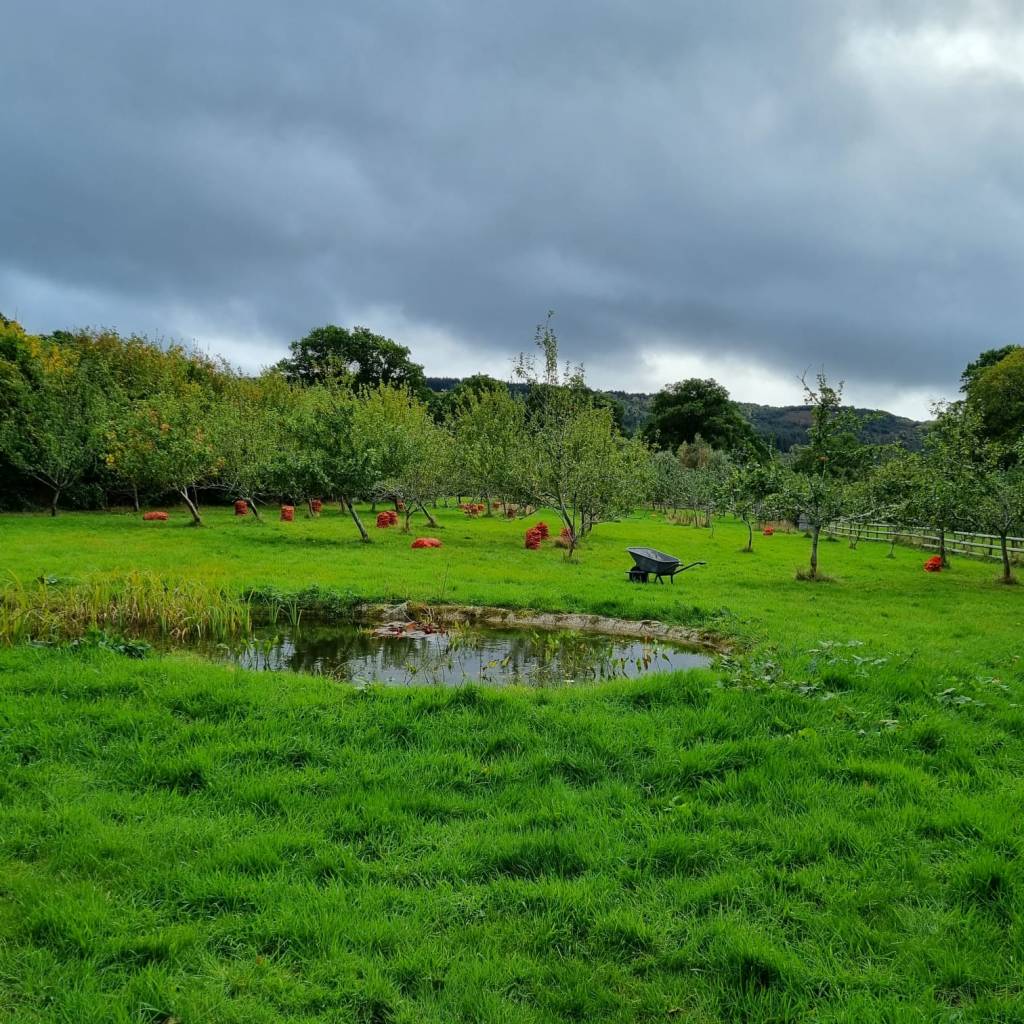
For it being an unintentionally still cider I think it is super juicy, with a lovely mouthfeel. Apart from High & Dry which is acid-led, I like to keep them juicy. It might be another 5 years, or never again, for the harvest from that orchard. Every January I go and prune that orchard, look after it, prop the trees up when they start to blow over. There’s about 220 trees in that orchard, Lady Melrose, Glams Castle, Stirling, they’re generally old Scottish varieties that you’d find in a Victorian walled garden – though this orchard is quite far removed from that setting, given its exposed location. There’s so many varieties that I would like to try and make into a single variety from that orchard. It’s the fabled promise of being able to make something like a Bloody Ploughman SVC or an Irish Peach SVC, having enough of them to do a whole cask of them, that keeps me going back there. But much like everything else in my cidermaking career it’s a labour of love that rarely pays off for the amount of time you put into it. To summarise, Tha Sin Blasda – a rare cider that I may never get to put out again but at least I managed to do it once!
CR: Thanks Ryan, now on to This Is Ceitdh. I’ve tried previous vintages of this. How do you think the 2022 vintage compared to previous editions?
Ryan: Likewise with this, I covered a bit above how this went in 2022. Compared to last year’s release, it’s a lot more precise aromatically. There were more murkier elements going on in the 2021 Vintage, the 2022 feels like a cleaner presentation of the apple. It tastes just like a Katy apple to me. You’re at the mercy of what you’re given when making a single variety cider. I don’t think it should or would taste the same every year. It goes down well locally at the markets where we sell. Folk around here like that level of fizz and acidity as it’s usually supermarket cider in the Highlands that everyone buys. So when they try my cider, if it’s dry and still, it can be quite far removed from what they’re used to.

CR: Finally onto North & South in 330ml bottles. How is this release going? Give us a reminder of what goes into this blend again please?
Ryan: The one you have to try is the 2021 vintage. The 2022 has gone into brown glass as the cost of the glass, everything in fact last year, skyrocketed. Brewers had been mentioning the cost of everything going up for a while. Because I’m a cidermaker and annualised with that volume of production where I send away a couple of 1000 litres to be bottled, I’m somewhat protected from price increases until they come all at once in Spring when I have the cider ready to bottle. The guys who bottle this came back to me and the price had literally doubled, I wasn’t sure how I was going to be able to do the release, it was more than I could possibly pass on as a price rise to my customers. So we looked at ways to make it cheaper to bottle – different label printer, different bottler, and different bottle (clear glass was much more expensive than brown glass). The colour of the glass and the level of shine to the label didn’t matter to me, it’s the liquid that’s important. It was tough having to phone around a find new suppliers. The most difficult bottling run so far I’ve had to organise, due to the cost being so astronomical.

Coincidentally it was the same with my 750ml bottles – last year I switched across to the same lightweight glass bottles as Mike and Albert at Ross-on-Wye. I had used full-weight champagne bottles before, they were lovely and heavy, but really they were rated to take a much higher level of carbonation than I’d ever be putting in them. Switching across to the lightweight bottles allows me to not raise prices again for another year. Once you get over £15 for a bottle of cider it feels to me like it has to be really special, there needs to be some justification for why it’s that much money. Is it a special variety? Made in a special way? Made in a special place? I like to keep my cider sub £10 at rrp. That’s my goal.
The North & South 2022 blend is not 50/50 English/Scottish fruit, as it has been in previous years. It’s probably more like 30/70 because of the tannins from the English fruit last year. There’s always some cask cider and some keeved cider blending together in the mix to create something medium dry around 4% abv. It’s meant to taste a bit like something you would get from the supermarket, but a natural, full juice version of that. I’ve not added sugar for the sweetness, that comes from the keeved cider. It’s been a while since I tried the 2021 that you’ve got. Will be interesting to see how it’s lasted in the bottle.
North & South is the closest I come to a core range cider that I can put out at volume. In an off-year where we don’t have that much fruit up here, let’s say only 2000 litres of cider from 4 tonnes of fruit. I’ll allocated 1000 litres of that to my North & South blend. Having the English element to it allows me to produce that cider each year and something else. When I have lots of smaller releases, you know I had a bumper harvest the year before.
CR: Thanks Ryan, that was very informative!
Discover more from Cider Review
Subscribe to get the latest posts sent to your email.
 Cider Review
Pingback: A Caledonian quartet | Cider Review
Pingback: Cider Review’s review of the year: 2023 | Cider Review