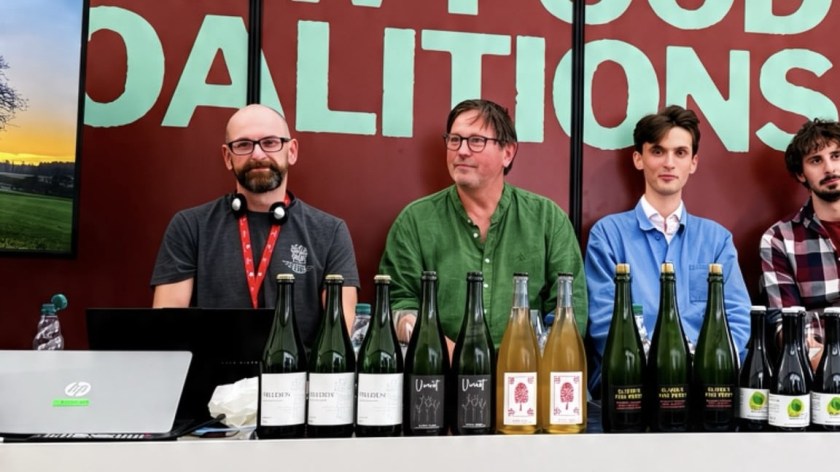
Last week I reported on the creation of the Slow Food Cider Coalition, a significant step towards a global food network recognising cider and perry, and particularly 100% juice cider and perry. I mentioned then that the official launch was during the Terra Madre Salone del Gusto in Turin at the end of September 2026, an event which I had the honour of attending as part of the German Slow Food delegation, and mainly because Darlene had asked me to join a masterclass on perry and moderate a couple others. As usual, I couldn’t refuse!
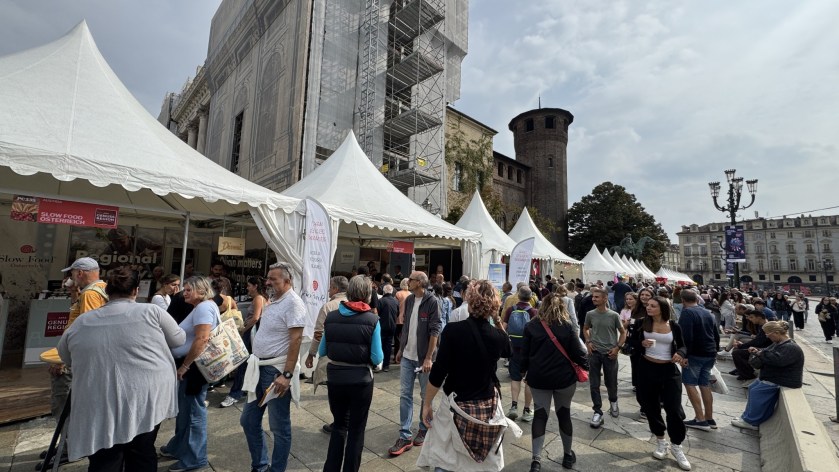
It’s hard to describe the Terra Madre Solone del Gusto, as it’s simply a massive event that took over much of the old town of Turin. That’s not the scope of this article, so I will not write about how basically every square was taken over with a huge array of stands and pavilions that represented food and drinks culture from across the globe. So many delicious things to try and stories to hear. Darlene and Emily Ritchie certainly made sure their suitcases were full before returning home. Afterwards, I was wishing I had done so too!
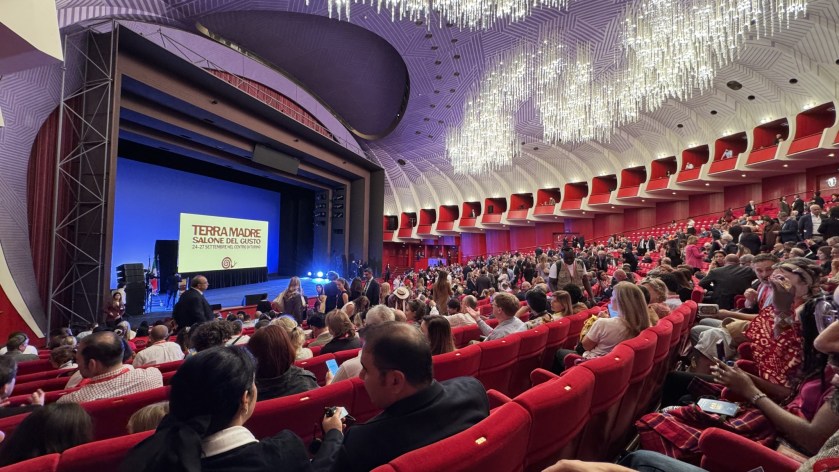
Likewise, I won’t go into the incredibly impressive opening ceremony, with delegates from I don’t know how many countries, the president of Italy with his ceremonial guards, swords drawn, the UK Ambassador to Italy delivering a message from King Charles, and the sheer joy that filled the auditorium as farmers and growers told their stories. But also tempered by honest concerns about climate change and conflicts across the globe, which affect the poorest of the population most.
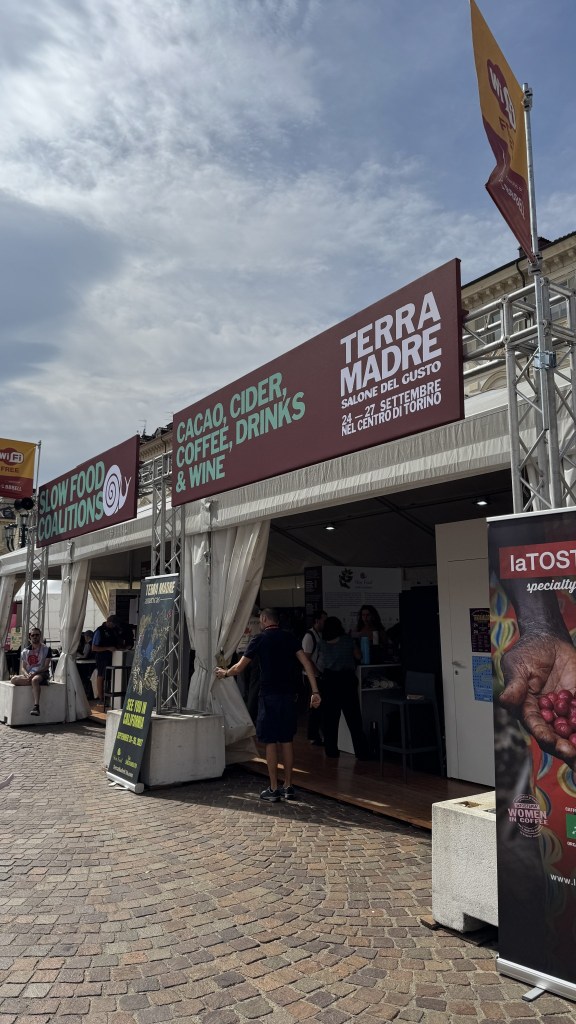
Though there were so many talks and demos, tastings and workshops, my brain was completely focussed on the coalitions area in the Piazza San Carlo, home for cider, wine, coffee and cacao events. For cider, we had five events at the coalitions space, plus a bonus event at the tent of the University of Gastronomic Sciences in the Piazza Castello, so here I would like to give an overview of each, just to give an impression of the breadth of offerings at the first formal outing of the Cider Coalition.
Ciders of the American West: A Taste of Place
“The cultivated apple has made its home in North America since Europeans arrived in the 17th century with many new varieties appearing over the centuries.
As Europeans moved westward, they took apples with them, discovering that the unique terroir of the Western United States subtly changed the fruits’ aromas and flavours. Former Executive Director of the Northwest Cider Association Emily Ritchie and author and cider advocate Darlene Hayes will pour five examples of ciders made from apples grown on the U.S. west coast. Seedlings that originated in the Western U.S. such as Airlie Redflesh and Wickson, as well as cultivars from other parts of the world like Gravenstein (Denmark), Newtown Pippin (New York), and Kingston Black (England) while talking about the apples’ histories and the impact of the West’s distinct environment.”
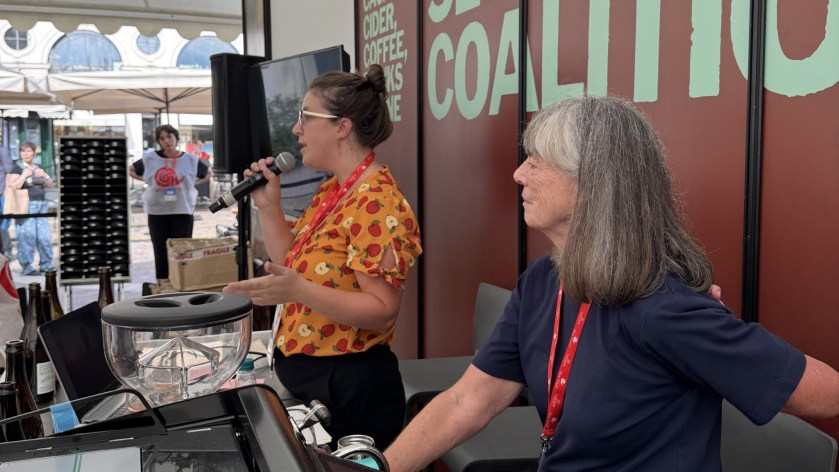
This masterclass delivered by Darlene and Emily, and moderated by yours truly, is summarised well in the official description. But you want to know the details, right?
They took the audience through a series of single variety ciders from up and down the west coast of the USA, speaking about terroir and the difference climate makes between the east and west coasts. With less rainfall, so called dry-farming is the norm in places like California, presenting its own unique challenges to growers and makers. Given how our climate is changing here in Europe, and specifically thinking about the challenges we faced this year with brutally dry conditions across the continent, I think it’s good to have these practices as a reference. They explained that typically, the old orchards in their region are trees that were grafted onto seedling rootstock, trees that have naturally developed to withstand the harsh conditions and deliver fruit, and naturally before modern clonal rootstocks became the norm. It’s logical, and I often feel that with a more-or-less monoculture under the ground in many newer orchards in Europe, always using the same few rootstock varieties, we are not spreading the risk well enough. But there are projects underway, in Germany at least, that are trying to address this.
That’s not to say many orchards in the western US do not face the same challenges, with many relying on Geneva or MM111 rootstocks. Returning to the old ways might be a good thing for us all.
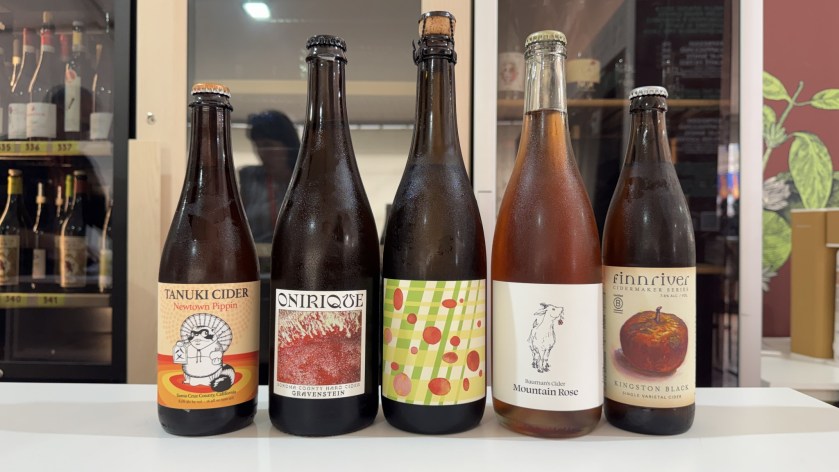
Oh, and the ciders presented! Note as I was moderating, my notes on flavour profiles were sparse, as I was thinking of questions to ask (I needn’t have bothered, the audience had enough to keep Emily and Darlene occupied), but it was a well thought out array of single variety ciders.
Tilted Shed’s Wickson Fireball Farm 2023 (Windsor, California) – A traditional method cider. Fireball farm indicates the apples came from their home orchard. As you can imagine with Wickson Crab, acid forward. Sadly, Tilted Shed has closed their doors, so it was very nice to finally get to try one of their ciders.
Tanuki Cider’s Newtown Pippin (Santa Cruz, California) – wild fermented, then finished with a selected yeast. Darlene later told me that the apples were grown at the Five Mile Orchard in nearby Pajaro. The Mann family has been growing Newtown Pippins there since the late 19th century (Jake, who runs it now is the 5th generation), and they still have some trees getting on 100-plus years old.
Gravenstein from Onirique Cider (Sebastopol, California) – a very pleasing cider indeed. Interestingly, the Russian River Slow Food branch (Onirique being in their territory) created the Sebastopol Gravenstein Apple Presidium, placing Gravenstein into the Slow Food Ark of Taste (a kind of catalogue created by the Slow Food movement to list and protect heritage foods), speaking to the importance of this variety to that region.
Mountain Rose from Bauman’s Cider (Gervais, Oregon) – from a yellow-skinned, red-fleshed apple also known as Airlie Redflesh. Marzipan, strawberry sorbet. I loved this enough that I nabbed a leftover bottle to bring home (with permission!).
And a Kingston Black from Finnriver (Chimacum, Washington) – burnt orange peel, leather, just so lush, right up my ally, ticking flavour profiles I yearn for.
It’s really difficult to get American cider, or actually any other country’s fares here in Germany, so this was a great chance to taste through these was an educational experience, and from the audience’s reaction, they appreciated them too. Incidentally, if you are in the UK, the Fine Cider company is now importing some US ciders, so worth a look.
A Forgotten Tradition: Cider and the Historic Apple Varieties of Alto Minho, Portugal
“What was once a popular tradition in the rural areas of Minho in northern Portugal gradually disappeared, without anyone truly understanding why.
Today, the memory of this once thriving cider region lives on through the stories of its elders and, especially, in the last surviving cider apple trees that remain as witnesses to those times.
During this masterclass, we invite you to discover how cider was once an important pillar of the local rural economy and an integral part of the region’s cultural identity. Through stories, traditions, and the legacy of these old apple trees, we will explore the forgotten history of cider in Minho and its place in the life of rural communities.”
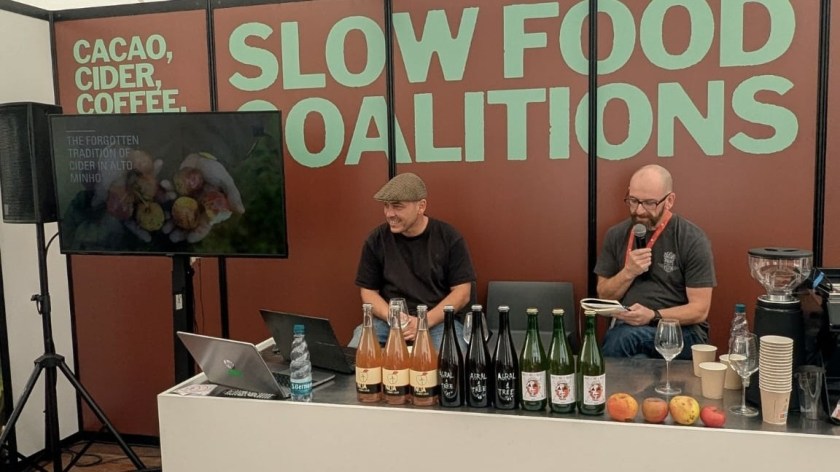
I had the honour of introducing Pedro Paiva, cidermaker and owner of northern Portugal’s Faca Nos Dentes. Pedro had spent a lot of time in France and Switzerland, where he worked on vineyards and in wineries, and it was in France where he discovered a love for cider. On returning to Portugal one year, intending to make wine, he realised he had arrived too late in the season, but on noticing apple trees in the landscape around his new home, he then discovered an old, almost forgotten Portuguese cider tradition that was once part of everyday rural life in the region.
This had my brain spinning at so many levels. Not only had I never heard of a cider tradition from Portugal (chances are you never did either), but the way the trees were grown, how they were an integral part of a patchwork of sustenance farming plots, grown on the periphery, but always there, all struck so many chords of how central European cider and perry making once was. It’s all gone here, but in Alto Minho, this old cultural landscape still exists.
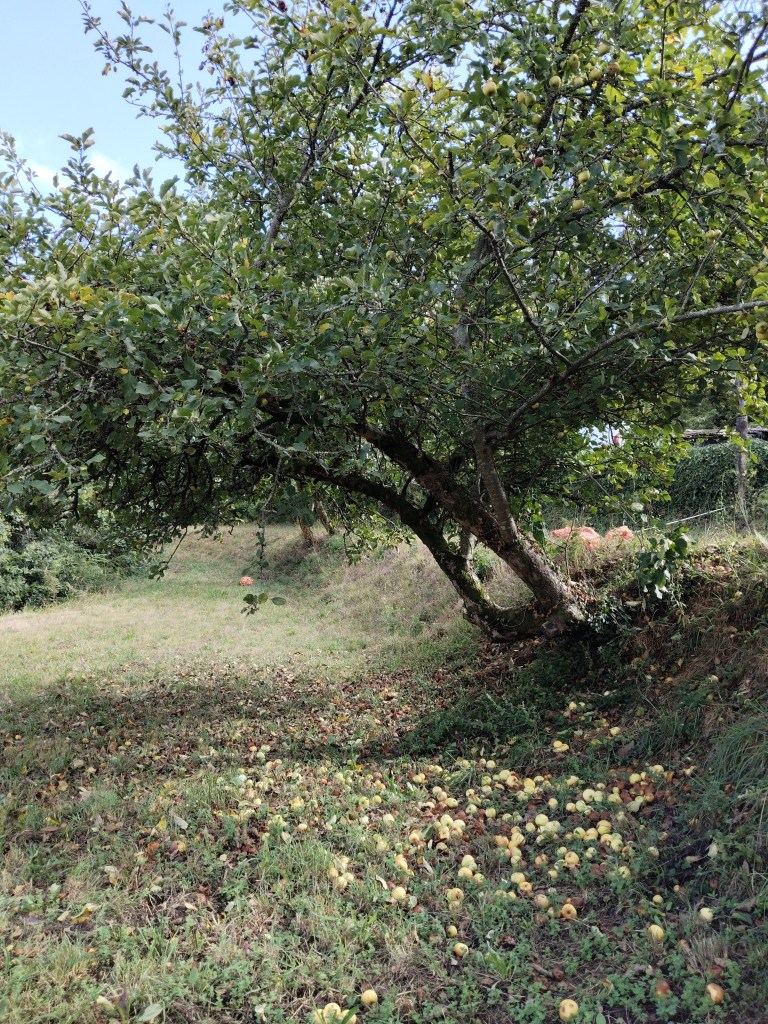
I don’t want to go into too much detail here (I may have given too much away already!), as Pedro’s story deserves a full CR article treatment, so stay tuned for more on this fascinating piece of forgotten, or maybe ignored, cultural history.
I was so engrossed in Pablo’s story, i made no notes on the ciders he presented, but for your edification, the list was:
- Faca Nos Dentes, Agral 2021, a single variety cider;
- Cider Nua, ” 1″, made from a blend of varieties from the apple collection of the local Agrarian School, and;
- Faca Nos Dentes, Omnia#2 2023, made by Pedro from a blend of local cider apples from isolated and abandoned trees from all over the region.
I should mention that all these sessions were simultaneously translated from English to Italian, or vice versa as appropriate, and headsets were available to the audience if needed. It was quite remarkable to watch the two translators in action.
The Pan-European Cultural Heritage of Perry
“Perry is a drink traditionally made from high tannin perry pears, harvested from trees that can live up to 300 years and more.
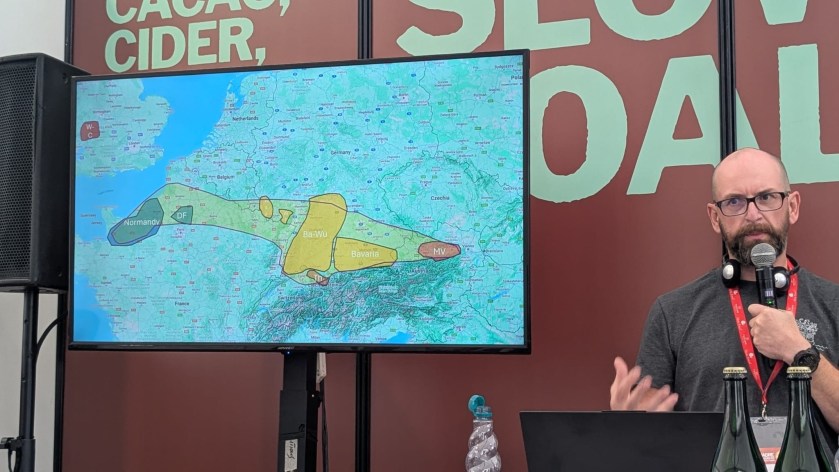
An ancient drink, first mentioned by Pliny the Elder in the first century CE, it became culturally important in Central Europe since at least Medieval times and was made in a band that once stretched from Austria and Switzerland, across southern Germany to Luxembourg, up across to Northern France and over to western Great Britain.
From the 1950s on, the onset of modern, intense farming methods saw the fragmentation of the pan-European cultural heritage of perry pears and perry, with most of the old perry heartlands losing that connection. What remained was just a few islands of living tradition in Austria, France and Western Britain. But there has been a resurgence in recent years, with small makers across Europe and beyond restoring perry’s rightful place in the cultural landscape.”
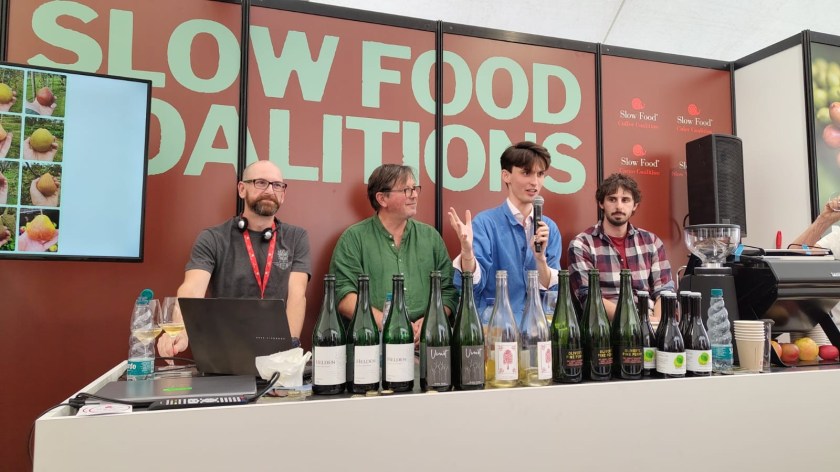
No prizes for guessing who wrote the blurb for this masterclass…
This was a four-person panel event introduced by Darlene, highlighting perry of course. I got a double role, as the first 10 minutes were dedicated to looking at a very compressed history of perry in Europe. If you have read my CraftCon 2025 opening keynote speech, a lot of it was based on that work.
Then each of us had 10 minutes to introduce our cidery and work in the overall context of perry traditions in Europe. I spoke about our small cidery, the southern German landscape that is filled with magnificent old perry pear trees, and our projects to return these kinds of trees, rare and endangered varieties from all over Europe, back into our local landscape, both as biotopes and conservation gene banks. We shared our Kertelreiter Helden 2024 single tree perry, a Karcherbirne, and perhaps my favourite perry pear tree anywhere.
Jérôme Forget (first time meeting him in person, lovely man) was next, you’ve heard of him and his perries, I am sure. This was fun, as Jérôme asked me a couple of hours before the session if he could speak French. I asked around and the translators had someone, so while he spoke, one of them wrote shorthand notes, then translated perfectly into Italian after him while the other translator live-translated that into English via the headsets. Incredible stuff!
Jérôme spoke about his farm, the silvopasture model they employ there, with cows grazing under the trees, and their overall approach to making some of the best perries in the world. He sneaked in two perries, Vinot, actually a blend of Vinot, Pomera and Plant de Blanc pears, and Rouge Vigny. Truly delightful stuff.
Ivo Freeman was standing in for Tom Oliver, and he spoke about perry in the three counties and Tom’s work, which has similarities to Jérôme’s, combining animal husbandry with growing fruit in traditional meadow orchard settings. If you are in any way a regular visitor to these pages, you should be quite familiar with Tom Oliver’s work!
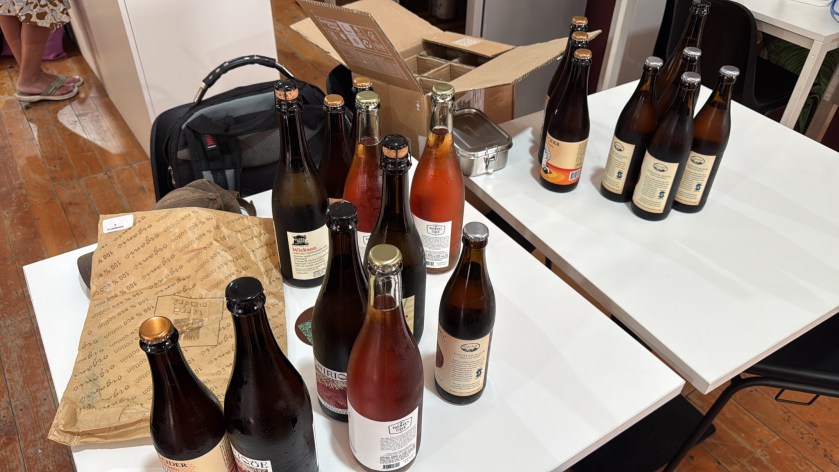
Ivo introduced Tom’s We Aren’t Stopping Now, a blend of perry pears. And it’s good that Tom shows no sign of stopping!
Frederico Pedrollio of Italy’s Appleblood cidery rounded off the quartet. While most cideries making perry in Italy are using low tannin pears typically destined for eating, Frederico has found tannin rich pears close to home at Trentino. These were from trees that older generations had used for preparing dried pears, following the same traditions as found in Austria, Switzerland and Germany, and some of the varieties he found originated from those countries. And this makes sense, they aren’t that far away and people were migrating, bringing their favourite fruit with them. It’s a fascinating window on the past, and I am sure there are some interesting stories to be told on how such varieties made their way to the northern mountains of Italy. But more to the point, Frederico has begun planting new orchards dedicated to pears to be able to increase his perry production in the future.
Frederico presented Essenza, a keeved perry made from some of the old varieties available to him, a blend of dessert and perry pears.
Beyond Cider: Apples & All Their Fruit Friends
“Let yourself be guided through innovative pairings and new perspectives: apples together with quince, plums, grapes, and hops! From Trentino to Piedmont, Valtellina, and Valle d’Aosta—discover what happens when apples ferment with other fruits to create incredible ciders.”
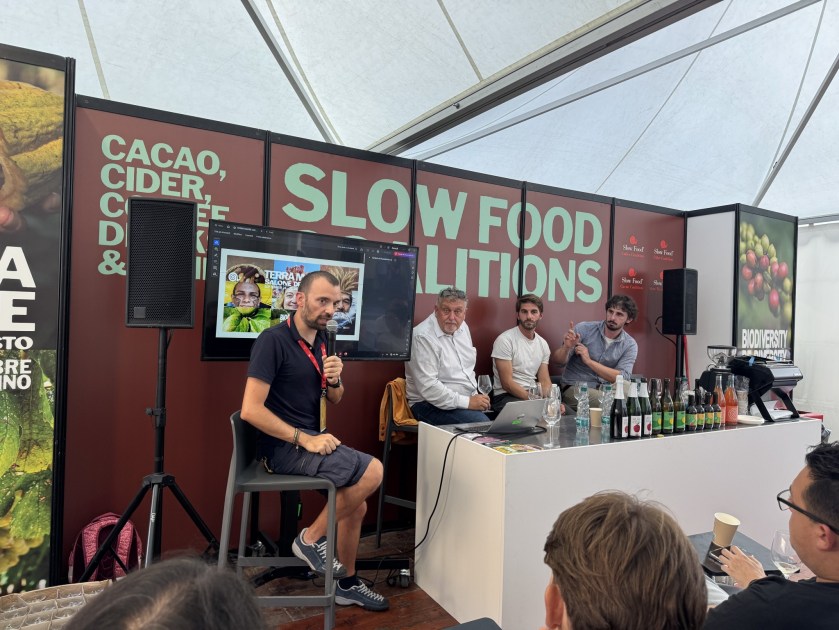
This session was moderated by Andrea Bedini of L’Associazione Pommelier e Assaggiatori di Sidro (the Italian associate of pommeliers) and the Torino Cider Club, focussed on four Italian makers presenting co-ferments.
Provino Demoz of Docendo Discitur spoke about their Sidro Alma, a rosé cider with 5% Fumin grapes. A kind of marzipan aroma, but the flavour was all berries, suggestions of raspberry jam, sorbet and tingly acids. Felt very much like a rosé, but with higher acidity.
Giacomo Rodolfi of Agricola Substrato, someone I spent some time talking to at his stand in the coalitions area , spoke about their work and poured Berilio, a 50:50 apple and quince conferment. I made copious notes on this when tasting through all his wares the day before. It’s a quince bomb, so aromatic, so soft and pillowy, shouting quince but with the acids and astringency you sometimes get dialled back a touch, letting all that quincy flavour shine. Membrillo and jammy, very comfy.
My new friend Federico Pedrolli of Appleblood, who we met at the perry masterclass, presented Orange Country, and this is where his brewer side comes out, a cider with cascade and galaxy hops, but also added grapefruit peel just to dial up the citrus notes. As good as any hopped cider I’ve had!
The final cider was from Craveri & Lamberti, who sadly could not be present. This was RV-1, a spontaneously-fermented cider with ramassin, a small, grape-sized plum grown widely in the hills of Piedmont. This was quite astringent, with an acetic note that was on the borderline for me.
There’s a lot happening in Italy at the moment, though I was told that the general public don’t quite know where to place cider, given it is still relatively new to the market there. It will take time.
When Apples Speak Like Grapes
“Despite often being single-variety, vintage-dated and aged in oak barrels, cider is neither wine nor beer, and it occupies a smaller niche compared to its grape- and grain-based counterparts.
This tasting will guide you on a journey to discover a craft—an art form that was banned in Italy in the early 20th century: the production of apple cider. We’ll explore the Italian terroir through a lens that has only recently been revived thanks to the work of a small group of passionate custodians, and we’ll discuss the future of this small industry.”
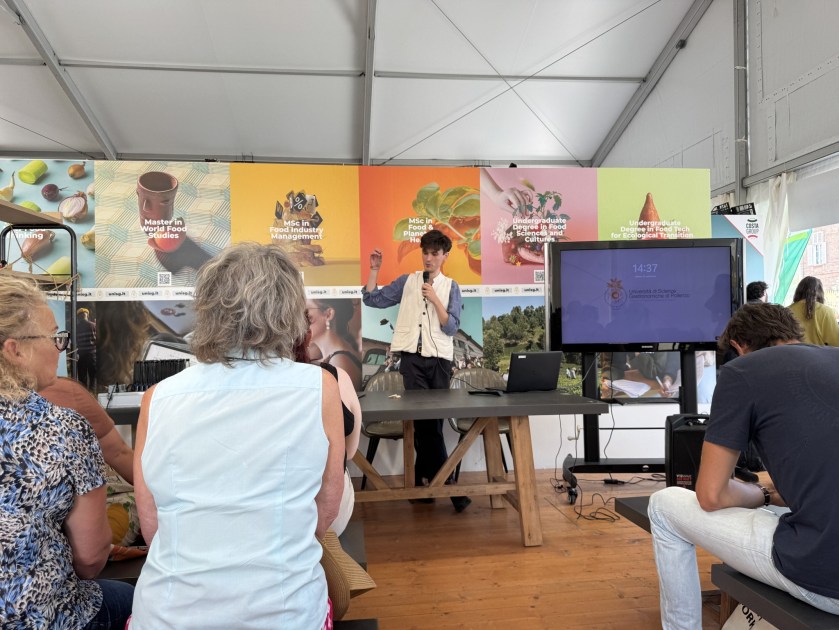
My tasting notes were more complete for this talk as I didn’t have to work, and Ivo is an interesting, idiosyncratic speaker, eschewing the need for slides, and bringing us on a meandering, fun story. The whole point, other than quince will rescue Italian cider, was the parallels that can be drawn between cider made with care and wine. And to highlight this he chose ciders from a maker I have not had the pleasure of meeting but would now very much like to. Paola Giberti of Ca’ Giberti.
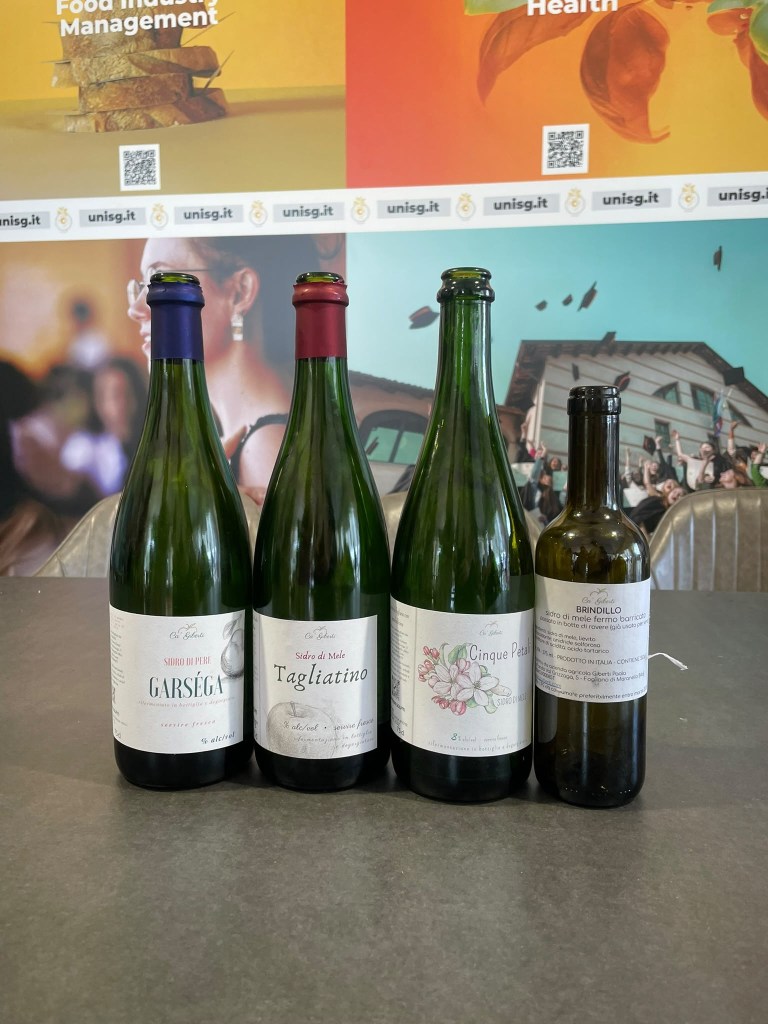
The first drink served was Garséga 2024, a traditional method perry made from a blend of three dessert varieties, Williams, Abate Fetel, and Santa Maria (the latter a new one to me).
I have to admit, it was served way too cold, and a slight acetic note came to the fore (a risk of perry, but in my experience heightened when using dessert pears), but trying it later, it had opened up into something far more approachable, luscious, fruity, a nibble of acid adding an accent without distracting. In short, delicious. Perry is often served far too cold if you ask me (I know, you didn’t).
Tagliatino 2024 was next, a cider made from dessert apple varieties (Golden and Staiman), bottle-fermented using selected yeasts, and disgorged. My notes say vinous, warming, light caramel and slightly creamy (malo)? Thoroughly enjoyable.
We had another quince co-ferment, Cinque Petali 2022, a blend mainly of Staiman and a mix of some old (which ones was not disclosed) varieties, and quince. Also super creamy in texture, a gentle but interesting bitterness, and something that suggested blueberries, perhaps blueberry yogurt. Quince is such an interesting fruit that can express itself in so many ways.
And finally, we were treated to Brindillo 2021, a barrique-aged cider with such HUGE wine influence, I had to imagine it was filled with cider very soon after the wine had been emptied out of it. Merlot, Ivo later told me. Dark, deep, broody. Ivo said she can’t sell it; people don’t know what to make of it. I say they are missing out on one very interesting experience. I wish I’d snagged a bottle to bring home and sit with in contemplation.
Ivo describes Paola as a quiet person, and I suspect that a quiet introspection is reflected very much in her drinks, all of which carried depth and nuances I had till then not really detected in Italian cider. That’s not meant to disparage everything else I have tried so far, but there is a youthful brashness to much of what is produced by, well, younger makers, many who are brewers (no objections, I originally came to cider from craft beer). And to be fair, cider in Italy is still quite young, only becoming legal to make and sell in 2015. Though we can probably be sure farmers in the mountains continued to make it even after il Duce banned it in 1927. Another interesting fact from Ivo that perked up my ears. Vin de Pomme… no, not wine made of apples, but a wine grape and apple co-ferment that was made in the past in Italy. I’ve said before, there’s nothing new under the sun in cider, and I hope this makes a return to Italy, too.
100% Apple: Cider Beyond Borders!
“A tasting journey through the cider traditions of Italy, France and Belgium, featuring five ciders from producers who are part of the Slow Food Cider Coalition network.
Through the tasting, we will explore different local varieties, fermentation methods and production approaches, with a focus on producers who put agroecological practices, biodiversity and the relationship with their territories at the heart of their work. A chance to discover the diversity of European cider through the glass and the stories behind it.”
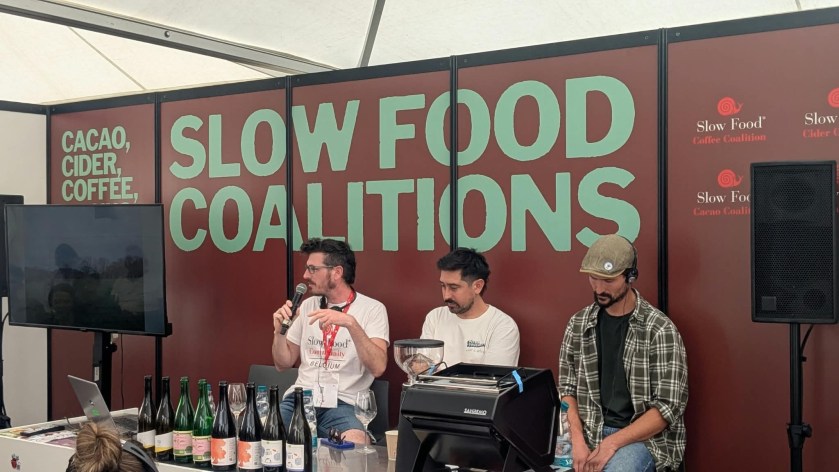
I actually missed this one, as I was travelling home that day, but it was a session moderated by Joran Le Stradic, manager and owner of La Cidrothèque, Brussels, who we have met on these pages before.
Joran filled me in later on what was opened for the tasting part.
- Badlands from Prima Radice, Italy
- Cidre Saint-Vincent 2024 from Verger du Sirieu, Belgium
- Dry Cider 2024 from Pascoli di Amaltea, Italy, and
- Cidre Brut 2024 from Cidre du Tchapia, Belgium.
All completely new to me, so I am very sorry I had to miss it!
Joran told me they spoke about the definition of cider, so “full juice versus Somersby and shit” as he so succinctly put it, fermentation techniques, different styles of ciders (how to make it sparkling, how to retain residual sugar). But also about full standard orchards, silvopasture approaches with sheep, cows and goats in the orchard, and the wildlife that such orchards support. It sounds like it was a great session.
Wrapping it up
So there you have it. It was a really busy few days, and the above are just the cider-specific events at Terra Madre 2026. I attended a number of other events, like the German Slow Food delegate meeting, and several coalition meetings where the focus tended to be on some of the other new coalitions that were also launched at the same event.
What stays with me, though, is not just the drinks, as good as so many of them were, but the people and the connections between their stories. From old apple trees in Portugal to perry pears in the mountains of Italy, from the American west coast to orchards with cows and sheep beneath them in France, England and Belgium, there was so much common ground. These were fun, generous sessions, full of curiosity, good humour and a willingness to share. Even with different languages, different traditions and very different things in our glasses, it felt like we had plenty to talk about.
For a first formal outing, I think the Cider Coalition gave us a very good taste of what is possible. I hope future Slow Food events give cider and perry an even more prominent place, with more makers, more regions and more chances to explore the orchards and cultures behind the drinks. There are clearly plenty of stories still to tell, and plenty of people keen to hear them. If Turin was the beginning of that conversation, I’m looking forward to seeing where it takes us. And next time, I’ll bring a bigger suitcase.
Discover more from Cider Review
Subscribe to get the latest posts sent to your email.

